Search results
Search for "mass spectrometry" in Full Text gives 685 result(s) in Beilstein Journal of Organic Chemistry. Showing first 200.
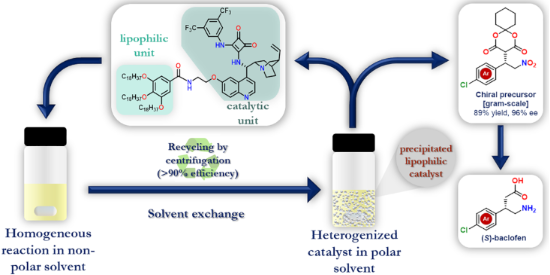
A novel recyclable organocatalyst for the gram-scale enantioselective synthesis of (S)-baclofen
Beilstein J. Org. Chem. 2023, 19, 1811–1824, doi:10.3762/bjoc.19.133
- and high-performance liquid chromatography–mass spectrometry (HPLC–MS). The solvent ratios of the eluents are given in volume units (mL mL−1). Nuclear magnetic resonance (NMR) spectra were recorded on a Bruker DRX-500 Avance spectrometer (at 500 and 126 MHz for the 1H and 13C spectra, respectively) or


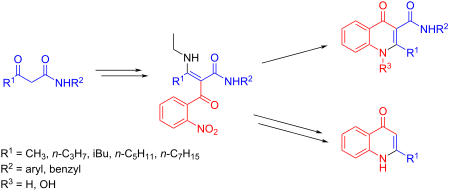
Synthetic approach to 2-alkyl-4-quinolones and 2-alkyl-4-quinolone-3-carboxamides based on common β-keto amide precursors
Beilstein J. Org. Chem. 2023, 19, 1804–1810, doi:10.3762/bjoc.19.132
- experimental details and analytical data. Supporting Information File 26: Processed NMR spectra. Acknowledgements We are grateful to Prof. Tsanko Gechev and the Center of Plant Systems Biology and Biotechnology, Plovdiv, for providing access to their Waters Acquity - Synapt XS UPLC - mass spectrometry system


Selectivity control towards CO versus H2 for photo-driven CO2 reduction with a novel Co(II) catalyst
Beilstein J. Org. Chem. 2023, 19, 1766–1775, doi:10.3762/bjoc.19.129

- high-resolution mass spectrometry (ESI), where it was shown the fragment corresponding to complex 1 that lost one isothiocyanate, [M − NCS]+, as the primary signal. Elemental analysis matched the calculated values, incorporating an additional MeOH molecule. Recrystallization was afforded by re


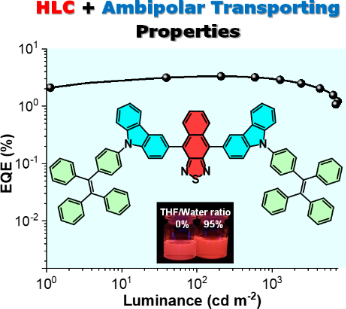
A deep-red fluorophore based on naphthothiadiazole as emitter with hybridized local and charge transfer and ambipolar transporting properties for electroluminescent devices
Beilstein J. Org. Chem. 2023, 19, 1664–1676, doi:10.3762/bjoc.19.122
- purchased from commercial resources and used without further purification. 1H NMR and 13C NMR spectra were recorded with a Bruker AVANCE III HD 600 (600 MHz for 1H and 151 MHz for 13C) using CDCl3 as a solvent containing TMS as an internal standard. High-resolution mass spectrometry (HRMS) analysis was


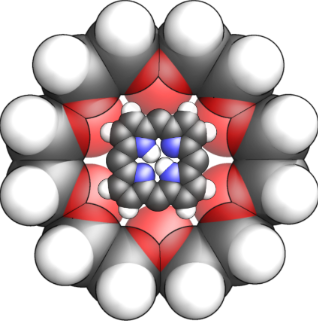
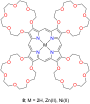
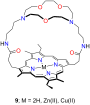
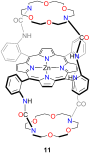
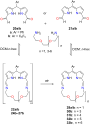
Tying a knot between crown ethers and porphyrins
Beilstein J. Org. Chem. 2023, 19, 1630–1650, doi:10.3762/bjoc.19.120
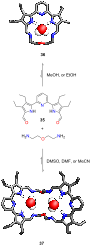
- analysis and mass spectrometry. Similar to the Ti(III) complexes, the V(III) compounds 16-V and 18a-V demonstrated paramagnetic features. The V(III) cation resided in a distorted octahedral environment, slightly outside the cleft, and was bound by two imine and two pyrrolic nitrogens (Scheme 7) [130]. The
- the aryl group at the meso-position of the dipyrrin moiety. Compound 40 was tested for sensing metal ions, and while no significant changes were observed with most cations, the addition of Cu(II) resulted in a colour change. UV–vis spectroscopy and mass spectrometry confirmed the 1:1 copper(II









A series of perylene diimide cathode interlayer materials for green solvent processing in conventional organic photovoltaics
Beilstein J. Org. Chem. 2023, 19, 1620–1629, doi:10.3762/bjoc.19.119
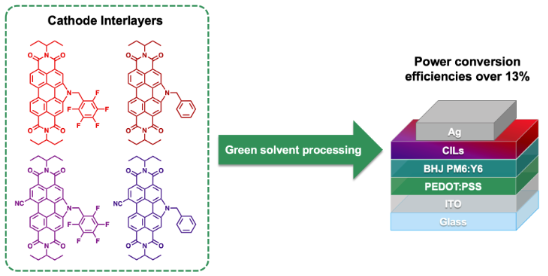
- NMR spectroscopy, mass spectrometry, and elemental analysis. See Supporting Information File 1 for full synthetic and characterization details. Optical properties Using UV–visible spectroscopy, the optical properties for PDIN-FB, PDIN-B, CN-PDIN-FB, and CN-PDIN-FB in both solution and film form were


Synthesis of 7-azabicyclo[4.3.1]decane ring systems from tricarbonyl(tropone)iron via intramolecular Heck reactions
Beilstein J. Org. Chem. 2023, 19, 1615–1619, doi:10.3762/bjoc.19.118
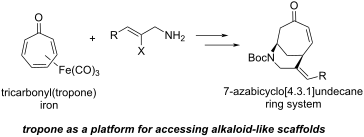
- (Colby College) and Prof. Bruce Foxman (Brandeis University) for X-ray analysis of compound 8. High-resolution mass spectra were obtained at the Mass Spectrometry Lab at the University of Illinois. Funding We thank the donors of the American Chemical Society Petroleum Research Fund (Grant No. 59202-UNI1


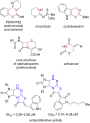
Secondary metabolites of Diaporthe cameroonensis, isolated from the Cameroonian medicinal plant Trema guineensis
Beilstein J. Org. Chem. 2023, 19, 1555–1561, doi:10.3762/bjoc.19.112
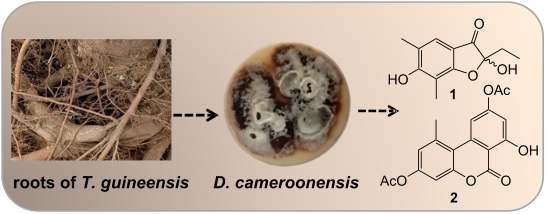
- polyketide 1, and an acetylated alternariol 2 were isolated, along with fifteen known secondary metabolites. Their structures were established by extensive NMR spectroscopy and mass spectrometry analyses, as well as by comparison with literature data of their analogs. Keywords: alternariol; Diaporthe
- cameroonensis, isolated from the root of Trema guineensis, a Cameroonian medicinal plant from the family Ulmaceae [11]. Results Structural elucidation Diaporthe cameroonensis, which showed an interesting high-performance liquid chromatography–diode array detector–high-resolution mass spectrometry (HPLC–DAD–HRMS


Synthesis and biological evaluation of Argemone mexicana-inspired antimicrobials
Beilstein J. Org. Chem. 2023, 19, 1511–1524, doi:10.3762/bjoc.19.108
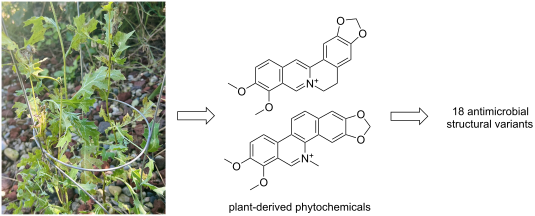
- B2 showed one less aromatic proton than expected and mass spectrometry revealed the presence of an extra oxygen. It was initially thought this unexpected oxidation had occurred at position-8, leading to an 8-oxoberberine variant. However, oxidation at position-8 was questionable (qualitatively) as 8


Consecutive four-component synthesis of trisubstituted 3-iodoindoles by an alkynylation–cyclization–iodination–alkylation sequence
Beilstein J. Org. Chem. 2023, 19, 1379–1385, doi:10.3762/bjoc.19.99
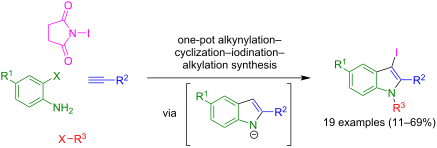
- compounds 5 in yields between 11–69% after chromatographic workup. The structures of the products were unambiguously confirmed by 1H and 13C NMR spectroscopy, as well as by mass spectrometry. Assuming that four new bonds are being formed in this one-pot process, the range of yield from 11 to 69% (after
- -trisubstitued indoles 8 in good yield (Scheme 4). The 1,2,3-trisubstitued indoles 8 were unambiguously confirmed by 1H and 13C NMR spectroscopy, as well as by mass spectrometry and elemental analysis. Miura et al. could show that 1-alkyl-2,3-diarylindoles constitute a class of blue-emissive indole derivatives




Organic thermally activated delayed fluorescence material with strained benzoguanidine donor
Beilstein J. Org. Chem. 2023, 19, 1289–1298, doi:10.3762/bjoc.19.95
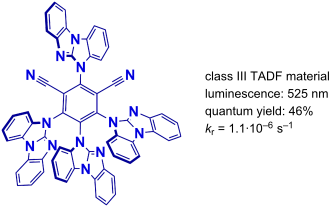
- deprotonation the latter with sodium hydride base. The compound shows poor solubility in most common organic solvents with moderate solubility in dichloromethane, 1,2-dichlorobenzene and dimethyl sulfoxide (DMSO). Compound 4BGIPN was characterized by high-resolution mass spectrometry (HRMS), elemental analysis
- Laboratory at the University of Manchester. Mass spectrometry data were obtained by the Mass Spectrometry Laboratory at the University of Manchester. Synthesis of 4BGIPN. 5H-Benzo[d]benzo[4,5]imidazo[1,2-a]imidazole (benzoguanidine, [10]) (700 mg, 3.38 mmol) was added to a suspension of NaH (81.0 mg, 3.38


Cyanothioacetamides as a synthetic platform for the synthesis of aminopyrazole derivatives
Beilstein J. Org. Chem. 2023, 19, 1191–1197, doi:10.3762/bjoc.19.87
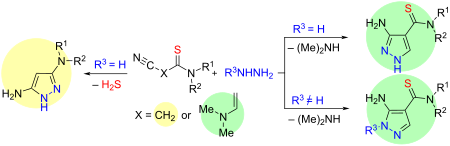
- pyrazoles has been thus synthesized. The structure of the reaction products was studied using NMR spectroscopy and mass spectrometry and confirmed by X-ray diffraction analysis. Keywords: aminopyrazoles; 2-cyanothioacetamides; enamines; hydrazines; Introduction Compounds containing a pyrazole cycle
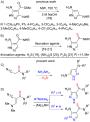
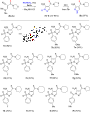
- -diaminopyrazoles 4a–c (Scheme 2). The structures of compounds 4a–c were confirmed by 1H and 13C NMR spectroscopy data, as well as high-resolution mass spectrometry (HRMS). Compound 4a was previously obtained by another method [18]. The spectral characteristics of diaminopyrazole 4a reported in [18] correspond to




Synthesis of imidazo[4,5-e][1,3]thiazino[2,3-c][1,2,4]triazines via a base-induced rearrangement of functionalized imidazo[4,5-e]thiazolo[2,3-c][1,2,4]triazines
Beilstein J. Org. Chem. 2023, 19, 1047–1054, doi:10.3762/bjoc.19.80
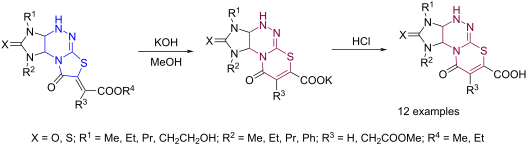
- in the thiazine ring leads to the cleavage of the triazine C–N bond. Further proton transfer gives product 9. The structures of the synthesized compounds 3a,b,j and 5a–k,m were confirmed by IR, 1H and 13C NMR spectroscopy, and high-resolution mass spectrometry. the potassium salts 3c–i,k,m were



Intermediates and shunt products of massiliachelin biosynthesis in Massilia sp. NR 4-1
Beilstein J. Org. Chem. 2023, 19, 909–917, doi:10.3762/bjoc.19.69
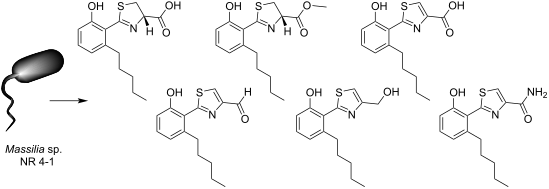
- metabolites that are structurally related to the siderophore massiliachelin were recovered from a culture extract of Massilia sp. NR 4-1. The structures of the natural products were verified by high-resolution mass spectrometry as well as 1D and 2D NMR analyses. The newly found compounds are assumed to


A fluorescent probe for detection of Hg2+ ions constructed by tetramethyl cucurbit[6]uril and 1,2-bis(4-pyridyl)ethene
Beilstein J. Org. Chem. 2023, 19, 864–872, doi:10.3762/bjoc.19.63
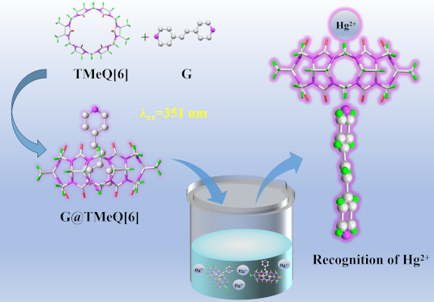
- detection methods include atomic absorption spectroscopy, mass spectrometry, emission spectroscopy and electrochemical methods [4][5][6][7]. These detection methods are expensive and time-consuming, and the detection of samples becomes extremely difficult. Therefore, it is of great significance to construct


Synthesis of substituted 8H-benzo[h]pyrano[2,3-f]quinazolin-8-ones via photochemical 6π-electrocyclization of pyrimidines containing an allomaltol fragment
Beilstein J. Org. Chem. 2023, 19, 778–788, doi:10.3762/bjoc.19.58
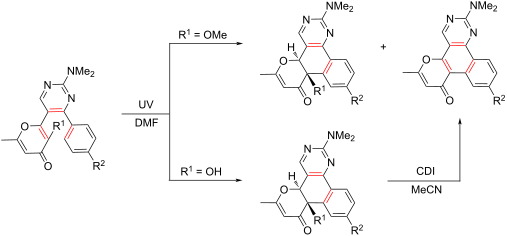
- result, both products could be isolated and characterized using 1H, 13C NMR spectroscopy and mass spectrometry. Moreover, the structure of product 11a was also confirmed by single-crystal X-ray diffraction analysis. It might be noted that precipitated crystals of 11a contained two polymorph modifications
- 11g–j were confirmed by 1H, 13C NMR spectroscopy and high-resolution mass spectrometry. In the 1H NMR spectra of the products, characteristic singlets corresponding to the protons of the dihydropyranone fragment in the region δ 5.3–5.4 ppm and the protons of the hydroxy group in the region δ 5.4–5.5


Dipeptide analogues of fluorinated aminophosphonic acid sodium salts as moderate competitive inhibitors of cathepsin C
Beilstein J. Org. Chem. 2023, 19, 434–439, doi:10.3762/bjoc.19.33
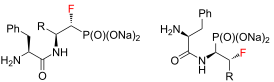
- , obtaining white powders with a yield of 99% in each case. The resulting sodium salts of phosphonic acids 9 and 11 were subjected to 1H, 13C, 19F, and 31P NMR spectroscopic analysis as well as mass spectrometry (MS) confirming their purity. The spectroscopic data of 9 and 11 are in agreement with the


Discrimination of β-cyclodextrin/hazelnut (Corylus avellana L.) oil/flavonoid glycoside and flavonolignan ternary complexes by Fourier-transform infrared spectroscopy coupled with principal component analysis
Beilstein J. Org. Chem. 2023, 19, 380–398, doi:10.3762/bjoc.19.30
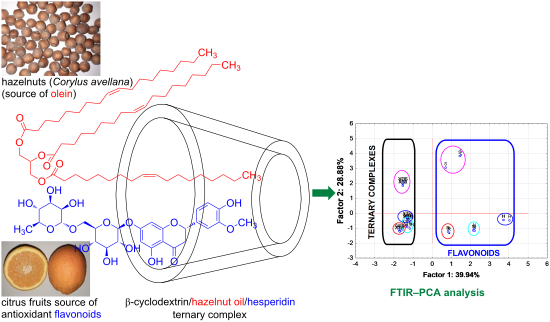
- the level of degradation compounds were determined by thermal methods (thermogravimetry-differential thermogravimetry, TG–DTG, and differential scanning calorimetry, DSC) and gas chromatography–mass spectrometry (GC–MS), respectively. The addition of sodium caseinate during the CD complexation of fish
- Sigma-Aldrich, St. Louis, MO, USA). Finally, 2-propanol (ACS reagent, Reag. Ph. Eur.) used for FTIR cleaning was obtained from Merck & Co., Inc., Rahway, NJ, USA. Gas chromatography–mass spectrometry (GC–MS) The FA profile of the hazelnut oil was determined by GC–MS, after derivatization to FAMEs



Recommendations for performing measurements of apparent equilibrium constants of enzyme-catalyzed reactions and for reporting the results of these measurements
Beilstein J. Org. Chem. 2023, 19, 303–316, doi:10.3762/bjoc.19.26
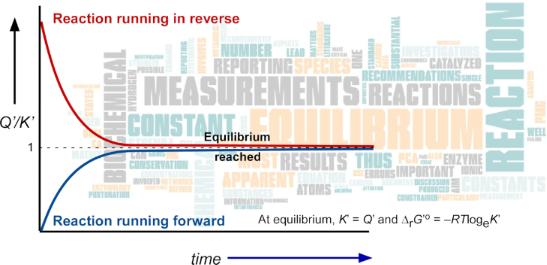
- reactions would eliminate the aforementioned possible systematic error. Thus, a check on mass balance on side reaction products is recommended. If possible, it is best to measure the concentrations of all reactants. The use of modern mass spectrometry should make this possible for many reactions. Method 3
- used occasionally. NMR and mass spectrometry can also be used in equilibrium investigations. In fact, essentially any analytical method might, in principle, be made to work. But, each analytical method has possible systematic errors associated with its use. For example, if a value of a molar decadic

Investigation of cationic ring-opening polymerization of 2-oxazolines in the “green” solvent dihydrolevoglucosenone
Beilstein J. Org. Chem. 2023, 19, 217–230, doi:10.3762/bjoc.19.21
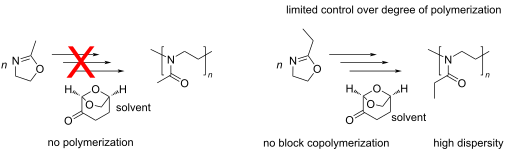
- . Size exclusion chromatography and matrix-assisted laser desorption/ionization time-of-flight mass spectrometry were performed to determine the molar mass of the resulting polymers. Our work shows clearly that the solvent is not inert under the conditions typically used for the cationic ring-opening
- polymerization process. Further work will be necessary to establish whether a living polymerization can be achieved by additional adjustments. Keywords: 2-alkyl-2-oxazolines; matrix-assisted laser desorption/ionization mass spectrometry; nuclear magnetic resonance; polymerization kinetics; Introduction
- obtained after precipitation from cold Et2O and lyophilization were analyzed by MALDI-TOF mass spectrometry (Figure 3, Figure 4, and Figures S9–S11 in Supporting Information File 1). The resulting MALDI-TOF mass spectra clearly confirm the presence of the desired polymer. The mass difference (Δm/z) between


Identification and determination of the absolute configuration of amorph-4-en-10β-ol, a cadinol-type sesquiterpene from the scent glands of the African reed frog Hyperolius cinnamomeoventris
Beilstein J. Org. Chem. 2023, 19, 167–175, doi:10.3762/bjoc.19.16
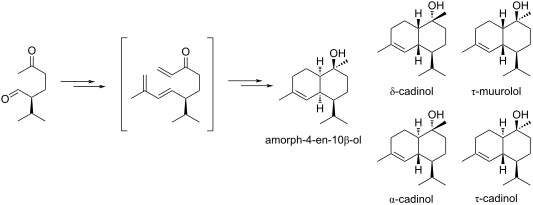
- sesquiterpene A, including spectral analysis and synthesis to determine its constitution and absolute configuration. Results and Discussion High-resolution mass spectrometry (HRMS) revealed both compounds A and C to be likely sesquiterpenes because of their molecular formula of C15H26O (m/z 222.1977, calcd for


Digyalipopeptide A, an antiparasitic cyclic peptide from the Ghanaian Bacillus sp. strain DE2B
Beilstein J. Org. Chem. 2022, 18, 1763–1771, doi:10.3762/bjoc.18.185
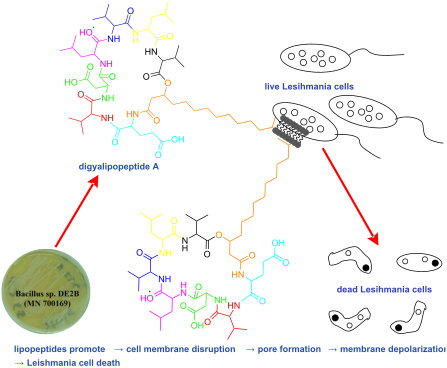
- data, mass spectrometry sequence tagging, advanced Marfey’s analysis, and the GNPS molecular networking we solved the full structure of digyalipopeptide A (1). We found that compound 1 is a member of a somewhat homologous series of peptides produced as a mixture by the strain containing the same amino
- to be C51H89N7O13 based on the high resolution electrospray ionization mass spectrometry (HRESIMSMS) at m/z 1008.6610 for [M + H]+ similar to the calculated value of m/z 1008.6591 with Δ = −1.9 ppm. The molecular formula indicated 11 degrees of unsaturation and the analyses of the 13C NMR spectrum
- and repeated the structure elucidation (see Supporting Information File 1, Table S2, and Figures S30–S37). The resultant structure confirmed the structural information initially obtained from the NMR data in DMSO-d6 solvent. High-resolution ESI mass spectrometry (HRESIMS) sequence tags Furthermore


Preparation of β-cyclodextrin-based dimers with selectively methylated rims and their use for solubilization of tetracene
Beilstein J. Org. Chem. 2022, 18, 1596–1606, doi:10.3762/bjoc.18.170
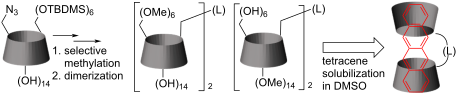
- . Despite this, we have found mass spectrometry and combined NMR analysis to be reliable methods to prove the structure of these compounds. On NMR spectra, we paid particular attention to the H1-region, where most of our products have several doublets, which referred to the signals from each hydrogen-1 in


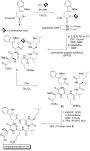
Solid-phase total synthesis and structural confirmation of antimicrobial longicatenamide A
Beilstein J. Org. Chem. 2022, 18, 1560–1566, doi:10.3762/bjoc.18.166
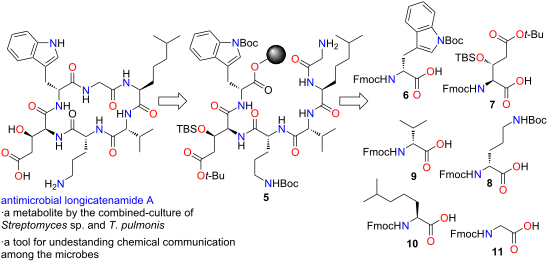
- . pulmonis TP-B0596 [8]. The planar structures were determined by analyzing two-dimensional (2D) nuclear magnetic resonance (NMR) spectra and mass spectrometry (MS) data, and the absolute configurations of their component amino acids were elucidated by using highly sensitive reagents that we recently



An alternative C–P cross-coupling route for the synthesis of novel V-shaped aryldiphosphonic acids
Beilstein J. Org. Chem. 2022, 18, 1518–1523, doi:10.3762/bjoc.18.160
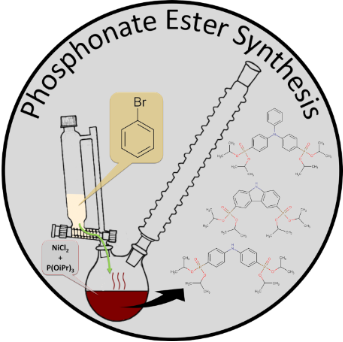
- mmol), 4.0 g (12.2 mmol) or 3.0 g (7.4 mmol) of substrate. Once the phosphonate esters had been successfully obtained and characterized by 1H, 31P, 13C NMR and mass spectrometry (see experimental section and Supporting Information File 1), they were then subjected to silylation and subsequent
- the viva voce examination. We thank the National Mass Spectrometry Facility (NMSF), Swansea University Medical School, for their support in obtaining the mass spectrometry data. Funding M.T. acknowledges funding from the European Union’s Horizon 2020 research and innovation program under the Marie