Search results
Search for "methylation" in Full Text gives 292 result(s) in Beilstein Journal of Organic Chemistry. Showing first 200.
Naphthalene diimide–amino acid conjugates as novel fluorimetric and CD probes for differentiation between ds-DNA and ds-RNA
Beilstein J. Org. Chem. 2020, 16, 2032–2045, doi:10.3762/bjoc.16.170
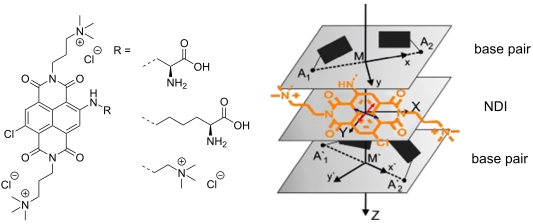
- nucleophilic substitution and then methylated. NDI 4 could be isolated in a yield of 60% after purification by column chromatography. In the last synthetic step, the molecule was triply methylated with iodomethane in acetonitrile at room temperature for three days. After complete methylation, purification by


The biomimetic synthesis of balsaminone A and ellagic acid via oxidative dimerization
Beilstein J. Org. Chem. 2020, 16, 2026–2031, doi:10.3762/bjoc.16.169
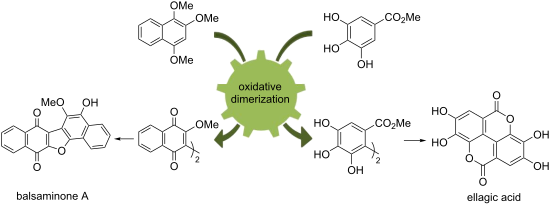
- synthesized through the oxidation of lawsone (6), in the presence of sodium persulfate, followed by methylation [25]. The cyclization of binaphthyl 16 was then attempted taking into consideration the photolytic cyclization of binaphthyls to form pentacyclic furan derivatives [8][18][22]. However, the
- by Alam et al. [23], starting from methyl gallate (15), it was anticipated that a more concise and efficient synthesis could be attained. Methyl gallate (15), which may be obtained commercially or from the methylation of gallic acid (10) [23], was subjected to the oxidants CAN, PIDA, FeCl3·6H2O, and


Stereoselective Biginelli-like reaction catalyzed by a chiral phosphoric acid bearing two hydroxy groups
Beilstein J. Org. Chem. 2020, 16, 1875–1880, doi:10.3762/bjoc.16.155
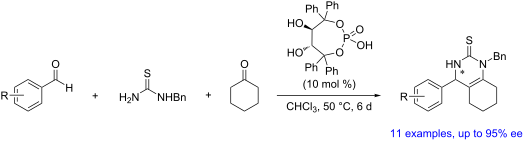
- followed by further modifications involving highly regioselective 1,4-cycloetherization [19], 2,3-spiroboration [20], 2,3-sulfitation [21], and 2,3-methylation [22] of 1. Therefore, the strategy for the catalyst’s preparation was based on the established regioselective 2,3-sulfitation reaction of 1 and


Clickable azide-functionalized bromoarylaldehydes – synthesis and photophysical characterization
Beilstein J. Org. Chem. 2020, 16, 1683–1692, doi:10.3762/bjoc.16.139
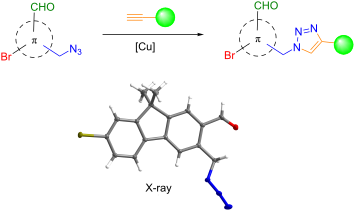
- diphenylphosphoryl azide (DPPA) in excellent yield. Finally, the oxazoline group, which acted as directing and protecting group, was removed in a three-step sequence of N-methylation, reduction of the in situ formed iminium ion and acidic hydrolysis. This afforded the azide-functionalized para-bromobenzaldehyde 3 in
- -methylbenzaldehyde). Bromofluorenecarbaldehyde 5 The synthetic route to azide-functionalized 7-bromofluorene-2-carbaldehyde 5 started from unfunctionalized fluorene. Double bromination to 14, followed by double methylation of the methylene bridge to 15 and a lithiation/formylation sequence afforded 7-bromofluorene-2
- Scheme 3). Derivatization of fluorenyl methanol 19 To gain deeper insights into the emission behavior of fluorenes bearing different functional groups in the side chains, fluorenylmethanol 19 was subjected to derivatization reactions (see Scheme 4). Deprotonation and subsequent methylation afforded



4-Hydroxy-3-methyl-2(1H)-quinolone, originally discovered from a Brassicaceae plant, produced by a soil bacterium of the genus Burkholderia sp.: determination of a preferred tautomer and antioxidant activity
Beilstein J. Org. Chem. 2020, 16, 1489–1494, doi:10.3762/bjoc.16.124
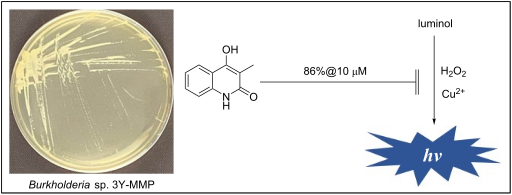
- methyltransferase [27]. Entry of malonate as the acylate precursor into this pathway is proposed to yield 3 (4 in the original literature) [29]. Thus, 1 is very likely to be biosynthesized by the same mechanism followed by additional methylation on C3. Compound 1 is reportedly inhibitory to Mycobacterium


One-pot synthesis of 1,3,5-triazine-2,4-dithione derivatives via three-component reactions
Beilstein J. Org. Chem. 2020, 16, 1447–1455, doi:10.3762/bjoc.16.120
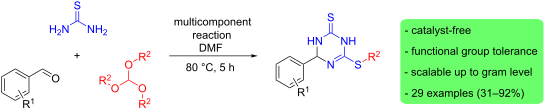
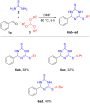
- involved in the methylation reaction mechanism (Scheme 5d). Based on previous literature reports and our experimental observations, a plausible mechanism for the synthesis of 6 is proposed in Scheme 6. Initially, the reversible nucleophilic attack of thiourea 2 on aldehyde 1 forms imine 8. Then, a




Recent synthesis of thietanes
Beilstein J. Org. Chem. 2020, 16, 1357–1410, doi:10.3762/bjoc.16.116
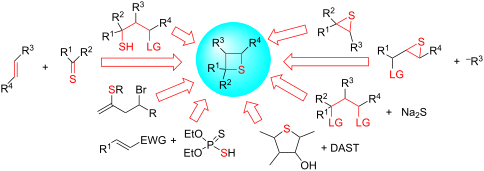
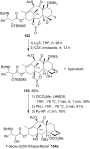
- converted to thiazolobenzimidazolium perchlorate 71 by methylation with dimethyl sulfate and addition of HClO4. After the treatment with KOH powder in MeCN and subsequent hydrolysis it gave thietanylbenzimidazolone 75. In the last step, the hydroxide ion first nucleophilically added to the iminium 71 to


















Copper-catalysed alkylation of heterocyclic acceptors with organometallic reagents
Beilstein J. Org. Chem. 2020, 16, 1006–1021, doi:10.3762/bjoc.16.90
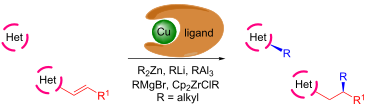
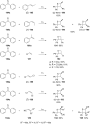
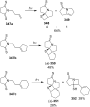
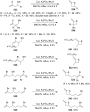
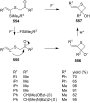
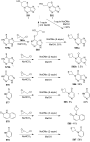
- the work of Feringa and co-workers, the methylation reaction using Me2Zn resulted in a low yield of 44% due to the difficult purification of the crude product [15]. However, the same authors showed later that the copper-catalysed ACA of Me3Al to Boc-protected 4-piperidone can be used as a key step in





Efficient synthesis of 3,6,13,16-tetrasubstituted-tetrabenzo[a,d,j,m]coronenes by selective C–H/C–O arylations of anthraquinone derivatives
Beilstein J. Org. Chem. 2020, 16, 544–550, doi:10.3762/bjoc.16.51
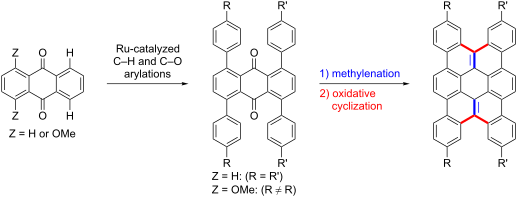
- examining various carbonyl methylenation methods, we found that the dimethylenation products 6 can be obtained in high yields through methylation of the carbonyl groups, followed by dehydration. Thus, the reaction of 4aa with methyllithium and subsequent treatment of the crude diol with NaH2PO2·H2O and NaI


Architecture and synthesis of P,N-heterocyclic phosphine ligands
Beilstein J. Org. Chem. 2020, 16, 362–383, doi:10.3762/bjoc.16.35
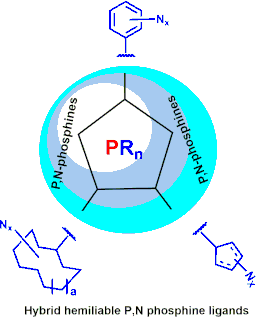
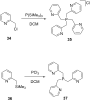
- chlorodiphenylphosphine, afforded 1-methyl-4,5-bis(diphenylphosphino)imidazole (85). Finally, N-methylation gave the imidazolium salt derivative 86 in good yield (65%). Preparation of N-heterocyclic phosphines via metal-catalyzed P–C/N bond formation There is limited availability of certain N-containing precursors and




Two antibacterial and PPARα/γ-agonistic unsaturated keto fatty acids from a coral-associated actinomycete of the genus Micrococcus
Beilstein J. Org. Chem. 2020, 16, 297–304, doi:10.3762/bjoc.16.29
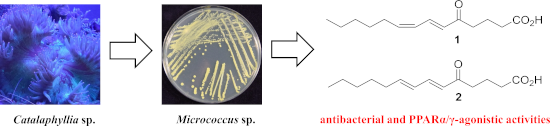
- ongoing screening program to discover new natural products from coral-associated bacteria, we have recently reported a catecholate siderophore, labrenzbactin, from an alphaproteobacterium Labrenzia [17] and an unsaturated fatty acid with unique methylation pattern from a gammaproteobacterium Microbulbifer


Synthesis of 4-(2-fluorophenyl)-7-methoxycoumarin: experimental and computational evidence for intramolecular and intermolecular C–F···H–C bonds
Beilstein J. Org. Chem. 2020, 16, 190–199, doi:10.3762/bjoc.16.22
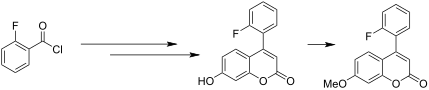
- used for the synthesis of coumarins [42][43]. Methyl 2-fluorobenzoylacetate (3) was reacted with resorcinol (4) in the presence of H2SO4 at 35 °C, and 7-hydroxy-4-(2-fluorophenyl)coumarin (5) [39][44] was obtained as a light yellow solid. The last step of the synthesis was the methylation of the



Potent hemithioindigo-based antimitotics photocontrol the microtubule cytoskeleton in cellulo
Beilstein J. Org. Chem. 2020, 16, 125–134, doi:10.3762/bjoc.16.14
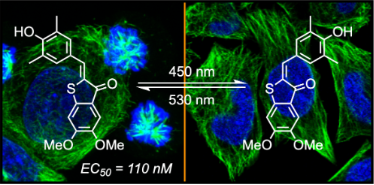
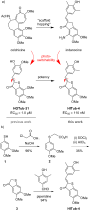
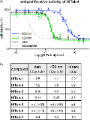
- unit of indanocine (which is attached in ortho-position to the key south ring methoxy group) by a hydroxy function, giving HITub-1 (Figure 2). When HITub-1 later proved less bioactive than we had wished, we explored steric and polarity changes to this south ring hydroxy group by methylation (HITub-2
- ), methylation and shifting on the ring (HITub-3), or even its removal (HITub-4). We additionally controlled against our design logic of north ring substituent shortening (HITub-5). We also controlled for the SAR observation that CDIs should not tolerate a non-polar central north ring substituent (HITub-6), but





A toolbox of molecular photoswitches to modulate the CXCR3 chemokine receptor with light
Beilstein J. Org. Chem. 2019, 15, 2509–2523, doi:10.3762/bjoc.15.244
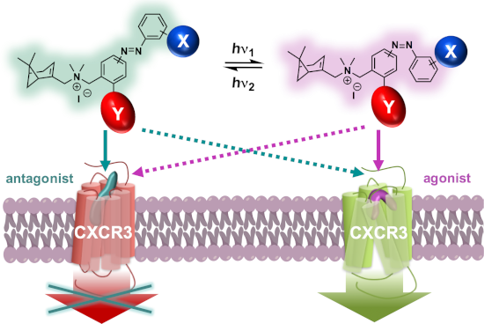
- , which were commercially available or prepared as described in our previous communication [7]. A final methylation of the tertiary amine 12a–e with MeI in DCM and subsequent precipitation with MTBE (methyl tert-butyl ether) gave 2a–e as orange powders with ≥99% trans-isomer in moderate to high yield
- performed following the strategies shown in Scheme 1 as disclosed for compounds 2a–e. Briefly, a reductive amination of 7 and 8b gave nitro compound 9b, which after reduction to 10b, coupling with nitroso compounds 11a–e to 13a–e and methylation gave iodide salts 3a–e with purities of trans-isomers ≥99% and
- was selectively reduced with DIBAL-H to benzyl alcohols 23f–h, which were oxidized with Dess–Martin periodinane to the corresponding benzaldehyde 26f–h. Reductive amination of 26f–h with 7 gave the tertiary amines 13f–h. Methylation with iodomethane and subsequent precipitation gave 3f–h as orange



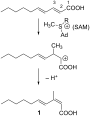
Isolation and biosynthesis of an unsaturated fatty acid with unusual methylation pattern from a coral-associated bacterium Microbulbifer sp.
Beilstein J. Org. Chem. 2019, 15, 2327–2332, doi:10.3762/bjoc.15.225
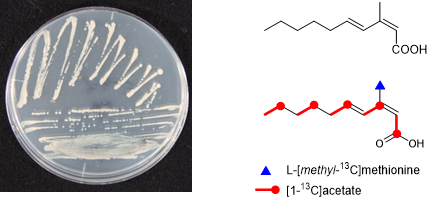
- analysis revealed that 1 is an unsaturated fatty acid in which a methyl group is located in an uncommon position as a natural product. Feeding experiments of 13C-labeled precursors clarified that ʟ-methionine-derived methylation takes place at the carbon which is derived from the carbonyl carbon of acetate
- . Compound 1 showed weak growth inhibition against Saccharomyces cerevisiae. Keywords: biosynthesis; fatty acid; marine bacteria; methylation; Microbulbifer; Introduction Marine microbial symbionts are currently recognized as a reservoir of new bioactive compounds [1]. The most well-studied host animal is
- biosynthetically unique: it has an uncommon methylation pattern in its carbon chain, derived from the C-methylation with ʟ-methionine at a carbon originated from a carbonyl carbon of acetate. In this paper, we report the isolation and structure determination of 1 and its biosynthetic origin proven by the feeding


Azologization and repurposing of a hetero-stilbene-based kinase inhibitor: towards the design of photoswitchable sirtuin inhibitors
Beilstein J. Org. Chem. 2019, 15, 2170–2183, doi:10.3762/bjoc.15.214
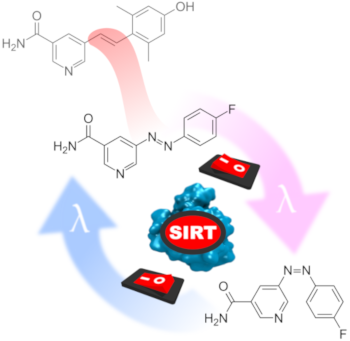
- methylation was intended to be examined. For UV–vis spectroscopy 50 µM solutions in 5% DMSO (v/v) in enzyme assay buffer were used, as this reflects the enzyme assay conditions. However, for LC-HRMS and NMR analysis, a higher concentration of 10 mM in methanol was necessary to receive reliable chromatograms


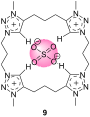
1,2,3-Triazolium macrocycles in supramolecular chemistry
Beilstein J. Org. Chem. 2019, 15, 2142–2155, doi:10.3762/bjoc.15.211
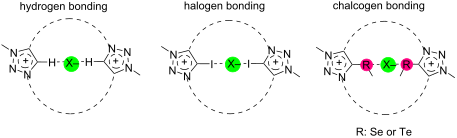
- macroring. A second strategy is the macrocyclization of an acyclic precursor containing pre-functionalized triazole by other ring closure methods such as Grubbs metathesis [25] and amidation reactions. The macrocyclization is normally followed by N-alkylation (often methylation) leading to the synthesis of
- component catalytic system composed of 16c before methylation and TBAI as reference catalysts. Optimization studies of the reaction conditions showed that the addition of CHCl3 and lowering of the reaction temperature (to 10 °C) considerably increased the enantioselectivity (s value of 4.1). An evaluation




1,2,3,4-Tetrahydro-1,4,5,8-tetraazaanthracene revisited: properties and structural evidence of aromaticity loss
Beilstein J. Org. Chem. 2019, 15, 2059–2068, doi:10.3762/bjoc.15.203
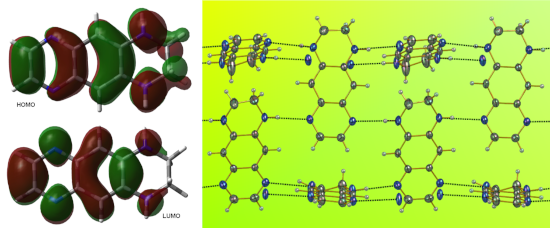
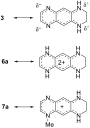
- (Figure 3). At the same time, the geometry optimized structure of 6a exhibits much greater torsion angles of 6.23 and 2.28 degrees. The X-ray structure analysis of 7a confirms that the methylation occurs at the N4 atom to form the respective cation (Figure 4). Examination of the bond distances revealed a




Attempted synthesis of a meta-metalated calix[4]arene
Beilstein J. Org. Chem. 2019, 15, 1996–2002, doi:10.3762/bjoc.15.195
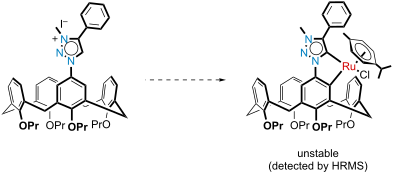
- Ullmann-type coupling to give aryl azide 2, which readily reacted with phenylacetylene in a copper-catalyzed Huisgen 1,3-dipolar cycloaddition to give 1,2,3-triazole 3 (Scheme 1). The formation of the ruthenacycle was then achieved using Albrecht’s method involving regioselective methylation of triazole 3
- cycloaddition between monoazidocalix[4]arene 7 and phenylacetylene, affording monotriazolocalix[4]arene 11 in 87% yield (Scheme 4). Methylation of the triazole was also achieved using excess iodomethane in a rather protracted reaction, to yield the calix[4]arene triazolium iodide salt 12 in effectively




A review of the total syntheses of triptolide
Beilstein J. Org. Chem. 2019, 15, 1984–1995, doi:10.3762/bjoc.15.194
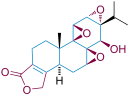
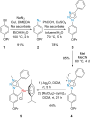
- form the A- and D-ring. The second one involves the reaction of the bicyclic intermediate 13 and 2-isopropyl-1,4-benzoquinone (14) to form the B- and C-ring. Finally, a regio- and stereoselective reduction, methylation and dehydration procedure and a selenylation, oxidation and elimination procedure
- triptolide (Figure 2, route I and Scheme 7) [74]. In this synthesis, commercially available 2-isopropylphenol (31) was used as starting material, protection of 31 with chloromethyl methyl ether (MOM), followed by ortho lithiation and methylation with iodomethane, provided intermediate 85, which was lithiated


N-(1-Phenylethyl)aziridine-2-carboxylate esters in the synthesis of biologically relevant compounds
Beilstein J. Org. Chem. 2019, 15, 1722–1757, doi:10.3762/bjoc.15.168

- )-28. After reductive aziridine ring opening N-Boc-norephedrine ((1R,2S)-29) was formed. The synthesis of (−)-ephedrine ((1R,2S)-31) required prior methylation of the nitrogen atom and for this reason it was performed on the benzyl ether (2S,1'R,1''R)-32 (Scheme 10) [48]. Its reaction with methyl
- -step aziridine ring opening was performed on the silylated alcohol (2S,1'R,1''S)-58 and included N-methylation and reaction with the protected phenylmagnesium bromide to form (2S,3R)-59. The last step opened the way to synthesis of tyroscherin analogues [58]. The alcohol (2S,3R)-60 was obtained after
- sources and are known as precursors to tropane alkaloids [59]. Together with (−)-pseudohygroline (2S,2'R)-62 they were synthesized from a common intermediate (2S,1'R)-63 prepared from the aldehyde (2R,1'R)-6 by Wittig olefination [60] and a regioselective C=C bond reduction (Scheme 17) [61]. N-Methylation


Synthesis and conformational preferences of short analogues of antifreeze glycopeptides (AFGP)
Beilstein J. Org. Chem. 2019, 15, 1581–1591, doi:10.3762/bjoc.15.162
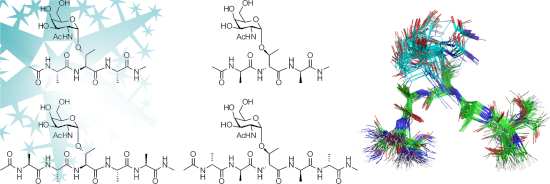
- with the aim of excluding pH-dependent charge effects and to simulate a protein environment. The introduction of a methyl amide function at the C-terminus of glycopeptides was carried out on solid phase. The N-methylation of the peptide terminus on solid support was an efficient four-step procedure
- . Moreover, performing this reaction on the resin has eliminated the need for product purification after each step. Modification of the resin was performed according to the protocol published by J. Chatterjee and co-workers [27]. This practical and straightforward strategy involved direct N-methylation of


Alkylation of lithiated dimethyl tartrate acetonide with unactivated alkyl halides and application to an asymmetric synthesis of the 2,8-dioxabicyclo[3.2.1]octane core of squalestatins/zaragozic acids
Beilstein J. Org. Chem. 2019, 15, 1194–1202, doi:10.3762/bjoc.15.116
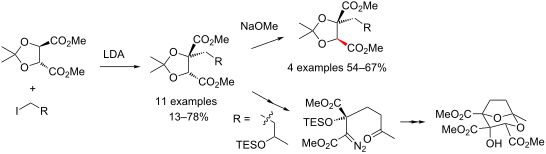
- diethyl tartrate reacted with LiHMDS in the presence of LiCl and MeI, to give exclusively the corresponding trans-monomethylated tartrate in 72% yield [42]; this compares with methylation of acetonide tartrate 7 by Seebach, which was reported to give an inseparable mixture of monomethylated product (86:14
- rationalisation of stereoselectivity [17][18][19]. Tartrate alkylation with a non-activated alkyl iodide. Alkylated tartrate to diazoester sequence. TES protection approach to the squalestatin core. Tartrate acetonide methylation. Tartrate alkylation with various alkyl halides. Rationalisation of dialkylation


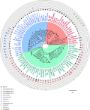
Phylogenomic analyses and distribution of terpene synthases among Streptomyces
Beilstein J. Org. Chem. 2019, 15, 1181–1193, doi:10.3762/bjoc.15.115
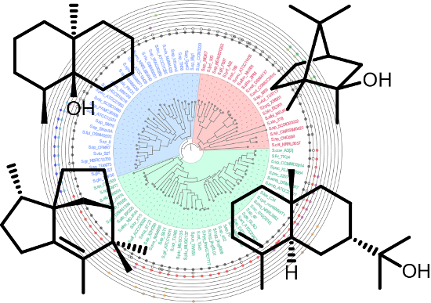
- substrate 2-methyl-GPP to form 2-MIB (2) [25][26]. An S-adenosylmethionine (SAM) dependent methyl transferase is responsible for the methylation of GPP into 2-methyl-GPP (14, Scheme 2). Its isomerisation to 15 allows for a cyclisation via the cationic intermediates B and C to 2. Genes encoding for SAM



Electrophilic oligodeoxynucleotide synthesis using dM-Dmoc for amino protection
Beilstein J. Org. Chem. 2019, 15, 1116–1128, doi:10.3762/bjoc.15.108
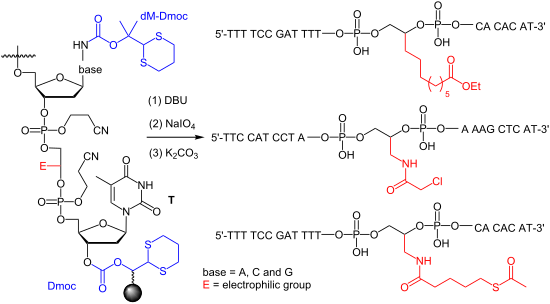
- instability of the adduct under acidic conditions during ODN synthesis [7]. In recent years, applications of ODNs have extended to emerging areas such as nanotechnology [8][9], antisense drug development [10][11][12], DNA damage and repair [13][14], DNA methylation and demethylation [15][16][17][18], DNA