Search results
Search for "orientation" in Full Text gives 531 result(s) in Beilstein Journal of Organic Chemistry. Showing first 200.
Regioselective synthesis of methyl 5-(N-Boc-cycloaminyl)-1,2-oxazole-4-carboxylates as new amino acid-like building blocks
Beilstein J. Org. Chem. 2022, 18, 102–109, doi:10.3762/bjoc.18.11
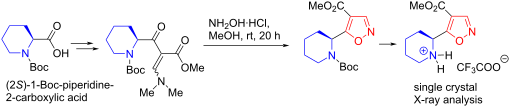
- their syn- and anti-orientation is present in the molecule [45][46]. Ley et al. demonstrated that selective chemical exchange NMR experiments are very useful in the determination of equilibrating rotamers, including chiral N-Boc amino acid derivatives, from non-equilibrating diastereomers [47]. Chemical


Effect of a twin-emitter design strategy on a previously reported thermally activated delayed fluorescence organic light-emitting diode
Beilstein J. Org. Chem. 2021, 17, 2894–2905, doi:10.3762/bjoc.17.197
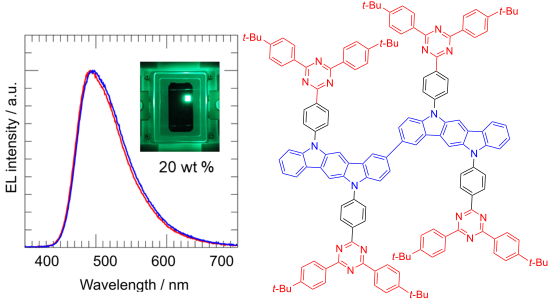
- %, with Commission Internationale de l’Éclairage coordinate of (0.22, 0.47), at 1 mA cm−2. Keywords: blue emitters; dimer; indolocarbazole; orientation; outcoupling effect; solution-processed OLEDs; TADF emitters; triazine; Introduction Organic thermally activated delayed fluorescence (TADF) materials
- ) of the device. A compound will emit light perpendicular to its transition dipole moment (TDM), quantified by the anisotropy factor, a. Controlling the orientation of the TDM to lie horizontally in the film (where 1 − a is the fraction of horizontally aligned TDMs) will lead to a maximized amount of
- nearly complete horizontal orientation in a wide number of host matrices. The best combination of properties was obtained in mCBP as a host, with the photoluminescence maximum wavelength, λPL of 479 nm, ΦPL of 70%, and a τd of 121.1 μs for the vacuum-deposited doped film. The anisotropy factor (a) in 5


Synthetic strategies toward 1,3-oxathiolane nucleoside analogues
Beilstein J. Org. Chem. 2021, 17, 2680–2715, doi:10.3762/bjoc.17.182
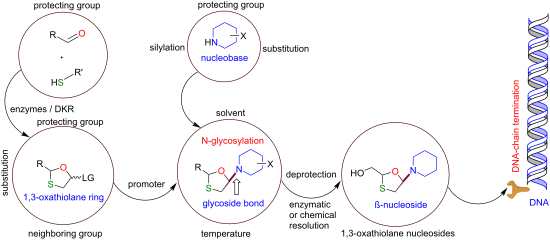
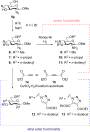
- -glycosidic bonds depends on the relative orientation of the anomeric carbon atom and the stereocenter furthest from position C-1 in the sugar. For example, when the nucleobase at C-1 is oriented cis to the hydroxymethyl group of the sugar at C-4, it is a β-glycosidic bond, whereas if it is orientated trans
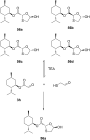
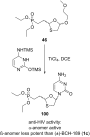
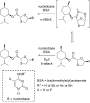
- stereoselective N-glycosylation. We hypothesize that because of the Lewis acid character, ZrCl4 could most likely form a precomplex with the sulfur atom of the oxathiolane ring, as in IV. The presence of the chiral ʟ-menthyl ester auxiliary function assists the complexation with ZrCl4 in a specific orientation








N-Sulfinylpyrrolidine-containing ureas and thioureas as bifunctional organocatalysts
Beilstein J. Org. Chem. 2021, 17, 2629–2641, doi:10.3762/bjoc.17.176
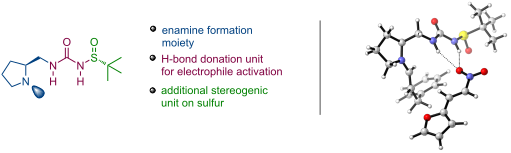
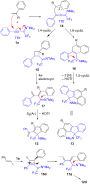
- nitroalkene. The nitroalkene is in synclinal orientation with respect to the enamine double bond. The alternative si-attack on the nitroalkene provides the minor diastereomer (S,R)-10. The enantiomeric products (R,R)- and (R,S)-10 could be formed via the Michael addition from the si-face of the enamine. In


Nomimicins B–D, new tetronate-class polyketides from a marine-derived actinomycete of the genus Actinomadura
Beilstein J. Org. Chem. 2021, 17, 2194–2202, doi:10.3762/bjoc.17.141
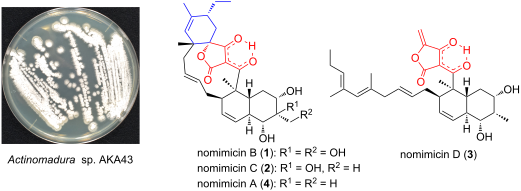
- , 1 has two additional hydroxy groups at C8 and C26. The axial orientation of the C26 hydroxymethyl group was supported by the ROESY correlations H26/H6ax and H26/H10 (Figure 3). The relative configuration of the remaining part was determined to be identical with 4 on the basis of ROESY correlations
- of a methyl group at C8 in an axial orientation (Figure S36, Supporting Information File 1). The remaining part of 2 was constructed based on COSY and HMBC analyses, and the relative configuration was established by NOESY/ROESY analyses (Table S2, Supporting Information File 1). The close similarity
- ). Correlations for H5/H7, H5/H9, and H7/H9 and large scalar couplings (3JHH > 10 Hz) for H5/H6ax, H6ax/H7, and H5/H9 established the trans-ring fusion of the dehydrodecalin moiety. The axial orientation of the methyl group at C8 was evidenced by NOESY correlations H26/H6ax and H26/H10. Correlations of H25/H10



Progress and challenges in the synthesis of sequence controlled polysaccharides
Beilstein J. Org. Chem. 2021, 17, 1981–2025, doi:10.3762/bjoc.17.129
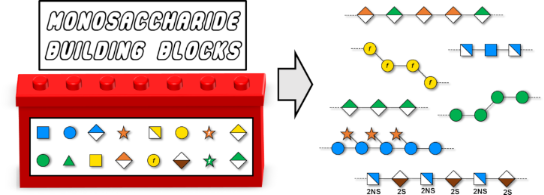
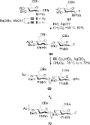
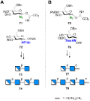
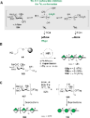
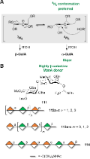
- orientation of the individual chains and in the number of hydrogen bonds in the crystalline structures [42][43]. In Cellulose I, the chains are oriented parallel, whereas in Cellulose II antiparallel. Natural cellulose is produced by cellulose synthases [44][45][46]. As the chain gets elongated, microfibrils








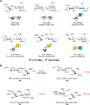


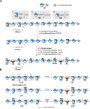


Double-headed nucleosides: Synthesis and applications
Beilstein J. Org. Chem. 2021, 17, 1392–1439, doi:10.3762/bjoc.17.98
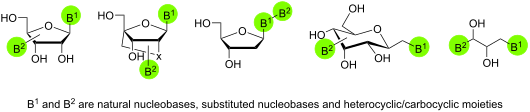
- desired nucleosides 59 and 60, respectively (Scheme 13) [47]. Vilarrasa and co-workers [47] also synthesized the double-headed nucleosides 63 and 64 with downwards orientation of the additional nucleosides at the C-3′ position. The synthesis was carried out via formation of anhydride 61. Azidation



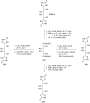


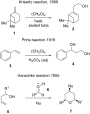
Prins cyclization-mediated stereoselective synthesis of tetrahydropyrans and dihydropyrans: an inspection of twenty years
Beilstein J. Org. Chem. 2021, 17, 932–963, doi:10.3762/bjoc.17.77
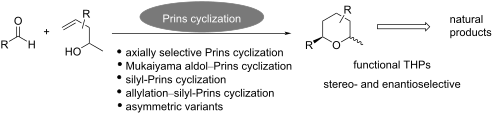
- ion intermediate in a stereoselective manner for THP ring formation as shown in Scheme 3. The outcome of exclusive cis-stereoselectivity in the Prins cyclization might be attributed to the most favorable conformation adopted by 12 with equatorial orientation of the 2,6-substituents (R1 and R2). Alder










Beyond ribose and phosphate: Selected nucleic acid modifications for structure–function investigations and therapeutic applications
Beilstein J. Org. Chem. 2021, 17, 908–931, doi:10.3762/bjoc.17.76
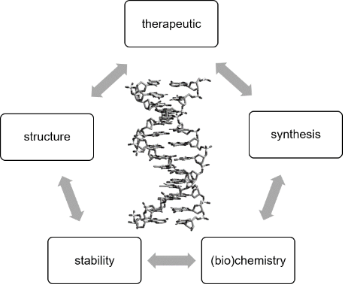
- adenosine [114]. This duplex adopted an overall A-form, with the sugars in the C3'-endo orientation and the two, well solvated methoxy groups, pointing into the relatively wide minor groove of the duplex. It was shown that as the number of carbons in the 2'-O-alkyl chain increased, so too did the
- -MOE modification was gained through the analysis of the crystal structure of a uniformly modified self-complementary 12-mer RNA duplex [58]. The duplex was observed to be in the A-form, with the sugar residues being in a C3'-endo conformation. The MOE substituents were in the gauche orientation, being
- ) conformation which allows for enhanced binding affinities towards both DNA and RNA targets [126][127]. Both 1H NMR [127][128][129] and crystallographic studies [126] have been used to demonstrate the Northern puckering of the sugar and the anti orientation of the nucleobase. The key synthetic step in the




DNA with zwitterionic and negatively charged phosphate modifications: Formation of DNA triplexes, duplexes and cell uptake studies
Beilstein J. Org. Chem. 2021, 17, 749–761, doi:10.3762/bjoc.17.65
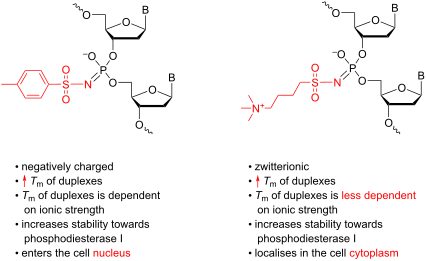
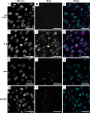
- is in blue, Watson–Crick base-paring is shown with dashed bonds, and Hoogsteen base-paring is shown with hashed bonds). The relative orientation of phosphodiester backbones is indicated by the symbols "" and "". Percentage of intact ONs after 120 min. A) N+ONs; B) Ts-ONs. Percentage of intact ONs was


α,γ-Dioxygenated amides via tandem Brook rearrangement/radical oxygenation reactions and their application to syntheses of γ-lactams
Beilstein J. Org. Chem. 2021, 17, 688–704, doi:10.3762/bjoc.17.58
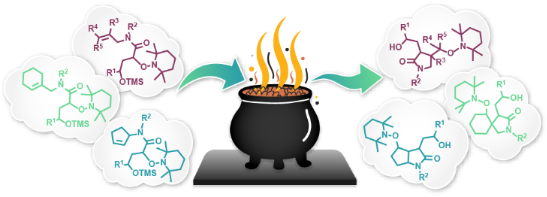
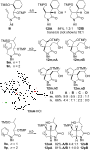
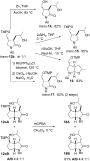
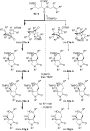
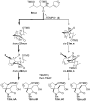
- lactams 12a–k in 66–93% yields. The thermal cyclization of α-(aminoxy)amide 9a provided two diastereomers of lactam 12a in a 2:1 trans/cis ratio (Table 3, entry 1). The N-allylic amides 9b–f provided lactams 12b–f as mixtures of four inseparable diastereomers in which those with trans orientation of the
- -cycloalkenylmethyl substituents provided spirolactams 12m,n in good yields, but with overall low diastereoselectivity. In the cyclization of 9m lactams 12mA and 12mB with trans orientation at C4 and the newly introduced aminoxy group at C5 were the major diastereomers, which results in an overall 4.5:1 trans/cis
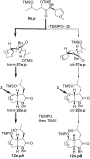
- the convex face of the bicyclic system. Amide 9p with an enantiomerically enriched cyclohex-2-enyl substituent cyclized with exclusive diastereoselectivity and only two diastereomers 12pA differing in the orientation of the hydroxy group were obtained in high yield. The radical coupling with TEMPO







The synthesis of chiral β-naphthyl-β-sulfanyl ketones via enantioselective sulfa-Michael reaction in the presence of a bifunctional cinchona/sulfonamide organocatalyst
Beilstein J. Org. Chem. 2021, 17, 494–503, doi:10.3762/bjoc.17.43
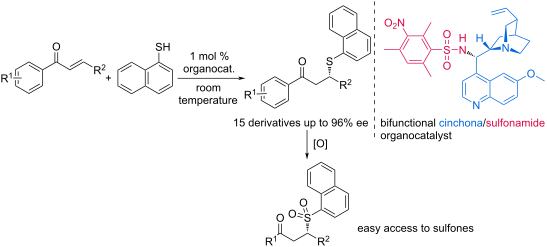
- Houk’s mode of activation was of lower energy than Wynberg’s activation mode, in which the activation and orientation of the nucleophile is done by the quinuclidine core [43]. According to our proposed model, the protonated quinuclidinium ion stabilizes the newly forming alkoxide on the electrophile


Insight into functionalized-macrocycles-guided supramolecular photocatalysis
Beilstein J. Org. Chem. 2021, 17, 139–155, doi:10.3762/bjoc.17.15
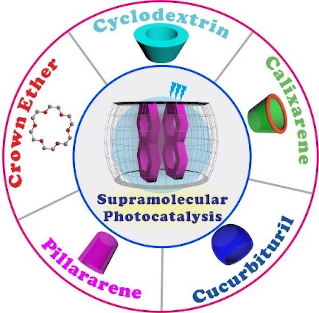
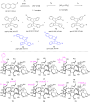
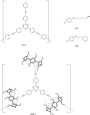
- satisfy the following criteria: i) a reaction-ready configuration, i.e., a substrate orientation in a configuration favorable for photochemical transformations, ii) in the supramolecular photocatalytic reaction (within the cavity), the quantum yield should be higher than both the unimolecular and






Control over size, shape, and photonics of self-assembled organic nanocrystals
Beilstein J. Org. Chem. 2021, 17, 42–51, doi:10.3762/bjoc.17.5
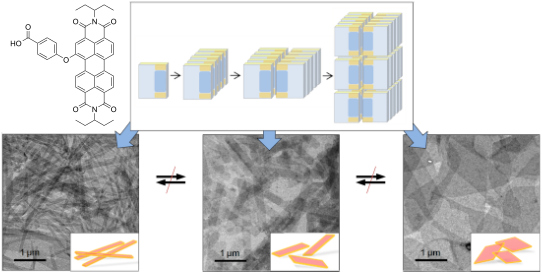
- inversion, red shift, and significant broadening in comparison to the molecularly dissolved system (Figure 1B). This is a typical spectral signature of ordered PDI systems and crystals [38][43][44][45][46][47] having a face-to-face orientation of the π-systems. Cryogenic transmission electron microscopy




Molecular basis for protein–protein interactions
Beilstein J. Org. Chem. 2021, 17, 1–10, doi:10.3762/bjoc.17.1
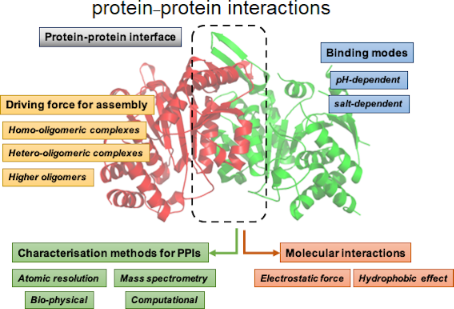
- . The orientation can be controlled by using, for example, an anti-affinity tag antibody [34] or an NTA surface [35]. Binding to the surface increases the density and the refractive index. Polarised light is irradiated on the surface at an angle around which SPR occurs (resonance angle). The binding


Chiral anion recognition using calix[4]arene-based ureido receptors in a 1,3-alternate conformation
Beilstein J. Org. Chem. 2020, 16, 2999–3007, doi:10.3762/bjoc.16.249
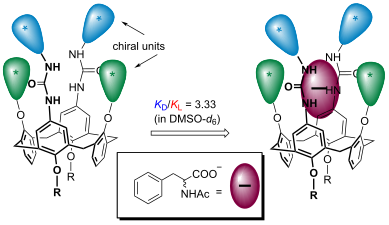
- same time, the carbonyl groups from the neighbouring receptor urea moieties interacted with the C–H bonds of the DMSO methyl group (the C=O···H–C distances were 2.486 and 2.452 Å), thus forming the calixarene dimer with a head-to-tail mutual orientation. The overall supramolecular binding motif was


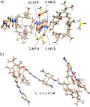


Ultrasound-assisted Strecker synthesis of novel 2-(hetero)aryl-2-(arylamino)acetonitrile derivatives
Beilstein J. Org. Chem. 2020, 16, 2929–2936, doi:10.3762/bjoc.16.242
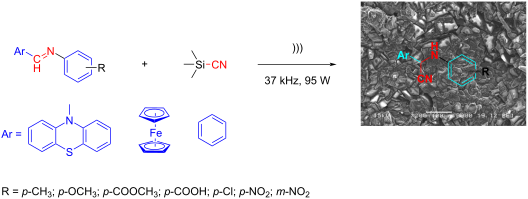
- enantiomers of the chiral molecular structure in an ordered 1:1 ratio in the elementary cell. The phenothiazine unit shows a quasi-equatorial orientation of the methyl group attached to the heterocyclic nitrogen atom and a folding angle of 143.3°, a value close to the typical folding angle for unsubstituted


Synthesis and investigation of quadruplex-DNA-binding, 9-O-substituted berberine derivatives
Beilstein J. Org. Chem. 2020, 16, 2795–2806, doi:10.3762/bjoc.16.230
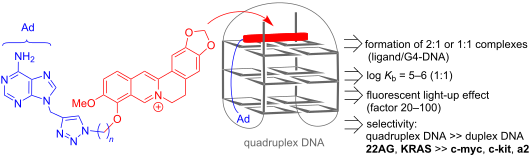
- between the sign and pattern of the ICD signal of a quadruplex ligand in orientation relative to the binding site, as is well established for duplex binders [63], is not available for quadruplex ligands, yet. With most quadruplex-bound berberine and berberine derivatives, including compounds 1a–d, ICD
- CD bands with increasing LDR. Insets: Plots of intensity of the ICD signal of the ligand–DNA mixtures (LDR 1.0; 361 nm) for 22AG (A) and a2 (B) versus the alkyl chain lengths n of 4a–e. The simplified structure of the complex between 1e3 and quadruplex DNA (left; [38]) and the proposed orientation of


Easy access to a carbohydrate-based template for stimuli-responsive surfactants
Beilstein J. Org. Chem. 2020, 16, 2788–2794, doi:10.3762/bjoc.16.229
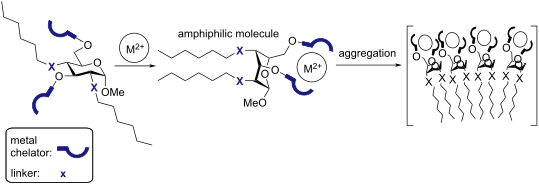
- -responsive lipids [11]. The three compounds reluctance to adopt a 1C4 conformation may be due to a steric clash between the methylene group at C5 and the anomeric substituent when both of these groups are in axial orientation. To further study the scope and versatility of building block 5, we decided to




Selective recognition of ATP by multivalent nano-assemblies of bisimidazolium amphiphiles through “turn-on” fluorescence response
Beilstein J. Org. Chem. 2020, 16, 2728–2738, doi:10.3762/bjoc.16.223
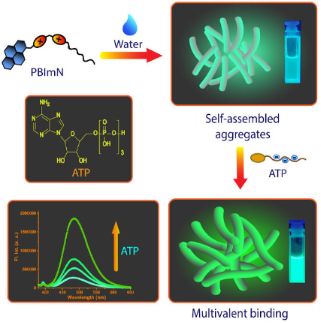
- the nucleotides occurring through multivalent electrostatic interactions in the cavity/cleft created by the spatial orientation of the imidazolium groups. We herein consider a self-assembly based approach in which amphiphilic monomers with bisimidazolium moieties are utilized to create multivalent


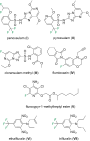
Conformational preferences of fluorine-containing agrochemicals and their implications for lipophilicity prediction
Beilstein J. Org. Chem. 2020, 16, 2469–2476, doi:10.3762/bjoc.16.200
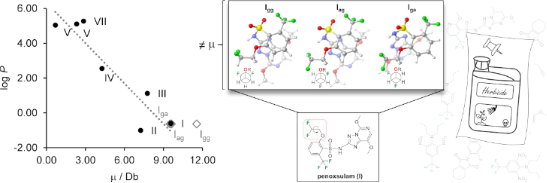
- soil sorption and bioconcentration of organic compounds. Since the C–F bond is the most polar in organic chemistry, the orientation of fluorine substituents originating from the rotation around C–C(F) bonds should affect the polarity and, consequently, the physicochemical and biological properties of
- stereochemical effects of fluorination, responsible for specific interactions and conformational preferences of several groups of compounds, have become increasingly well understood [12], their direct implication on physicochemical properties has not been fully investigated yet. The orientation of fluorine
- employed to describe lipophilicity. It has been previously established that the lipophilicity of a compound depends greatly on the overall molecular polarity [15], which is often expressed as the molecular dipole moment (μ). In turn, the orientation of polar bonds also influences the overall polarity of an



Computational tools for drawing, building and displaying carbohydrates: a visual guide
Beilstein J. Org. Chem. 2020, 16, 2448–2468, doi:10.3762/bjoc.16.199
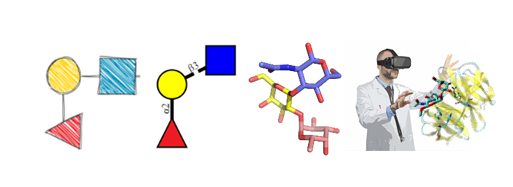
- adaptability. By allowing to modify colours, sizes, lengths/widths and turn some features on/off, a “sketcher” would allow maximum flexibility to depict carbohydrates in any desired or necessary form, size, orientation. However, this adaptability should become available without hampering the sketching effort
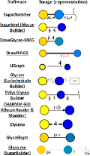
- file or as GlycoCT text. The interface also provides additional options to add, replace or delete each monosaccharide, modify the sizes of symbols and text fonts, and turn off the linkage annotations or change their orientation; all of which increases the usability of the software. The input structure
- monosaccharide by adding substituents and alterations. Free movement of the monosaccharides is allowed through movement and orientation buttons. GlycanBuilder offers multiple options for glycan notation which include CFG, CFG colour, UOXF, UOXF colour and text only. GlycanBuilder can also calculate the masses of


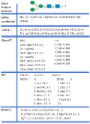
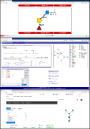






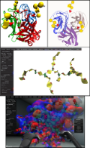
Chan–Evans–Lam N1-(het)arylation and N1-alkеnylation of 4-fluoroalkylpyrimidin-2(1H)-ones
Beilstein J. Org. Chem. 2020, 16, 2304–2313, doi:10.3762/bjoc.16.191

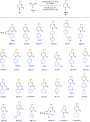
- analogous enamides [57], the facile [2 + 2] photocycloaddition process likely occurred due to favorable orientation of the interacting molecules and close contacts between alkene carbon atoms in the crystal structure. Consequently, the synthesis of product 5c was performed in darkness. N1-Styryl-substituted




Naphthalene diimide bis-guanidinio-carbonyl-pyrrole as a pH-switchable threading DNA intercalator
Beilstein J. Org. Chem. 2020, 16, 2201–2211, doi:10.3762/bjoc.16.185
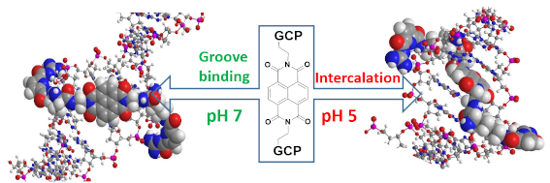
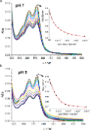
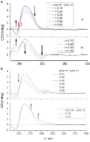
- binding constants (Table 2) support an intercalative binding of the naphthalene diimide unit in AT-DNAs [26][27], whereby the positive sign of the ICD band (380 nm) supports a perpendicular orientation of the longer axis of the naphthalene diimide in respect to the longer axes of DNA base pairs [13][14





Reactions of 3-aryl-1-(trifluoromethyl)prop-2-yn-1-iminium salts with 1,3-dienes and styrenes
Beilstein J. Org. Chem. 2020, 16, 2064–2072, doi:10.3762/bjoc.16.173
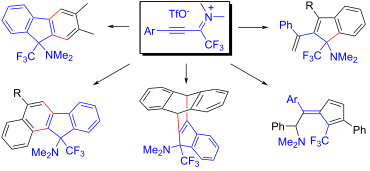
- with the expected orientation of the cycloaddition. Cis-annelated cyclobutene 18 (1H NMR: 3JH,H = 3.8 Hz for the angular protons) and the iminium-substituted primary cycloadduct are not expected to undergo a fast ring opening under moderate thermal conditions, because the orbital-symmetry-allowed