


Search results
Search for "tyrosine" in Full Text gives 152 result(s) in Beilstein Journal of Organic Chemistry.
Biosynthesis of oxygen and nitrogen-containing heterocycles in polyketides
Beilstein J. Org. Chem. 2016, 12, 1512–1550, doi:10.3762/bjoc.12.148
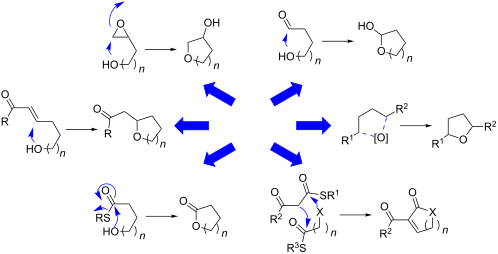
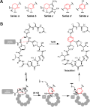
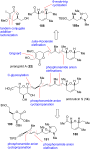
- consumption of hydrogen peroxide. It has been shown that the AS is substrate tolerant and accepts different hydroxylation patterns as well as glycosylations on the chalcone A and B rings [154]. However, the oxidative half-reaction only occurs with chalcones and not with other aryl substrates like L-tyrosine




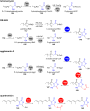


Cyclisation mechanisms in the biosynthesis of ribosomally synthesised and post-translationally modified peptides
Beilstein J. Org. Chem. 2016, 12, 1250–1268, doi:10.3762/bjoc.12.120
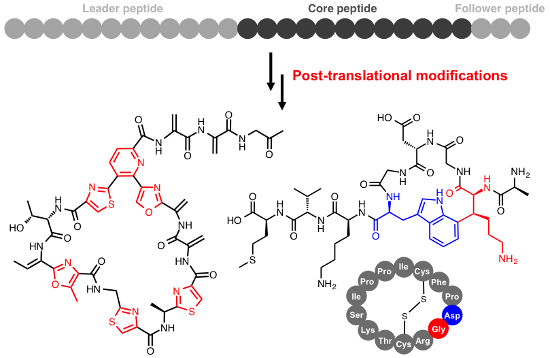
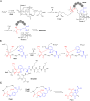
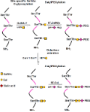
- tyrosine side chains [17] (Figure 10C). This proposal was confirmed by in vitro reconstitution of PqqE activity with PqqA [128]. Interestingly, PqqE activity is dependent on PqqD, a 10 kDa protein that functions as a chaperone that tightly binds PqqA [129]. This key interaction promotes an association with





Marine-derived myxobacteria of the suborder Nannocystineae: An underexplored source of structurally intriguing and biologically active metabolites
Beilstein J. Org. Chem. 2016, 12, 969–984, doi:10.3762/bjoc.12.96
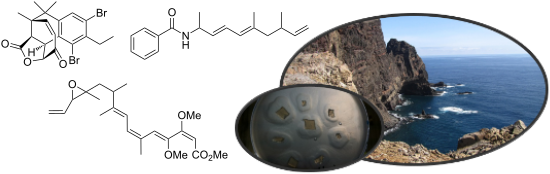
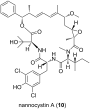
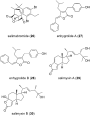
- miuraenamide A (31) the absolute configuration was determined. Marfey´s method was employed to show that L-alanine and N-methyl-D-tyrosine are present. Furthermore, after acid hydrolysis, methylation and application of modified Mosher´s method the absolute configuration at the oxygen bearing C-9 was deduced as






Gold-catalyzed direct alkynylation of tryptophan in peptides using TIPS-EBX
Beilstein J. Org. Chem. 2016, 12, 745–749, doi:10.3762/bjoc.12.74
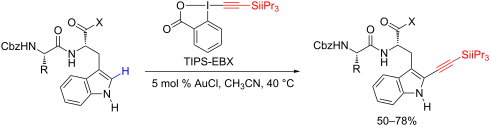
- under mild conditions and could be applied to peptides containing other nucleophilic and aromatic amino acids, such as serine, phenylalanine or tyrosine. Keywords: alkynes; C–H functionalization; gold catalysis; hypervalent iodine; peptides; Introduction Alkynes have always been important building
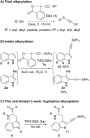
- ][15][16][17], whereas the more challenging modification of the electron-rich aromatic residues of tyrosine [18][19][20] and tryptophan [21][22][23][24][25][26][27][28][29][30][31] has been the focus of recent interest. As tryptophan is a rare amino acid, its functionalization is especially interesting
- other aromatic amino acids, such as phenylalanine or tyrosine (products 5c and 5d). Serine and proline containing dipeptides 5e and 5f could also be obtained in 64% and 53% yield, respectively. The reaction was therefore general for dipeptides bearing tryptophan at the C-terminus. On the other hand



Opportunities and challenges for direct C–H functionalization of piperazines
Beilstein J. Org. Chem. 2016, 12, 702–715, doi:10.3762/bjoc.12.70
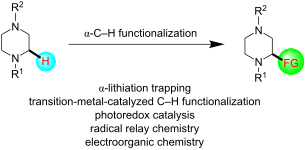
- marketed as Gleevec), a BCR-Abl tyrosine kinase inhibitor, is used in the treatment of multiple cancers with high response rate [3]. Sildenafil, sold as Viagra, is an important medication for treating erectile dysfunction as well as pulmonary arterial hypertension [4]. Indinavir, a protease inhibitor, is





(Thio)urea-mediated synthesis of functionalized six-membered rings with multiple chiral centers
Beilstein J. Org. Chem. 2016, 12, 462–495, doi:10.3762/bjoc.12.48
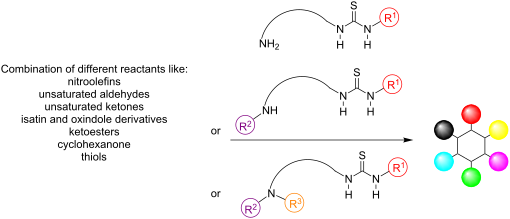
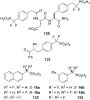
- dihydropyrans 122. They utilized the novel tyrosine-derived tertiary amine-thiourea 123 in quite low catalyst loading to catalyze the reaction between α-cyanoketones 118 and β,γ-unsaturated α-ketoesters 87 (Scheme 39) [59]. Initially a Michael reaction occurs, followed by a hemiacetalization reaction, providing
- (Scheme 42) [62]. The resulting (R)-3-nitro-2H-chromene was isolated in rather moderate optical purity. In 2010, a domino Michael hemiacetalization reaction was reported between cyclic 1,3-dicarbonyl compounds 134 and β-unsaturated α-ketoesters 87 utilizing a novel tyrosine-derived thiourea 135 (Scheme 43


Supramolecular structures based on regioisomers of cinnamyl-α-cyclodextrins – new media for capillary separation techniques
Beilstein J. Org. Chem. 2016, 12, 97–109, doi:10.3762/bjoc.12.11
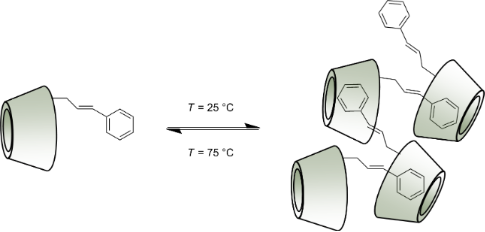
- capillary electrophoresis. The influence of the addition of 2-O-Cin-α-CD and 3-O-Cin-α-CD to the background electrolyte (BGE) and its impact on the effective mobilities of eighteen selected analytes were tested. Nine analytes were in the form of cations (aniline, antipyrine, L-histidine, DL-tyrosine, DL


A convergent, umpoled synthesis of 2-(1-amidoalkyl)pyridines
Beilstein J. Org. Chem. 2016, 12, 1–4, doi:10.3762/bjoc.12.1
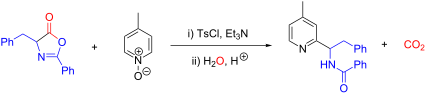
- 4 [5] and the threonine tyrosine kinase inhibitor CFI-401870 (5) [6]. The 2-(1-amidoalkyl)pyridines are almost always synthesised by acylation of the related 2-(1-aminoalkyl)pyridines, which can be prepared by reduction of ketimines derived from 2-acylpyridines [5] or 2-cyanopyridines [6], addition


Recent highlights in biosynthesis research using stable isotopes
Beilstein J. Org. Chem. 2015, 11, 2493–2508, doi:10.3762/bjoc.11.271
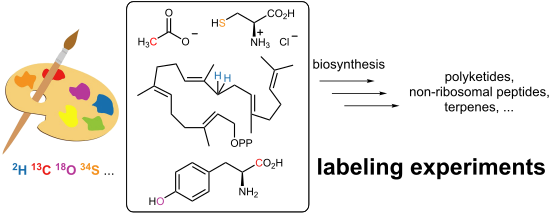
- promoter exchange [45] in the native host. Bioinformatics allowed for the annotation of several epimerization domains in the kollosin A NRPS, but it is hard to determine the actual activity of each of these functions. To overcome this problem, L-[2H8]valine, L-[2H10]leucin, L-[2H7,15N]tyrosine und L
- activity was shown for tyrosine and both threonine building blocks, marked by asterisks in Figure 4. Moreover, one leucine could be determined as D-configured according to incorporation in truncated fragments of 16. For the elucidation of the second stereocenter in both threonines, solid phase synthesis of
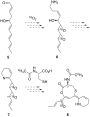
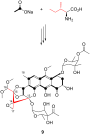
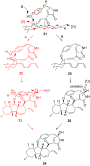
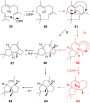
- scaffold. In this study, 13C- and 18O-labeled L-tyrosine was used to elucidate the biosynthesis of pyrrocidines such as pyrrocidine A (24, Scheme 6) bearing a [9]paracyclophane moiety in the fungus Acremonium zeae [52]. Compound 24 is the product of a mixed PKS and NRPS machinery containing nine acetate









An efficient synthesis of N-substituted 3-nitrothiophen-2-amines
Beilstein J. Org. Chem. 2015, 11, 1707–1712, doi:10.3762/bjoc.11.185
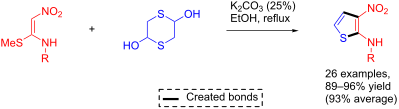
- medication for osteoporosis [6] (Figure 1). Other interesting properties identified in 2-aminothiophene derivatives include GluR6 antagonism [7], antiviral and antitumor activities [8][9][10], inhibition of p53-MDM2 interactions [11] and protein-tyrosine phosphatase 1B inhibition [12]. Furthermore, 2



Pyridinoacridine alkaloids of marine origin: NMR and MS spectral data, synthesis, biosynthesis and biological activity
Beilstein J. Org. Chem. 2015, 11, 1667–1699, doi:10.3762/bjoc.11.183
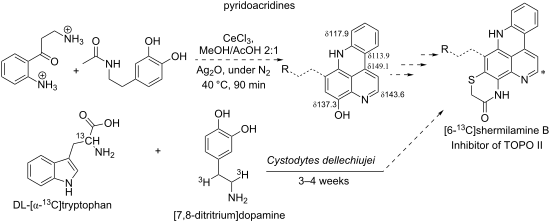
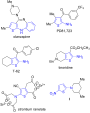
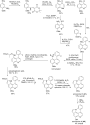
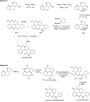
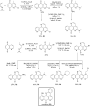
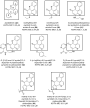
- [25][26] effects, have been exhibited by these marine-derived metabolites. Additionally, some of them also inhibited many enzymes including Na+/K+-ATPase [26], tyrosine kinase [27], phosphatidylinositol-specific phospholipase C [28], topoisomerase II [29], cathepsin L [30], protein tyrosine











The synthesis of active pharmaceutical ingredients (APIs) using continuous flow chemistry
Beilstein J. Org. Chem. 2015, 11, 1194–1219, doi:10.3762/bjoc.11.134
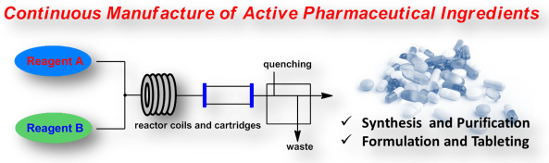
- collection of the crude reaction mixture an extractive work-up was performed off-line, in which ibuprofen was generated upon acidification from its sodium salt 17. Another high profile pharmaceutical for which a flow synthesis has been developed is imatinib (23), the API of Novartis’ tyrosine kinase


New depsidones and isoindolinones from the mangrove endophytic fungus Meyerozyma guilliermondii (HZ-Y2) isolated from the South China Sea
Beilstein J. Org. Chem. 2015, 11, 1187–1193, doi:10.3762/bjoc.11.133
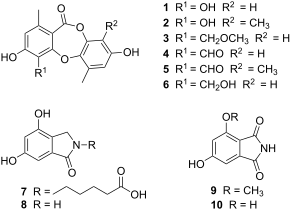
- 8 and 10 inhibited α-glucosidase with moderate to weak activities (Table 3). All isolated compounds were also evaluated for their inhibitory activity against Mycobacterium tuberculosis protein tyrosine phosphatase B (MptpB), of which were inactive (IC50 > 200 μM). Experimental General experimental


Are D-manno-configured Amadori products ligands of the bacterial lectin FimH?
Beilstein J. Org. Chem. 2015, 11, 1096–1104, doi:10.3762/bjoc.11.123

- aromatic moiety with the so-called tyrosine gate at the entrance of the carbohydrate binding site, formed by Y48 and Y137. Additional interactions exerted by extended aglycone portions can further improve ligand affinity for FimH; for example ortho-chloro substitution of the phenyl ring (compounds 2 and 5
- binding pocket of FimH, flexible ligand docking studies were performed using the program Glide [21][22][23][24] as implemented in the Schrödinger program package (cf. Supporting Information File 1). For these studies we utilized the so-called open gate crystal structure of FimH [10]. Here, the tyrosine
- (1). A somewhat weaker complexation is predicted for 9 and 10 than for 1. We had expected 10 to score clearly better than 9, owing to the possibility of π–π interactions between the phenyl substituent in 10 and the tyrosine gate at the entrance of the FimH CRD. However, this seems not to be the case


Adsorption mechanism and valency of catechol-functionalized hyperbranched polyglycerols
Beilstein J. Org. Chem. 2015, 11, 828–836, doi:10.3762/bjoc.11.92
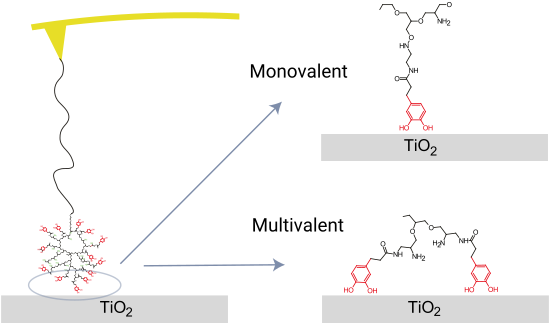
- -dihydroxyphenylalanine (DOPA, 15–30 mol %) [7][8]. DOPA is formed by posttranslational modification of tyrosine. Mefp 6 is rich in cystein (11 mol %) [6]. It has been found that the DOPA in Mefp 3 and 5 adheres to the surfaces, while the cystein-rich Mefp 6 controls the redox balance and can keep interfacial DOPA in a



Regulation of integrin and growth factor signaling in biomaterials for osteodifferentiation
Beilstein J. Org. Chem. 2015, 11, 773–783, doi:10.3762/bjoc.11.87
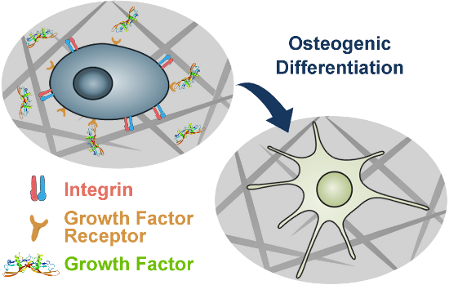
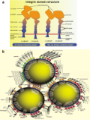
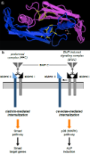
- have been mapped [7][35]. Generally, integrin–ligand interactions elicit the activation of focal adhesion kinase (FAK) and its downstream target-effectors [36]. FAK is a tyrosine kinase and embedded in focal adhesions, the distribution of which is responsive to cell adhesion and spreading. The integrin
- –ligand interactions also activate a series of other biochemical signals, such as the Ras-ERK cascade, and PI3-K and Rho family proteins [37]. Another tyrosine kinase Src also appears to be important for the regulation of focal adhesion organization [38]. Both FAK and Src play an important role to





Multivalent polyglycerol supported imidazolidin-4-one organocatalysts for enantioselective Friedel–Crafts alkylations
Beilstein J. Org. Chem. 2015, 11, 730–738, doi:10.3762/bjoc.11.83
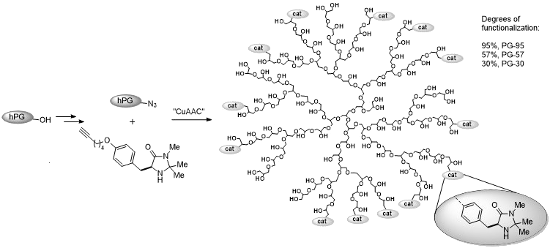
- described. A modified tyrosine-based imidazolidin-4-one was grafted to a soluble high-loading hyperbranched polyglycerol via a copper-catalyzed alkyne–azide cycloaddition (CuAAC) reaction and readily purified by dialysis. The efficiency of differently functionalized multivalent organocatalysts 4a–c was
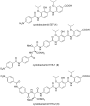
- -ones PG-95 (4a), PG-57 (4b) and PG-30 (4c) representing different degrees of functionalization: 95% (4a), 57% (4b) and 30% (4c), respectively. An (S)-tyrosine-derived imidazolidin-4-one 5 was anchored to the polymeric support through a CuAAC reaction. Following the same strategy, a monovalent analog 8
- structures were confirmed by 1H and 13C NMR spectroscopy and the functionalization degrees of 4a–c were determined by correlating the aromatic with the polyglycerol backbone protons (for details see Supporting Information File 1). The synthesis of modified imidazolidin-4-one 5 started with (S)-tyrosine


Chemoselective O-acylation of hydroxyamino acids and amino alcohols under acidic reaction conditions: History, scope and applications
Beilstein J. Org. Chem. 2015, 11, 446–468, doi:10.3762/bjoc.11.51
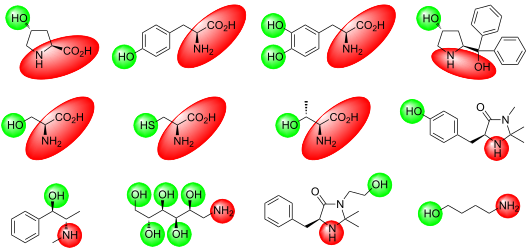
- derivatives of many amino acids often become annoyingly strenuous due to the necessity of employing protecting groups, on one or more of the amino acid functionalities, during the synthetic sequence. However, in the case of hydroxyamino acids such as hydroxyproline, serine, threonine, tyrosine and 3,4
- ; organocatalysis; serine; threonine; tyrosine; Introduction Any adept researcher within the field of organic synthetic chemistry will be mindful of the outstanding importance of amino acids as inexpensive chiral starting materials in the synthesis of a nearly infinite variety of synthetic end products. This
- the copper salt with hydrogen sulfide. This methodology has subsequently been employed in a more generic sense as a preparative method for synthesis of acrylic side-chain derivatives of amino acids such as lysine, ornithine, tyrosine and serine [6][7][8], having modified the original technique by




Natural phenolic metabolites with anti-angiogenic properties – a review from the chemical point of view
Beilstein J. Org. Chem. 2015, 11, 249–264, doi:10.3762/bjoc.11.28
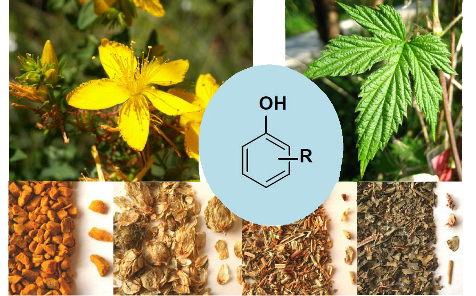
- , various therapies targeted at interfering with this process were investigated [6]. The favored clinical targets are the VEGF receptors, which have led to the development and approval of monoclonal antibodies against VEGF and VEGF receptor tyrosine kinase inhibitors [3]. However, the existing therapy
- neovascularization in vivo [39]. It was also shown that resveratrol directly inhibited bovine aorta endothelial cell proliferation, migration and tube formation in vitro [40]. Resveratrol has also been found to effectively interrupt VEGF-mediated tyrosine phosphorylation of vascular endothelial (VE)-cadherin and its
- show in vitro anti-angiogenic activity with respect to Pazopanib in both HUVEC tube formation assay and the rat thoracic aorta ring test. They inhibited protein kinase B/Akt and ABL tyrosine kinase in the micromolar range. The preliminary structure–activity relationship is summarized in Figure 5. The


Synthesis and biological evaluation of a novel MUC1 glycopeptide conjugate vaccine candidate comprising a 4’-deoxy-4’-fluoro-Thomsen–Friedenreich epitope
Beilstein J. Org. Chem. 2015, 11, 155–161, doi:10.3762/bjoc.11.15
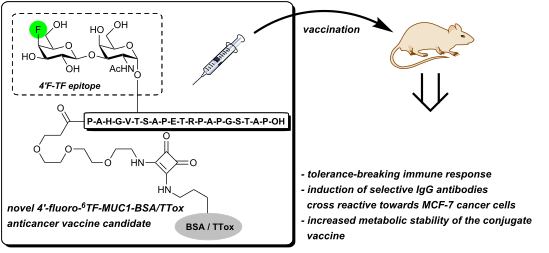
- , the search for novel anticancer therapies is of high current interest. For instance, promising approaches such as targeted therapy with small molecule tyrosine kinase inhibitors [1][2] and active cancer immune therapy have emerged [3][4] with the latter one being particularly attractive in terms of




Expanding the scope of cyclopropene reporters for the detection of metabolically engineered glycoproteins by Diels–Alder reactions
Beilstein J. Org. Chem. 2014, 10, 2235–2242, doi:10.3762/bjoc.10.232
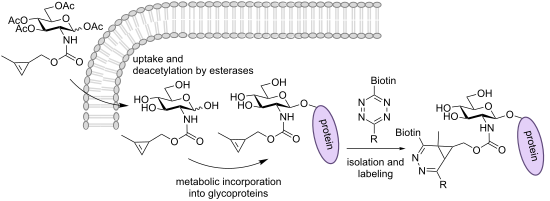
- ), sodium fluoride (20 mM) (Ser/Thr phosphatase inhibitor), sodium orthovandadate (0.3 mM) (inhibitor for ATPase, tyrosine and alkaline phosphatases), complete X protease inhibitor (Roche) (1X), NaCl (300 mM), TrisHCl pH 7.4 (25 mM), EDTA (5 mM) (to chelate metal ions and reduce oxidation damage), O-(2



Application of cyclic phosphonamide reagents in the total synthesis of natural products and biologically active molecules
Beilstein J. Org. Chem. 2014, 10, 1848–1877, doi:10.3762/bjoc.10.195
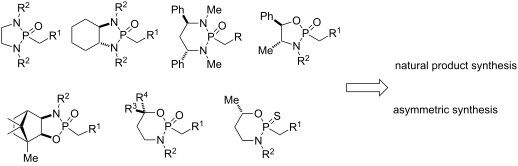
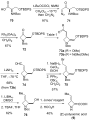
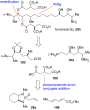
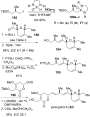
- inhibitors (2000) Protein tyrosine phosphatases (PTPs) are part of a superfamily of enzymes that catalyze protein tyrosine dephosphorylation. They are key regulators in various, crucial kinase-dependent signal transduction pathways and act to counterbalance the kinases. In particular, PTP1B has attracted












Carbohydrate PEGylation, an approach to improve pharmacological potency
Beilstein J. Org. Chem. 2014, 10, 1433–1444, doi:10.3762/bjoc.10.147
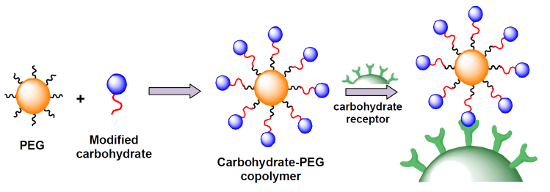
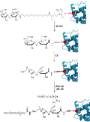
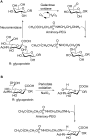
- by the use of a [3 + 2] cycloaddition reaction of an alkyne-bearing PEG reagent and an azide-functionalized tyrosine residue genetically incorporated on human superoxide dismutase-1 [30]. GlycoPEGylation, targeting carbohydrate sites, was conceived to produce a more homogeneous product with lower






Automated solid-phase peptide synthesis to obtain therapeutic peptides
Beilstein J. Org. Chem. 2014, 10, 1197–1212, doi:10.3762/bjoc.10.118

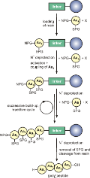
- substitutions by alanine [124] or hydrophobic/ionic monomers [125] can help to identify key binding sites of peptides and their individual receptors. In addition, it is possible to perform cyclization [126] or modification of NPY with unnatural amino acids [127]. Cabrele et al. reported on a tyrosine methyl




A catalyst-free multicomponent domino sequence for the diastereoselective synthesis of (E)-3-[2-arylcarbonyl-3-(arylamino)allyl]chromen-4-ones
Beilstein J. Org. Chem. 2014, 10, 459–465, doi:10.3762/bjoc.10.43
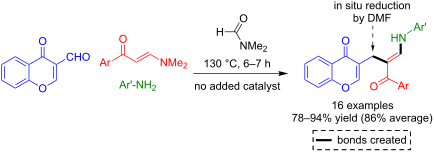
- ; Introduction Chromones are widely present in nature, especially in the plant kingdom, and a wide variety of useful biological properties are associated with them [1][2]. Chromone derivatives act as effective tyrosine and protein kinase C inhibitors [3] and display antifungal [4][5], antimycobacterial [6





