


Search results
Search for "Diels-Alder reaction" in Full Text gives 220 result(s) in Beilstein Journal of Organic Chemistry. Showing first 200.
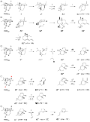
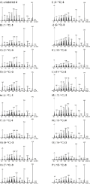
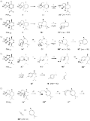
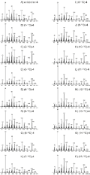
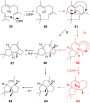
The EIMS fragmentation mechanisms of the sesquiterpenes corvol ethers A and B, epi-cubebol and isodauc-8-en-11-ol
Beilstein J. Org. Chem. 2016, 12, 1380–1394, doi:10.3762/bjoc.12.132
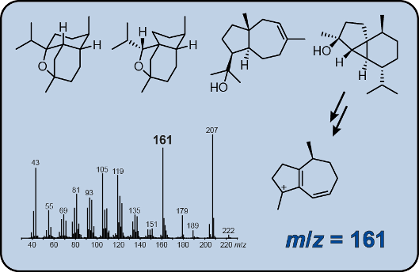
- ions produced via retro-Diels–Alder reaction [5][6]. Such diagnostic fragment ions are of high value to delineate structural proposals for unknown analytes from their mass spectra, but for unambiguous proof of the suggested structures a synthesis of reference material is essential. Back in the 1960s


Artificial Diels–Alderase based on the transmembrane protein FhuA
Beilstein J. Org. Chem. 2016, 12, 1314–1321, doi:10.3762/bjoc.12.124
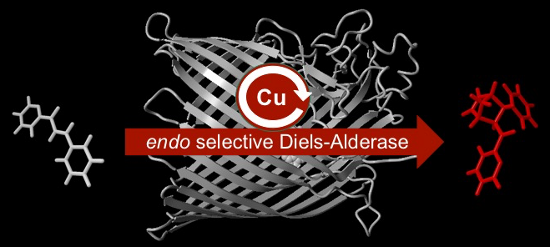
- . Copper(II) was attached by coordination to a terpyridyl ligand. The spacer length was varied in the back of the ligand framework. These biohybrid catalysts were shown to be active in the Diels–Alder reaction of a chalcone derivative with cyclopentadiene to preferentially give the endo product. Keywords
- reported. The Diels–Alder reaction is a powerful C–C bond formation reaction, widely used in organic chemistry, e.g., for the synthesis of natural products [28]. This reaction is known to be catalyzed by Lewis acids such as a Cu(II) complex [29]. Additionally, structurally defined catalysts are found to
- = 6301 Da). The signal of m/z = 6111 Da results from saponification of the ester and the maleimide moiety (calcd (M + H2O + Na+): m/z = 6111 Da, found: m/z = 6111 Da). We were unable to detect the copper ion in the MALDI–TOF–MS. The isolated biohybrid catalysts were tested in the Diels–Alder reaction of


Towards the total synthesis of keramaphidin B
Beilstein J. Org. Chem. 2016, 12, 1096–1100, doi:10.3762/bjoc.12.104
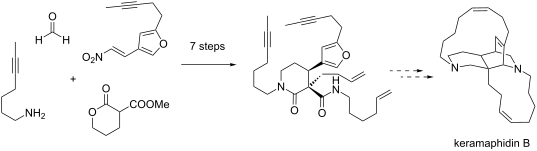
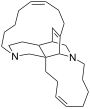
- Diels–Alder reaction as the late stage key step. After extensive purification, the authors were able to isolate keramaphidin B in just 0.3% yield, but nevertheless they provided evidence for the biosynthesis [3]. A year later, Baldwin et al. completed an alternative synthesis by performing an
- intermolecular Diels–Alder reaction and a double late stage RCM reaction to close the two macrocyclic rings; albeit the last stage afforded 1 in 1% yield after separation of various oligomeric byproducts [4]. Our group has had a long-standing research program dedicated towards the total syntheses of the



The synthesis of functionalized bridged polycycles via C–H bond insertion
Beilstein J. Org. Chem. 2016, 12, 985–999, doi:10.3762/bjoc.12.97
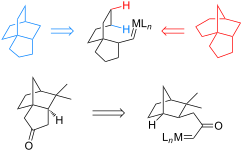
- alternative positions, or the synthetic strategy must be completely altered as the original method is not capable of synthesizing other isomers. For example, multiple research groups have shown that the bridged bicyclo[2.2.2]octane core 1 of maoecrystal V may be constructed via an intramolecular Diels–Alder
- reaction from a functionalized 1,3-diene like 2 (Figure 2) [13][14][15][16]. However, such a reaction would not be applicable to synthesize the bicyclo[3.2.1]octane core 3 of taxuspine C, as the mechanistic requirements in a Diels–Alder cycloaddition are not met with a 1,4-diene. Strategies that may access





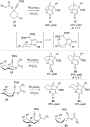


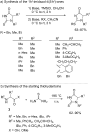
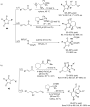
1H-Imidazol-4(5H)-ones and thiazol-4(5H)-ones as emerging pronucleophiles in asymmetric catalysis
Beilstein J. Org. Chem. 2016, 12, 918–936, doi:10.3762/bjoc.12.90
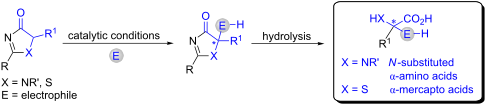
- two other examples (Scheme 7b), however, rhodanines of type 45 have been employed to produce spirocyclic compounds. The first case is an enamine/Michael tandem reaction to unsaturated enones [81] (Scheme 7b,1) and the second one is the Diels–Alder reaction with 2,4-dienals which occurs via trienamine






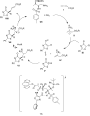


Indenopyrans – synthesis and photoluminescence properties
Beilstein J. Org. Chem. 2016, 12, 825–834, doi:10.3762/bjoc.12.81

- -fused pyran-3-ones and the results are reported herein. Results and Discussion For a long time, the Diels–Alder reaction of simple heterosubstituted 1,3-dienes has been considered a standard procedure to prepare highly functionalized ring systems [28]. Taking advantage of diazalactones to act as the



The aminoindanol core as a key scaffold in bifunctional organocatalysts
Beilstein J. Org. Chem. 2016, 12, 505–523, doi:10.3762/bjoc.12.50
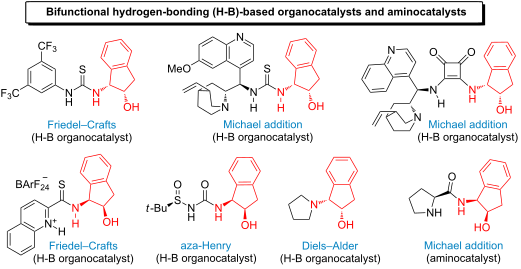
- hydroxy group) exhibited poor enantioselectivity. These effects may suggest and support the bifunctional role played by the catalyst (Figure 8). Diels–Alder reaction An important contribution in the construction of highly substituted carbocyclic compounds was disclosed by Tan’s group in 2009. In this work
- . Diels–Alder reaction catalyzed by the aminoindanol derivative ent-41. Asymmetric Michael addition of 3-pentanone (55a) to the nitroalkenes 3 through aminocatalysis. Substrate scope extension for the asymmetric Michael addition between the ketones 55 and the nitroalkenes 3 through aminocatalysis. A


(Thio)urea-mediated synthesis of functionalized six-membered rings with multiple chiral centers
Beilstein J. Org. Chem. 2016, 12, 462–495, doi:10.3762/bjoc.12.48
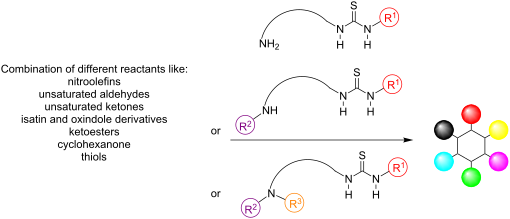
- a variety of transformations. Utilizing the primary amine-thiourea 18, an enantioselective formal aza-Diels–Alder reaction of enones 12 and 13 was reported. In this reaction the enamine is formed from the side of the methyl ketone, which is conjugated with the pre-existing double bond, providing the
- electron-rich diene, which reacts with substituted dihydroisoquinoline 14 and dihydro-β-carboline 15, so that cyclohexanone derivatives 16 and 17 will be produced, respectively (Scheme 8) [19]. Also, a cyclic derivative of 13 was utilized (not shown). This aza-Diels–Alder reaction provides products with
- , the product was obtained in 78–90% yield and 15–92% ee. Finally, β-substituted α,β-unsaturated aldehydes were completely unreactive. In 2012, a proposed inverse electron-demand Diels–Alder reaction was reported by Wang and co-workers, obtaining enantiopure products 33, starting from diene 31 and


Recent advances in N-heterocyclic carbene (NHC)-catalysed benzoin reactions
Beilstein J. Org. Chem. 2016, 12, 444–461, doi:10.3762/bjoc.12.47
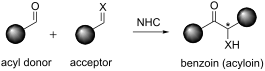
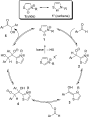
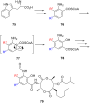
- Melchiorre. A Diels–Alder reaction of indole-2,3-quinodimethane 76 (generated from 77 and the prolinol catalyst 78 ) with the enone 79 affords a tetrahydrocarbazole derivative 80. The NHC precatalyst 22 then promotes an intramolecular cross-benzoin condensation of the keto-aldehyde to furnish the tetracyclic
- cycloadducts 84 in good yield and enantioselectivity [63]. Initially, the trienamine 85 is generated by the action of prolinol catalyst 86 on the dienal 82. The former (85) then undergoes a Diels–Alder reaction with the sulfonylimine 83 to generate the keto-aldehyde 87. Finally, the NHC precatalyst 22 mediates



A quadruple cascade protocol for the one-pot synthesis of fully-substituted hexahydroisoindolinones from simple substrates
Beilstein J. Org. Chem. 2016, 12, 253–259, doi:10.3762/bjoc.12.27
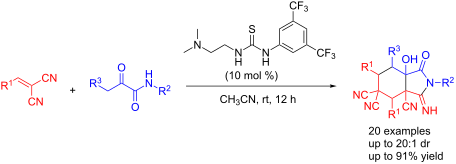
- isoindolinones have been developed. The first method was the synthesis of 3-substituted isoindolinones from the corresponding N-methylmaleimides by the Diels–Alder reaction with 1,3-butadiene followed by hydrogenation. The second and the third methods employed the corresponding dicarboxylic acids and the


Simple activation by acid of latent Ru-NHC-based metathesis initiators bearing 8-quinolinolate co-ligands
Beilstein J. Org. Chem. 2016, 12, 154–165, doi:10.3762/bjoc.12.17
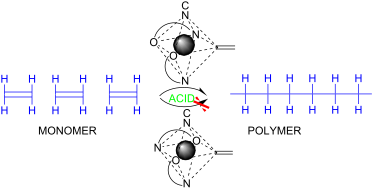
- –Alder reaction at higher temperatures, causing a mass loss during polymerization if higher temperatures are applied for the reaction. To test the pre-catalysts regarding their performance in the polymerization of DCPD, two different test-reactions were carried out: a) STA measurements to gain an insight
- polymerization of DCPD is their outstanding solubility in the neat monomer. The main challenge of the polymerization of DCPD is to guarantee an adequate mixing of monomer and catalyst to obtain a homogenous reaction mixture and moreover a steady polymerization product. DCPD is also prone to undergo a retro-Diels


Synthesis and reactivity of aliphatic sulfur pentafluorides from substituted (pentafluorosulfanyl)benzenes
Beilstein J. Org. Chem. 2016, 12, 110–116, doi:10.3762/bjoc.12.12
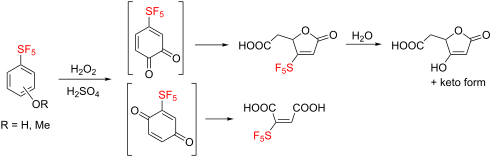
- : dearomatization; decarboxylation; Diels–Alder reaction; oxidation; pentafluorosulfanyl group; Introduction Fluorinated organic compounds have been one of the foci of chemical industry for the last several decades. The unique properties of fluorine atoms and fluorinated groups have been exploited in various
- oxidation of aromatics. Benzoquinone 12 is a solid material with good stability at −20 °C. Several standard reactions were investigated. Reduction to hydroquinone 15 using catalytic palladium was very efficient (Scheme 5). The Diels–Alder reaction with cyclopentadiene proceeded in a high yield at ambient
- acid 4, some basic chemical reactivity studies were performed. When heated to about 125 °C under reduced pressure, acid 4 eliminated water to afford anhydride 20 in a good yield. Anhydride 20 underwent a Diels–Alder reaction with cyclopentadiene at ambient temperature to provide a mixture of endo and


Iron complexes of tetramine ligands catalyse allylic hydroxyamination via a nitroso–ene mechanism
Beilstein J. Org. Chem. 2015, 11, 2549–2556, doi:10.3762/bjoc.11.275

- ][24][25][26]. Several new developments in the related hetero-Diels–Alder reaction of acylnitroso species have also been reported recently [27][28][29][30]. These methodologies generally involve in situ generation of the acylnitroso species, achieved using a variety of oxidants including vanadium- [28
- trapped by hetero-Diels–Alder reaction with dienes [54][55], and detection of the resulting hetero-Diels–Alder adducts used to confirm the formation of free nitroso intermediates. Thus trapping experiments were conducted using isoprene (14) to investigate the formation of a nitroso species in this
- reaction. First a 1:1 mixture of cycloadducts 15 and 16 was synthesised as a reference sample using Kirby’s conditions for the hetero-Diels–Alder reaction (N-Boc-hydroxylamine (8), isoprene (14) and sodium periodate, Scheme 3a) [54][55]. Then isoprene (14) and N-Boc-hydroxylamine (8) were combined in


Synthesis of Xenia diterpenoids and related metabolites isolated from marine organisms
Beilstein J. Org. Chem. 2015, 11, 2521–2539, doi:10.3762/bjoc.11.273
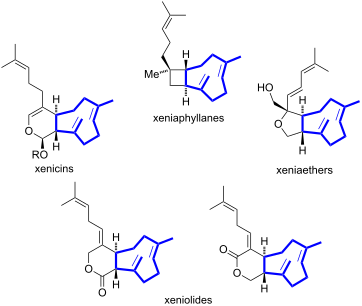
- ester 75. Finally, an elegant cascade reaction involving an aldol condensation, followed by a hetereo Diels–Alder reaction closed the last three rings and antheliolide A (18) was obtained in 74% yield. In summary, the successful total synthesis of antheliolide A proceeded in 25 linear steps with an







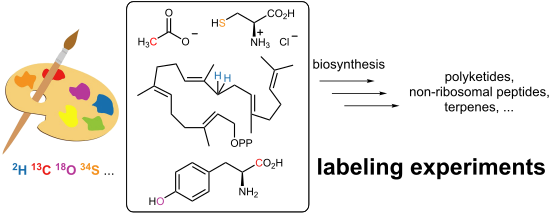
Recent highlights in biosynthesis research using stable isotopes
Beilstein J. Org. Chem. 2015, 11, 2493–2508, doi:10.3762/bjoc.11.271
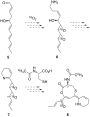
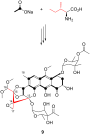
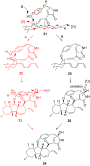
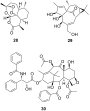
- group. The energy barrier of a distorted benzene ring would then be compensated by rearomatization in 23 after intramolecular Diels–Alder reaction. This mechanism would involve a 1,2-hydride shift and a nucleophilic attack of water at C-2’. The second discussed route starts with a nucleophilic attack of
- the phenolic oxygen at C-6 to close the macrocycle in 25. In this mechanism, the aromaticity of the phenol ring remains untouched. Intramolecular Diels–Alder reaction gives rise to the hexacyclic system 26, which would then be oxidized to pyrrocidine A (24) at C-2’. In contrast to route A, the









Synthesis of constrained analogues of tryptophan
Beilstein J. Org. Chem. 2015, 11, 1997–2006, doi:10.3762/bjoc.11.216
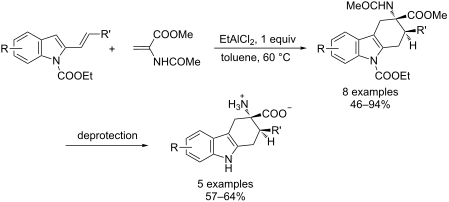
- yields, referred to the starting compounds 3/3', are reported in Scheme 2. No epimerisation reactions occurred during the hydrolytic processes as demonstrated via 2D NMR experiments (COSY, HSQC). Discussion In the Diels–Alder reaction of vinylindoles 1 with methyl 2-acetamidoacrylate (2), among tested
- and 4). It is well known that reaction rates and selectivity in Diels–Alder reactions are affected by solvents [30][31][32]. In particular, polarity and hydrogen bond donor ability of the solvent can impact the diastereoisomeric ratios in a Diels–Alder reaction. Such an effect seems negligible in the


Stereochemistry of ring-opening/cross metathesis reactions of exo- and endo-7-oxabicyclo[2.2.1]hept-5-ene-2-carbonitriles with allyl alcohol and allyl acetate
Beilstein J. Org. Chem. 2015, 11, 1893–1901, doi:10.3762/bjoc.11.204

- reaction may be improved by using neat reaction conditions. Experimental A mixture of 1 and 2 (1.6:1) is readily available from the Diels–Alder reaction of furan and acrylonitrile according to the literature procedure [28][29]. The pure isomers were isolated by column chromatography. The 1H and 13C NMR


The simple production of nonsymmetric quaterpyridines through Kröhnke pyridine synthesis
Beilstein J. Org. Chem. 2015, 11, 1781–1785, doi:10.3762/bjoc.11.193

- pathway [17][20], or a Suzuki–Miyaura cross-coupling reaction [21]. The use of triazine derivatives (which under particular conditions undergo an inverse Diels–Alder reaction) can also produce oligopyridines [22]. On the other hand, there are a limited number of reports dealing with the preparation of


Pyridinoacridine alkaloids of marine origin: NMR and MS spectral data, synthesis, biosynthesis and biological activity
Beilstein J. Org. Chem. 2015, 11, 1667–1699, doi:10.3762/bjoc.11.183
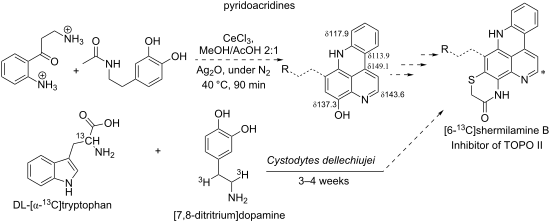
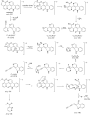
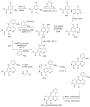
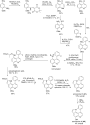
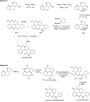
- quick and economically accessible for developing styelsamine B (4) and cystodytin J (1) bioactive derivatives. Synthesis of sebastianine A (38) and its regioisomer (39) The first step of the sebastianine A synthesis was based on a Diels–Alder reaction between a pyrroloquinone used as the dienophile and







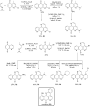


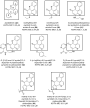


Tandem cross enyne metathesis (CEYM)–intramolecular Diels–Alder reaction (IMDAR). An easy entry to linear bicyclic scaffolds
Beilstein J. Org. Chem. 2015, 11, 1486–1493, doi:10.3762/bjoc.11.161
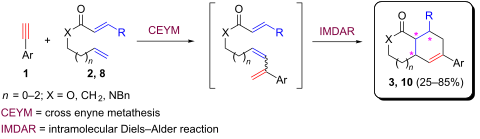
- Abstract A new tandem cross enyne metathesis (CEYM)–intramolecular Diels–Alder reaction (IMDAR) has been carried out. It involves conjugated ketones, esters or amides bearing a remote olefin and aromatic alkynes as the starting materials. The overall process enables the preparation of a small family of
- bonds, expanding the utility of metathesis processes beyond olefinic substrates [8][9]. The inherent tandem nature of enyne metathesis is particularly appealing in its combination with the Diels–Alder reaction. This tandem protocol is well suited for addressing a broad range of complex molecules since
- the presence of second generation Hoveyda–Grubbs catalyst [23]. After the initial formation of the trienic unit, an intramolecular Diels–Alder reaction (IMDAR) rendered highly functionalized bicyclic derivatives in a very efficient manner. More recently, a multicomponent CEYM–intermolecular hetero


Thermal properties of ruthenium alkylidene-polymerized dicyclopentadiene
Beilstein J. Org. Chem. 2015, 11, 1469–1474, doi:10.3762/bjoc.11.159
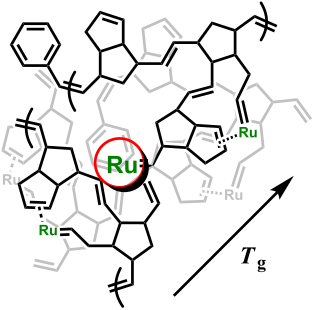
- equilibrates and further ruthenium–alkylidene metathesis with neighboring double bonds may be promoted. Alternatively, thermal decomposition of DCPD (or larger oligomers) to cyclopentadiene (CPD) by a retro-Diels–Alder reaction could also explain the observed phenomenon, although unlikely at room temperature


Consequences of the electronic tuning of latent ruthenium-based olefin metathesis catalysts on their reactivity
Beilstein J. Org. Chem. 2015, 11, 1458–1468, doi:10.3762/bjoc.11.158
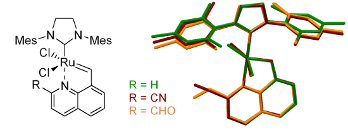
- substrate-induced activation is impeded. This effect turned out to be of particular relevance when the polymerization of dicyclopentadiene is regarded. Because polymerizations were carried out in open reaction vessels, the retro-Diels–Alder reaction of 23, releasing volatile cyclopentadiene, is a concurring




Cross-metathesis reaction of α- and β-vinyl C-glycosides with alkenes
Beilstein J. Org. Chem. 2015, 11, 1392–1397, doi:10.3762/bjoc.11.150

- cycloaddition reactions providing indolyl C-deoxyribosides [6], cyclopentenonyl C-deoxyribosides [9], triazolyl C-deoxyribosides [12][13], carboranyl C-deoxyribosides [7], and finally also in Diels–Alder reaction with cyclobutadiene derivatives [8]. Despite of the above mentioned transformations, alkynyl C


Design and synthesis of polycyclic sulfones via Diels–Alder reaction and ring-rearrangement metathesis as key steps
Beilstein J. Org. Chem. 2015, 11, 1373–1378, doi:10.3762/bjoc.11.148
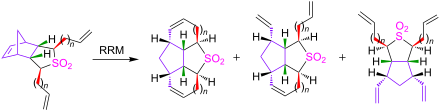
- Sambasivarao Kotha Rama Gunta Department of Chemistry, Indian Institute of Technology-Bombay, Powai, Mumbai-400 076, India, Fax: 022-25767152 10.3762/bjoc.11.148 Abstract Here, we describe a new and simple synthetic strategy to various polycyclic sulfones via Diels–Alder reaction and ring
- . Interestingly the starting materials used are simple and commercially available. Keywords: alkenylation; Diels–Alder reaction; ring-rearrangement metathesis; sulfones; Introduction Sulfones [1][2][3][4][5][6][7][8] are popular building blocks [9] in organic synthesis. They are also useful substrates for the


Spiro annulation of cage polycycles via Grignard reaction and ring-closing metathesis as key steps
Beilstein J. Org. Chem. 2015, 11, 1367–1372, doi:10.3762/bjoc.11.147
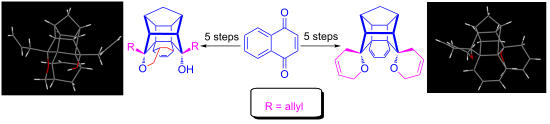
- ) reaction as a key step is described. The structures of three new cage compounds 7, 12 and 18 were confirmed by single crystal X-ray diffraction studies. Keywords: cage molecules; Diels–Alder reaction; Grignard reaction; ring-closing metathesis; spirocycles; Introduction Design and synthesis of
- Claisen rearrangement and RCM as key steps [21][30]. Here, we have prepared the cage dione 10 by the known route involving two atom-economic protocols such as Diels–Alder reaction and [2 + 2] photocycloaddition [42][43][44][45] (Scheme 1). Later, the hexacyclic cage dione 10 was subjected to a Grignard





