


Search results
Search for "amino acid" in Full Text gives 575 result(s) in Beilstein Journal of Organic Chemistry. Showing first 200.
1,2-Naphthoquinone-4-sulfonic acid salts in organic synthesis
Beilstein J. Org. Chem. 2022, 18, 53–69, doi:10.3762/bjoc.18.5
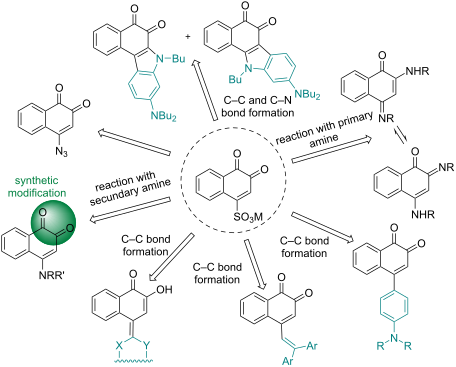
- signal. Danielson [48] found some errors in Folin’s analytical method and optimized it for better amino acid determination. Martin and Fieser [49] described an optimized method, analogous to Folin’s procedures, with temperature control, producing β-NQSNH4 16 and β-NQSK 20 in high yields (Scheme 2). It is


Peptide stapling by late-stage Suzuki–Miyaura cross-coupling
Beilstein J. Org. Chem. 2022, 18, 1–12, doi:10.3762/bjoc.18.1
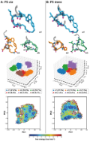
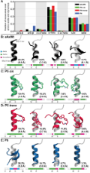
- given next to the respective structure and backbone-atoms root mean square deviation with respect to the active conformation are indicated in parenthesis. RMSD reported and used in clustering were calculated from Pro to Met only. A schematic representation of the secondary structure of each amino acid
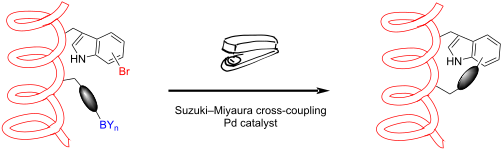
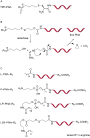
- , 1 h. In panel C), amino acids in R1 and R2 are with protecting groups and R2 is resin-bound (Rink amide resin); R3 = 4-phenylboronic acid or (4-ethylphenyl)boronic acid (P2–P5). Supporting Information Supporting Information File 6: Details on the amino acid and peptide synthesis, analytical data of


First total synthesis of hoshinoamide A
Beilstein J. Org. Chem. 2021, 17, 2924–2931, doi:10.3762/bjoc.17.201
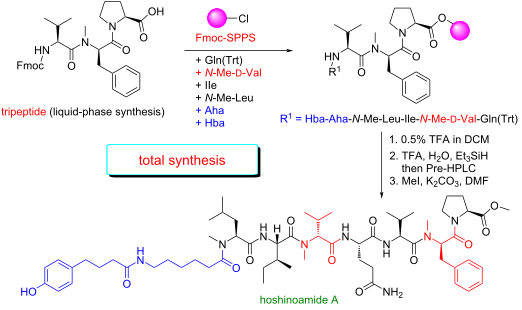
- -Val5 and N-Me-ᴅ/ʟ-Phe2. Hoshinoamide C includes two N-methyl amino acids: N-Me-ᴅ-Phe2 and N-Me-ᴅ-IIe5. The C-terminal Pro is functionalized as methyl ester, while the N-terminal polypeptide is linked to the long alkyl chain amino acid Aha8/Ana8/Ama7 and p-hydroxybenzoic acid Hba9/Hba8. Hoshinoamides



GlycoBioinformatics
Beilstein J. Org. Chem. 2021, 17, 2726–2728, doi:10.3762/bjoc.17.184
- ” is described by the National Human Genome Research Institute as “a subdiscipline of biology and computer science concerned with the acquisition, storage, analysis, and dissemination of biological data, most often DNA and amino acid sequences”. Adding the prefix “glyco-“ is about placing genomic and
Synthetic strategies toward 1,3-oxathiolane nucleoside analogues
Beilstein J. Org. Chem. 2021, 17, 2680–2715, doi:10.3762/bjoc.17.182
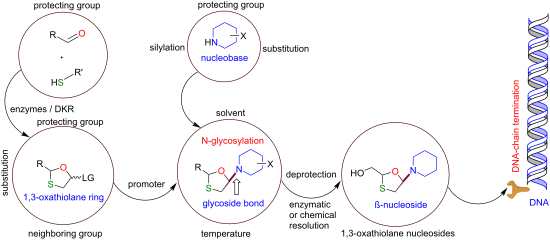
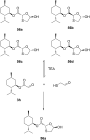
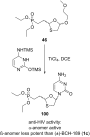
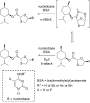
- ; separation of racemic nucleosides; stereoselectivity; Introduction Among all the biomolecules in an organism, nucleic acids, namely DNA and RNA, have the unique role of storing the genetic code – the nucleotide sequence that specifies the amino acid sequence of proteins that is essential for life on Earth








Recent advances in organocatalytic asymmetric aza-Michael reactions of amines and amides
Beilstein J. Org. Chem. 2021, 17, 2585–2610, doi:10.3762/bjoc.17.173
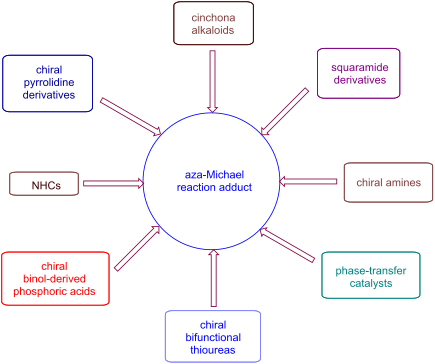
- different approach for the use of cinchona-based organocatalysts. Instead of using the cinchona derivative alone, they employed a mixture of cinchona derivative and amino acid such as ᴅ-proline, termed as the modularly designed organocatalyst (MDO) for the synthesis of bridged tetrahydroisoquinoline


Visible-light-mediated copper photocatalysis for organic syntheses
Beilstein J. Org. Chem. 2021, 17, 2520–2542, doi:10.3762/bjoc.17.169
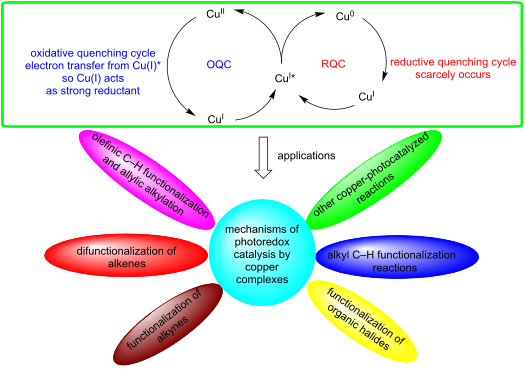
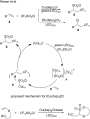
- aliphatic alcohols. In 2015, Ackermann’s group [88] disclosed the visible light-induced copper-catalyzed arylation of azoles. In this case, the mechanistic studies revealed that amino acid ligands accelerated the cross-coupling (Scheme 22). In 2020, a visible-light-induced copper-catalyzed arylation of C






Synthesis of new substituted 7,12-dihydro-6,12-methanodibenzo[c,f]azocine-5-carboxylic acids containing a tetracyclic tetrahydroisoquinoline core structure
Beilstein J. Org. Chem. 2021, 17, 2511–2519, doi:10.3762/bjoc.17.168
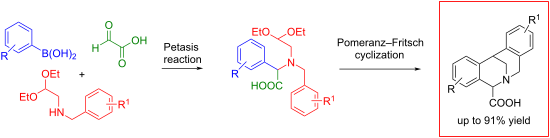
- amino acid 6a was subjected to cyclization under different acidic conditions (not shown). The reaction of 6a with TiCl4 or SnCl4 in DCM at 0 °C led exclusively to the formation of 7a (TLC analysis) but it was impossible to isolate the product in a pure form probably due to the formation of the salts
- the desired dihydromethanodibenzoazocine-5-carboxylic acids 7d and 7e with yields of 52% and 96%, respectively. The overall yields of 7d and 7e (from 3d and 3e, respectively) were 37% and 91%, respectively (Scheme 5). In the case of the amino acid 6f, containing insufficiently activated phenyl rings
- with 67% yield (53% overall yield from 3d), while the reaction carried out in 20% HCl led to a mixture of products, among which 7f was not detected (Scheme 5). It should be also mentioned that the amino acid 6g with a benzyloxy-substituted aromatic ring, obtained in the Petasis reaction of boronic acid


Targeting active site residues and structural anchoring positions in terpene synthases
Beilstein J. Org. Chem. 2021, 17, 2441–2449, doi:10.3762/bjoc.17.161
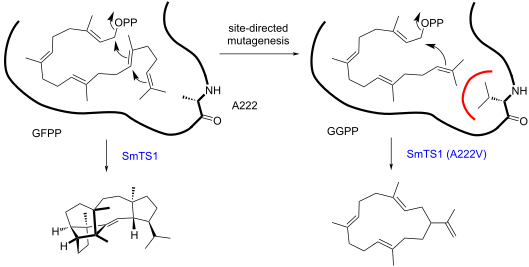
- motifs (Supporting Information File 1, Figure S1), composed in bacterial and non-plant eukaryotic enzymes of the aspartate-rich motif DDXX(X)D around position 90 and the NSE triad ND(L,I,V)XSXX(K,R)E near position 230 (Figure 1) [9]. While the amino acid sequences of two TPSs can strongly deviate, their
- of the pyrophosphate sensor) that form a salt bridge between helices F and G [12][13][14], and a conserved Asn (8 or 9 residues downstream of the NSE triad) that hydrogen bridges to the Mg2+ binding Glu of the NSE triad [15]. In between these structural anchors the amino acid sequences of terpene
- ). SmTS1 has a low amino acid sequence identity to other characterised TPSs, with the diterpene synthase (DTS) for cattleyene from Streptomyces cattleya as one of the closest relatives, which shows only 29% sequence identity [17]. We have recently shown that the sum of the calculated van der Waals volumina


Isolation and characterization of new phenolic siderophores with antimicrobial properties from Pseudomonas sp. UIAU-6B
Beilstein J. Org. Chem. 2021, 17, 2390–2398, doi:10.3762/bjoc.17.156
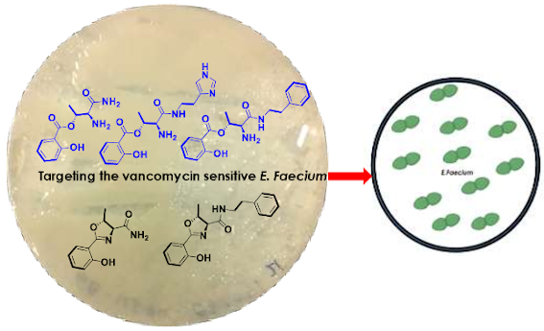
- compounds 1–5 was assigned as ʟ, based on the derivatization with Marfey’s reagent of compound 2 and 4 hydrolysates, which represented the two distinctive structural scaffolds and chemical shifts followed by HPLC analysis of the derivatized amino acid residuals in the hydrolysate and threonine standards
- standard amino acid derivatized solution (5 µL), compound 2 (5 µL) and 4 (5 µL) hydrolysates were analyzed by injecting into an HPLC Agilent 1260 Infinity instrument coupled with a Phenomenex C18 analytical column (5 µm, 4.6 × 150 mm) maintained at 40 °C. The mobile phase solvents comprised a mixture of A


Advances in mercury(II)-salt-mediated cyclization reactions of unsaturated bonds
Beilstein J. Org. Chem. 2021, 17, 2348–2376, doi:10.3762/bjoc.17.153
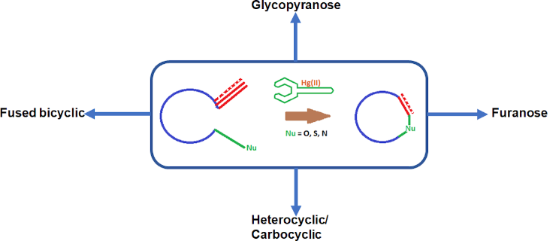
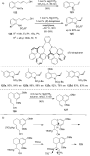
- with Hg(OAc)2 affording the corresponding cyclized pyanosylmethylmercuric chloride derivatives 12 (Scheme 5). This methodology can be used to synthesize rare C-glycosyl carbohydrates from easily available sugars. In a similar manner, stereoselective cyclization of C-glycosyl amino acid derivative 13
- using mercuric trifluoroacetate Hg(TFA)2 at room temperature was performed. The reaction proceeds primarily through stereoselective cyclization to give α-ᴅ-C-glycopyranosyl amino acid derivative 14 as the major product [43]. Nevertheless, C-mannopyranosyl derivatives cannot be achieved in a similar
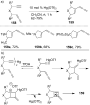
- catalytic Hg(II)-salt-induced cyclization. Yamamoto and co-workers published the intermolecular cyclization of alkynyl-carboxylic acid 153 to produce 6-membered morpholine type ring compound 154 and compound 155 [103]. The stereochemistry of the chiral amino acid was not conserved in the cyclized product












Halides as versatile anions in asymmetric anion-binding organocatalysis
Beilstein J. Org. Chem. 2021, 17, 2270–2286, doi:10.3762/bjoc.17.145
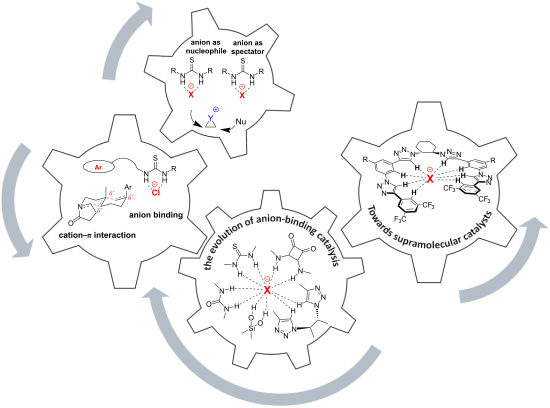
- proton of the enolizable β-ketoester 49 and thus activating the nucleophilic species. This enolate then adds to the cationic substrate from in situ upon halide abstraction of α-chloro amino acid derivatives 48 by the thiourea moiety of the bifunctional catalyst (Scheme 10c, key intermediate), leading to
- have been provided by the group of Jacobsen in the nucleophilic addition of indoles 17 to pyranones 62 (Scheme 14a) [71], as well as in the enantioselective synthesis of α-allyl amino esters 67 by the reaction of α-chloro amino acid derivatives 65 with allyltin and allylsilane 66 nucleophiles [72



Constrained thermoresponsive polymers – new insights into fundamentals and applications
Beilstein J. Org. Chem. 2021, 17, 2123–2163, doi:10.3762/bjoc.17.138


Enantioenriched α-substituted glutamates/pyroglutamates via enantioselective cyclopropenimine-catalyzed Michael addition of amino ester imines
Beilstein J. Org. Chem. 2021, 17, 2077–2084, doi:10.3762/bjoc.17.134
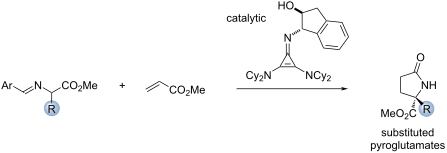
- strategy for the enanantioselective conjugate addition of amino acid derivatives for this reaction remains an unmet goal. Our group previously described a chiral cyclopropenimine catalyst that displayed outstanding reactivity for addition reactions of glycine imines [40][41]. We hypothesized that this


Cationic oligonucleotide derivatives and conjugates: A favorable approach for enhanced DNA and RNA targeting oligonucleotides
Beilstein J. Org. Chem. 2021, 17, 1828–1848, doi:10.3762/bjoc.17.125
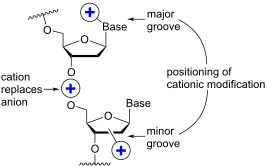
- 2 (A and B) [44][48][49][50][51][52][53][54]. Interestingly, when ONs were modified with C-5 amino acid-functionalized LNA nucleotides 20–22, significant increases in the melting temperatures (Tm) were measured with up to 14 °C for modification 22 towards complementary RNA, relative to the


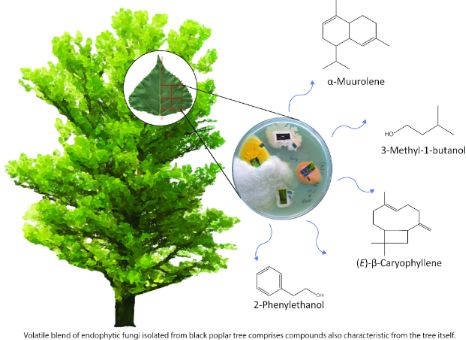
Volatile emission and biosynthesis in endophytic fungi colonizing black poplar leaves
Beilstein J. Org. Chem. 2021, 17, 1698–1711, doi:10.3762/bjoc.17.118
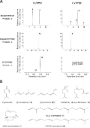
- phylogenetic tree, we used the MUSCLE algorithm (gap open, −2.9; gap extend, 0; hydrophobicity multiplier, 1.2; max. iterations, 8; clustering method, upgmb) implemented in MEGA7 [89] to compute an amino acid alignment. Based on the MUSCLE alignment, the tree was constructed with MEGA7 using a Maximum
- amino acid substitutions per site. The alpha-domain of maize TPS4 [62] was chosen as an outgroup. TPS proteins from different Ascomycota are highlighted according to their different lifestyle: endophytic (purple), pathogenic (orange) and saprophytic (green). Fungal endophytes identified from leaves of



Chemical approaches to discover the full potential of peptide nucleic acids in biomedical applications
Beilstein J. Org. Chem. 2021, 17, 1641–1688, doi:10.3762/bjoc.17.116
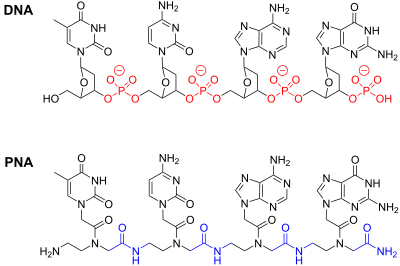
- phosphono-PNAs retained the stability against nucleases. In another study, conjugation with glutamine phosphonate or lysine bis-phosphonate amino acid derivatives introduced up to twelve negative charges (phosphonate moieties) into PNAs [91]. The negative charges allowed cationic lipid-mediated delivery of
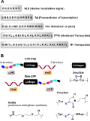
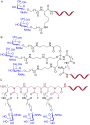
- conjugate approach involved the conjugation of PNA to (ᴅ)-insulin-like growth factor 1 peptide (IGF1) that enabled the delivery to cells expressing the IGF1 receptor [166]. Later developments adopted CPPs derived from natural proteins (Figure 12A), such as penetratin (16-amino acid peptide from the third
- helix of the Antennapedia homeodomain) [167], Tat (14-amino acid peptide from HIV-1 TAT protein) [168], and transportan (chimeric 27-amino acid peptide derived from galanin and mastoparan) [169]. Corey and co-workers were the first to demonstrate that conjugation of an 11-mer PNA to penetratin peptide









N-tert-Butanesulfinyl imines in the asymmetric synthesis of nitrogen-containing heterocycles
Beilstein J. Org. Chem. 2021, 17, 1096–1140, doi:10.3762/bjoc.17.86

- the synthesis of (–)-AG-041R, a gastrin/cholecyctokinin-B receptor antagonist. In addition, amino ester 55 was transformed into the fully unprotected amino acid 56 under basic conditions in MeOH, and after that, further treatment with of MsCl and NaHCO3 in MeCN at 80 °C led to spiro-β-lactam


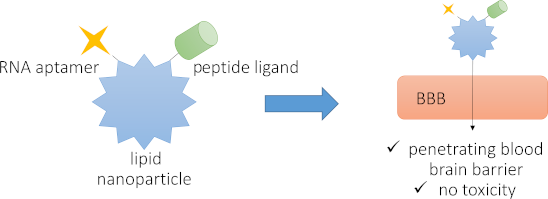
Enhanced target cell specificity and uptake of lipid nanoparticles using RNA aptamers and peptides
Beilstein J. Org. Chem. 2021, 17, 891–907, doi:10.3762/bjoc.17.75
- columns. Initially, fluorenylmethyloxycarbonyl (Fmoc) group removal from the Rink linker was achieved by applying 20% piperidine in DMF (2 × 30 min). Preactivation of Fmoc amino acid (4 equiv) prior each coupling was performed with 1-[bis(dimethylamino)methylene]-1H-1,2,3-triazolo[4,5-b]pyridinium 3-oxide
- hexafluorophosphate (HATU, 4 equiv) and N,N-diisopropylethylamine (DIPEA, 6 equiv) in DMF. Then, the activated mixture was added to the resin swollen in DMF, and manual stirring was applied approximately every 15 min over a total reaction time of 2 h. The first amino acid was installed via double coupling. Fmoc



Microwave-assisted multicomponent reactions in heterocyclic chemistry and mechanistic aspects
Beilstein J. Org. Chem. 2021, 17, 819–865, doi:10.3762/bjoc.17.71
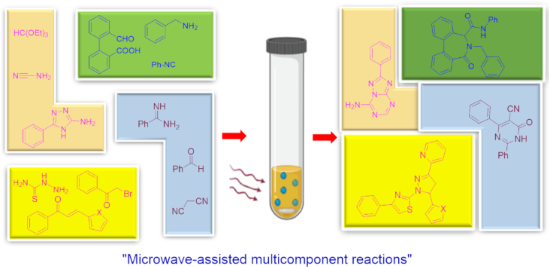
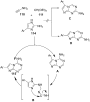
- plausible mechanism shown in Scheme 14 explains the formation of azomethine ylide B by condensation of isatin with amino acid followed by release of a molecule of CO2 via A. The imine B undergoes 1,3-dipolar cycloaddition with the dipolarophiles 39. The cyclization yields the desired product 40 of the three






Synthetic reactions driven by electron-donor–acceptor (EDA) complexes
Beilstein J. Org. Chem. 2021, 17, 771–799, doi:10.3762/bjoc.17.67

- synthesis of unnatural α-amino acids 129 and precise alkylation modification of peptides in the later stage (Scheme 45). Even in the presence of other amino acid residues, this protocol has excellent regio- and chemoselectivity, providing a sequence of novel corresponding dipeptides with good yield. The
- acylation product 123 initiated by an EDA complex. Mechanism of the synthesis of acylation product 123. Synthesis of trifluoromethylation product 126 initiated by an EDA complex. Synthesis of unnatural α-amino acid 129 initiated by an EDA complex. Synthesis of thioether derivative 132 initiated by an EDA


[2 + 1] Cycloaddition reactions of fullerene C60 based on diazo compounds
Beilstein J. Org. Chem. 2021, 17, 630–670, doi:10.3762/bjoc.17.55
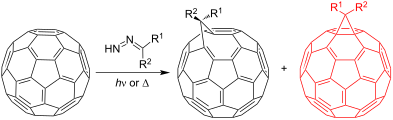
- the main characteristics of C60 stimulated a great interest in the application of fullerenes in medical chemistry. Of the fullerene-based biologically significant molecules, amino acid derivatives are of particular interest. In fact, Prato and co-workers synthesized and characterized the first peptide
- dimethoxymethanofullerene 7. Synthesis of fullerene monoesters and symmetric diesters 8–10 and 11–12, respectively. The synthetic route to the first fullerene–peptide conjugate 16. Synthesis of bioactive fullerene peptides 19 and 20. Synthesis of amino acid–fullerene derivatives 21 and 22. (BtOH is 1H-benzotriazol-1-ol
Synthesis and physicochemical evaluation of fluorinated lipopeptide precursors of ligands for microbubble targeting
Beilstein J. Org. Chem. 2021, 17, 511–518, doi:10.3762/bjoc.17.45
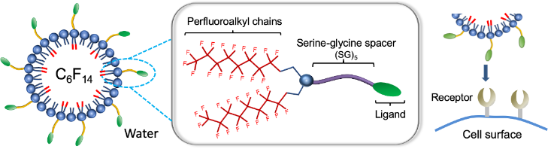
- mL column was suspended in 5 mL of DMF and swollen overnight. After washing with DMF (3 × 2 mL), the Fmoc groups of the Rink amide AM resin were activated with 20% of piperidine in DMF (2 mL) for 20 min. After washing with DMF (3 × 2 mL), Fmoc-Ser(t-Bu)-OH (3 equiv) as the first Fmoc-amino acid and
- terminal amino acid, the Fmoc groups of Fmoc-Lys(Fmoc)-OH were activated with 2 × 20% of piperidine in DMF (2 mL) for 20 min, and the coupling reaction with perfluoroalkylated acids (3 equiv) or alkyl acid (3 equiv) was performed 3 times with HBTU/HOBT/DIPEA (6 equiv/6 equiv/12 equiv) for 3 h. After


Biochemistry of fluoroprolines: the prospect of making fluorine a bioelement
Beilstein J. Org. Chem. 2021, 17, 439–460, doi:10.3762/bjoc.17.40
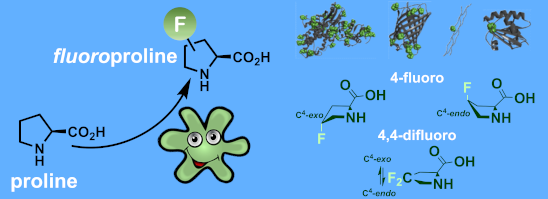
- structural, catalytic, energetic, and transport. The introduction of organofluorine components into proteins is typically expected to alter their structure, stability and/or specific features associated with their functional roles [8][9][10][11]. The replacement of natural amino acid residues with the ones
- organisms? In protein evolution, mutations obey a simple "similar replaces similar" rule since the disruption of the resulting protein structure is minimized by the modest changes in the amino acid backbone. Hence, when global substitution of proline is aimed at, it should possibly be ascribed to its
- below. 2.1 Molecular size Replacing hydrogen with fluorine increases the molecular size of congeneric molecules. The molecular volume increases gradually in the row: Pro < Flp < Dfp. However, compared to other amino acid size differences, this increase appears to be quite unspectacular (Figure 3). For


Coupling biocatalysis with high-energy flow reactions for the synthesis of carbamates and β-amino acid derivatives
Beilstein J. Org. Chem. 2021, 17, 379–384, doi:10.3762/bjoc.17.33
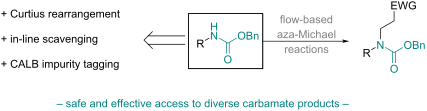
- resulting telescoped flow process was effectively applied across a series of acid substrates rendering the desired carbamate structures in high yield and purity. The derivatization of these products via complementary flow-based Michael addition reactions furthermore demonstrated the creation of β-amino acid
- into benzyl butyrate in view of facilitating the downstream purification of continuous flow Curtius rearrangement reactions [21]. In this paper, we will give a full account on this valuable approach and showcase the utility of the carbamate products towards generating sets of β-amino acid species
- carbamate group allowing for further use of the resulting N-protected amino acid species (e.g., 9d) in synthetic elaborations. Conclusion In conclusion, a new strategy in continuous flow processing that combines challenging high-energy transformations with downstream impurity tagging facilitated by





