Search results
Search for "assembly" in Full Text gives 648 result(s) in Beilstein Journal of Organic Chemistry. Showing first 200.
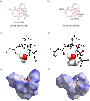
1,4,6,10-Tetraazaadamantanes (TAADs) with N-amino groups: synthesis and formation of boron chelates and host–guest complexes
Beilstein J. Org. Chem. 2022, 18, 1424–1434, doi:10.3762/bjoc.18.148
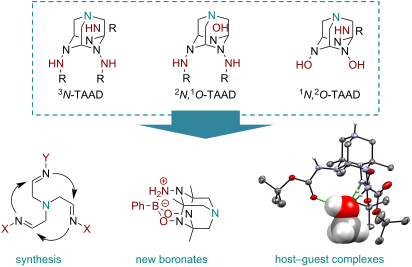
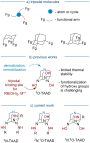
- self-assembly reactions from simple precursors and easily functionalized through addition reactions at heteroatoms [15][16][17][18][19][20]. Some time ago, our group introduced 1,4,6,10-tetraazaadamantane (TAAD) as a promising molecular platform for the design of functional tripodal molecules (Figure
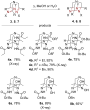
- cyclization of the corresponding tris-hydrazones, as well as the assembly of unsymmetrically substituted TAADs having both amino(amido) and hydroxy groups at bridge nitrogen atoms (2N,1O-TAADs and 1N,2O-TAADs) via a hitherto unknown co-trimerization of oxime and hydrazone units [35]. Also, structural studies
- , 21, and 21·HCl as well as the previously described 3O-TAADs 2 do not form such host–guest complexes, although water and methanol molecules are present in their crystal lattices. Thus, the presence of amide/carbamate groups is essential for the assembly of these supramolecular structures. The






Synthesis of C6-modified mannose 1-phosphates and evaluation of derived sugar nucleotides against GDP-mannose dehydrogenase
Beilstein J. Org. Chem. 2022, 18, 1379–1384, doi:10.3762/bjoc.18.142
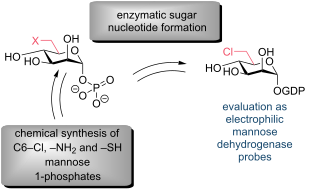
- interventions that could halt its production would be of significant value. Within the biosynthetic assembly of alginate there is a critical dependence upon the provision of one sugar nucleotide building block, GDP-mannuronic acid (GDP-ManA, 5). This material is sourced from the cytosolic metabolic pool


Synthesis of protected precursors of chitin oligosaccharides by electrochemical polyglycosylation of thioglycosides
Beilstein J. Org. Chem. 2022, 18, 1133–1139, doi:10.3762/bjoc.18.117
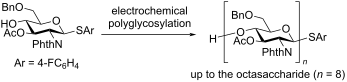
- blocks can reduce the number of steps in the total synthesis. However, it requires manipulation of the anomeric leaving groups and deprotection of the protected hydroxy group at the 4-position prior to glycosylation. Although automated electrochemical assembly, which is a one-pot iterative synthesis of


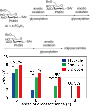
Enzymes in biosynthesis
Beilstein J. Org. Chem. 2022, 18, 1131–1132, doi:10.3762/bjoc.18.116
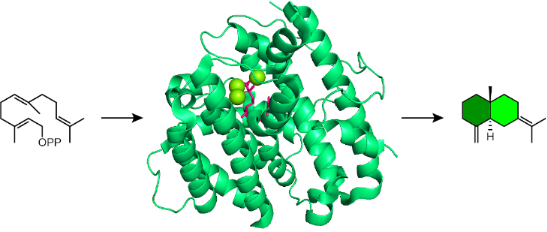
- assembly line logic, with individual domains for each single step [2]. Furthermore, the domains are organized into modules, each of which is responsible for the incorporation of one extender unit into the growing polyketide or peptide chain. With our knowledge today, the function of these large enzyme

Heterogeneous metallaphotoredox catalysis in a continuous-flow packed-bed reactor
Beilstein J. Org. Chem. 2022, 18, 1123–1130, doi:10.3762/bjoc.18.115
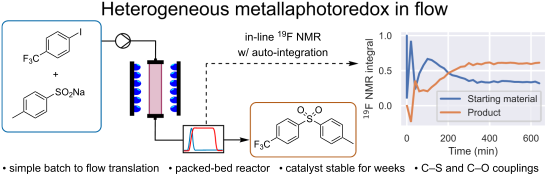
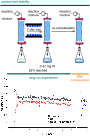
- . Results and Discussion Reactor assembly and model reaction We started our investigations by preparing a packed-bed reactor using a glass column (6.6 mm i.d., 100 mm length) that can be used in a dedicated setup for heterogeneous flow photocatalysis carried out in a commercial photochemical flow reactor
- )-proline. Optimization of temperature and light intensity for the coupling of 4-iodobenzotrifluoride and sodium p-toluenesulfinate. Comparison of different reactors. Supporting Information Supporting Information File 104: Details of packed-bed assembly, experimental procedures, reaction optimization and





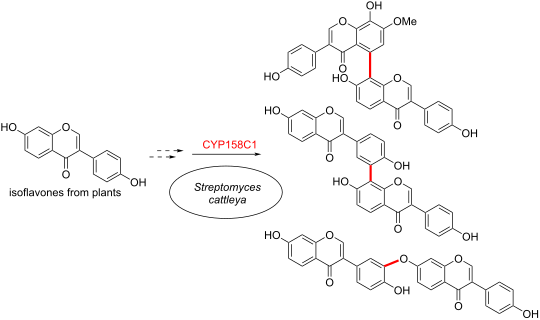
A Streptomyces P450 enzyme dimerizes isoflavones from plants
Beilstein J. Org. Chem. 2022, 18, 1107–1115, doi:10.3762/bjoc.18.113
- ://www.geneious.com). Protein purification and biochemical assays The Streptomyces genome was extracted by TIANamp Bacteria DNA Kit (TIANGEN BIOTECH), and the P450 genes were amplified by PCR (Table S1, Supporting Information File 1) and cloned into a pET-28a(+) vector by the T5 exonuclease DNA assembly method [39


Electrochemical hydrogenation of enones using a proton-exchange membrane reactor: selectivity and utility
Beilstein J. Org. Chem. 2022, 18, 1055–1061, doi:10.3762/bjoc.18.107
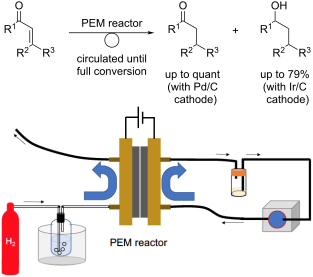
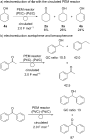
- consists of a membrane called a membrane electrode assembly (MEA), which can act as supporting electrolyte, electrode, and heterogeneous catalyst. Therefore, the further addition of a supporting electrolyte is not necessary for the electrochemical reactions using a PEM reactor, which offers clean and





A versatile way for the synthesis of monomethylamines by reduction of N-substituted carbonylimidazoles with the NaBH4/I2 system
Beilstein J. Org. Chem. 2022, 18, 1032–1039, doi:10.3762/bjoc.18.104

- , entry 5). Increasing the amount of I2 from 1.0 equiv to 1.5 equiv (Table 1, entry 6) did not significantly accelerated the reaction. All the above described results might indicate that an assembly of 1.0 equiv of I2 and 5.0 equiv of NaBH4 was sufficient to complete the reaction in one hour. With the


First series of N-alkylamino peptoid homooligomers: solution phase synthesis and conformational investigation
Beilstein J. Org. Chem. 2022, 18, 845–854, doi:10.3762/bjoc.18.85
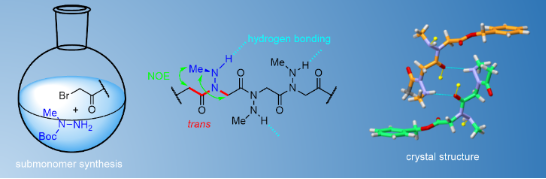
- hydrogen bonds within an assembly, and that this is dependent on the size of the oligomers. Also, the region of the spectra corresponding to the C=O stretching (1800–1600 cm−1) show a band at 1743 cm−1 corresponding to C=O stretching of the ester and a band at 1648 cm−1 which increases with the oligomer


Thiophene/selenophene-based S-shaped double helicenes: regioselective synthesis and structures
Beilstein J. Org. Chem. 2022, 18, 809–817, doi:10.3762/bjoc.18.81
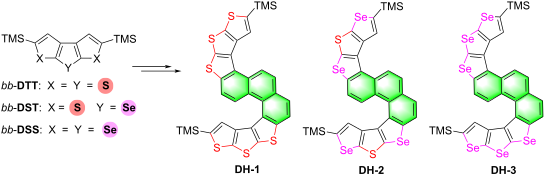
- channels (Figures S4 and S8 in Supporting Information File 2), which is a suitable characteristic for helicene compounds used as supramolecular self-assembly units [34][35][36][37][38][39][40][41]. Spectroscopic features of DH-1–3 The UV–vis absorption spectra of DH-1–3 in dichloromethane are shown in
- arrangement in the crystal packing structures of DH-1 and DH-2 indicate that these compounds may be used as supramolecular self-assembly units. Changes in molecular structure may substantially modulate the optical band gap of heteroacenes, and the replacement of heteroatoms from S to Se could fine-tune their


Copper-catalyzed multicomponent reactions for the efficient synthesis of diverse spirotetrahydrocarbazoles
Beilstein J. Org. Chem. 2022, 18, 796–808, doi:10.3762/bjoc.18.80
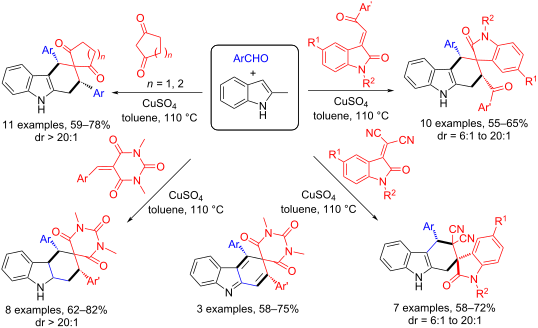
- ][11][12][13][14][15]. Among many well-designed strategies for the synthesis of tetrahydrocarbazoles, the direct assembly of the tetrahydrocyclohexenyl ring with readily available functionalized indoles as precursors has proven to be one of the most efficient synthetic protocols [16][17][18][19][20][21





Heteroleptic metallosupramolecular aggregates/complexation for supramolecular catalysis
Beilstein J. Org. Chem. 2022, 18, 597–630, doi:10.3762/bjoc.18.62
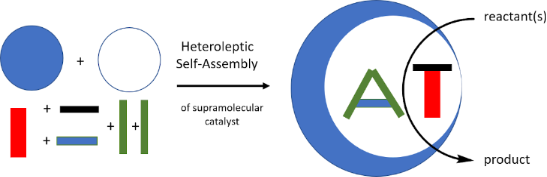
- heteromeric complexes by Issacs’ classification [32] of two main categories: (a) social self-sorting, which involves the assembly of different species, and (b) narcissistic self-sorting, which only involves aggregation of the same component. Over the past few years, a variety of social self-sorting protocols
- Switchable catalysis due to reversible assembly/disassembly Toggling between intra- and intermolecular complexation in nanoswitches Review Catalysis using heteroleptic discrete supramolecular architectures In its early years, supramolecular chemistry mainly focused on host–guest interactions, primarily on
- and size of their cavity requires often tedious de-novo synthesis. Eventually, these drawbacks have been tackled by synthesizing discrete supramolecular hosts based on metal–ligand coordination-driven self-assembly [15][16][17][18][19][20][21][22][52]. This approach not only solved the issue with low











Synthesis of a new water-soluble hexacarboxylated tribenzotriquinacene derivative and its competitive host–guest interaction for drug delivery
Beilstein J. Org. Chem. 2022, 18, 539–548, doi:10.3762/bjoc.18.56
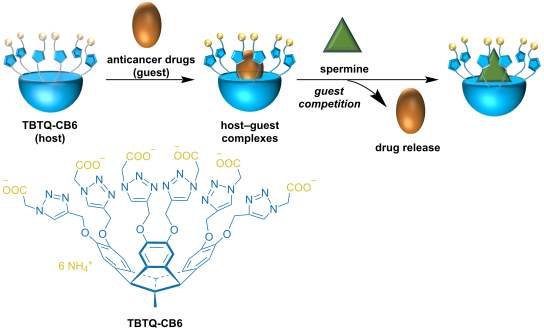
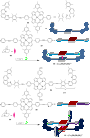
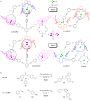
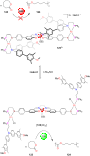
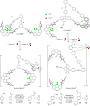
- ) derivatives are a class of molecules possessing a rigid bowl-shaped structure and a C3v-symmetric skeleton [21]. Bearing similarity with macrocycles in general, they can act as versatile hosts for encapsulating guest molecules. Over the past two decades, host–guest interactions and self-assembly based on TBTQ





BINOL as a chiral element in mechanically interlocked molecules
Beilstein J. Org. Chem. 2022, 18, 508–523, doi:10.3762/bjoc.18.53
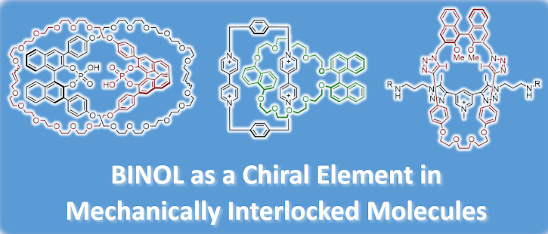
- containing electron-rich hydroquinone or 1,5-dioxynaphthalene units (macrocycles 15/21/23), together with suitable dicationic bis-bipyridinium precursors (16/19). Self-assembly of the corresponding pseudorotaxanes by π–π stacking, following by capping with dibromo-p-xylene 17 gave rise to a series of chiral
- mechanical bond, namely from a BINOL-based macrocycle onto the axle. First, they developed [2]rotaxane 27 [52]. Here, the methacrylate-functionalized ammonium salt 25 and the bis-BINOL macrocycle (R,R)-26 give the pseudorotaxane (R,R)-27 through self-assembly. Stoppering of the pseudorotaxane was achieved by




Bioinspired tetraamino-bisthiourea chiral macrocycles in catalyzing decarboxylative Mannich reactions
Beilstein J. Org. Chem. 2022, 18, 486–496, doi:10.3762/bjoc.18.51
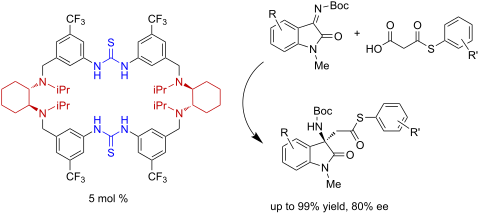
- Mannich reactions; supramolecular catalysis; thiourea; Introduction In the past decades, the development of supramolecular chemistry has enabled abundant host scaffolds and assembly tools for boosting catalytic processes, and stimulated the emergence of supramolecular catalysis [1][2][3][4][5][6][7][8][9
- tetraamino-bisthiourea chiral macrocycles were synthesized [30]. When applied in catalyzing the decarboxylative addition of phenyl β-ketoacids to cyclic imines bearing sulfamate heading group, an interesting substrate-induced assembly catalysis mode was uncovered [30]. To expand more applications, herein we




Tetraphenylethylene-embedded pillar[5]arene-based orthogonal self-assembly for efficient photocatalysis in water
Beilstein J. Org. Chem. 2022, 18, 429–437, doi:10.3762/bjoc.18.45
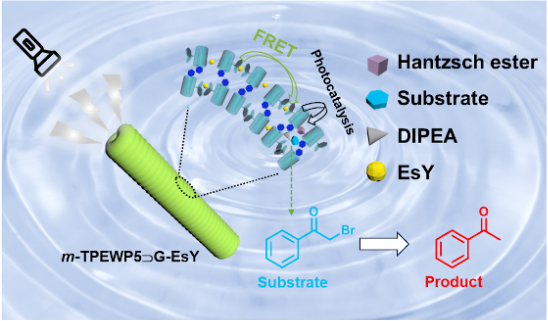
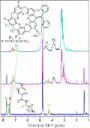
- supramolecular self-assembled nanosystem based on host–guest interactions between water-soluble tetraphenylethylene-embedded pillar[5]arene (m-TPEWP5) and ammonium benzoyl-ʟ-alaninate (G) in an aqueous medium. The obtained assembly of m-TPEWP5 and G showed aggregation-induced emission (AIE) via the blocking of
- intramolecular phenyl-ring rotations and functioned as an ideal donor. After the loading of eosin Y (EsY) as acceptor on the surface of the assembly of m-TPEWP5 and G, the worm-like nanostructures changed into nanorods, which facilitates a Förster resonance energy transfer (FRET) from the m-TPEWP5 and G
- assembled donor to the EsY acceptor present in the nanorod assembly. The system comprising m-TPEWP5, G and EsY displayed moderate FRET efficiency (31%) at a 2:1 molar ratio of donor-to-acceptor. Moreover, the obtained supramolecular nanorod assembly could act as a nanoreactor mimicking natural


![[Graphic 5]](/bjoc/content/inline/1860-5397-18-45-i7.svg?max-width=637&scale=1.18182) G-EsY self-assembled photocat...
G-EsY self-assembled photocat...


![[Graphic 15]](/bjoc/content/inline/1860-5397-18-45-i17.svg?max-width=637&scale=1.18182) G; (b) m-TPEWP5
G; (b) m-TPEWP5![[Graphic 16]](/bjoc/content/inline/1860-5397-18-45-i18.svg?max-width=637&scale=1.18182) G-EsY. [m-TPEWP5] = 1 × 10⁻⁴ M, [G] = 1 × 10⁻⁴ M, [EsY] = ...
G-EsY. [m-TPEWP5] = 1 × 10⁻⁴ M, [G] = 1 × 10⁻⁴ M, [EsY] = ...

![[Graphic 25]](/bjoc/content/inline/1860-5397-18-45-i27.svg?max-width=637&scale=1.18182) G donor assembly...
G donor assembly...

![[Graphic 43]](/bjoc/content/inline/1860-5397-18-45-i45.svg?max-width=637&scale=1.18182) G-EsY na...
G-EsY na...

![[Graphic 48]](/bjoc/content/inline/1860-5397-18-45-i50.svg?max-width=637&scale=1.18182) G-E...
G-E...
A resorcin[4]arene hexameric capsule as a supramolecular catalyst in elimination and isomerization reactions
Beilstein J. Org. Chem. 2022, 18, 337–349, doi:10.3762/bjoc.18.38
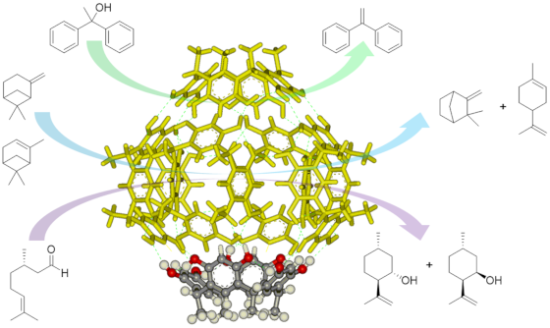
- presence of electron-rich aromatic surfaces. In a recent publication, Reek [22] further investigated the self-assembly properties of 1 as function of the content of water in chloroform-d demonstrating that the symmetrical hexameric capsule 16·(H2O)8 comprising 8 water molecules (capsule A) is present only
- evidence of the importance of an accessible cavity for the activation of the reaction after alcohol protonation. It is known that 16 behaves as a weakly acidic assembly with pKa of about 5.5 [42], while the resorcinol moiety presents a pKa of 9.15. This enhanced acidity is likely to promote the protonation


A Se···O bonding catalysis approach to the synthesis of calix[4]pyrroles
Beilstein J. Org. Chem. 2022, 18, 325–330, doi:10.3762/bjoc.18.36
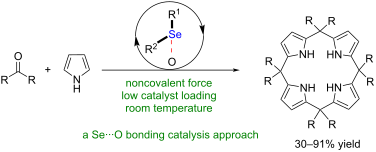
- phosphonium selenide catalysts which showed catalytic activity in assembly reactions [41], Michael addition reactions [41], Rauhut–Currier reactions [42], cyanosilylation reactions [43], and cycloaddition of vinylindoles through chalcogen–π bonding catalysis [44]. Our previous works demonstrated that Se···O



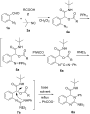
New efficient synthesis of polysubstituted 3,4-dihydroquinazolines and 4H-3,1-benzothiazines through a Passerini/Staudinger/aza-Wittig/addition/nucleophilic substitution sequence
Beilstein J. Org. Chem. 2022, 18, 286–292, doi:10.3762/bjoc.18.32
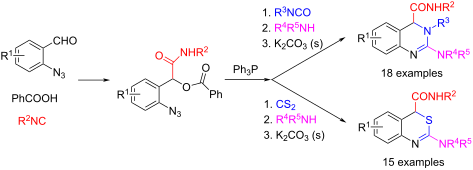
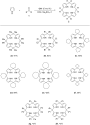
- of their derivatives [12][13][14][15][16][17][18][19][20][21][22]. For example (Scheme 1), a one-pot Tf2O-mediated assembly of amides, amines, and ketones provided 3,4-dihydroquinazolines in good yields via successive triflic anhydride-mediated amide dehydration, ketimine addition, and Pictet




Recent developments and trends in the iron- and cobalt-catalyzed Sonogashira reactions
Beilstein J. Org. Chem. 2022, 18, 262–285, doi:10.3762/bjoc.18.31
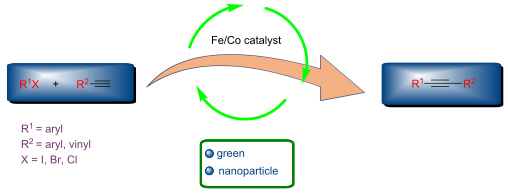
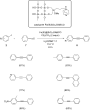
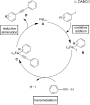
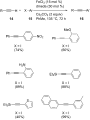
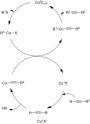
- ) moiety since it can easily undergo aggregation-induced emission enhancement (AIEE). The self-assembly of the HPB derivative resulted in the formation of fluorescent aggregates, which can act as a stabilizer or as a reactor for the development of α-Fe2O3 nanoparticles at room temperature. The catalytic







Synthesis and bioactivity of pyrrole-conjugated phosphopeptides
Beilstein J. Org. Chem. 2022, 18, 159–166, doi:10.3762/bjoc.18.17
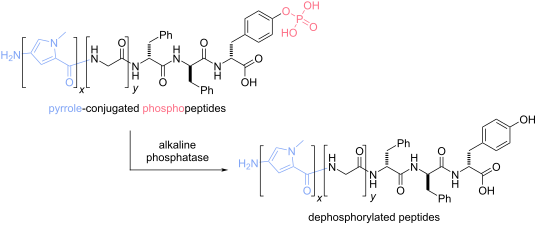
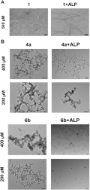
- of 1. These results suggest that a heteroaromatic motif at the N-terminal of peptides likely disfavors the formation of extensive nanofibers or morphological changes during enzymatic self-assembly, thus provide useful insights for the development of phosphopeptides as substrates of phosphatases for
- controlling cell fate. Keywords: cells; enzyme; N-terminal; peptides; pyrroles; self-assembly; Introduction Biomacromolecular assemblies have received considerable attention recently in the field of biomaterials [1][2][3][4][5][6][7], among which peptides are of particular interest because of their unique
- ][11], collagen mimic [12], antibacterial [13][14], biomineralization [15][16], mimicry of amyloids [17], cell cultures [18], and tissue engineering [19]. Particularly, the use of enzyme-instructed self-assembly (EISA) [20][21] of peptide assemblies has expanded the applications of peptide assemblies



Earth-abundant 3d transition metals on the rise in catalysis
Beilstein J. Org. Chem. 2022, 18, 86–88, doi:10.3762/bjoc.18.8
- , Germany 10.3762/bjoc.18.8 Keywords: C–H activation; 3d transition metals; green chemistry; late-stage functionalization; sustainability; Transition metal catalysis has emerged as a transformative platform for the assembly of increasingly complex compounds, with enabling applications to natural product
- industries as one of the most powerful methods for molecular assembly. With regard to the cost of goods and the allowance of trace metal impurities in medicinally relevant compounds, 3d transition metal complexes, such as those of iron, copper, cobalt or nickel, represent exciting, more sustainable
- functionalization enabled the de novo assembly of bioactive molecules [9]. The full potential of the mild nature of C–H functionalization is unlocked by the merger with modern photochemistry and electrocatalysis manifolds. In this context, recent advances were realized by the combination of photoredox catalysis and
Polymer chemistry: fundamentals and applications
Beilstein J. Org. Chem. 2021, 17, 2922–2923, doi:10.3762/bjoc.17.200
- supramolecular chemistry for the assembly of polymer fibers and the synthesis of well-defined polysaccharides. In the direction of materials, cryogels and reinforced hydrogels are discussed, as well as 3D-printed poly(caprolactone) biomaterials. In addition, properties of thermoresponsive materials and self
- -healing materials are presented in this thematic issue. Finally, the use of polymerization-induced self-assembly for the synthesis of drug carriers is presented. The issue also shows the multidisciplinary character of polymer science, for example when supramolecular motifs, organic coupling reactions or
Total synthesis of the O-antigen repeating unit of Providencia stuartii O49 serotype through linear and one-pot assemblies
Beilstein J. Org. Chem. 2021, 17, 2915–2921, doi:10.3762/bjoc.17.199
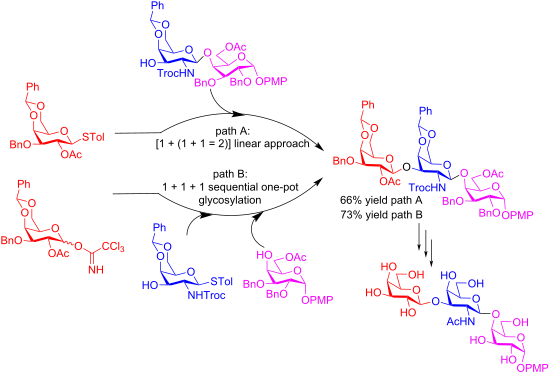
- involving the [1 + (1 + 1 = 2)] assembly, followed by a one-pot synthesis involving [1 + 1 + 1] strategy from the corresponding monosaccharides. The one-pot method provided a higher yield of the protected trisaccharide intermediate (73%) compared to the two step synthesis (66%). The protected trisaccharide
- co-worker accomplished the total synthesis of a O-polysaccharide of Providencia alcalifaciens O22 via a one pot assembly of the oligosaccharide unit [36]. Recently in 2020 Werz and co-workers completed the total synthesis of a tri-, hexa-, and heptasaccharide of the O-polysaccharide of Providencia
- the hitherto not synthesized above trisaccharide repeating unit containing two ᴅ-galactose and one N-acetyl-ᴅ-galactosamine moieties. The linear synthesis of the target oligosaccharide was first carried out via a linear [1 + (1 + 1 = 2)] assembly of a galactopyranose donor with a GalpNTroc–Galp


Iron-catalyzed domino coupling reactions of π-systems
Beilstein J. Org. Chem. 2021, 17, 2848–2893, doi:10.3762/bjoc.17.196
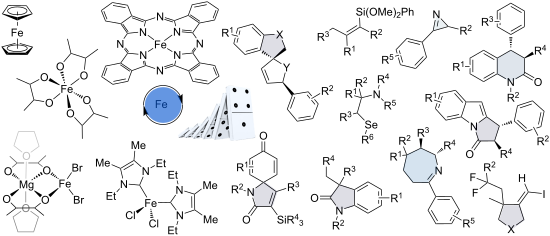
- reported a similar approach towards the assembly of 2,2-disubstituted indolines from N-sulfonylanilines and substituted styrene derivatives [93]. In 2014, the Jiao group investigated the carbosulfonation of alkenes 60 for the synthesis of oxindoles 90 through sequential C–S/C–C-bond formation (Scheme 16
- a four-component radical dual difunctionalization and ordered assembly of two chemically distinct alkenes 114/115, aldehyde 65, and tert-butyl peroxide (Scheme 23) [108]. In order to selectively couple one alkene to another, without the formation of oligomers, the authors utilized the different