Search results
Search for "carbamate" in Full Text gives 206 result(s) in Beilstein Journal of Organic Chemistry. Showing first 200.
Encapsulation of biocides by cyclodextrins: toward synergistic effects against pathogens
Beilstein J. Org. Chem. 2014, 10, 2603–2622, doi:10.3762/bjoc.10.273
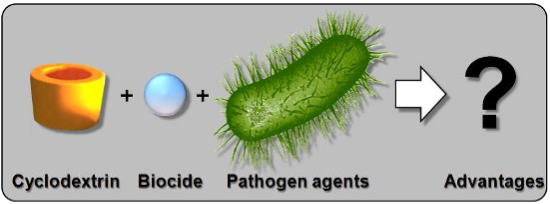
- complexation, all organic biocides developed in the following sections also present an enhancement of their water-solubility in addition to the other benefits highlighted. The methyl N-(1H-benzimidazol-2-yl)carbamate (named carbendazim, see Figure 1) was used to illustrate the effect of CDs on its aqueous
- the methyl carbamate residue is the binding site. Despite the weak binding constants, the carbendazim water-solubility is increased but the effect remains low (1.9-fold compared to free carbendazim in the presence of 15 mM of β-CD). In 2012, Ge et al. proposed to use the HP-β-CD to enhance the
- bioavailability of biocides. As an example, Szejtli et al. reported that the biocidal activity of methyl [1-(butylcarbamoyl)benzimidazol-2-yl]carbamate (named benomyl) can be improved in the presence of β-CD (Scheme 2) [46]. Indeed, the same fungicidal efficiency can thus be achieved with a lower active


Electrocarboxylation: towards sustainable and efficient synthesis of valuable carboxylic acids
Beilstein J. Org. Chem. 2014, 10, 2484–2500, doi:10.3762/bjoc.10.260
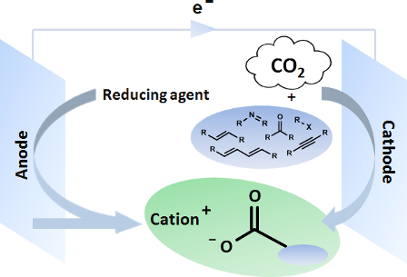
- R1 and R2. In both cases, a second electron reduction in presence of CO2 yields a carboxylate intermediate with an additional carbonate or carbamate group. The latter is converted to the corresponding α-hydroxy acid or to an α-amino acid after acid hydrolysis in the product work-up [75][76][77]. An


Expanding the scope of cyclopropene reporters for the detection of metabolically engineered glycoproteins by Diels–Alder reactions
Beilstein J. Org. Chem. 2014, 10, 2235–2242, doi:10.3762/bjoc.10.232
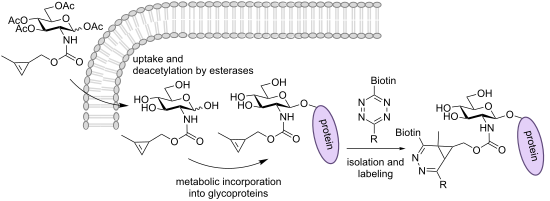
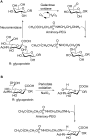
- Diels–Alder reaction between methylcyclopropene tags and tetrazines has become a popular ligation reaction due to the small size and high reactivity of cyclopropene tags. Attaching the cyclopropene tag to mannosamine via a carbamate linkage has made the reaction even more efficient. Here, we expand the
- (4) [23] (Figure 1) to label sialic acid residues on the surface of living cells via MOE. Since carbamate-linked methylcyclopropenes have significantly higher reaction rates in DAinv reactions with tetrazines [22][28], we recently introduced Ac4ManNCyoc (3) as a derivative for rapid labeling of
- metabolically engineered cell-surface sialic acids [24]. The application of 3 was prompted by the previous observation that carbamate-modified ManNAc derivatives are also accepted in the biosynthetic pathway [19][29]. Derivative 3 in combination with a sulfo-Cy3-tetrazine conjugate enabled dual sugar labeling



De novo macrolide–glycolipid macrolactone hybrids: Synthesis, structure and antibiotic activity of carbohydrate-fused macrocycles
Beilstein J. Org. Chem. 2014, 10, 2215–2221, doi:10.3762/bjoc.10.229
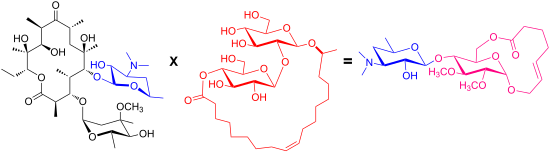
- part of ester linkages; in 4 they are a carbamate and ether, respectively. Modest antifungal activity against C. neoformans and A. fumigatis were also noted for 4 [13]. Here we report on two new natural product-like 12-membered ring macrolides 5 and 6 (Scheme 1) where the pyranose is fused to the


Building complex carbon skeletons with ethynyl[2.2]paracyclophanes
Beilstein J. Org. Chem. 2014, 10, 2013–2020, doi:10.3762/bjoc.10.209

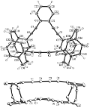
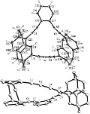
- extensive column chromatography/recrystallization. Isomer 11 is chiral and could be separated on a column impregnated with cellulose tris(3,5-dimethylphenyl)carbamate. The bridge-extended cyclophane precursor 18 furnished the ring-enlarged cyclophanes 19 and 20 on Glaser–Hay coupling. Cross-coupling of 4
- chiral compound, was resolved into its enantiomers on a OD-column impregnated with cellulose tris(3,5-dimethylphenyl) carbamate using hexane/propan-2-ol (9:1) as an eluent and a UV-detector set at 254 nm. A baseline separation was achieved and the two enantiomers had [α]D25 = −44 ° (c 0.375, hexane




Efficient CO2 capture by tertiary amine-functionalized ionic liquids through Li+-stabilized zwitterionic adduct formation
Beilstein J. Org. Chem. 2014, 10, 1959–1966, doi:10.3762/bjoc.10.204
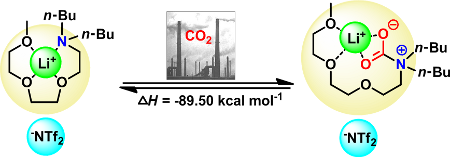
- liquid absorbents allowing for reversible CO2 chemisorption [31][32][33][34][35]. In general, two absorbent molecules are involved to react with one CO2 molecule generating ammonium carbamate (Scheme 1a) or ammonium alkyl formate (Scheme 1b). Hence, increasing the 1:2 (CO2:absorbent molecule
- formation of ammonium carbamate as shown in Scheme 1a [38]. Notably, the CO2 capacity of guanidine-functionalized ILs increased in the order of [TMGLi][NTf2] (0.65) < [OctTMGLi][NTf2] (0.80) < [PEG150MeTMGLi][NTf2] (0.89 mol CO2 absorbed per mol of base) (Table 1, entries 5–7), indicating that the CO2
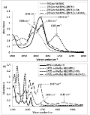
- cm−1 after reaction with CO2. A characteristic peak centered at 1685 cm−1 is assigned to the stretching vibration of the carbonyl group in the zwitterionic alkyl carbamate, which is quite different from that in HCO3− (1588 cm−1). For the reaction of [PEG150MeBu2NLi][NTf2] with CO2, a new band at 1635




A promising cellulose-based polyzwitterion with pH-sensitive charges
Beilstein J. Org. Chem. 2014, 10, 1549–1556, doi:10.3762/bjoc.10.159
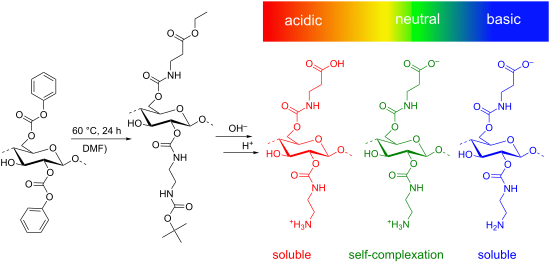
- of novel polyzwitterions based on cellulose carbamate with carboxylic- and primary amino groups is discussed. Starting from cellulose carbonate, the fully protected zwitterion is efficiently synthesized that could be converted into the polyanion, polycation, and polyzwitterion via the orthogonal
- triethylamine deficiency conditions in order to avoid cross-linking of the polymer chains via carbonate moieties resulting from the strong basicity of the trialkylamine [22]. The aminolysis yields the (3-ethoxy-3-oxopropyl)(N-Boc-2-aminoethyl)cellulose carbamate 4 with a DSβ-alanine ester of 0.88 and a DSBoc
- -EDA of 0.95 that indicates a similar reactivity of the amines applied and the conversion of 95% of the carbonate moieties into the carbamate. Moreover, a random distribution of the substituents within the repeating unit and the polymer backbone can be assumed. From cellulose carbamate 4, the polyanion


Carbohydrate PEGylation, an approach to improve pharmacological potency
Beilstein J. Org. Chem. 2014, 10, 1433–1444, doi:10.3762/bjoc.10.147
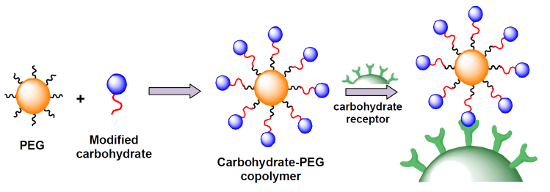
- protonable amines into neutral amide or carbamate linkers. Even though PEGylation of chitosan via the amino group is the most commonly used method a number of examples of polysaccharide derivatisation on the hydroxy groups have been reported. Chitosan-O-poly(ethylene glycol) graft copolymers were synthesized






Atherton–Todd reaction: mechanism, scope and applications
Beilstein J. Org. Chem. 2014, 10, 1166–1196, doi:10.3762/bjoc.10.117

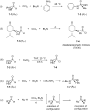
- TBAB (tetrabutylammonium bromide), TBAI (tetrabutylammonium iodide), TMAC (tetramethylammonium chloride) or 18-crown-6. The best result was obtained with TBAB and 18-crown-6 catalysts in a CH2Cl2/water or AcOEt/water mixture (yields included from 72 to 85%). The carbamate anion is another nucleophilic




Synthesis of fluorescent (benzyloxycarbonylamino)(aryl)methylphosphonates
Beilstein J. Org. Chem. 2014, 10, 741–745, doi:10.3762/bjoc.10.68
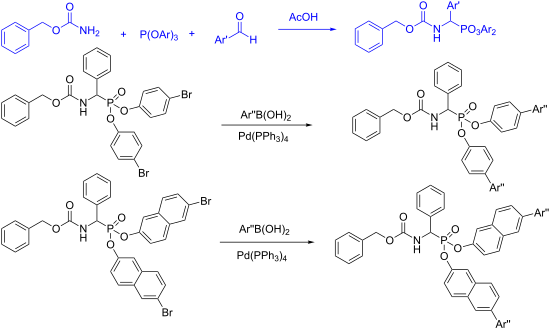
- tribromides gave far less satisfactory results because the obtained crude products were difficult to purify. The obtained phosphites were reacted with benzaldehyde and benzyl carbamate, according to literature [18][19][20], providing the desired diaryl (benzyloxycarbonylamino)(phenyl)methylphosphonates
- restricted rotation around the C–N bound of their carbamate group. As a consequence, they exist in solution in cis- and trans-forms, with the equilibrium strongly shifted towards the formation of trans-isomers [22]. Synthesis of diaryl (benzyloxycarbonylamino)(aryl)methylphosphonates By applying the same


Synthesis of chiral N-phosphinyl α-imino esters and their application in asymmetric synthesis of α-amino esters by reduction
Beilstein J. Org. Chem. 2014, 10, 653–659, doi:10.3762/bjoc.10.57
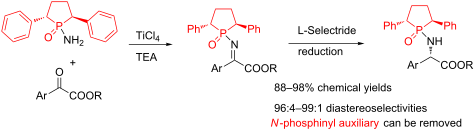
- esters [6][7][8][9][10]. Up to now, a series of nucleophilic substrates have been reported to react with α-imino esters, such as enamine [11][12][13][14], carbamate ammonium ylide [15], 1,3-dipolar cycle [16], boronic acid [17], acetylide [18], proparygylic anion [19] and ketene silyl acetal [20]. These


Direct and indirect single electron transfer (SET)-photochemical approaches for the preparation of novel phthalimide and naphthalimide-based lariat-type crown ethers
Beilstein J. Org. Chem. 2014, 10, 514–527, doi:10.3762/bjoc.10.47

- the heteroatom-containing, crown ether ring systems. A notable feature of these reactions is their remarkable chemoselectivity. Alternative pathways initiated by intramolecular SET from the carbamate nitrogen donor sites [57] to the phthalimide acceptor moiety excited state, even though




Concise, stereodivergent and highly stereoselective synthesis of cis- and trans-2-substituted 3-hydroxypiperidines – development of a phosphite-driven cyclodehydration
Beilstein J. Org. Chem. 2014, 10, 369–383, doi:10.3762/bjoc.10.35
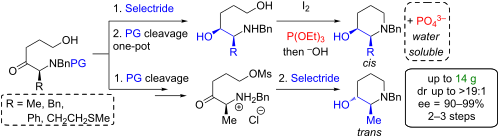
- configurationally labile amino aldehyde intermediates [55][56]. Basically any carbamate or amide protecting group (= PG) orthogonal to the benzyl moiety would be suitable for this strategy. Furthermore, we decided to surrender protection of the OH functions in the synthesis of intermediates D and C in order to
- , phenylalanine, phenylglycine and methionine 1a–d were converted to their N-benzyl-N-carbamate-protected derivatives 2a–d (PG = Cbz, Boc) in a practical one pot procedure through combination of Quitt´s reductive benzylation protocol [61] and a Schotten–Baumann acylation [62][63] in 70–95% yield (Scheme 1). While
- carbamate protected amino acid derivatives 3 (remaining as impurity in the isolated products 2), quantitative benzylation (1→I) was ensured by successive addition of three portions of benzaldehyde/NaBH4 (Quitt´s procedure [61] → two portions) and by maintaining the pH at a value of 10–11. The extractive


Diversity-oriented synthesis of dihydrobenzoxazepinones by coupling the Ugi multicomponent reaction with a Mitsunobu cyclization
Beilstein J. Org. Chem. 2014, 10, 209–212, doi:10.3762/bjoc.10.16

- easy reaction of this electron-rich benzylamine with CO2 to give an insoluble carbamate. Skipping the extractive purification and directly using the crude amine in the ensuing sequence gave again erratic yields and was troublesome because of the difficult separation of the Ugi adducts 9 from


Recent applications of the divinylcyclopropane–cycloheptadiene rearrangement in organic synthesis
Beilstein J. Org. Chem. 2014, 10, 163–193, doi:10.3762/bjoc.10.14
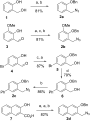
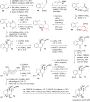
- Curtius rearrangement, upon heating the intermediate isocyanate was trapped with EtOH to yield ethyl carbamate protected amine 141. Deprotection of the Alloc-group [126] and chloro carbamate formation furnished 142. Exposure of this compound to a silver source led to the formation of the five-membered
- (see Scheme 21), followed by the formation of an acid-azide. Shiori version [146][147] of the Curtius rearrangement with concomitant addition of MeOH to the intermediate isocyanate afforded carbamate 171. Oxetane 171 was then opened under Lewis-acidic conditions. The deprotected alcohol was protected
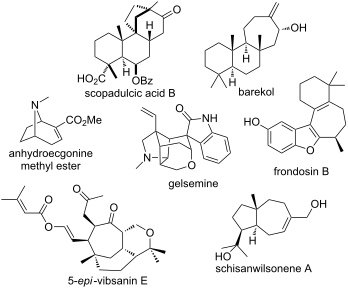
- demercurization [128][129] sequence (through intermediate 177) yielding 178. The oxindole protecting group was then removed, followed by reduction of the carbamate to the remaining missing methyl group [151] to finish gelsemine (146). The total synthesis of the monoterpenoid-indole alkaloid gelsemoxonine (197




Synthesis of novel derivatives of 5-hydroxymethylcytosine and 5-formylcytosine as tools for epigenetics
Beilstein J. Org. Chem. 2014, 10, 7–11, doi:10.3762/bjoc.10.2
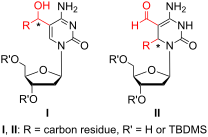
- the corresponding carbamates 7a–c. The reaction of aldehyde 4 and vinylmagnesium bromide yielded directly carbamate 7d. Surprisingly, the reaction of derivative 5 bearing a N-(TCBoc)2 group with organometallic compounds (methylmagnesium bromide, THF, 0 °C → room temperature, lithium (trimethylsilyl


Oligomeric epoxide–amine adducts based on 2-amino-N-isopropylacetamide and α-amino-ε-caprolactam: Solubility in presence of cyclodextrin and curing properties
Beilstein J. Org. Chem. 2013, 9, 2803–2811, doi:10.3762/bjoc.9.315
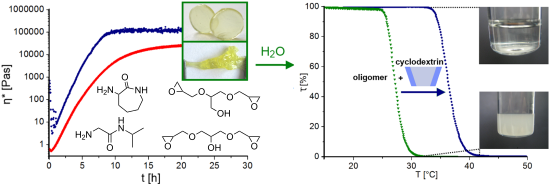
- pressure and the product dried in vacuo. 11.9 g (62.9 mmol = 87.8%) of a colorless oil was obtained. FTIR (diamond) ν (cm−1): 3500–3200 (br, NH), 1753 (s, ester), 1695 (vs, carbamate); 1H NMR (300 MHz, CDCl3) δ 5.22 (s, 1H, NH), 3.78 (d, J = 5.9 Hz, 2H, CH2), 3.62 (s, 3H, OCH3), 1.33 (s, 9H, RC(CH3)3); 13C
- 102 °C) were obtained. FTIR (diamond) ν (cm−1): 3292, 3222 (br, NH), 1692 (vs, carbamate), 1657, 1548 (vs, amide); 1H NMR (300 MHz, CDCl3) δ 6.41 (s, 1H, RC(O)-NH-R), 5.57 (s, 1H, R-NH-C(O)OR), 3.98 (m, 1H, CH-Me2), 3.66 (d, J = 5.7 Hz, 2H, CH2), 1.36 (s, 9H, RC(CH3)3), 1.06 (d, J = 6.6 Hz, 6H, RHC




Garner’s aldehyde as a versatile intermediate in the synthesis of enantiopure natural products
Beilstein J. Org. Chem. 2013, 9, 2641–2659, doi:10.3762/bjoc.9.300
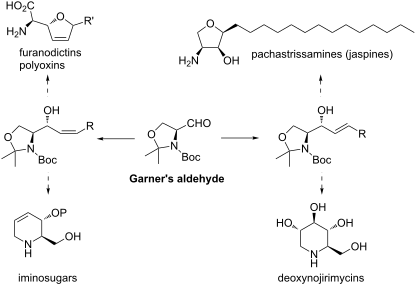
- density from the reaction center toward nitrogen. In cases where syn-selectivity is observed, the Cram’s chelation control model provides an explanation [56][57]. Chelating metal coordinates between the two carbonyls (the aldehyde and the carbamate), thus forcing the nucleophile to attack from the si-side
- syn-selectivities were achieved with vinylZnCl in Et2O (1:6 anti/syn). Coleman also noticed that the addition of excess ZnCl2 did not increase the syn-selectivity at all. They attributed this to the mono-coordination of the metal to the carbamate instead of the usual “bidentate” chelation control





New developments in gold-catalyzed manipulation of inactivated alkenes
Beilstein J. Org. Chem. 2013, 9, 2586–2614, doi:10.3762/bjoc.9.294
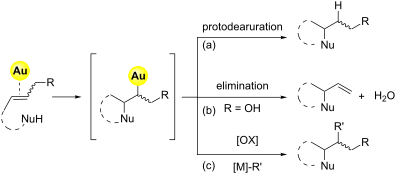
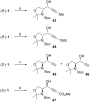
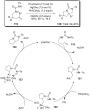
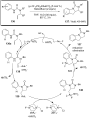
- hydroamination of alkenes. Detailed computational studies on the addition of benzyl carbamate to dienes revealed the protodeauration as the rate-determining step of the reaction [34]. Mechanistically, the initial stage was determined dealing with the energetically favourable substitution of the TfO− ligand from
- the gold coordination sphere with the diene (Figure 4). Preferred coordination geometry is the η2-type, with the gold cation coordinating to a single double bond. Either direct coordination of the nucleophile to the gold cation, or reaction of the PH3AuOTf with the carbamate to deliver TfOH and
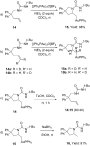
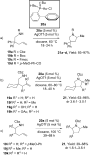
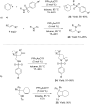
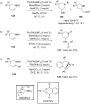
- [38]. Although prolonged reaction times were required (up to 68 h in refluxing dioxane), remarkable tolerance in terms of carbamate protecting groups (Scheme 7a) and substituents at the carbon chain was recorded (Scheme 7b,c). Soon after the same team disclosed that the titled transformation could be








One-pot sequential synthesis of isocyanates and urea derivatives via a microwave-assisted Staudinger–aza-Wittig reaction
Beilstein J. Org. Chem. 2013, 9, 2378–2386, doi:10.3762/bjoc.9.274

- [1]. Isocyanates play a relevant role as chemical intermediates in the manufacturing of thermoplastic foams, elastomers, adhesives, agrochemicals and pharmaceuticals. The isocyanate group is also widely used as a precursor to several bioactive compounds and drugs that contain urea and carbamate


An overview of the synthetic routes to the best selling drugs containing 6-membered heterocycles
Beilstein J. Org. Chem. 2013, 9, 2265–2319, doi:10.3762/bjoc.9.265
- ) is hydrogenated to the vinylogous carbamate 2.53 in the presence of acetic anhydride. Then the intermediate 2.53 can be subjected to an asymmetric hydrogenation utilising rhodium-based catalyst systems at elevated hydrogen pressures rendering the desired ethyl (R)-nipecotate 2.54 [75]. Uniting the
- scientists and consists of a chiral hydroisoquinoline linked to a (R)-quinuclidinol unit through a carbamate linkage (Figure 6). Upon protonation the tertiary amine of the quinuclidine is expected to resemble the ammonium substructure of muscarine (2.58) [76]. This molecule can be prepared by direct coupling
- of the (R)-quinuclidinol and tetrahydroisoquinoline carbamate partner (Scheme 28). The (R)-quinuclidinol (2.59) itself can be accessed from quinuclidone (2.60), and is most conveniently prepared by alkylation of ethyl isonicotinate (2.61) with ethyl bromoacetate (2.62) followed by full reduction of


The chemistry of isoindole natural products
Beilstein J. Org. Chem. 2013, 9, 2048–2078, doi:10.3762/bjoc.9.243
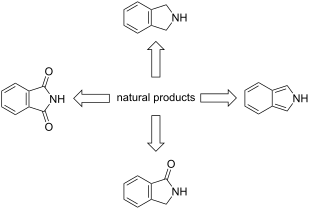
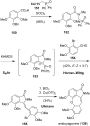
- carbamate formation of the starting material. Upon exposure of 223 to phosphorus pentoxide, the desired isoindolinone 224 was formed in 75% yield. Deprotection led to lactonamycinone (214), which was the substrate for a ytterbium triflate-catalyzed glycosylation to give 215 and 217, respectively
















Natural products in synthesis and biosynthesis
Beilstein J. Org. Chem. 2013, 9, 1897–1898, doi:10.3762/bjoc.9.223
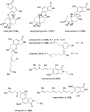
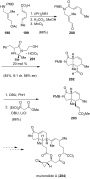
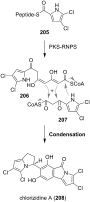
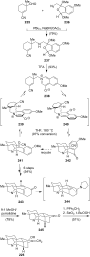
- aminosugar, a hydroxylamine linkage between two sugar subunits, a carbamate, an aromatic iodide, a thioester, and a trisulfide [4]. Natural products have also been used by humankind since ancient times and are part of our traditions and culture, as is evident from the widespread consumption of coffee, tea

A Lewis acid-promoted Pinner reaction
Beilstein J. Org. Chem. 2013, 9, 1572–1577, doi:10.3762/bjoc.9.179

- were observed, when ester or carbamate groups were present in the substrates (Table 2, entries 8 and 9). The Lewis acid trimethylsilyl triflate possibly cleaves the benzyloxycarbonyl (Z) group, since the similar trimethylsilyl iodide (TMSI) is known to cleave Z protecting groups [17]. Poor yields are


ML212: A small-molecule probe for investigating fluconazole resistance mechanisms in Candida albicans
Beilstein J. Org. Chem. 2013, 9, 1501–1507, doi:10.3762/bjoc.9.171
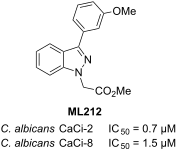
- tert-butyl carbamates 5 prior to undergoing palladium-mediated Suzuki reactions with various boronic acid partners. Under the reaction conditions, the carbamate-protecting group was also cleaved to afford the desired 3-arylindazoles, albeit as the unprotected systems 6. Alkylation with methyl