Search results
Search for "catalytic activity" in Full Text gives 327 result(s) in Beilstein Journal of Organic Chemistry. Showing first 200.
Ammonium-tagged ruthenium-based catalysts for olefin metathesis in aqueous media under ultrasound and microwave irradiation
Beilstein J. Org. Chem. 2019, 15, 160–166, doi:10.3762/bjoc.15.16
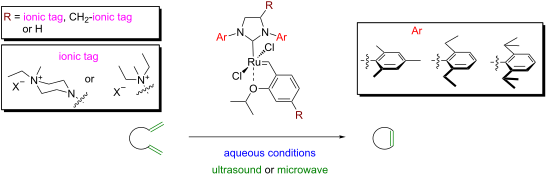
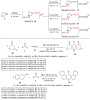
- Abstract The influence of microwave and ultrasonic irradiation on the performance of ammonium-tagged Ru-based catalysts in olefin metathesis transformations in aqueous media was studied. Differences in the catalytic activity in correlation with the nature of the present counter ion and the size of the N
- only in academia but also in industry [7][8][9][10][11][12]. However, there is still a large interest in improving the catalytic activity of the existing Ru-based metathesis catalysts as there is no universal catalyst for all the metathesis transformations. This is especially true for olefin metathesis
- (e.g., 50 mg mL−1 for 1a or 3a) whereas for those with I− as counter-ion is much lower (e.g., 4.0 mg mL−1 for 1b). In turn catalysts bearing PF6− or BF4− as counter ions are not soluble in water [71]. We have started our study with the comparison of the catalytic activity of complex 4b, having the


Gold-catalyzed ethylene cyclopropanation
Beilstein J. Org. Chem. 2019, 15, 67–71, doi:10.3762/bjoc.15.7
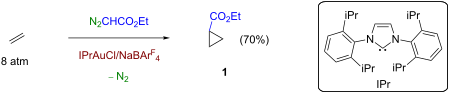
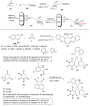
- ethyl diazoacetate.a Catalytic activity of IPrAuCl/NaBArF4 in the reaction of ethylene and ethyl diazoacetate.a Acknowledgements Support for this work was provided by the MINECO (CTQ2017-82893-C2-1-R and CTQ2015-73693-JIN).


Asymmetric synthesis of a high added value chiral amine using immobilized ω-transaminases
Beilstein J. Org. Chem. 2019, 15, 60–66, doi:10.3762/bjoc.15.6
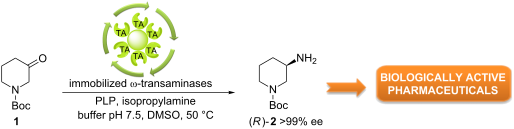
- excess starting from a commercial substrate. The reaction was carried out by using different commercially available immobilized enzymes, evaluating the catalytic activity and the enantioselectivity under different experimental conditions. Re-use of the most efficient enzyme was performed both in batch


Ruthenium-based olefin metathesis catalysts with monodentate unsymmetrical NHC ligands
Beilstein J. Org. Chem. 2018, 14, 3122–3149, doi:10.3762/bjoc.14.292
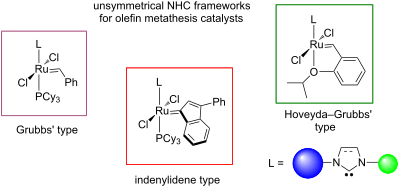
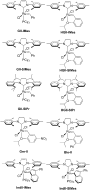
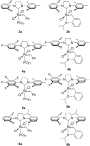
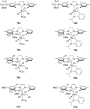
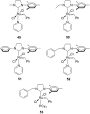
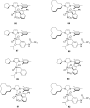
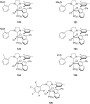
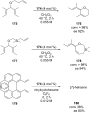
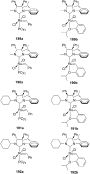
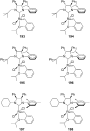
- and 4a clearly outperformed GII-SIMes, with catalyst 4a emerging as the most efficient of all (>97% conversion in 9 min). Complex 5a showed a higher initiation rate with respect to GII-SIMes, but eventually was found to be less efficient due to a decrease in its catalytic activity related to
- beneficial effect on the catalytic activity was observed. Indeed complex 22 revealed a very poor olefin metathesis catalyst, likely as a consequence of the excessive steric hindrance of the adamantyl moiety at the ruthenium center. It is worth to underline that the first Z-selective ruthenium catalyst (23
- reported by Blechert and co-workers [21]. In addition to the concept that the presence of more electron-donating alkyl groups on the NHC could lead to enhanced σ-donor properties, and, consequently, to higher catalytic activity, the authors postulated that the unsymmetrical nature of the NHC ligands could



















Thermophilic phosphoribosyltransferases Thermus thermophilus HB27 in nucleotide synthesis
Beilstein J. Org. Chem. 2018, 14, 3098–3105, doi:10.3762/bjoc.14.289
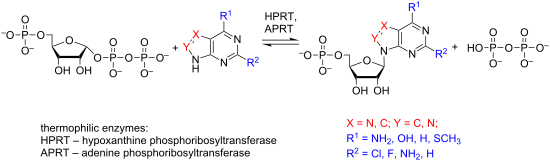
- phosphoribosyltransferase Thermus thermophilus (TthHPRT), investigated its substrate specificity and optimal conditions for catalytic activity, and determined the kinetic parameters of the enzyme. A comparative study of the substrate specificity of TthAPRT and TthHPRT was performed to determine the usability of


A tutorial review of stereoretentive olefin metathesis based on ruthenium dithiolate catalysts
Beilstein J. Org. Chem. 2018, 14, 2999–3010, doi:10.3762/bjoc.14.279
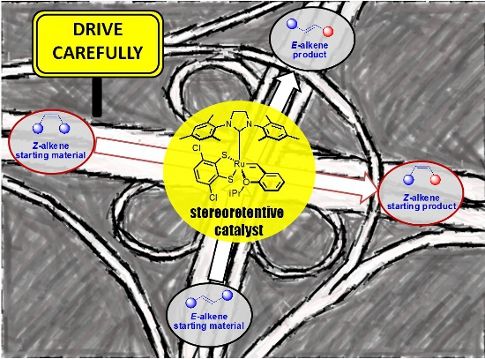
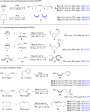
- introduced by Hoveyda in 2015 [4] showed moderate to good catalytic activity and can therefore be considered as a relatively general catalyst (Figure 1). In 2016 Pederson and Grubbs reported SIPr-based catalyst Ru-4 with increased catalytic activity for Z-alkenes (Figure 1) [3]. Further improvement was made




MoO3 on zeolites MCM-22, MCM-56 and 2D-MFI as catalysts for 1-octene metathesis
Beilstein J. Org. Chem. 2018, 14, 2931–2939, doi:10.3762/bjoc.14.272
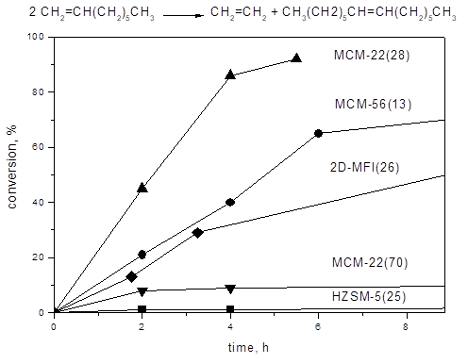
- metathesis catalysts [1]. Albeit typical ill-defined catalysts they are still popular as relatively cheap catalysts finding industrial applications especially in the treatment of low olefins [2][3][4][5]. Their catalytic activity depends on many factors, especially on Mo loading, support acidity, and pre
- -reaction activations. Surface isolated MoO4 tetrahedra were proved as the main precursors of the catalytic species [6][7], thus the perfect dispersion of MoO3 on the surface is a crucial precondition for a high catalytic activity. The mechanisms of transformation of these precursors to the surface Mo
- the parent supports. It may be explained by the formation of some amount of Mo in a lower oxidation state which has been already described for siliceous supports (MCM-41, SBA-15) [9][26]. Catalytic activity MCM-22-based catalysts Na+ forms of zeolites turned out to be unsuitable supports for


Protein–protein interactions in bacteria: a promising and challenging avenue towards the discovery of new antibiotics
Beilstein J. Org. Chem. 2018, 14, 2881–2896, doi:10.3762/bjoc.14.267
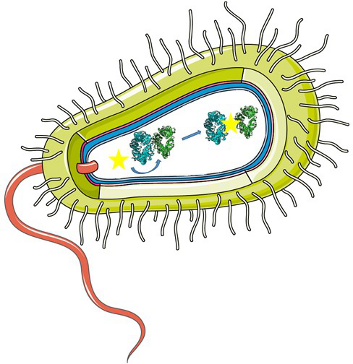
- inhibition of the catalytic activity of the enzyme [23]. All these drug discovery successes have validated PPIs as a target and, in conjunction with the elucidation and reconstruction of protein–protein interaction networks in bacteria, have paved the way towards the development of novel and promising




Copolymerization of epoxides with cyclic anhydrides catalyzed by dinuclear cobalt complexes
Beilstein J. Org. Chem. 2018, 14, 2779–2788, doi:10.3762/bjoc.14.255
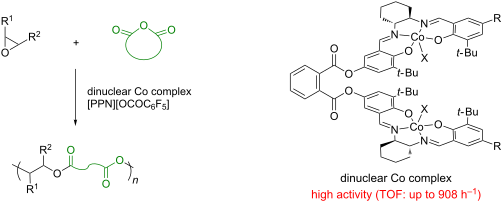
- benzene ring as a linker and their activities in copolymerization reactions. The dinuclear cobalt complexes showed a higher catalytic activity for the copolymerization of propylene oxide with phthalic anhydride than the corresponding mononuclear cobalt–salen complex and achieved one of the highest
- turnover frequencies ever reported. A variety of epoxides and CAs were also found to be copolymerized successfully by the dinuclear cobalt complex with a high catalytic activity. Keywords: cobalt; copolymerization; cyclic anhydrides; epoxides; polyesters; Introduction Aliphatic polyesters have received
- epoxide/CA copolymerization was constricted until recently because of low catalytic activity and poor control over the main chain sequence (formation of ether linkages through consecutive epoxide enchainment) and molecular weight. In 2007, Coates and co-workers reported that β-diiminate zinc complexes


An overview on recent advances in the synthesis of sulfonated organic materials, sulfonated silica materials, and sulfonated carbon materials and their catalytic applications in chemical processes
Beilstein J. Org. Chem. 2018, 14, 2745–2770, doi:10.3762/bjoc.14.253
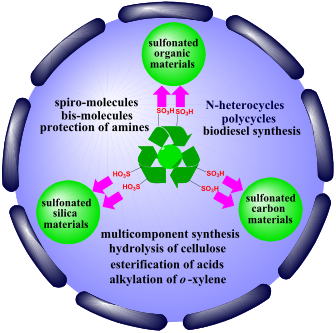
- homogeneous catalysts (Scheme 7). Significantly, IL catalysts 47b,c could be extracted from the reaction mixture for six consecutive cycles. In all runs, IL catalysts 47b,c showed excellent catalytic activity. The FTIR spectra of two of these reused ILs after the 6th run and the fresh ILs have been used to
- prove the retention of their catalytic activity [46]. Khazaei et al. prepared 3-methyl-1-sulfo-1H-imidazolium tetrachloroferrate ([Msim]FeCl4, 3) as a nanostructured catalyst via the reaction of 3-methyl-1-sulfon-1H-imidazolium chloride with dry FeCl3. After stirring the starting materials for 60
- products from the catalyst. The catalyst showed good catalytic activity for four successive runs [47]. Tayebee and co-workers prepared 3-sulfo-imidazolopyridinium hydrogen sulfate ([Simp]HSO4, 53) as a new natural ionic liquid by the reaction between caffeine (51) as a natural, inexpensive, and available









Photocatalyic Appel reaction enabled by copper-based complexes in continuous flow
Beilstein J. Org. Chem. 2018, 14, 2730–2736, doi:10.3762/bjoc.14.251
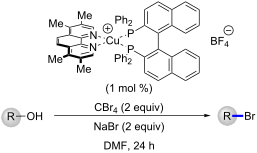
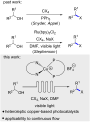
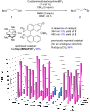
- conversion of an alcohol to bromide involved screening a wide variety of structurally varied complexes. Our group has previously demonstrated that the nature of each ligand influences the physical and photophysical properties as well as catalytic activity of the resulting catalyst (Figure 2) [27]. A library




Transition metal-free oxidative and deoxygenative C–H/C–Li cross-couplings of 2H-imidazole 1-oxides with carboranyl lithium as an efficient synthetic approach to azaheterocyclic carboranes
Beilstein J. Org. Chem. 2018, 14, 2618–2626, doi:10.3762/bjoc.14.240

- capture therapy (BNCT) of cancer [8][9][10][11][12], as well as agonists and antagonists of biological receptors [13][14][15][16][17], etc. In addition, azaheterocyclic carboranes are actively used as ligands in the synthesis of metal complexes of various architectures, possessing catalytic activity [18


Learning from B12 enzymes: biomimetic and bioinspired catalysts for eco-friendly organic synthesis
Beilstein J. Org. Chem. 2018, 14, 2553–2567, doi:10.3762/bjoc.14.232
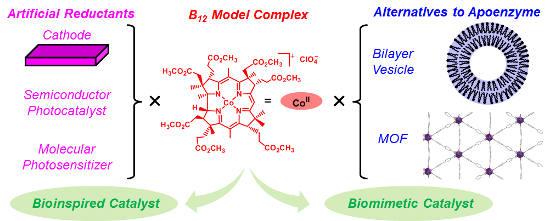
- terms of both catalytic activity and visible-light harvesting. In relation to the reactivity of 1 with DDT, interesting reactions of trichlorinated organic compounds have recently been investigated [100][114]. The B12-TiO2 hybrid catalyst converted trichlorinated organic compounds into esters and amides
- use of vitamin B12 [116]. Furthermore, cobalester, an amphiphilic vitamin B12 derivative with six ester groups and a nucleotide loop, has recently been developed to show good catalytic activity for C–C bond forming reactions [117][118]. The above-mentioned visible-light-driven system composed of 1


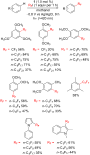
Efficient catalytic alkyne metathesis with a fluoroalkoxy-supported ditungsten(III) complex
Beilstein J. Org. Chem. 2018, 14, 2425–2434, doi:10.3762/bjoc.14.220
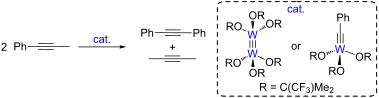
- expanded the “low-oxidation-state route” to the synthesis of 2,4,6-trimethylbenzylidyne complexes of molybdenum and tungsten [18][49][50], which led to an increased steric demand at the metal center. This proved to be advantageous for the catalytic activity, since the removal of coordinating solvents like
- studies With the bimetallic complexes Mo2F6 and W2F3 and the new alkylidyne complex WPhF3 at hand, we aimed at systematically investigating the catalytic activity of those complexes. Even though we failed in selectively cleaving the Mo≡Mo triple bond, we attempted catalytic alkyne metathesis with Mo2F6
- . Interestingly, a marginal catalytic activity could be detected for complex Mo2F6: over the course of four days, the dimolybdenum complex achieved a conversion of 70% in the self-metathesis of the standard substrate 3-pentynyl benzyl ether in toluene in the presence of molecular sieves (MS 5 Å) as 2-butyne


Cationic cobalt-catalyzed [1,3]-rearrangement of N-alkoxycarbonyloxyanilines
Beilstein J. Org. Chem. 2018, 14, 1972–1979, doi:10.3762/bjoc.14.172

- 1,3-bis(diphenylphosphino)propane (dppp), totally diminished the activity of cationic cobalt catalyst (Table 1, entries 6 and 7). Among metal chlorides examined, CoCl2 exhibited the best catalytic activity at 30 °C, affording the corresponding 2a in 68% yield (Table 1, entry 9), as reported previously
- , entry 20), the catalytic activity was diminished at 30 °C (Table 1, entry 21). Neutral CoCl2 did not promote the present reaction (Table 1, entry 22). Brønsted acids, such as trifluoromethanesulfonic acid and diphenylphosphoric acid, were much less active (Table 1, entries 23 and 24). The kind of the
- :1) as eluent to obtain 2k (113.9 mg, 82%). ortho-Aminophenol derivatives. Rearrangement of N-acyloxyanilines. Mechanistic studies, reported in [13]. Competitive experiments, reported in [13]. Mechanism for rearrangement to the para-position. Catalytic activity. Solvent and concentration effects


Water-soluble SNS cationic palladium(II) complexes and their Suzuki–Miyaura cross-coupling reactions in aqueous medium
Beilstein J. Org. Chem. 2018, 14, 1859–1870, doi:10.3762/bjoc.14.160
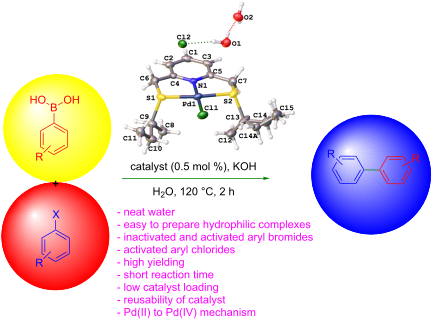
- their SCS analogues, SNS pincer complexes are poorly studied for their use in coupling reactions. Accordingly, a series of water soluble cationic Pd(II) SNS pincer complexes have been successfully synthesised and investigated in detail for their catalytic activity in Suzuki–Miyaura coupling reactions
- inactivated aryl bromides according to the study conducted by Bai and Hor [34]. Similarly, Kumar et al. studied the catalytic activity of pincer complex 16 and reported that the catalyst was compatible with activated aryl bromides to provide reasonable yields over 12 h at 100 °C using 2 mol % catalyst loading
- investigation of their catalytic activity in the aqueous Suzuki–Miyaura coupling reaction. Herein, we report the synthesis of the SNS Pd(II) pincer complexes and their interesting catalytic activities in the Suzuki–Miyaura cross coupling reactions in neat water. Results and Discussion Our study commenced with




β-Hydroxy sulfides and their syntheses
Beilstein J. Org. Chem. 2018, 14, 1668–1692, doi:10.3762/bjoc.14.143
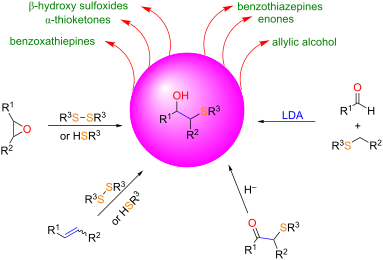
- Brønsted and Lewis acid and base catalysis. Pizzo and co-workers conducted a comparative study on the catalytic activity of Lewis and Brønsted acids as well as bases for the thiolysis of epoxides using InCl3, p-TsOH, n-Bu3P and K2CO3 as representative examples, respectively. Although all of them effected
- organophosphine was found to have a profound effect on the catalytic activity; some reactions were sluggish when tricyclohexylphosphine or triphenylphosphine were used as catalysts. The tributylphosphine acts as a nucleophilic trigger to attack, and thus initiates the reaction. 3.1.1.3 Use of zinc salts. In


Spectroelectrochemical studies on the effect of cations in the alkaline glycerol oxidation reaction over carbon nanotube-supported Pd nanoparticles
Beilstein J. Org. Chem. 2018, 14, 1428–1435, doi:10.3762/bjoc.14.120
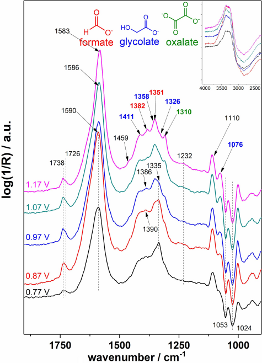
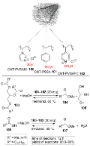
- (Ep1 and Ep2) are found at lower anodic potentials (−29 and −52 mV vs RHE on average) compared with Pd/OCNT. Although the peak current densities are almost equal, the catalytic activity towards glycerol oxidation is higher for Pd/NCNT, as the reaction starts at lower anodic overpotentials. This
- structural properties of the catalyst, whereas the changes in jp1 and jp2 are caused by the nature of the cation in the electrolyte. The higher catalytic activity of the metallic Pd NPs supported on NCNTs in heterogeneous gas-phase catalysis has been explained by an electronic effect due to the electron


Recent applications of chiral calixarenes in asymmetric catalysis
Beilstein J. Org. Chem. 2018, 14, 1389–1412, doi:10.3762/bjoc.14.117
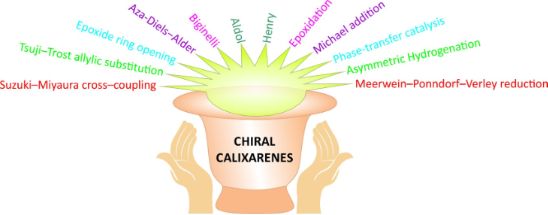
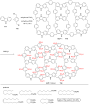
- important role in the catalytic activity and the selectivity. In addition, the catalytic performance of 7 was found sensitive to the cation of the base. Because, when aqueous NaOH was used instead of KOH, a higher yield and ee were obtained. It is proposed that a better chelating ability of 7 toward the
- product 5a in 86% yield up to 35% ee (Scheme 4). In order to assess the effect of the calixarene backbone on the catalytic activity and enantioselectivity, they also performed the reaction in the presence of a chiral monoamide and an achiral calix[4]arene-tetramide. The results obtained in the presence of
- asymmetric Tsuji–Trost allylic alkylation of 1,3-diphenylprop-2-enyl acetate (33) with dimethyl malonate (34, Scheme 9). Both, good catalytic activity and enantioselectivity (ee values up to 86%) were obtained with the potassium cation. This was due to the more strongly interaction of the dimethyl malonate


An overview of recent advances in duplex DNA recognition by small molecules
Beilstein J. Org. Chem. 2018, 14, 1051–1086, doi:10.3762/bjoc.14.93






Phosphodiester models for cleavage of nucleic acids
Beilstein J. Org. Chem. 2018, 14, 803–837, doi:10.3762/bjoc.14.68
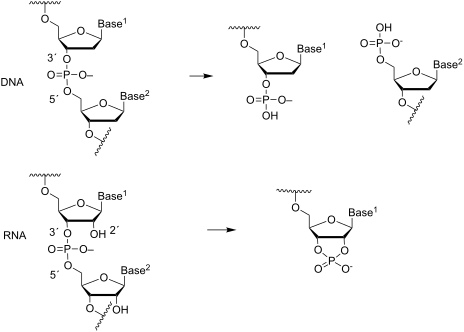
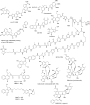
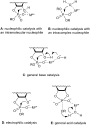
- guanidinium compound. This low basicity was suggested to be a central factor behind the catalytic activity. A clarification of the mechanism of guanidine-based catalysis has more recently been attempted by anchoring a 2,4-diamino-1,3,5-triazine core to the N3 of uracil bases of UpU by two side arms, each
- hydroxy function on phosphorus (Scheme 8). Similar results were obtained on using diphenylmethane as a scaffold 8 (Figure 8) [81]. A cyclohexylidene or adamantylidene substituent on the methylene carbon moderately enhanced the catalytic activity. Interestingly, the calix[4]arene-based agent 7 catalyzed



Nanoreactors for green catalysis
Beilstein J. Org. Chem. 2018, 14, 716–733, doi:10.3762/bjoc.14.61
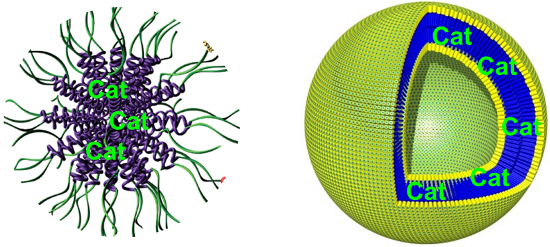
- is occurring in the lipophilic pocket and not in water. The authors also demonstrated the ability of the PQS system to be recycled up to 10 times without loss in its catalytic activity. Catalytic micelles were also prepared by O’Reilly et al. when a novel amphiphilic Sulfur–Carbon–Sulfur (SCS) pincer
- Pd catalyst together with a PAA (poly(acrylic acid)) based polymer self-assembled in water [32]. The catalytic activity of the nanostructures was compared to the results achieved with the small molecule analogues of the pincer Pd complex, in a Suzuki–Miyaura coupling. When the reaction of vinyl
- -coupling reactions. Catalytic activity was compared to the activity of the freshly prepared free catalyst, and the palladium entrapment did not affect either the conversion or the yields of the reaction [28]. The catalyst immobilization also allowed facile Pd removal from the final product and catalyst


Cobalt-catalyzed directed C–H alkenylation of pivalophenone N–H imine with alkenyl phosphates
Beilstein J. Org. Chem. 2018, 14, 709–715, doi:10.3762/bjoc.14.60
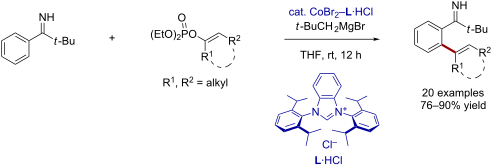
- Grignard reagent would furnish the alkenylation product 3·MgX and regenerate the species A. While the relationship between the ligand and the catalytic activity remains unclear, we speculate that a strong σ-donating ability of NHC ligands would facilitate the SET step among others. Conclusion In summary


Heterogeneous Pd catalysts as emulsifiers in Pickering emulsions for integrated multistep synthesis in flow chemistry
Beilstein J. Org. Chem. 2018, 14, 648–658, doi:10.3762/bjoc.14.52
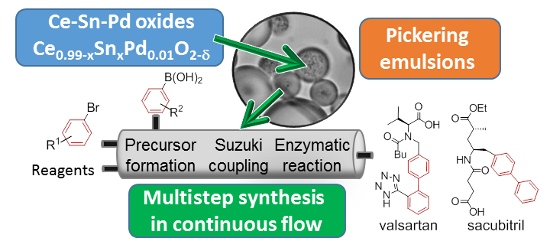
- for catalysts rich in tin. Suzuki–Miyaura coupling reactions Batch reactions The catalytic activity of the synthesised catalysts in the Suzuki–Miyaura reaction was investigated using phenylboronic acid 3 in combination with various bromoarenes 4a–e, featuring ortho- and para-substitution of electron
- reach full conversion. p-Bromobenzenes containing electron-withdrawing substituents showed higher reactivity than bromobenzenes containing electron-donating groups. When Ce0.495Sn0.495Pd0.01O2–δ was employed as catalyst, however, the catalytic activity was found to be significantly lower and the binary
- connected to their catalytic activity. Nevertheless, there are indications that the surface area and the particle size distribution play a role in the catalytic performance of the palladium substituted metal oxides. In view of the aimed application of the Pd metal oxides for targeted API synthesis, the





An air-stable bisboron complex: a practical bidentate Lewis acid catalyst
Beilstein J. Org. Chem. 2018, 14, 618–625, doi:10.3762/bjoc.14.48

- enhancing its practicality. Comparative reactions were carried out to evaluate its catalytic activity in IEDDA reactions of diazine including phthalazine as well as 1,2,4,5-tetrazine. Keywords: air-stable catalyst; bidentate; bisboron; diazine; Diels–Alder; Lewis acid; Introduction The development of
- reactions were carried out and the results showed that the catalytic activity of the complex in IEDDA reactions depended on its performance in ligand exchange with the diazine substrates. Experimental Complexation of 5,10-dimethyl-5,10-dihydroboranthrene with Lewis bases: In the glovebox, 5,10-dimethyl-5,10