Search results
Search for "cationic" in Full Text gives 496 result(s) in Beilstein Journal of Organic Chemistry. Showing first 200.
Synthesis and electrochemical properties of 3,4,5-tris(chlorophenyl)-1,2-diphosphaferrocenes
Beilstein J. Org. Chem. 2022, 18, 1338–1345, doi:10.3762/bjoc.18.139
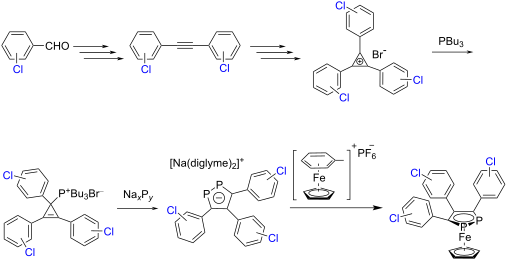
- , for 5c, single-crystal X-ray crystallography (Figure 1a). The 13C NMR signals of the cationic carbon atoms of the three-membered ring appeared at about 145 ppm. Besides, the 1H NMR spectra of 5 were unremarkable and consistent with the suggested formulas. As a next step, we synthesized a series of




Ionic multiresonant thermally activated delayed fluorescence emitters for light emitting electrochemical cells
Beilstein J. Org. Chem. 2022, 18, 1311–1321, doi:10.3762/bjoc.18.136
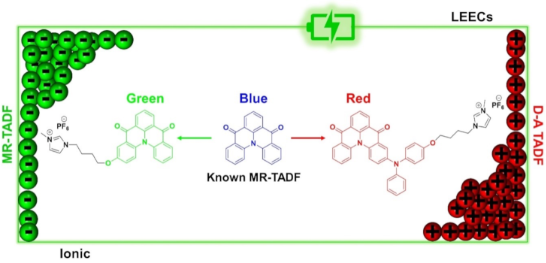
- the non-doped device, at 2.0% demonstrated 100% exciton utilization efficiency in the device and efficient energy transfer from the host to the guest cyanine emitter. Deep blue emission in LEECs is challenging. We also reported a blue-emitting LEEC employing a cationic sulfone-based donor–acceptor
- where the emissive layer also contained an inorganic salt and a conducting polymer. Recently, a step-change in device performance were achieved by He et al. who employed a cationic TADF compound that possesses low-lying through-space and through-bond charge transfer excited states [23]. The LEEC showed



Electro-conversion of cumene into acetophenone using boron-doped diamond electrodes
Beilstein J. Org. Chem. 2022, 18, 1154–1158, doi:10.3762/bjoc.18.119

- propose a reaction mechanism (Table 2). First, we carried out the electrolysis of 1 in MeCN–MeOH to confirm whether the reaction intermediate is a radical or cationic species (Table 2, entry 1). As a result, methyl cumyl ether, a methoxy adduct to the benzyl position of 1, was obtained as the main product


Enzymes in biosynthesis
Beilstein J. Org. Chem. 2022, 18, 1131–1132, doi:10.3762/bjoc.18.116
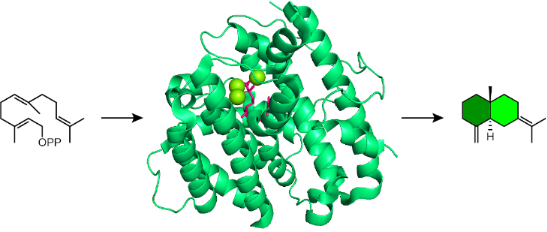
- proceed through multistep cationic cascade reactions and usually produce a polycyclic terpene hydrocarbon or alcohol with multiple stereogenic centers. While these transformations require only a single enzyme, polyketide and nonribosomal peptide biosyntheses are catalyzed by megasynthases that follow an

Understanding the competing pathways leading to hydropyrene and isoelisabethatriene
Beilstein J. Org. Chem. 2022, 18, 972–978, doi:10.3762/bjoc.18.97
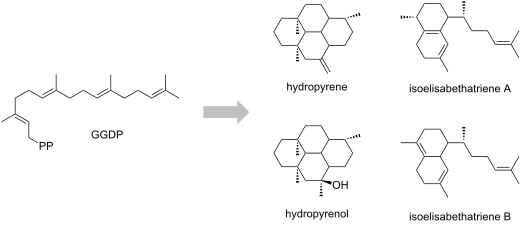
- ), which is −18.5 kcal/mol more stable than A. The barrier for the 1,3-hydride transfer is 16.2 kcal/mol for B→C. Subsequently, the double bond on C14–C15 reacts with the cationic charge on C1 to form intermediate D, which is slightly less stable than C (−17.3 kcal/mol) In the enzyme environment



DDQ in mechanochemical C–N coupling reactions
Beilstein J. Org. Chem. 2022, 18, 639–646, doi:10.3762/bjoc.18.64
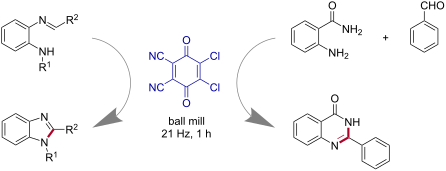
- reaction. So, based on literature reports [53][54][55], we have proposed a reaction mechanism in Figure 5b. Initially, DDQ abstracts a hydride ion from substrate 1a to generate the intermediate A. Then intermediate A undergoes an electrophilic intramolecular cyclization to form the cationic intermediate B


BINOL as a chiral element in mechanically interlocked molecules
Beilstein J. Org. Chem. 2022, 18, 508–523, doi:10.3762/bjoc.18.53
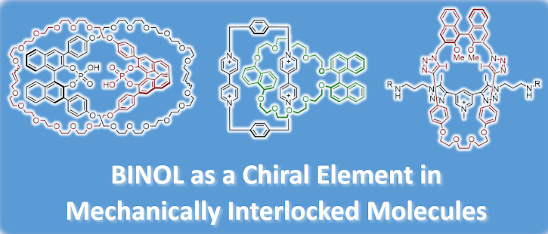
- thread also leads to a desymmetrization of the BINOL-based macrocycle (loss of C2 symmetry), as seen by 13C NMR spectroscopy. Stoddart and co-workers also used their π–π-recognition approach for the synthesis of BINOL-containing cationic catenanes [47][48]. They employed BINOL-based macrocycles
- pyridine axle, followed by ion exchange, gave rise to the cationic rotaxanes 64a/b in 23/37% overall yield, both of which feature four iodotriazoles as XB donors. While rotaxane (S)-64a only possesses the BINOL unit as a stereogenic element, the system (S,S,S)-64b features two additional chiral centers on




A resorcin[4]arene hexameric capsule as a supramolecular catalyst in elimination and isomerization reactions
Beilstein J. Org. Chem. 2022, 18, 337–349, doi:10.3762/bjoc.18.38
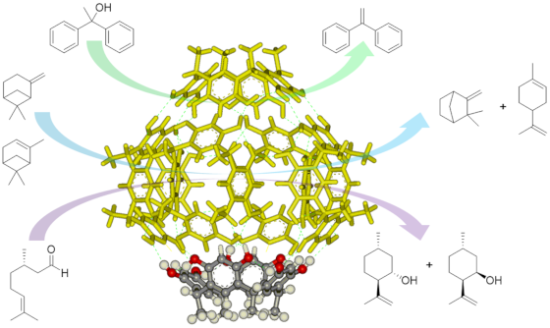
- promoting the protonation of the substrates leading to the formation of cationic intermediates that are stabilized within the cavity with consequent peculiar features in terms of acceleration and product selectivity. In all cases the catalytic activity displayed by the hexameric capsule is remarkable if
- compared to many other strong Brønsted or Lewis acids. Keywords: cationic intermediates; encapsulation; organocatalysis; resorcin[4]arene hexamer; supramolecular catalysis; Introduction In enzymatic catalysis, the substrate is selected matching the size, shape and specific functional groups present in
- 1375 Å3 that is accessible [23] for cationic guests [24] thanks to extended cation–π interactions [25] as well as other electron poor molecules [26][27]. After our seminal work on the use of 16 as a nanoreactor to bind an Au(I) catalyst and to impart unique product [28] as well as substrate [29


Site-selective reactions mediated by molecular containers
Beilstein J. Org. Chem. 2022, 18, 309–324, doi:10.3762/bjoc.18.35
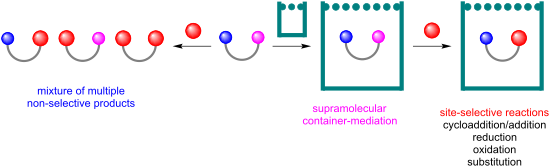
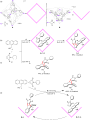
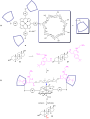
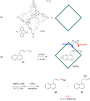
- ) [60]. The host in here was a water-soluble deep cavitand D with methylated urea groups on the rim, which had already been used to mediate other organic reactions [61]. The feet of the host were transformed to pyridinium cationic moieties to make it soluble in water, and in other examples, similar
- cavitand hosts were also modified with imidazolium cationic or carboxylic anionic feet [29]. Before the reaction, NMR analysis of the host–guest complex indicated that the bound guest was in yo-yo motions time-averaged between unsymmetrical J-shaped conformations and symmetrical U-shaped ones. Treatment of
- demonstrated a relatively high affinity towards cationic guests through cation–π interactions, which was crucial for the catalysis of many of the organic reactions. And similarly, the ionic form of the host made it water-soluble and reactions could be conducted in water. In this particular example, the






Recent developments and trends in the iron- and cobalt-catalyzed Sonogashira reactions
Beilstein J. Org. Chem. 2022, 18, 262–285, doi:10.3762/bjoc.18.31
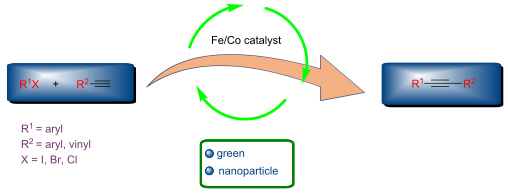
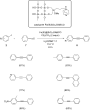
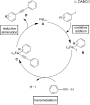
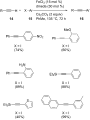
- cross-coupling reactions Homogeneous green protocols Tsai et al. discussed an efficient, simple and environmentally friendly method for the coupling of arylynols 3 with an aryl halide [21]. This strategy discloses a one pot reaction catalyzed by FeCl3 in an aqueous medium associated with the cationic







Recent advances and perspectives in ruthenium-catalyzed cyanation reactions
Beilstein J. Org. Chem. 2022, 18, 37–52, doi:10.3762/bjoc.18.4
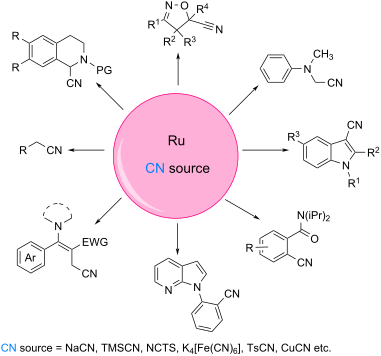
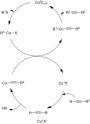
- heteroarenes such as thiophenes, benzofurans, furans, and indoles were found suitable substrates and afforded the desired products with high chemo- and site-selectivity. A possible mechanism for the reaction was also described. The first step of the catalytic cycle involves the formation of a cationic complex


Iron-catalyzed domino coupling reactions of π-systems
Beilstein J. Org. Chem. 2021, 17, 2848–2893, doi:10.3762/bjoc.17.196
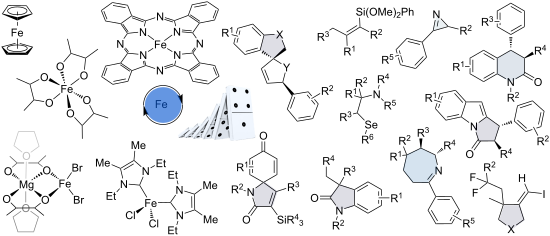
- authors propose the intramolecular cyclization proceeds via the nucleophilic attack of a brominated or cationic benzylic position rather than a radical cyclization. In 2021, Tang and Zhang demonstrated a similar radical annulation of unsaturated carboxylic acids with disulfides for the synthesis of γ













Electrocatalytic C(sp3)–H/C(sp)–H cross-coupling in continuous flow through TEMPO/copper relay catalysis
Beilstein J. Org. Chem. 2021, 17, 2650–2656, doi:10.3762/bjoc.17.178
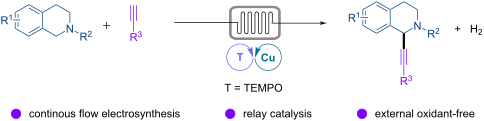
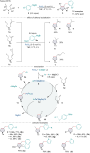
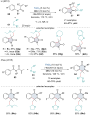
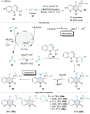
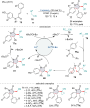
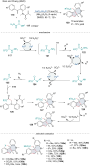
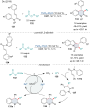
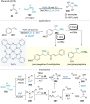
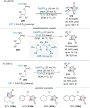
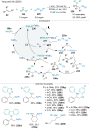
- through reversible reaction with this cationic species. Conclusion In summary, we have achieved the electrochemical dehydrogenation cross-coupling of tetrahydroisoquinolines with terminal alkynes in continuous flow through Cu/TEMPO relay catalysis. This work demonstrates that continuous-flow




Recent advances in the tandem annulation of 1,3-enynes to functionalized pyridine and pyrrole derivatives
Beilstein J. Org. Chem. 2021, 17, 2462–2476, doi:10.3762/bjoc.17.163
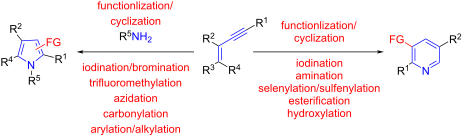
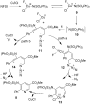
- trapped by Cu(II) to deliver the Cu(III) species 12, which undergoes intramolecular annulation and reductive elimination to afford the desired product 8 and regenerate the Cu(I) catalyst. Path b: vinyl radical intermediate 11 is oxidized by Cu(II) to give the cationic vinyl species 14. Finally, the




Targeting active site residues and structural anchoring positions in terpene synthases
Beilstein J. Org. Chem. 2021, 17, 2441–2449, doi:10.3762/bjoc.17.161
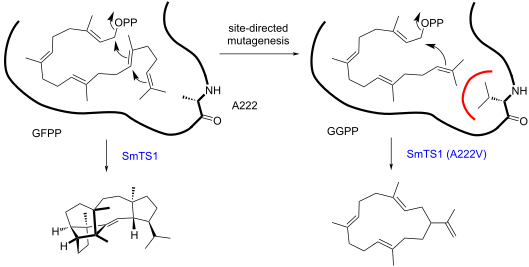
- attack of an olefinic double bond to the cationic centre Wagner–Meerwein rearrangements, and proton or hydride migrations [2]. These multistep cascade reactions ultimately result in terpene hydrocarbons that are often (poly)cyclic and contain several stereogenic centres [3][4]. In some cases, water is
- incorporated by its nucleophilic attack at a cationic intermediate, leading to terpene alcohols [5][6] or sometimes ethers [7][8]. Substrate ionisation by TPSs is achieved through binding of the diphosphate portion to a trinuclear Mg2+ cluster in the active site that is itself bound to two highly conserved
- synthases seem to be quite random, only the active site is lined with mostly non-polar residues. They contour the active site and force the substrate into a certain conformation which, after substrate ionisation, determines the reaction pathway that is taken by the cationic cascade. Here we present site


Synthesis of 5-arylacetylenyl-1,2,4-oxadiazoles and their transformations under superelectrophilic activation conditions
Beilstein J. Org. Chem. 2021, 17, 2417–2424, doi:10.3762/bjoc.17.158

- bond of these oxadiazoles quantitatively resulted in E/Z-vinyl triflates. The reactions of the cationic intermediates have been studied by DFT calculations and the reaction mechanisms are discussed. Keywords: acetylene-oxadiazoles; Friedel–Crafts reaction; hydroarylation; superelectrophilic activation
- , as a hydride ion source, was conducted to achieve the ionic hydrogenation of intermediate cationic species. However, no products of ionic hydrogenation were obtained, only the product of the hydrophenylation of the acetylene bond 5a was quantitatively isolated (compare with data shown in Scheme 5


Advances in mercury(II)-salt-mediated cyclization reactions of unsaturated bonds
Beilstein J. Org. Chem. 2021, 17, 2348–2376, doi:10.3762/bjoc.17.153
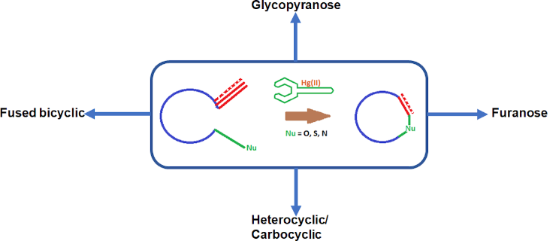
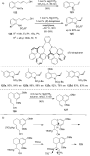
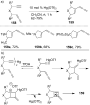
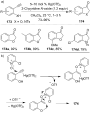
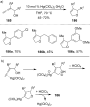
- literature. Utilization of Hg(II) salts in the intramolecular cationic cyclization of olefinic, acetylenic, and allenic substrates having aromatic rings, nucleophiles, and heteroatoms in the neighborhood were well documented. Hg(II) reagents were also often employed in the important cyclization step during
- Yamamoto et al [116]. The catalytic pathway was proved to involve the direct H-transfer to the vinylmercury complex from the aromatic ring. It involved Hg(OTf)2-catalyzed cyclization of aryl 1,1-disubstituted allenes with the formation of a quaternary carbon center followed by the formation of a cationic












Post-functionalization of drug-loaded nanoparticles prepared by polymerization-induced self-assembly (PISA) with mitochondria targeting ligands
Beilstein J. Org. Chem. 2021, 17, 2302–2314, doi:10.3762/bjoc.17.148
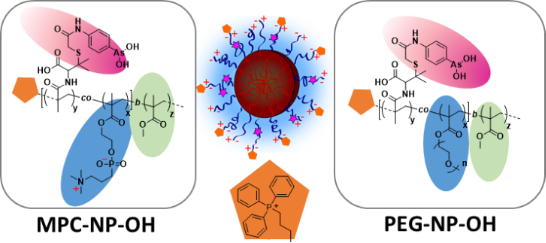
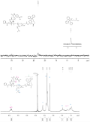
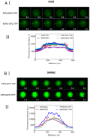
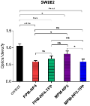
- peptides and proteins have been linked to nanotechnology. DQA and TPP are both cationic and lipophilic molecules and therefore able to easily pass the mitochondrial membrane [15][16][17][18][19]. TPP is the most-studied mitochondrial targeting agent and has shown to accumulate 1000 times more in the






Halides as versatile anions in asymmetric anion-binding organocatalysis
Beilstein J. Org. Chem. 2021, 17, 2270–2286, doi:10.3762/bjoc.17.145
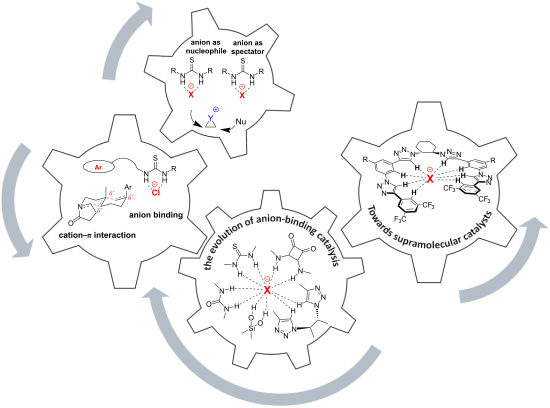
- the cationic reactive species. Keywords: anion binding; asymmetric catalysis; halide anions; hydrogen donors; noncovalent interactions; Introduction Halogens and the respective anionic halides occupy an essential role in natural and chemical processes [1][2][3][4]. While in chemical syntheses
- anion coordination and supramolecular chemistry [7][8][9][10][11], this field of research has attracted more attention within the past two decades. Immense efforts were made to identify small molecules that are able to productively bind anions via noncovalent hydrogen bonding, from which cationic
- proton of the enolizable β-ketoester 49 and thus activating the nucleophilic species. This enolate then adds to the cationic substrate from in situ upon halide abstraction of α-chloro amino acid derivatives 48 by the thiourea moiety of the bifunctional catalyst (Scheme 10c, key intermediate), leading to



Chemical syntheses and salient features of azulene-containing homo- and copolymers
Beilstein J. Org. Chem. 2021, 17, 2164–2185, doi:10.3762/bjoc.17.139
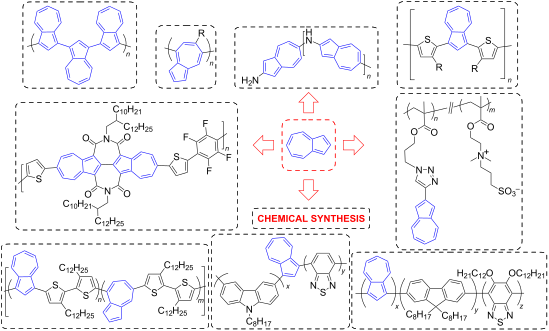
- , Fukutomi, and Nakayama [19] reported the synthesis of what they described as ‘true polyazulene’ through a cationic polymerization reaction. Their protocol involved heating the trifluoroacetic acid (TFA) solution of azulene (1) followed by treatment with triethylamine to obtain a brown polymeric product
- ) complexes. Synthesis of ‘true polyazulene’ 3 or 3’ by cationic polymerization. Synthesis of 1,3-polyazulene 5 by Yamamoto protocol. Synthesis of 4,7-dibromo-6-(n-alkyl)azulenes 12–14. Synthesis of (A) 4,7-diethynyl-6-(n-dodecyl)azulene (16) and (B) 4,7-polyazulene 17 containing an ethynyl spacer. Synthesis





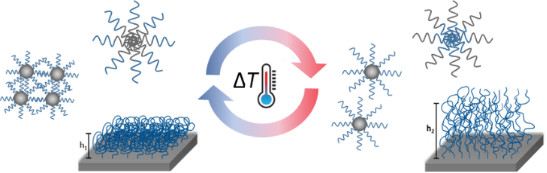
Constrained thermoresponsive polymers – new insights into fundamentals and applications
Beilstein J. Org. Chem. 2021, 17, 2123–2163, doi:10.3762/bjoc.17.138


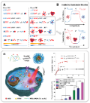
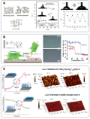
Towards new NIR dyes for free radical photopolymerization processes
Beilstein J. Org. Chem. 2021, 17, 2067–2076, doi:10.3762/bjoc.17.133

- process is expected with different NIR dyes [9]. Table 1 and Figure S2 (Supporting Information File 1) clearly show the exothermicity observed upon irradiation. The proposed NIR dye/iodonium combinations are able to generate free radicals and cationic species (Scheme 7 and Figure 4), and these two




Progress and challenges in the synthesis of sequence controlled polysaccharides
Beilstein J. Org. Chem. 2021, 17, 1981–2025, doi:10.3762/bjoc.17.129
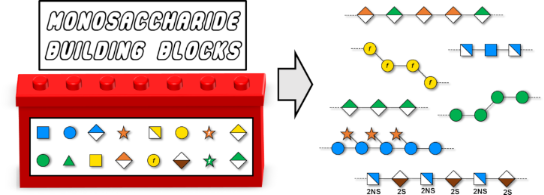
- . Cationic ROP of anhydrosugars was the pioneering approach for the preparation of synthetic, unnatural xylans. Polyxylofurans with (1–5) and (3–5) linkages were described [199][200]. In most cases, non-uniform polysaccharides were obtained, as in the case of α(1–5)-xylans, prepared in up to 93% yields and
- , enabling the synthesis of a 32mer [272]. The construction of α(1–6)-mannans (up to 10mer) bearing α(1–2)-Man branches was also accomplished using phosphate, N-phenyltrifluoroacetimidate or n-pentenylorthoester donors [273][274]. An approach using a (cationic) ROP method using tricyclic orthoester Man BBs








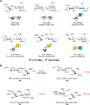


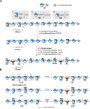


Cationic oligonucleotide derivatives and conjugates: A favorable approach for enhanced DNA and RNA targeting oligonucleotides
Beilstein J. Org. Chem. 2021, 17, 1828–1848, doi:10.3762/bjoc.17.125
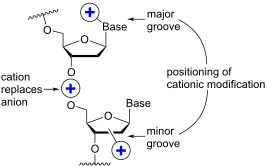
- strategy that has been employed to optimize the delivery profile of ASOs, is the functionalization of ASOs with cationic amine groups, either by direct conjugation onto the sugar, nucleobase or internucleotide linkage. The introduction of these positively charged groups has improved properties like
- nuclease resistance, increased binding to the nucleic acid target and improved cell uptake for oligonucleotides (ONs) and ASOs. The modifications highlighted in this review are some of the most prevalent cationic amine groups which have been attached as single modifications onto ONs/ASOs. The review has
- been separated into three sections, nucleobase, sugar and backbone modifications, highlighting what impact the cationic amine groups have on the ONs/ASOs physiochemical and biological properties. Finally, a concluding section has been added, summarizing the important knowledge from the three chapters


Development of N-F fluorinating agents and their fluorinations: Historical perspective
Beilstein J. Org. Chem. 2021, 17, 1752–1813, doi:10.3762/bjoc.17.123
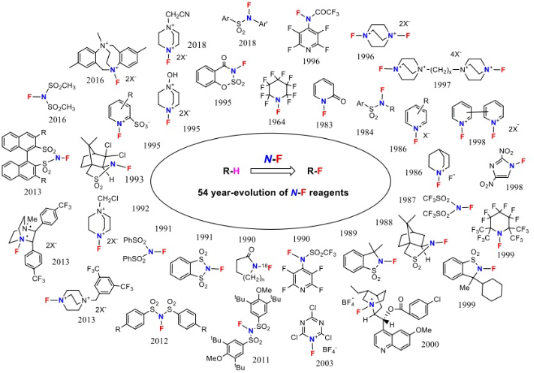
- moisture, while HF seriously attacks human skin. The N-F fluorinating agents can be classified into two categories: these are neutral and cationic. This review covers the chronological advancement of these reagents regardless of their classification, as they advanced side by side. Review 1. Historical
- gave higher yields of the protonated products 4-3. 1-5. N-Fluoropyridinium salts and their derivatives In 1986, Umemoto et al. reported N-fluoropyridinium triflate and its derivatives 5-4 as new stable cationic fluorinating agents. These possessed either electron-donating or -withdrawing substituents