


Search results
Search for "chromophores" in Full Text gives 143 result(s) in Beilstein Journal of Organic Chemistry.
Diarylethene-modified nucleotides for switching optical properties in DNA
Beilstein J. Org. Chem. 2012, 8, 905–914, doi:10.3762/bjoc.8.103
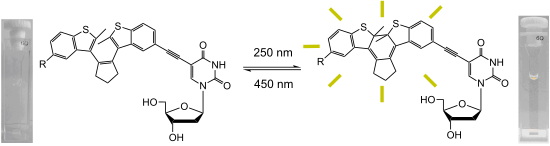
- molecular components represents an increasingly significant goal for the development of new photoreactive nanostructured architectures. Among those architectures, nucleic acids were proven to be an important scaffold for the precise arrangement of all kinds of chromophores inside or along the double helix
- chromophores to oligonucleotides offers potentially interesting optical characteristics, among these being solvatochromism and red-shifted exciplex-type fluorescence [38]. Such absorption and fluorescence readouts are potentially suitable for DNA probing [39][40][41]. On the other hand, with respect to
- reactivity the 5-position of pyrimidines (U/T and C) and the 8-position of purines (A and G) are preferred as chromophore modification sites. The assumption, that these points of attachment allow the chromophores to point into the major groove is only partially true, if at all. In particular, large and




Multistep organic synthesis of modular photosystems
Beilstein J. Org. Chem. 2012, 8, 897–904, doi:10.3762/bjoc.8.102
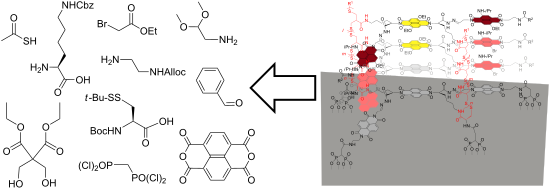
- fill them with functional π-stacks of free choice. Keywords: asparagusic acid; charge-transfer cascades; chromophores; disulfide exchange; hydrazone exchange; molecular switches; naphthalenediimides; π-stacks; surface-initiated polymerization; Introduction The architecture of photosystem 1 is rather


Thiophene-based donor–acceptor co-oligomers by copper-catalyzed 1,3-dipolar cycloaddition
Beilstein J. Org. Chem. 2012, 8, 683–692, doi:10.3762/bjoc.8.76

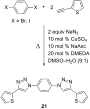
- electronic communication between the chromophores [21][22][23][31]. It has also been shown that a 1,2,3-triazole can act as a strong σ-electron donor [26] or as a weak π-electron acceptor [15]. In this study, we aimed at the combination of electron-rich (oligo)thiophenes as donors and electron-deficient




Synthesis of szentiamide, a depsipeptide from entomopathogenic Xenorhabdus szentirmaii with activity against Plasmodium falciparum
Beilstein J. Org. Chem. 2012, 8, 528–533, doi:10.3762/bjoc.8.60
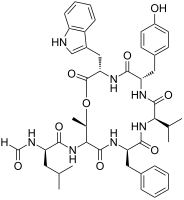
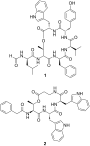
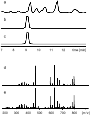
- -weight compounds with UV chromophores (e.g., isopropylstilbenes [4], anthraquinones [4], or xenorhabdines [5]. However, bioactivity-based or MS-based screening of crude extracts and culture supernatants led to the identification of larger compounds, such as the PAX peptides [6], the xenortides [7



Imidazole as a parent π-conjugated backbone in charge-transfer chromophores
Beilstein J. Org. Chem. 2012, 8, 25–49, doi:10.3762/bjoc.8.4
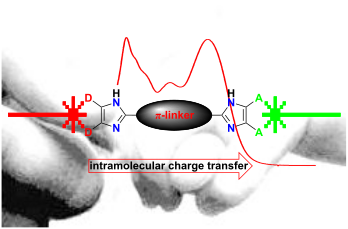
- diimidazoles, benzimidazoles, bis(benzimidazoles), imidazole-4,5-dicarbonitriles, and imidazole-derived chromophores chemically bound to a polymer chain. Keywords: charge transfer; chromophore; conjugation; donor–acceptor system; imidazole; Introduction Over the past three decades, great progress has been
- robustness, possibility for further modification, and facile property tuning. Hence, heteroaromatic push–pull chromophores have been targeted and investigated as active components of optoelectronic devices, organic light-emitting diodes (OLED), photovoltaic cells, semiconductors, switches, data-storage
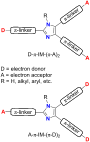
- C5 in addition to N1. On the imidazole backbone, two principal orientations of the substituents are possible, and these are most frequently used to generate Y-shaped chromophores as shown in Figure 2. The donor appended through an additional π-linker to the imidazole C2, completed with two peripheral




Photochemical and thermal intramolecular 1,3-dipolar cycloaddition reactions of new o-stilbene-methylene-3-sydnones and their synthesis
Beilstein J. Org. Chem. 2011, 7, 1663–1670, doi:10.3762/bjoc.7.196
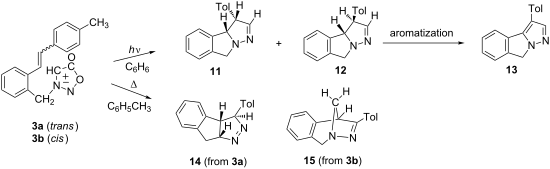
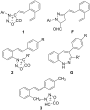
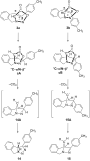
- such a system, where two chromophores, stilbene and sydnone, are divided by a methylene bridge, an intramolecular 1,3-dipolar cycloaddition and the formation of diverse polycyclic compounds could be expected. Herein we describe, for the first time, the synthesis of cis- and trans-3-(stilbenylmethyl




One-pot four-component synthesis of pyrimidyl and pyrazolyl substituted azulenes by glyoxylation–decarbonylative alkynylation–cyclocondensation sequences
Beilstein J. Org. Chem. 2011, 7, 1173–1181, doi:10.3762/bjoc.7.136
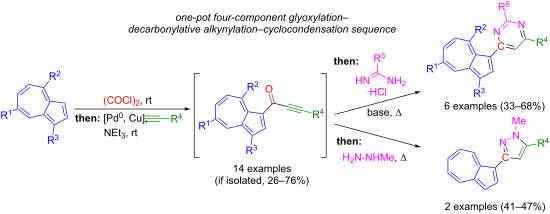
- these intermediates into many classes of heterocycles [12][13][14][15]. These novel MCRs nicely correspond with diversity-oriented strategies towards functional organic chromophores [1][2]. The striking blue color of azulene (1a) (from the Spanish word “azul” = blue) has aroused scientific attention for
- -component approach to heterocyclic derivatives of azulene is well suited for the development of functional chromophores with extended π-conjugation. Selected resonance structures of azulene (1a) and structure of the sesquiterpene guaiazulene (1b). Synthesis of ynones by glyoxylation–decarbonylative


Supramolecular FRET photocyclodimerization of anthracenecarboxylate with naphthalene-capped γ-cyclodextrin
Beilstein J. Org. Chem. 2011, 7, 290–297, doi:10.3762/bjoc.7.38
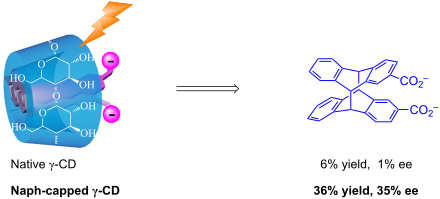
- of 7, where the included naphthalene chromophores are arranged in a right-handed screw [24]. As can be seen from Figure 3, naphthalene-capped γ-CD 6 gave only weak induced circular dichroism signals at the 1La and 1Bb bands of the naphthalene chromophore, the intensity of which was not concentration



Effects of anion complexation on the photoreactivity of bisureido- and bisthioureido-substituted dibenzobarrelene derivatives
Beilstein J. Org. Chem. 2011, 7, 278–289, doi:10.3762/bjoc.7.37
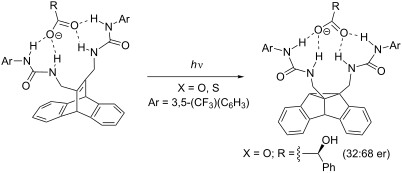
- (trifluoromethyl)phenyl substituents. Notably, not even the commonly employed sensitizer acetone is capable of inducing the DPM rearrangement of 1i. Considering the different photophysical and photochemical properties of the carbonyl and thiocarbonyl chromophores [49], it may be that a similar difference exists




Self-assembly and semiconductivity of an oligothiophene supergelator
Beilstein J. Org. Chem. 2010, 6, 1070–1078, doi:10.3762/bjoc.6.122
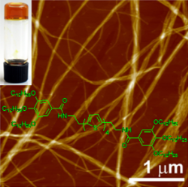
- on bisurea derivatives of bithiophene chromophores and demonstrated a significant charge carrier mobility as a result of self-assembly (Σμmin = 5 × 10⁻³ cm2 V−1 s−1) [18]. However, the building blocks were made only from mono and bithiophene units. Later, Shinkai and co-workers reported the gelation
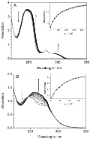
- -type aggregate to monomeric building blocks at elevated temperature. The self-assembly of T1 at such low concentrations can be attributed to the synergistic effect of π-π-stacking among the oligothiophene chromophores and intermolecular hydrogen bonding between the amide groups of the neighbouring
- chromophores (Scheme 3). To ascertain the involvement of hydrogen bonding in the self-assembly, we examined the effect of a protic solvent, e.g. MeOH, on the self-assembly process by UV-vis spectroscopy. MeOH itself can be involved in H-bonding interaction with the amide groups, and thus expected to interfere


Conjugated polymers containing diketopyrrolopyrrole units in the main chain
Beilstein J. Org. Chem. 2010, 6, 830–845, doi:10.3762/bjoc.6.92
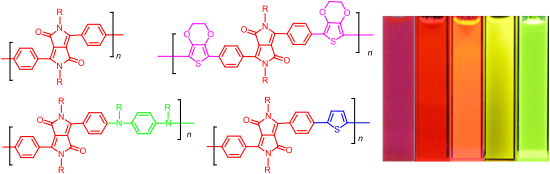
- ; photoluminescence; solar cell; Introduction A useful strategy in the design of new polymers for electronic applications is to incorporate chromophores which are highly absorbing and emitting in the visible and near infrared region into π-conjugated polymers chains. Potentially useful chromophores for electronic
- . Strong hydrogen bonding between the lactam units favors the chromophores forming physically cross-linked chain structures in the solid state, which is the origin for the poor solubility [7][8]. Short distances between the chromophore planes (0.336 nm) and phenyl ring planes (0.354 nm) enable π-π
- , and the chromophore requires to be functionalized with polymerizable groups. The solubility can be increased by N-alkylation [10], arylation [11] or acylation [12] of the lactam units thus preventing hydrogen bond formation between the chromophores. Polymerizable groups can be attached to the aryl




Chromo- and fluorophoric water-soluble polymers and silica particles by nucleophilic substitution reaction of poly(vinyl amine)
Beilstein J. Org. Chem. 2010, 6, No. 79, doi:10.3762/bjoc.6.79
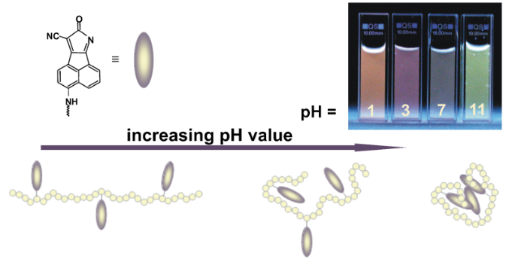
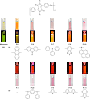
- of the two contacting phases). This approach was developed to carry out functionalization reactions between the water-soluble PVAm and suitable chromophores [30] or fluorophores. In these reactions, silica can be considered as ‘solubilizer’ because PVAm, as well as the reactants, are consecutively
- NH2 groups of the PVAm on the UV–vis absorption maxima of the chromophore. Probably, the chains of the polymer are able to insulate the chromophores from the solvent molecules. Hence, the chromophores interact more strongly with the polymer chains than they do with the solvents. The HBD ability of the




Molecular recognition of organic ammonium ions in solution using synthetic receptors
Beilstein J. Org. Chem. 2010, 6, No. 32, doi:10.3762/bjoc.6.32
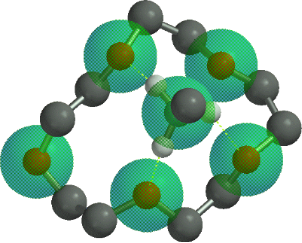
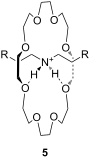
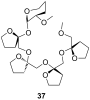
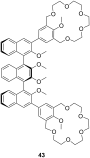
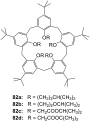
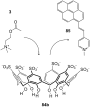
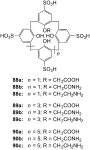
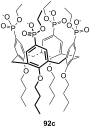
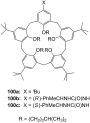
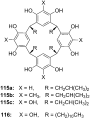
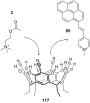
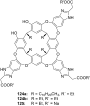
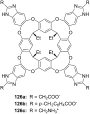
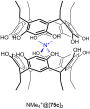
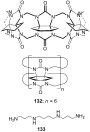
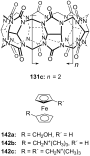
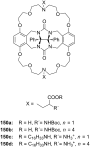
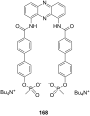
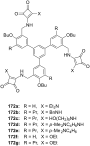
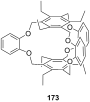
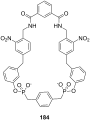
- ion binding processes are direct absorption and emission measurements utilizing chromophores in the receptor or analyte molecule, displacement assays with suitable dyes, NMR titration experiments, isothermal titration calorimetry and transport through an organic phase monitored by HPLC, NMR [37][38
















































Synthetic incorporation of Nile Blue into DNA using 2′-deoxyriboside substitutes: Representative comparison of (R)- and (S)-aminopropanediol as an acyclic linker
Beilstein J. Org. Chem. 2010, 6, No. 13, doi:10.3762/bjoc.6.13
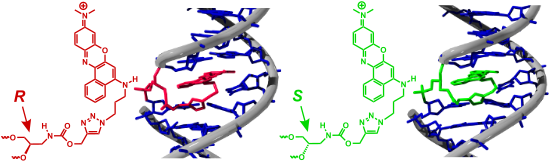
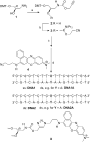
- similar within each duplex set, DNA1Y or DNA2Y. This is typical for chromophores as base surrogates [26][27][28][29][30][31][32][33][34][35][36] since they do not exhibit any preferential base pairing properties. The UV–vis absorption properties of all Nile Blue-modified duplexes are remarkably different
- experimental result can be imaged by geometrically optimized DNA models. Our result is remarkable regarding opposite results with the L-/D-threoninol linkers [37][38][39][40] that revealed strong differences in stacking and also in function of attached chromophores depending on the chirality of the linker. We




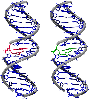
Synthesis of rigidified flavin–guanidinium ion conjugates and investigation of their photocatalytic properties
Beilstein J. Org. Chem. 2009, 5, No. 26, doi:10.3762/bjoc.5.26

- Harald Schmaderer Mouchumi Bhuyan Burkhard Konig Institute of Organic Chemisty, University of Regensburg, Universitätsstr. 31, D-93040 Regensburg, Germany 10.3762/bjoc.5.26 Abstract Flavin chromophores can mediate redox reactions upon irradiation by blue light. In an attempt to increase their
- ; Introduction Flavins are redox-active chromophores [1][2][3][4][5][6] and represent one of the most abundant classes of natural enzyme co-factors [7][8][9]. Recently, the photo redox properties of flavins have been used to catalyze chemical reactions [10][11][12][13][14][15][16][17][18][19][20][21][22][23][24




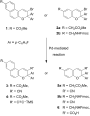
Synthesis of novel photochromic pyrans via palladium- mediated reactions
Beilstein J. Org. Chem. 2009, 5, No. 25, doi:10.3762/bjoc.5.25
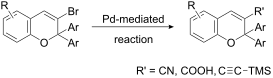
- was investigated by time-resolved absorption spectroscopy in the picosecond time domain. Keywords: benzopyrans; chromenes; naphthopyrans; palladium-mediated coupling reactions; photochromism; Introduction Interest in photoswitchable chromophores for the material and life sciences has increased
- dramatically over the past decade [1]. In the past, naphthopyrans were primarily commercialized as components for photochromic ophthalmic eyeware [2][3][4][5]. Nowadays, basic research in material sciences tries to implement photoswitchable pyrans and related chromophores as functional parts in organo




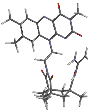
Reversible intramolecular photocycloaddition of a bis(9-anthrylbutadienyl)paracyclophane – an inverse photochromic system. (Photoactive cyclophanes 5)
Beilstein J. Org. Chem. 2009, 5, No. 20, doi:10.3762/bjoc.5.20
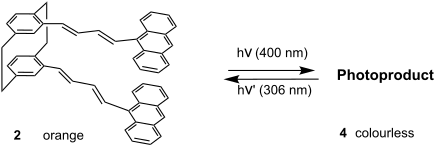
- the cyclophane acting as a convenient scaffold, as demonstrated previously [18][19]. To avoid steric crowding and excessive distance between the chromophores, it seemed reasonable to select the rigid all-trans butadienyl tether as represented in compound 2 (see Figure 3). The synthesis, molecular


Convenient methods for preparing π-conjugated linkers as building blocks for modular chemistry
Beilstein J. Org. Chem. 2009, 5, No. 11, doi:10.3762/bjoc.5.11
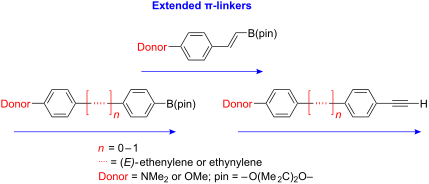
- most important goals of modern material chemistry. Organic chemists steadily attempt to design and synthesize novel and well-defined organic push-pull systems with prospective applications as chromophores for nonlinear optics (NLO) [1][2][3][4][5], dyes [6], electronic and photonic devices [7][8
- ) between the donor (D = NR2, OR groups etc.) and the acceptor (A = NO2, CN groups etc.) is most commonly comprised of double and triple bonds, aromatic and heteroaromatic rings as well as their combinations [14][15][16][17][18][19]. A typical synthetic approach to CT chromophores involves either a stepwise





