


Search results
Search for "diastereoselective" in Full Text gives 334 result(s) in Beilstein Journal of Organic Chemistry. Showing first 200.
Ruthenium-based olefin metathesis catalysts with monodentate unsymmetrical NHC ligands
Beilstein J. Org. Chem. 2018, 14, 3122–3149, doi:10.3762/bjoc.14.292
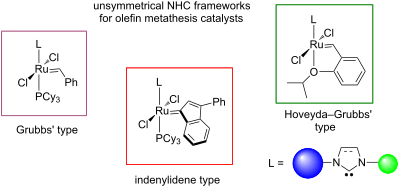
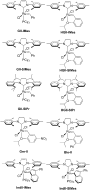
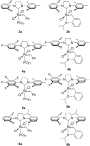
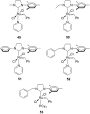
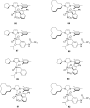
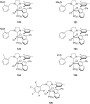
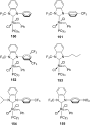
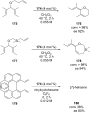
- 24b showed activities similar to that of GII-SIMes. They also exhibited different E/Z selectivities in CM transformations (e.g., Table 1, entry 2), and gave improved selectivities in a diastereoselective RCM reaction (Table 1, entry 3). Ledoux, Verpoort et al. described a series of phosphine
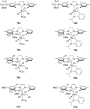
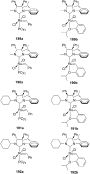
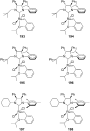
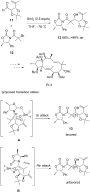
- diastereoselective ring-rearrangement metathesis (dRRM) of cyclopentene 131 (Scheme 12). The presence of a nitro group at the ortho or para positions of the benzyl substituent (134 and 135 in Figure 24), reported by Malinowska and co-workers [45], led to higher activities in the RCM of 7 and 9 (Schemes 1 and 2



















Stereodivergent approach in the protected glycal synthesis of L-vancosamine, L-saccharosamine, L-daunosamine and L-ristosamine involving a ring-closing metathesis step
Beilstein J. Org. Chem. 2018, 14, 2949–2955, doi:10.3762/bjoc.14.274
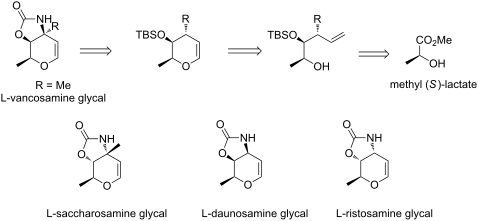
- vinyl ethers as key step of reaction sequences developed. Keywords: 3-amino glycals; diastereoselective additions to aldehydes; pluramycins; ring-closing metathesis; vinyl ethers; Introduction Several classes of medicinally useful molecules with antibiotic and anticancer activity contain in their
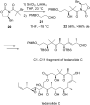
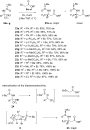
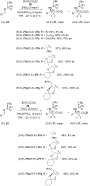
- corresponding alkenes 13a,b in 90% and 63% yield, respectively, over two steps. Alternatively, we envisioned that, from the same α-substituted chiral aldehyde 5, compound 13b could be obtained in a more straightforward manner employing a strategy based on a diastereoselective allylboration reaction (Scheme 2
- metathesis of vinyl ethers as key step for the preparation of several carbamate-protected 3-aminoglycals. Evans aldol reaction for the preparation of diastereomeric compounds 13a and 13b. Alternative preparation of 13b based on a diastereoselective allylboration. O-Vinylation-ring-closing metathesis sequence


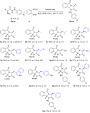
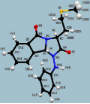
Green synthesis of new chiral 1-(arylamino)imidazo[2,1-a]isoindole-2,5-diones from the corresponding α-amino acid arylhydrazides in aqueous medium
Beilstein J. Org. Chem. 2018, 14, 2923–2930, doi:10.3762/bjoc.14.271
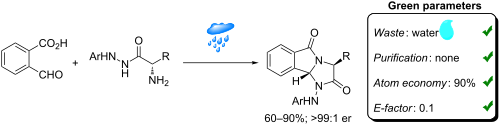
- . The reaction is totally diastereoselective and gives access to the nitrogenated tricyclic core with a relative trans stereochemistry. Keywords: sodium dodecyl sulfate; totally diastereoselective; trans-stereochemistry; Introduction Tricyclic compounds, such as imidazo[2,1-a]isoindol-5-ones, are




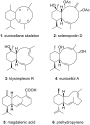
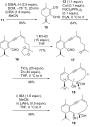
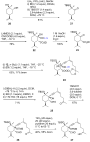
Synthesis of eunicellane-type bicycles embedding a 1,3-cyclohexadiene moiety
Beilstein J. Org. Chem. 2018, 14, 2461–2467, doi:10.3762/bjoc.14.222
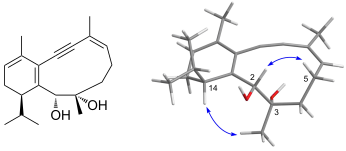
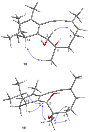
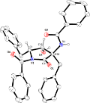
- The first synthesis of diterpenoid eunicellane skeletons incorporating a 1,3-cyclohexadiene moiety is presented. Key step is a low-valent titanium-induced pinacol cyclization that proved to be perfectly diastereoselective. Determination of the relative configuration of the diol was aided by the




Microfluidic light-driven synthesis of tetracyclic molecular architectures
Beilstein J. Org. Chem. 2018, 14, 2418–2424, doi:10.3762/bjoc.14.219
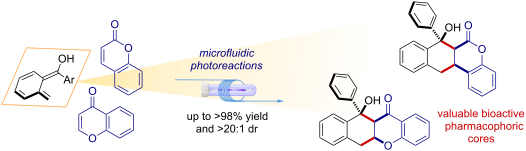
- synthetic method for the direct assembly of highly functionalized tetracyclic pharmacophoric cores. Coumarins and chromones undergo diastereoselective [4 + 2] cycloaddition reactions with light-generated photoenol intermediates. The reactions occur by aid of a microfluidic photoreactor (MFP) in high yield
- anticipated that the successful development of these photoreactions would generate valuable privileged scaffolds, namely, naphthochromenones 4 and benzoxanthenes 5, through a diastereoselective light-driven [4 + 2] cycloaddition reaction. Interestingly, the tetracyclic scaffolds 4 and 5 are embodied in
- different biologically active molecules, with diverse pharmacological activities [9]. To the best of our knowledge, diastereoselective methods for the direct construction of naphthochromenone 4 are still missing. On the other hand, the reported construction of the benzoxanthene scaffold 5 relies on the use


A novel and practical asymmetric synthesis of eptazocine hydrobromide
Beilstein J. Org. Chem. 2018, 14, 2340–2347, doi:10.3762/bjoc.14.209
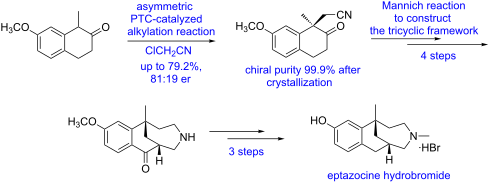
- the unwanted isomer [3][4][5][6]. Other asymmetric syntheses of 1 have been reported in the literature. These relied either on organometallic catalysis [7], asymmetric tandem addition to chiral tetrahydronaphthalenes [8], bioenzymatic steps [9] or diastereoselective Evans alkylation from oxazolidinone


Hydroarylations by cobalt-catalyzed C–H activation
Beilstein J. Org. Chem. 2018, 14, 2266–2288, doi:10.3762/bjoc.14.202
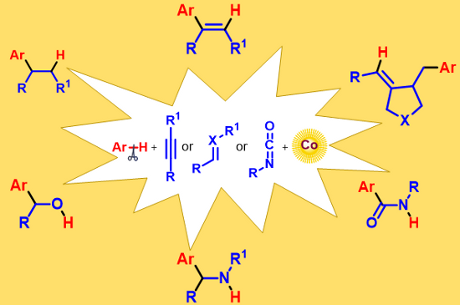
- forms cobalt enolate J2, which converts into J3 by the addition of aldehyde via a chair transition state in a diastereoselective manner. Finally, protonolysis affords product 62 and regenerates the active Co(III)Cp* catalyst for the next cycle. Later, Li et al. reported a Co(III)-catalyzed








Synthesis of 1,4-imino-L-lyxitols modified at C-5 and their evaluation as inhibitors of GH38 α-mannosidases
Beilstein J. Org. Chem. 2018, 14, 2156–2162, doi:10.3762/bjoc.14.189
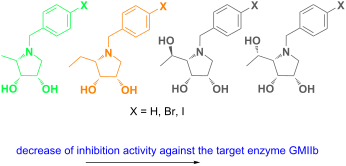
- chromatography on silica gel, the sensitive aldehyde 17 was used in the next step without further purification and characterization. Diastereoselective addition of MeMgBr to the aldehyde group of 17 gave alcohol 18 as single diastereoisomer in 69% yield. Removal of the Cbz protecting group of 18 under catalytic


Applications of organocatalysed visible-light photoredox reactions for medicinal chemistry
Beilstein J. Org. Chem. 2018, 14, 2035–2064, doi:10.3762/bjoc.14.179
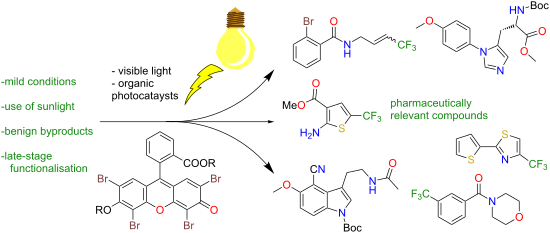
- protected naturally occurring amines such as GABA and phenylethylamine as well as diamines with orthogonal protecting groups, cf. product 2c. The combination of this protocol with the diastereoselective reductive amination reported by Hughes and Devine [41], provides access to very high value chiral α
- trifluoromethyl are not tolerated. No functional group tolerance towards other carbonyls such as esters or aldehydes is demonstrated. The use of terminal or trisubstituted alkenes is limited and the reaction times are long. However, the authors do report that the reaction is somewhat diastereoselective, favouring




Recent advances in hypervalent iodine(III)-catalyzed functionalization of alkenes
Beilstein J. Org. Chem. 2018, 14, 1813–1825, doi:10.3762/bjoc.14.154
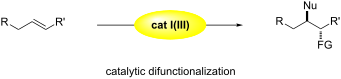
- diastereoselective catalytic fluorination was developed by the same group (Scheme 14, bottom) [65] using the lactate-based resorcinol derivative 44 as the catalyst. By this route chiral 4-fluoroisochromanones 46 could be accomplished in high enantio- and diastereoselectivity. The same I(III) intermediate 47 was
- addition, electron-rich aromatics present in the substrates were also brominated. During the screening of the iodoarene pre-catalysts, a dihalogenation product was detected in the presence of iodoarenes bearing electron-donating side chains 70. A diastereoselective dihalogenation method was established


Glycosylation reactions mediated by hypervalent iodine: application to the synthesis of nucleosides and carbohydrates
Beilstein J. Org. Chem. 2018, 14, 1595–1618, doi:10.3762/bjoc.14.137
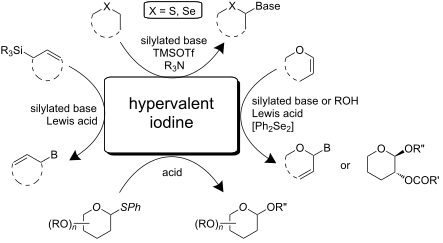
- derivative, 2-dimethoxybenzoate 20 was prepared from tribenzylated ribose 16. Introduction of a dimethoxybenzoyl (DMBz) group at the 2-position and diastereoselective formation of sulfoxide 20, favored in Pummerer-type glycosylation reactions and cases where the approach of the nucleophile is restricted


Three-component coupling of aryl iodides, allenes, and aldehydes catalyzed by a Co/Cr-hybrid catalyst
Beilstein J. Org. Chem. 2018, 14, 1413–1420, doi:10.3762/bjoc.14.118
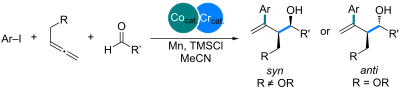
- iodides, allenes, and aldehydes has been developed to afford multi-substituted homoallylic alcohols in a diastereoselective manner. Control experiments for understanding the reaction mechanism reveal that the cobalt catalyst is involved in the oxidative addition and carbometalation steps in the reaction
- , whereas the chromium salt generates highly nucleophilic allylchromium intermediates from allylcobalt species, without the loss of stereochemical information, to allow the addition to aldehydes. Keywords: chromium; cobalt; diastereoselective; homoallyl alcohols; hybrid catalyst; three-component coupling
- three-component coupling method is herein reported for the direct synthesis of highly diastereoselective multi-substituted homoallyl alcohols employing a cobalt/chromium hybrid catalyst (Scheme 5). Results and Discussion Initially, suitable reaction conditions were investigated for the three-component


Recent applications of chiral calixarenes in asymmetric catalysis
Beilstein J. Org. Chem. 2018, 14, 1389–1412, doi:10.3762/bjoc.14.117
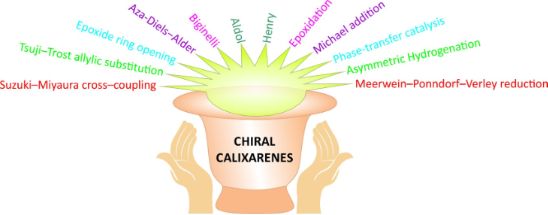
- to synthesize inherently chiral calixarenes 36 and 37 [43][44]. In a continuation of their previous studies, they have reported diastereoselective synthesis of inherently chiral calixarene derivatives 38 and 39 via chiral tert-butyloxazoline-directed lithiation (Figure 4) [45]. It has been shown that


Stereoselective nucleophilic addition reactions to cyclic N-acyliminium ions using the indirect cation pool method: Elucidation of stereoselectivity by spectroscopic conformational analysis and DFT calculations
Beilstein J. Org. Chem. 2018, 14, 1192–1202, doi:10.3762/bjoc.14.100
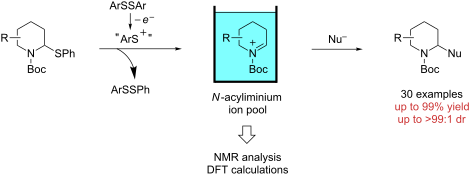
- give the disubstituted piperidine derivatives in an excellent diastereoselective manner (Scheme 1). This result inspired us to investigate the stereochemistry of the N-acyliminium ions by means of NMR spectroscopy, which is challenging to achieve without using cation pool methods. The current report
- presents the diastereoselective synthesis of disubstituted piperidine derivatives by the indirect cation pool method and the elucidation of the stereoselectivity based on both NMR analyses of the cyclic N-acyliminium ions and DFT calculations. Results and Discussion N-Acyliminium ions obtained from N-Boc
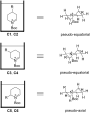
- form product, because an attack from another side would lead to a more unstable product with a twist form [13]. As a close study, Woerpel reported a diastereoselective substitution reaction for synthesizing disubstituted tetrahydropyrans via six-membered oxocarbenium ions generated in situ from






Fluorocyclisation via I(I)/I(III) catalysis: a concise route to fluorinated oxazolines
Beilstein J. Org. Chem. 2018, 14, 1021–1027, doi:10.3762/bjoc.14.88
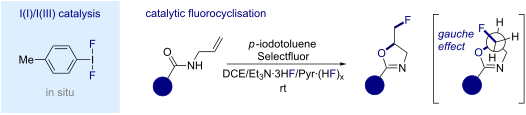
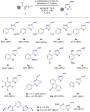
- diastereoselective on account of the proximal nature of the stereocentre (65%, dr >95:5). Compound 3 is noteworthy on account of the β-amino alcohol and β-fluoro alcohol motifs that collectively preorganised the propyl chain. Stabilising hyperconjugative interactions manifest themselves in the characteristic gauche




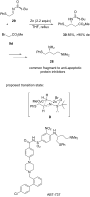
Diastereoselective auxiliary- and catalyst-controlled intramolecular aza-Michael reaction for the elaboration of enantioenriched 3-substituted isoindolinones. Application to the synthesis of a new pazinaclone analogue
Beilstein J. Org. Chem. 2018, 14, 593–602, doi:10.3762/bjoc.14.46

- stereocenter [14]. Hence, the asymmetric synthesis of functionalized 3-substituted isoindolinones using short, versatile and selective procedures is clearly a topic of current interest. Two strategies can be applied for the asymmetric synthesis of 3-substituted isoindolinones. First, diastereoselective
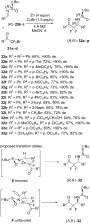
- and 8 in 61–75% isolated yields after work-up (Scheme 2, Figure 3). Diastereoselective intramolecular aza-Michael reaction First, the study of the diastereoselective intramolecular aza-Michael reaction of benzamide substrate (S)-6a allowed us to optimize the reaction conditions (Table 1) and latter to
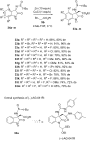
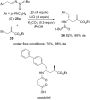
- 3:7). Removal of the chiral auxiliary. Synthesis of isoindolinones 1a–c, 1e, 2; isolated yield, ee by HPLC. Synthesis of pazinaclone analogue (3S)-27. Identification of the optimum reaction conditions for the diastereoselective intramolecular aza-Michael reaction of (S)-6a. Identification of the


The selective electrochemical fluorination of S-alkyl benzothioate and its derivatives
Beilstein J. Org. Chem. 2018, 14, 389–396, doi:10.3762/bjoc.14.27
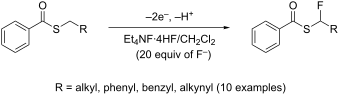
- be the most suitable combination as electrolytic solvent and supporting salt as well as fluorine source for the anodic fluorination. The electrochemical fluorination of cyclic benzothioates such as benzothiophenone was also achieved. Keywords: anodic cyclization; diastereoselective fluorination


Syn-selective silicon Mukaiyama-type aldol reactions of (pentafluoro-λ6-sulfanyl)acetic acid esters with aldehydes
Beilstein J. Org. Chem. 2018, 14, 373–380, doi:10.3762/bjoc.14.25

- rearrangement [31]. Under slightly modified conditions, this type of rearrangement was also successful for SF5-substituted acetic esters of cinnamyl alcohols [32]. Herein we describe our results [33] of highly syn-diastereoselective silicon Mukaiyama-type aldol reactions of SF5-acetic acid esters with different


Recent developments in the asymmetric Reformatsky-type reaction
Beilstein J. Org. Chem. 2018, 14, 325–344, doi:10.3762/bjoc.14.21
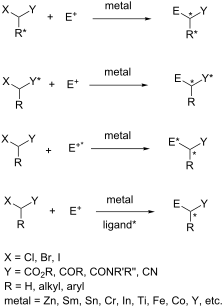
- Helene Pellissier Aix-Marseille Univ, CNRS, Centrale Marseille, iSm2, Marseille, France 10.3762/bjoc.14.21 Abstract This review collects the most important developments in asymmetric Reformatsky-type reactions published since the beginning of 2013, including both diastereoselective methodologies
- enantioselective (aza)-variants by using chiral substrates or chiral ligands. As illustrated in this review, the diastereoselective Reformatsky reactions of chiral substrates or auxiliaries have been applied to the total synthesis of a number of important products, such as naturally occurring bioactive products
- Reformatsky-type reactions published since the beginning of 2013, since this field was most recently reviewed this year by Colobert for the diastereoselective version [4], and Fernández-Ibáñez and Maciá for the catalytic enantioselective version [5]. Earlier, this field was reviewed by different groups [6][7











Nucleophilic fluoroalkylation/cyclization route to fluorinated phthalides
Beilstein J. Org. Chem. 2018, 14, 182–186, doi:10.3762/bjoc.14.12
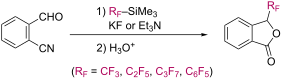
- asymmetric synthesis of 3-(trifluoromethyl)phthalide (1a) using a chiral auxiliary was published to date. In 2006, Pedrosa and co-workers discribed the diastereoselective nucleophilic trifluoromethylation of aldehyde 5, which was prepared by condensation of ortho-phthalaldehyde with (−)-8-benzylaminomenthol




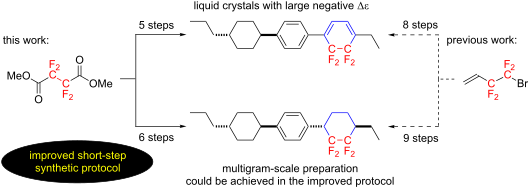
Gram-scale preparation of negative-type liquid crystals with a CF2CF2-carbocycle unit via an improved short-step synthetic protocol
Beilstein J. Org. Chem. 2018, 14, 148–154, doi:10.3762/bjoc.14.10
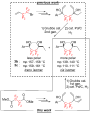
- . However, performing the reaction in the presence of 10 mol % of the catalyst for 40 h drove the reaction to completion. Intriguingly, the ring-closing metathesis proceeded in a highly diastereoselective manner and produced the corresponding cyclized adduct 4a as a single isomer [26]. Finally, with


Quinone-catalyzed oxidative deformylation: synthesis of imines from amino alcohols
Beilstein J. Org. Chem. 2017, 13, 2895–2901, doi:10.3762/bjoc.13.282

- resulting imines (7r−t) are hydrolyzed under the current reaction conditions. Notably, imines 7n [42][43][44][45] and 7t [46][47][48] are useful imines for diastereoselective 1,2-addition reactions. Following these substrate scope studies, we next examined the quinone-catalyzed C–C bond cleavage of


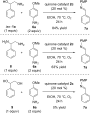

The synthesis of the 2,3-difluorobutan-1,4-diol diastereomers
Beilstein J. Org. Chem. 2017, 13, 2883–2887, doi:10.3762/bjoc.13.280
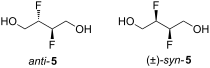
- Robert Szpera Nadia Kovalenko Kalaiselvi Natarajan Nina Paillard Bruno Linclau Chemistry, University of Southampton, Highfield, Southampton SO17 1BJ, United Kingdom 10.3762/bjoc.13.280 Abstract The diastereoselective synthesis of fluorinated building blocks that contain chiral fluorine


A Brønsted base-promoted diastereoselective dimerization of azlactones
Beilstein J. Org. Chem. 2017, 13, 2663–2670, doi:10.3762/bjoc.13.264

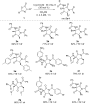
- Brønsted base system for the diastereoselective dimerization of azlactones using trichloroacetate salts and acetonitrile has been developed. Desired products were obtained in good yields (60–93%) and with up to >19:1 dr after one hour of reaction. Additionally, the relative stereochemistry of the major
- dimer was assigned as being trans, by X-ray crystallographic analysis. The kinetic reaction profile was determined by using 1H NMR reaction monitoring and revealed a second order overall kinetic profile. Furthermore, by employing this methodology, a diastereoselective total synthesis of a functionalized
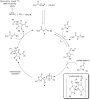
- bond formation, such as a dimerization process. We herein report a diastereoselective dimerization of azlactones using potassium or sodium trichloroacetate salts and acetonitrile as solvent. Besides, a reaction mechanism is proposed based on NMR studies and the relative stereochemistry of the major





![[Graphic 5]](/bjoc/content/inline/1860-5397-13-264-i10.svg?max-width=637&scale=1.18182) vs time for the dimerization of azlactone 1a.
vs time for the dimerization of azlactone 1a.

Recent progress in the racemic and enantioselective synthesis of monofluoroalkene-based dipeptide isosteres
Beilstein J. Org. Chem. 2017, 13, 2637–2658, doi:10.3762/bjoc.13.262
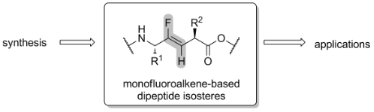
- Boc-Tyr-ψ[(Z)-CF=CH]-Gly using a diastereoselective Reformatsky–Honda condensation, a (E)-selective HWE olefination and a SmI2 reduction as key steps (Scheme 12) [41]. First, Reformatsky–Honda reaction of TIPS-protected phenylacetaldehyde 57 with the chiral auxiliary (L)-phenylglycine derivative 58
- cyclopentanone 90. A HWE olefination converted 90 into (Z)-monofluoroalkene 91 without any significant selectivity. The chiral Ellman’s sulfinylimine 92 was obtained in 3 steps. The diastereoselective addition of isopropyllithium was then possible to afford the (L)-Leu residue with a moderate selectivity (dr
- -ψ[(Z)-CF=CH]-Phe by Dory and co-workers. Diastereoselective addition of Grignard reagents to sulfinylamines derived from α-fluoroenals by Pannecoucke and co-workers. NHC-mediated synthesis of monofluoroalkenes by Otaka and co-workers. Stereoselective synthesis of Boc-Tyr-ψ[(Z)-CF=CH]-Gly by Altman





