


Search results
Search for "electrospray" in Full Text gives 196 result(s) in Beilstein Journal of Organic Chemistry.
Two strategies for the synthesis of the biologically important ATP analogue ApppI, at a multi-milligram scale
Beilstein J. Org. Chem. 2015, 11, 2189–2193, doi:10.3762/bjoc.11.237
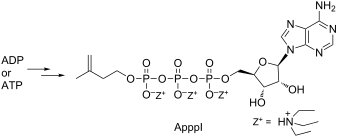
- quadrupole time-of-flight mass spectrometer using electrospray ionization (ESI) in the positive ionization mode. The purity of the products was determined from 1H and 31P NMR spectra and was ≥95% unless stated otherwise. Procedure for the preparation of isopentenyl tosylate (7): 3-Methyl-3-buten-1-ol (770 µL


Conformational equilibrium in supramolecular chemistry: Dibutyltriuret case
Beilstein J. Org. Chem. 2015, 11, 2105–2116, doi:10.3762/bjoc.11.227

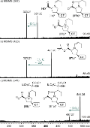
- complex. For detailed discussion that supports experimental findings refer to the computations section in Supporting Information File 1. Mass spectrometry To have a more complete view of properties of 1 we applied the combination of soft ionization technique electrospray ionization (ESI) with high
- , m/zmeas = 775.51543) via positive electrospray. The results of performed ESI–HRMS experiments clearly show that dibutyltriuret can easily self-associate in the chloroform/methanol solution, forming singly charged cations of dimers and trimers in positive electrospray and singly charged anions of
- dimers in negative electrospray, respectively. Association processes of dibutyltriuret 1 with anionic guests also occur, however presence of methanol in the analytical solutions and/or mechanism of ESI ionization process (in ESI ions are created by the addition or removal of a proton(s)) [57] have non


Investigation on the reactivity of α-azidochalcones with carboxylic acids: Formation of α-amido-1,3-diketones and highly substituted 2-(trifluoromethyl)oxazoles
Beilstein J. Org. Chem. 2015, 11, 2021–2028, doi:10.3762/bjoc.11.219

- . Electrospray ionization (ESI) mass spectra were obtained on an LCQ Fleet mass spectrometer, Thermo Fisher Instruments Limited, US and an Agilent mass spectrometer. Infrared spectra were recorded on a Shimadzu FTIR instrument (KBr pellet). Elemental analyses were performed on a Perkin Elmer 2400 Series II




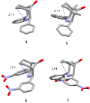
Investigation of the role of stereoelectronic effects in the conformation of piperidones by NMR spectroscopy and X-ray diffraction
Beilstein J. Org. Chem. 2015, 11, 1973–1984, doi:10.3762/bjoc.11.213

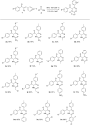
- point matrix of 1024 × 256 with a spectral width of 6354 × 6354 Hz, mixture time of 1 s, and a recycle delay of 1.5 s [66][67]. Mass spectra were recorded on an Agilent G1969 LC/MSD TOF spectrometer coupled to HPLC with electrospray ionization. X-ray crystal structure analysis The crystals were mounted




Profluorescent substrates for the screening of olefin metathesis catalysts
Beilstein J. Org. Chem. 2015, 11, 1886–1892, doi:10.3762/bjoc.11.203
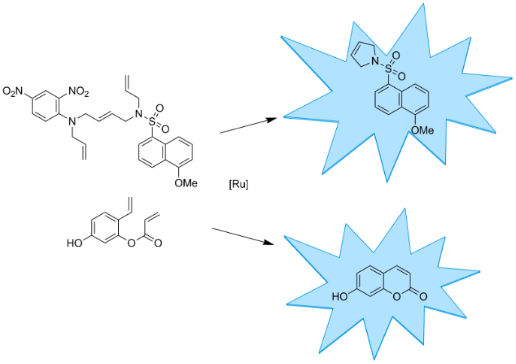
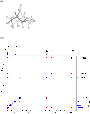
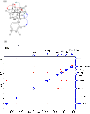
- on Bruker 400 MHz and 500 MHz spectrometers. The chemical shifts are reported in ppm (parts per million). Electrospray ionization mass spectra (ESIMS) were recorded on a Bruker FTMS 4.7T bioAPEX II spectrometer. HRMS was measured on a Bruker maXis 4G QTOF-ESI spectrometer. HPLC was conducted on a


Fe(II)/Et3N-Relay-catalyzed domino reaction of isoxazoles with imidazolium salts in the synthesis of methyl 4-imidazolylpyrrole-2-carboxylates, its ylide and betaine derivatives
Beilstein J. Org. Chem. 2015, 11, 1732–1740, doi:10.3762/bjoc.11.189

- (39.51 ppm). Mass spectra were recorded on a Bruker maXis HRMS–ESI–QTOF, with electrospray ionization in positive mode. IR spectra were recorded on a Bruker FTIR spectrometer Tensor 27 for tablets in KBr, only characteristic absorption is indicated. The single crystal X-ray diffraction experiment was


A hybrid electron donor comprising cyclopentadithiophene and dithiafulvenyl for dye-sensitized solar cells
Beilstein J. Org. Chem. 2015, 11, 1052–1059, doi:10.3762/bjoc.11.118
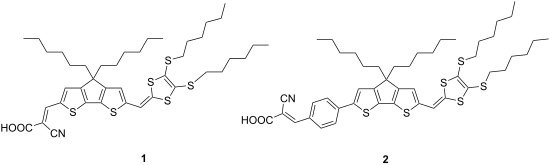
- , multiplet. HRMS data were obtained with electrospray ionization (ESI). Cyclic voltammetry was performed in a three-electrode cell equipped with a platinum-disk working electrode, a glassy carbon counter electrode, and Ag/AgCl was used as the reference electrode. The electrochemical experiments were carried


Synthesis and characterization of the cyanobenzene-ethylenedithio-TTF donor
Beilstein J. Org. Chem. 2015, 11, 951–956, doi:10.3762/bjoc.11.106
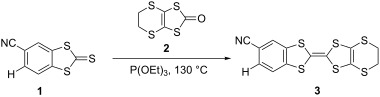
- counter electrodes and an Ag/AgNO3 reference electrode. The measurements were performed on fresh solutions with a concentration of 10−3 M, in CH2Cl2, that contained n-Bu4PF6 (10−1 M) as the supporting electrolyte. Mass spectra were obtained with a Bruker HCT electrospray ionization quadrupole ion trap


Discrete multiporphyrin pseudorotaxane assemblies from di- and tetravalent porphyrin building blocks
Beilstein J. Org. Chem. 2015, 11, 748–762, doi:10.3762/bjoc.11.85
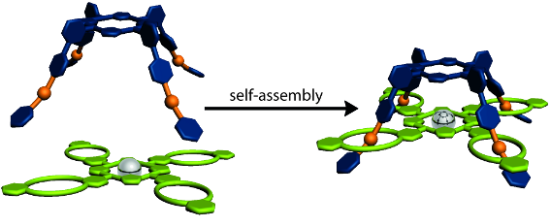
- more complicated. Therefore, a straightforward and easy analysis of the NMR spectra will likely be impossible. In our earlier studies [37][78][79], however, electrospray ionization (ESI) mass spectrometry (MS) turned out to be a perfectly suited method to characterize the complexes present in solution
- electrospray ionization. These results show that mass spectrometry should be a well suited method for the investigation of the multivalent pseudorotaxanes under study. These usually show much higher binding constants than the monovalent analogue and should therefore very likely survive the ionization process
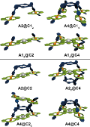
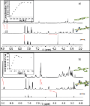
- conclusion, that this partly bound pseudorotaxane is most probably a product of the electrospray ionization process. In cases of the 1:1 mixture of A4 and C4 and the 1:2 mixture of A4 and C2 the desired pseudorotaxanes [A4@C4]4+ (m/z = 989) and [A4@C22]4+ (m/z = 1200) are the most abundant species and there





3α,5α-Cyclocholestan-6β-yl ethers as donors of the cholesterol moiety for the electrochemical synthesis of cholesterol glycoconjugates
Beilstein J. Org. Chem. 2015, 11, 162–168, doi:10.3762/bjoc.11.16
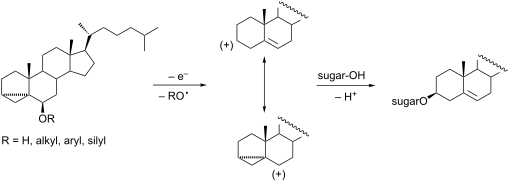
- electrospray ionization (ESI) or AutoSpec Premier (Waters) (EI). Merck Silica Gel 60, F 256 TLC aluminum sheets were applied for thin-layer chromatographic analysis. For a visualization of the products, a 5% solution of phosphomolybdic acid in ethanol was used. The reaction products were separated by column


Synthesis and characterization of a new photoinduced switchable β-cyclodextrin dimer
Beilstein J. Org. Chem. 2014, 10, 2874–2885, doi:10.3762/bjoc.10.304
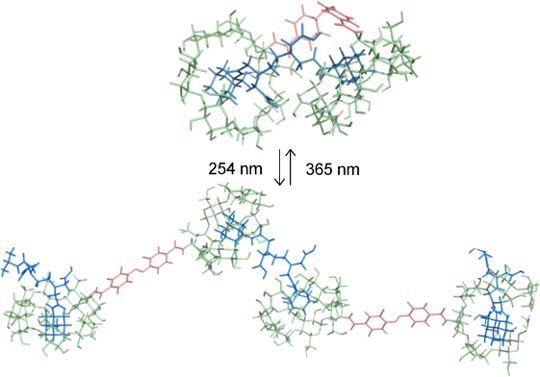
- (λ = 365 nm) for the irradiation of aqueous AZO-CDim 1 solutions (c = 10−4 M). Stepwise control of the reactions was readily achieved by ESIMS in the positive ion mode using a ZQ 4000 quadrupole mass spectrometer (Waters-Micromass, Manchester, UK). High resolution electrospray mass spectra (HRMS–ESI
- mass spectrometer with EBETOF geometry. The compounds were individually dissolved in a 1:1 water/CH3CN mixture at a concentration of 10 μg·cm−3 and then infused into the electrospray ion source at a flow rate of 10 mm3·min−1 at 333 K. The mass spectrometer was operated at 4 kV while scanning the magnet



A small azide-modified thiazole-based reporter molecule for fluorescence and mass spectrometric detection
Beilstein J. Org. Chem. 2014, 10, 2470–2479, doi:10.3762/bjoc.10.258

- electrospray ionization MS runs by monitoring for its characteristic isotope signature. We demonstrate the universal utility of the reporter for the detection of an alkyne-modified small molecule by LC–MS and for the visualization of a model protein by in-gel fluorescence. The novel probe advantageously
- samples. Several probes have been designed for use with liquid chromatography–mass spectrometry (LC–MS). The probes attach covalently to target functional groups like amines, aldehydes/ketones, carboxylic acids and enhance their detection limit in LC–electrospray ionization (ESI) MS. This can be achieved


A new charge-tagged proline-based organocatalyst for mechanistic studies using electrospray mass spectrometry
Beilstein J. Org. Chem. 2014, 10, 2027–2037, doi:10.3762/bjoc.10.211
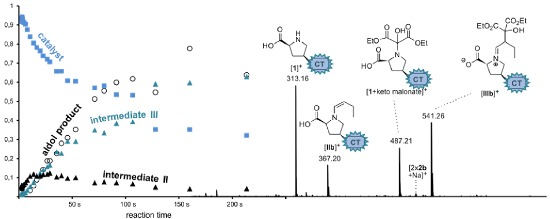
- temporal evolution has been followed using a microreactor continuous-flow technique. Keywords: charge tag; electrospray; mass spectrometry; organocatalysis; proline; template; Introduction Electrospray ionization (ESI) mass spectrometry [1] has not only developed into a standard characterization method
- mixing event and the electrospray is determined by the flow rates and capillary lengths. Mass spectra of a solution of diethyl ketomalonate, butyraldehyde and unmodified L-proline or 1, respectively, are depicted in Figure 4. The mass spectra shown in Figure 4 do not exhibit abundant signals for the
- . In particular, intermediates [IIa]+ and [IIIa]+ have been detected in high abundances. Again, we unfortunately have not been successful in finding suitable electrospray conditions to detect the fragile intermediates [Ia]+/[Ib]+ and [IVa]+/[IVb]+. More importantly, however, additional species that are



Influence of cyclodextrin on the UCST- and LCST-behavior of poly(2-methacrylamido-caprolactam)-co-(N,N-dimethylacrylamide)
Beilstein J. Org. Chem. 2014, 10, 1951–1958, doi:10.3762/bjoc.10.203
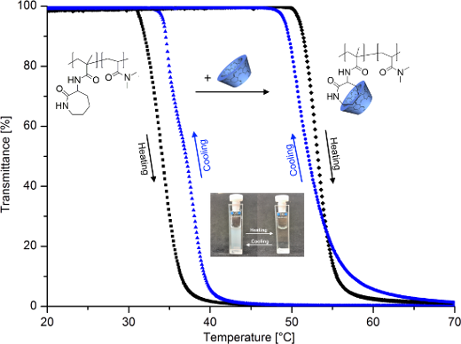
- critical temperature was determined at 50% of relative transmittance. Electrospray ionization mass spectrometry (ESIMS) was conducted on a Bruker maXis 4G mass spectrometer. Melting points were obtained using a Büchi Melting Point B-545 apparatus at a heating rate of 1 °C/min. Synthesis of α-amino-ε


Syntheses of 15N-labeled pre-queuosine nucleobase derivatives
Beilstein J. Org. Chem. 2014, 10, 1914–1918, doi:10.3762/bjoc.10.199
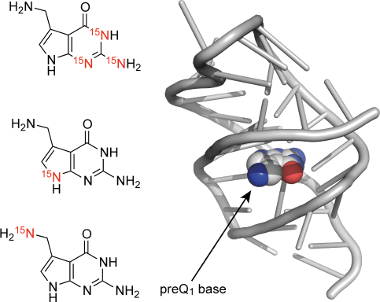
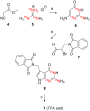
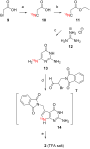
- on a Bruker 7T FT-ICR instrument with an electrospray ion source. Samples were analyzed in the positive-ion mode. [15N1,15N3,H215N(C2)]-2,6-Diaminopyrimidin-4(3H)-one (6). To a solution of methyl cyanoacetate (4, 90 µL, 1.02 mmol) and [15N3]-guanidine hydrochloride (5, 100 mg, 1.02 mmol) in methanol



Isoxazolium N-ylides and 1-oxa-5-azahexa-1,3,5-trienes on the way from isoxazoles to 2H-1,3-oxazines
Beilstein J. Org. Chem. 2014, 10, 1896–1905, doi:10.3762/bjoc.10.197

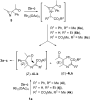
- CDCl3 with a Bruker DPX 300 and a Bruker AVANCE III 400 spectrometer. Chemical shifts (δ) are reported in parts per million downfield from tetramethylsilane. Mass spectra were recorded on a Bruker maXis HRMS-ESI-QTOF by using electrospray ionization in the positive mode. IR spectra were recorded on a


Orthogonal dual thiol–chloroacetyl and thiol–ene couplings for the sequential one-pot assembly of heteroglycoclusters
Beilstein J. Org. Chem. 2014, 10, 1557–1563, doi:10.3762/bjoc.10.160
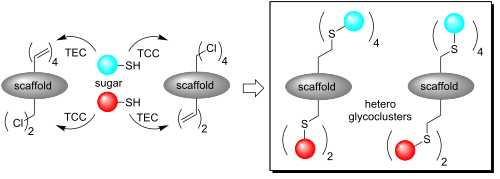
- yield after HPLC purification and gave the expected multicharged ions by electrospray mass spectrometry (Table 1). Conclusion In summary, we have developed the first synthesis of hGCs using a one-pot orthogonal chemoselective route by using dual thiol–chloroacetyl and thiol–ene couplings. The
- ). Preparative separation was carried out at 22 mL/min (VP 250/21 nucleosil 300-7 C18) with UV monitoring at 214 nm and 250 nm using a linear A–B gradient (buffer A: 0.09% CF3CO2H in water; buffer B: 0.09% CF3CO2H in 90% acetonitrile). Mass spectrometry was performed using electrospray ionization on an Esquire


Synthesis and solvodynamic diameter measurements of closely related mannodendrimers for the study of multivalent carbohydrate–protein interactions
Beilstein J. Org. Chem. 2014, 10, 1524–1535, doi:10.3762/bjoc.10.157

- apparatus and are uncorrected. Accurate mass measurements (HRMS) were performed on a LC–MSD–ToF instrument from Agilent Technologies in positive electrospray mode. Low-resolution mass spectra were performed on the same apparatus or on a LCQ Advantage ion trap instrument from Thermo Fisher Scientific in
- positive electrospray mode (Mass Spectrometry Laboratory (Université de Montréal), or Plateforme analytique pour molécules organiques (Université du Québec à Montréal), Québec, Canada). Either protonated molecular ions [M + nH]n+ or adducts [M + nX]n+ (X = Na, K, NH4) were used for empirical formula


Glycosystems in nanotechnology: Gold glyconanoparticles as carrier for anti-HIV prodrugs
Beilstein J. Org. Chem. 2014, 10, 1339–1346, doi:10.3762/bjoc.10.136
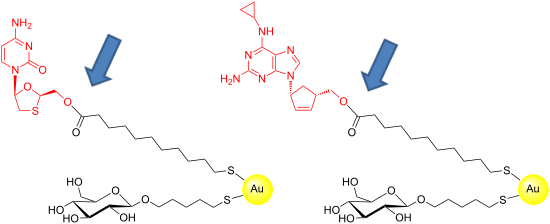
- carried out in positive ion mode with electrospray ionization. The capillary and the cove voltages were set to 100 and 30 V, respectively. The desolvation gas was set to 600 L/h at 120 °C. The cone gas was set to 50 L/h and the ion source temperature at 120 °C. The instrument was operated in W mode with a


Human dendritic cell activation induced by a permannosylated dendron containing an antigenic GM3-lactone mimetic
Beilstein J. Org. Chem. 2014, 10, 1317–1324, doi:10.3762/bjoc.10.133
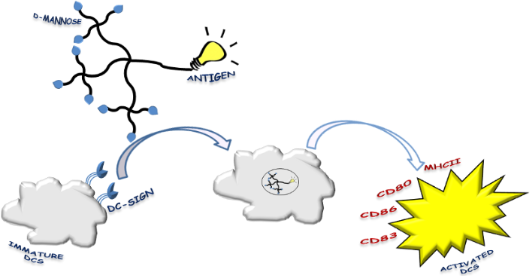
- remove any trace of copper that could cause interferences in the biological assays. After purification by size exclusion chromatography by using a LH-20 column, the bifunctional glycodendron 5 was obtained in 86% yield and characterized by NMR and MS (electrospray). We tested in vitro human myeloid DCs



Homochiral BINOL-based macrocycles with π-electron-rich, electron-withdrawing or extended spacing units as receptors for C60
Beilstein J. Org. Chem. 2014, 10, 1308–1316, doi:10.3762/bjoc.10.132
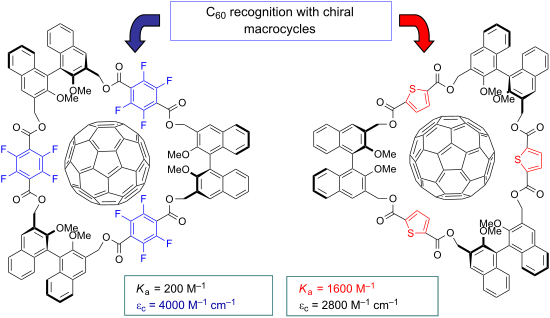
- spectroscopic studies were recorded by means of commercially-available spectrophotometers. Mass spectra were recorded by using an electrospray ionization instrument. Optical rotations were measured on a polarimeter with a sodium lamp (λ = 589 nm) and are reported as follows: [α]Drt (c = g (100 mL solvent)−1


Automated solid-phase peptide synthesis to obtain therapeutic peptides
Beilstein J. Org. Chem. 2014, 10, 1197–1212, doi:10.3762/bjoc.10.118

- major prerequisite for the success of SPPS, both with respect to analytics and preparative purification [25]. Furthermore, high-quality mass spectrometry (MS) with soft ionization techniques such as MALDI–TOF (matrix-assisted laser desorption ionization – time of flight) and ESI (electrospray ionization




Dimerisation, rhodium complex formation and rearrangements of N-heterocyclic carbenes of indazoles
Beilstein J. Org. Chem. 2014, 10, 832–840, doi:10.3762/bjoc.10.79
- with a Varian 450-GC. The electrospray ionization mass spectra (ESIMS) were measured with an Agilent LCMSD series HP 1100 with APIES. Melting points are uncorrected and were determined in an apparatus according to Dr. Tottoli (Büchi). The HRMS spectra were measured on a Bruker Daltonik Tesla-Fourier
- transform-ion cyclotron resonance mass spectrometer with electrospray ionisation. Yields are not optimized. Compounds 12a, 12b, 12c and 12e were described in an earlier publication [22]. 1-(4-Bromophenyl)-1H-indazole was prepared by the method B which we described earlier [22] and was isolated in better




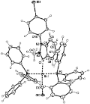


Domino reactions of 2H-azirines with acylketenes from furan-2,3-diones: Competition between the formation of ortho-fused and bridged heterocyclic systems
Beilstein J. Org. Chem. 2014, 10, 784–793, doi:10.3762/bjoc.10.74

- microscope and are uncorrected. 1H (300 MHz) and 13C (75 MHz) NMR spectra were determined in CDCl3 with a Bruker DPX 300 spectrometer. Chemical shifts (δ) are reported in parts per million downfield from tetramethylsilane. Electrospray ionization mass spectra were measured on MS Q-TOF and micrOTOF 10223 mass


N,N'-(Hexane-1,6-diyl)bis(4-methyl-N-(oxiran-2-ylmethyl)benzenesulfonamide): Synthesis via cyclodextrin mediated N-alkylation in aqueous solution and further Prilezhaev epoxidation
Beilstein J. Org. Chem. 2013, 9, 2834–2840, doi:10.3762/bjoc.9.318
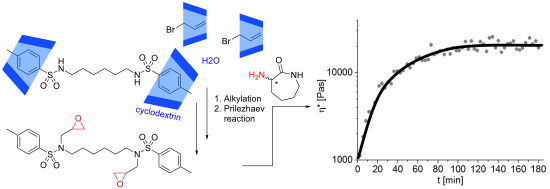
- calibration, standard tin, indium, and zinc samples were used. Heating and cooling curves were determined between −30 and 130 °C at a heating rate of 15 °C/min. The Tg value was taken from the inflection point of the second heating curve. Electrospray ionization mass spectrometry (ESIMS) was conducted on a





