


Search results
Search for "epimerization" in Full Text gives 148 result(s) in Beilstein Journal of Organic Chemistry.
Inter- and intramolecular enantioselective carbolithiation reactions
Beilstein J. Org. Chem. 2013, 9, 313–322, doi:10.3762/bjoc.9.36

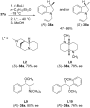
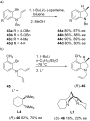
- concept to avoid the epimerization of reactive intermediates, which has allowed them to carry out the enantioselective version of the above procedure. Thus, the use of a flow microreactor system has allowed the enantioselective carbolithiation of conjugated enynes, followed by the reaction with
- electrophiles to give enantioenriched chiral allenes. By high-resolution control of the residence time, the epimerization of a configurationally unstable chiral organolithium intermediate 23 could be suppressed. Using this method, n-butyllithium reacts with enynes 22 in the presence of chiral ligands, and the





The diketopiperazine-fused tetrahydro-β-carboline scaffold as a model peptidomimetic with an unusual α-turn secondary structure
Beilstein J. Org. Chem. 2013, 9, 147–154, doi:10.3762/bjoc.9.17
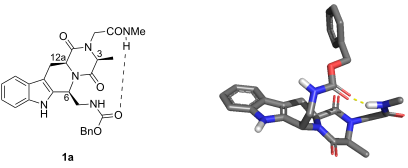
- of the THBC-DKP scaffold also in solution, compound 6 was converted into the N-methyl carboxyamide derivative 1a, by a two-step procedure (0.5 M LiOH, 0 °C, then MeNH2, TBTU, DIPEA), which was carefully conducted in order to avoid the easy epimerization of the C3 and C12a stereocenters. Spin-system


Automated three-component synthesis of a library of γ-lactams
Beilstein J. Org. Chem. 2012, 8, 1804–1813, doi:10.3762/bjoc.8.206
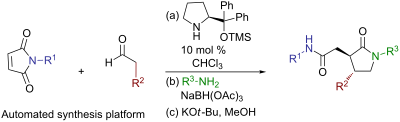
- , aldehydes and amines [12]. The method involved a three-step stepwise sequence involving an organocatalyzed Michael addition, a reductive amination/intramolecular lactamization, and an epimerization step (Scheme 1). It culminated in the preparation of a 43-member library. Although this method permitted
- produced 3{1,1} in high yields and with high enantioselectivity, albeit with low diastereoselectivity. Such a low diastereoselectivity was of no concern in the originally reported procedure since the final potassium tert-butoxide promoted epimerization step produced a racemic mixture of a single
- diastereomer. In the case of an asymmetric synthesis, however, the initial diasteromeric ratio would be reflected in the enantiomeric ratio of the final products when the downstream epimerization step is taken into account; this is illustrated for the limiting case of high facial selectivity with respect to


A macrolactonization approach to the total synthesis of the antimicrobial cyclic depsipeptide LI-F04a and diastereoisomeric analogues
Beilstein J. Org. Chem. 2012, 8, 1344–1351, doi:10.3762/bjoc.8.154
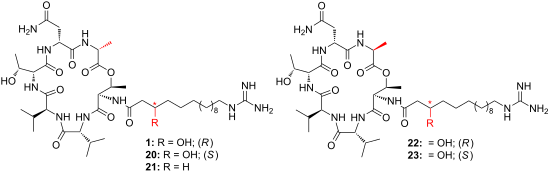
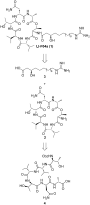
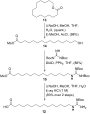
- -F04a was synthesised by using a modified Yamaguchi macrolactonization approach. Alternative methods of macrolactonization (e.g., Corey–Nicolaou) resulted in significant epimerization of the C-terminal amino acid during the cyclization reaction. The D-stereochemistry of the alanine residue in the
- naturally occurring cyclic peptide may be required for the antifungal activity of this natural product. Keywords: antifungal; cyclic depsipeptide; epimerization; lipopeptide; macrolactonization; peptides; Introduction The LI-F or fusaricidin class of cyclic depsipeptides are produced by a number of
- cases (Table 1, entries 1–3), analysis of the crude product mixtures showed that mixtures of cyclic diastereoisomers were obtained, indicating that the C-terminal amino acid underwent epimerization during the macrolactonization reactions (see Supporting Information File 1 for full experimental details





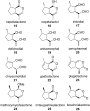
Stereoselective synthesis of trans-fused iridoid lactones and their identification in the parasitoid wasp Alloxysta victrix, Part II: Iridomyrmecins
Beilstein J. Org. Chem. 2012, 8, 1256–1264, doi:10.3762/bjoc.8.141
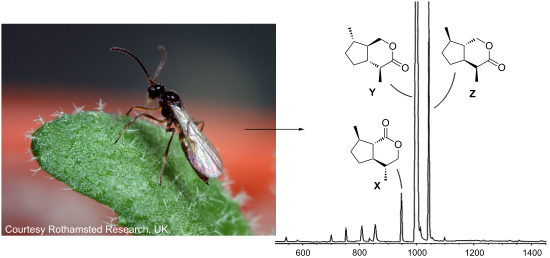
- in a complete epimerization at the CH-acidic C-4 position, exclusively yielding the thermodynamically more stable iridomyrmecin B. All reaction steps were also carried out starting from enantiomerically pure (S)-limonene affording trans-fused iridomyrmecins A' and B'. Relative configurations of
- iridomyrmecin C, whereas treatment with p-toluenesulfonic acid in benzene under reflux conditions led to complete epimerization at C-4 and afforded iridomyrmecin D. All reaction steps were also carried out starting from enantiomerically pure (S)-limonene (3') and afforded iridomyrmecins C' and D'. Relative



Stereoselective synthesis of trans-fused iridoid lactones and their identification in the parasitoid wasp Alloxysta victrix, Part I: Dihydronepetalactones
Beilstein J. Org. Chem. 2012, 8, 1246–1255, doi:10.3762/bjoc.8.140
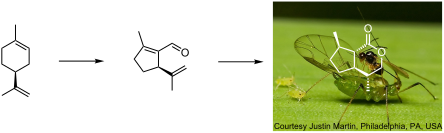
- steric strain. Due to the CH-acidity at the α-position of the formyl group, epimerization of the all-trans product 24 under acidic or basic conditions could be expected. Lange et al. reported the catalytic hydrogenation of a structurally close analogue, (5R)-1-formyl-2-methyl-5-isopropylcyclopent-1-ene
- palladium on carbon (10%) to be the method of choice [30]. Using this approach, the all-trans aldehyde 24 was almost exclusively formed. The presence of ammonium formate in the reaction mixture probably leads to an “in-situ” epimerization at C2 from the kinetically formed all-cis to the thermodynamically
- phosphate buffer (pH 4.5) afforded the carboxylic acid 25 without epimerization at C1 [23][31]. Subsequent deprotection of the TBDMS ether with tetrabutylammonium fluoride (TBAF) yielded 17, and lactonization with N,N-dicyclohexylcarbodiimide (DCC) and 4-dimethylaminopyridine (DMAP) in dichloromethane


Partial thioamide scan on the lipopeptaibiotic trichogin GA IV. Effects on folding and bioactivity
Beilstein J. Org. Chem. 2012, 8, 1161–1171, doi:10.3762/bjoc.8.129
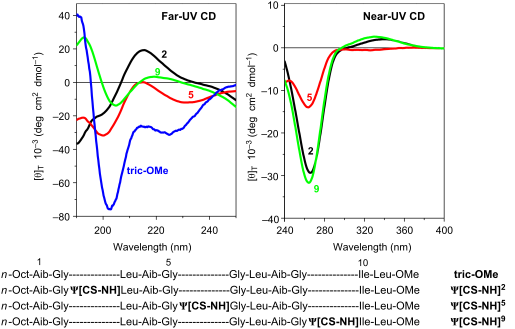
- Gly) residues spread across its sequence, which allows one to design suitable segments each with an achiral residue at its C-terminus, thus reducing dramatically the usually considerable risk of epimerization during the coupling reactions. For the best choice of the step involving treatment with the


Synthesis of highly functionalized β-aminocyclopentanecarboxylate stereoisomers by reductive ring opening reaction of isoxazolines
Beilstein J. Org. Chem. 2012, 8, 100–106, doi:10.3762/bjoc.8.10
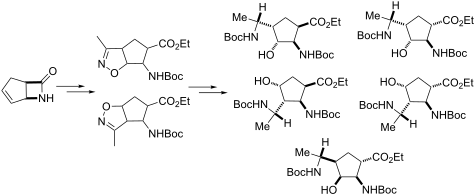
- formed, then separated and isolated. The cycloaddition of nitrile oxide to trans-ethyl 2-aminocyclopent-3-enecarboxylate under similar conditions proceeded selectively with the formation of 6. Epimerization of 2 and 4 afforded trans derivatives 3 and 5 [48][49]. Since isoxazoline-functionalized molecules


Photochemical and thermal intramolecular 1,3-dipolar cycloaddition reactions of new o-stilbene-methylene-3-sydnones and their synthesis
Beilstein J. Org. Chem. 2011, 7, 1663–1670, doi:10.3762/bjoc.7.196
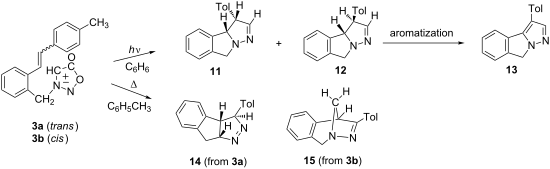
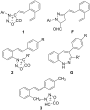
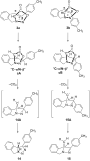
- photoproduct 12 from the trans configuration, although the formation of 12 via epimerization of 11 could not be eliminated. It is also evident that there are several competitive processes, which are summarized in Scheme 5. On irradiation of 3a (trans) or 3b (cis) parallel competitive processes are in operation




Asymmetric synthesis of quaternary aryl amino acid derivatives via a three-component aryne coupling reaction
Beilstein J. Org. Chem. 2011, 7, 1570–1576, doi:10.3762/bjoc.7.185
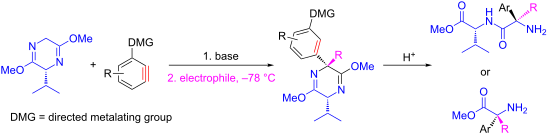
- exposure to 0.5 M HCl, epimerization of the isopropyl group at C-3 occurs in near quantitative yield, giving adduct 13 (Scheme 10). The electron-withdrawing effect of the carbonyl moiety must increase the acidity of the C-3 proton to such an extent that the acidic media simply epimerizes at this center to
- . Hydrolysis to amino acids. Hydrolysis of analogue 6j. Epimerization at C-3 of 6g. Formation of quaternary Schöllkopf adducts employing a range of electrophiles. Supporting Information Supporting Information File 285: Detailed experimental procedures and analytical data for compounds 6a–j, 7b–c, 8a, 8d, 8e




Coupled chemo(enzymatic) reactions in continuous flow
Beilstein J. Org. Chem. 2011, 7, 1449–1467, doi:10.3762/bjoc.7.169
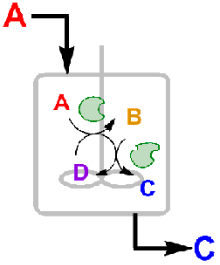
- catalyzed the epimerization of 14 yielding the epimer N-acetylmannosamine (15), which consequently was condensed by the second enzyme aldolase with pyruvic acid (16) to form the product 17 (Scheme 6). By appropriately adjusting the reaction parameters, such as pH, temperature and substrate concentrations


High chemoselectivity in the phenol synthesis
Beilstein J. Org. Chem. 2011, 7, 794–801, doi:10.3762/bjoc.7.90
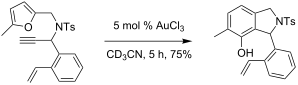
- -catalyzed conversion of the pure isomers. From the NMR spectra taken during the conversion (Figure 4), it could be clearly seen that no epimerization of the propargylic position occurred. In addition to the selective transformation to the phenols 37a and 37b as the main reaction products, partial removal of


Synthetic applications of gold-catalyzed ring expansions
Beilstein J. Org. Chem. 2011, 7, 767–780, doi:10.3762/bjoc.7.87
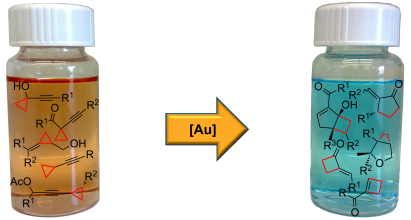
- is sometimes incomplete. This may arise due to a competitive gold-promoted cyclopropyl ring opening/epimerization/ring closure, both in cis and trans-cyclopropyl settings, which competes with the cyclization event, thus eroding the overall transfer of stereochemical information. Conclusion From the


Photoinduced electron-transfer chemistry of the bielectrophoric N-phthaloyl derivatives of the amino acids tyrosine, histidine and tryptophan
Beilstein J. Org. Chem. 2011, 7, 518–524, doi:10.3762/bjoc.7.60
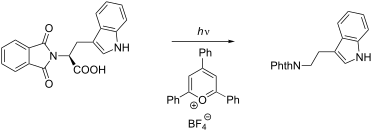
- with the corresponding amino acids or by the Nefkens procedure [9]. The latter procedure yields enantiomerically pure products (by optical rotation), whereas the thermal method leads to partial epimerization. Photochemistry of the tyrosine and histidine derivatives 8 and 9 The colorless phthalimides


Addition of lithiated enol ethers to nitrones and subsequent Lewis acid induced cyclizations to enantiopure 3,6-dihydro-2H-pyrans – an approach to carbohydrate mimetics
Beilstein J. Org. Chem. 2010, 6, No. 75, doi:10.3762/bjoc.6.75

- ). We presume that an initially formed nitrone 22 probably undergoes base induced epimerization to generate the thermodynamically more stable trans-substituted nitrone 21. As shown below, the nitrone moiety of 21 can be regarded as a masked hydroxylamine, however, it should also be very useful for


Molecular recognition of organic ammonium ions in solution using synthetic receptors
Beilstein J. Org. Chem. 2010, 6, No. 32, doi:10.3762/bjoc.6.32


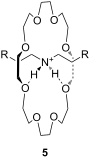


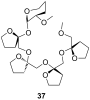


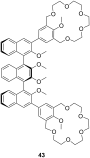


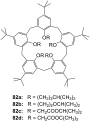


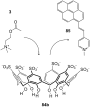


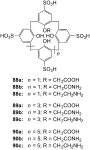


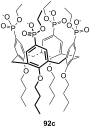


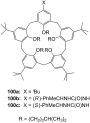


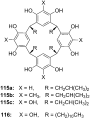
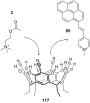


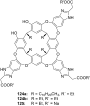
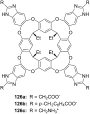


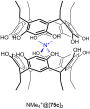


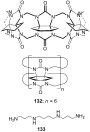


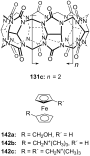


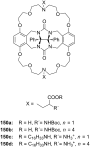
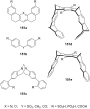


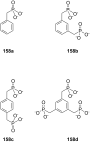

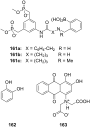


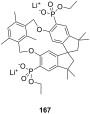
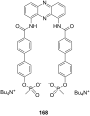

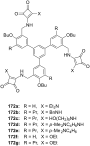
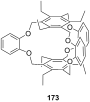


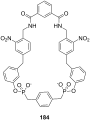


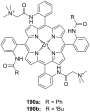


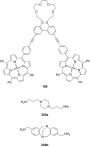


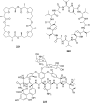


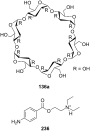




Synthesis and binding studies of two new macrocyclic receptors for the stereoselective recognition of dipeptides
Beilstein J. Org. Chem. 2010, 6, No. 5, doi:10.3762/bjoc.6.5
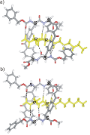
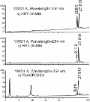
- peptide-coupling reaction of the all-S linear tetrapeptide. As discussed above, one of the two diastereoisomers is probably the outcome of the epimerization reaction experienced by the stereogenic center in the α-position with respect to the carboxylic group undergoing activation. Likewise, the two minor
- peaks should correspond to cyclic diastereoisomers formed from macrocyclization and concomitant epimerization reactions experienced by the minor linear tetrapeptide S,S,S,R also incorporated into the starting material. Figure 4b depicts the HPLC chromatogram obtained from the analysis of the purified
- techniques. Initially, we used HBTU/NMM [25][33][34] for activation of the intramolecular peptide bond formation. We observed considerable epimerization at the stereogenic α-carbon. We assessed the coupling reaction using different coupling methods, HATU/NMM [35] and PyAOP/DIEA [36], and found that although







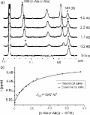
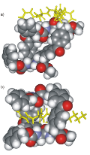
An enantiomerically pure siderophore type ligand for the diastereoselective 1 : 1 complexation of lanthanide(III) ions
Beilstein J. Org. Chem. 2009, 5, No. 78, doi:10.3762/bjoc.5.78
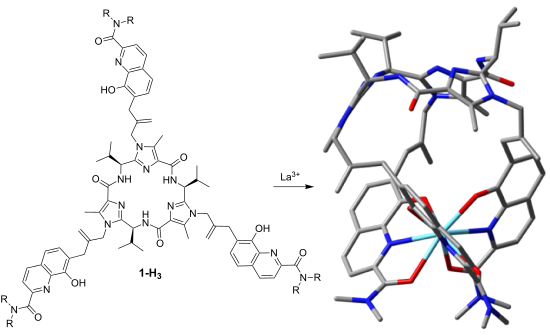
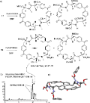
- group for the attachment of other units. Coupling of 2 with three equivalents of 3 results in the formation of the ligand precursor 4. The triple Claisen rearrangement of 4 proceeds at 165 °C under inert atmosphere (N2) within 6 hours [36]. No epimerization occurs at the chiral carbon atoms of the




Mitomycins syntheses: a recent update
Beilstein J. Org. Chem. 2009, 5, No. 33, doi:10.3762/bjoc.5.33






Highly brominated anthracenes as precursors for the convenient synthesis of 2,9,10-trisubstituted anthracene derivatives
Beilstein J. Org. Chem. 2008, 4, No. 50, doi:10.3762/bjoc.4.50

- effective and convenient method to prepare hexabromide 3. Most of the product precipitated during the reaction. After the reaction, a rapid and simple recrystallization gave the pure hexabromide 3 in 95% yield. As hexabromide 4 is quite sensitive to daylight and temperature, aromatization and epimerization


Vinylogous Mukaiyama aldol reactions with 4-oxy-2-trimethylsilyloxypyrroles: relevance to castanospermine synthesis
Beilstein J. Org. Chem. 2007, 3, No. 38, doi:10.1186/1860-5397-3-38

- under acid conditions with CAN to give lactam 10 in 82% yield with retention of the MOM groups (Scheme 4). The vinyl ether 10 was then converted to a ketal in order to preclude any epimerization occurring at C-4, and this was achieved by subjecting 10 to bromine in the presence of methanol to give


Reactions of glycidyl derivatives with ambident nucleophiles; part 2: amino acid derivatives
Beilstein J. Org. Chem. 2007, 3, No. 28, doi:10.1186/1860-5397-3-28

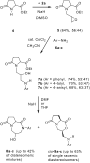
- the cyclization process the α-proton of the amino acid moiety is obviously acidic enough to allow epimerization at this centre. This is in accord with the exclusive formation of a single diastereoisomer of 9 and with the occurrence of 10a as a byproduct in up to 28 % yield, when the reaction was




8-epi-Salvinorin B: crystal structure and affinity at the κ opioid receptor
Beilstein J. Org. Chem. 2007, 3, No. 1, doi:10.1186/1860-5397-3-1
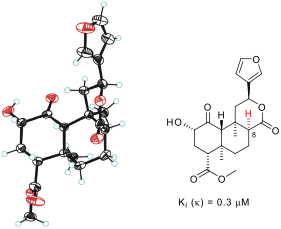
- 02138, USA Department of Pharmacology, Temple University, 3420 N. Broad Street, Philadelphia, PA 19140, USA 10.1186/1860-5397-3-1 Abstract There have been many reports of epimerization of salvinorins at C-8 under basic conditions, but little evidence has been presented to establish the structure of
- these compounds. We report here the first crystal structure of an 8-epi-salvinorin or derivative: the title compound, 2b. The lactone adopts a boat conformation with the furan equatorial. Several lines of evidence suggest that epimerization proceeds via enolization of the lactone rather than a
- -salvinorin A (1b).[12] Brown also reported that deacetylation of 1a under basic conditions gave 8-epi-salvinorin B (2b), but did not characterize either compound. Several further reports of epimerization at C-8 appeared over the following decade, [13][14] but no characterization data was presented. Valdés





