


Search results
Search for "hydrazine" in Full Text gives 218 result(s) in Beilstein Journal of Organic Chemistry. Showing first 200.
One-pot multistep mechanochemical synthesis of fluorinated pyrazolones
Beilstein J. Org. Chem. 2017, 13, 1950–1956, doi:10.3762/bjoc.13.189
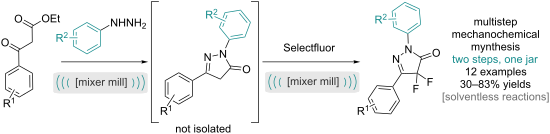
- the hydrazine is slow, meaning that the nucleophilicity is greatly retarded compared to lower acid loadings. Nonetheless, considering that the subsequent fluorination step should proceed optimally under basic conditions [17], the lowest amount of acid which also provided a good yield was thus chosen


Mechanochemical N-alkylation of imides
Beilstein J. Org. Chem. 2017, 13, 1745–1752, doi:10.3762/bjoc.13.169
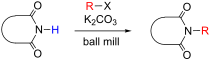
- hazardous hydrazine hydrate was replaced by 1,2-diaminoethane [39] and conversion to the corresponding benzylamines was quantitative within 1 h. As a proof of concept of reaction, p-methylbenzylamine was isolated in 41% yield in the form of acetamide 42. In this way, a three-step, two-pot (A and B, Scheme 5


Encaging palladium(0) in layered double hydroxide: A sustainable catalyst for solvent-free and ligand-free Heck reaction in a ball mill
Beilstein J. Org. Chem. 2017, 13, 1661–1668, doi:10.3762/bjoc.13.160
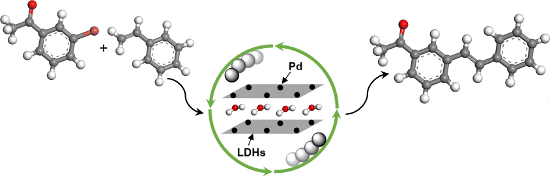
- hybrid LDHs were then reduced by hydrazine hydrate (N2H4·H2O) to obtain the Pd catalyst supported on MgAl-LDHs (Pd/MgAl-LDHs). The as-prepared Pd/MgAl-LDH catalyst was further applied in representative cross-coupling Heck reactions under HSBM conditions (Scheme 1) by using a planetary ball mill


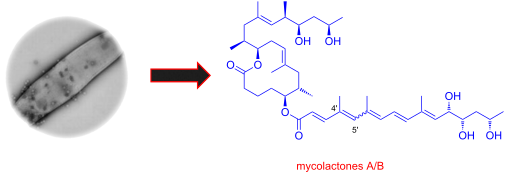
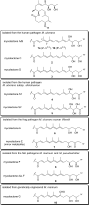
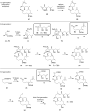
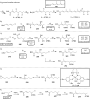
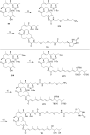
The chemistry and biology of mycolactones
Beilstein J. Org. Chem. 2017, 13, 1596–1660, doi:10.3762/bjoc.13.159









Nucleophilic and electrophilic cyclization of N-alkyne-substituted pyrrole derivatives: Synthesis of pyrrolopyrazinone, pyrrolotriazinone, and pyrrolooxazinone moieties
Beilstein J. Org. Chem. 2017, 13, 825–834, doi:10.3762/bjoc.13.83
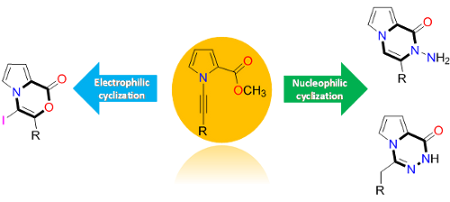
- by a copper-catalyzed cross-coupling reaction. Nucleophilic cyclization of N-alkyne-substituted methyl 1H-pyrrole-2-carboxylates with hydrazine afforded the 6-exo-dig/6-endo-dig cyclization products depending on the electronic nature of the substituents attached to the alkyne. On the other hand
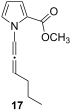
- the presence of an electron-donating group at the benzene ring. However, when the reaction was carried out at the reflux temperature of toluene, the conversion increased to 35%. Next, we conducted cyclization reactions of N-alkyne substituted carboxylate derivatives 7a–d via hydrazine monohydrate
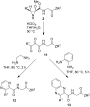
- . Methyl 1-(phenylethynyl)-1H-pyrrole-2-carboxylate (7c) was treated with hydrazine monohydrate in MeOH under N2 atmosphere at reflux temperature. Pyrrolopyrazinone 12c and pyrrolotriazinone 13c skeletons were formed in 67% and 24% yields, respectively (Scheme 2). The structures of cyclization products 12c




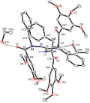
Derivatives of the triaminoguanidinium ion, 5. Acylation of triaminoguanidines leading to symmetrical tris(acylamino)guanidines and mesoionic 1,2,4-triazolium-3-aminides
Beilstein J. Org. Chem. 2017, 13, 579–588, doi:10.3762/bjoc.13.57
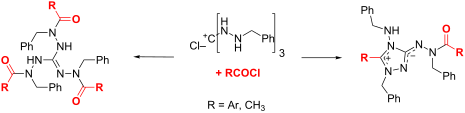
- the reaction of guanidinium chloride with hydrazine [2], triaminoguanidinium chloride (TAG-Cl) offers the opportunity to serve as a C3-symmetrical platform for the synthesis of triaminoguanidines with multiple functionalization (see [3] and references cited there). In most studies reported so far




Contribution of microreactor technology and flow chemistry to the development of green and sustainable synthesis
Beilstein J. Org. Chem. 2017, 13, 520–542, doi:10.3762/bjoc.13.51
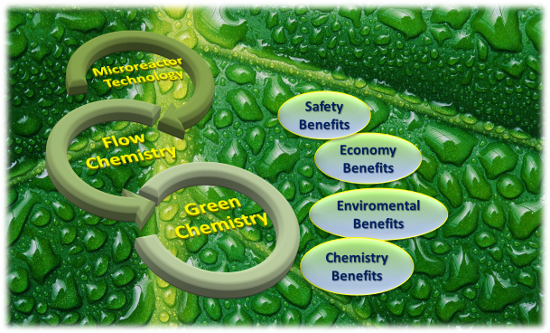
- " for safety reasons, such as those involving diazo compounds, hydrazine, azides, phosgene, cyanides and other hazardous chemicals could be performed with relatively low risk using flow technology [72][73][74][75][76]. Several research groups investigated this aspect, as highlighted by several available
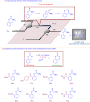
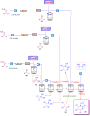
- in Scheme 16, diazo species 18 could be generated from simple carbonyls 15 and hydrazine (16). Intermediate hydrazones 17 can be converted into the corresponding diazo compounds by oxidation using a recyclable oxidant based on N-iodo-p-toluenesulfonamide potassium salt. The possibility to regenerate
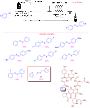
- to handle hazardous components such as hydrazine and molecular oxygen, which represent alternative reagents for selective reduction of C=C double bonds. In fact, combination of hydrazine hydrate (N2H4·H2O) and O2 provide diimide (HN=NH) as reducing agent. Nevertheless, this strategy is rarely used in








Synthesis and optical properties of new 5'-aryl-substituted 2,5-bis(3-decyl-2,2'-bithiophen-5-yl)-1,3,4-oxadiazoles
Beilstein J. Org. Chem. 2017, 13, 313–322, doi:10.3762/bjoc.13.34
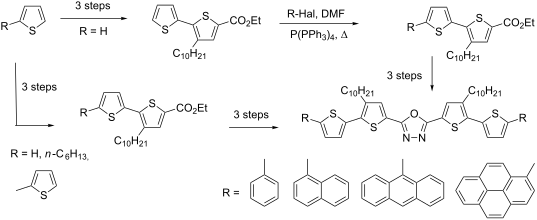
- semiconducting and photoluminescent properties. First, alkaline hydrolysis of the esters 7b–g led to the corresponding carboxylic acids 12b–g in good yields (70–87%, Scheme 3). The corresponding hydrazide derivatives 13b,c were obtained in 67–73% yields by refluxing the esters 7b,c with hydrazine monohydrate in
- synthesis of 14d–g. These intermediates were synthesized by the reaction of the acid chlorides with hydrazine dihydrochloride in the presence of pyridine. The required acid chlorides were prepared in situ through the reaction of the corresponding carboxylic acids 12b–g with oxalyl chloride. The yields of


Total synthesis of a Streptococcus pneumoniae serotype 12F CPS repeating unit hexasaccharide
Beilstein J. Org. Chem. 2017, 13, 164–173, doi:10.3762/bjoc.13.19
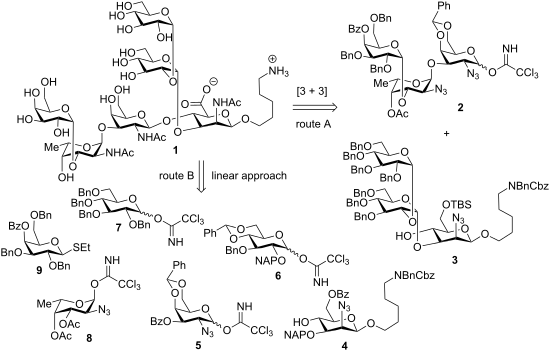
- C2-participating levulinyl ester protecting group ensured selective formation of the trans-glycoside upon activation of 11 by NIS/TfOH in the presence of the C5 linker to produce glucoside 12 in 70% yield [24]. Cleavage of the C2 levulinyl ester of 12 by treatment with hydrazine acetate furnished 13


Synthesis of acylhydrazino-peptomers, a new class of peptidomimetics, by consecutive Ugi and hydrazino-Ugi reactions
Beilstein J. Org. Chem. 2016, 12, 2865–2872, doi:10.3762/bjoc.12.285

- hydrazino-Ugi reaction (or a classical Ugi reaction). The hydrazides 3a–c used in the first MCR were prepared by the reaction of glycine-derived esters 2, 5 and 7 with hydrazine monohydrate (hydrazinolysis), following a known procedure [63][64] (Scheme 2). The obtained hydrazides were then reacted with


Continuous-flow synthesis of primary amines: Metal-free reduction of aliphatic and aromatic nitro derivatives with trichlorosilane
Beilstein J. Org. Chem. 2016, 12, 2614–2619, doi:10.3762/bjoc.12.257
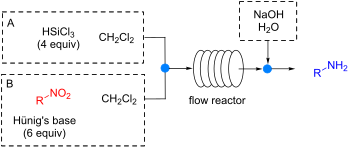
- conditions, but the presence of noble metal catalysts, packed into disposable cartridges, suffers from functional group compatibility and catalyst poisoning during time. In 2012 Kappe’s research group reported the microwave-assisted continuous-flow synthesis of anilines from nitroarenes using hydrazine as


Facile synthesis of a 3-deazaadenosine phosphoramidite for RNA solid-phase synthesis
Beilstein J. Org. Chem. 2016, 12, 2556–2562, doi:10.3762/bjoc.12.250

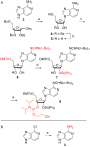
- . Only when treated with hydrazine, nucleophilic substitution was observed and after reduction with Raney nickel the desired 3-deazaadenosine was isolated. Our own attempts towards direct ammonolysis failed as well. Additionally, the limited commercial availability of hydrazine and its inconvenience in
- . c) Anhydrous hydrazine, steam bath, 1 h, not isolated. d) Raney nickel, water, reflux, 1 h. Synthesis of c3A described by Montgomery et al. in 1977 [23]. The final step, displacement of the 2-chlorine atom by a hydrogen atom, remains problematic [24][25][26]. a) 1,2,3,5-Tetraacetyl-ß-D-ribofuranose


A new paradigm for designing ring construction strategies for green organic synthesis: implications for the discovery of multicomponent reactions to build molecules containing a single ring
Beilstein J. Org. Chem. 2016, 12, 2420–2442, doi:10.3762/bjoc.12.236
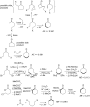
- -membered heterocycle containing two adjacent nitrogen atoms. Pyrazole Pyrazole is a well-studied 5-membered heterocycle that has been traditionally synthesized either via the Knorr [151] (1,3-diketone and hydrazine) or von Pechmann [152] (olefin and diazomethane followed by oxidation) strategies. Figure 7








Three-component synthesis of highly functionalized aziridines containing a peptide side chain and their one-step transformation into β-functionalized α-ketoamides
Beilstein J. Org. Chem. 2016, 12, 1772–1777, doi:10.3762/bjoc.12.166
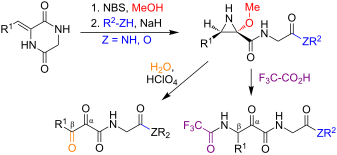
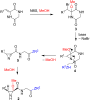
- of 1,4-diacetyl-2,5-piperazinedione with aldehydes in the presence of potassium tert-butoxide, followed by deacetylation with hydrazine hydrate (see the Supporting Information File 1 for further details). As shown in Scheme 2, treatment of these materials with N-bromosuccinimide and methanol in




Automated glycan assembly of a S. pneumoniae serotype 3 CPS antigen
Beilstein J. Org. Chem. 2016, 12, 1440–1446, doi:10.3762/bjoc.12.139
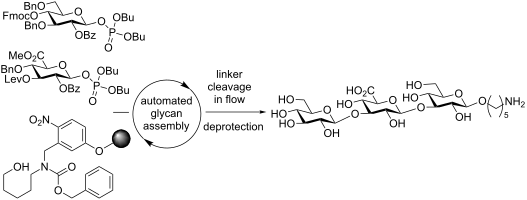
- maintained for 30 min. The temporary Fmoc protecting group was cleaved with triethylamine in DMF (N,N-dimethylformamide; 10% v/v). The Lev protecting group was removed using hydrazine monohydrate in pyridine/acetic acid (3:2 v/v). The crude oligosaccharide products were cleaved from the solid support by
- -protected 3. The use of the buffered hydrazine solution for the cleavage of Lev TPGs was expected to prevent any undesired benzoyl ester cleavage. The trisaccharide synthesis was repeated using the same glycosylation conditions as in the previous synthesis (Scheme 2). After each glycosylation step, the pH
- tetrasaccharide addition sequence, resulting from benzoyl ester cleavage and a double glycosylation in the last step (see Supporting Information File 1). This result was not expected as the buffered hydrazine deprotection protocol had never favored the formation of side products in our hands. However, this


Multicomponent reactions: A simple and efficient route to heterocyclic phosphonates
Beilstein J. Org. Chem. 2016, 12, 1269–1301, doi:10.3762/bjoc.12.121
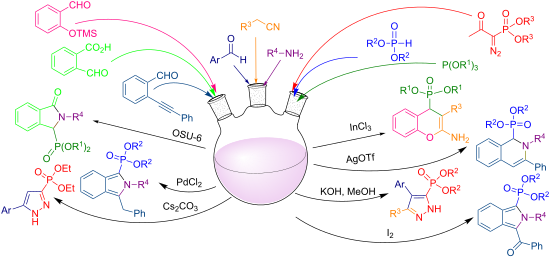
- phosphonates via ring opening through an intramolecular nucleophilic attack at the 2-position of the pyrone. Thus, the three-component reaction of 75 with hydrazine derivatives 76 or hydroxylamine 79 in the presence of diethyl phosphonate led to pyrazolylphosphonate 78 and oxazolylphosphonate 81, respectively
- -aryl-3-oxoisoindolin-1-yl)phosphonates. FeCl3 and PdCl2 co-catalyzed three-component reaction of 2-alkynylbenzaldehydes, anilines, and diethyl phosphonate. Three-component reaction of 6-methyl-3-formylchromone (75) with hydrazine derivatives or hydroxylamine in the presence of diethyl phosphonate


Unusual traits of cis and trans-2,3-dibromo-1,1-dimethylindane on the way from 1,1-dimethylindene to 2-bromo-, 3-bromo-, and 2,3-dibromo-1,1-dimethylindene
Beilstein J. Org. Chem. 2016, 12, 1178–1184, doi:10.3762/bjoc.12.113
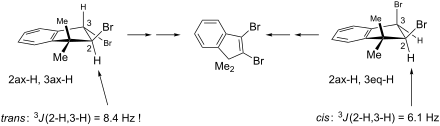
- -phenylbutan-2-ol, N-(1,1-dimethylindan-3-ylidene)hydrazine, and N,N´-bis(1,1-dimethylindan-3-ylidene)hydrazine. Acknowledgements This article is dedicated to Professor Manfred Heuschmann on the occasion of his retirement. Technical support of this research by the Organic Chemistry Division of the Department



Enabling technologies and green processes in cyclodextrin chemistry
Beilstein J. Org. Chem. 2016, 12, 278–294, doi:10.3762/bjoc.12.30
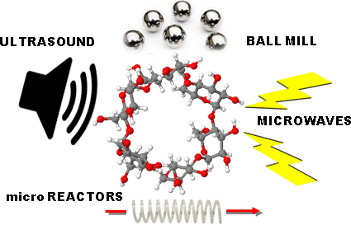
- azido β-CD was obtained by a Staudinger reaction or in the presence of hydrazine. A new generation of organophosphate scavengers has been obtained by Le Provost et al. [25] in which β-CD was regioselectively monosubstituted at O-2 using a bromomethyl pyridine derivative under US irradiation to avoid
- (GO) by MW irradiation (450 W) at different temperatures ranging from 50 to 100 °C for 10, 30, 60 and 90 min. After reduction with hydrazine hydrate, this HP-β-CD-RGO modified glassy carbon electrode showed good results in supramolecular recognition a set of six different phenolic organic pollutants



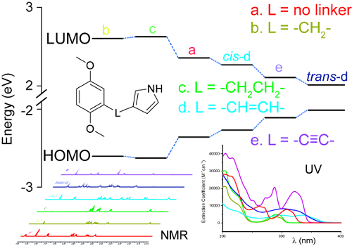
Hydroquinone–pyrrole dyads with varied linkers
Beilstein J. Org. Chem. 2016, 12, 89–96, doi:10.3762/bjoc.12.10
- . achieved a total yield of 70% [11], however, their procedure relies on a Wolff–Kishner reduction of the corresponding acylpyrrole with hydrazine hydrate, making it impractical in countries where the use of hydrazine has been restricted by law [12]. As an alternative, the Suzuki–Miyaura reaction can be


A convenient four-component one-pot strategy toward the synthesis of pyrazolo[3,4-d]pyrimidines
Beilstein J. Org. Chem. 2015, 11, 2125–2131, doi:10.3762/bjoc.11.229

- results in hand, two possible reaction mechanisms were proposed and shown in Scheme 3. 5-Aminopyrazole-4-carbonitrile 6 was obtained from the reaction of hydrazine 1 and methylenemalononitrile 2 through nucleophilic addition, cyclization and aromatization. The nucleophilic attack of the amino group of 6


A new approach to ferrocene derived alkenes via copper-catalyzed olefination
Beilstein J. Org. Chem. 2015, 11, 2072–2078, doi:10.3762/bjoc.11.223
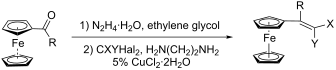
- , 28 Vavilov Street, Moscow 119991, Russia 10.3762/bjoc.11.223 Abstract A new approach to ferrocenyl haloalkenes and bis-alkenes was elaborated. The key procedure involves copper catalyzed olefination of N-unsubstituted hydrazones, obtained from ferrocene-containing carbonyl compounds and hydrazine


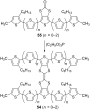
Polythiophene and oligothiophene systems modified by TTF electroactive units for organic electronics
Beilstein J. Org. Chem. 2015, 11, 1749–1766, doi:10.3762/bjoc.11.191
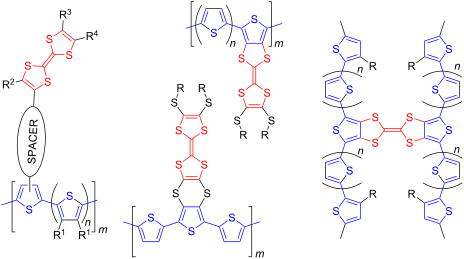
- cation radical [31][32]. The doped film exhibited excellent stability and its absorption characteristics did not change despite treatment with hydrazine. However, de-doping was achieved with repetitive scanning of the polymer film over the range of −0.3–0 V vs Ag/AgCl for 2 hours [73]. After de-doping






The facile construction of the phthalazin-1(2H)-one scaffold via copper-mediated C–H(sp2)/C–H(sp) coupling under mild conditions
Beilstein J. Org. Chem. 2015, 11, 1624–1631, doi:10.3762/bjoc.11.177

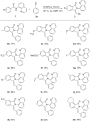
- hydrazine hydrate and sodium hydroxide. Results and Discussion We initiated our investigation of the direct carbon–carbon coupling of N-(quinolin-8-yl)benzamide (1a) and phenylacetylene (2a). After extensive attempts, 3-benzylidene-2-(quinolin-8-yl)isoindolin-1-one (3a) was formed in 18% yield via the
- quinolin-8-amine was easily removed and recycled by treatment of 3a with hydrazine hydrate and NaOH in EtOH at 120 °C under microwave irradiation (Scheme 4). Both electron-rich and electron-deficient 4-benzylphthalazin-1(2H)-one derivatives were obtained in good yields (4b, 4k). The halo-substituted phenyl
- phthalazin-1(2H)-one scaffold by treatment with hydrazine hydrate and sodium hydroxide. As the phthalazin-1(2H)-one scaffold is identified as a privilege moiety and bioactive nucleus in pharmaceuticals, this modified procedure will be of importance to medicinal chemists. Experimental General procedure for




The enantioselective synthesis of (S)-(+)-mianserin and (S)-(+)-epinastine
Beilstein J. Org. Chem. 2015, 11, 1509–1513, doi:10.3762/bjoc.11.164

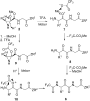
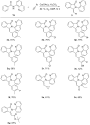
- reacting amine 7 and ethyl chloro(oxo)acetate in dichloromethane in the presence of triethylamine. The removing of the phthaloyl protecting group from 8 using hydrazine gave an intermediate with a free amino group which is cyclised in situ to dioxopiperazine 9 in 90% yield. In the next step
- (S)-(+)-7 with hydrazine led to derivative 13 with deprotected amine function. Subsequent condensation with cyanogen bromide gave (S)-(+)-epinastine (2) in nearly quantitative yield. Conclusion In summary, we have presented a simple enantioselective synthesis of (S)-(+)-mianserin and (S


The synthesis of active pharmaceutical ingredients (APIs) using continuous flow chemistry
Beilstein J. Org. Chem. 2015, 11, 1194–1219, doi:10.3762/bjoc.11.134
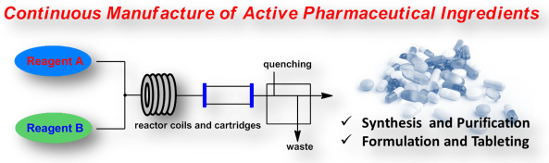
- precipitation and clogging problems, thus a pressure chamber was developed [94] that would act as a pressure regulator allowing this step to be scaled up in flow in order to provide 114 on multigram scale (134 g/h). A Knorr pyrazole formation between 114 and commercially available hydrazine 115 had previously





