Search results
Search for "lipid" in Full Text gives 159 result(s) in Beilstein Journal of Organic Chemistry.
Synthesis of novel conjugates of a saccharide, amino acids, nucleobase and the evaluation of their cell compatibility
Beilstein J. Org. Chem. 2014, 10, 2406–2413, doi:10.3762/bjoc.10.250

- ], Fmoc [23][24], lipid [25]), it is still challenging to judge which molecules could self-assemble to form ordered nanostructures. This challenge requires the molecular engineering of the conjugates and intense study of their properties to provide a molecular basis for the understanding of the


Specific DNA duplex formation at an artificial lipid bilayer: fluorescence microscopy after Sybr Green I staining
Beilstein J. Org. Chem. 2014, 10, 2307–2321, doi:10.3762/bjoc.10.240
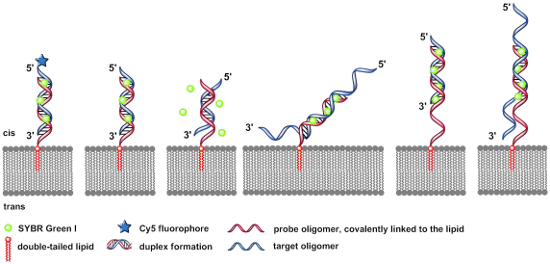
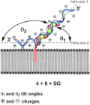
- describes the immobilization of different probe oligonucleotides (4, 7, 10) carrying each a racemic mixture of 2,3-bis(hexadecyloxy)propan-1-ol (1a) at the 5’-terminus on a stable artificial lipid bilayer composed of 1-palmitoyl-2-oleoyl-sn-glycero-3-phosphoethanolamine (POPE) and 1-palmitoyl-2-oleoyl-sn
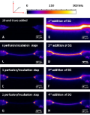
- complexes consisting of various DNA duplexes and the fluorescent dye were studied with respect to the kinetics of their formation as well as to their stability against perfusion. Keywords: artificial lipid bilayers; lipo-oligonucleotide duplexes; nucleic acids; Sybr Green I; Introduction The post
- ability to form complex nano-architectures [5][6] as well as self-assembling aggregates such as micelles, vesicles [3] and bilayer formation of nucleolipids [7] offers numerous possibilities, e.g., for drug delivery [3]. Simultaneously, the interaction of such nanostructures with lipid membranes becomes








Photo, thermal and chemical degradation of riboflavin
Beilstein J. Org. Chem. 2014, 10, 1999–2012, doi:10.3762/bjoc.10.208

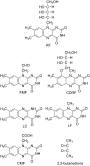
- reducing the patient compliance [73]. Incorporation into liposomes Entrapment of RF within lipid bilayered vesicles (liposomes) is another approach to improve the photostability of the vitamin and various studies related to such preparations have been conducted [111][137][138][139][140][141][142][143]. The




Sacrolide A, a new antimicrobial and cytotoxic oxylipin macrolide from the edible cyanobacterium Aphanothece sacrum
Beilstein J. Org. Chem. 2014, 10, 1808–1816, doi:10.3762/bjoc.10.190
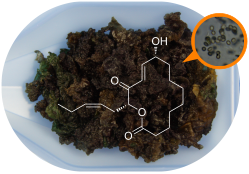
- as evidenced by one-to-one NOE correlations between the acetonide methyl groups and oxymethine protons. Therefore, it was concluded that C13 has an R-configuration. Sacrolide A (1) is apparently a member of the oxylipins, lipid oxidation products reported from all organisms, and its biosynthesis


Convergent synthetic methodology for the construction of self-adjuvanting lipopeptide vaccines using a novel carbohydrate scaffold
Beilstein J. Org. Chem. 2014, 10, 1741–1748, doi:10.3762/bjoc.10.181
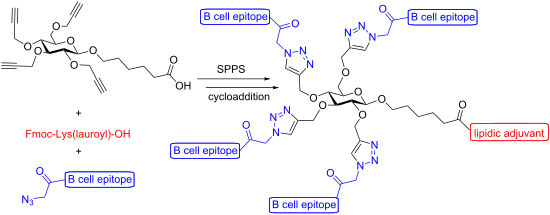
- in the body’s defences, particularly against Gram positive bacteria [8]. Research efforts within our group have shown that a short sequence of synthetic lipo-amino acids (Lipid Core Peptide (LCP)), can bind to the TLR2, which results in increased immune responses to otherwise poorly immunogenic
- peptide was cleaved from the resin and purified by preparative RP (reversed phase)-HPLC. Construction of vaccine candidates The lipidic adjuvanting moiety was synthesized by standard Fmoc SPPS using the lipidated lysine amino acid 8 (K(C12)). This lipidic sequence, lysine lipid core peptide (LLCP; K(C12



Postsynthetic functionalization of glycodendrons at the focal point
Beilstein J. Org. Chem. 2014, 10, 1482–1487, doi:10.3762/bjoc.10.152
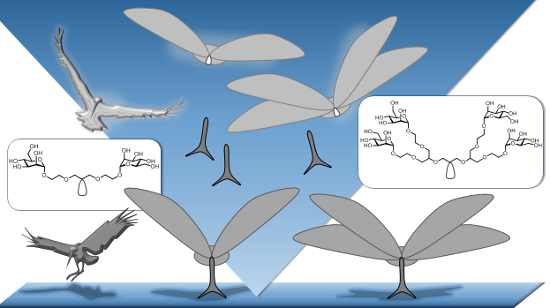
- for incorporation into lipid bilayers, the di- and tetravalent glycodendrons 6 and 9 were then cross-coupled with the mono-allylated glycerol triether 22 (Scheme 4). The alkene 22 can be derived from commercially available glycerolmonoallyl ether according to the literature [15]. Metathesis with the
- mimetics that are amenable to a variety of applications, employing Langmuir films [16], self-assembled monolayers (SAMs) [17][18][19] or lipid bilayers [20], for example. We will eventually optimize some of the described reactions where necessary and validate the described procedures for modification of


Glycosystems in nanotechnology: Gold glyconanoparticles as carrier for anti-HIV prodrugs
Beilstein J. Org. Chem. 2014, 10, 1339–1346, doi:10.3762/bjoc.10.136
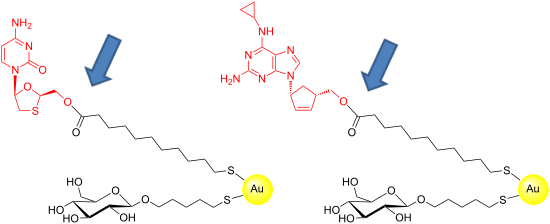
- . Some of these nanomaterials like polymeric nanoparticles, lipid nanoparticles and nanofibers have shown the ability to improve solubility, stability and permeability of anti-HIV drugs [9][10], but also to reduce the viral load by the activation of latently infected CD4+ T-cells [11]. Gold nanoparticles


Atherton–Todd reaction: mechanism, scope and applications
Beilstein J. Org. Chem. 2014, 10, 1166–1196, doi:10.3762/bjoc.10.117

- for biological applications. The selected examples to illustrate the applications of the Atherton–Todd reaction mainly cover the past 15 years. Keywords: amphiphiles; flame retardant; lipid conjugates; organophosphorus; phosphoramidate; phosphate; Review 1. Introduction The reaction of
- reactions mainly include dialkyl phosphites. It must be noted that the alkyl-chain length can be changed and extended to lipid chains as exemplified in Scheme 17 (oleyl chains). Diaryl phosphite can also be used for AT reactions as illustrated in a recent example published by Gaan et al. (Scheme 21) [70]. O




Amino acid motifs in natural products: synthesis of O-acylated derivatives of (2S,3S)-3-hydroxyleucine
Beilstein J. Org. Chem. 2014, 10, 1135–1142, doi:10.3762/bjoc.10.113
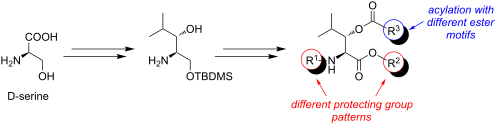
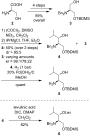
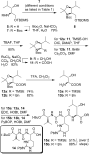
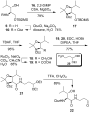
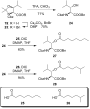
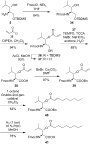
- direct relation of the lipophilicity of semi-synthetic muraymycin C1 analogues and their biological activity [18]. They thus also postulated that the lipid structure might be involved in transporting the molecule to the active site of the target enzyme. The most recent SAR investigation on synthetic




From porphyrin benzylphosphoramidate conjugates to the catalytic hydrogenation of 5,10,15,20-tetrakis(pentafluorophenyl)porphyrin
Beilstein J. Org. Chem. 2014, 10, 628–633, doi:10.3762/bjoc.10.54
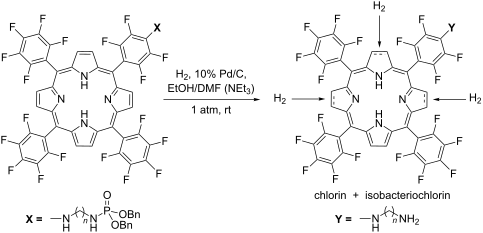
- that the efficiency of the drug greatly depends on the porphyrin amphiphilicity, which must provide good interactions with the lipid membranes and the physiological medium. Consequently, tumor localization and better selectivity can be achieved by introducing polar substituents [3]. For this reason, we


Convergent synthesis of a tetrasaccharide repeating unit of the O-specific polysaccharide from the cell wall lipopolysaccharide of Azospirillum brasilense strain Sp7
Beilstein J. Org. Chem. 2014, 10, 293–299, doi:10.3762/bjoc.10.26
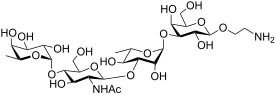
- (e.g. a protein, a lipid or another aglycone) for biochemical applications. A stereoselective [2 + 2] block glycosylation of the disaccharide derivative 8 with the disaccharide thioglycoside 9 led to the formation of tetrasaccharide 10, which was finally deprotected to give the desired tetrasaccharide


Synthesis and biological activity of N-substituted-tetrahydro-γ-carbolines containing peptide residues
Beilstein J. Org. Chem. 2014, 10, 155–162, doi:10.3762/bjoc.10.13
- autooxidation and the t-BHP-induced lipid peroxidation. Keywords: mitochondrial membrane potential; mitochondrial permeability transition; multicomponent; peptides; tetrahydro-γ-carbolines; Ugi multicomponent reaction; Introduction The design and synthesis of new efficient pharmaceutical drugs for the
- ] (Figure 1). These peptides were found to scavenge hydrogen peroxide and peroxynitrite and inhibit lipid peroxidation in vitro. By reducing mitochondrial reactive oxygen species, they inhibit MPT and cytochrome c release, thus protecting cells from oxidative cell death [11]. We expected that the
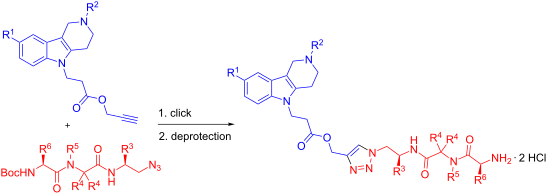
- membrane potential, mitochondrial permeability transition and lipid peroxidation. Results and Discussion The starting N-substituted tetrahydro-γ-carbolines 3a–d containing a terminal alkyne group were prepared in good yields by heating compounds 1a–d [12][13] with propargyl acrylate (2) in the presence of


3-Pyridinols and 5-pyrimidinols: Tailor-made for use in synergistic radical-trapping co-antioxidant systems
Beilstein J. Org. Chem. 2013, 9, 2781–2792, doi:10.3762/bjoc.9.313
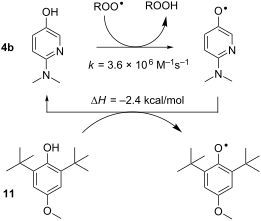
- mediated peroxidation’ (TMP), which occurs when α-tocopherol (the most biologically active form of vitamin E) is left alone to protect the lipid core of low-density lipoproteins (LDL). LDL is the particle responsible for the distribution of cholesterol in blood plasma and whose oxidation has been linked to
- water-soluble reducing equivalent into a lipid-soluble one [5][6][7]. In recent years, some of us have worked to understand the kinetic and thermodynamic basis for synergism among radical-trapping antioxidants in homogeneous solution, which is summarized in Scheme 3 [8][9]. When two (or more




Total synthesis of the endogenous inflammation resolving lipid resolvin D2 using a common lynchpin
Beilstein J. Org. Chem. 2013, 9, 2762–2766, doi:10.3762/bjoc.9.310
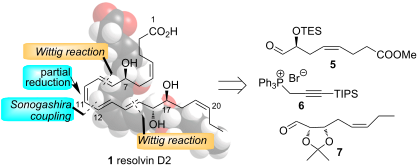
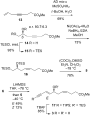
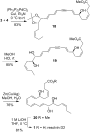
- ; resolvin D2; Sonogashira coupling; total synthesis; Wittig reaction; Introduction The resolution of inflammation is a tightly governed active process effectively mediated by a range of bioactive polyunsaturated fatty acids, peptides and proteins. In 2002, a new family of endogenously generated lipid


Synthesis and evaluation of cell-permeable biotinylated PU-H71 derivatives as tumor Hsp90 probes
Beilstein J. Org. Chem. 2013, 9, 544–556, doi:10.3762/bjoc.9.60
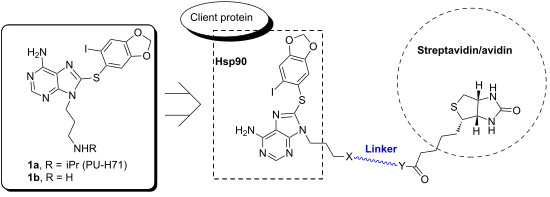
- linker. It is possible that such compounds are prone to being trapped in the lipid bilayers of the plasma membrane, and thus, significant amounts become available for binding to intracellular Hsp90 only after the cell-permeabilization step (such as is performed in Figure 2d). Alternatively, it is


A peptidic hydrogel that may behave as a “Trojan Horse”
Beilstein J. Org. Chem. 2013, 9, 417–424, doi:10.3762/bjoc.9.44

- drugs, which should be sufficiently polar for ease of administration and successful distribution in the organism, but also adequately hydrophobic so as to traverse the lipid bilayer of the cell membrane. Because they do not fulfill these physical properties, a large number of drug leads fail to make it


Chemical–biological characterization of a cruzain inhibitor reveals a second target and a mammalian off-target
Beilstein J. Org. Chem. 2013, 9, 15–25, doi:10.3762/bjoc.9.3
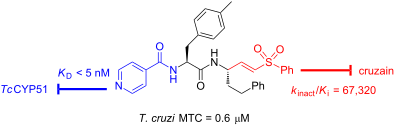
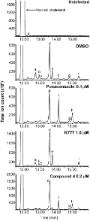
- compound 4 or 8 produced effects very similar to those observed in posaconazole treated parasites (Figure 4 and Supporting Information File 1). The other test compounds evaluated (3, 6, 7) produced no significant change in lipid composition, as expected since these compounds do not inhibit TcCYP51 in vitro
- . Synthesis of the additional control compound 6–8, the reduced forms of analogues 1, 3, and 4 respectively. GC/MS analysis of lipid extracts from T. cruzi parasites treated with test compounds. DMSO and K777 (1) were used as negative controls; posaconazole served as a positive control. The analysis of 4 was
- performed concurrently with other CYP51 inhibitors described recently [33] and, thus, the spectra for the controls shown above are reproduced from the earlier report. Spectra of lipid extracts from parasites treated with 3, 6, 7, and 8 are provided in Supporting Information File 1. Uninfected host cell




Chemical modification allows phallotoxins and amatoxins to be used as tools in cell biology
Beilstein J. Org. Chem. 2012, 8, 2072–2084, doi:10.3762/bjoc.8.233
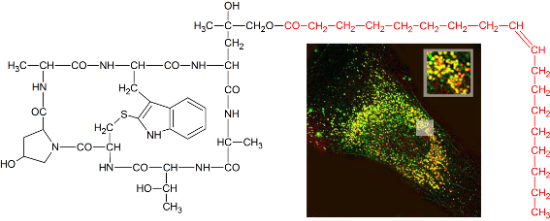
- experience with moieties that may help to overcome the plasma membrane barrier and to shift hydrophilic peptides into a cell. Previous experience with internalization-mediating moieties Lipid acids have been used by various researchers to enhance the uptake of peptides and proteins into cells. For example




Modulating the activity of short arginine-tryptophan containing antibacterial peptides with N-terminal metallocenoyl groups
Beilstein J. Org. Chem. 2012, 8, 1753–1764, doi:10.3762/bjoc.8.200
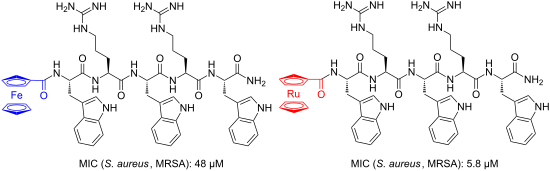
- activities of these RW-based synAMPs and their organometallic conjugates into perspective, two reference peptides were included, i.e., membrane-targeting gramicidin S derivative GS(K2Y2) and cell wall precursor lipid II-targeting vancomycin. For the calculations of the MIC values in µM, molecular weights of
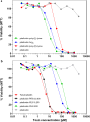
- ) and their metallocene-derivatives (right); the lower row shows the structure of pore-forming gramicidin S derivative GS(K2Y2) (left) and lipid II-binding cell wall biosynthesis inhibitor vancomycin (right). Bactericidal activity of (RW)3 against S. aureus 133 (panel A and D) or B. megaterium (panel B


Design of a novel tryptophan-rich membrane-active antimicrobial peptide from the membrane-proximal region of the HIV glycoprotein, gp41
Beilstein J. Org. Chem. 2012, 8, 1172–1184, doi:10.3762/bjoc.8.130
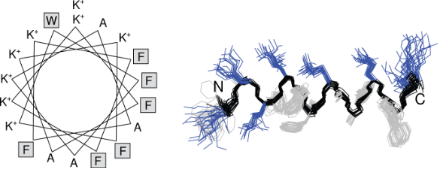
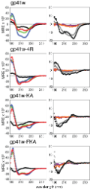
- with enhanced antimicrobial potency and weak cytotoxic activity. The first step in this process was to select an appropriate sequence to serve as the peptide scaffold. Many linear AMPs are unstructured in aqueous solution and only adopt a well-defined structure in the presence of a lipid bilayer [1
- ]. This binding event is integral to the mechanism of action of the peptide, either through direct damage to the phospholipid bilayer or by allowing the peptide to cross the bacterial membrane to reach intracellular targets [2]. A number of AMPs form amphipathic α-helices when bound to lipid bilayers with
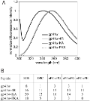
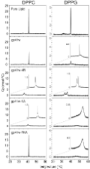
- solutions caused substantial blue shifts of the maximum wavelength in the Trp emission spectra (Figure 2B). The maximum wavelength of the gp41w-4R samples blue shifted in all the lipid environments, with the largest changes occurring in the presence of anionic LUVs and detergents. Gp41w-KA also displayed




Partial thioamide scan on the lipopeptaibiotic trichogin GA IV. Effects on folding and bioactivity
Beilstein J. Org. Chem. 2012, 8, 1161–1171, doi:10.3762/bjoc.8.129
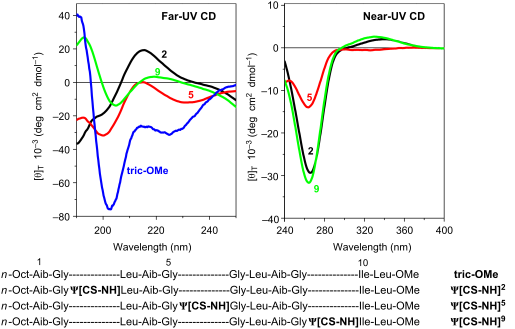
- SUVs was performed in a similar way as described in reference [59]. Leakage from lipid vesicles The peptide-induced leakage from SUVs was measured at 293 K by using the CF-entrapped vesicle technique [65] and a Perkin Elmer model MPF-66 spectrofluorimeter. SUVs were prepared as described above. The
- phospholipid concentration was kept constant (0.06 mM), and increasing [peptide]/[lipid] molar ratios (R−1) were obtained by adding aliquots of each non-hydrosoluble, monothionated peptide (or of trichogin GA IV, used as reference compound) as a MeOH solution, keeping the final MeOH concentration below 5% by


Triterpenoid saponins from the roots of Acanthophyllum gypsophiloides Regel
Beilstein J. Org. Chem. 2012, 8, 763–775, doi:10.3762/bjoc.8.87
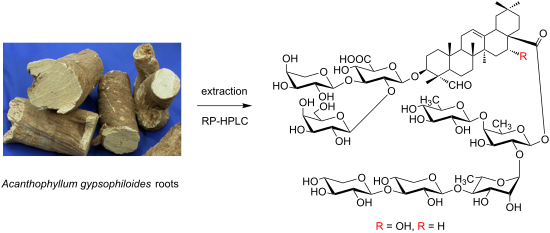
- nature of compounds 1 and 2, the presence of glucuronic acid at C-3 of the aglycone, and the absence of a lipid moiety. Histamine-induced acute inflammation in the paws of the mice was used as a classical model of edema formation for the study of the anti-inflammatory activity of saponins. Two methods of


An easy α-glycosylation methodology for the synthesis and stereochemistry of mycoplasma α-glycolipid antigens
Beilstein J. Org. Chem. 2012, 8, 629–639, doi:10.3762/bjoc.8.70
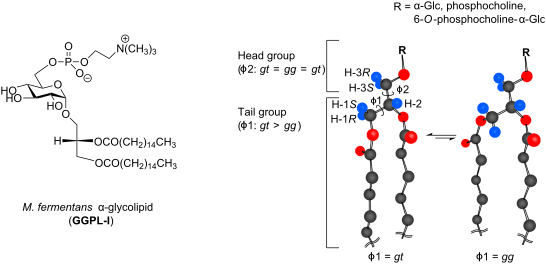
- %) conformers around the lipid tail, while adopting all of the three conformers with equal probability around the sugar position. This property was very close to what we have observed with respect to the conformation of phosphatidylcholine (DPPC), suggesting that the Mycoplasma glycolipids GGPLs may constitute
- symmetric lipid, the asymmetric phospholipid (DPPC) favors the gt-conformer more strongly around the tail lipid moiety along the sn-1,2 position, while disfavoring the tg-conformer, in the ratio of gt (59%), gg (34%) and tg (7%). The head phosphate moiety along the sn-2,3 position adopts the three
- conformers in equilibrated populations (gg = gt = tg). 3-O-(α-D-glucopyranosyl)-sn-glycerolipids 10 and 11 (Figure 3, entries 3 and 4) were found to have conformational properties very similar to DPPC; the lipid tail moiety prefers the gauche conformations (gt and gg), while the sugar moiety allows a random


Electrochemical generation of 2,3-oxazolidinone glycosyl triflates as an intermediate for stereoselective glycosylation
Beilstein J. Org. Chem. 2012, 8, 456–460, doi:10.3762/bjoc.8.52
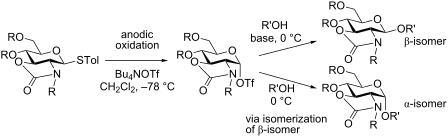
- Stereoselective formation of glycosidic linkages is the key issue in oligosaccharide synthesis, because both 1,2-trans and 1,2-cis aminoglycosides are ubiquitous in biologically active oligosaccharides [1][2][3][4][5]. The 1,2-trans aminoglycosides, which are found in Nod factor [1] and lipid A [2], can be easily


Planar-bilayer activities of linear oligoester bolaamphiphiles
Beilstein J. Org. Chem. 2011, 7, 1562–1569, doi:10.3762/bjoc.7.184
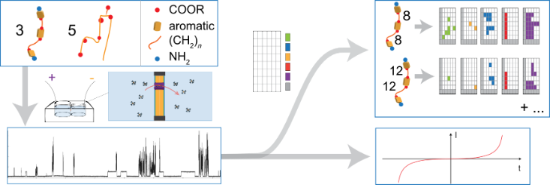
- between different linear bolaamphiphiles and correspond to the influence of each unique architecture on the overall system behavior. This is experimental support for the proposal [10] that there is some underlying energetic landscape that is as much a property of the system (lipid, water, and compound) as
- underlying mechanism? One line of possibilities relates to the underlying “system property” mentioned earlier. It is known that pure lipids near their phase transitions can show single-channel conductance activities; while the specific mode of action depends on the identity of the lipid, discrete conductance
- events indistinguishable from channels are possible [26]. It was recently reported that an applied potential can effect lipid phase transitions [27], one consequence of which is the creation of voltage-dependent lipid ion channels at the phase-transition temperature. Pure diphytanoyl phosphatidylcholine