


Search results
Search for "macrocycle" in Full Text gives 208 result(s) in Beilstein Journal of Organic Chemistry. Showing first 200.
Intramolecular glycosylation
Beilstein J. Org. Chem. 2017, 13, 2028–2048, doi:10.3762/bjoc.13.201
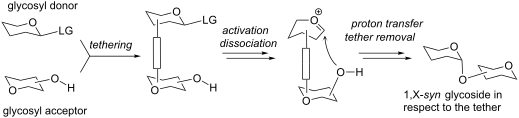
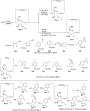
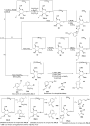
- modification of the macrocycle ring size, torsional rigidity of the spacer, position of the attachment to both donor and acceptor, relative configuration of hydroxy groups, and the length of the linker [58][60][61][62][63][64][65][66][67][68][69][70][71][72]. Among early examples, xylylene and phthalimido
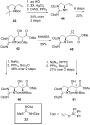
- trimethylsilyl triflate gave the desired α-linked product 24 in 66% yield [51]. Xylylene tether Generally during glycosylation, it has been found that the more rigid the spacers, and smaller macrocycle formed, the more selective the reaction [63][69]. As an example of this approach, a rigid xylylene linker
- size of the macrocycle formed during the glycosylation (Scheme 12) [80][81]. Thioglycoside donor 45 containing a 2-O-propargyl group and acceptor 46 with an azide-containing protecting group were connected using a click reaction to afford the tethered intermediate 47. Upon treatment with NIS/TfOH


p-tert-Butylthiacalix[4]arenes functionalized by N-(4’-nitrophenyl)acetamide and N,N-diethylacetamide fragments: synthesis and binding of anionic guests
Beilstein J. Org. Chem. 2017, 13, 1940–1949, doi:10.3762/bjoc.13.188

- of 3.55 × 10³–7.94 × 10⁵ M−1. Besides, the binding selectivity for F−, Cl−, CH3CO2−, and H2PO4− anions against other anions was in the range of 4.1–223.9. Substituting one or two fragments in the macrocycle with N,N-diethylacetamide groups significantly reduces the complexation ability of the
- receptor. In contrast to the 1,3-disubstituted macrocycle containing two N-(4’-nitrophenyl)acetamide moieties, the 1,2-disubstituted thiacalix[4]arene, which contains only one such fragment and a N,N-diethylacetamide moiety, selectively binds F− anions. Keywords: anion binding; synthesis; thiacalixarenes
- the ratio to 1:4:4 = macrocycle 1/Na2CO3/2-bromo-N-(4’-nitrophenyl)acetamide resulted in an increase of the yield of the 1,3-disubstituted thiacalix[4]arene to 60%. In addition, p-tert-butylthiacalix[4]arene 3 tetrasubstituted at the lower rim by N-(4’-nitrophenyl)acetamide fragments in cone


The chemistry and biology of mycolactones
Beilstein J. Org. Chem. 2017, 13, 1596–1660, doi:10.3762/bjoc.13.159
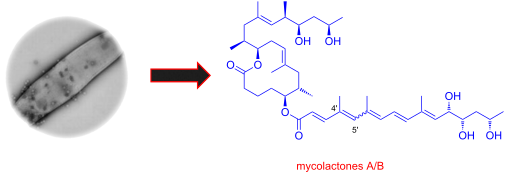
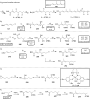
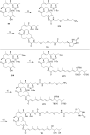
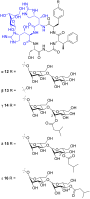
- , namely Kishi’s 2nd and 3rd generation approaches, Burkart’s 3rd generation strategy as well as Altmann’s and Blanchard’s approaches, full elaboration of the upper (C12) side chain is performed only after formation of the macrocycle. Moreover, the majority of syntheses (all of Kishi’s syntheses, Burkart’s









Molecular recognition of N-acetyltryptophan enantiomers by β-cyclodextrin
Beilstein J. Org. Chem. 2017, 13, 1572–1582, doi:10.3762/bjoc.13.157
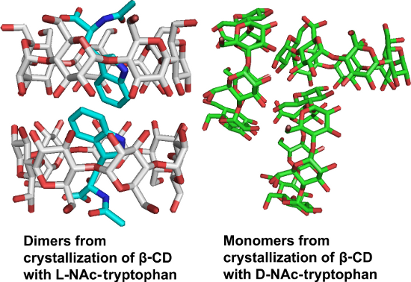
- ” packing of the β-CD monomers (Figure 4) as the hydrated β-CD structures reported so far [29][33][34][35], as well as several monomeric β-CD complexes [32][36][37]. The conformation of the β-CD macrocycle (Supporting Information File 1, Table S3) is similar to the monomeric β-CD structures [29], but more
- (after the appropriate transformation of coordinates due to different origin and axes; Supporting Information File 1, Figures S4 and S5) that the hydrated β-CD macrocycle does not superpose exactly in the lattice of “β-CD–D-NAcTrp”, which may render the two structures not quite isomorphous. It is worth
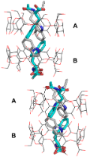
- the macrocycle in the solution structures is opposite to the orientation of L-NAcTrp in ther crystal. On the other hand, only the complex β-CD–L-NAcTrp crystallizes readily forming a dimeric complex (two host and two guest molecules) packed in broken channels, isomorphous to the known β-CD complexes




An eco-compatible strategy for the diversity-oriented synthesis of macrocycles exploiting carbohydrate-derived building blocks
Beilstein J. Org. Chem. 2017, 13, 1106–1118, doi:10.3762/bjoc.13.110
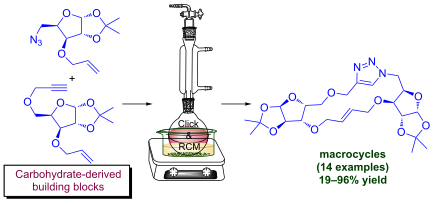
- for the macrocyclization reaction. A reaction under high dilution (1 mM) with 5 mol % catalysts at 75 °C in ethyl acetate resulted in macrocycle 4a in 84% yield (Table 3). The structure of 4a was confirmed by 1H NMR based on the disappearance of the signal corresponding to the allyl group (from the
- reaction compared to when the compound was synthesized via the two-step process (Table 4). Lastly, the macrocycle 4m was acetylated in pyridine using acetyl chloride and a catalytic amount of DMAP to furnish diacetate 5. The 1H NMR analysis of 5 clearly showed presence of two singlets at δ 2.08 and 2.06
- , eco-friendly without compromise in yield and selectivity. Build-couple-pair (B/C/P) strategy for macrocycles. Different building blocks used for DOS. Cycloaddition reaction of alkyne-azide building block. Acetylation of macrocycle 4m. Optimization of the reaction conditions for the cycloaddition


Total syntheses of the archazolids: an emerging class of novel anticancer drugs
Beilstein J. Org. Chem. 2017, 13, 1085–1098, doi:10.3762/bjoc.13.108
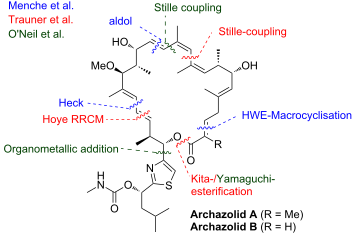
- -catalysis to get the final fragment 54 in 32% yield [85][86]. The envisioned Hoye relay RCM was catalyzed by Grubbs’ second generation catalyst to close the macrocycle in 27% yield. The final acid-mediated deprotection liberated finally archazolid B (2). Notably, no cyclization was observed in an analogous


Opportunities and challenges for the sustainable production of structurally complex diterpenoids in recombinant microbial systems
Beilstein J. Org. Chem. 2017, 13, 845–854, doi:10.3762/bjoc.13.85
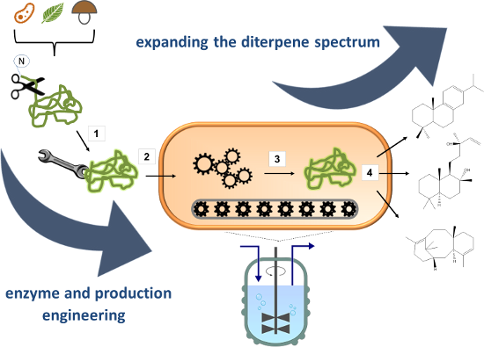
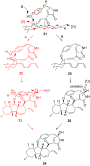
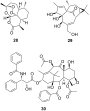
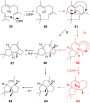
- taxadiene macrocycle [28]. Engineering one host alone can therefore sometimes be insufficient since there are specific elements of biosynthetic pathways that may have different production capacities in one organism or another. Zhou et al. [94] reported stable co-culture fermentation of specifically


Structure–efficiency relationships of cyclodextrin scavengers in the hydrolytic degradation of organophosphorus compounds
Beilstein J. Org. Chem. 2017, 13, 417–427, doi:10.3762/bjoc.13.45
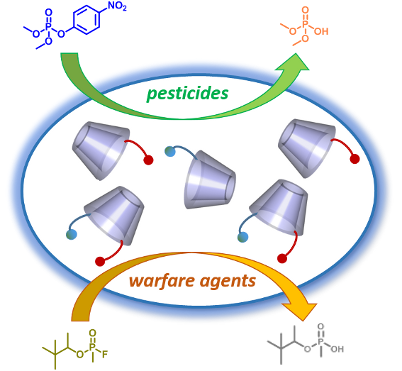
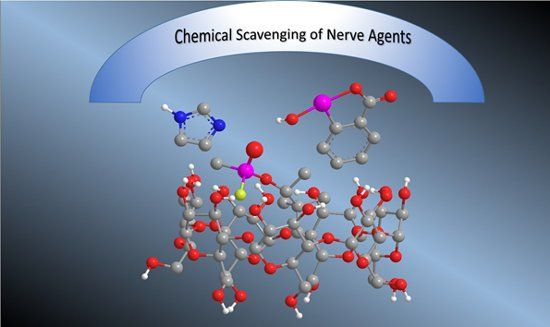
- , cyclosarin or tabun (Figure 1) [23][24][25][26][27][28][29][30]. In fact, these β-CD derivatives play a dual role in this process: the macrocycle traps the organophosphorus whilst the bound α nucleophile reacts with the toxic agent leading to a non-toxic derivative. Other scavengers bearing several α
- scavengers (with the groups covalently attached to the macrocycle) and with mixtures of heptakis(2,3,6-trimethyl)-β-cyclodextrin (TRIMEB) with 2-iodosobenzoic acid and/or imidazole, respectively. In addition, the degradation properties of the newly synthesized CD derivatives against methyl parathion and
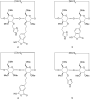
- ) analyses of compounds 13 and 14 confirmed the presence of the two substituents bound to the macrocycle. Also the 1H and 13C NMR spectra showed chemical shifts attributable to the CH2 groups linked to the imidazole and iodobenzoate moieties, similar to those observed for the precursor of 1 [33]. The




Efficient access to β-vinylporphyrin derivatives via palladium cross coupling of β-bromoporphyrins with N-tosylhydrazones
Beilstein J. Org. Chem. 2017, 13, 195–202, doi:10.3762/bjoc.13.22
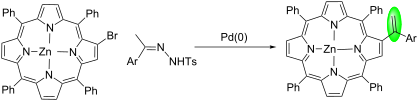
- ]. The use of the porphyrin zinc complex avoids the complexation of the tetrapyrrolic macrocycle with Pd(II) formed during the catalytic cycle, and in this way prevents the loss of the catalyst. In the first experiments, the reactions between 2-bromo-5,10,15,20-tetraphenylporphyrinatozinc(II) (1) and the


Identification, synthesis and mass spectrometry of a macrolide from the African reed frog Hyperolius cinnamomeoventris
Beilstein J. Org. Chem. 2016, 12, 2731–2738, doi:10.3762/bjoc.12.269
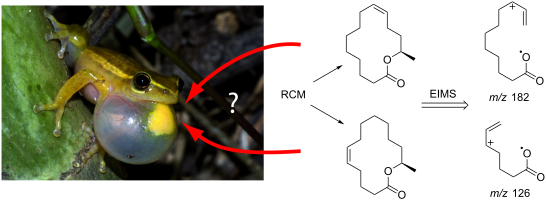
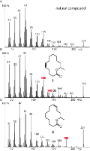
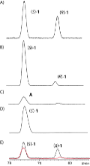
- acid precursor is often oxidized near the end of the chain to form a polar hydroxy acid. The following ring-closure reduces the hydrophilicity of the compound and increases its vapor pressure, making the resulting macrocycle well-suited to serve as a signal [1]. Fatty acid derived macrolactones were



A direct method for the N-tetraalkylation of azamacrocycles
Beilstein J. Org. Chem. 2016, 12, 2457–2461, doi:10.3762/bjoc.12.239

- ]. N-Tetraalkylation is a simple modification which can facilitate significant diversification of the macrocycle, often inducing marked changes to the chelation properties of the ligand [2][29]. From the first reports of N-tetramethylcyclam (1,4,8,11-tetramethyl-1,4,8,11-tetraazacyclotetradecane) [29
- miscible aqueous-organic solvent system. The procedure combines the macrocycle and alkyl halide (4.1 equivalents), dissolved in a 1:1 mixture of aqueous sodium hydroxide solution (1 M) and CH3CN (Scheme 1). The mixture is then shaken, not stirred. A fine precipitate can be seen at the solvent phase barrier


Efficient mechanochemical synthesis of regioselective persubstituted cyclodextrins
Beilstein J. Org. Chem. 2016, 12, 2364–2371, doi:10.3762/bjoc.12.230
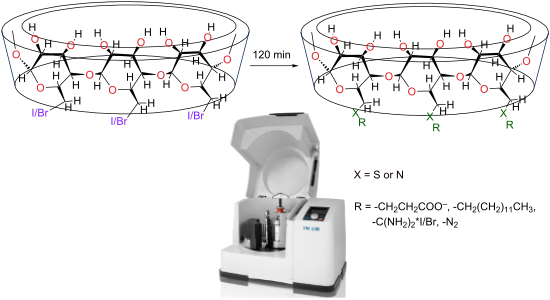
- the chloride has less affinity to the macrocycle. It was not possible to reproduce the literature method [14] for per-6-chloro-β-CD synthesis, but a protocol using p-toluenesulfonyl chloride under reaction conditions that were analogous to the iodination/bromination reaction resulted in the targeted


Enduracididine, a rare amino acid component of peptide antibiotics: Natural products and synthesis
Beilstein J. Org. Chem. 2016, 12, 2325–2342, doi:10.3762/bjoc.12.226
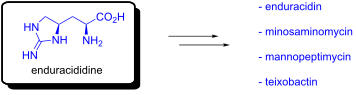
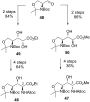
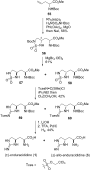
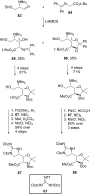
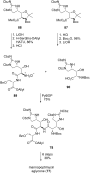
- that final deprotection of the remaining enduracididine protecting groups would take place after formation of the macrocycle. Treatment of linear precursor 116 with modified Shiina macrolactonisation conditions reported by Batey et al. [74] of 2-methyl-6-nitrobenzoic anhydride (MNBA), DMAP and Dy(OTf)3
- afforded macrocycle 117 in 30–35% yield. Unfortunately efforts to remove both the Cbz and CO2H moieties of 117 to afford macrocycle 109 under hydrogenation conditions were unsuccessful. Conclusion The recent interest in teixobactin has resulted from its clinically unexploited mode of action, potent
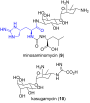
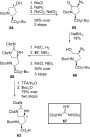
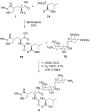
- -hydroxyenduracididine 98. Total synthesis of mannopeptimycin α (12) and β (13). Synthesis of protected L-allo-enduracididine 102. The solid phase synthesis of teixobactin (17). Retrosynthesis of the macrocyclic core 109 of teixobactin (17). Synthesis of macrocycle 117. Acknowledgements The authors would like to thank












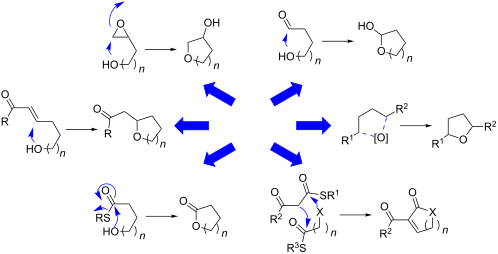
Biosynthesis of oxygen and nitrogen-containing heterocycles in polyketides
Beilstein J. Org. Chem. 2016, 12, 1512–1550, doi:10.3762/bjoc.12.148
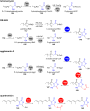
- ETH A7796 as well as by Streptomyces fulvissimus and consists of four nonactic acid units, which are assembled in a head-to-tail fashion giving a C2-symmetric (−)-(+)-(−)-(+) macrocycle [53]. Nonactin (70) biosynthesis has been extensively studied and shows multiple unusual features. Genes of an ACP






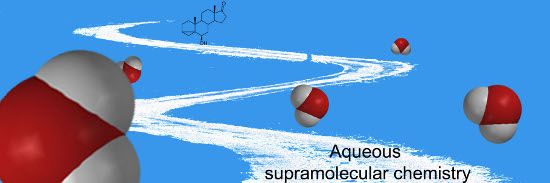
From steroids to aqueous supramolecular chemistry: an autobiographical career review
Beilstein J. Org. Chem. 2016, 12, 684–701, doi:10.3762/bjoc.12.69
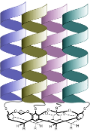
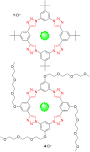
- aromatic macrocycle [25]. Interestingly, as these hosts are tetra-acetals we initially tried removing the template under acidic conditions. However, even reflux in 1:1 EtOH/H2SO4 for a week failed to affect the starting material. Evidently, under reversible conditions, a broken acetal can easily reform
- oriented. We designed two general families of tris-pyridyl hosts to bind zinc ions within our proposed chiral canyons (Figure 4) [26][27][28]. The shown macrocycle turned out not to be a strong binder of zinc, but did demonstrate enantioselective binding of chiral amino acids that was dependent on the




Creating molecular macrocycles for anion recognition
Beilstein J. Org. Chem. 2016, 12, 611–627, doi:10.3762/bjoc.12.60
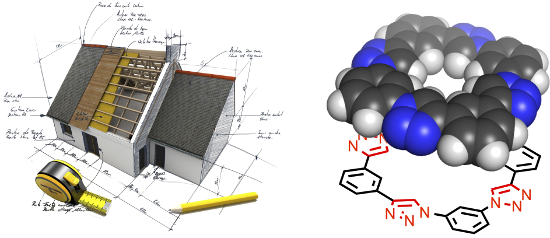
- Otago. Being given the chance of independence at Indiana University as an assistant professor was a welcome next step to fulfilling the dream. Career accomplishments and highlights Macrocycle discoveries Macrocycles have been key to the group’s research findings. The timeline of macrocycle structures
- macrocycle (Figure 5c). I recall being amazed at how well the two ends came together and I thought it was a little too convenient. So, with plenty of time left in the lecture, I carefully redrew the molecular design as a sequence of hexagons and pentagons. I used as much precision as possible and made use of
- the lines on the notepad for guidance; a hangover from my father’s influence as a builder. If anything, the design got sharper upon redrawing. A few more things happened that same day to benefit the realization of the macrocycle. I tested the idea using simple molecular mechanics to recapitulate the






Interactions of cyclodextrins and their derivatives with toxic organophosphorus compounds
Beilstein J. Org. Chem. 2016, 12, 204–228, doi:10.3762/bjoc.12.23
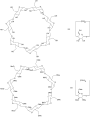
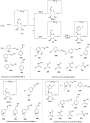
- covalent bond between the macrocycle and the reagent, first forming an intermediate and then the product; (b) by providing the reactants a new environment with novel reactivity, i.e., selectivity and/or rate due to the apolar CD cavity. In alkaline medium hydrolysis of organophosphorus species, an
- , the macrocycle has no influence on the degradation of the nerve agent. This might be rationalized by the inclusion of the triazole ring into the CD’s cavity by a tumbling phenomenon as shown by Monflier et al. [81]. This process would therefore prevent any interaction of the hydroxamic acid group with





A journey in bioinspired supramolecular chemistry: from molecular tweezers to small molecules that target myotonic dystrophy
Beilstein J. Org. Chem. 2016, 12, 125–138, doi:10.3762/bjoc.12.14
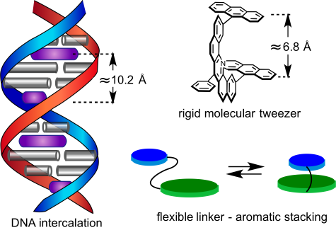
- even to form supramolecular inkjet printing inks [40]. It is clear that molecular tweezers have found diverse applications, many of which derive from their cleft-like architecture. For example, the recognition of the polymer by a macrocycle would necessitate the threading of the polymer through the
- macrocycle and the act of reading the polymer sequence would have to be performed sequentially rather than random access. Macrocycles make an appearance: macrocyclic bisintercalators and our early efforts to develop DNA probes As just illustrated, one of the major advantages of the molecular tweezer approach
- observation that all synthetic bisintercalators of DNA were nonmacrocyclic. DNA bisintercalating natural products with macrocyclic peptide scaffolds (such as echinomycin) were known as early as 1957, but these bound with the macrocycle in a single groove [41]. We wondered whether a macrocyclic bisintercalator


Aggregation behavior of amphiphilic cyclodextrins in a nonpolar solvent: evidence of large-scale structures by atomistic molecular dynamics simulations and solution studies
Beilstein J. Org. Chem. 2016, 12, 73–80, doi:10.3762/bjoc.12.8
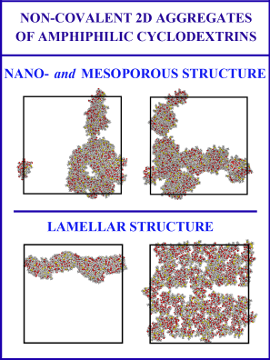
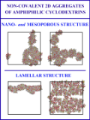
- persist for a long time. From the conformational viewpoint, it is also interesting to notice that the thioethyl chains, linked to the primary rim of the macrocycle at the C6 carbon through the sulfur atoms shown in yellow in Figure 1 and Figure 2, tend to stay at the aggregate envelope, thus allowing the


Determination of formation constants and structural characterization of cyclodextrin inclusion complexes with two phenolic isomers: carvacrol and thymol
Beilstein J. Org. Chem. 2016, 12, 29–42, doi:10.3762/bjoc.12.5
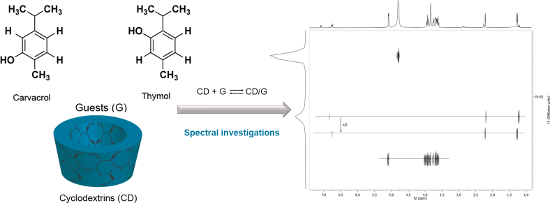
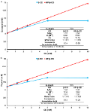
- 2. This is due to the small relative mass changes between the free and the complexed macrocycle. Meanwhile, the D values of both encapsulated 1 and 2 decreased (Table 3, Table 4 and Figure 3). This proved that 1 and 2 are included in the CD cavity and diffuse slowly. Finally, variation of chemical




Synthesis and photophysical characteristics of polyfluorene polyrotaxanes
Beilstein J. Org. Chem. 2015, 11, 2677–2688, doi:10.3762/bjoc.11.288
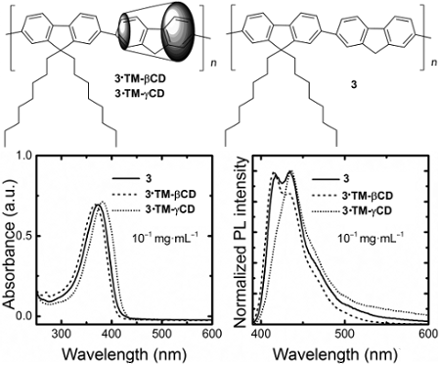
- -βCD rotaxane copolymer are also upfield shifted by 0.05 ppm as compared to those of the non-rotaxane homologue, while all protons of the TM-βCD macrocycle are shifted by more than 0.07 ppm. Comparing the integrals of d' protons from monomer 1 to those corresponding to H1 protons of TM-βCD, the average
- ) suggesting that about every three structural unit was threaded with TM-βCD macrocycle. However, compared with native CD [43][45], 1H NMR results suggest poor hydrophobic–hydrophobic interactions of molecule 1 towards TM-βCD. Unfortunately, as a consequence of the low Ks of 1·TM-γCD, the polyrotaxane 3·TM-γCD
- intensity of the 0–0 transition for 3·TM-βCD is higher than that of the 0–1 transition, contrary to what we observe for the non-rotaxane 3 counterpart. Such trends suggest that the encapsulation with the macrocycle TM-βCD acts to reduce intermolecular interactions, in agreement with previous reported


Inclusion complexes of 2-methoxyestradiol with dimethylated and permethylated β-cyclodextrins: models for cyclodextrin–steroid interaction
Beilstein J. Org. Chem. 2015, 11, 2616–2630, doi:10.3762/bjoc.11.281
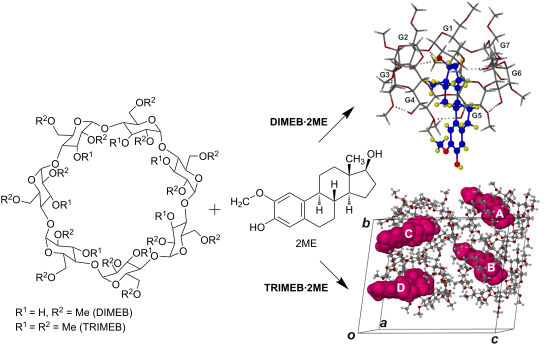
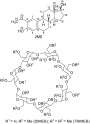
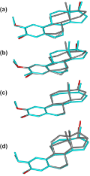
- ) in two representative host CD molecules, one of them (DIMEB) having restricted conformational flexibility owing to cooperative intramolecular O–H···O hydrogen bonding that maintains the round shape of the macrocycle, and the other (TRIMEB) lacking this facility and hence having access to





Smart molecules for imaging, sensing and health (SMITH)
Beilstein J. Org. Chem. 2015, 11, 2540–2548, doi:10.3762/bjoc.11.274
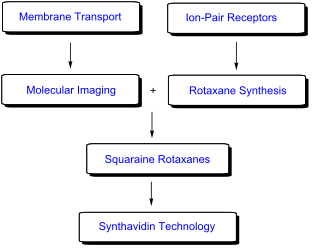
- a remarkable self-assembly process that we call Synthavidin (synthetic avidin). A simple example is illustrated in Scheme 5 [44]. A water soluble tetralactam macrocycle with anthracene sidewalls is threaded by squaraine dyes that are flanked by long PEG chains to give highly stable complexes with
- nanomolar dissociation constants. The rate of macrocycle threading is insensitive to the length of the appended PEG chains. But the threading kinetics are greatly affected by the steric size of the second N-substituent at each end of the squaraine dye, and an N-propyl group produces a perfect mixture of
- kinetic and thermodynamic properties. The nanomolar affinity in water is exceptionally strong for a synthetic cyclophane host molecule, and it is driven by a large favorable change in enthalpy. The two oxygen atoms on the encapsulated squaraine dye form hydrogen bonds to the four macrocycle NH residues


Recent highlights in biosynthesis research using stable isotopes
Beilstein J. Org. Chem. 2015, 11, 2493–2508, doi:10.3762/bjoc.11.271
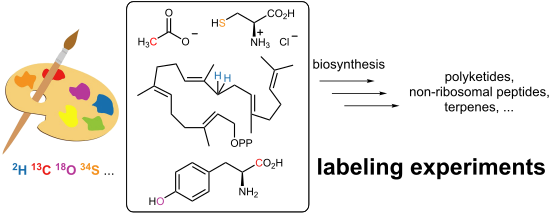
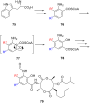
- the phenolic oxygen at C-6 to close the macrocycle in 25. In this mechanism, the aromaticity of the phenol ring remains untouched. Intramolecular Diels–Alder reaction gives rise to the hexacyclic system 26, which would then be oxidized to pyrrocidine A (24) at C-2’. In contrast to route A, the









Diversity-oriented synthesis of analogues of the novel macrocyclic peptide FR-225497 through late stage functionalization
Beilstein J. Org. Chem. 2015, 11, 2487–2492, doi:10.3762/bjoc.11.270

- -225497. Keywords: cross metathesis; cyclic peptides; diversity oriented synthesis; macrocycle; Introduction Diversity-oriented synthesis (DOS) has been established as an important paradigm in drug discovery [1][2][3][4][5][6][7]. Although the major focus is on the synthesis of small molecular libraries





