Search results
Search for "monitoring" in Full Text gives 396 result(s) in Beilstein Journal of Organic Chemistry. Showing first 200.
The McKenna reaction – avoiding side reactions in phosphonate deprotection
Beilstein J. Org. Chem. 2020, 16, 1436–1446, doi:10.3762/bjoc.16.119
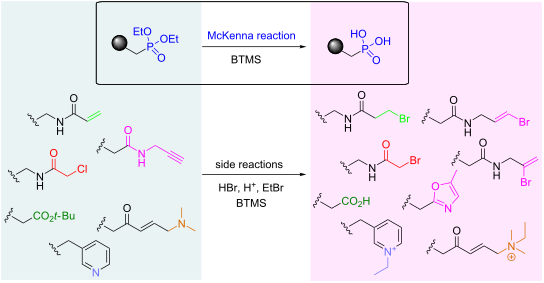
- susceptibility of 2-chloro-N-phenethylacetamide (13), towards halogen exchange mediated by BTMS (Scheme 6). The reaction progress was monitored by 1H NMR spectroscopy monitoring the signals of the methylene groups C(O)CH2Cl in 13 vs C(O)CH2Br in the product 22 (see Figure S16 in Supporting Information File 1


Oxime radicals: generation, properties and application in organic synthesis
Beilstein J. Org. Chem. 2020, 16, 1234–1276, doi:10.3762/bjoc.16.107
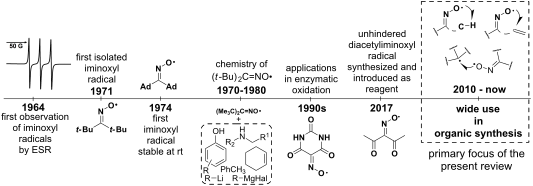
- and the difficulties associated with the interpretation of the obtained data [53]. During EPR monitoring of the generation and decomposition of iminoxyl radicals, the formation of several free-radical products of a non-iminoxyl type, probably of the general formula R1R2NO•, was observed. It was




Anthelmintic drug discovery: target identification, screening methods and the role of open science
Beilstein J. Org. Chem. 2020, 16, 1203–1224, doi:10.3762/bjoc.16.105

- available, enabling utilisation and modification by other groups. Stress-Chip is a chip that allows the isolation of a hundred worms in single-worm arenas and monitoring as chemicals flow over the worms [153]. The CAD file for producing the microfluidic device has been made available on Figshare under the






Synthesis and properties of quinazoline-based versatile exciplex-forming compounds
Beilstein J. Org. Chem. 2020, 16, 1142–1153, doi:10.3762/bjoc.16.101
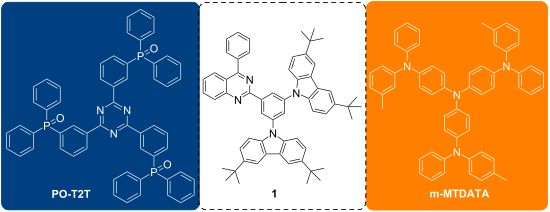
- , such as monitoring of specific biological activities and as antimalarial and anticancer agents [5][6]. However, electroactive properties of derivatives of this acceptor have been scarcely reported. Quinazoline-based compounds were used as hosts for red phosphorescent OLEDs with an external quantum


A cyclopeptide and three oligomycin-class polyketides produced by an underexplored actinomycete of the genus Pseudosporangium
Beilstein J. Org. Chem. 2020, 16, 1100–1110, doi:10.3762/bjoc.16.97
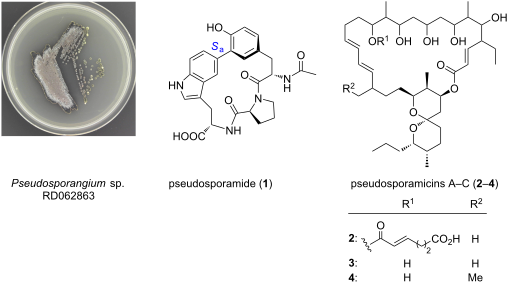
- ) was added and then diluted with MeCN/0.2% HCO2H aqueous solution (100 μL, 50:50). The Marfey’s derivatives of the hydrolysate and standards were analyzed by LC–MS using a Cosmosil 5C18-AR-II column eluted with MeCN/0.1% HCO2H aqueous solution at a flow rate of 1.0 mL/min, monitoring at 340 nm with a


Accelerating fragment-based library generation by coupling high-performance photoreactors with benchtop analysis
Beilstein J. Org. Chem. 2020, 16, 982–988, doi:10.3762/bjoc.16.87
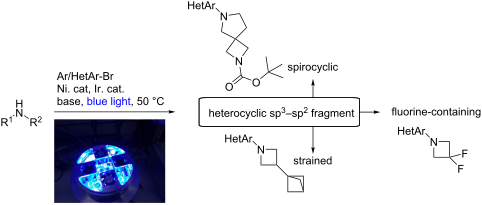
- conditions compared to a single vial reactor. Active water cooling protects the LEDs from overheating, while additional air cooling with bespoke fans prevents the vessels to heat over 50 °C. Each vessel is placed at equal distance of a 35 W high power blue LED (Figure 1). Reaction monitoring by TLC–MS


Cation-induced ring-opening and oxidation reaction of photoreluctant spirooxazine–quinolizinium conjugates
Beilstein J. Org. Chem. 2020, 16, 904–916, doi:10.3762/bjoc.16.82
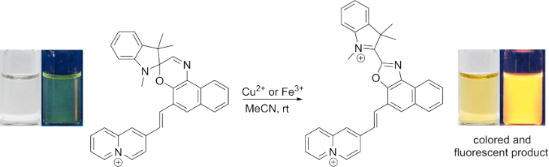
- . For 3a, further monitoring by absorption spectroscopy revealed that higher Cu2+ concentrations led to an increase of the reaction rate. However, at a spirooxazine concentration of c = 20 µM, slightly more than 2.0 equiv of Cu2+ were required for a complete conversion (Figure S4, Supporting Information
- “adjacent-averaging“ (factor of 10). For the reaction monitoring by absorption spectroscopy, an aliquot of the solutions of Cu(BF4)2, Fe(ClO4)3 or Hg(ClO4)2 was added to a solution of 3a (c = 20 µM) in MeCN to achieve a final concentration of the metal ions of c = 20–60 µM. The solutions were mixed
- vigorously, and absorption spectra were recorded every 5 s. For the reaction monitoring by NMR spectroscopy, six samples were prepared with a fixed concentration of 3a (c = 2.0 mM). In five of the samples, different amounts of Cu(BF4)2 were added to obtain Cu2+ concentrations of c = 0.5, 1.0, 2.0, 3.0 and


Efficient synthesis of piperazinyl amides of 18β-glycyrrhetinic acid
Beilstein J. Org. Chem. 2020, 16, 798–808, doi:10.3762/bjoc.16.73
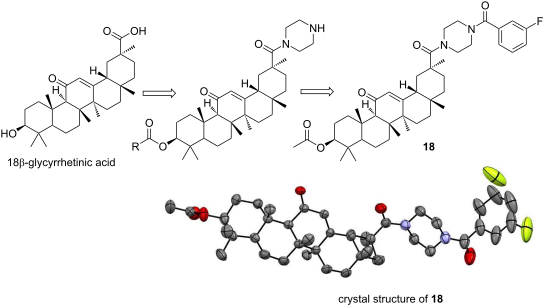
- , compound 9 did not reacted completely after 48 h (TLC monitoring). The reaction from 2 to 8 proceeded via the intermediate 6, which can be isolated. The intermediate 6 did not react with 1-Boc-piperazine in low boiling point solvents even after an extended reaction time (up to 72 h). Heating the reaction
- , N,N-dimethylformamide (DMF), a solvent with a higher boiling point than acetonitrile, was also tested, yet the reaction led to the formation of unknown compounds (TLC monitoring, Table 2, entry 7). After screening several solvents, the optimal yield was obtained in acetonitrile, though a small


Regio- and stereoselective synthesis of new ensembles of diversely functionalized 1,3-thiaselenol-2-ylmethyl selenides by a double rearrangement reaction
Beilstein J. Org. Chem. 2020, 16, 515–523, doi:10.3762/bjoc.16.47
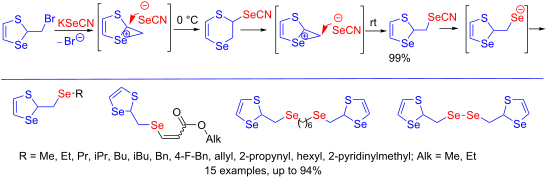
- suggested that the reaction proceeds via an intermediate six-membered selenocyanate 5, which could be observed at a lower temperature. Indeed, monitoring the reaction by 1H NMR spectroscopy using the same conditions as in the synthesis of the selenocyanate 4, but at 0 °C confirmed this assumption (Scheme 6
- ). The monitoring results are presented in Figure 1 and Table 1. The reaction was studied in the time interval from 0.25 to 6 h. Having assigned the 1H NMR data for compounds 1 and 4, we found signals of an unknown compound, which was easily identified after 0.5 h (at 46% conversion of thiaselenole 1) as
- chemistry. Monitoring the reaction of thiaselenole 1 with KSeCN by 1H NMR spectroscopy (in accordance with the data of Table 1). Reaction conditions: compound 1 (0.5 mmol), KSeCN (0.5 mmol), MeCN (2.5 mL), 0 °C. Possible formation of reaction products starting from 1 via seleniranium 2 or thiiranium cations


Exploring the scope of DBU-promoted amidations of 7-methoxycarbonylpterin
Beilstein J. Org. Chem. 2020, 16, 509–514, doi:10.3762/bjoc.16.46

- the order of several hours. Viewing this reaction as an essential tool for pteridine chemists seeking to rapidly generate diverse pterin structures, we sought to explore the scope of amines which can be easily appended to the pterin core. Trends in reactivity were further probed by monitoring the
- the relative reactivity of the various amines, a pseudo-first order kinetics of the amidation reaction was probed. The reaction was followed by 1H NMR spectroscopy at room temperature, following the disappearance of 7-CMP and appearance of the amide product (Figure 3). By monitoring the reaction


Architecture and synthesis of P,N-heterocyclic phosphine ligands
Beilstein J. Org. Chem. 2020, 16, 362–383, doi:10.3762/bjoc.16.35
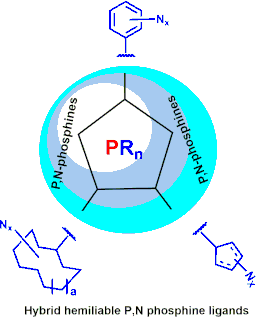
- monitoring and in situ speciation. In addition, phosphine ligands have found various applications as auxiliary ligands in organometallic transition-metal complexes. A great number have exhibited potential application in organic light-emitting devices (OLEDs) [3], medicine [4][5][6] and catalysis [1][7][8




Oligomeric ricinoleic acid preparation promoted by an efficient and recoverable Brønsted acidic ionic liquid
Beilstein J. Org. Chem. 2020, 16, 351–361, doi:10.3762/bjoc.16.34
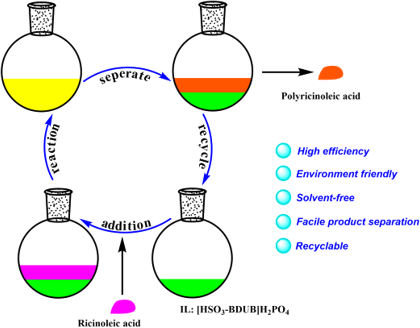
- IL settled well after the reaction and was absent in the product. Monitoring oligomerization process by 1H NMR (400 MHz, CDCl3). Reusability of the IL catalyst. Reaction conditions: 10 g (30 mmol) ricinoleic acid, 190 °C, 6 h, 50 kPa. 1H NMR (400 MHz, DMSO-d6) spectra of [HSO3-BDBU]H2PO4: a) Fresh


p-Pyridinyl oxime carbamates: synthesis, DNA binding, DNA photocleaving activity and theoretical photodegradation studies
Beilstein J. Org. Chem. 2020, 16, 337–350, doi:10.3762/bjoc.16.33
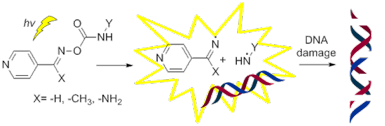
- collected, i.e., DNA-viscosity measurements [70]. Thus, the monitoring of the DNA viscosity changes when compounds 11 and 12 are present, may be elucidating in regard to their binding mode to DNA. As known, the changes of the relative DNA viscosity (η/ηo)1/3 are proportionally related to changes of the


Reversible photoswitching of the DNA-binding properties of styrylquinolizinium derivatives through photochromic [2 + 2] cycloaddition and cycloreversion
Beilstein J. Org. Chem. 2020, 16, 111–124, doi:10.3762/bjoc.16.13
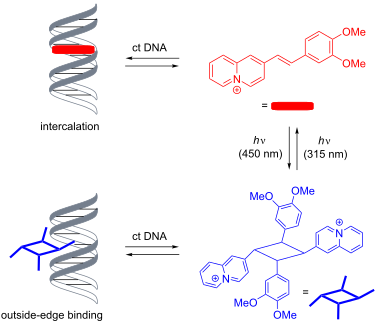
- of the initially formed Z-isomers Z-3a and Z-3b, with both processes generally being possible starting from 3b and 3c (Scheme 2). On the one hand, the photometric monitoring as well as the 1H NMR spectroscopic studies of the photoreaction of 3b indicated a preceding E-to-Z isomerization (cf
- base pairs). Spectrophotometric monitoring of the irradiation of styrylquinolizinium derivatives 3a (A), 3b (B), 3c (C), and 3d (D) in acetonitrile [cL = 10 µM (A), cL = 20 µM (B, C, D)]. The arrows indicate the changes of absorption upon irradiation. Absorption of the monomers (c = 20 µM, red) 3b (A
- ) and 3c (B) and their dimers (black) 4b and 4c in H2O after 1.5 h and 4 h, respectively, at ca. 450 nm. Photometric monitoring of the photoreaction of 3b (c = 20 µM) to the dimer 4b by irradiation at ca. 450 nm in H2O (A) and of the photoinduced cycloreversion of 4b (c = 20 µM) to the monomer 3b at 315




Microwave-assisted synthesis of 2-substituted 4,5,6,7-tetrahydro-1,3-thiazepines from 4-aminobutanol
Beilstein J. Org. Chem. 2020, 16, 32–38, doi:10.3762/bjoc.16.5
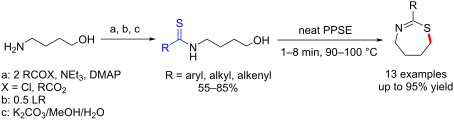
- experimental conditions, several novel 2-aryl-1,4,5,6-tetrahydro-1,3-thiazepines were synthesized in good to high yields (Table 2). Due to the different reactivity of each substrate, irradiation times and temperatures were individually adjusted by monitoring the disappearance of substrate (TLC). Derivatives 4f


A green, economical synthesis of β-ketonitriles and trifunctionalized building blocks from esters and lactones
Beilstein J. Org. Chem. 2019, 15, 2930–2935, doi:10.3762/bjoc.15.287
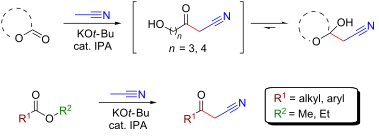
- monitoring. Due to the persistent presence of unreacted starting materials in all examples given, it was decided to dose with second equivalents of base (KOt-Bu) and CH3CN after 1 h of reaction, as seen in most examples in Table 1. Disappointingly, we were unable to further significantly increase product


Preparation of anthracene-based tetraperimidine hexafluorophosphate and selective recognition of chromium(III) ions
Beilstein J. Org. Chem. 2019, 15, 2847–2855, doi:10.3762/bjoc.15.278
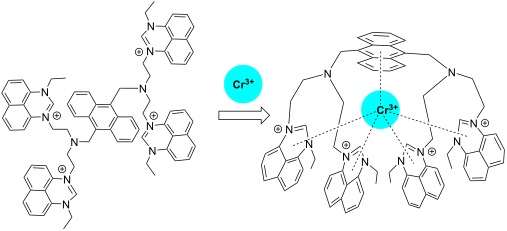
- monitoring. In recent years, some fluorescent chemosensors for the detection of chromium(III) have been developed [15][16][17][18][19][20][21][22][23]. Generally, chemosensors with fluorescence enhancement are more efficient than fluorescence turn-off chemosensors [24][25][26][27][28][29] because the


Photoreversible stretching of a BAPTA chelator marshalling Ca2+-binding in aqueous media
Beilstein J. Org. Chem. 2019, 15, 2801–2811, doi:10.3762/bjoc.15.273
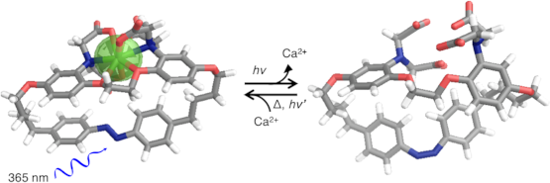
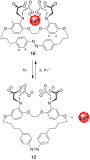
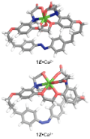
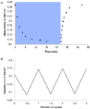
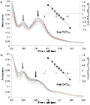
- (Figure S3, Supporting Information File 1). On repeating this cycle, slow decomposition was observed, estimated at 14% after 3 cycles. Calcium binding by hosts 1E and 1Z was investigated by spectrophotometry, specifically monitoring aromatic ring chromophores which give rise to absorption bands observed





A photochemical determination of luminescence efficiency of upconverting nanoparticles
Beilstein J. Org. Chem. 2019, 15, 2671–2677, doi:10.3762/bjoc.15.260
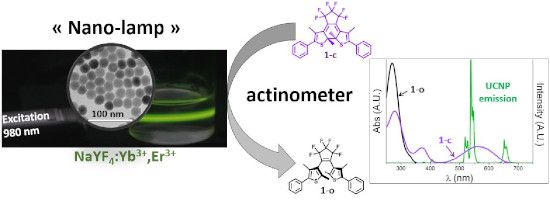
- solution. Compared to physical radiometry, actinometry is directly transposable to the monitoring of photochemical transformations as it originates from the very same concept and can be performed in the same experimental conditions. It is also adapted to turbid mixtures and can be extended to polychromatic
- green light escapes the photoreactor. Under these conditions the actinometric equation becomes so the flux in photon per second emitted by the source is: where V is the total volume of the DAE solution and the monitoring optical path is 1 cm. Finally, the average upconversion-QY, ΦUC can be estimated by


Acid-catalyzed rearrangements in arenes: interconversions in the quaterphenyl series
Beilstein J. Org. Chem. 2019, 15, 2655–2663, doi:10.3762/bjoc.15.258
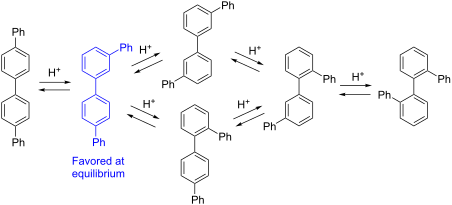
- 10 mL vessels with temperature monitoring by an external sensor. General procedure for rearrangement in the microwave (MW) reactor. In a similar manner as described in [28], under a nitrogen atmosphere, the substrate (ca. 4 – 50 mg) and 1,2-dichloroethane (DCE, 4 mL) were added to a 10 mL reaction



Plasma membrane imaging with a fluorescent benzothiadiazole derivative
Beilstein J. Org. Chem. 2019, 15, 2644–2654, doi:10.3762/bjoc.15.257
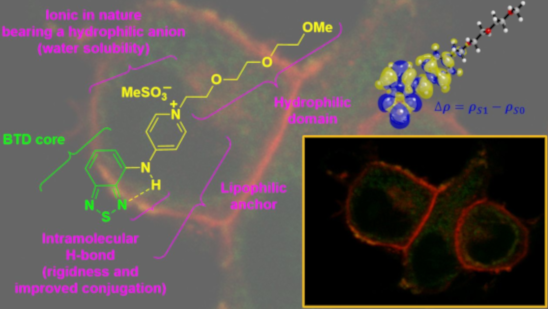
- transduction, apoptosis and even necrosis [8][9][10]. The monitoring of plasma membranes, their biophysical properties, endocytosis/exocytosis of several types of molecules, as well as their dynamic changes, may be performed by using fluorogenic organic dyes or derivatives thereof [11][12][13][14][15]. The


Arylisoquinoline-derived organoboron dyes with a triaryl skeleton show dual fluorescence
Beilstein J. Org. Chem. 2019, 15, 2612–2622, doi:10.3762/bjoc.15.254
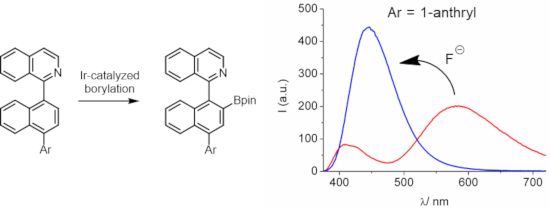
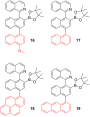
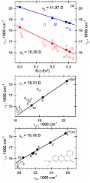
- to the pyrenyl moiety. Most interesting are the fluorescence properties of the dyes (see spectra in Figure 2), which revealed a dual emission phenomenon (see ratio ILW/ISW of the intensities I of the long-wavelength (LW) and short-wavelength (SW) emission band; Table 1). The monitoring of the



Probing of local polarity in poly(methyl methacrylate) with the charge transfer transition in Nile red
Beilstein J. Org. Chem. 2019, 15, 2552–2562, doi:10.3762/bjoc.15.248
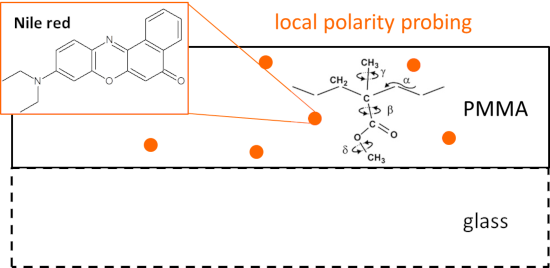
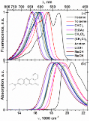
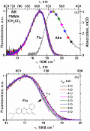
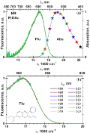
- stained with NR [19]. Recently, the phase of the microcapsules and their energy release were analyzed by monitoring the color of NR fluorescence in an energy storage microsystem [22]. Although NR solvent effects are a useful tool in biology and technology, an adequate description and characterization of



Indium-mediated C-allylation of melibiose
Beilstein J. Org. Chem. 2019, 15, 2458–2464, doi:10.3762/bjoc.15.238

- with NaOMe (pH 9) until a pH around 9 was reached. The solution was stirred at rt for 2 h, until reaction monitoring via TLC analysis (1-butanol/acetone/H2O 5:4:1, v/v/v) showed complete conversion of the starting material. The reaction mixture was diluted with dichloromethane (dichloromethane/MeOH, 1


Reversible switching of arylazopyrazole within a metal–organic cage
Beilstein J. Org. Chem. 2019, 15, 2398–2407, doi:10.3762/bjoc.15.232
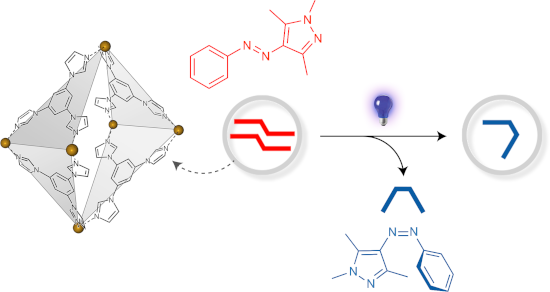
- reaction was followed by monitoring the recovery of absorbance at 336 nm, which corresponds to the maximal absorbance (λmax) of the E isomer. The orange circles in Figure 8a show the recovery profile of E-1 in the presence of 0.5 equiv of 2, following the reaction equation, (Z-1)2 + Z-1 → (E-1)22. The
- (0.8 equiv), 0.187 mM (1.0 equiv); 0.249 mM (1.33 equiv)). The rate of back-isomerization was followed by monitoring the increase in absorbance at λmax (336 nm). In control experiments, we followed the back-isomerization of Z-1 (0.187 mM) in the absence of 2 and in the presence of [Pd(NO3)2(tmeda


![[Graphic 1]](/bjoc/content/inline/1860-5397-15-232-i3.svg?max-width=637&scale=1.18182) 2 (500 MHz, D2O, 298 K).
2 (500 MHz, D2O, 298 K).