


Search results
Search for "olefins" in Full Text gives 342 result(s) in Beilstein Journal of Organic Chemistry. Showing first 200.
Intramolecular cascade annulation triggered by rhodium(III)-catalyzed sequential C(sp2)–H activation and C(sp3)–H amination
Beilstein J. Org. Chem. 2019, 15, 571–576, doi:10.3762/bjoc.15.52
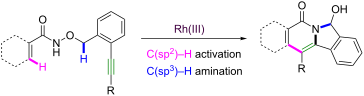
- components (such as olefins, alkynes) stands out for the construction of carbo(hetero)cycles from easily available starting materials [7][8][9][10]. Compared to aromatic C(sp2)–H bonds, studies on activation of vinylic C(sp2)–H bonds have been less explored, due to an intrinsic inactivity, tended to undergo
- highly substituted olefins using acrylamides. However, most of them are limited to one-step coupling or annulation and just a single ring is formed [15][16][17][18][19][20][21][22]. Therefore, it is necessary to explore a new cascade annulation of acrylamides to construct a polyfused-heteroarene skeleton




Aqueous olefin metathesis: recent developments and applications
Beilstein J. Org. Chem. 2019, 15, 445–468, doi:10.3762/bjoc.15.39
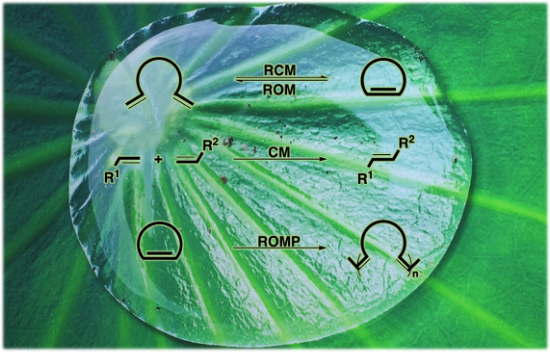
- ). In the ROMP of the norbornene derivative 13, ArM 6 and ArM 7 performed best, outperforming catalyst 9. A near ten-fold increase is observed for ArM 6 (Table 10, entry 2). In the cross metathesis of terminal olefins 73, 74, and 75, with the commercial catalyst 9 conversions of 79%, 98% and 94




Thiol-free chemoenzymatic synthesis of β-ketosulfides
Beilstein J. Org. Chem. 2019, 15, 378–387, doi:10.3762/bjoc.15.34
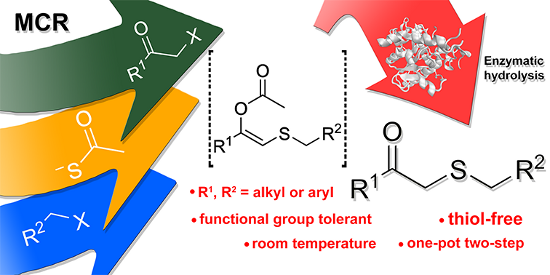
- ][4], however, there are certain negative aspects of thiols that need to be taken into account (i.e., foul smell, easy oxidation into disulfide, participation as donors in one-electron events, reaction with olefins through ene-type reactions, etc) [5][6][7][8]. Hence, the development of thiol-free


Synthesis of C3-symmetric star-shaped molecules containing α-amino acids and dipeptides via Negishi coupling as a key step
Beilstein J. Org. Chem. 2019, 15, 371–377, doi:10.3762/bjoc.15.33
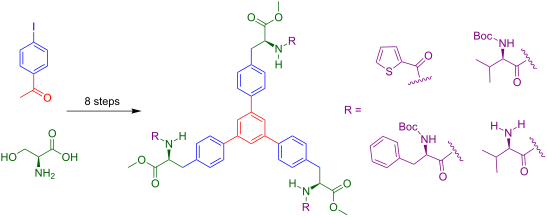
- reagents [39][40] with various halo derivatives (e.g., aryl, vinyl, benzyl, or allyl) and has a broad scope to assemble diverse targets. This reaction was first reported in 1977, and it is an elegant and versatile method that allows the preparation of biaryls and olefins in good yields. To the best of our


Application of olefin metathesis in the synthesis of functionalized polyhedral oligomeric silsesquioxanes (POSS) and POSS-containing polymeric materials
Beilstein J. Org. Chem. 2019, 15, 310–332, doi:10.3762/bjoc.15.28
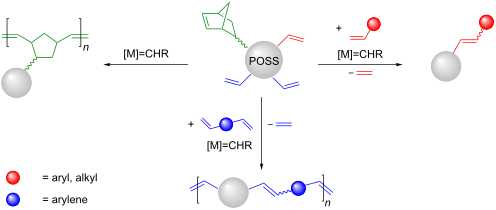
- silsesquioxanes (POSS) and POSS-containing polymeric materials. Three types of processes, i.e., cross metathesis (CM) of vinyl-substituted POSS with terminal olefins, acyclic diene metathesis (ADMET) copolymerization of divinyl-substituted POSS with α,ω-dienes and ring-opening metathesis polymerization (ROMP) of
- reactivity is the inactivity of vinylsilsesquioxane in homometathesis. The limitations apply to silanes containing a double bond located directly at the silyl group and do not apply to allylsilanes and other alkenylsilanes, which behave like terminal olefins and readily undergo metathesis. Application of
- metathesis in chemistry of unsaturated derivatives of POSS is limited to three types of processes, i.e., cross metathesis (CM) of vinyl-substituted POSS with terminal olefins, acyclic diene metathesis (ADMET) copolymerization of divinyl-substituted POSS with α,ω-dienes and ring-opening metathesis






Oxidative radical ring-opening/cyclization of cyclopropane derivatives
Beilstein J. Org. Chem. 2019, 15, 256–278, doi:10.3762/bjoc.15.23
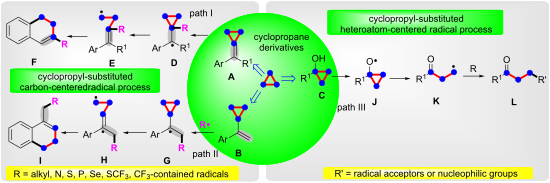
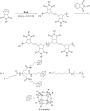
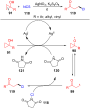
- derivatives has drawn great attention in the past several decades. In this review, recent efforts in the development of oxidative radical ring-opening/cyclization of cyclopropane derivatives, including methylenecyclopropanes, cyclopropyl olefins and cyclopropanols, are described. We hope this review will be
- skeletons and their easy availability [1][2][3][4][5][6][7][8][9][10][11][12][13][14][15][16]. The cyclopropane derivatives, especially methylenecyclopropanes [17][18][19][20][21], cyclopropyl olefins [22] and cyclopropanols [23][24] undergo ring-opening/cyclization reactions to provide a huge number of
- methylenecyclopropanes (compounds A). The cyclopropyl-substituted carbon radical D easily goes through a ring-opening to generate the alkyl radical E, and then cyclizes with the phenyl ring to afford the terminal product F (path I). The cyclopropyl olefins (compounds B) also react in the same cyclopropyl-substituted








Olefin metathesis in multiblock copolymer synthesis
Beilstein J. Org. Chem. 2019, 15, 218–235, doi:10.3762/bjoc.15.21

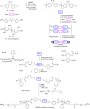
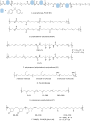
- metathesis reactions on polymers were mostly studied with regard to the intramolecular polymer–catalyst interactions [77][78][79] or intermolecular degradation of polymers via the cometathesis with different olefins [77][80][81]. Only recently, the cross metathesis between macromolecules, or macromolecular






Gold-catalyzed ethylene cyclopropanation
Beilstein J. Org. Chem. 2019, 15, 67–71, doi:10.3762/bjoc.15.7
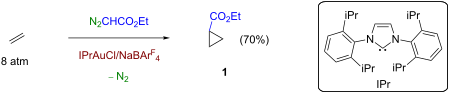
- transfer; cyclopropane; cyclopropylcarboxylate; ethylene cyclopropanation; ethyl diazoacetate; gold catalysis; Introduction Nowadays the olefin cyclopropanation through metal-catalyzed carbene transfer starting from diazo compounds to give olefins constitutes a well-developed tool (Scheme 1a), with an
- formation of electrophilic metal–carbene intermediates LnM=CRR’ [1][2] that further react with nucleophiles such as olefins en route to cyclopropanes. However, these intermediates can also react with another molecule of the diazo reagent promoting the formation of olefins RR’C=CRR’ [17]. This side reaction
- . The complex TpMsCu(thf), previously described as an excellent catalyst for olefin cyclopropanation [18], led to negative results, since only the olefins 2 (mixtures of diethyl fumarate and maleate) were detected at the end of the reaction. The second copper-based catalyst tested Tp(CF3)2,BrCu(thf) [19


N-Arylphenothiazines as strong donors for photoredox catalysis – pushing the frontiers of nucleophilic addition of alcohols to alkenes
Beilstein J. Org. Chem. 2019, 15, 52–59, doi:10.3762/bjoc.15.5
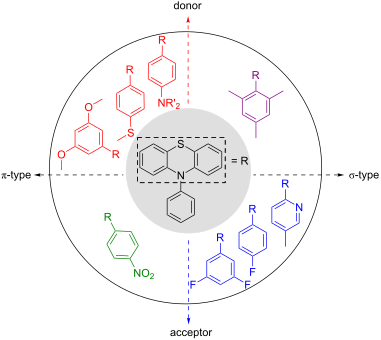
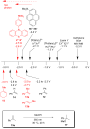
- -phenylphenothiazine derivatives 1–11 as photoredox catalysts. Three of them were identified to be highly suitable for the addition of methanol to alkenes affording the corresponding Markovnikov products. Results and Discussion Activated aromatic olefins, such as 1,1-diphenylethylene (12), have reduction potentials
- Ered(S/S−·) in the range of −2.2 to −2.3 V [23][24], α- and β-methylstyrene (13a and 13b) have an Ered(S/S−·) of −2.5 to −2.7 V [25], and styrene (14) an Ered(S/S−·) of −2.6 V (Figure 1) [25][26]. For non-aromatic, alkylated olefins, like 1-methylcyclohex-1-ene (15), the reduction potentials are
- -diphenylethylene (12), but not yet α-methylstyrene (13), and clearly not non-aromatic (alkylated) olefins, such as methylated cyclohexene 15, as basic structures. The absorption of N-phenylphenothiazine (1) disappears at around 390 nm. This feature requires the excitation of the molecule using UV light sources and



Ruthenium-based olefin metathesis catalysts with monodentate unsymmetrical NHC ligands
Beilstein J. Org. Chem. 2018, 14, 3122–3149, doi:10.3762/bjoc.14.292
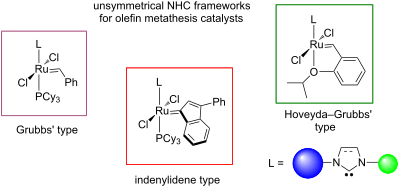
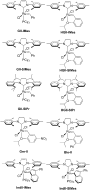
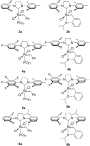
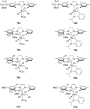
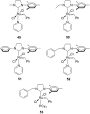
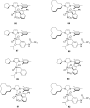
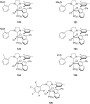
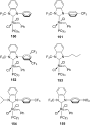
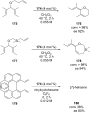
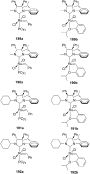
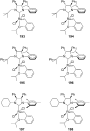
- , as increasing steric bulkiness of the NHC ligand leads to greater selectivity and improves stability. Catalyst 68 gave the highest selectivity (95%) toward terminal olefins observed until then for NHC–Ru complexes (Table 2, entry 7), but with 46% yield at 500 ppm of catalyst loading. The chiral
- (Scheme 11). More recently, Olivier-Bourbigou and Mauduit demonstrated the ability of unsymmetrical N-cycloalkyl Ru–indenylidene catalysts for the selective self metathesis of linear α-olefins to longer internal linear olefins in the absence of additives to prevent isomerization [35]. Catalyst 91 with a
- the selective metathesis of linear α-olefins and was successfully applied to selectively re-equilibrate the naphtha fraction (C5–C8) of a Fischer–Tropsch feed derived from biomass to higher value added olefins (C9–C14) that can serve as plasticizer and detergent precursors. An excellent olefin



















Cross metathesis-mediated synthesis of hydroxamic acid derivatives
Beilstein J. Org. Chem. 2018, 14, 3070–3075, doi:10.3762/bjoc.14.285

- the preparation of functionalized alkenes and derivatives thereof. Intricacies regarding the electronic nature of olefins, their substitution patterns and steric demands are more or less settled through the works of many workers in many reports [4][5][6][7]. Yet, a number of new reports describing the
- derivatives, belonging to class-I olefins according to Grubbs’ generalizations [31], are indeed known to be a sluggish partner in CM reactions, with homodimerization to stilbene being a recurring problem. Alkenes 4h–j containing a benzyl ester functionality at two, three and four carbons apart, respectively


Degenerative xanthate transfer to olefins under visible-light photocatalysis
Beilstein J. Org. Chem. 2018, 14, 3047–3058, doi:10.3762/bjoc.14.283

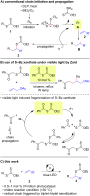
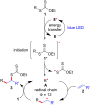
- degenerative transfer of xanthates to olefins is enabled by the iridium-based photocatalyst [Ir{dF(CF3)ppy}2(dtbbpy)](PF6) under blue LED light irradiation. Detailed mechanistic investigations through kinetics and photophysical studies revealed that the process operates under a radical chain mechanism, which
- is initiated through triplet-sensitization of xanthates by the long-lived triplet state of the iridium-based photocatalyst. Keywords: energy transfer; olefin; photocatalysis; radical; xanthate; Introduction A degenerative radical transfer of xanthates to olefins has been developed as a robust
- functionalities [1][2][3][4][5][6][7][8][9][10][11][12][13][14]. This concept has also been of particular importance in the field of polymer science, known as reversible addition–fragmentation chain transfer (RAFT) polymerization [15][16]. Mechanistically, the degenerative transfer of xanthates 1 to olefins 2



Organometallic vs organic photoredox catalysts for photocuring reactions in the visible region
Beilstein J. Org. Chem. 2018, 14, 3025–3046, doi:10.3762/bjoc.14.282
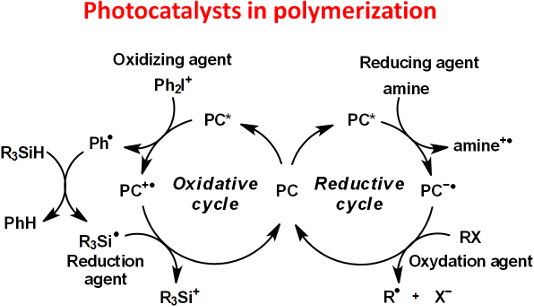
- regioselective hydroformylation of aromatic olefins [84]. Interestingly, if transition metals can initiate an ionic hydroformylation reaction of aryl olefins, a free radical pathway could be promoted by use of diethoxyacetic acid and 4CzIPN, inducing the in situ generation of an equivalent of a formyl radical
- -opening metathesis polymerization. This polymerization is based on cyclic olefins whose ring strain is released during polymerization. This reaction needs a catalyst to occur [108]. Metal-free photoredox catalysts for ROMP were proposed in [109]. For example, pyrylium and acridinium salts can be used as



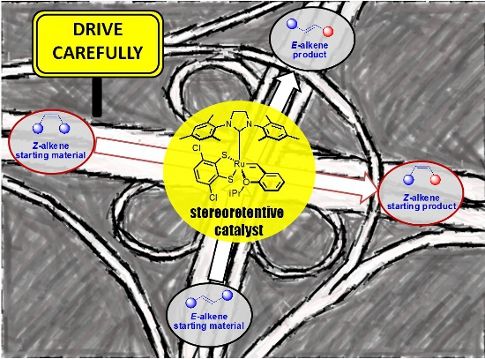
A tutorial review of stereoretentive olefin metathesis based on ruthenium dithiolate catalysts
Beilstein J. Org. Chem. 2018, 14, 2999–3010, doi:10.3762/bjoc.14.279
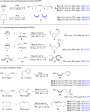
- alkenes require high catalyst loading (see next section for details). 5 Catalyst stability Hoveyda proposed that the catalyst degradation in the presence of terminal olefins is due to the generation of unstable methylidene-ruthenium species (Scheme 4) [4]. Terminal olefins inevitably produce ethylene
- [21]. The trick is to transform in situ the terminal olefins A and B into methylene capped olefins C and D by applying a large excess of (Z)-2-butene (Z-25, Scheme 5). (Z)-2-butene (Z-25) and propene E are then removed in vacuo (100 Torr) and a new portion of catalyst is added for the cross metathesis
- reactions a 1:3 ratio of A/B was applied. Practical limitations are that A and B have to be of significantly different polarity for easy column chromatographic separation and that sterically hindered olefins are not tolerated. For some alkenes, e.g., styrenes, the homodimerization is too fast leading to




MoO3 on zeolites MCM-22, MCM-56 and 2D-MFI as catalysts for 1-octene metathesis
Beilstein J. Org. Chem. 2018, 14, 2931–2939, doi:10.3762/bjoc.14.272
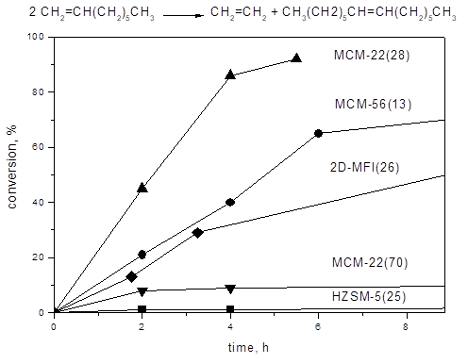
- metathesis catalysts [1]. Albeit typical ill-defined catalysts they are still popular as relatively cheap catalysts finding industrial applications especially in the treatment of low olefins [2][3][4][5]. Their catalytic activity depends on many factors, especially on Mo loading, support acidity, and pre
- carbenes as real catalytically active species has been suggested [6][7]. The replacement of ordinary silicas for mesoporous molecular sieves SBA-15 or MCM-41 increased the catalyst activity substantially, which allowed performing the metathesis of long chain olefins under mild reaction conditions [8][9][10
- solutions were used for the metathesis of low olefins (ethylene, propylene, butenes) [11][12][13]. In the case of bulkier substrates they suffer, however, of micropore size limitations. To overcome these limitations a decrease in crystal size and the application of two-dimensional zeolites can be used [14


The influence of the cationic carbenes on the initiation kinetics of ruthenium-based metathesis catalysts; a DFT study
Beilstein J. Org. Chem. 2018, 14, 2872–2880, doi:10.3762/bjoc.14.266
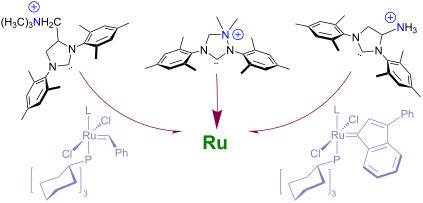
- most feasible for medium and large-sized olefins (Scheme 5) [61][62]. Results presented in Table 4 suggest that the incorporation of cationic NHC increases the Gibbs free energy (∆G10) barriers by ca. 4–6 kcal/mol with respect to the standard Hoveyda–Grubbs catalyst (Hov) [63]. Given the accuracy of


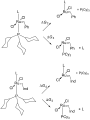
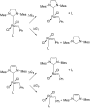

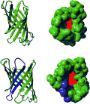
Olefin metathesis catalysts embedded in β-barrel proteins: creating artificial metalloproteins for olefin metathesis
Beilstein J. Org. Chem. 2018, 14, 2861–2871, doi:10.3762/bjoc.14.265
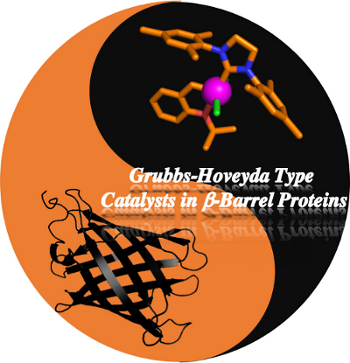
- ), which exhibited an improved activity of TON(per cell) ≈ 500,000 compared to Sav_WT [47]. This is the first example of a whole-cell metathesis biohybrid catalyst, opening up new possibilities to utilize olefins in biological systems in the context of artificial metabolism [14]. Nitrobindin Nitrobindin
- [52][53], and hydrogen evolution [54]. Further, Lewis et al. employed the NB scaffold for epoxidation of styrene and other olefins [55]. In all studies, the catalyst incorporated into the NB scaffold showed increased activity as compared to the protein-free catalyst under similar conditions


Synthesis of a tyrosinase inhibitor by consecutive ethenolysis and cross-metathesis of crude cashew nutshell liquid
Beilstein J. Org. Chem. 2018, 14, 2737–2744, doi:10.3762/bjoc.14.252
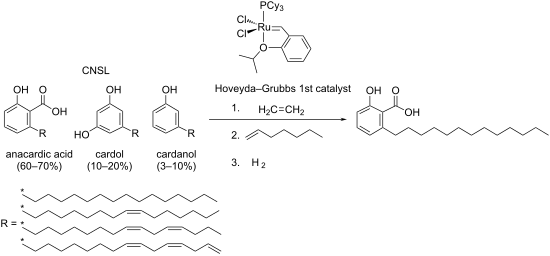
- Supporting Information File 1). In principle, these internal olefins can still undergo metathesis albeit with less activity, depending on the catalyst. It was possible to reduce the time of the reaction to 6 h with almost the same yield (Table 1, entry 11). We investigated various ruthenium catalysts in


Learning from B12 enzymes: biomimetic and bioinspired catalysts for eco-friendly organic synthesis
Beilstein J. Org. Chem. 2018, 14, 2553–2567, doi:10.3762/bjoc.14.232
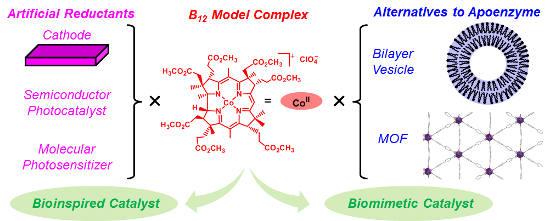
- (III) form of 1 has recently been found to catalyze atom transfer radical addition of alkyl halides to olefins (phenyl vinyl sulfone and acrylates) in the presence of NaBH4 [115]. In addition, a new light-driven method for generating acyl radicals from 2-S-pyridyl thioesters was developed through the


Synergistic approach to polycycles through Suzuki–Miyaura cross coupling and metathesis as key steps
Beilstein J. Org. Chem. 2018, 14, 2468–2481, doi:10.3762/bjoc.14.223
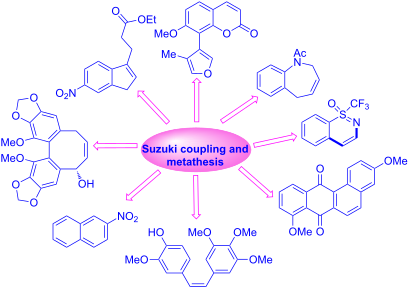
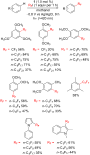
- ] catalyst to obtain the cross-coupling products 88a–g (81–96%). Finally, exposure of olefins 88a–g to G-II catalyst 2 in CH2Cl2 led to the formation of the respective trans-stilbene derivatives 89–95 in high yields (Scheme 14). It is worth mentioning that the loading of only 0.0001 mol % catalyst can effect


Catalyst-free synthesis of 4-acyl-NH-1,2,3-triazoles by water-mediated cycloaddition reactions of enaminones and tosyl azide
Beilstein J. Org. Chem. 2018, 14, 2348–2353, doi:10.3762/bjoc.14.210
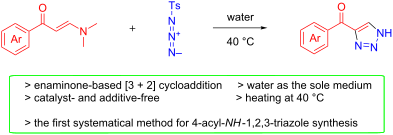
- cycloaddition of azides with activated dipolarophiles such as strained cyclic alkynes, enamines, enolates, electron-deficient olefins, ylides, iminium cations and alkyne anions, etc., have been identified as reliable approaches to access 1,2,3-triazole scaffolds with multiple substitution patterns [39][40][41


Applications of organocatalysed visible-light photoredox reactions for medicinal chemistry
Beilstein J. Org. Chem. 2018, 14, 2035–2064, doi:10.3762/bjoc.14.179




Cobalt-catalyzed nucleophilic addition of the allylic C(sp3)–H bond of simple alkenes to ketones
Beilstein J. Org. Chem. 2018, 14, 2012–2017, doi:10.3762/bjoc.14.176
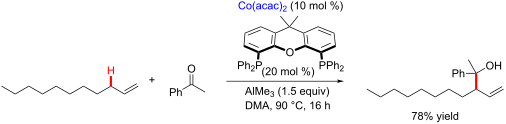
- -olefins (CxH2x) are abundantly present in nature or are readily accessible, they should be appropriate starting materials for C–C bond forming reactions to create organic frameworks of value-added compounds such as natural products, drugs, and fine chemicals. There have been tremendous synthetic methods
- species (Figure 1). However, the substrates employed have been restricted to allylarenes and 1,4-enyne, and 1,4-diene derivatives and α-olefins were totally unexplored. Therefore, the next challenge would be to use less reactive α-olefins (pKa value of 1-propene = 43). In this paper, we describe an
- allylic C(sp3)–H addition of α-olefins, mainly 1-undecene and their analogues, to ketone electrophiles. Results and Discussion We initially conducted screening of conditions using 1 equiv of 1-undecene (1a) and 3 equiv of acetophenone (2a) as starting materials (Table 1). When the reaction was conducted


Diazirine-functionalized mannosides for photoaffinity labeling: trouble with FimH
Beilstein J. Org. Chem. 2018, 14, 1890–1900, doi:10.3762/bjoc.14.163

- olefin formation through abstraction of α-H atoms. Therefore, aryl(trifluoromethyl)diazirines were introduced, which lack hydrogen atoms in α-position of the diazirine function and consequently do not form olefins. Thus, aryl(trifluoromethyl)diazirines have become reagents of first choice for




Recent advances in hypervalent iodine(III)-catalyzed functionalization of alkenes
Beilstein J. Org. Chem. 2018, 14, 1813–1825, doi:10.3762/bjoc.14.154
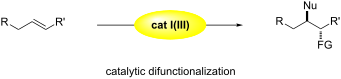
- iodotoluene [27]. Based on this seminal work, Gilmour and co-workers reported a catalytic difluorination of alkenes using an inexpensive p-iodotoluene as the catalyst and Selectfluor as the terminal oxidant [63]. Terminal olefins proved to be viable substrates for this reaction. It is worth noting that the





