


Search results
Search for "photoredox" in Full Text gives 183 result(s) in Beilstein Journal of Organic Chemistry.
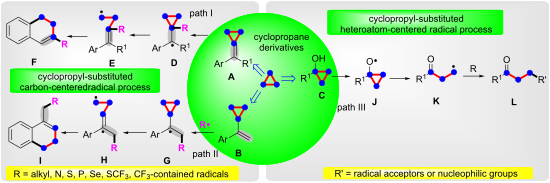
Oxidative radical ring-opening/cyclization of cyclopropane derivatives
Beilstein J. Org. Chem. 2019, 15, 256–278, doi:10.3762/bjoc.15.23
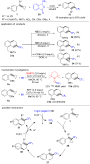
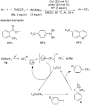
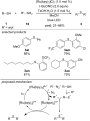
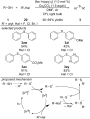
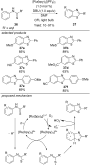
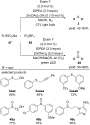
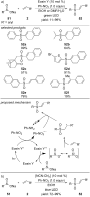
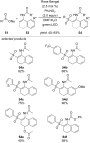
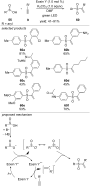
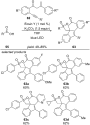
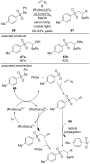
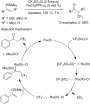
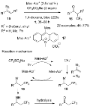
- photoredox catalysis oxidative radical ring-opening and cyclization of cyclopropyl olefins 83 with bromides 84 for the synthesis of partially saturated naphthalenes 85 in moderate to excellent yields (Scheme 19) [97]. It was the first example for alkylation, ring-opening and cyclization cascade reaction of
- the cyclopropyl olefins under photoredox catalysis. The alkylation reagents could be extended to other bromides, such as monofluoro-substituted bromides, trifluoro-substituted bromides, bromoacetonitrile and bromomalonate. This alkylation/ring-opening/cyclization was carried out by using Ir(ppy)2
- (dtbbpy)PF4 as photocatalyst, and K2HPO4 as base in MeCN under the irradiation of 24 W blue LED light at room temperature for 12–36 h. A plausible mechanism is shown in Scheme 19. Firstly, the substrate 84a underwent oxidative quenching under the action of an iridium photoredox catalyst to afford the








N-Arylphenothiazines as strong donors for photoredox catalysis – pushing the frontiers of nucleophilic addition of alcohols to alkenes
Beilstein J. Org. Chem. 2019, 15, 52–59, doi:10.3762/bjoc.15.5
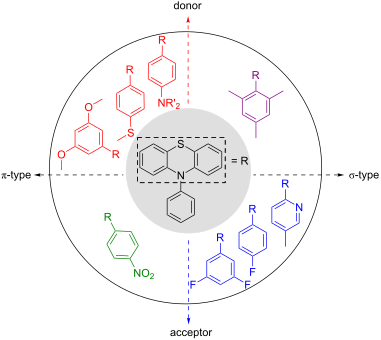
- Fabienne Speck David Rombach Hans-Achim Wagenknecht Institute of Organic Chemistry, Karlsruhe Institute of Technology (KIT), Fritz-Haber-Weg 6, 76131 Karlsruhe, Germany 10.3762/bjoc.15.5 Abstract A new range of N-phenylphenothiazine derivatives was synthesized as potential photoredox catalysts to
- broaden the substrate scope for the nucleophilic addition of methanol to styrenes through photoredox catalysis. These N-phenylphenothiazines differ by their electron-donating and electron-withdrawing substituents at the phenyl group, covering both, σ and π-type groups, in order to modulate their
- absorbance and electrochemical characteristics. Among the synthesized compounds, alkylaminylated N-phenylphenothiazines were identified to be highly suitable for photoredox catalysis. The dialkylamino substituents of these N-phenylphenothiazines shift the estimated excited state reduction potential up to



Organometallic vs organic photoredox catalysts for photocuring reactions in the visible region
Beilstein J. Org. Chem. 2018, 14, 3025–3046, doi:10.3762/bjoc.14.282
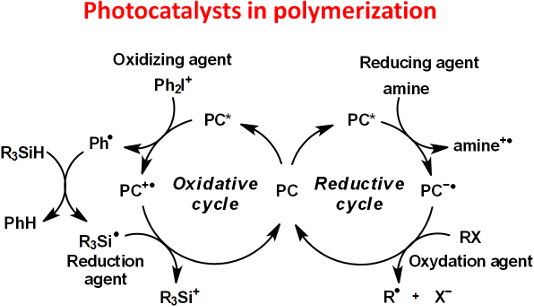
- from adhesives, coatings, packaging materials, inks, paints, optics, 3D printing, microelectronics or textiles. From a synthetic viewpoint, photoredox catalysis, originally developed for organic chemistry, has recently been applied to the polymer synthesis, constituting a major breakthrough in polymer
- chemistry. Thanks to the development of photoredox catalysts of polymerization, a drastic reduction of the amount of photoinitiators could be achieved, addressing the toxicity and the extractability issues; high performance initiating abilities are still obtained due to the catalytic approach which
- regenerates the catalyst. As it is a fast-growing field, this review will be mainly focused on an overview of the recent advances concerning the development of organic and organometallic photoredox catalysts for the photoreticulation of multifunctional monomers for a rapid and efficient access to 3D polymer



Photocatalyic Appel reaction enabled by copper-based complexes in continuous flow
Beilstein J. Org. Chem. 2018, 14, 2730–2736, doi:10.3762/bjoc.14.251
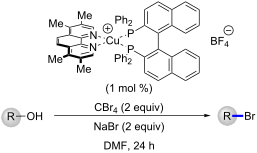
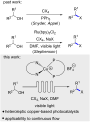
- photocatalyst, Cu(tmp)(BINAP)BF4, was found to be active in a photoredox Appel-type conversion of alcohols to bromides. The catalyst was identified from a screening of 50 complexes and promoted the transformation of primary and secondary alcohols to their corresponding bromides and carboxylic acids to their
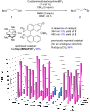
- providing 2 (54–87% yield, not including dppf-based complexes). Interestingly, the best catalyst for the transformation (Cu(tmp)(BINAP)BF4, 99% of 2) was a poor catalyst for a previously reported photoredox reaction [27]. It should be noted that Cu(tmp)(BINAP)+ possesses an excited state reduction potential




Synthesis of aryl sulfides via radical–radical cross coupling of electron-rich arenes using visible light photoredox catalysis
Beilstein J. Org. Chem. 2018, 14, 2520–2528, doi:10.3762/bjoc.14.228
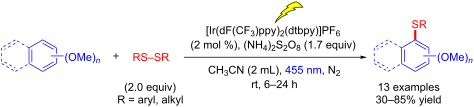
- showed that an aryl disulfide could be cleaved by irradiation with visible light [49]. Some spectroscopic investigations (Figure 3) gave valuable information about the mechanism of the photoredox catalytic cycle. The luminescence intensity of [Ir(dF(CF3)ppy)2(dtbpy)]PF6 was quenched upon successive


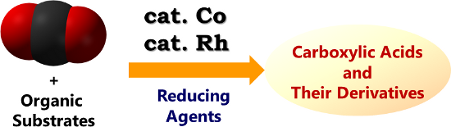
Cobalt- and rhodium-catalyzed carboxylation using carbon dioxide as the C1 source
Beilstein J. Org. Chem. 2018, 14, 2435–2460, doi:10.3762/bjoc.14.221
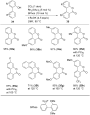
- presence of [Ir(ppy)(dtbpy)](PF6) and iPr2NEt as photoredox catalyst and a sacrificial reagent, respectively, in acetonitrile under an atmospheric pressure of CO2 (Scheme 20). 1-Phenyl-1-propyne (16n) afforded hydrocarboxylated products as a mixture of regio- and stereoisomers. 4-Octyne (16b) afforded the
- reaction mechanism for these reactions. First, the Co(II) precursor is reduced to Co(I) A by the aid of an Ir photoredox catalyst and an amine under irradiation. The oxidative cyclization of A with 23 and CO2 affords cobaltacycle B (step a). Next, the protonation of B affords an intermediate C (step b
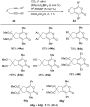
- et al. reported the Rh-catalyzed hydrocarboxylation of alkenes driven by visible-light irradiation conditions in the presence of a photoredox catalyst (Scheme 37) [75]. A model reaction using 4-cyanostyrene (40a) was carried out using iPrNEt2 as a sacrificial electron donor in the presence of [Ru(bpy





Microfluidic light-driven synthesis of tetracyclic molecular architectures
Beilstein J. Org. Chem. 2018, 14, 2418–2424, doi:10.3762/bjoc.14.219
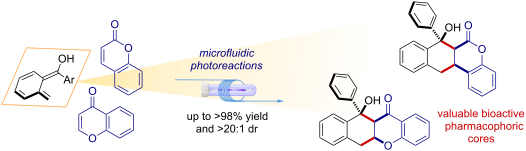
- molecules. Keywords: [4 + 2] photoenol; cycloaddition; flow chemistry; microfluidic photoreactor; photoredox catalysis; synthetic photochemistry; Introduction In recent years synthetic photochemistry has become highly sophisticated [1]. The opportunity of using renewable energy sources to transform and


Bioinspired cobalt cubanes with tunable redox potentials for photocatalytic water oxidation and CO2 reduction
Beilstein J. Org. Chem. 2018, 14, 2331–2339, doi:10.3762/bjoc.14.208
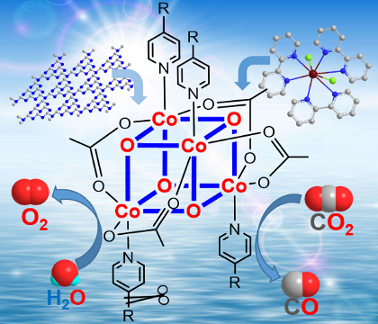
- photocatalytic conversions has been the Achilles’ heel of solar energy utilization. Here, we report on a chemical approach based on ligand designed architectures to fabricate unique structural molecular catalysts coupled with appropriate light harvesters (e.g., carbon nitride and Ru(bpy)32+) for photoredox
- characteristics for a molecular catalyst by selective ligand modification. This work demonstrates a modulation method for fabricating effective, stable and earth-abundant molecular catalysts, which might facilitate further innovation in the function-led design and synthesis of cubane clusters for photoredox
- highly active for both water oxidation and CO2 reduction reactions, which is in good agreement with the results of the optical, CV and LSV measurements. Importantly, the photoredox functions of the molecular complexes can be modulated deliberately by ligand substitutions with different electronic


One-pot synthesis of epoxides from benzyl alcohols and aldehydes
Beilstein J. Org. Chem. 2018, 14, 2308–2312, doi:10.3762/bjoc.14.205

- into carbonyls [8][9][10][11][12][13][14][15][16][17], and application to cascade or domino reactions [18][19]. More recently, our group has used benzyl epoxides for the photoredox generation of carbonyl ylides which are leveraged in the synthesis of cyclic ethers [20]. This work has led us to search



Applications of organocatalysed visible-light photoredox reactions for medicinal chemistry
Beilstein J. Org. Chem. 2018, 14, 2035–2064, doi:10.3762/bjoc.14.179
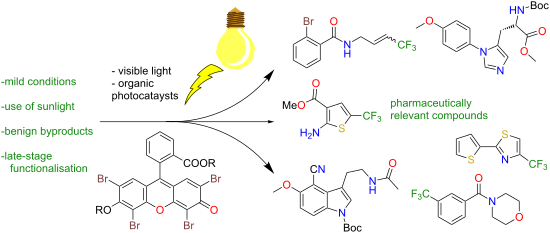
- , 4070 Basel, Switzerland 10.3762/bjoc.14.179 Abstract The focus of this review is to provide an overview of the field of organocatalysed photoredox chemistry relevant to synthetic medicinal chemistry. Photoredox transformations have been shown to enable key transformations that are important to the
- value of these methods to medicinal chemistry is considered. An overview of the general characteristics of the photocatalysts as well as some electrochemical data is presented. In addition, the general reaction mechanisms for organocatalysed photoredox transformations are discussed and some individual
- mechanistic considerations are highlighted in the text when appropriate. Keywords: C–H functionalisation; heterocycles; late-stage functionalisation; medicinal chemistry; organic dyes; organic photocatalysts; peptide chemistry; photoredox catalysis; Review 1 Introduction 1.1 Main advantages of




Recent advances in materials for organic light emitting diodes
Beilstein J. Org. Chem. 2018, 14, 1944–1945, doi:10.3762/bjoc.14.168
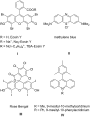
- (LEECs), two types of electroluminescent devices; (ii) sensing materials employed in electro-chemiluminescence; and (iii) photocatalysts employed in photoredox catalytic reactions.
Visible light-mediated difluoroalkylation of electron-deficient alkenes
Beilstein J. Org. Chem. 2018, 14, 1637–1641, doi:10.3762/bjoc.14.139

- equivalents of the iododifluoromethyl carbanion [33][34][35][36]. We also demonstrated that iodides 1 can alkylate silyl enol ethers [37] under photoredox conditions [38][39][40]. However, the latter protocol is inapplicable to the addition to electron-deficient alkenes since a radical resulting from the
- product 3a was isolated in 83% yield (Table 1, entry 6). N,N'-Dimethylimidazolidene borane complex (NHC·BH3) was also efficient (Table 1, entry 5), but because of availability and cost issues, sodium cyanoborohydride was used for further studies. We also evaluated the photoredox-mediated


Metal-free formal synthesis of phenoxazine
Beilstein J. Org. Chem. 2018, 14, 1491–1497, doi:10.3762/bjoc.14.126
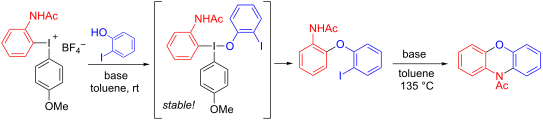
- ][8], are present in a variety of dyes [9], and can be applied in chemosensors and dye-sensitized solar cells (Figure 1) [10][11][12]. N-Arylphenoxazines were recently employed as photoredox catalysts in metal-free polymerizations [13]. The first synthesis of phenoxazine dates back more than 100 years


Investigations of alkynylbenziodoxole derivatives for radical alkynylations in photoredox catalysis
Beilstein J. Org. Chem. 2018, 14, 1215–1221, doi:10.3762/bjoc.14.103
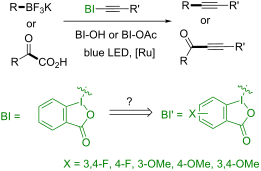
- Chinese Academy of Sciences, Chinese Academy of Sciences, 345 Lingling Road, Shanghai 200032, China 10.3762/bjoc.14.103 Abstract The alkynylbenziodoxole derivatives are recently developed alkynylation reagents in organic synthesis, which demonstrate excellent radical alkynylation reactivity in photoredox
- radical; alkynylbenziodoxoles; photoredox catalysis; radical alkynylation; Introduction The introduction of the alkynyl group to organic molecules is an important synthetic transformation in organic synthesis [1][2][3][4]. Recently, cyclic iodine(III) reagents (CIR)-substituted alkynes
- group first used alkynylbenziodoxoles for decarboxylative radical alkynylation under silver salt and persulfate conditions [19]. In 2014, the Chen group discovered that alkynylbenziodoxoles (BI-alkyne) readily participated in photoredox catalysis as the radical alkynylation reagent [20], after which


Stepwise radical cation Diels–Alder reaction via multiple pathways
Beilstein J. Org. Chem. 2018, 14, 704–708, doi:10.3762/bjoc.14.59
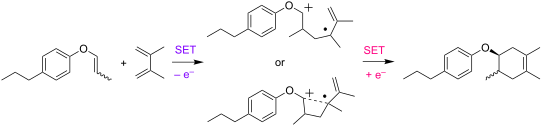
- reported by Bauld in 1986 [16] and was elegantly revisited by Yoon in 2011 [17] in the field of photoredox catalysis (Scheme 1). The reaction was further studied by Ferreira and Shores [18], followed by a unique mechanistic investigation by Rappé [19]. Although most recent examples of the radical cation


Investigating radical cation chain processes in the electrocatalytic Diels–Alder reaction
Beilstein J. Org. Chem. 2018, 14, 642–647, doi:10.3762/bjoc.14.51
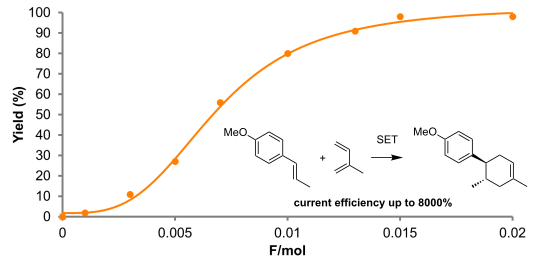
- ion chain processes. As an early example, Bauld estimated the chain lengths of cyclodimerizations of cyclohexadiene and trans-anethole (1) [18]. More recently, Yoon has established a straightforward method to estimate the chain length of photoredox processes using the combination of quantum yield and


Diels–Alder cycloadditions of N-arylpyrroles via aryne intermediates using diaryliodonium salts
Beilstein J. Org. Chem. 2018, 14, 354–363, doi:10.3762/bjoc.14.23
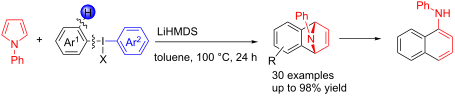
- coupling products were obtained in moderate to good yields (Scheme 1a) [6]. Later in 2013, Xue and Xiao et al. developed a method of photoredox catalysis in the presence of [Ru(bpy)3]2+ with visible light for the coupling reaction of arenes with unprotected or N-substituted pyrroles, pyrrole substrates


Progress in copper-catalyzed trifluoromethylation
Beilstein J. Org. Chem. 2018, 14, 155–181, doi:10.3762/bjoc.14.11
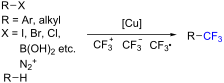
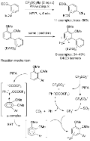
- merger of photoredox and Cu catalysis (Scheme 21). In this protocol, the CF3 radical was generated by visible light photoredox, then Cu aryl species were generated through Cu catalysis. Aromatic boronic acids bearing either electron-donating or electron-withdrawing substituents underwent
- trifluoromethylation smoothly to give the corresponding products in high yield. It represented a new example of combining transition metal and photoredox catalysis to achieve the trifluoromethylation of (hetero)aromatic boronic acids. Then, the same group [41] chose a more practical CF3 source, CF3SO2Na (Langlois
- . Trifluoromethylation of boronic acid derivatives reported by the group of Liu. Trifluoromethylation of organotrifluoroborates reported by the group of Huang. Trifluoromethylation of aryl- and vinylboronic acids reported by the group of Shibata. Trifluoromethylation of arylboronic acids via the merger of photoredox and













Photocatalytic formation of carbon–sulfur bonds
Beilstein J. Org. Chem. 2018, 14, 54–83, doi:10.3762/bjoc.14.4
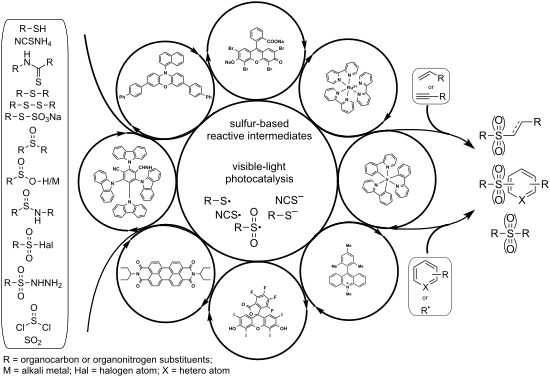
- ; Introduction Visible-light photoredox catalysis has developed into an important tool for organic synthesis in the last two decades. Energy-efficient and cheap visible-light-emitting diodes are perfect light sources allowing chemists now to conduct photocatalyzed reactions without special or expensive equipment
- . Photoredox-active metal complexes or organic dyes are used to initiate photo-induced single-electron transfer (SET) processes upon excitation with visible-light. Such photooxidations or photoreductions yield reactive organic radicals, which can undergo unique bond forming reactions, under very mild
- conditions. The key concepts of photocatalysis and photoredox-catalyzed reactions for carbon–carbon and carbon–heteroatom (C–X) bond formation have been reviewed in detail. However, several new photocatalytic methods for the formation of carbon–sulfur (C–S) bonds were recently reported and we aim to





























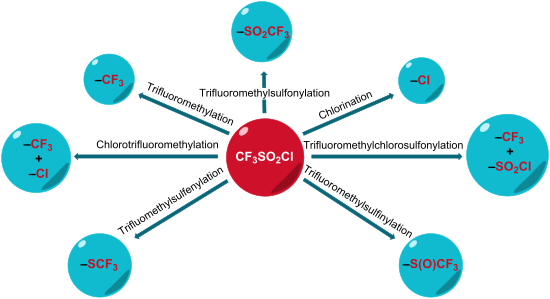
CF3SO2X (X = Na, Cl) as reagents for trifluoromethylation, trifluoromethylsulfenyl-, -sulfinyl- and -sulfonylation and chlorination. Part 2: Use of CF3SO2Cl
Beilstein J. Org. Chem. 2017, 13, 2800–2818, doi:10.3762/bjoc.13.273
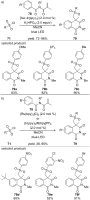
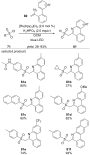
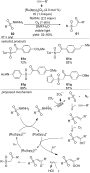
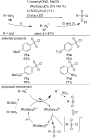
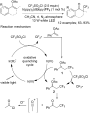
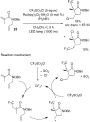
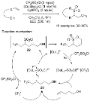
- acrylamides were also investigated for the realisation of cascade reactions including a trifluoromethylation step. This was notably the case of unactivated alkenes: Dolbier and co-workers showed that such compounds could be involved in photoredox-catalysed trifluoromethylation reactions, followed by a 6-exo
- -cyanotrifluoromethylations [22] of alkenes under photoredox catalysis. These reactions proceeded through a formyl or a cyano group migration triggered by the addition of the trifluoromethyl radical onto the alkene moiety. Both methodologies were developed using Togni’s hypervalent iodine reagent as the CF3 source, but it
- was found that they also proceeded smoothly with CF3SO2Cl (Scheme 15). Chlorotrifluoromethylation of alkenes: As clearly demonstrated in the works described above, CF3SO2Cl is a reliable CF3 source under photoredox catalysis. However, its use under similar conditions can also allow the simultaneous








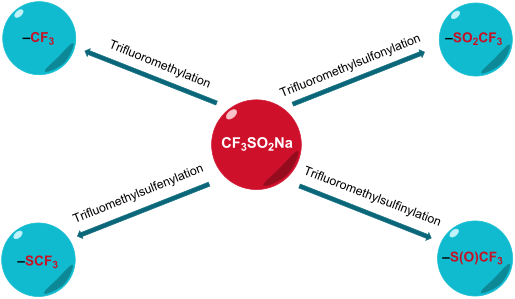
CF3SO2X (X = Na, Cl) as reagents for trifluoromethylation, trifluoromethylsulfenyl-, -sulfinyl- and -sulfonylation. Part 1: Use of CF3SO2Na
Beilstein J. Org. Chem. 2017, 13, 2764–2799, doi:10.3762/bjoc.13.272
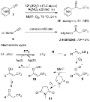
- -trifluoromethylated ketones by reaction of CF3SO2Na under photoredox catalysis. The substrate scope was broad and the reaction proceeded with high functional group tolerance; indeed, aryl-, alkyl-, hetero-functionalised terminal as well as non-terminal vinyl azides 15 were compatible with the reaction conditions. In
- heterocycles. Subsequently, a photoredox-catalysed azotrifluoromethylation of unactivated alkenes was developed by Chen, Xiao and co-workers [32]. The scope was broad for a variety of unactivated alkenes, functionalised or not, and aryldiazonium salts (Scheme 13). Interestingly, the method did not require
- electron oxidation of CF3SO2Na was performed by visible-light activated N-methyl-9-mesitylacridinium as a photoredox catalyst. Two hydrogen atom donors, 20 mol % of methyl thiosalicylate 38 for aliphatic alkenes (or 1 equiv of thiophenol 39 for styrenyl alkenes) and 2,2,2-trifluoroethanol (TFE), worked in






















Synthesis of 1,3-cis-disubstituted sterically encumbered imidazolidinone organocatalysts
Beilstein J. Org. Chem. 2017, 13, 2577–2583, doi:10.3762/bjoc.13.254

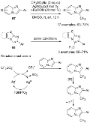
- –Crafts alkylation [23] and in combination with photoredox catalysis (Scheme 1a) [24]. The enantioselective α-alkylation was achieved by merging the common photoredox catalyst Ru(bpy)3Cl2 with imidazolidinone catalyst 3a·TfOH, controlling the stereochemistry of the radical addition via an intermediate


A novel approach to oxoisoaporphine alkaloids via regioselective metalation of alkoxy isoquinolines
Beilstein J. Org. Chem. 2017, 13, 1564–1571, doi:10.3762/bjoc.13.156

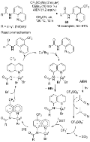
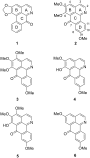
- starting from an isoquinoline bearing an ester group at C-8. In a photoredox-catalyzed direct C–H arylation a 4-methoxyphenyl residue from a methoxyphenyldiazonium salt was introduced at C-1, and after ester hydrolysis intramolecular Friedel–Crafts acylation afforded menisporphine (2). In continuation of



Mechanochemical borylation of aryldiazonium salts; merging light and ball milling
Beilstein J. Org. Chem. 2017, 13, 1463–1469, doi:10.3762/bjoc.13.144
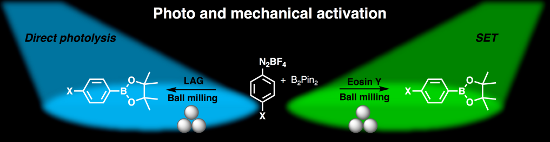
- yielded the same negative result proving that ambient light did not mediate the photoredox catalytic borylation reaction under mechanochemical conditions (Table 1, entry 3). Furthermore, neat grinding of a catalyst-free mixture of 1a and 2 under blue LEDs (light-emitting diodes) light did not afford the
- –d were detected. Meaning that the external light contributes to both, heating the reaction mixture to its eutectic and it also initiated the photoredox process. Similarly, a photocatalyzed reaction between 2 and 4-nitrobenzenediazonium tetrafluoroborate (1e), a salt found also to undergo
- milling conditions (vide supra) could have been indeed the result of a photoredox transformation where the organic photocatalyst eosin Y played a key role in triggering the SET process. Conclusion In summary, simultaneous activation of an organic system by light and ball milling techniques has been


Photocatalyzed synthesis of isochromanones and isobenzofuranones under batch and flow conditions
Beilstein J. Org. Chem. 2017, 13, 1456–1462, doi:10.3762/bjoc.13.143
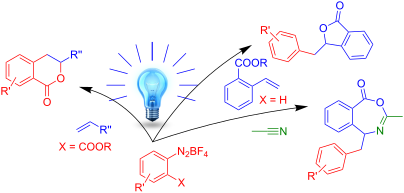
- therefore designed and synthesized reagents bearing ester or carboxylic functions in a convenient position, for a possible intramolecular attack, to investigate their reactivity. While working on this project, König and Fagnoni reported the photoredox-catalyzed reaction of 2-carboxybenzenediazonium salts





