Search results
Search for "solid state" in Full Text gives 481 result(s) in Beilstein Journal of Organic Chemistry. Showing first 200.
Annulation of a 1,3-dithiole ring to a sterically hindered o-quinone core. Novel ditopic redox-active ligands
Beilstein J. Org. Chem. 2021, 17, 273–282, doi:10.3762/bjoc.17.26
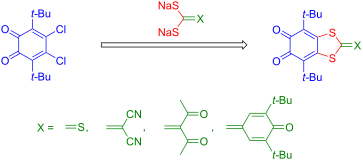
- -quinone 3a, which was previously reported by us [14]. The product 6a is air-stable at ambient conditions both in solid state and in solution. According to X-ray data, the 1,3-dithiole ring in the molecule is almost planar, its geometry is typical of 1,3-dithiole-2-thione species [26][27][28] (Figure S1 in


Tuning the solid-state emission of liquid crystalline nitro-cyanostilbene by halogen bonding
Beilstein J. Org. Chem. 2021, 17, 124–131, doi:10.3762/bjoc.17.13
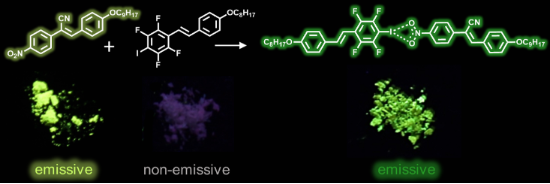
- supramolecular entities in the solid state. This effect was also confirmed by the fluorescence behaviour (see paragraph on photophysical properties) and affects mainly the transition from the nematic to crystalline phase. In addition, it was observed that only assemblies with an odd number of carbon atoms in the
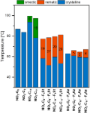
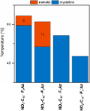
- , enantiotropic phase transitions were observed exclusively for NO2-C10∙∙∙F4Az, indicating a different solid-state arrangement of the azo compounds compared to the stilbazole-based assemblies. The mesomorphic properties of all nitro compounds and the assemblies are summarised in Figure 3 and Table 1. The strength
- interactions and packing in the solid state and adds to the shift of the crystallisation temperature. Photophysical studies Recently, our group has shown that self-assembly provides an efficient way to tune fluorescence behaviour of liquid crystalline materials [21]. Phenolic thioethers showing aggregation




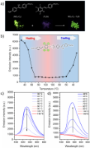


Circularly polarized luminescent systems fabricated by Tröger's base derivatives through two different strategies
Beilstein J. Org. Chem. 2021, 17, 52–57, doi:10.3762/bjoc.17.6
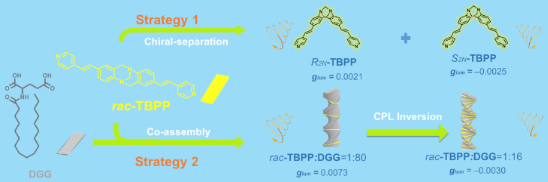
- ; inversion of CPL handedness; Tröger's base; Introduction Recently, much effort has been devoted to constructing luminescent materials with efficient high emission in the solid state [1][2][3]. More and more types of fluorophores with aggregation-induced emission (AIE) characteristics have been discovered


Control over size, shape, and photonics of self-assembled organic nanocrystals
Beilstein J. Org. Chem. 2021, 17, 42–51, doi:10.3762/bjoc.17.5
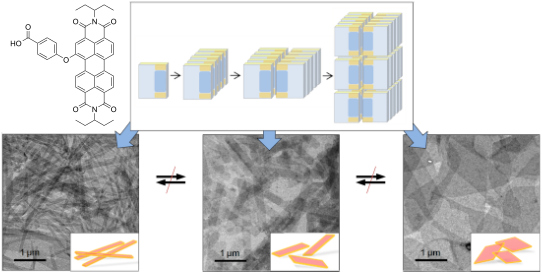
- building blocks in such systems results in a certain degree of control [26][27], yet the PDI nanobelts do not remain free-floating in solution and normally are characterized as solid-state materials [28], limiting the processability of the nanocrystals, the control over the morphology, and insights into




Chiral anion recognition using calix[4]arene-based ureido receptors in a 1,3-alternate conformation
Beilstein J. Org. Chem. 2020, 16, 2999–3007, doi:10.3762/bjoc.16.249
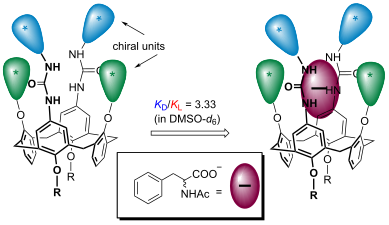
- Tereza Horackova Jan Budka Vaclav Eigner Wen-Sheng Chung Petra Curinova Pavel Lhotak Department of Organic Chemistry, University of Chemistry and Technology, Prague (UCTP), Technicka 5, 166 28 Prague 6, Czech Republic Department of Solid State Chemistry, UCTP, 166 28 Prague 6, Czech Republic
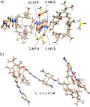
- Å, respectively. Every ureido group held one molecule of DMSO via synchronous hydrogen bonding interactions between the two NH protons and a sulfoxide oxygen atom (Figure 3a). The S=O···H–N distances were 1.995, 2.285, 2.033, and 2.328 Å, indicating strong interactions in the solid state. At the




Naphthalonitriles featuring efficient emission in solution and in the solid state
Beilstein J. Org. Chem. 2020, 16, 2960–2970, doi:10.3762/bjoc.16.246
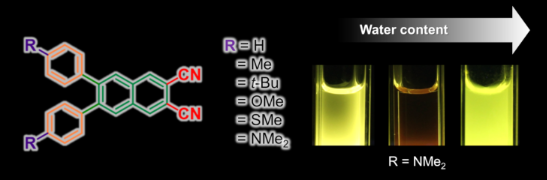
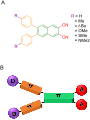
- substitution and environment is reported with potential applications in sensing, bioimaging and optoelectronics. Keywords: aggregation caused quenching (ACQ); aggregation-induced emission enhancement (AIEE); naphthalonitriles (NCNs); solution and solid state emitters (SSSE); solvent quenching (SQ
- (AIE) [23][24][25][26][27]. They mentioned a series of silole derivatives with propeller-like conformations that show no emission in dilute solutions, but are highly luminescent when aggregated in the solid state. Their work has attracted major attention and quickly became one of the most sought-after
- materials equally efficient both in solution and in the solid state, thus bridging a gap between the dichotomous phenomena of ACQ and AIE with a new class of luminescent species, so-called dual-state emitting (DSE) compounds (DSEgens) [33]. While in many papers these compounds are called Dual State Emitting



Construction of pillar[4]arene[1]quinone–1,10-dibromodecane pseudorotaxanes in solution and in the solid state
Beilstein J. Org. Chem. 2020, 16, 2954–2959, doi:10.3762/bjoc.16.245
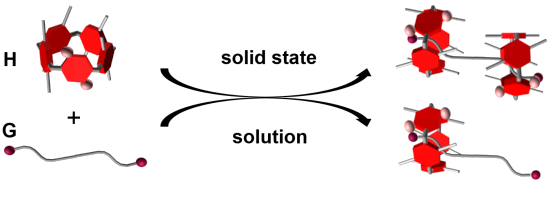
- in the solid state. From single crystal X-ray diffraction, the linear guest molecules thread into cyclic pillar[4]arene[1]quinone host molecules in the solid state, stabilized by CH∙∙∙π interactions and hydrogen bonds. The bromine atoms at the periphery of the guest molecule provide convenience for
- reports [44][45]. We found that H and G can be used to build a [3]pseudorotaxane in the solid state but a [2]pseudorotaxane in solution. Results and Discussion Host–guest complexation in the solid state Cocrystals of H and G were obtained by slow evaporation of the solution in methanol. The X-ray
- crystallography revealed that two host molecules complex one guest molecule, forming a [3]pseudorotaxane in the solid state (Figure 1). In the crystal structure, the alkyl chain of the guest is threaded through the cavities of two host molecules, which is stabilized by multiple CH∙∙∙π interactions and hydrogen


Vicinal difluorination as a C=C surrogate: an analog of piperine with enhanced solubility, photostability, and acetylcholinesterase inhibitory activity
Beilstein J. Org. Chem. 2020, 16, 2663–2670, doi:10.3762/bjoc.16.216
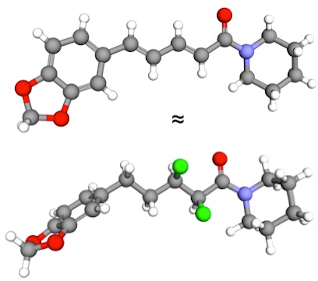
- (Figure 2), which was among the higher-energy calculated conformers of 2 (see Supporting Information File 1), bears a close resemblance to the solid-state conformation of piperine (1, Figure 1). The structure 2f has a F–C–C–F dihedral angle of 57° and a F–C–C=O dihedral angle of –133°. These angles


Synthesis and characterization of S,N-heterotetracenes
Beilstein J. Org. Chem. 2020, 16, 2636–2644, doi:10.3762/bjoc.16.214

- –property relationships showing the influence of the number and sequence of pyrrole rings. The highly planar π-conjugated systems revealed interesting structural features such as nearly complete bond length equalization and S–S and S–π dipolar interactions in the solid state. Due to tunable optoelectronic


Particle size effect in the mechanically assisted synthesis of β-cyclodextrin mesitylene sulfonate
Beilstein J. Org. Chem. 2020, 16, 2598–2606, doi:10.3762/bjoc.16.211

- of a reaction in the solid state. As such, we recently investigated the influence of the particle size of β-CD in the synthesis of β-CD mesitylene sulfonate (β-CDMts) in the solid state using a vibrating ball-mill. We were particularly interested in the role of the particle size on the kinetics of
- out in the presence of KOH as a base. The data series were confronted with kinetics models to get insight in the way the reactions proceeded. The diversity of possible models suggests that multiple mechanochemical processes can account for the formation of β-CDMts in the solid state. Throughout the
- , 7, and 8 α-ᴅ-glucopyranoside units, respectively. CDs are recognized as effective excipients in the formulation of numerous drugs [7][8][9][10]. Upon grinding, CDs form inclusion complexes with the drugs in the solid state, resulting in a significantly faster dissolution rate and increased




Thermodynamic and electrochemical study of tailor-made crown ethers for redox-switchable (pseudo)rotaxanes
Beilstein J. Org. Chem. 2020, 16, 2576–2588, doi:10.3762/bjoc.16.209
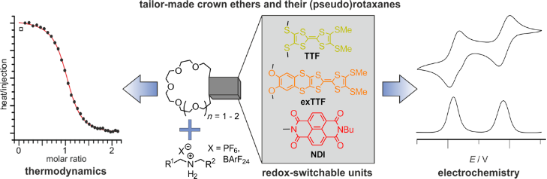
- Information File 1). Slow diffusion of CH3CN into a concentrated solution of NDIC7 in CH2Cl2 yielded single crystals suitable for X-ray diffraction (Figure 2b). The macrocycle displays a folded conformation in the solid state due to the flexible linker, featuring an intramolecular NDI/naphthalene stacking
- is impeded. NDIC8 therefore does not fold but stacks with the naphthalene and NDI moieties of the neighbors alternatingly in the solid state and with a typical plane/plane distance of 3.57 Å [49]. Thermodynamic analysis of crown ether/ammonium complexes For the investigation of the thermodynamic
- intramolecular folding which was observed in the solid-state structure and is likely also present in solution, as indicated by a charge-transfer band. Nevertheless, it might be applicable for redox-controlled metal-sensing [60][61][62]. On the contrary, NDIC8 forms pseudo[2]rotaxanes and facilitates the


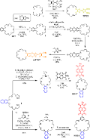


Water-soluble host–guest complexes between fullerenes and a sugar-functionalized tribenzotriquinacene assembling to microspheres
Beilstein J. Org. Chem. 2020, 16, 2551–2561, doi:10.3762/bjoc.16.207
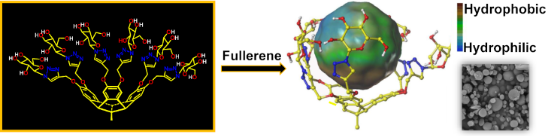
- the solid state. It is shown that the inclusion of fullerenes into the water-soluble TBTQ-based host greatly compensates for their water-repulsive nature and results in the formation of self-assembled microspheres that may have some potential for biological and pharmaceutical applications. Results and


![[Graphic 2]](/bjoc/content/inline/1860-5397-16-207-i3.svg?max-width=637&scale=1.18182) C60 [TBTQ-(OG)6: 50 μM; C60: 50 μM] and (b) TBTQ-(OG)6
C60 [TBTQ-(OG)6: 50 μM; C60: 50 μM] and (b) TBTQ-(OG)6 


Chan–Evans–Lam N1-(het)arylation and N1-alkеnylation of 4-fluoroalkylpyrimidin-2(1H)-ones
Beilstein J. Org. Chem. 2020, 16, 2304–2313, doi:10.3762/bjoc.16.191

- 1а with pinacol 2-phenylethynyl boronate. The meta-methoxystyryl derivative 5c was found to easily undergo photodimerization in solid state upon sunlight exposure, leading to the formation of compound 8 with a central cyclobutane ring (see Supporting Information File 1). As proved previously for


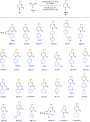


Styryl-based new organic chromophores bearing free amino and azomethine groups: synthesis, photophysical, NLO, and thermal properties
Beilstein J. Org. Chem. 2020, 16, 2282–2296, doi:10.3762/bjoc.16.189

- comprising of electron-donating and accepting groups in a donor–π–acceptor (D–π–A) system. The dyes exhibit strong absorption and emission properties in solution and in the solid state [1][2][3]. One important feature of these molecules is an exceptional polarizability which is a crucial criterion for NLO


The B & B approach: Ball-milling conjugation of dextran with phenylboronic acid (PBA)-functionalized BODIPY
Beilstein J. Org. Chem. 2020, 16, 2272–2281, doi:10.3762/bjoc.16.188
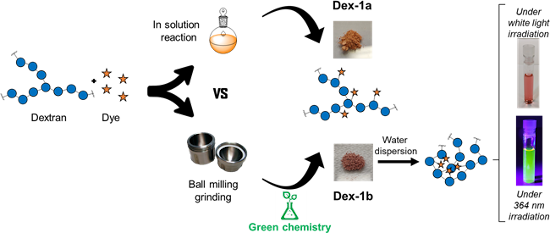
- reactions, and even in nanomaterials preparation [1][2][3][4][5]. Indeed, solid-state mechanochemical methodologies are a viable alternative to traditional syntheses in solution [4] for the preparation of complex molecules, either under solvent-free conditions, named ‘neat grinding’, or in nearly solvent
- ), by following a straightforward synthetic strategy recently reported by some of us [26]. Then, in order to assess the efficacy of the solid-state milling approach in the formation of boronate esters between the PBA moiety of 1 and the vicinal diols of dextran (Dex), both mechanochemical and


Synthesis of 6,13-difluoropentacene
Beilstein J. Org. Chem. 2020, 16, 2136–2140, doi:10.3762/bjoc.16.181
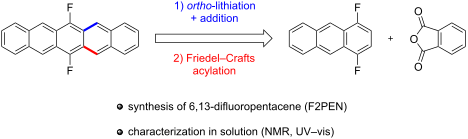
- derivatization of known compounds [4]. Since the performance of these devices is strongly dependent on the optoelectronic solid-state properties of the pentacenes, predictable control of the electronic structure is desirable. A common strategy to influence the electronic properties of pentacenes, without



Clustering and curation of electropherograms: an efficient method for analyzing large cohorts of capillary electrophoresis glycomic profiles for bioprocessing operations
Beilstein J. Org. Chem. 2020, 16, 2087–2099, doi:10.3762/bjoc.16.176
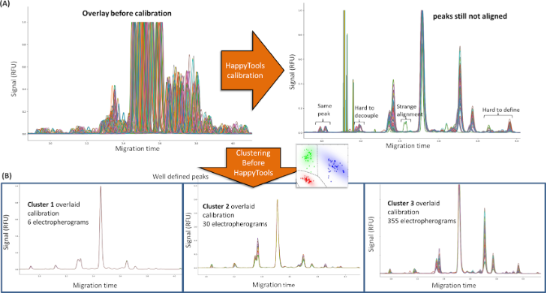
- Capillary electrophoresis of the released and APTS-labelled antibody N-glycans was performed on a CESI8000 CE instrument (Sciex) equipped with a solid state laser-induced fluorescent detector (excitation 488 nm, emission 520 nm). Separations were made across a 20 cm effective length (30 cm total length), 50


Reactions of 3-aryl-1-(trifluoromethyl)prop-2-yn-1-iminium salts with 1,3-dienes and styrenes
Beilstein J. Org. Chem. 2020, 16, 2064–2072, doi:10.3762/bjoc.16.173
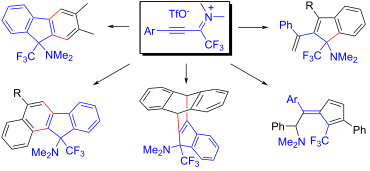
- -(dimethylamino)indenes as the major products. Various other synthetic applications of these reactive propyn-1-iminium salts will be reported in due course. Solid-state molecular structure of 11 (ORTEP plot). Solid-state molecular structure of 12c (ORTEP plot). Solid-state molecular structure of 12d (ORTEP plot
- . Synthesis and solid-state molecular structure (ORTEP plot) of pentafulvene 19; selected bond distances (Å), see molecule plot for atom numbering: C8‒C7 1.370(2), C7‒C17 1.481(2), C17‒C18 1.343(2), C18‒C5 1.471(2), C5‒C6 1.374(2), C6‒C7 1.496(2). Proposed mechanistic pathway leading to fulvene 19


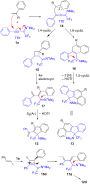


Isolation and structure determination of a tetrameric sulfonyl dilithio methandiide in solution based on crystal structure analysis and 6Li/13C NMR spectroscopic data
Beilstein J. Org. Chem. 2020, 16, 2057–2063, doi:10.3762/bjoc.16.172

- . Their anion is stabilized by electrostatic interaction, polarization, and negative nC-σ*SR hyperconjugation, with electrostatic interaction as dominating mechanism [56][58]. The lithio methanides 1 are monomeric or dimeric in THF solution and the solid state, depending on Lewis basic ligands of the
- atoms and not between orbitals. A similar conclusion was reached in the case of the dilithio methandiides IIIa and IIIb. Conclusion The determination of the structure of tetramer 2a-I in both the solution and solid state, which is the first of a dilithio methandiide, was achieved based on X-ray crystal


Controlling the stereochemistry in 2-oxo-aldehyde-derived Ugi adducts through the cinchona alkaloid-promoted electrophilic fluorination
Beilstein J. Org. Chem. 2020, 16, 1963–1973, doi:10.3762/bjoc.16.163
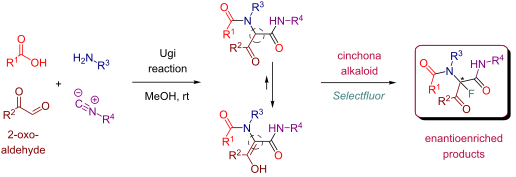
- -triggered complexation with boron trifluoride diethyl etherate. The resulting O,O-chelated boron complexes 11 turned out to be strong solid-state emitters featuring clear aggregation-induced emission (AIE) characteristics [61]. Encouraged by these results, we decided to attempt the reaction of 2-oxo


Clickable azide-functionalized bromoarylaldehydes – synthesis and photophysical characterization
Beilstein J. Org. Chem. 2020, 16, 1683–1692, doi:10.3762/bjoc.16.139
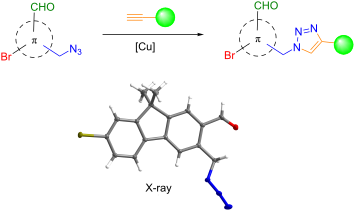
- Figure 2a and Figures S1–S11 in Supporting Information File 1). The emission spectra for para-bromocarbaldehyde 3 and adamantyltriazole 34 in the solid-state show maxima at 440 nm (for compound 3) and 416 nm (for compound 34) (see Figure 2b). Additionally, fluorescence lifetimes (τ) of 3 and 34 were
- determined by time correlated single photon counting (TCSPC), indicating low lifetimes of 2.21 ns (for compound 3) and 3.23 ns (for compound 34) for lower populated species (see Figure S6, Supporting Information File 1). Quantum yields (Φ) of both derivatives are below 1% in the solid-state. In chloroform
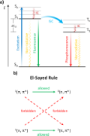
- , no luminescence was detected for the para derivatives. All ortho derivatives exhibited luminescence neither in solution nor in the solid-state [73]. These observations for the para- and ortho-bromobenzaldehydes indicate that the phosphorescence is quenched in these systems, yielding only a weak



Fluorohydration of alkynes via I(I)/I(III) catalysis
Beilstein J. Org. Chem. 2020, 16, 1627–1635, doi:10.3762/bjoc.16.135
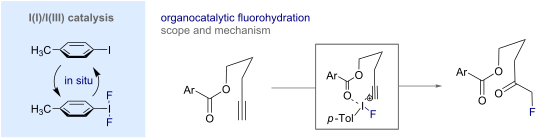
- established by single crystal X-ray diffraction (Figure 2). Interestingly, a study by Pattison has established that α-fluoroketones preferentially adopt a cis-conformation in polar solvents [54]. In the solid state, a dihedral angle of φ = −3.7° was observed thereby placing the C–F bond in the same plane as


Five-component, one-pot synthesis of an electroactive rotaxane comprising a bisferrocene macrocycle
Beilstein J. Org. Chem. 2020, 16, 1564–1571, doi:10.3762/bjoc.16.128
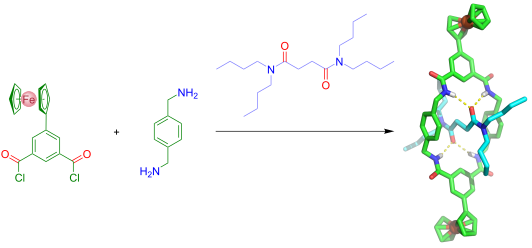
- was E1/2 = +0.380 V vs SCE showing that rotaxane 1a retained the redox properties of the parent ferrocene [21][22]. Importantly, the full reversibility of the one electron oxidation–reduction process attested to the stability of the electroactive system. Solid-state X-ray structure The solid-state
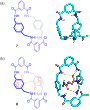
- structure of rotaxane 1a was determined by single crystal X-ray diffraction of crystals obtained by slow evaporation of a dichloromethane solution. The analysis of the X-ray solid-state structure of the rotaxane 1a showed a significant difference to Leigh’s rotaxane I [4]. Rotaxane I only presented two
- structures of (a) rotaxane 1a and (b) Leigh’s rotaxane I [4]. Selected H···O distances from the solid-state structures. Supporting Information Supporting Information File 71: Further experimental details and NMR spectra of new compounds. Supporting Information File 72: X-ray data of rotaxane 1a




Mechanochemical green synthesis of hyper-crosslinked cyclodextrin polymers
Beilstein J. Org. Chem. 2020, 16, 1554–1563, doi:10.3762/bjoc.16.127
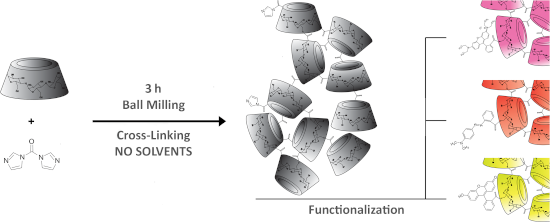
- modifications of starch using ball milling have been reported. These included esterifications and etherifications of starch [19] and cellulose [20]. In 2017, Jicsinszky et al. obtained CD derivatives through a solid-state reaction, using a planetary ball mill [21][22] and by other green processes [23]. The main




Heterogeneous photocatalysis in flow chemical reactors
Beilstein J. Org. Chem. 2020, 16, 1495–1549, doi:10.3762/bjoc.16.125
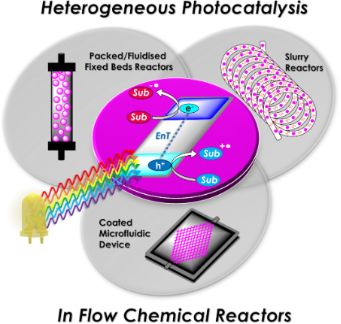
- recommend exploring the article for further details [95]. Molecules with functional groups such as carboxylic acid present complex surface topologies from bridging and bidentate binding modes [91]. Yoshida and co-workers studied the adsorption of benzene derivatives on TiO2 surfaces by solid-state NMR and