Search results
Search for "water soluble" in Full Text gives 254 result(s) in Beilstein Journal of Organic Chemistry. Showing first 200.
Interactions between photoacidic 3-hydroxynaphtho[1,2-b]quinolizinium and cucurbit[7]uril: Influence on acidity in the ground and excited state
Beilstein J. Org. Chem. 2017, 13, 203–212, doi:10.3762/bjoc.13.23
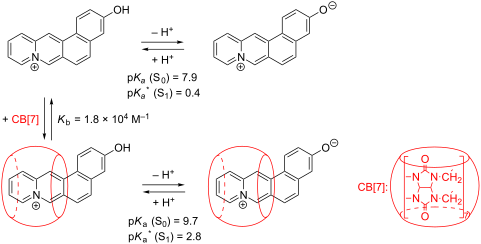
- cavity. In contrast, if the hydroxy group of the ligand points far outside the binding pocket of CB[7] the ESPT is comparable to the one observed with the non-complexed ligand [28]. Recently, we discovered that the 8-hydroxybenzo[b]quinolizinium ion (1a, Figure 1) represents an efficient water-soluble
- derivatives may be modulated by supramolecular interactions. Considering the ability of this class of compounds to operate as DNA-binding ligands [56] or water-soluble chemosensors [57], we anticipate that the combination of these properties with the potential for modulation by host–guest assembly may widen


Dynamics and interactions of ibuprofen in cyclodextrin nanosponges by solid-state NMR spectroscopy
Beilstein J. Org. Chem. 2017, 13, 182–194, doi:10.3762/bjoc.13.21
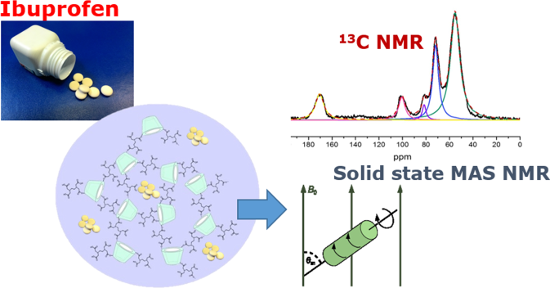
- . Ibuprofen is the API of many nonsteroidal anti-inflammatory formulations widely used in the treatment of fever, rheumatoid arthritis and other inflammatory diseases [10]. From the chemical viewpoint, ibuprofen is the (RS)-2-(4-(2-methylpropyl)phenyl)propanoic acid. Its sodium salt is water-soluble and


A new class of organogelators based on triphenylmethyl derivatives of primary alcohols: hydrophobic interactions alone can mediate gelation
Beilstein J. Org. Chem. 2017, 13, 138–149, doi:10.3762/bjoc.13.17
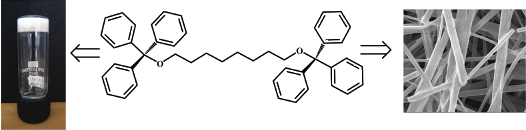
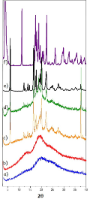
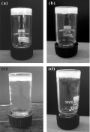
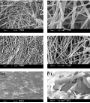
- the gel were carried out using scanning electron microscopy, FTIR spectroscopy, rheology and powder XRD techniques. This gel also showed a good absorption profile for a water soluble dye. Given the non-polar nature of this molecule, gel formation is likely to be mediated by hydrophobic interactions
- industries. But most of these dyes are toxic and harmful to the environment. Discharge of waste water generated during use of these water-soluble dyes without proper pretreatment creates a serious environmental and health hazard. Hence, development of simple and reliable methods to remove dyes from the
- [38][39]. Hence, small molecules based molecular gels have recently emerged as a new class of materials which can be used in the removal of water-soluble toxic dyes. We reasoned that TPM-G12 gel (being non-polar) can perhaps be utilized for removal of water-soluble dyes having appreciable hydrophobic







A postsynthetically 2’-“clickable” uridine with arabino configuration and its application for fluorescent labeling and imaging of DNA
Beilstein J. Org. Chem. 2017, 13, 127–137, doi:10.3762/bjoc.13.16
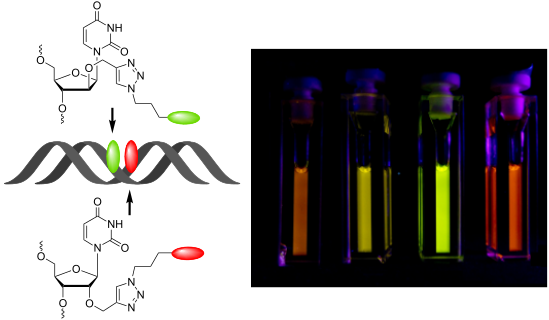
- only reaction rates but improves also regioselectivity. The formation of oligonucleotide oxidation side products by Cu(I) is avoided by the use of chelating Cu(I) ligands, in particular tris[(1-benzyl-1H-1,2,3-triazol-4-yl)methyl]amine (TBTA) and better water-soluble derivatives [9][10]. The CuAAC



Phosphated cyclodextrins as water-soluble chiral NMR solvating agents for cationic compounds
Beilstein J. Org. Chem. 2017, 13, 43–53, doi:10.3762/bjoc.13.6
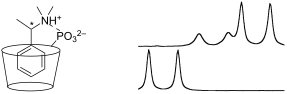
- Cira Mollings Puentes Thomas J. Wenzel Department of Chemistry, Bates College, Lewiston, Maine 04240 USA 10.3762/bjoc.13.6 Abstract The utility of phosphated α-, β- and γ-cyclodextrins as water-soluble chiral NMR solvating agents for cationic substrates is described. Two sets of phosphated
- cyclodextrins, one with degrees of substitution in the 2–6 range, the other with degrees of substitution in the 6–10 range, are examined. Results with 33 water-soluble cationic substrates are reported. We also explored the possibility that the addition of paramagnetic lanthanide ions such as praseodymium(III
- that at the primary side. Native, underivatized CDs are effective chiral NMR solvating agents in water [8][9]. Water-soluble substrates with hydrophobic moieties such as aryl rings typically form inclusion complexes by insertion of the aryl ring into the CD cavity. Neutral CDs with permethylated [10




Synthesis of multi-lactose-appended β-cyclodextrin and its cholesterol-lowering effects in Niemann–Pick type C disease-like HepG2 cells
Beilstein J. Org. Chem. 2017, 13, 10–18, doi:10.3762/bjoc.13.2
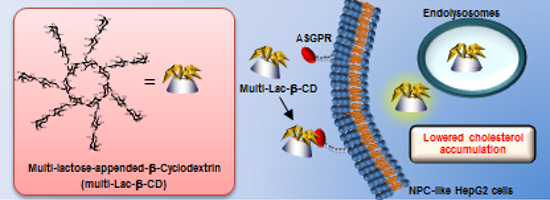
- (Figure 2B). These results indicate the successful synthesis of multi-Lac-β-CD (DSL5.6). Cytotoxicity of multi-Lac-β-CD (DSL5.6) To evaluate the cytotoxicity of multi-Lac-β-CD (DSL5.6), cell viability was examined after treatment with multi-Lac-β-CD (DSL5.6) by the water-soluble tetrazolium (WST)-1 method





Versatile synthesis of end-reactive polyrotaxanes applicable to fabrication of supramolecular biomaterials
Beilstein J. Org. Chem. 2016, 12, 2883–2892, doi:10.3762/bjoc.12.287

- , triazole). The same reaction was performed for 4b and 4c according to the above described procedure. Synthesis of water-soluble benzylazide group-terminated PRX (6) To solubilize 4a into an aqueous solutions, 2-(2-hydroxyethoxy)ethyl (HEE) groups were modified onto the threading α-CDs of 4a [28][29
- pseudopolyrotaxane with 2a–c (Reaction 2). End-group modification of 4a-c with model alkyne via copper-catalyzed click reaction. Scheme of the synthesis of water-soluble PRX (6) and the following end group modification with copper-free click reaction (7). Reaction conditions and characterizations of the PRXs




Stabilization of nanosized titanium dioxide by cyclodextrin polymers and its photocatalytic effect on the degradation of wastewater pollutants
Beilstein J. Org. Chem. 2016, 12, 2873–2882, doi:10.3762/bjoc.12.286
- light scattering: The average molecular weight of the water-soluble polymers has been determined by static light scattering method using a Malvern Zetasizer Nano Series ZS device manufactured by Malvern Instruments Ltd., UK. The analysis was performed as described elsewhere [53]. Particle size analysis



Development of a continuous process for α-thio-β-chloroacrylamide synthesis with enhanced control of a cascade transformation
Beilstein J. Org. Chem. 2016, 12, 2511–2522, doi:10.3762/bjoc.12.246
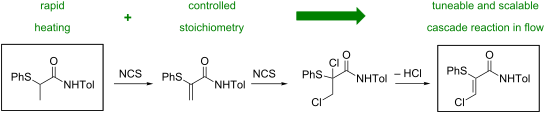
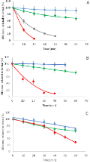
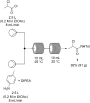
- an acceptable yield of α-thioamide 2 in all instances (entries 4–13, Table 1). The use of an excess of sodium hydroxide as base had removed the difficulty with unreacted starting material, presumably by hydrolysis of unreacted α-chloroamide 1 to more water soluble byproducts. In order to minimize the




Radical polymerization by a supramolecular catalyst: cyclodextrin with a RAFT reagent
Beilstein J. Org. Chem. 2016, 12, 2495–2502, doi:10.3762/bjoc.12.244
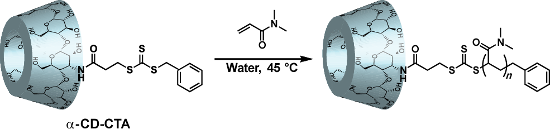
- β-CD cavity of β-CD-CTA was capped by the CTA unit, inhibiting the molecular recognition property. Crystal structure of the α-CD-DMA and β-CD-DMA complexes We chose N,N-dimethylacrylamide (DMA), acrylic acid (AA), and acrylamide (AAm) as water-soluble vinyl monomers for radical polymerization. Prior
- result in a precipitate, indicating that the affinities of the CDs for AAm were low. Polymerization of vinyl monomers mediated by α-CD-CTA α-CD-CTA-mediated polymerizations of water-soluble vinyl monomers were performed in aqueous media, where the strong molecular recognition property of α-CD is expected
- due to the hydrophobic effect. As a water-soluble radical initiator, we selected 2,2'-azobis[2-(2-imidazolin-2-yl)propane] dihydrochloride (VA-044). Two hundred equivalents (equiv) of monomers, 1 equiv of α-CD-CTA, and 0.4 equiv of VA-044 were mixed in water (monomer: 1 mol/kg). After the reactants


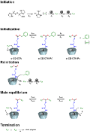
The in situ generation and reactive quench of diazonium compounds in the synthesis of azo compounds in microreactors
Beilstein J. Org. Chem. 2016, 12, 1987–2004, doi:10.3762/bjoc.12.186
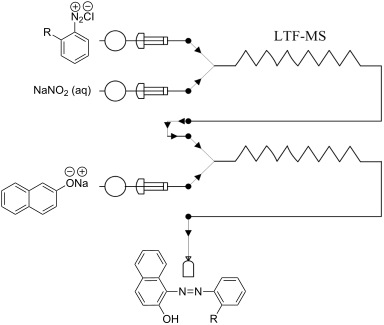
- this investigation is also presented here in form of simple profile plots. Effect of reaction pH, temperature and flow rate on the reaction conversion Azo coupling reactions involving aromatic amines as coupling agents are carried out in mildly acidic conditions such that a water-soluble protonated


Cross-linked cyclodextrin-based material for treatment of metals and organic substances present in industrial discharge waters
Beilstein J. Org. Chem. 2016, 12, 1826–1838, doi:10.3762/bjoc.12.172
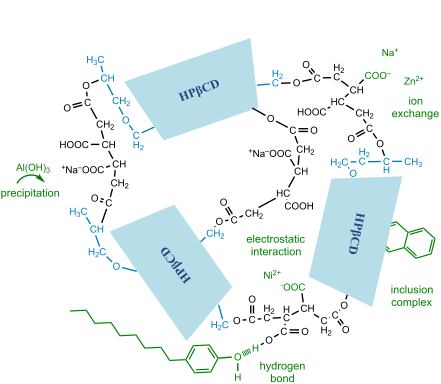
- properties leading to a host–guest relationship with organic substances [6][7][8][9]. These cyclic oligosaccharides are water soluble in their native form and are often modified to prepare novel insoluble CD-based materials. Two patents published by Martel et al. [10], and Trotta et al. [11] can be consulted




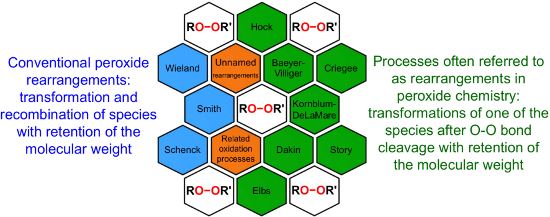
Rearrangements of organic peroxides and related processes
Beilstein J. Org. Chem. 2016, 12, 1647–1748, doi:10.3762/bjoc.12.162





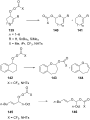


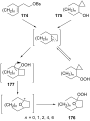


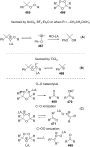


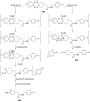


Organic chemistry meets polymers, nanoscience, therapeutics and diagnostics
Beilstein J. Org. Chem. 2016, 12, 1638–1646, doi:10.3762/bjoc.12.161
- external regulation [4]. I also took on a brutal project, focused on the synthesis of water-soluble analogs of Kemp's triacid. This project was a massive effort, with a huge number of reactions required to optimize the initial steps. We did, however, obtain the desired receptors and observe some




Mutagenic activity of quaternary ammonium salt derivatives of carbohydrates
Beilstein J. Org. Chem. 2016, 12, 1434–1439, doi:10.3762/bjoc.12.138

- design the QAS. All the newly synthesized N-[6-(β-D-glucopyranosyloxy)hexyl]ammonium bromides were water soluble. The identities of all compounds were confirmed by 1H and 13C NMR. Mutagenic activity of QAS QASs are generally recognized as safe compounds. Nevertheless, considering our previous


Synthesis, fluorescence properties and the promising cytotoxicity of pyrene–derived aminophosphonates
Beilstein J. Org. Chem. 2016, 12, 1229–1235, doi:10.3762/bjoc.12.117
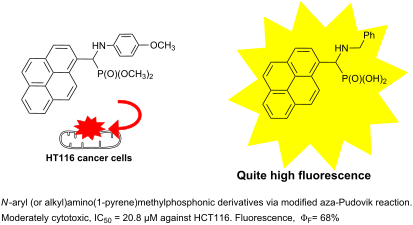
- corresponding aminophosphonate was earlier reported [29]. The aforementioned data suggest possible application of compound 3Aj (and other exhibiting similar emission quantum yield) as molecular probes monitoring micropolarity of the fluorophore environment. On the other hand, water-soluble 4a might be used for


Stimuli-responsive HBPS-g-PDMAEMA and its application as nanocarrier in loading hydrophobic molecules
Beilstein J. Org. Chem. 2016, 12, 939–949, doi:10.3762/bjoc.12.92

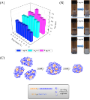
- clusters of smaller units. These aggregates were soluble in water due to water soluble PDMAEMA chains. The aggregates were also stable enough because the incorporated HBPS segment is an excellent hydrophobic polymeric chain. To further investigate the behavior of HBPS-g-PDMAEMA aggregates in water, DLS




From steroids to aqueous supramolecular chemistry: an autobiographical career review
Beilstein J. Org. Chem. 2016, 12, 684–701, doi:10.3762/bjoc.12.69
- were working in organic solvents, not water. Throughout my career, water had been just under the surface of all my research endeavors: I had been working towards water-soluble cavitands and making four-helix bundles that assembled via the hydrophobic effect at UBC, I had been working with water-soluble
- zinc complexes at NYU; even non-water-soluble steroids rely in part on the hydrophobic effect to bind. The common denominator was water, “the solvent of life”. However, although we understand water quite well, we are far from fully understanding aqueous solutions [29][30], and to be frank, it’s hard to
- contribute to this understanding if you are working in chloroform. Something had to be done. We examined several approaches to making deep-cavity cavitands water-soluble, but the one that worked best led to what has been commonly called octa-acid (Figure 5) [31][32]. Now we had a host that: 1) was evenly





Elucidation of a masked repeating structure of the O-specific polysaccharide of the halotolerant soil bacteria Azospirillum halopraeferens Au4
Beilstein J. Org. Chem. 2016, 12, 636–642, doi:10.3762/bjoc.12.62
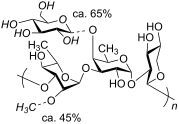
- carbohydrate and glycolipid parts [15] followed by fractionation of the released water-soluble carbohydrate portion by Sephadex G-50 Superfine size-exclusion chromatography. It was demonstrated that the OPS contained 2-O-methyl-6-deoxyhexose, L-rhamnose (Rha), D-fucose (Fuc), D-xylose (Xyl), and D-glucose (Glc


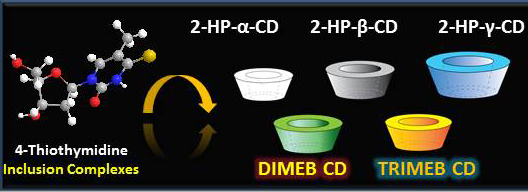
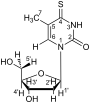
Interactions between 4-thiothymidine and water-soluble cyclodextrins: Evidence for supramolecular structures in aqueous solutions
Beilstein J. Org. Chem. 2016, 12, 549–563, doi:10.3762/bjoc.12.54



New synthetic strategies for xanthene-dye-appended cyclodextrins
Beilstein J. Org. Chem. 2016, 12, 537–548, doi:10.3762/bjoc.12.53
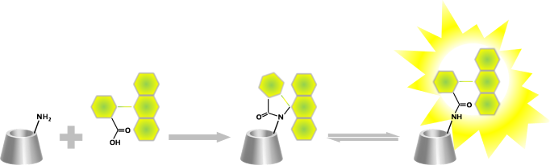
- compound possesses advantageous properties as it can be prepared in gram scale from inexpensive reagents, it is stable in air, it does not adsorb water, and the water soluble co-products formed during the coupling reaction can be easily removed from the reaction crude. All these characteristics make DMT-MM


Regiodefined synthesis of brominated hydroxyanthraquinones related to proisocrinins
Beilstein J. Org. Chem. 2016, 12, 531–536, doi:10.3762/bjoc.12.52
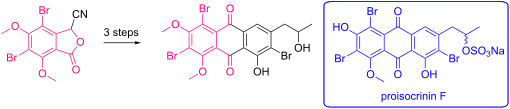
- inhibitory activity against human tumor cell lines SF-268, MCF-7, and NCI-H460, with IC50 values of 7.11, 6.64, and 7.42 μM, respectively [12]. Proisocrinins A–F (6–11), recently isolated from the stalked crinoid Proisocrinus ruberrimus (Figure 1) are the first water soluble natural anthraquinone pigments


Enabling technologies and green processes in cyclodextrin chemistry
Beilstein J. Org. Chem. 2016, 12, 278–294, doi:10.3762/bjoc.12.30
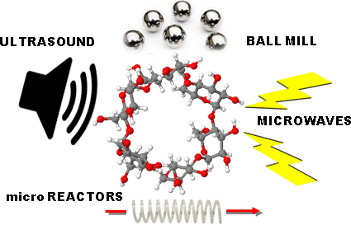
- interaction and may promote the formation of metal nanoparticle clustering. Cu(I)-based system have been used in alkyne/azide [3 + 2] cycloadditions, while Pd(II)-based catalysts have been used in C–C couplings reactions (Scheme 7) [34]. An example of water-soluble β- and γ-CD/chitosan derivatives have been
- esterification of CD was promoted by MW irradiation, while the chitosan coupling used a water-soluble carbodiimide, N-(3-dimethylaminopropyl)-N-ethylcarbodiimide hydrochloride, under US. A mild sonication at rt using HDI enabled efficient CDs reticulation in the presence of lipases (Scheme 7) whose biocatalytic
- substances and to improve the aqueous solubility of poorly water-soluble molecules. α-, β- and γ-CDs were reacted solventless with diphenyl carbonate or carbonyldiimidazole under US (up to 90 °C). These nanosponges may resolve some active ingredients drawbacks, such as instability, degradation, poor



A journey in bioinspired supramolecular chemistry: from molecular tweezers to small molecules that target myotonic dystrophy
Beilstein J. Org. Chem. 2016, 12, 125–138, doi:10.3762/bjoc.12.14
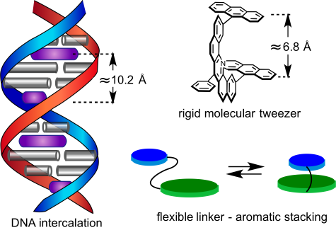
- ” chromophores obeying the NEP), were an obvious attempt to provide water solubility to a highly aromatic structure. In Roger Adams’ Laboratory, Craig Vanzyl, Greg Hamilton, and I were able to prepare molecular tweezer 4 and several substituted analogs, but none that were water soluble [9][10]. Fortunately, the
- were reported many years ago. Were the water-soluble tweezers we set out to prepare in 1985 ever made? Where does the field stand today? We found that our molecular tweezers are well preorganized for dimerization, limiting their use in water [22], whereas Klärner and colleagues discovered that their
- tweezers 19 and 20 are water-soluble but tend not to self-associate [33]. This has allowed their use in a range of biomolecular recognition applications, which appear quite promising. For example, tweezer 20, also called CLR01, has been found to bind the accessible lysine and arginine groups of proteins


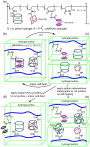
Supramolecular polymer assembly in aqueous solution arising from cyclodextrin host–guest complexation
Beilstein J. Org. Chem. 2016, 12, 50–72, doi:10.3762/bjoc.12.7
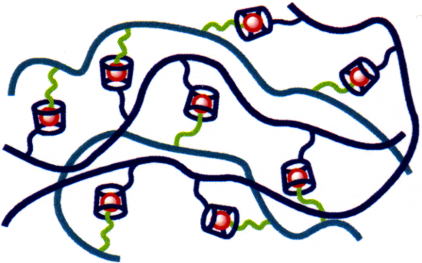
- outline of the annulus is shown for uniformity and simplicity in this review.) Review 1 Host–guest complexation between cyclodextrins and guest-substituted polymers 1.1 Modulation of hydrophobic interactions Hydrophobic interactions of water soluble polymers substituted with either terminal hydrophobic
- guests in aqueous solution may be used to greatly extend supramolecular and polymer chemistry when cyclodextrins and hydrophobes are substituted onto water-soluble polymer backbones. The host–guest complexes formed between the cyclodextrin and hydrophobic substituents represent very specific interactions
- chain such that the uncomplexed portions of the PEG chains are too short for significant interchain interaction to form a water soluble network [82][86][88]. However, when a hydrophobic adamantyl group is substituted onto one end of a low molecular weight PEG chain to form amphiphilic AD-PEG, it is