


Search results
Search for "Click" in Full Text gives 263 result(s) in Beilstein Journal of Organic Chemistry. Showing first 200.
Dinuclear thiazolylidene copper complex as highly active catalyst for azid–alkyne cycloadditions
Beilstein J. Org. Chem. 2016, 12, 1566–1572, doi:10.3762/bjoc.12.151
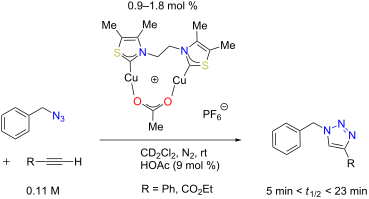
- cycloaddition (CuAAC) “click” reactions. The ancillary ligand comprises two 4,5-dimethyl-1,3-thiazol-2-ylidene units and an ethylene linker. The three-step preparation of the complex from commercially available starting compounds is more straightforward and cost-efficient than that of the previously described
- -heterocyclic carbene, linker, sacrificial ligand, and counter ion. Keywords: catalysis; click; copper; CuAAC; N-heterocyclic carbene; thiazole; Introduction The copper-catalyzed azide–alkyne cycloaddition (CuAAC) is one of the most important “click” reactions for the facile covalent linking of two molecules
- ). Disfavored mononuclear pathway and favored dinuclear pathway in the CuAAC click reaction, according to the mechanistic proposal of reference [37]. R, R’ = alkyl, aryl, silyl, carbonyl groups; L = NHC; L’ = NHC or solvent; L’’ = solvent, acetylide, carboxylate, halide. Synthesis of dinuclear copper complex 2


Beta-hydroxyphosphonate ribonucleoside analogues derived from 4-substituted-1,2,3-triazoles as IMP/GMP mimics: synthesis and biological evaluation
Beilstein J. Org. Chem. 2016, 12, 1476–1486, doi:10.3762/bjoc.12.144
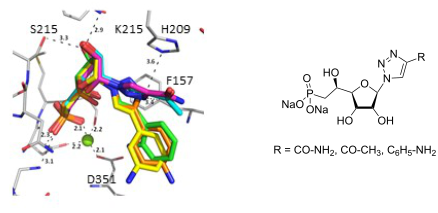
- ]. The inherent flexibility of the corresponding nucleobase-mimics allows to accommodate steric and electronic clashes encountered in protein binding sites and to interact with other amino acids. Another type of fleximers, obtained by a click chemistry approach, was developed by R. H. E. Hudson to obtain
- “click-fleximer” as expanded nucleobase mimicking the purine [14]. “Click-fleximer” nucleoside analogues are easily accessible derivatives using copper-catalysed alkyne–azide cycloaddition (CuAAC) and this synthetic methodology allows generating a small library of derivatives depending on the nature of
- sugar, and finally with Met53 and Lys292 for the phosphonate group, within the IMP-nucleotide binding site of cN-II. Experimental General procedure A for click reaction: The azido-sugar 2 (1 equiv) was dissolved in dry THF (45 mL/mmol) and the required alkyne derivative (5.4 equiv


From N-vinylpyrrolidone anions to modified paraffin-like oligomers via double alkylation with 1,8-dibromooctane: access to covalent networks and oligomeric amines for dye attachment
Beilstein J. Org. Chem. 2016, 12, 1395–1400, doi:10.3762/bjoc.12.133

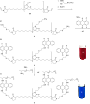
- paraffin-like oligomeric chains bearing polymerizable vinyl moieties. These oligomers were radically crosslinked in bulk with N-VP as co-monomer yielding swellable polymer disks. The vinylic side groups of the N-VP oligomers allow thiol–ene click reactions with 2-aminoethanethiol hydrochloride to obtain
- poly(ethylene glycol) side chains. Keywords: double alkylation; modified N-vinylpyrrolidone; oligomeric anthraquinone dye; paraffin-like oligomer; radical thiol-ene click reaction; Introduction Poly(N-vinylpyrrolidone) (PVP) is established in daily life due to its high water solubility and
- access to further potential applications of the corresponding polymers [14][15][16]. Thereby, the electron-rich double bond of N-VP is stable towards nucleophilic attack of the resulting carbanion intermediates. Some alkylated N-VP-based monomers can be used as agents in click chemistry [17] to obtain



Towards potential nanoparticle contrast agents: Synthesis of new functionalized PEG bisphosphonates
Beilstein J. Org. Chem. 2016, 12, 1366–1371, doi:10.3762/bjoc.12.130

- amino functional groups. The azido products will allow us to perform click chemistry to introduce various functionalities. Moreover, the amino derivatives will be easily obtained by reducing the azido group. As previously mentioned, the first step was a selective mono-activation of PEG using para


Application of Cu(I)-catalyzed azide–alkyne cycloaddition for the design and synthesis of sequence specific probes targeting double-stranded DNA
Beilstein J. Org. Chem. 2016, 12, 1348–1360, doi:10.3762/bjoc.12.128
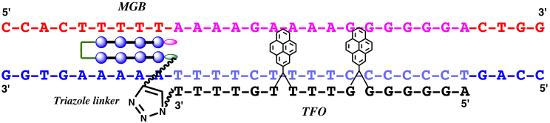
- helices by TFO-MGB conjugates was evaluated by gel-shift experiments. The presence of MGB in these conjugates did not affect the binding parameters (affinity and triplex stability) of the parent TFOs. Keywords: binding affinity; click chemistry; Cu(I)-catalyzed azide–alkyne cycloaddition; pyrrole
- of 1,2,3-triazoles can connect several components in one molecule [25][26]. CuAAC belongs to the class of chemical processes called “click-chemistry” and it is also a biorthogonal reaction because functional groups of natural biopolymers are not affected and do not participate in chemical
- . demonstrated the fluorescent labeling of proteins directly in living cells by copper-free "click chemistry" [29]. Alkyne or azide groups can be inserted into both TFO and MGB using enzymatic or chemical methods during matrix or solid-phase synthesis [2][30][31] or post-synthetically using described conjugation


Stimuli-responsive HBPS-g-PDMAEMA and its application as nanocarrier in loading hydrophobic molecules
Beilstein J. Org. Chem. 2016, 12, 939–949, doi:10.3762/bjoc.12.92

- hyperbranched polystyrene. Chen reported a star-like polymer HBPS-g-PNIPAM in which HBPS was prepared by click chemistry to load small hydrophobic molecules [25]. However, its preparation needs specially designed monomers, the preparation of which is tedious and time-comsuming. Hyperbranched polystyrene (HBPS




Superstructures with cyclodextrins: chemistry and applications III
Beilstein J. Org. Chem. 2016, 12, 937–938, doi:10.3762/bjoc.12.91
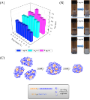
- has been achieved in the synthesis of CD polyrotaxanes. The one-pot and one-step polyrotaxane synthesis of β-CDs was performed in aqueous solution by employing a click reaction [7] as well as by radical copolymerization [8]. Slide-ring gels, synthesized by the group of K. Ito through the crosslinking
From steroids to aqueous supramolecular chemistry: an autobiographical career review
Beilstein J. Org. Chem. 2016, 12, 684–701, doi:10.3762/bjoc.12.69
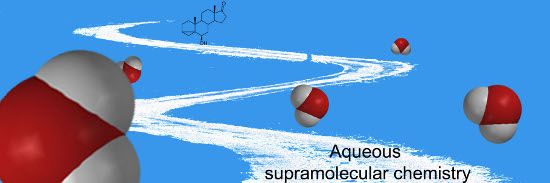
- using “Click” chemistry [37]. Forming stable complexes for a broad range of guests, the capsules formed by octa-acid are ideal nano-scale (yocto-liter) reaction vessels. Our first foray into this topic relied on collaboration with Vaidhyanathan Ramamurthy, and examined a wide range of photophysics, and




Creating molecular macrocycles for anion recognition
Beilstein J. Org. Chem. 2016, 12, 611–627, doi:10.3762/bjoc.12.60
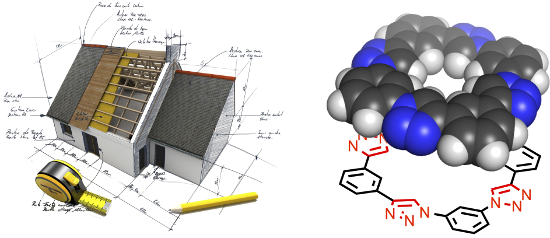
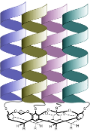
- activity surrounding 1,2,3-triazoles made using click chemistry; and the same triazoles are responsible for anion capture. Mistakes made and lessons learnt in anion recognition provide deeper understanding that, together with theory, now provides for computer-aided receptor design. The lessons are acted
- philosophy for synthetic design that was derived from Roald Hoffmann’s idea of chemistry being “the same and not the same” [9]. At around this time (2006), click chemistry [10] (Figure 3) had caught my attention for its prevalence but I did not know why it was being used so much. All I could venture was that
- it was an old reaction, the Huisgen cycloaddition, made good (regioselective) with the aid of copper catalysis. Taking that idea on face value, I reasoned that click chemistry was a new and extremely effective way to make 1,2,3-triazoles. It is not often that either new or newly refined reactions






Enabling technologies and green processes in cyclodextrin chemistry
Beilstein J. Org. Chem. 2016, 12, 278–294, doi:10.3762/bjoc.12.30
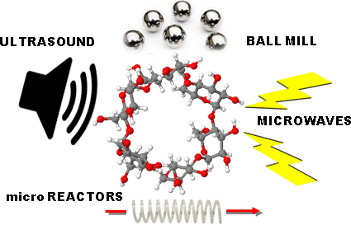
- friendly technique that is well suited to the selective chemical modification of CDs from native α-, β- and γ-CD. The use of this method in heterogeneous phase reactions, such as reductions and “click reactions” [14], is well known, as is its use in full CD derivatization in combination with MW irradiation
- -assisted click cluster synthesis. An example of the MW-promoted ‘cooperative’ click reaction of azido-CDs has recently been reported and offers useful synthetic insights into a specific labelling strategy [54]. The aforementioned reaction afforded a new series of antimicrobial γ-CD derivatives that
- strongly disrupt bacterial membranes, and a series of persubstituted γ-CD derivatives bearing polyamino groups (77% yield) [55]. MW-promoted Cu-catalyzed click reaction for the preparation of second generation CD derivatives and hybrid structures The MW-promoted CuAAC between CD monoazides and acetylenic



Recent advances in metathesis-derived polymers containing transition metals in the side chain
Beilstein J. Org. Chem. 2015, 11, 2747–2762, doi:10.3762/bjoc.11.296
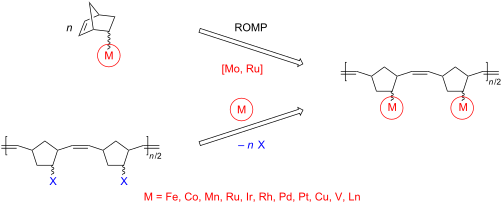
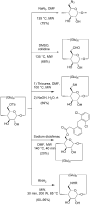
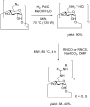
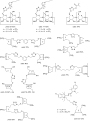
- triazolyl unit was first attached to the η4-cyclopentadiene CpCo(I) complex by click reaction of the corresponding alkyne precursor and then the triazolyl-Co scaffold was incorporated into the norbornene monomer 9 by conventional esterification. It is important to note that the cyclopentadienyl-cobalt-1,3
- and tetraethylene glycol groups. Synthesis of redox-robust triazolylbiferrocenyl polymers 4. Synthesis of cobaltocenium-containing polymers by ROMP. Cobaltocenium-appending copolymers by the ROMP approach (X = PF6, Y = BPh4 or Cl). Cobalt-containing polymers by click and ROMP approach. Synthesis of


Selectively fluorinated cyclohexane building blocks: Derivatives of carbonylated all-cis-3-phenyl-1,2,4,5-tetrafluorocyclohexane
Beilstein J. Org. Chem. 2015, 11, 2671–2676, doi:10.3762/bjoc.11.287

- illustrated in Scheme 4 [17]. Reduction of benzyl azide 21 to generate amine 27 as its hydrochloride salt was achieved by a Staudinger reduction in good yield [18]. Azide 21 was also amenable to a ‘click’ reaction, in this case with the acetylenic protected amino acid 24 [19]. This gave the 1,2,3-triazol


Exploring architectures displaying multimeric presentations of a trihydroxypiperidine iminosugar
Beilstein J. Org. Chem. 2015, 11, 2631–2640, doi:10.3762/bjoc.11.282

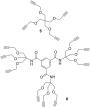
- , Universidad de Sevilla, c/ Prof. García González 1, E-41012, Sevilla, Spain 10.3762/bjoc.11.282 Abstract The synthesis of new multivalent architectures based on a trihydroxypiperidine α-fucosidase inhibitor is reported herein. Tetravalent and nonavalent dendrimers were obtained by means of the click
- ). The low yield observed for the click reaction of the deprotected azido derivative 10 can be ascribed to the tricky purification of 11 that was recovered from silica gel only by eluting with 33% NH4OH due to its high basicity (see Experimental section). For this reason we decided to change the strategy
- by performing the click reaction on the protected azido derivative 4, analogously to what reported with the tetravalent scaffold 5. Reaction of 4 (9 equiv) with the nonavalent alkyne scaffold 6 gave compound 12 in excellent 92% yield (Scheme 5). After treatment in acidic methanol at room temperature




Synthesis of bi- and bis-1,2,3-triazoles by copper-catalyzed Huisgen cycloaddition: A family of valuable products by click chemistry
Beilstein J. Org. Chem. 2015, 11, 2557–2576, doi:10.3762/bjoc.11.276
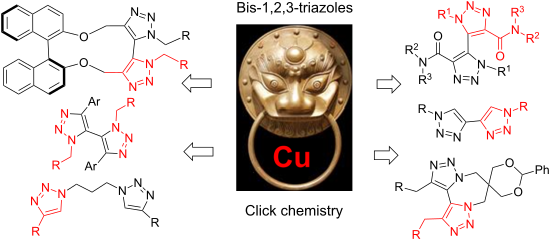
- Selective Oxidation, Lanzhou Institute of Chemical Physics, Chinese Academy of Sciences, Lanzhou, P. R. China 10.3762/bjoc.11.276 Abstract The Cu(I)-catalyzed azide-alkyne cycloaddition reaction, also known as click chemistry, has become a useful tool for the facile formation of 1,2,3-triazoles
- . Specifically, the utility of this reaction has been demonstrated by the synthesis of structurally diverse bi- and bis-1,2,3-triazoles. The present review focuses on the synthesis of such bi- and bistriazoles and the importance of using copper-promoted click chemistry (CuAAC) for such transformations. In
- addition, the application of bitriazoles and the related CuAAAC reaction in different fields, including medicinal chemistry, coordination chemistry, biochemistry, and supramolecular chemistry, have been highlighted. Keywords: bistriazoles; click chemistry; cycloaddition; homogeneous catalysis; oxidative




Copper catalysis in organic synthesis
Beilstein J. Org. Chem. 2015, 11, 2252–2253, doi:10.3762/bjoc.11.244
- . Some of the most highly cited papers of all time on this topic are reviews on conjugate addition, cross-coupling, and [3 + 2] “Click” reaction applied to bioconjugation. The growth in copper-catalyzed organic reactions may be driven by a couple of factors. First, copper chemistry is incredibly diverse
- field of copper-catalysis from 7 countries make up this Thematic Series, “Copper catalysis in organic synthesis”. Contributions include authoritative reviews on the latest developments in copper-catalyzed Click applications, C–N cross-coupling, C–H functionalization, trifluoromethylations, asymmetric
- synthesis, amide bond formation and photochemical Click reaction development. I am grateful to the contributors and the reviewers who participated in the production of this Thematic Series. It is clear from the impact copper catalysis has had on organic synthesis that copper should be considered a first
Easy access to heterobimetallic complexes for medical imaging applications via microwave-enhanced cycloaddition
Beilstein J. Org. Chem. 2015, 11, 2202–2208, doi:10.3762/bjoc.11.239

- Nicolas Desbois Sandrine Pacquelet Adrien Dubois Clement Michelin Claude P. Gros Université de Bourgogne Franche-Comté, ICMUB (UMR CNRS 6302), 9 Avenue Alain Savary, BP 47870, 21078 Dijon Cedex, France 10.3762/bjoc.11.239 Abstract The Cu(I)-catalysed Huisgen cycloaddition, known as “click
- are promising contrast agents (CA) in MRI. Keywords: click chemistry; corrole; DOTA; microwave; NOTA; porphyrin; Introduction Magnetic resonance imaging (MRI), positron emission tomography (PET) or single photon emission computed tomography (SPECT) are actually the most commonly used imaging
- and alkyne derivatives to further interconnect by microwave-assisted click reaction. Azidocorroles/porphyrins Azidocorrole 1 [9] was obtained by the condensation of the corresponding meso-mesityl-substituted dipyrromethane with 4-azidobenzaldehyde in the presence of a catalytic amount of


Effective ascorbate-free and photolatent click reactions in water using a photoreducible copper(II)-ethylenediamine precatalyst
Beilstein J. Org. Chem. 2015, 11, 1950–1959, doi:10.3762/bjoc.11.211
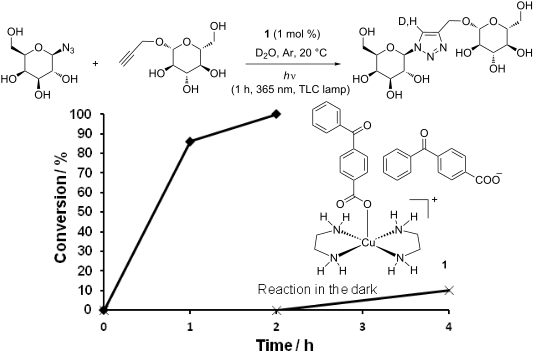
- , F-38000 Grenoble, France Univ. Bordeaux, IECB, UMS 3033/US 001, 2 rue Escarpit, 33607 Pessac, France CNRS, IECB, UMS 3033, 33600 Pessac, France INSERM, IECB, US 001, 33600 Pessac, France 10.3762/bjoc.11.211 Abstract The search for copper catalysts able to perform effectively click reactions in
- photoreduced in water when alkynes were present in solution. The catalytic activity of 1 for click reactions involving a range of water-soluble alkynes and azides, in particular saccharides, was tested under various illumination conditions. Complex 1 was found to exhibit a photolatent character, the
- photogenerated copper(I) being very reactive. On irradiating aqueous reaction mixtures containing 1 mol % of 1 at 365 nm (TLC lamp) for 1 h, click reactions were shown to proceed to full conversion. Keywords: benzophenone photosensitizer; bioconjugation; click chemistry; copper; photoreduction; Introduction


Synthesis and spectroscopic properties of β-triazoloporphyrin–xanthone dyads
Beilstein J. Org. Chem. 2015, 11, 1434–1440, doi:10.3762/bjoc.11.155
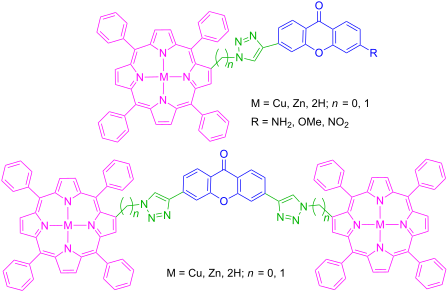
- ) were synthesized in good yields by the “click reaction” of 3,6-diethynylxanthen-9-one (11) with copper and zinc azidoporphyrins, respectively. Further, the free-base diporphyrins 12b and 13b were obtained in 81% and 84% yields, respectively after the treatment of 12a with conc. H2SO4 at 0 °C and 13a
- -diethynylxanthen-9-one. In addition, a new series of various β-triazole-linked porphyrin–xanthone conjugates and xanthone-bridged triazoloporphyrin dyads were synthesized through click chemistry in moderate to good yields. The preliminary photophysical evaluation of these π-conjugated molecules revealed a


Synthesis of alpha-tetrasubstituted triazoles by copper-catalyzed silyl deprotection/azide cycloaddition
Beilstein J. Org. Chem. 2015, 11, 1425–1433, doi:10.3762/bjoc.11.154
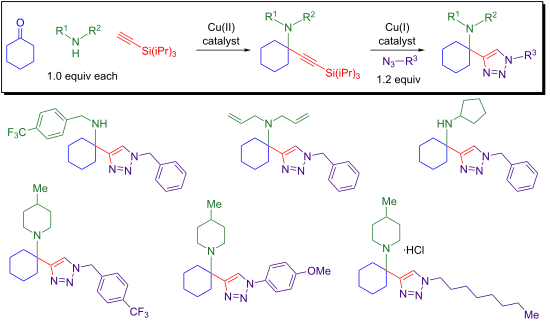
- -deprotection with azide–alkyne cycloaddition, producing hindered triazoles in 6 hours. This tandem reaction was optimal with a copper(II) triflate and sodium ascorbate (NaAsc) as a mild reductant. The outcome that copper(II) triflate provides the highest yields for the one-pot deprotection/click reaction was
- (blue). KA2 coupling followed by tandem silyl deprotection and triazole formation. Silyl deprotection/click conditions applied to tert-butylacetylene. An identical yield is observed without TBAF. High overall yield of 1,2,3-triazole fully-substituted at the 4-position. Optimization of silyl deprotection


Synthesis of γ-hydroxypropyl P-chirogenic (±)-phosphorus oxide derivatives by regioselective ring-opening of oxaphospholane 2-oxide precursors
Beilstein J. Org. Chem. 2015, 11, 1332–1339, doi:10.3762/bjoc.11.143
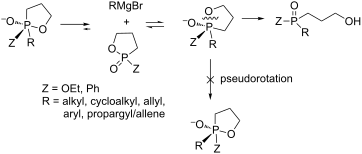
- ., after the "click" reaction) [61]. Conclusion In this work, we demonstrated the generality and the versatility of oxaphospholanes such as 4 and 5 to serve as precursors for the synthesis of γ-hydroxypropyl (±)-phosphinates and phosphine oxides, respectively, using Grignard reactions. Noteworthy is the


Selected synthetic strategies to cyclophanes
Beilstein J. Org. Chem. 2015, 11, 1274–1331, doi:10.3762/bjoc.11.142
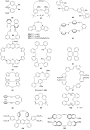
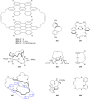
- (Scheme 51). [3 + 2] Cycloaddition (1,3-dipolar cycloaddition/click reaction): In 2010, Raghunathan and co-workers [185] have synthesized a C2-symmetric triazolophane by a copper(I)-catalyzed azide-alkyne cycloaddition, involving a click reaction. The dipropargyl fluorenyl derivative 299 was prepared from
- 308 in the presence of CuSO4 and sodium ascorbate in acetonitrile/water to deliver the desired cyclophane derivative 309 (56%, Scheme 53). Similarly, a novel BINOL-based cyclophane 310 has been synthesized via click chemistry by incorporating two triazole moieties in the macrocycle [187]. Li and co






Synthesis of novel N-cyclopentenyl-lactams using the Aubé reaction
Beilstein J. Org. Chem. 2015, 11, 1060–1067, doi:10.3762/bjoc.11.119

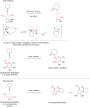
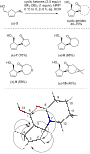
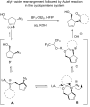
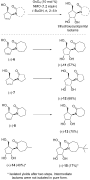
- literature and the data were compared with that reported [34]. The structure of the minor diastereomer (±)-4’ was assigned based on 2D NMR correlations. Secondly, the azido alcohol (±)-3 was subjected to a click reaction with phenylacetylene under standard conditions and the resulting two compounds, (±)-5




Quarternization of 3-azido-1-propyne oligomers obtained by copper(I)-catalyzed azide–alkyne cycloaddition polymerization
Beilstein J. Org. Chem. 2015, 11, 1037–1042, doi:10.3762/bjoc.11.116

- alkynes with a copper(I) catalyst under mild conditions even in the presence of various functional groups [1][2][3]. CuAAC is thus the most important reaction in “click chemistry” [4][5][6][7]. A number of studies have been published on CuAAC, which is applied in a wide range of fields from bio-related


Carboxylated dithiafulvenes and tetrathiafulvalene vinylogues: synthesis, electronic properties, and complexation with zinc ions
Beilstein J. Org. Chem. 2015, 11, 957–965, doi:10.3762/bjoc.11.107
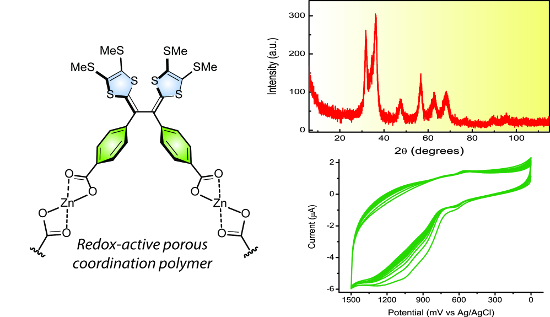
- and Cu-catalysed alkyne–azide cycloaddition (i.e., click) reactions [22][23][24][25][26]. In this work, we continued to explore the class of carboxylated diphenyl-TTFVs, in view of the synthetic versatility of the carboxyl group towards various commonly used linkage groups (e.g., amides, esters). The





DNA display of glycoconjugates to emulate oligomeric interactions of glycans
Beilstein J. Org. Chem. 2015, 11, 707–719, doi:10.3762/bjoc.11.81
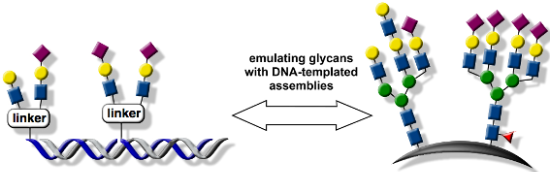
- alkyne by oxidative amidation using carbon tetrachloride with propargylamine. The microwave-assisted click-conjugation was performed on a solid phase upon completion of the DNA synthesis (Scheme 4). Lönnberg and co-workers prepared a thymidine modified at the 4’-position with an azidomethyl group to





