


Search results
Search for "catalytic activity" in Full Text gives 327 result(s) in Beilstein Journal of Organic Chemistry. Showing first 200.
Addition of dithi(ol)anylium tetrafluoroborates to α,β-unsaturated ketones
Beilstein J. Org. Chem. 2018, 14, 515–522, doi:10.3762/bjoc.14.37

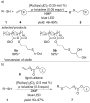
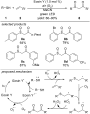
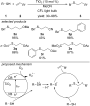
- completion within 3 hours if 10% of HBF4 remains in the reaction mixture (see table for comparative experiments in the Supporting Information File 1). This result indicates the catalytic activity of HBF4 in the reaction. The same product 4c can be obtained if an isolated ketene dithi(ol)ane is subjected to


Carbohydrate inhibitors of cholera toxin
Beilstein J. Org. Chem. 2018, 14, 484–498, doi:10.3762/bjoc.14.34
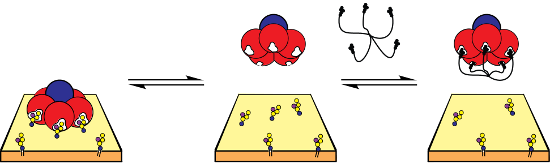
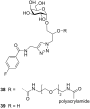
- pentamer of B-subunits [5]. The catalytic activity of the toxins is due to the A-subunit, while the B-subunit enables binding of the complex to the cell surface and its delivery into the target cells, hence the complete AB5 holotoxin is required for their toxic effects. Because of the difference in the
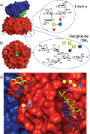
- sequence homology and catalytic activity, the classes of AB5 toxins are subdivided into three families (Figure 3): the cholera toxin (CT) family, the shiga toxin (ST) family and the pertussis toxin (PT) family [6]. The CT family contains CT, and heat-labile toxins LT-I and LT-II [7][8]. The ST family







Stimuli-responsive oligonucleotides in prodrug-based approaches for gene silencing
Beilstein J. Org. Chem. 2018, 14, 436–469, doi:10.3762/bjoc.14.32
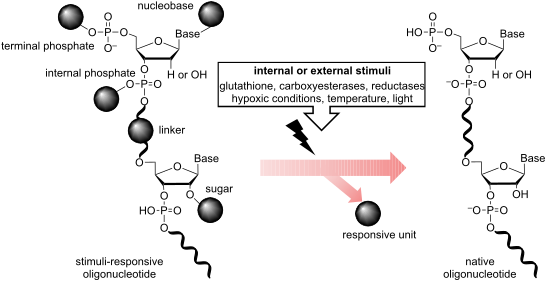
- ][75][76], and occasionally for RNA-cleaving activity with DNAzymes [77]. It is expected that phosphate-modified siRNAs sterically block the interaction of siRNA with the RISC complex and that the process is turned on upon photoirradiation [72]. Considering DNAzymes, their catalytic activity is


Photocatalytic formation of carbon–sulfur bonds
Beilstein J. Org. Chem. 2018, 14, 54–83, doi:10.3762/bjoc.14.4
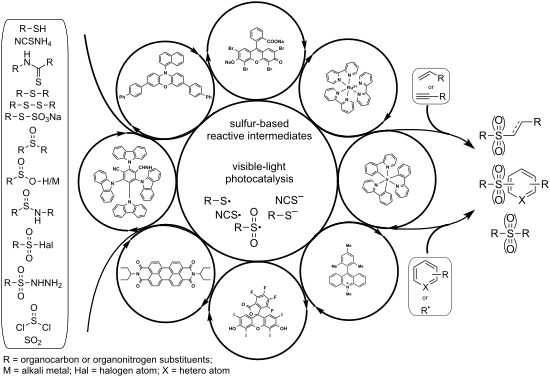
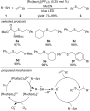
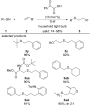
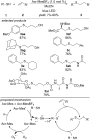
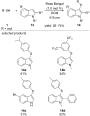
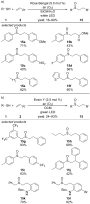
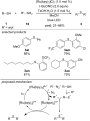
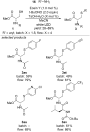
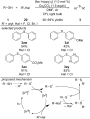
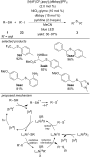
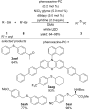
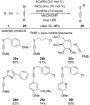
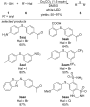
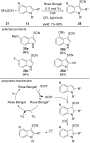
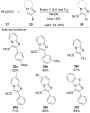
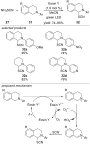
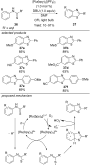
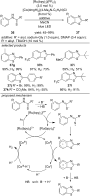
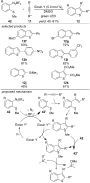
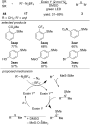
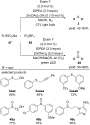
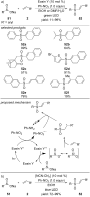
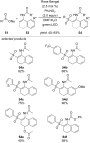
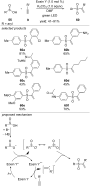
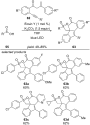
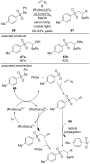
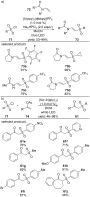
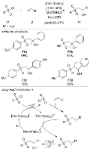
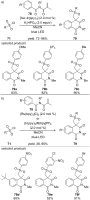
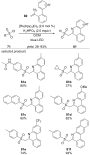
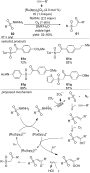
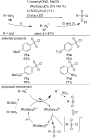
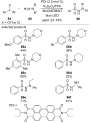
- (Scheme 42b) [79]. The catalyst was recycled and reused after centrifugation and washing with ethanol. High catalytic activity was preserved for at least 3 cycles. Very recently, the group of Zhang published a photocatalyzed procedure for the preparation of β-acetylaminoacrylsulfones from the respective





























Synthetic mRNA capping
Beilstein J. Org. Chem. 2017, 13, 2819–2832, doi:10.3762/bjoc.13.274
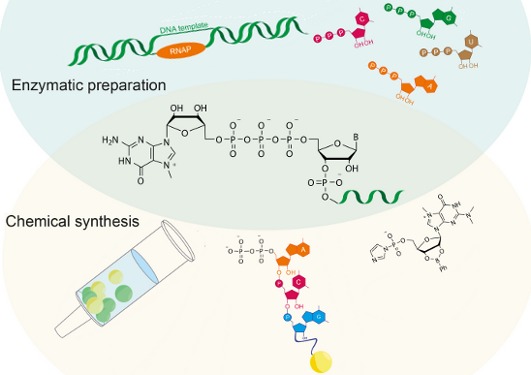
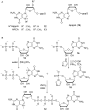
- -terminal half and the methyltransferase in the C-terminal half of the large D1 protein, whereas the small D12 protein has no catalytic activity but activates D1 [36][37][38]. Originally, the RNA capping with the Vaccinia capping apparatus was reported to be inefficient [35][37][39][40]. To date, the enzyme



Sulfation and amidinohydrolysis in the biosynthesis of giant linear polyenes
Beilstein J. Org. Chem. 2017, 13, 2408–2415, doi:10.3762/bjoc.13.238
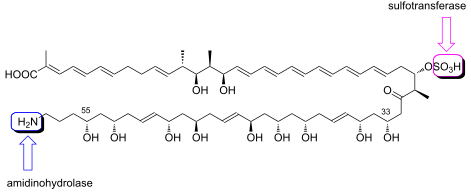
- of the assembly-line PKS in both clethramycin and mediomycin biosynthesis. The sulfotransferases from the cle and med clusters appear essentially identical in their catalytic activity. The co-location of the slf gene with the gigantic 27-extension module PKS of clethramycin or mediomycin suggested


Is the tungsten(IV) complex (NEt4)2[WO(mnt)2] a functional analogue of acetylene hydratase?
Beilstein J. Org. Chem. 2017, 13, 2332–2339, doi:10.3762/bjoc.13.230
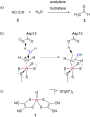
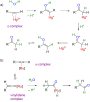
- , ionization is brought about without an added reagent, and catalytic activity towards Markovnikov product 5 revealed, even if the conversion is low (Table 1, entry 1). A cyclopentadienylruthenium(II) catalyst with the ambifunctional steering ligand ISIPHOS (2-(diphenylphosphino)-6-(2,4,6-triisopropylphenyl
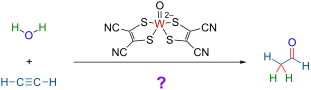
- catalytic activity by increasing conversion to higher levels through increasing the catalyst loading [36]. Tests of complex 1 with purified 4 in acetone–water or acetonitrile–water failed to show catalytic activity (Table 1, entries 6 and 7). The recovery of 4 was excellent (97–98%) and the side products
- 3 cannot be excluded. Continued interest in functional models of acetylene hydratase [14][15][16][42] and a theoretical study on the mechanisms of acetylene hydration by complex 1 [17] have motivated us to scrutinize the claimed biomimetic catalytic activity by performing the hydration experiment



Transition-metal-free synthesis of 3-sulfenylated chromones via KIO3-catalyzed radical C(sp2)–H sulfenylation
Beilstein J. Org. Chem. 2017, 13, 2017–2022, doi:10.3762/bjoc.13.199

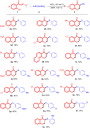
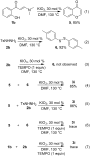
- as KI, I2 or KIO3 could all catalyze the domino reaction to provide product 3a, wherein KIO3 displayed the highest catalytic activity (entries 2–4, Table 1). On the other hand, in the reactions performed in different media, including DMSO, ethyl lactate (EL), EtOH, MeCN, 1,4-dioxane and toluene, DMF



New bio-nanocomposites based on iron oxides and polysaccharides applied to oxidation and alkylation reactions
Beilstein J. Org. Chem. 2017, 13, 1982–1993, doi:10.3762/bjoc.13.194
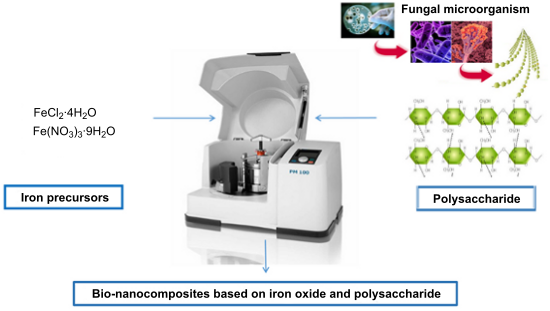
- potential from an environmental point-of-view since it is able to reduce solvent issues in chemical syntheses. The catalytic activity of the obtained nanocatalysts was investigated in both the oxidation of benzyl alcohol to benzaldehyde and in the alkylation of toluene with benzyl chloride. The microwave
- oxide–iron oxide–polysaccharide 4 (TiO2-Fe2O3-PS4) nanocomposites. The materials were successfully obtained using the proposed solvent-free methodology, which is depicted in Figure 1. The materials were characterized by the techniques presented below. The catalytic activity of these systems has been
- material. Such values make this a material with attractive feature for magnetic separation (Table 4) [40]. Catalytic activity The catalytic activity of these materials has been investigated in two reactions: 1) the oxidation of benzyl alcohol to benzaldehyde and the 2) alkylation of toluene with benzyl


Mechanochemical synthesis of thioureas, ureas and guanidines
Beilstein J. Org. Chem. 2017, 13, 1828–1849, doi:10.3762/bjoc.13.178
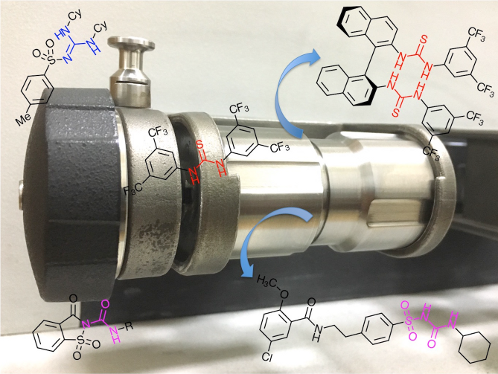
- next screened as catalysts in Morita–Baylis–Hillman reaction, and their performance matched the previously published catalytic activity. An analogous click-type reaction between 4-nitrophenyl isothiocyanate and trans-1,2-diaminocyclohexane quantitatively afforded enantiomeric (1R,2R)-10 and (1S,2S)-10






Ni nanoparticles on RGO as reusable heterogeneous catalyst: effect of Ni particle size and intermediate composite structures in C–S cross-coupling reaction
Beilstein J. Org. Chem. 2017, 13, 1796–1806, doi:10.3762/bjoc.13.174

- catalyst. It is observed that the uniformly dispersed Ni NPs supported on RGO could exhibit excellent catalytic activity in C–S cross-coupling reactions and the catalytic application is generalized with diverse coupling partners. Although the electron-rich planar RGO surface helps in stabilizing the
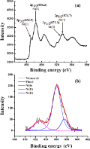
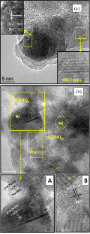
- times for the same reaction examined consecutively without any significant drop in catalytic activity. Figure 1 shows the results of consecutive recycle runs. Characterization of the recovered catalyst To establish the reaction mechanism, we characterized the recovered catalyst by Raman, XRD, XPS and




Selective enzymatic esterification of lignin model compounds in the ball mill
Beilstein J. Org. Chem. 2017, 13, 1788–1795, doi:10.3762/bjoc.13.173
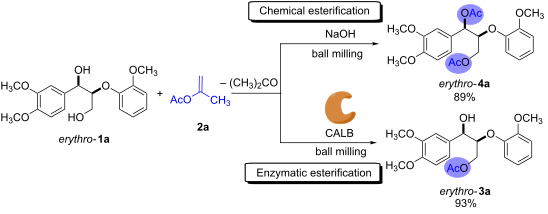
- milling, reaction time and additives was also investigated (Table S1 in Supporting Information File 1). In addition to this, the catalytic activity of a number of other lipases was studied (Table 1). Amongst the commercially available lipases, CALA (lipase A from Candida antarctica, immobilized on
- β-nitro alcohols [32], and proved to be stable under ball milling conditions [10] exhibited lower catalytic activity than CALB (Table 1, entry 3). However, in both cases the alternative biocatalysts also afforded the monoacetylated dilignol derivative erythro-3a. Finally, lipase A showed no
- , milling frequency, presence of additives and different acyl donors were studied in detail. Amongst the various biocatalysts tested, the lipase CALB proved superior in terms of catalytic activity and stability in the ball mill. The high catalytic activity of the enzyme facilitated the monoacetylation of β



18-Hydroxydolabella-3,7-diene synthase – a diterpene synthase from Chitinophaga pinensis
Beilstein J. Org. Chem. 2017, 13, 1770–1780, doi:10.3762/bjoc.13.171
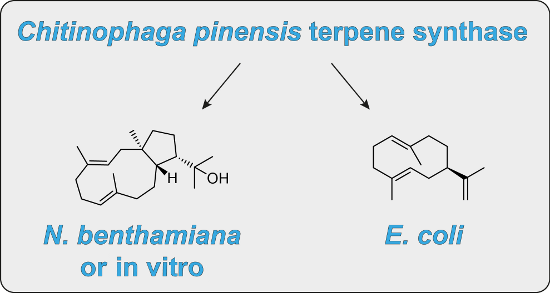
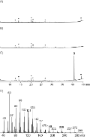
- test the catalytic activity of HdS in planta, its corresponding gene was transiently expressed in N. benthamiana. Since we have shown before that the mitochondria are a suitable subcellular compartment for the heterologous production of terpenes [26], and it is known that one of the multiple GGPP




An efficient Pd–NHC catalyst system in situ generated from Na2PdCl4 and PEG-functionalized imidazolium salts for Mizoroki–Heck reactions in water
Beilstein J. Org. Chem. 2017, 13, 1735–1744, doi:10.3762/bjoc.13.168

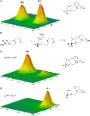
- materials via a simple method. Their corresponding water soluble Pd–NHC catalysts, in situ generated from the imidazolium salts L1–L3 and Na2PdCl4 in water, showed impressive catalytic activity for aqueous Mizoroki–Heck reactions. The kinetic study revealed that the Pd catalyst derived from the imidazolium
- salt L1, bearing a pyridine-2-methyl substituent at the N3 atom of the imidazole ring, showed the best catalytic activity. Under the optimal conditions, a wide range of substituted alkenes were achieved in good to excellent yields from various aryl bromides and alkenes with the catalyst TON of up to
- presence of 0.01 mol % of Na2PdCl4/L and 2.0 equivalents of NaOEt at 100 °C in water and all the three reactions preceded for 24 h. As shown in Figure 2, the reaction using Na2PdCl4/L1 as the catalyst had a relatively shorter induction period and a higher catalytic activity than those of Na2PdCl4/L2 and


Mechanochemical enzymatic resolution of N-benzylated-β3-amino esters
Beilstein J. Org. Chem. 2017, 13, 1728–1734, doi:10.3762/bjoc.13.167

- significant catalytic activity (yield = 38%). Finally, to test the scalability of the process, a set of reactions was carried out increasing the amount of substrate rac-1a under the optimized reaction parameters. (Table 4). Relative to the results obtained with 1 equivalent of rac-1a in the presence of LAG


An effective Pd nanocatalyst in aqueous media: stilbene synthesis by Mizoroki–Heck coupling reaction under microwave irradiation
Beilstein J. Org. Chem. 2017, 13, 1717–1727, doi:10.3762/bjoc.13.166

- relatively easy to prepare and can be obtained in different size and morphology by essentially controlling the synthetic method and experimental conditions. As a result of the excellent catalytic activity of NPs, they can be used under mild and, in some cases, in environmental sustainable conditions. In
- H2PdCl4 in the presence of poly(N-vinylpirrolidone) (PVP) [46][47]. These Pd NPs exhibited highly efficient catalytic activity in Suzuki–Miyaura coupling reactions [46][47] and nitroaromatic hydrogenations [48] in aqueous medium. Outstanding performance of these PVP-Pd NPs in the coupling reaction was
- )). In a first approach, time optimization was performed by using K2CO3 as base, at 130 °C by MW irradiation (entries 1–3, Table 1). The highest catalytic activity of PVP-Pd NPs was obtained after 10 minutes, when the yield of stilbene 3 achieved 100% (entry 3, Table 1). Reducing the catalyst loading


Encaging palladium(0) in layered double hydroxide: A sustainable catalyst for solvent-free and ligand-free Heck reaction in a ball mill
Beilstein J. Org. Chem. 2017, 13, 1661–1668, doi:10.3762/bjoc.13.160
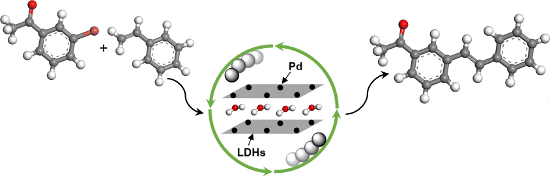
- easily recovered and reused for at least five times without significant loss of catalytic activity. Keywords: ball milling; Heck reaction; layer double hydroxides; solvent-free; supported Pd catalyst; Introduction High-speed ball milling (HSBM)-assisted transition metal-catalyzed cross-coupling reactions
- catalytic activity in coupling reactions than that on acidic-supported materials. In the present work, co-precipitation was used for fabricating MgAl-LDHs with nitrate anions, followed by introducing disodium tetrachloropalladate (Na2PdCl4) into the LDH interlayer by the ion exchange method. The prepared
- at least five times efficiently without significant loss in catalytic activity, resulting in almost no change in the yields. Hence, the reusability of Pd/MgAl-LDHs is one of the major advantages for Heck reactions under HSBM conditions. Conclusion In summary, a supported and recyclable Pd catalyst (Pd


Chemical systems, chemical contiguity and the emergence of life
Beilstein J. Org. Chem. 2017, 13, 1551–1563, doi:10.3762/bjoc.13.155
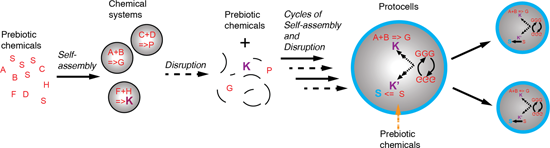
- characteristics of various biomolecules, e.g., the catalytic activity of RNAs and their evolution potential [9][10][11], as well as processes that were essential for their syntheses, such as Fischer–Tropsch-like reactions [12], non-enzymatic RNA [13] or peptide polymerization [14]. Moreover, it has also allowed
- of RNAs for catalytic activity, which often requires the presence of high ion concentrations that are disruptive for the formation of primitive membrane models. Membranes composed of putatively prebiotic amphiphiles, such as single hydrocarbon chain species [20][21] may have been exemplars of such
- permeability of simple membranes was sufficient to permit an internalized synthetic or catalytic activity albeit at low yield and rate levels. However, both highlighted a different aspect of the compartmentalization: The use of aqueous metal ions could jeopardize the integrity of the compartment [20], and the


Mechanochemical synthesis of graphene oxide-supported transition metal catalysts for the oxidation of isoeugenol to vanillin
Beilstein J. Org. Chem. 2017, 13, 1439–1445, doi:10.3762/bjoc.13.141

- decrease in the catalytic activity due to material deactivation. Conclusion A simple mechanochemical ball milling process was used to prepare highly active transition-metal-supported reduced graphene oxide catalysts. The catalysts were used to produce the highly useful aromatic compound vanillin, by
- (JEOL) and Phillips Analytical FEI Tecnai 30 microscopes. SEM micrographs were recorded on a JEOL-SEM JSM-6610 LV scanning electron microscope in backscattered electron model at 3/15 kV. DRIFT spectra were recorded on a PIKE Technologies MB 3000 ABB at room temperature. Catalytic activity tests In a


Synthesis of novel 13α-estrone derivatives by Sonogashira coupling as potential 17β-HSD1 inhibitors
Beilstein J. Org. Chem. 2017, 13, 1303–1309, doi:10.3762/bjoc.13.126

- semihydrogenation of different arylacetylenes using Pd(OAc)2 or Pd(PPh3)2Cl2 as the catalyst and DMF/KOH as a hydrogen source, under conventional heating [30]. The first catalyst afforded cis-alkenes in high yields with excellent chemo- and stereoselectivity. The latter catalyst displayed lower catalytic activity


Sugar-based micro/mesoporous hypercross-linked polymers with in situ embedded silver nanoparticles for catalytic reduction
Beilstein J. Org. Chem. 2017, 13, 1212–1221, doi:10.3762/bjoc.13.120
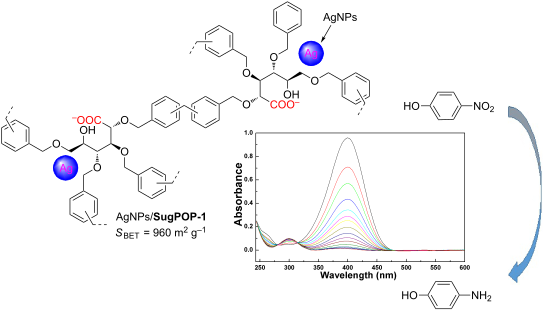
- . As the prepared porous polymer SugPOP-1 is based on hemiacetal glucose, Ag nanoparticles (AgNPs) can be successfully incorporated into the polymer by an in situ chemical reduction of freshly prepared Tollens’ reagent. The obtained AgNPs/SugPOP-1 composite demonstrates good catalytic activity in the
- good catalytic activity, which takes on important implications for the conversion of nitro compound precursors or intermediates to the corresponding amino or amine compounds in the preparation of pharmaceuticals and agrochemicals [42][43]. 4-Nitrophenol (4-NP) can cause water pollution, which has
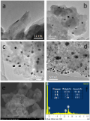
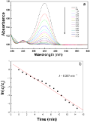
- aroused widespread concern, while its reduced product, 4-aminophenol (4-AP), is an industrial intermediate for uses such as anticorrosion lubricants and analgesic and antipyretic drugs [44]. The catalytic activity of the AgNPs/SugPOP-1 composite was tested by the reduction of 4-NP at room temperature with




Towards open-ended evolution in self-replicating molecular systems
Beilstein J. Org. Chem. 2017, 13, 1189–1203, doi:10.3762/bjoc.13.118
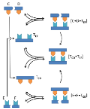
- was found from in vitro evolution experiments that the introduction of G∙U base pairs close to the site of ligation leads to enhanced cross-catalytic activity. Figure 8b shows the sequence and secondary structure of the A∙B∙E’ complex. The site of ligation is indicated by the curved arrow and the G∙U
- pairs that are depicted in a solid box induce a wobble in the sequence that results in the enhanced catalytic activity. When this wobble is installed in both enzymes of the cross-catalytic set, exponential growth of the system can be achieved over multiple cycles. With an exponential replicator in hand
- E1 to E12 and are shown in Figure 8c. It is important to note that mutations between enzymes are such that the stability of the ligase duplex due to base pairing is not altered, but only the catalytic activity and replication rate are affected. All these enzymes were shown to cross-replicate, with




From chemical metabolism to life: the origin of the genetic coding process
Beilstein J. Org. Chem. 2017, 13, 1119–1135, doi:10.3762/bjoc.13.111
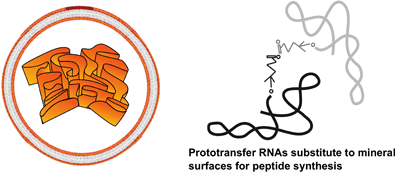
- ” templates of RNA sequences matching the peptide sequence via a coding process, asked for the synthesis of their exact copies, i.e., replication. This operation evolved from natural RNA catalytic activity [62] and progressively improved its autocatalytic reproduction by using increasingly more accurate



Continuous-flow processes for the catalytic partial hydrogenation reaction of alkynes
Beilstein J. Org. Chem. 2017, 13, 734–754, doi:10.3762/bjoc.13.73
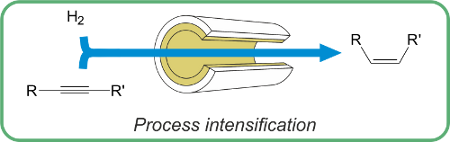
- adsorption on the atomically dispersed Pd sites. Electrostatic stabilization of Pd atoms was ascribed to a strong interaction with the nitrogen-coordinating species on the basis of DFT calculations. Effective stabilization also prevented site aggregation, resulting in pretty constant catalytic activity over
- (13 s), that suggests a high contribution to catalytic activity by easy accessible PdNP. No catalyst efficiency decay was observed over 6 h time-on-stream. Worse performances were shown by other Pd packed-bed catalysts using conventional support materials, including mesoporous titania powder








Transition-metal-catalyzed synthesis of phenols and aryl thiols
Beilstein J. Org. Chem. 2017, 13, 589–611, doi:10.3762/bjoc.13.58

- phenols in water at room temperature. This catalyst can be reused many times without loss of the catalytic activity. Moreover, this catalyst could also be applied in the synthesis of anilines. 1.1.2 Copper-catalyzed hydroxylation of aryl halides: Copper catalysts are considered as economical and stable
- catalysts. However, copper catalysts often have a low catalytic activity to activate the C–Hal bond. Fortunately, along with the development of various bidentate ligands, the copper-catalyzed C–O coupling reaction has been extensively applied in the synthesis of phenols from aryl halides. However, the
- catalyst and KOH as base [42]. In 2011, the Jiang group employed 8-hydroxyquinoline-N-oxide (L10) as ligand and hydroxylation occurred in the presence of CuI as catalyst and CsOH as base (Scheme 19) [43]. The catalytic activity of the reaction system depended on the reaction temperature. The reactions of





