Search results
Search for "key intermediate" in Full Text gives 287 result(s) in Beilstein Journal of Organic Chemistry. Showing first 200.
Influence of the milling parameters on the nucleophilic substitution reaction of activated β-cyclodextrins
Beilstein J. Org. Chem. 2017, 13, 1893–1899, doi:10.3762/bjoc.13.184
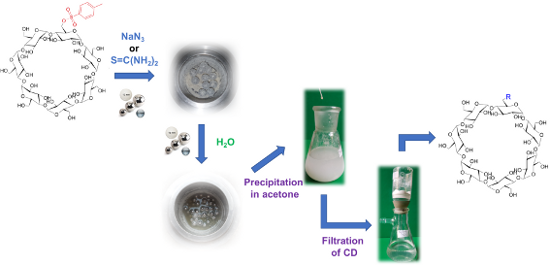
- differences are also elements of complexity. The mechanical processing of CDs in the absence of solvent therefore promises to simplify the work-up and allows the almost complete utilization of the CD key-intermediate [13], in comparison with the classic method [6]. Moreover, the absence of a solvent, high


Oxidative dehydrogenation of C–C and C–N bonds: A convenient approach to access diverse (dihydro)heteroaromatic compounds
Beilstein J. Org. Chem. 2017, 13, 1670–1692, doi:10.3762/bjoc.13.162
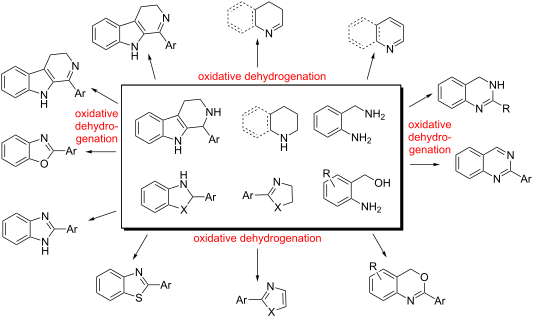
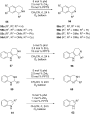
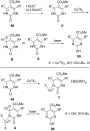
- of molecular oxygen and with catalytic copper acetate (Cu(OAc)2) generated the desired pyrimidine 102 which was converted to the final products in a few more steps. This is one of the noteworthy examples where oxidative dehydrogenation has been utilized for the synthesis of a key intermediate of an










The chemistry and biology of mycolactones
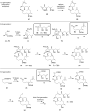
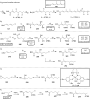
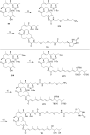
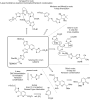
Beilstein J. Org. Chem. 2017, 13, 1596–1660, doi:10.3762/bjoc.13.159









Development of a method for the synthesis of 2,4,5-trisubstituted oxazoles composed of carboxylic acid, amino acid, and boronic acid
Beilstein J. Org. Chem. 2017, 13, 1478–1485, doi:10.3762/bjoc.13.146

- trisubstituted oxazoles. Herein, we described an efficient method for the synthesis of trisubstituted oxazoles through a one-pot oxazole synthesis and subsequent Suzuki–Miyaura coupling. Results and Discussion The study was initiated with the preparation of the key intermediate, 5-(triazinyloxy)oxazole 3, from


Synthesis of the heterocyclic core of the D-series GE2270
Beilstein J. Org. Chem. 2017, 13, 1407–1412, doi:10.3762/bjoc.13.137

- reported two-step oxidation/Reissert-type sequence [21][22]. The access to the key intermediate trithiazolylpyridine 9 was next investigated via two synthetic routes by exploiting BSC cross-coupling and Hantzsch condensation reactions from the picolinamide 5, which was produced by simple treatment of 6
- in fair 59% yield over 2 steps. Finally, the second synthetic pathway proved to be slightly more performant to produce the trithiazolylpyridine key-intermediate 9 from the picolinamide 5 in 58% yields over 3 steps (vs 55% for the first synthetic route). Then, the trithiazolylpyridine 9 was engaged in
- the key-intermediate 6-chloro-5-thiazolylpicolinate ester 4, which was obtained in multi-gram amounts in 57% yield over 3 synthetic steps (13% global yield) from the readily available ester ethyl 5-bromopicolinate (1) as starting material. Main synthetic strategies towards heterocyclic cores of D



Transition-metal-free one-pot synthesis of alkynyl selenides from terminal alkynes under aerobic and sustainable conditions
Beilstein J. Org. Chem. 2017, 13, 910–918, doi:10.3762/bjoc.13.92

- afforded 64% yield of phenylacetylene (6a), while the elimination reaction was quantitative with 2 equiv of the base. These results suggested that 6a is a key intermediate in the reaction. Furthermore, the fact that in the presence of 1 equiv of base the elimination product was obtained in approximately 50


Fluorescent carbon dots from mono- and polysaccharides: synthesis, properties and applications
Beilstein J. Org. Chem. 2017, 13, 675–693, doi:10.3762/bjoc.13.67
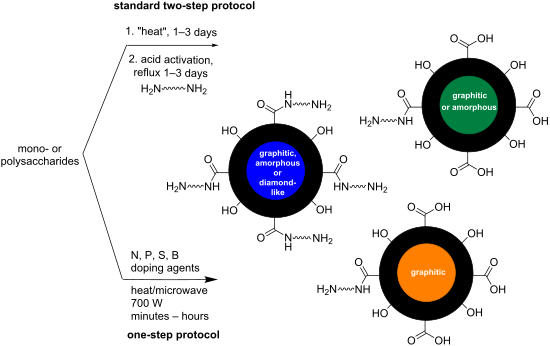
- observed. React-IR studies under hydrothermal conditions, but at a lower temperature of 70 °C, helped the team to identify a reactive iminium species, which is formed from the reaction between the sugar aldehyde and an amine present in the reaction mixture, and is a key intermediate in the initial stages


The reductive decyanation reaction: an overview and recent developments
Beilstein J. Org. Chem. 2017, 13, 267–284, doi:10.3762/bjoc.13.30
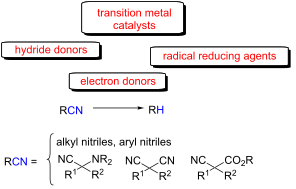
- . First, a SET from the electron donor to the nitrile forms a radical anion. This radical anion can fragment into a cyanide ion and a radical which is rapidly reduced into a stabilized carbanion before protonation. This carbanion appears as a key intermediate leading to complex mixtures when method A is


Total synthesis of a Streptococcus pneumoniae serotype 12F CPS repeating unit hexasaccharide
Beilstein J. Org. Chem. 2017, 13, 164–173, doi:10.3762/bjoc.13.19
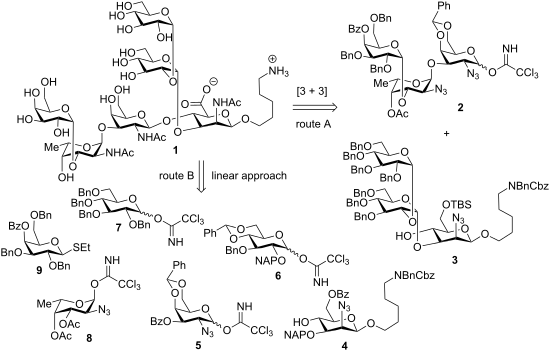
- reducing to the non-reducing end (Scheme 8). Union of 4 and 5 (Scheme 7) produced disaccharide 41 as the key intermediate, the naphthyl protecting group of which was cleaved in 70% yield using DDQ [37] to afford 42. Thioglycoside 43 failed to react with disaccharide 42 to furnish the desired trisaccharide


Symmetry-based approach to oligostilbenoids: Rapid entry to viniferifuran, shoreaphenol, malibatol A, and diptoindonesin G
Beilstein J. Org. Chem. 2016, 12, 2689–2693, doi:10.3762/bjoc.12.266

- ring toward the neighboring alkyne in the iodine-mediated cyclization reactions were explored. Starting from the symmetrical 3,5-dimethoxybenzyl alcohol, this route allowed rapid access to 2,3-diarylbenzofuran, a key intermediate to several oligostilbenoid natural products, in good overall yields
- element [19] of the target molecules. We expected that the key intermediate (inset box of Scheme 1) could be constructed from the monoiodo compounds 1, 2, or 3 through a sequence involving Sonogashira coupling, iodocyclization [20][21][22][23][24][25][26], and Suzuki coupling. As the starting materials (1


Facile synthesis of a 3-deazaadenosine phosphoramidite for RNA solid-phase synthesis
Beilstein J. Org. Chem. 2016, 12, 2556–2562, doi:10.3762/bjoc.12.250

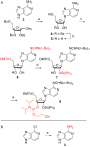
- to use 6-azido-3-deazapurine ribonucleoside as key intermediate Our initial attempts to create an efficient route to c3A started with the smooth transformation of commercially available 4-chloroimidazo[4,5-c]pyridine with lithium azide to provide 4-azidoimidazo[4,5-c]pyridine (1) [27] (Scheme 3


Efficient mechanochemical synthesis of regioselective persubstituted cyclodextrins
Beilstein J. Org. Chem. 2016, 12, 2364–2371, doi:10.3762/bjoc.12.230
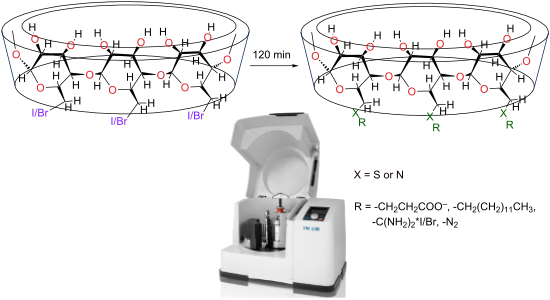
- friendly procedures. Ball mill assisted syntheses are good alternatives to overcome solubility difficulties in syntheses or isolation of natural compounds from vegetables using CDs [9][10]. Environmentally benign synthetic methods of CD derivatives have been recently reviewed [11]. The key intermediate in


Enduracididine, a rare amino acid component of peptide antibiotics: Natural products and synthesis
Beilstein J. Org. Chem. 2016, 12, 2325–2342, doi:10.3762/bjoc.12.226
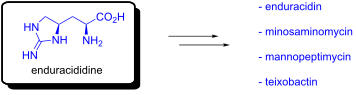
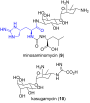
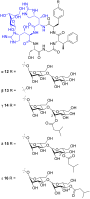
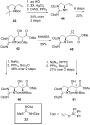
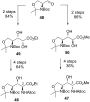
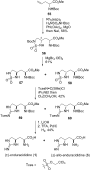
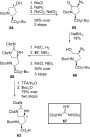
- afforded the free amino acid in four steps via key intermediate 4-hydroxyarginine 62. The synthesis of nitro alcohol 61 was not described but its preparation has been reported [65]. All four diastereomers were synthesised for comparison with the isolated enduracididine sample. Synthesis of L-allo












High performance p-type molecular electron donors for OPV applications via alkylthiophene catenation chromophore extension
Beilstein J. Org. Chem. 2016, 12, 2298–2314, doi:10.3762/bjoc.12.223
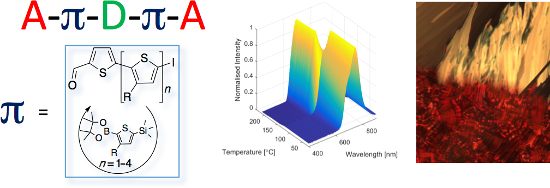
- donors via chain extension catenation of alkylthiophenes. We have used commercially available 3-butyl-, 3-hexyl- and 3-octylthiophene to form the key intermediate TMS-alkylthiophene boronic acid pinacol esters (3) in high yield on a large scale and in high purity as they can be purified by distillation




A new and expeditious synthesis of all enantiomerically pure stereoisomers of rosaprostol, an antiulcer drug
Beilstein J. Org. Chem. 2016, 12, 2234–2239, doi:10.3762/bjoc.12.215
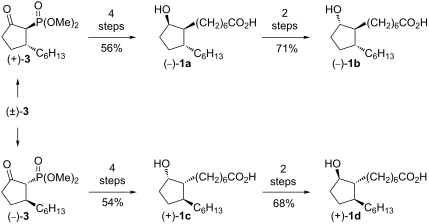
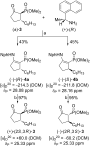
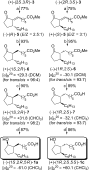
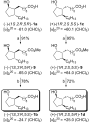
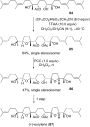
- methanephosphonate into (±)-1 was achieved in only seven steps and in 42% overall yield. Racemic 2-dimethoxyphosphoryl-3-hexylcyclopentan-1-one (3) is the key intermediate in this synthesis. This report describes the resolution of (±)-3 into its enantiomers and their application as starting chiral reagents for the



The direct oxidative diene cyclization and related reactions in natural product synthesis
Beilstein J. Org. Chem. 2016, 12, 2104–2123, doi:10.3762/bjoc.12.200
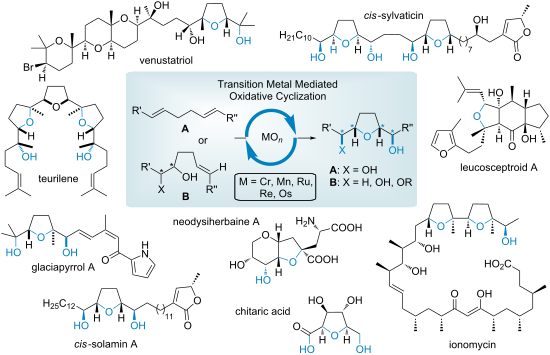
- in Scheme 3). The key intermediate and cyclization precursor may then involve a coordinative bond of that ether oxygen to the strongly Lewis acidic metal center. Due to the close relation to type B cyclizations, they can be classified as type B’ (Scheme 3). Reagents that mediate this type of reaction
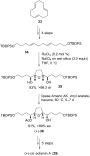
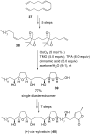
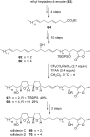
- was intramolecularly trapped by attack of the remote hydroxy group to afford bis-THF 54, a key intermediate en route to membranacin (55) (Scheme 12) [102]. One year later, in 2005, Brown and co-workers achieved a total synthesis of 21,22-diepi-membrarollin (60) [105], possessing an adjacent bis-THF
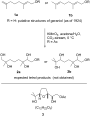
- an oxidative cyclization using stoichiometric amounts of sodium permanganate to furnish trans-THF diol 78 in 73% yield with an excellent diastereomeric ratio of 97:3 induced by a cyclohexanol derived chiral auxiliary. This key intermediate was subsequently converted to natural trans-(+)-linalool









Beta-hydroxyphosphonate ribonucleoside analogues derived from 4-substituted-1,2,3-triazoles as IMP/GMP mimics: synthesis and biological evaluation
Beilstein J. Org. Chem. 2016, 12, 1476–1486, doi:10.3762/bjoc.12.144
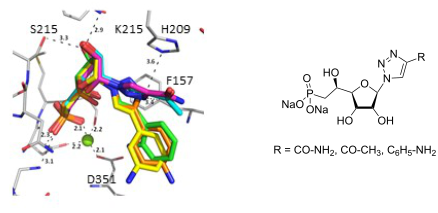
- synthesis of 1,2,3-triazolonucleotides (1a–o, Figure 1) was envisaged using the Huisgen 1,3-dipolar cycloaddition of the azido-sugar-phosphonate key-intermediate 2 (Scheme 1) and selected commercially available alkynes. Thus, (1-azido-2,5-di-O-acetyl-3-O-benzoyl-6-deoxy-6-diethylphosphono)-β-ribo-(5S


Synthesis of ferrocenyl-substituted 1,3-dithiolanes via [3 + 2]-cycloadditions of ferrocenyl hetaryl thioketones with thiocarbonyl S-methanides
Beilstein J. Org. Chem. 2016, 12, 1421–1427, doi:10.3762/bjoc.12.136

- 1,5-diradical as a key intermediate. The complete change of the reaction mechanism toward the concerted [3 + 2]-cycloaddition was observed in the reaction of a sterically crowded cycloaliphatic thiocarbonyl ylide with ferrocenyl methyl thioketone. Keywords: [3 + 2]-cycloadditions; 1,3-dithiolanes


Catalytic asymmetric synthesis of biologically important 3-hydroxyoxindoles: an update
Beilstein J. Org. Chem. 2016, 12, 1000–1039, doi:10.3762/bjoc.12.98
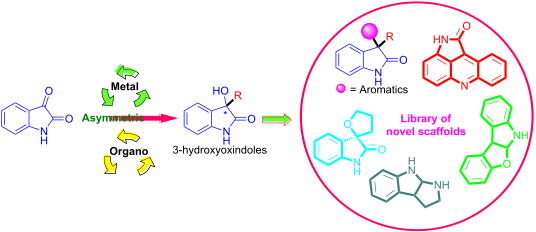
- ’-position of the BINOL backbone had a remarkable effect on the catalytic activity and enantioselectivity. Based on this method, the authors also achieved the synthesis of a key intermediate efficiently (99% yield and 93% ee), which had been used in the total synthesis of (+)-folicanthine [68]. The Zhang




A robust synthesis of 7,8-didemethyl-8-hydroxy-5-deazariboflavin
Beilstein J. Org. Chem. 2016, 12, 912–917, doi:10.3762/bjoc.12.89

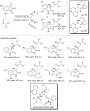
- transformed to the corresponding protected ribitylamine via the oxime, which was submitted to reduction with LiAlH4. Key advantage compared to previous syntheses is the utilization of a polyol-protective group which allowed the chromatographic purification of a key-intermediate product providing the target
- biosynthetic precursor compound to cofactor F420. In comparison with older routes to this target compound, the key innovation of our procedures is the introduction of two isopropylidene protective groups into the ribose side chain, which allowed the chromatographic purification of key intermediate product 11


Muraymycin nucleoside-peptide antibiotics: uridine-derived natural products as lead structures for the development of novel antibacterial agents
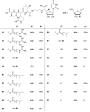
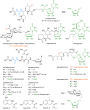
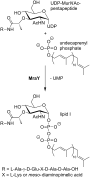
Beilstein J. Org. Chem. 2016, 12, 769–795, doi:10.3762/bjoc.12.77
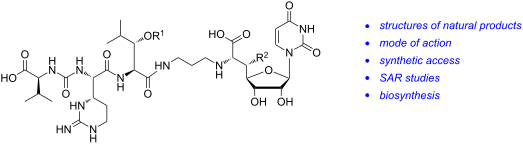
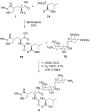
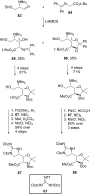
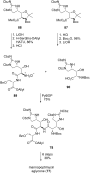
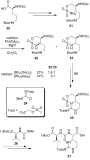
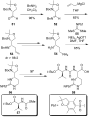
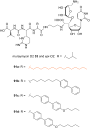
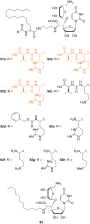
- . synthesised the hydroxyleucine moiety found in naturally occurring muraymycins of classes A to C (Scheme 8) [107]. Adapting a strategy developed by Zhu et al., D-serine (59) was stereoselectively converted into the protected amino alcohol 60 [108]. Key intermediate 60 was then Cbz- and acetonide protected to













Strecker degradation of amino acids promoted by a camphor-derived sulfonamide
Beilstein J. Org. Chem. 2016, 12, 732–744, doi:10.3762/bjoc.12.73
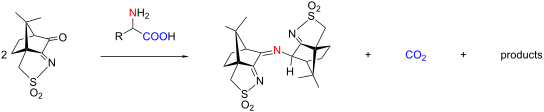
- Strecker degradation was proposed, which includes the anion formed by deprotonation of the carboxyl group as the key intermediate [28][29]. Indeed during geometry optimization we found that the decarboxylation of the anion formed from glycine and ninhydrin occurs without significant energy barrier. This
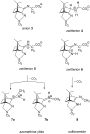
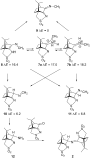
- decarboxylation. Since the parent zwitterions 5 and 6 cannot be calculated as energy minima, there is no chance to understand, e.g., which conformations of 5 will lead preferentially to 7a and 7b, respectively. Since it was found experimentally that the amine 12 is the key intermediate for the formation of
- hydrolysis of 11 was detected. This observation suggests that 10 is formed preferentially, and thus the key intermediate is rather 7b and not 8. Such proposal is supported by the calculated activation barrier for the formation of 10 from 7b which is slightly lower (2.2 kcal/mol) than the corresponding





(Thio)urea-mediated synthesis of functionalized six-membered rings with multiple chiral centers
Beilstein J. Org. Chem. 2016, 12, 462–495, doi:10.3762/bjoc.12.48
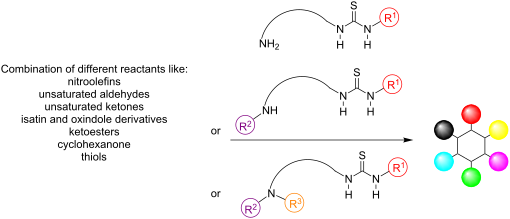
- constructed via a desymmetrization aza-Michael reaction. That key intermediate 72 was afforded in 91% yield and 97% ee. (Scheme 25). In 2012, Cobb and co-workers developed a novel asymmetric Michael–Michael reaction between nitrohex-4-enoates 73 and nitroolefins 74 to construct a cyclohexene moiety, bearing


Enabling technologies and green processes in cyclodextrin chemistry
Beilstein J. Org. Chem. 2016, 12, 278–294, doi:10.3762/bjoc.12.30
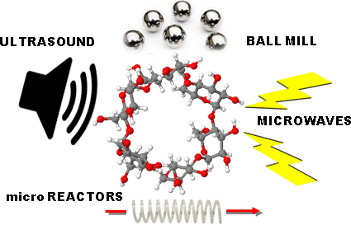
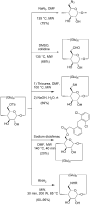
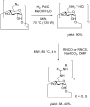
- . Monosubstituted CD derivative preparation Mono 6I-(p-toluenesulfonyl)-β-CD is the most popular of the CD derivatives because it is a key intermediate in the synthesis of important amino, azido, thio, thiocyanate and halo-derivatives. 6I-(p-toluenesulfonyl)-β-CD was efficiently prepared in an US-assisted procedure



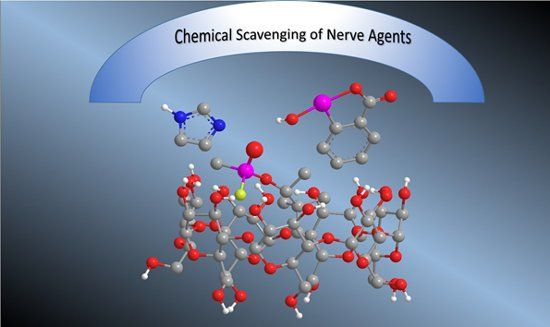
Interactions of cyclodextrins and their derivatives with toxic organophosphorus compounds
Beilstein J. Org. Chem. 2016, 12, 204–228, doi:10.3762/bjoc.12.23
- disulfonylimidazole 42 to access a key intermediate easily converted to the corresponding di-2,3-mannoepoxido compound 43 (Scheme 8) [89]. The 3A,3B-diazido-3A,3B-dideoxy-bis(altro)-β-cyclodextrin 44 was then obtained by reaction of 43 with sodium azide and a copper(I)-catalyzed azide–alkyne cycloaddition finally