


Search results
Search for "lactone" in Full Text gives 294 result(s) in Beilstein Journal of Organic Chemistry. Showing first 200.
Volatiles from the tropical ascomycete Daldinia clavata (Hypoxylaceae, Xylariales)
- Tao Wang,
- Kathrin I. Mohr,
- Marc Stadler and
- Jeroen S. Dickschat
Beilstein J. Org. Chem. 2018, 14, 135–147, doi:10.3762/bjoc.14.9
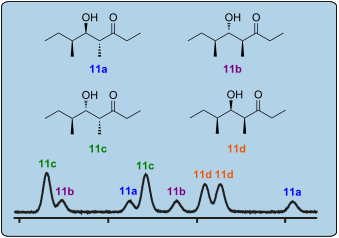
- -pyrone 17 exhibited a moderate antifungal and weak antibacterial effect, while the lactone 9 was moderately cytotoxic, but devoid of significant antimicrobial activity. The chlorinated aromatic compound 14 only weakly inhibited the sensitive test organisms Chromobacterium violaceum and Mucor hiemalis

Graphical Abstract

Scheme 1: A selection of widespread fungal volatiles.

Figure 1: Total ion chromatogram of a representative headspace extract from Daldinia clavata MUCL 47436. Peak...

Scheme 2: Identified volatiles from Daldinia clavata MUCL 47436.
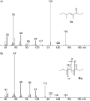
Figure 2: Mass spectra of volatiles from D. clavata that were identified by synthesis.

Scheme 3: Synthesis of manicone (10).

Scheme 4: Synthesis of a racemic mixture of all four diastereomers of 11.
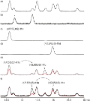
Figure 3: Gas chromatographic analysis of 11 on a homochiral stationary phase. a) Synthetic mixture of all ei...

Scheme 5: Enantioselective synthesis of (4R,5S,6S)-11c and (4S,5R,6S)-11d.

Scheme 6: Epimerisations of (4R,5S,6S)-11c and (4S,5R,6S)-11d under basic conditions.
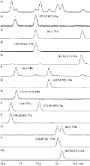
Figure 4: Gas chromatographic analysis of 11 on a homochiral stationary phase. a) Synthetic mixture of all ei...

Scheme 7: Proposed biosynthesis for (4R,5R,6S)-11a.
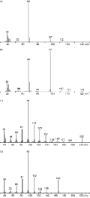
Figure 5: Mass spectra of a) 6-methyl-5,6-dihydro-2H-pyran-2-one (9), b) 6-propyl-5,6-dihydro-2H-pyran-2-one,...

Scheme 8: Synthesis of 6-methyl-5,6-dihydro-2H-pyran-2-one (9) and 6-nonyl-2H-pyran-2-one (17).
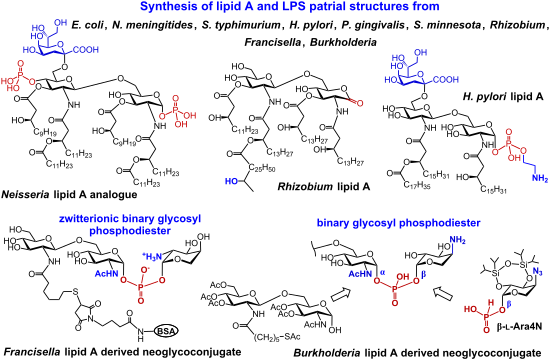
Aminosugar-based immunomodulator lipid A: synthetic approaches
- Alla Zamyatina
Beilstein J. Org. Chem. 2018, 14, 25–53, doi:10.3762/bjoc.14.3

Graphical Abstract

Figure 1: (A) Gram-negative bacterial membrane with LPS as major component of the outer membrane; (B) structu...
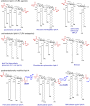
Figure 2: Structures of representative TLR4 ligands: TLR4 agonists (E. coli lipid A, N. meningitidis lipid A ...

Figure 3: (A) Co-crystal structure of the homodimeric E. coli Ra-LPS·hMD-2∙TLR4 complex (PDB code: 3FXI); (B)...

Figure 4: Co-crystal structures of (A) hybrid TLR4·hMD-2 with the bound antagonist eritoran (PDB: 2Z65, TLR4 ...

Scheme 1: Synthesis of E. coli and S. typhimurium lipid A and analogues with shorter acyl chains.

Scheme 2: Synthesis of N. meningitidis Kdo-lipid A.

Scheme 3: Synthesis of fluorescently labeled E. coli lipid A.
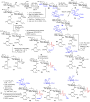
Scheme 4: Synthesis of H. pylori lipid A and Kdo-lipid A.

Scheme 5: Synthesis of tetraacylated lipid A corresponding to P. gingivalis LPS.

Scheme 6: Synthesis of pentaacylated P. gingivalis lipid A.

Scheme 7: Synthesis of monophosphoryl lipid A (MPLA) and analogues.

Scheme 8: Synthesis of tetraacylated Rhizobium lipid A containing aminogluconate moiety.

Scheme 9: Synthesis of pentaacylated Rhizobium lipid A and its analogue containing ether chain.

Scheme 10: Synthesis of pentaacylated Rhizobium lipid A containing 27-hydroxyoctacosanoate lipid chain.

Scheme 11: Synthesis of zwitterionic 1,1′-glycosyl phosphodiester: a partial structure of GalN-modified Franci...

Scheme 12: Synthesis of a binary 1,1′-glycosyl phosphodiester: a partial structure of β-L-Ara4N-modified Burkh...
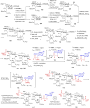
Scheme 13: Synthesis of Burkholderia lipid A containing binary glycosyl phosphodiester linked β-L-Ara4N.
CF3SO2X (X = Na, Cl) as reagents for trifluoromethylation, trifluoromethylsulfenyl-, -sulfinyl- and -sulfonylation. Part 1: Use of CF3SO2Na
- Hélène Guyon,
- Hélène Chachignon and
- Dominique Cahard
Beilstein J. Org. Chem. 2017, 13, 2764–2799, doi:10.3762/bjoc.13.272
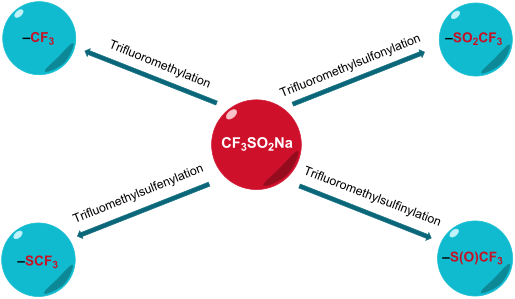
- aminotrifluoromethylation of alkenes in an intramolecular version was reported by Zhang and co-workers in 2017 (Scheme 14) [33]. Langlois’ conditions with tert-butyl hydroperoxide and a catalytic amount of copper(II) triflate were used to prepare a series of CF3-containing indoline, pyrrolidine, lactam and lactone

Graphical Abstract

Scheme 1: Trifluoromethylation of enol acetates by Langlois.

Scheme 2: Trifluoromethylation of (het)aryl enol acetates.

Scheme 3: Mechanism for the trifluoromethylation of enol acetates.

Scheme 4: Oxidative trifluoromethylation of unactivated olefins and mechanistic pathway.
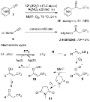
Scheme 5: Oxidative trifluoromethylation of acetylenic substrates.

Scheme 6: Metal free trifluoromethylation of styrenes.

Scheme 7: Synthesis of α-trifluoromethylated ketones by oxytrifluoromethylation of heteroatom-functionalised ...
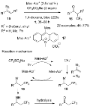
Scheme 8: Catalysed photoredox trifluoromethylation of vinyl azides.

Scheme 9: Oxidative difunctionalisation of alkenyl MIDA boronates.

Scheme 10: Synthesis of β-trifluoromethyl ketones from cyclopropanols.

Scheme 11: Aryltrifluoromethylation of allylic alcohols.

Scheme 12: Cascade multicomponent synthesis of nitrogen heterocycles via azotrifluoromethylation of alkenes.

Scheme 13: Photocatalytic azotrifluoromethylation of alkenes with aryldiazonium salts and CF3SO2Na.

Scheme 14: Copper-promoted intramolecular aminotrifluoromethylation of alkenes with CF3SO2Na.

Scheme 15: Oxytrifluoromethylation of alkenes with CF3SO2Na and hydroxamic acid.

Scheme 16: Manganese-catalysed oxytrifluoromethylation of styrene derivatives.

Scheme 17: Oxytrifluoromethylation of alkenes with NMP/O2 and CF3SO2Na.

Scheme 18: Intramolecular oxytrifluoromethylation of alkenes.

Scheme 19: Hydrotrifluoromethylation of styrenyl alkenes and unactivated aliphatic alkenes.

Scheme 20: Hydrotrifluoromethylation of electron-deficient alkenes.

Scheme 21: Hydrotrifluoromethylation of alkenes by iridium photoredox catalysis.

Scheme 22: Iodo- and bromotrifluoromethylation of alkenes by CF3SO2Na/I2O5 or CF3SO2Na / NaBrO3.

Scheme 23: N-methyl-9-mesityl acridinium and visible-light-induced chloro-, bromo- and SCF3 trifluoromethylati...

Scheme 24: Carbotrifluoromethylation of N-arylacrylamides with CF3SO2Na / TBHP by Lipshutz.

Scheme 25: Carbotrifluoromethylation of N-arylacrylamides with CF3SO2Na/TBHP reported by Lei.

Scheme 26: Carbotrifluoromethylation of N-arylacrylamides with CF3SO2Na/(NH4)2S2O8.

Scheme 27: Metal-free carbotrifluoromethylation of N-arylacrylamides with CF3SO2Na/K2S2O8 reported by Wang.

Scheme 28: Metal-free carbotrifluoromethylation of N-arylacrylamides with CF3SO2Na/PIDA reported by Fu.

Scheme 29: Metal-free cascade trifluoromethylation/cyclisation of N-arylmethacrylamides (a) and enynes (b) wit...

Scheme 30: Trifluoromethylation/cyclisation of N-arylcinnamamides: Synthesis of 3,4-disubstituted dihydroquino...

Scheme 31: Trifluoromethylation/cyclisation of aromatic-containing unsaturated ketones.

Scheme 32: Chemo- and regioselective cascade trifluoromethylation/heteroaryl ipso-migration of unactivated alk...

Scheme 33: Copper-mediated 1,2-bis(trifluoromethylation) of alkenes.

Scheme 34: Trifluoromethylation of aromatics with CF3SO2Na reported by Langlois.

Scheme 35: Baran’s oxidative C–H trifluoromethylation of heterocycles.

Scheme 36: Trifluoromethylation of acetanilides and anilines.

Scheme 37: Trifluoromethylation of heterocycles in water.

Scheme 38: Trifluoromethylation of coumarins in a continuous-flow reactor.

Scheme 39: Oxidative trifluoromethylation of coumarins, quinolines and pyrimidinones.

Scheme 40: Oxidative trifluoromethylation of pyrimidinones and pyridinones.

Scheme 41: Phosphovanadomolybdic acid-catalysed direct C−H trifluoromethylation.
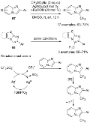
Scheme 42: Oxidative trifluoromethylation of imidazopyridines and imidazoheterocycles.

Scheme 43: Oxidative trifluoromethylation of imidazoheterocycles and imidazoles in ionic liquid/water.
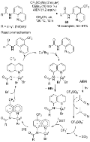
Scheme 44: Oxidative trifluoromethylation of 8-aminoquinolines.

Scheme 45: Oxidative trifluoromethylation of various 8-aminoquinolines using the supported catalyst CS@Cu(OAc)2...

Scheme 46: Oxidative trifluoromethylation of the naphthylamide 70.

Scheme 47: Oxidative trifluoromethylation of various arenes in the presence of CF3SO2Na and sodium persulfate.
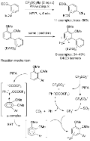
Scheme 48: Trifluoromethylation of electron-rich arenes and unsymmetrical biaryls with CF3SO2Na in the presenc...

Figure 1: Trifluoromethylated coumarin and flavone.

Scheme 49: Metal-free trifluoromethylation catalysed by a photoredox organocatalyst.
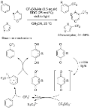
Scheme 50: Quinone-mediated trifluoromethylation of arenes and heteroarenes.
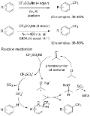
Scheme 51: Metal- and oxidant-free photochemical trifluoromethylation of arenes.

Scheme 52: Copper-mediated trifluoromethylation of arenediazonium tetrafluoroborates.

Scheme 53: Oxidative trifluoromethylation of aryl- and heteroarylboronic acids.
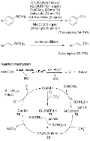
Scheme 54: Oxidative trifluoromethylation of aryl- and vinylboronic acids.

Scheme 55: Oxidative trifluoromethylation of unsaturated potassium organotrifluoroborates.

Scheme 56: Oxidative trifluoromethylation of (hetero)aryl- and vinyltrifluoroborates.

Scheme 57: Copper−catalysed decarboxylative trifluoromethylation of cinnamic acids.

Scheme 58: Iron-mediated decarboxylative trifluoromethylation of α,β-unsaturated carboxylic acids.

Scheme 59: Cu/Ag-catalysed decarboxylative trifluoromethylation of cinnamic acids.

Scheme 60: I2O5-Promoted decarboxylative trifluoromethylation of cinnamic acids.

Scheme 61: Silver(I)-catalysed denitrative trifluoromethylation of β-nitrostyrenes.
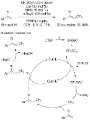
Scheme 62: Copper-catalysed direct trifluoromethylation of styrene derivatives.
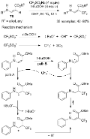
Scheme 63: Transition-metal-free synthesis of β-trifluoromethylated enamines.

Scheme 64: I2O5-mediated iodotrifluoromethylation of alkynes.

Scheme 65: Silver-catalysed tandem trifluoromethylation/cyclisation of aryl isonitriles.

Scheme 66: Photoredox trifluoromethylation of 2-isocyanobiphenyls.

Scheme 67: Trifluoromethylation of potassium alkynyltrifluoroborates with CF3SO2Na.
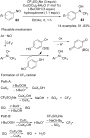
Scheme 68: N-trifluoromethylation of nitrosoarenes with CF3SO2Na (SQ: semiquinone).

Scheme 69: Trifluoromethylation of disulfides with CF3SO2Na.

Scheme 70: Trifluoromethylation of thiols with CF3SO2Na/I2O5.
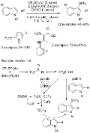
Scheme 71: Electrophilic trifluoromethylsulfenylation by means of CF3SO2Na/(EtO)2P(O)H/CuCl/DMSO.

Scheme 72: Electrophilic trifluoromethylsulfenylation by means of CF3SO2Na/(EtO)2P(O)H/TMSCl.
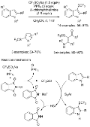
Scheme 73: Electrophilic trifluoromethylsulfenylation by means of CF3SO2Na/PPh3/N-chlorophthalimide.

Scheme 74: Electrophilic trifluoromethylsulfenylation by means of CF3SO2Na/PCl3.

Scheme 75: Electrophilic trifluoromethylsulfenylation by means of CF3SO2Na/PCl3.

Scheme 76: Trifluoromethylsulfenylation of aryl iodides with in situ generated CuSCF3 (DMI: 1,3-dimethyl-2-imi...

Scheme 77: Pioneering trifluoromethylsulfinylation of N, O, and C-nucleophiles.

Scheme 78: Trifluoromethylsulfinylation of (1R,2S)-ephedrine (Im: imidazole; DIEA: N,N-diisopropylethylamine).

Scheme 79: Trifluoromethylsulfinylation of substituted benzenes with CF3SO2Na/CF3SO3H.

Scheme 80: Trifluoromethylsulfinylation of indoles with CF3SO2Na/P(O)Cl3.

Scheme 81: Trifluoromethylsulfinylation of indoles with CF3SO2Na/PCl3.

Scheme 82: Formation of triflones from benzyl bromides (DMA: dimethylacetamide).

Scheme 83: Formation of α-trifluoromethylsulfonyl ketones, esters, and amides.

Scheme 84: Allylic trifluoromethanesulfonylation of aromatic allylic alcohols.

Scheme 85: Copper-catalysed couplings of aryl iodonium salts with CF3SO2Na.

Scheme 86: Palladium-catalysed trifluoromethanesulfonylation of aryl triflates and chlorides with CF3SO2Na.

Scheme 87: Copper-catalysed coupling of arenediazonium tetrafluoroborates with CF3SO2Na.

Scheme 88: Synthesis of phenyltriflone via coupling of benzyne with CF3SO2Na.

Scheme 89: Synthesis of 1-trifluoromethanesulfonylcyclopentenes from 1-alkynyl-λ3-bromanes and CF3SO2Na.

Scheme 90: One-pot synthesis of functionalised vinyl triflones.

Scheme 91: Regioselective synthesis of vinyltriflones from styrenes.

Scheme 92: Trifluoromethanesulfonylation of alkynyl(phenyl) iodonium tosylates by CF3SO2Na.

Scheme 93: Synthesis of thio- and selenotrifluoromethanesulfonates.
Diastereoselective Mannich reactions of pseudo-C2-symmetric glutarimide with activated imines
- Tatsuya Ishikawa,
- Tomoko Kawasaki-Takasuka,
- Toshio Kubota and
- Takashi Yamazaki
Beilstein J. Org. Chem. 2017, 13, 2473–2477, doi:10.3762/bjoc.13.244
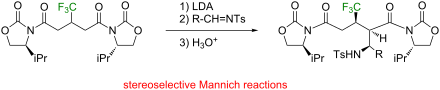
- lactones in good to excellent yields [4][5]. One of the most intriguing features of this protocol is the fact that the enantiomers at the lactone part were readily obtained only by the selection of the tertiary amines employed in the reaction. It is quite apparent that this success is, at least in part

Graphical Abstract

Figure 1: Crystallographic analysis of the major diastereomer of 3a (some hydrogen atoms are omitted for clar...

Scheme 1: Explanation of the construction of the main stereoisomers.
Synthesis of ergostane-type brassinosteroids with modifications in ring A
- Vladimir N. Zhabinskii,
- Darya A. Osiyuk,
- Yuri V. Ermolovich,
- Natalia M. Chaschina,
- Tatsiana S. Dalidovich,
- Miroslav Strnad and
- Vladimir A. Khripach
Beilstein J. Org. Chem. 2017, 13, 2326–2331, doi:10.3762/bjoc.13.229
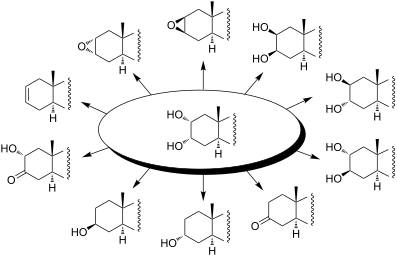
- ; metabolites; Introduction The group of steroid plant hormones called brassinosteroids (BS) currently comprises about 70 compounds [1]. It is generally accepted that only few of them (such as brassinolide, castasterone, epibrassinolide, etc.), possessing 2α,3α-, (22R,23R)-diol groups, B-lactone, and 6-ketone
- cyclic thiocarbonate 15 as a key reaction step gave the expected Δ2-olefin 16 in an excellent yield (Scheme 2). Subsequent deacetylation of 16 then afforded 24-episecasterol (17). An alternative procedure to Δ2-steroids was applied for the preparation of the B-ring lactone derivative 21 (Scheme 3). The
- mesylation of diol 18 produced dimesylate 19, which was treated with zinc dust and sodium iodide in refluxing DMF (Tipson–Cohen reaction [16]) to give, after deacetylation, B-lactone olefin 21 in 96% yield. 2α,3α- and 2β,3β-epoxides of type 4 and 5 Olefins of type 3 are evident intermediates for the

Graphical Abstract

Scheme 1: Structural features of epicastasterone (1), epibrassinolide (2) and A-ring units 3–12 of BS biosynt...

Scheme 2: (a) Ac2O, Py, DMAP, 60 °C; (b) K2CO3, MeOH, 20 °C (97% over 2 steps); (c) TCDI, DMAP, THF, 65 °C (7...

Scheme 3: (a) MsCl, Py, 20 °C (95%); (b) Zn, NaI, DMF, 150 °C (83%); (c) KOH, MeOH, 65 °C (96%).

Scheme 4: (a) MCPBA, CH2Cl2, 20 °C (90%); (b) NBS, DME, 20 °C; (c) KOH, MeOH, 20 °C (85% over 2 steps).

Scheme 5: (a) BnBr, DMAP, Bu2SnO, TBAI, DIPEA, 110 °C (94%); (b) PCC, CH2Cl2, 20 °C (84%); (c) H2, Pd/C, 20 °...

Scheme 6: (a) TsCl, DMAP, Py, 30 °C (91%); (b) Py, 115 °C (65%); (c) KOH, MeOH, 20 °C (52%).

Scheme 7: (a) NaBH4, EtOH, −25 °C (49%); (b) KOH, MeOH, 65 °C (85%).

Scheme 8: (a) Anisaldehyde, TMSCl, MeOH, 20 °C; (b) BnBr, DMAP, Bu2SnO, TBAI, DIPEA, 110 °C (86% over 2 steps...
Are boat transition states likely to occur in Cope rearrangements? A DFT study of the biogenesis of germacranes
- José Enrique Barquera-Lozada and
- Gabriel Cuevas
Beilstein J. Org. Chem. 2017, 13, 1969–1976, doi:10.3762/bjoc.13.192
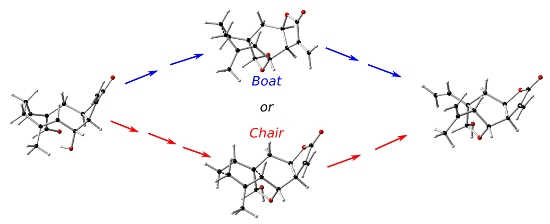
- rearrange to yield one or potentially two elemanolide configurations. The schkuriolide (1, Scheme 1) is a sesquiterpene lactone, specifically a (Z,E)-germacranolide, named melampolide, that coexists in the same natural source with the elemanschkuhriolide (3), which is an elemanolide with a stereochemistry
- considered when a prediction of the configuration of an elemane is determined before a Cope rearrangement. Finally, we studied the role the γ-lactone ring plays in the transformation of germacranes into elemanes. Takeda et al. carried out a series of experiments, which proved that γ-lactone rings prevent the
- Cope rearrangement of (Z,E)-germacranolides when the ring is closed but not when the ring is open [41]. A study of the Cope rearrangement in open ring (Z,E)-germacranolide 1 (7, Figure 3) and (E,E)-germacranolide 4 (8, Figure 3) was done in order to analyze the effect of the lactone ring. Figure 3

Graphical Abstract
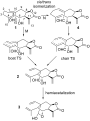
Scheme 1: Biogenetic hypothesis for the transformation of schkuhriolide (1) into elemanschkuriolide (3).

Figure 1: Reaction paths M (blue), N (orage), O (yellow) and P (green) for the transformation of 1 into 3. Re...

Scheme 2: Similar compounds to melampolide 1 unable to be hemiacetaled.

Figure 2: Schematic representations of the calculated C5 epimeric structures of 2 and 3. Relative electronic ...

Figure 3: Reaction paths of the Cope rearrangements of closed (dark blue and orange) and open (red and pink) ...
The chemistry and biology of mycolactones
- Matthias Gehringer and
- Karl-Heinz Altmann
Beilstein J. Org. Chem. 2017, 13, 1596–1660, doi:10.3762/bjoc.13.159
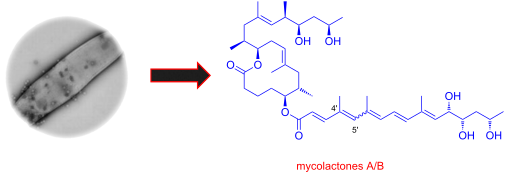
- macrolactone ring are designated as C1–C11 (with the carbonyl carbon of the lactone ester group as C1), those in the carbon-linked (“upper”) side chain as C12–C20 and those of the oxygen-linked (“lower”) side chain as C1’–C16’ (with the carbonyl carbon of the exocyclic ester group as C1’). Finally, in our

Graphical Abstract

Figure 1: Initial proposal for the core macrolactone structure (left) and the established complete structure ...
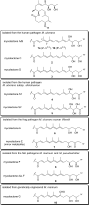
Figure 2: Mycolactone congeners and their origins.

Figure 3: Misassigned mycolactone E structure according to Small et al. [50] (11) and the correct structure (6) f...

Figure 4: Schematic illustration of Kishi’s improved mycolactone TLC detection method exploiting derivatizati...

Figure 5: Fluorescent probes derived from natural mycolactone A/B (1a,b) or its synthetic 8-desmethyl analogs...

Figure 6: Tool compounds used by Pluschke and co-workers for elucidating the molecular targets of mycolactone...

Figure 7: Synthetic strategies towards the extended mycolactone core. A) General strategies. B) Kishi’s appro...

Scheme 1: Kishi’s 1st generation approach towards the extended core structure of mycolactones. Reagents and c...

Scheme 2: Kishi’s 2nd generation approach towards the extended core structure of mycolactones. Reagents and c...

Scheme 3: Kishi’s 3rd generation approach towards the extended core structure of mycolactones. Reagents and c...

Scheme 4: Negishi’s synthesis of the extended core structure of mycolactones. Reagents and conditions: a) (i) ...

Scheme 5: Burkart’s (incomplete) 1st generation approach towards the extended core structure of mycolactones....
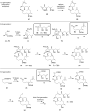
Scheme 6: Burkart’s (incomplete) 1st, 2nd and 3rd generation approach towards the extended mycolactone core s...

Scheme 7: Altmann’s synthesis of alkyl iodide 91. Reagents and conditions: a) (i) PMB-trichloroacetimidate, T...

Scheme 8: Final steps of Altmann’s synthesis of the extended core structure of mycolactones. Reagents and con...

Scheme 9: Basic principles of the Aggarwal lithiation–borylation homologation process [185,186].

Scheme 10: Aggarwal’s synthesis of the C1–C11 fragment of the mycolactone core. Reagents and conditions: a) Cl...

Scheme 11: Aggarwal’s synthesis of the linear C1–C20 fragment of the mycolactone core. Reagents and conditions...

Figure 8: Synthetic strategies towards the mycolactone A/B lower side chain.

Scheme 12: Gurjar and Cherian’s synthesis of the C1’–C8’ fragment of the mycolactone A/B pentaenoate side chai...

Scheme 13: Gurjar and Cherian’s synthesis of the benzyl-protected mycolactone A/B pentaenoate side chain. Reag...

Scheme 14: Kishi’s synthesis of model compounds for elucidating the stereochemistry of the C7’–C16’ fragment o...

Scheme 15: Kishi’s synthesis of the mycolactone A/B pentaenoate side chain. (a) (i) NaH, (EtO)2P(O)CH2CO2Et, T...

Scheme 16: Feringa and Minnaard's incomplete synthesis of mycolactone A/B pentaenoate side chain. Reagents and...

Scheme 17: Altmann’s approach towards the mycolactone A/B pentaenoate side chain. Reagents and conditions: a) ...

Scheme 18: Negishi’s access to the C1’–C7’ fragment of mycolactone A. Reagents and conditions: a) (i) n-BuLi, ...

Scheme 19: Negishi’s approach to the C1’–C7’ fragment of mycolactone B. Reagents and conditions: a) (i) DIBAL-...

Scheme 20: Negishi’s synthesis of the C8’–C16’ fragment of mycolactone A/B. Reagents and conditions: a) 142, BF...

Scheme 21: Negishi’s assembly of the mycolactone A and B pentaenoate side chains. Reagents and conditions: a) ...

Scheme 22: Blanchard’s approach to the mycolactone A/B pentaenoate side chain. a) (i) Ph3P=C(Me)COOEt, CH2Cl2,...

Scheme 23: Kishi’s approach to the mycolactone C pentaenoate side chain exemplified for the 13’R,15’S-isomer 1...

Scheme 24: Altmann’s (unpublished) synthesis of the mycolactone C pentaenoate side chain. Reagents and conditi...

Scheme 25: Blanchard’s synthesis of the mycolactone C pentaenoate side chain. Reagents and conditions: a) (i) ...

Scheme 26: Kishi’s synthesis of the tetraenoate side chain of mycolactone F exemplified by enantiomer 165. Rea...

Scheme 27: Kishi’s synthesis of the mycolactone E tetraenoate side chain. Reagents and conditions: a) (i) CH2=...

Scheme 28: Wang and Dai’s synthesis of the mycolactone E tetraenoate side chain. Reagents and conditions: a) (...

Scheme 29: Kishi’s synthesis of the dithiane-protected tetraenoate side chain of the minor oxo-metabolite of m...

Scheme 30: Kishi’s synthesis of the mycolactone S1 and S2 pentaenoate side chains. Reagents and conditions: a)...

Scheme 31: Kishi’s 1st generation and Altmann’s total synthesis of mycolactone A/B (1a,b) and Negishi’s select...

Scheme 32: Kishi’s 2nd generation total synthesis of mycolactone A/B (1a,b). Reagents and conditions: a) 2,4,6...

Scheme 33: Blanchard’s synthesis of the 8-desmethylmycolactone core. Reagents and conditions: a) (i) TsCl, TEA...

Scheme 34: Altmann’s (partially unpublished) synthesis of the C20-hydroxylated mycolactone core. Reagents and ...

Scheme 35: Altmann’s and Blanchard’s approaches towards the 11-isopropyl-8-desmethylmycolactone core. Reagents...

Scheme 36: Blanchard’s synthesis of the saturated variant of the C11-isopropyl-8-desmethylmycolactone core. Re...

Scheme 37: Structure elucidation of photo-mycolactones generated from tetraenoate 224.

Scheme 38: Kishi’s synthesis of the linear precursor of the photo-mycolactone B1 lower side chain. Reagents an...

Scheme 39: Kishi’s synthesis of the photo-mycolactone B1 lower side chain. Reagents and conditions: a) LiTMP, ...

Scheme 40: Kishi’s synthesis of a stabilized lower mycolactone side chain. Reagents and conditions: a) (i) TBD...
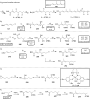
Scheme 41: Blanchard’s variation of the C12’,C13’,C15’ stereocluster. Reagents and conditions: a) (i) DIBAL-H,...

Scheme 42: Blanchard’s synthesis of aromatic mycolactone polyenoate side chain analogs. Reagents and condition...

Scheme 43: Small’s partial synthesis of a BODIPY-labeled mycolactone derivative and Demangel’s partial synthes...

Scheme 44: Blanchard’s synthesis of the BODIPY-labeled 8-desmethylmycolactones. Reagents and conditions: a) (i...
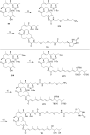
Scheme 45: Altmann’s synthesis of biotinylated mycolactones. Reagents and conditions: a) (i) CDI, THF, rt, 2 d...

Figure 9: Kishi’s elongated n-butyl carbamoyl mycolactone A/B analog.
BODIPY-based fluorescent liposomes with sesquiterpene lactone trilobolide
- Ludmila Škorpilová,
- Silvie Rimpelová,
- Michal Jurášek,
- Miloš Buděšínský,
- Jana Lokajová,
- Roman Effenberg,
- Petr Slepička,
- Tomáš Ruml,
- Eva Kmoníčková,
- Pavel B. Drašar and
- Zdeněk Wimmer
Beilstein J. Org. Chem. 2017, 13, 1316–1324, doi:10.3762/bjoc.13.128
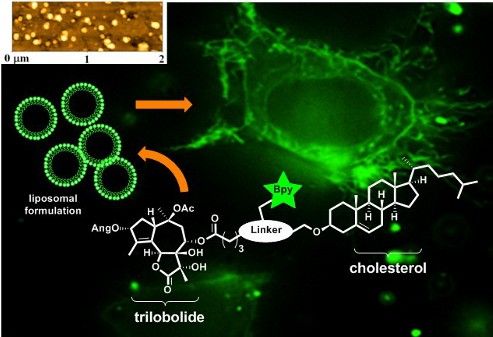
- theranostic applications. Keywords: BODIPY conjugates; cancer targeting; drug delivery; liposomes; natural compounds; sesquiterpene lactone trilobolide; Introduction Targeted (smart) drug delivery is a method for specific delivering of an active compound preferentially to some cells or tissues in the human
- describe the synthesis and application of a fluorescent construct (further called construct 6, depicted in Scheme 1) based on a green-emitting BODIPY dye and trilobolide–cholesterol (Tb-ChL) in a liposome formulation. Trilobolide (Tb, Figure 1) is a potent natural compound of the sesquiterpene lactone
- active construct 6 from the liposomes. Further tests are necessary to confirm this hypothesis. Conclusion In summary, in order to develop a drug delivery system for potential theranostic applications, we prepared a submicron liposome-based formulation of a cytotoxic agent, sesquiterpene lactone

Graphical Abstract

Figure 1: Chemical structures of the basic compounds used in this study.
Scheme 1: Synthesis of the BODIPY building block (part A) and construct 6 (part B).

Figure 2: Absorbance and fluorescence spectra of compounds 3–6. UV spectra (part A) were recorded with a conc...

Figure 3: NO production in primary rat macrophages. The cells were treated with Tb, compounds 4, 5, and Tb-co...

Figure 4: Atomic force microscopy images of liposomes, 5 µm area: A) 2D image, B) 3D image (Ra = 2.4 nm); 2 µ...

Figure 5: Panel of images from live-cell fluorescence microscopy: intracellular localization of construct 6 i...

Figure 6: Panel of images from live-cell fluorescence microscopy: intracellular localization of liposomes wit...
Strategies in megasynthase engineering – fatty acid synthases (FAS) as model proteins
- Manuel Fischer and
- Martin Grininger
Beilstein J. Org. Chem. 2017, 13, 1204–1211, doi:10.3762/bjoc.13.119
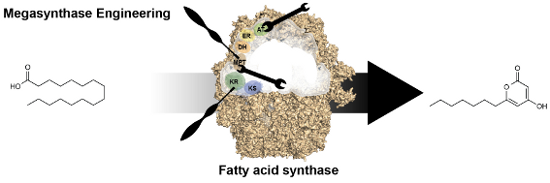
- lactone 6-heptyl-4-hydroxypyran-2-one (6-HHP) within the scaffold of the Corynebacterium ammoniagenes FAS (a bacterial type I system). In an engineered reaction sequence, an initial FAS module was designed to produce SCFA as acyl esters, which are in a second FAS module elongated to the triketide and
- cyclized to the final lactone (Figure 4). A similar synthetic route can be found in norsolorinic acid synthesis, in which a fully reducing fungal FAS collaborates with a non-reducing PKS [4][56], as well as in resorcylic acid lactone synthesis, in which two iterative PKS systems work in sequence [57]. We
- -domain functional knockout, to synthesize the final lactone PK. The knockout in the AT-domain hinders the uptake of acetyl-CoA and encodes for modules acting in sequence. Acknowledgements M.G. thanks Dieter Oesterhelt for valuable discussions on FAS and PKS catalytic mechanisms, and continuous support

Graphical Abstract

Figure 1: Megasynthases – chemistry and modes of action. a) Products of PKS and FAS megasynthases. b) Reactio...

Figure 2: Compartmentalization of synthesis. a) Surface depiction of fungal FAS (PDB-code: 3hmj) with the upp...

Figure 3: Strategies of megasynthase engineering. a) Mix-and-match approach: A hypothetical chimeric PKS is a...

Figure 4: Preserve-and-adapt approach with FAS. C. ammoniagenes FAS has been engineered in two cooperatively ...
Total syntheses of the archazolids: an emerging class of novel anticancer drugs
- Stephan Scheeff and
- Dirk Menche
Beilstein J. Org. Chem. 2017, 13, 1085–1098, doi:10.3762/bjoc.13.108
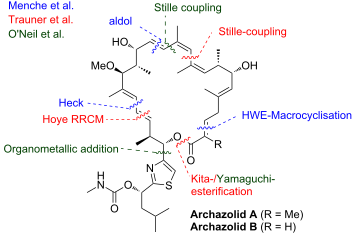
- also pursued identical routes to this subunit. As shown in Scheme 5, this sequence started from L-leucine (26) which was first converted with nitrous acid to the hydroxy acid 27, which proceeds with retention of the configuration due to intermediate lactone formation after generation of the diazonium

Graphical Abstract

Scheme 1: Molecular structures of the archazolids.

Scheme 2: Retrosynthetic analysis of archazolid A by the Menche group.

Scheme 3: Synthesis of north-eastern fragment 5 through a Paterson anti-aldol addition and multiple Still–Gen...

Scheme 4: Synthesis of 4 through an Abiko–Masamune anti-aldol addition.

Scheme 5: Thiazol construction and synthesis of the southern fragment 6.

Scheme 6: Completion of the total synthesis of archazolid A.

Scheme 7: Synthesis of archazolid B (2) by a ring closing Heck reaction of 38.

Scheme 8: Retrosynthetic analysis of archazolid B by the Trauner group.

Scheme 9: Synthesis of acid 40 from Roche ester 41 involving a highly efficient Trost–Alder ene reaction.

Scheme 10: Synthesis of precursor 39 for the projected relay RCM reaction.

Scheme 11: Final steps of Trauner’s total synthesis of archazolid B.

Scheme 12: Overview of the different retrosynthetic approaches for the synthesis of dihydroarchazolid B (3) re...

Scheme 13: Fragment synthesis of 69 towards the total synthesis of 3.

Scheme 14: Organometallic addition of the side chain to access free alcohol 75.
A concise and practical stereoselective synthesis of ipragliflozin L-proline
- Shuai Ma,
- Zhenren Liu,
- Jing Pan,
- Shunli Zhang and
- Weicheng Zhou
Beilstein J. Org. Chem. 2017, 13, 1064–1070, doi:10.3762/bjoc.13.105

- other hypoglycemic agents. Only a few methods have been found in the literature about the synthesis of 1. It was reported that aryllithium reacted with per-hydroxy-protected D-glucono-1,5-lactone at −78 °C to obtain the lactol, followed by reduction with a large bulk silyl hydride in order to get high β

Graphical Abstract

Figure 1: Structure of ipragliflozin L-proline.

Scheme 1: Stereoselective synthesis of C-aryl glycoside by Lemarie.

Scheme 2: Stereoselective synthesis of β-C-arylglucoside 5.

Scheme 3: Synthesis of 1.

Scheme 4: Synthesis of diastereomer 6’ and 5’.
A strategic approach to [6,6]-bicyclic lactones: application towards the CD fragment of DHβE
- Tue Heesgaard Jepsen,
- Emil Glibstrup,
- François Crestey,
- Anders A. Jensen and
- Jesper Langgaard Kristensen
Beilstein J. Org. Chem. 2017, 13, 988–994, doi:10.3762/bjoc.13.98
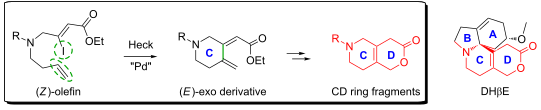
- effective synthetic protocol to access [6,6]-bicyclic lactone moieties through a regio- and stereoselective intramolecular Mizoroki–Heck cross-coupling reaction followed by a 6π-electrocyclization. This method enabled the first synthesis of the elusive CD fragment of the Erythrina alkaloid DHβE. Preliminary
- pharmacological evaluations support the notion that the key pharmacophores of DHβE are located in the A and B rings. Keywords: DhβE; Mizoroki–Heck cross-coupling reaction; 6π-electrocyclization; [6,6]-bicyclic lactone; vinyl halide; Introduction The neuronal nicotinic acetylcholine receptors (nAChRs) have been
- ring and the B–C ring, which contrasts a mutational-computational study by Bermudez and co-workers suggesting that the lactone carbonyl is a hydrogen bond acceptor and hence locating the key pharmacophores in the C and D rings [9]. In order to weigh these hypotheses against one another, we have

Graphical Abstract

Figure 1: DHβE and related structures. The Ki values of the compounds at the rat α4β2 nAChR subtype determine...
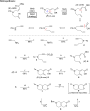
Scheme 1: First strategy towards the CD fragment (Ts-strategy). i) TsCl, TEA, DCM, 0 °C. ii) NaH, DMF, 0 °C, ...

Scheme 2: First strategy towards the CD fragment (Cbz-strategy). i) R-Cl, TEA, CH2Cl2, 0 °C. ii) NaH, DMF, 0 ...

Scheme 3: Second strategy towards the CD fragment. i) 4-Bromobut-1-ene, K2CO3, acetone, 70 °C. ii) n-BuLi, TH...

Figure 2: The binding affinities of compounds 9 and 26 at the rat α4β2 nAChR. a) The AB fragment was evaluate...
Transition-metal-catalyzed synthesis of phenols and aryl thiols
- Yajun Liu,
- Shasha Liu and
- Yan Xiao
Beilstein J. Org. Chem. 2017, 13, 589–611, doi:10.3762/bjoc.13.58

- phosphonates were compatible with the hydroxylation condtions, while monoalkyl phosphonate gave the phosphoryl lactone as product. Exploration of substrate scope showed that both electron-donating groups (such as Me, OMe) and electron-withdrawing groups (such as F, Cl, Br, CF3) are tolerable. 1.2.2.3 Phenol as

Graphical Abstract

Figure 1: Examples of drugs bearing phenol or aryl thiol as central structural motifs.

Scheme 1: Hydroxylation of aryl halides using biphenylphosphine as ligand.

Scheme 2: Hydroxylation of aryl halides using tert-butylphosphine as ligand.

Scheme 3: Hydroxylation of aryl halides using imidazole typed phosphine ligands.

Scheme 4: [Pd(cod)(CH2SiMe3)2] catalyzed hydroxylation of aryl halides.

Scheme 5: Pd/PANI catalyzed hydroxylation of hydroxylation of aryl halides.

Scheme 6: MCM-41-dzt-Pd catalyzed hydroxylation of aryl halides.

Scheme 7: Hydroxylation of aryl halides using dibenzoylmethane as ligand.

Scheme 8: Hydroxylation of aryl halides using 2,2’-bipyridine as ligand.

Scheme 9: Hydroxylation of aryl bromides using imidazolyl pyridine as ligand.

Scheme 10: Hydroxylation of aryl halides using DMEDA as ligand.

Scheme 11: Hydroxylation of aryl halides using PAO as ligand.

Scheme 12: Hydroxylation of aryl halides using D-glucose as ligand.

Scheme 13: Hydroxylation of aryl halides using INDION-770 as ligand.

Scheme 14: PEG-400 mediated hydroxylation of aryl halides.

Scheme 15: Hydroxylation of aryl halides using glycolic acid as ligand.

Scheme 16: Hydroxylation of aryl halides using L-sodium ascorbate as ligand.

Scheme 17: Difunctionalized ethanes mediated hydroxylation of aryl iodides.

Scheme 18: Hydroxylation of aryl halides using 2-methyl-8-hydroxylquinoline as ligand.

Scheme 19: Hydroxylation of aryl halides using 8-hydroxyquinolin-N-oxide as ligand.

Scheme 20: Hydroxylation of aryl halides using lithium pipecolinate as ligand.

Scheme 21: Hydroxylation of aryl halides using L-lithium prolinate.

Scheme 22: Hydroxylation of aryl halides using triethanolamine as ligand.

Scheme 23: CuI-nanoparticle-catalyzed hydroxylation of aryl halides.

Scheme 24: Cu-g-C3N4-catalyzed hydroxylation of aryl bromides.

Scheme 25: Cu(OAc)2-mediated hydroxylation of (2-pyridyl)arenes.

Scheme 26: Removable pyridine moiety directed hydroxylation of arenes.

Scheme 27: Removable quinoline moiety directed hydroxylation of arenes.

Scheme 28: CuCl2 catalyzed hydroxylation of benzimidazoles and benzoxazoles.

Scheme 29: Disulfide-directed C–H hydroxylation.

Scheme 30: Pd(OAc)2-catalyzed hydroxylation of diarylpyridines.

Scheme 31: PdCl2-catalyzed hydroxylation of 2-arylpyridines.

Scheme 32: PdCl2-catalyzed hydroxylation of 2-arylpyridines.

Scheme 33: Pd(OAc)2-catalyzed hydroxylation of 2-arylpyridines.

Scheme 34: Pd(CH3CN)2Cl2-catalyzed hydroxylation of 2-arylpyridines.

Scheme 35: Pd(OAc)2-catalyzed hydroxylation of benzothiazolylarenes.

Scheme 36: Pd(OAc)2 catalyzed hydroxylation of benzimidazolylarenes.

Scheme 37: Dioxane mediated hydroxylation of 2-heteroarylarenes.

Scheme 38: Hydroxylation of oxime methyl ester.

Scheme 39: CN-directed meta-hydroxylation.

Scheme 40: Pd(OAc)2-catalyzed hydroxylation of benzoic acids.

Scheme 41: Pd(OAc)2-catalyzed hydroxylation of biaryl or aryl alkyl ketones.

Scheme 42: Pd(OAc)2 and Pd(TFA)2 catalyzed hydroxylation of aryl ketones.

Scheme 43: Pd(OAc)2 catalyzed hydroxylation of aryl ketones.

Scheme 44: Pd(TFA)2-catalyzed hydroxylation of aryl phosphonates.

Scheme 45: Hydroxy group directed hydroxylation.

Scheme 46: [Ru(O2CMes)2(p-cymene)] catalyzed hydroxylation of benzamides and aryl ketones.

Scheme 47: [RuCl2(p-cymene)]2-catalyzed hydroxylation of benzamides and carbamates.

Scheme 48: [RuCl2(p-cymene)]2 catalyzed hydroxylation of benzaldehydes.

Scheme 49: [RuCl2(p-cymene)]2 catalyzed hydroxylation of ethyl benzoates, benzamides and carbamates.

Scheme 50: Different regioselective ortho-hydroxylation.

Scheme 51: Ruthenium-complex-catalyzed hydroxylation of flavones.

Scheme 52: Vanadium-catalyzed hydroxylation of arenes.

Scheme 53: VOSiW-catalyzed hydroxylation of arenes.

Scheme 54: Synthesis of aryl thiols using thiourea as thiol source.

Scheme 55: Synthesis of aryl thiols using alkyl thiol as thiol source.

Scheme 56: Synthesis of 1-thionaphthol using HS-TIPS as thiol source.

Scheme 57: Synthesis of aryl thiols using sodium thiosulfate as thiol source.

Scheme 58: Synthesis of thiophenol using thiobenzoic acid as thiol source.

Scheme 59: Synthesis of aryl thiols using sulfur powder as thiol source.

Scheme 60: CuI-nanoparticles catalyzed synthesis of aryl thiols.

Scheme 61: Synthesis of aryl thiols using Na2S·5H2O as thiol source.

Scheme 62: Synthesis of aryl thiols using 1,2-ethanedithiol as thiol source.
Synthesis of 1-indanones with a broad range of biological activity
- Marika Turek,
- Dorota Szczęsna,
- Marek Koprowski and
- Piotr Bałczewski
Beilstein J. Org. Chem. 2017, 13, 451–494, doi:10.3762/bjoc.13.48
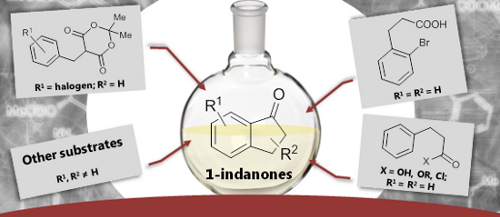
- , 1-indanone has been obtained in 80% yield. Interestingly, when aluminum chloride was added to the lactone in benzene, the yield of this reaction decreased (30%) [34]. Irradiation of esters 44 possessing the photoremovable 2,5-dimethylphenacyl group in benzene or cyclohexane solutions led to free

Graphical Abstract

Figure 1: Biologically active 1-indanones and their structural analogues.

Figure 2: Number of papers about (a) 1-indanones, (b) synthesis of 1-indanones.

Scheme 1: Synthesis of 1-indanone (2) from hydrocinnamic acid (1).

Scheme 2: Synthesis of 1-indanone (2) from 3-(2-bromophenyl)propionic acid (3).

Scheme 3: Synthesis of 1-indanones 5 from 3-arylpropionic acids 4.

Scheme 4: Synthesis of kinamycin (9a) and methylkinamycin C (9b).

Scheme 5: Synthesis of trifluoromethyl-substituted arylpropionic acids 12, 1-indanones 13 and dihydrocoumarin...

Scheme 6: Synthesis of 1-indanones 16 from benzoic acids 15.

Scheme 7: Synthesis of 1-indanones 18 from arylpropionic and 3-arylacrylic acids 17.

Scheme 8: The NbCl5-induced one-step synthesis of 1-indanones 22.

Scheme 9: Synthesis of biologically active 1-indanone derivatives 26.

Scheme 10: Synthesis of enantiomerically pure indatraline ((−)-29).

Scheme 11: Synthesis of 1-indanone (2) from the acyl chloride 30.

Scheme 12: Synthesis of the mechanism-based inhibitors 33 of coelenterazine.

Scheme 13: Synthesis of the indane 2-imidazole derivative 37.

Scheme 14: Synthesis of fluorinated PAHs 41.

Scheme 15: Synthesis of 1-indanones 43 via transition metal complexes-catalyzed carbonylative cyclization of m...

Scheme 16: Synthesis of 6-methyl-1-indanone (46).

Scheme 17: Synthesis of 1-indanone (2) from ester 48.

Scheme 18: Synthesis of benzopyronaphthoquinone 51 from the spiro-1-indanone 50.

Scheme 19: Synthesis of the selective endothelin A receptor antagonist 55.

Scheme 20: Synthesis of 1-indanones 60 from methyl vinyl ketone (57).

Scheme 21: Synthesis of 1-indanones 64 from diethyl phthalate 61.

Scheme 22: Synthesis of 1-indanone derivatives 66 from various Meldrum’s acids 65.

Scheme 23: Synthesis of halo 1-indanones 69.

Scheme 24: Synthesis of substituted 1-indanones 71.

Scheme 25: Synthesis of spiro- and fused 1-indanones 73 and 74.

Scheme 26: Synthesis of spiro-1,3-indanodiones 77.

Scheme 27: Mechanistic pathway for the NHC-catalyzed Stetter–Aldol–Michael reaction.

Scheme 28: Synthesis of 2-benzylidene-1-indanone derivatives 88a–d.

Scheme 29: Synthesis of 1-indanone derivatives 90a–i.

Scheme 30: Synthesis of 1-indanones 96 from o-bromobenzaldehydes 93 and alkynes 94.

Scheme 31: Synthesis of 3-hydroxy-1-indanones 99.

Scheme 32: Photochemical preparation of 1-indanones 103 from ketones 100.

Scheme 33: Synthesis of chiral 3-aryl-1-indanones 107.

Scheme 34: Photochemical isomerization of 2-methylbenzil 108.

Scheme 35: Synthesis of 2-hydroxy-1-indanones 111a–c.

Scheme 36: Synthesis of 1-indanone derivatives 113 and 114 from η6-1,2-dioxobenzocyclobutene complex 112.

Scheme 37: Synthesis of nakiterpiosin (117).

Scheme 38: Synthesis of 2-alkyl-1-indanones 120.

Scheme 39: Synthesis of fluorine-containing 1-indanone derivatives 123.

Scheme 40: Synthesis of 2-benzylidene and 2-benzyl-1-indanones 126, 127 from the chalcone 124.

Scheme 41: Synthesis of 2-bromo-6-methoxy-3-phenyl-1-indanone (130).

Scheme 42: Synthesis of combretastatin A-4-like indanones 132a–s.

Figure 3: Chemical structures of investigated dienones 133 and synthesized cyclic products 134–137.

Figure 4: Chemical structures of 1-indanones and their heteroatom analogues 138–142.

Scheme 43: Synthesis of 2-phosphorylated and 2-non-phosphorylated 1-indanones 147 and 148 from β-ketophosphona...

Scheme 44: Photochemical synthesis of 1-indanone derivatives 150, 153a, 153b.

Scheme 45: Synthesis of polysubstituted-1-indanones 155, 157.

Scheme 46: Synthesis of 1-indanones 159a–g from α-arylpropargyl alcohols 158 using RhCl(PPh3)3 as a catalyst.

Scheme 47: Synthesis of optically active 1-indanones 162 via the asymmetric Rh-catalyzed isomerization of race...

Scheme 48: Mechanism of the Rh-catalyzed isomerization of α-arylpropargyl alcohols 161 to 1-indanones 162.

Figure 5: Chemical structure of abicoviromycin (168) and its new benzo derivative 169.

Scheme 49: Synthesis of racemic benzoabicoviromycin 172.

Scheme 50: Synthesis of [14C]indene 176.

Scheme 51: Synthesis of indanone derivatives 178–180.

Scheme 52: Synthesis of racemic pterosin A 186.

Scheme 53: Synthesis of trans-2,3-disubstituted 1-indanones 189.

Scheme 54: Synthesis of 3-aryl-1-indanone derivatives 192.

Scheme 55: Synthesis of 1-indanone derivatives 194 from 3-(2-iodoaryl)propanonitriles 193.

Scheme 56: Synthesis of 1-indanones 200–204 by cyclization of aromatic nitriles.

Scheme 57: Synthesis of 1,1’-spirobi[indan-3,3’-dione] derivative 208.

Scheme 58: Total synthesis of atipamezole analogues 211.

Scheme 59: Synthesis of 3-[4-(1-piperidinoethoxy)phenyl]spiro[indene-1,1’-indan]-5,5’-diol hydrochloride 216.

Scheme 60: Synthesis of 3-arylindan-1-ones 219.

Scheme 61: Synthesis of 2-hydroxy-1-indanones 222.

Scheme 62: Synthesis of the 1-indanone 224 from the THP/MOM protected chalcone epoxide 223.

Scheme 63: Synthesis of 1-indanones 227 from γ,δ-epoxy ketones 226.

Scheme 64: Synthesis of 2-hydroxy-2-methylindanone (230).

Scheme 65: Synthesis of 1-indanone derivatives 234 from cyclopropanol derivatives 233.

Scheme 66: Synthesis of substituted 1-indanone derivatives 237.

Scheme 67: Synthesis of 7-methyl substituted 1-indanone 241 from 1,3-pentadiene (238) and 2-cyclopentenone (239...

Scheme 68: Synthesis of disubstituted 1-indanone 246 from the siloxydiene 244 and 2-cyclopentenone 239.

Scheme 69: Synthesis of 5-hydroxy-1-indanone (250) via the Diels–Alder reaction of 1,3-diene 248 with sulfoxid...

Scheme 70: Synthesis of halogenated 1-indanones 253a and 253b.

Scheme 71: Synthesis of 1-indanones 257 and 258 from 2-bromocyclopentenones 254.

Scheme 72: Synthesis of 1-indanone 261 from 2-bromo-4-acetoxy-2-cyclopenten-1-one (260) and 1,2-dihydro-4-viny...

Scheme 73: Synthesis of 1-indanone 265 from 1,2-dihydro-7-methoxy-4-vinylnaphthalene (262) and bromo-substitut...

Scheme 74: Synthesis of 1-indanone 268 from dihydro-3-vinylphenanthrene 266 and 4-acetoxy-2-cyclopenten-1-one (...

Scheme 75: Synthesis of 1-indanone 271 from phenylselenyl-substituted cyclopentenone 268.

Scheme 76: Synthesis of 1-indanone 272 from the trienone 270.

Scheme 77: Synthesis of the 1-indanone 276 from the aldehyde 273.

Scheme 78: Synthesis of 1-indanones 278 and 279.

Scheme 79: Synthesis of 1-indanone 285 from octa-1,7-diyne (282) and cyclopentenone 239.

Scheme 80: Synthesis of benz[f]indan-1-one (287) from cyclopentenone 239 and o-bis(dibromomethyl)benzene (286)....

Scheme 81: Synthesis of 3-methyl-substituted benz[f]indan-1-one 291 from o-bis(dibromomethyl)benzene (286) and...

Scheme 82: Synthesis of benz[f]indan-1-one (295) from the anthracene epidioxide 292.

Scheme 83: Synthesis of 1-indanone 299 from homophthalic anhydride 298 and cyclopentynone 297.

Scheme 84: Synthesis of cyano-substituted 1-indanone derivative 301 from 2-cyanomethylbenzaldehyde (300) and c...

Scheme 85: Synthesis of 1-indanone derivatives 303–305 from ketene dithioacetals 302.

Scheme 86: Synthesis of 1-indanones 309–316.

Scheme 87: Mechanism of the hexadehydro-Diels–Alder (HDDA) reaction.

Scheme 88: Synthesis of 1-indenone 318 and 1-indanones 320 and 321 from tetraynes 317 and 319.

Scheme 89: Synthesis of 1-indanone 320 from the triyn 319.

Scheme 90: Synthesis 1-indanone 328 from 2-methylfuran 324.

Scheme 91: Synthesis of 1-indanones 330 and 331 from furans 329.

Scheme 92: Synthesis of 1-indanone 333 from the cycloadduct 332.

Scheme 93: Synthesis of (S)-3-arylindan-1-ones 335.

Scheme 94: Synthesis of (R)-2-acetoxy-1-indanone 338.

Figure 6: Chemical structures of obtained cyclopenta[α]phenanthrenes 339.

Scheme 95: Synthesis of the benzoindanone 343 from arylacetaldehyde 340 with 1-trimethylsilyloxycyclopentene (...
Biosynthetic origin of butyrolactol A, an antifungal polyketide produced by a marine-derived Streptomyces
- Enjuro Harunari,
- Hisayuki Komaki and
- Yasuhiro Igarashi
Beilstein J. Org. Chem. 2017, 13, 441–450, doi:10.3762/bjoc.13.47
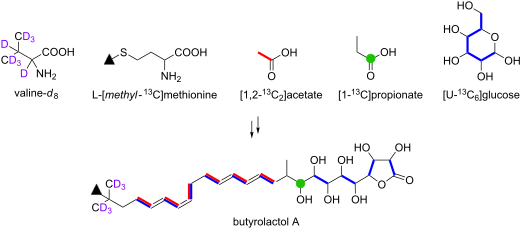
- system bearing a γ-lactone terminus constitutes the right half of the molecule. To date, no structurally related natural products are known except for its demethyl congener butyrolactol B that was also isolated from the same strain and has an isopropyl group instead of the tert-butyl terminus [9]. Very
- intriguing feature of this molecule is the highly oxygenated carbon chain in which eight hydroxy groups, one of which is used for lactone formation, are contiguously aligned. A 1,3-diol is a common structural element in aliphatic polyketides because the incorporation of malonate-precursors gives rise to the
- with a parameter set optimized for 1JCC 50 Hz, cross peaks derived from the intact 13C2 acetate units were detected for the carbon pairs mentioned above (Table 1, Figure 4a). According to the incorporation result of the doubly labeled acetate, malonyl-CoA is not the extender unit for the lactone (C-1

Graphical Abstract

Figure 1: The structure of butyrolactol A (1).

Figure 2: Cyanobacterial polyketides bearing a tert-butyl group.

Figure 3: Actinomycete metabolites possessing a contiguous 1,2-diol system.

Figure 4: Feeding experiments of 13C-labeled precursors into 1 detected by 2D-INADEQUATE NMR experiments. (a)...

Figure 5: Organization of the biosynthesis gene cluster for 1. Blue, transcriptional regulator; pink, PKS for...

Figure 6: Biosynthetic pathway of hydroxymalonyl-ACP. Adapted from [24].
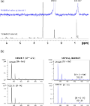
Figure 7: Incorporation of L-valine-d8 into 1. (a) 1H NMR spectrum of natural 1 and 2H NMR spectrum of L-vali...

Figure 8: Incorporation of 13C- and 2H-labeled precursors into 1.
Polyketide stereocontrol: a study in chemical biology
- Kira J. Weissman
Beilstein J. Org. Chem. 2017, 13, 348–371, doi:10.3762/bjoc.13.39
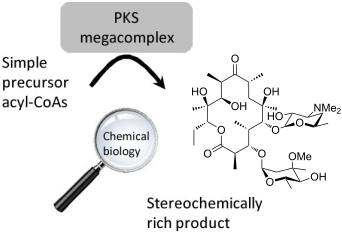
- stage. This modification results in an experimentally tractable δ-lactone 9 instead of the 14-membered macrolide, 6-deoxyerythronolide B. Notably, the two methyl centers in the lactone have opposite configurations (for clarity, that at C-2 will be referred to as D-configured, and that at C-4 as L), and
- (Figure 9), (2RS)-[2-2H]methylmalonyl-CoA (10) was prepared and provided to DEBS 1-TE (along with starter unit butyryl-CoA (11) and NADPH (12)), knowing that solely the (2S)- isomer would be utilized. Analysis by mass spectrometry and NMR of the triketide lactone product 13 showed that only a single
- lactone product). Sequestering of intermediates by the ACP domains has been proposed as a source of configurational stability at C-2 [82]. However, as all direct study of this question to date by NMR has failed to reveal any direct contact between modular PKS ACP domains and their attached substrates [83

Graphical Abstract

Figure 1: Structures of clinically-relevant polyketides: erythromycin A (1), azithromycin (2), clarithromycin...

Figure 2: Schematic of erythromycin A (1) bound to 23S ribosomal RNA of the 50S subunit of the Deinococcus ra...

Figure 3: Schematic of the biosynthetic pathway leading to erythromycin A (1) in the bacterium Saccharopolysp...

Figure 4: Schematic of the virginiamycin PKS from Streptomyces virginiae, a member of the trans-AT PKS family ...

Figure 5: Determination of the stereochemistry of extender unit selection by the AT domains of modular PKS. a...

Figure 6: Creation by genetic engineering of the DEBS 1-TE model system. The region of the eryAIII gene encod...

Figure 7: Model for substrate selection by AT domains. a) Sequence motifs in malonyl- and methylmalonyl-CoA-s...

Figure 8: Proposed mechanism for KS-catalyzed chain extension, based on extrapolation from studies on homolog...

Figure 9: Experiment in vitro to determine the stereochemistry of condensation in modular PKS [46]. Use of specif...

Figure 10: Genetic engineering experiments which suggested a role for the KS domain in epimerization. a) A dik...

Figure 11: Models for control of the stereochemistry of reduction by KR domains. The two directions of ketored...

Figure 12: Assays in vitro to evaluate the stereospecificity of recombinant KR domains. A series of KR domains...

Figure 13: Assays in vitro which provided the first direct evidence that KR domains act as epimerases [77]. Biosyn...

Figure 14: Assays in vitro to demonstrate directly the epimerase activity of PKS KR domains. a) Equilibrium ex...

Figure 15: Model for DH-catalyzed generation of trans and cis double bonds by syn elimination from substrates ...
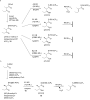
Figure 16: Stereospecificity of dehydration by Rif DH10 [94]. a) The four possible diastereomeric diketide-ACP sub...

Figure 17: Stereocontrol by PKS ER domains. Sequence motifs correlated with the final stereochemistry of the C...

Figure 18: a) PKS engineered to test the role of the ER stereospecificity residues [115]. TKS-ERY4 was created by r...
Identification, synthesis and mass spectrometry of a macrolide from the African reed frog Hyperolius cinnamomeoventris
- Markus Menke,
- Pardha Saradhi Peram,
- Iris Starnberger,
- Walter Hödl,
- Gregory F.M. Jongsma,
- David C. Blackburn,
- Mark-Oliver Rödel,
- Miguel Vences and
- Stefan Schulz
Beilstein J. Org. Chem. 2016, 12, 2731–2738, doi:10.3762/bjoc.12.269
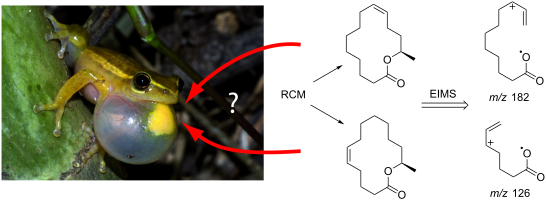
- ; pheromones; Introduction The lactone motif is found in many compounds that are used in chemical communication. Among them, macrocyclic lactones are an important class because of their biosynthetic availability and their inherent compound properties. During the biosynthesis of macrocyclic lactones, a fatty

Graphical Abstract

Figure 1: Macrolactones produced in scent glands of frogs: (Z)-Tetradec-5-en-13-olide (1) or (Z)-tetradec-9-e...

Figure 2: Total ion chromatogram of the gular gland extract of Hyperolius cinnamomeoventris. X: frog anaesthe...

Scheme 1: Synthesis of (9Z,13R)-tetradec-9-en-13-olide (2).

Scheme 2: Synthesis of (5Z,13R)-tetradec-5-en-13-olide ((R)-1). The enantiomer was obtained in a similar sequ...
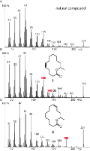
Figure 3: Mass spectra of A) the natural compound A, B) (Z)-tetradec-5-en-13-olide (1), and C) (Z)-tetradec-9...
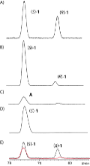
Figure 4: Total ion chromatogram of the enantiomer separation of (Z)-1 on a chiral β-TBDMS- Hydrodex phase. T...

Figure 5: Proposed mass spectrometric fragmentation of macrolides 1 and 2 leading to diagnostic ions of the i...
Evidence for an iterative module in chain elongation on the azalomycin polyketide synthase
- Hui Hong,
- Yuhui Sun,
- Yongjun Zhou,
- Emily Stephens,
- Markiyan Samborskyy and
- Peter F. Leadlay
Beilstein J. Org. Chem. 2016, 12, 2164–2172, doi:10.3762/bjoc.12.206
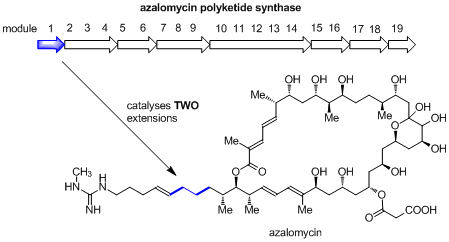
- gene cluster for biosynthesis of the polyketide β-lactone ebelactone in Streptomyces aburaviensis has shown that, contrary to a recently-published proposal, the ebelactone polyketide synthase faithfully follows the colinear modular paradigm. Keywords: colinearity; ebelactone; enzyme catalysis
- the third is the PKS for the β-lactone ebelactone, a potent esterase inhibitor from Streptomyces aburaviensis 2a,b (Figure 1) [30]. These examples are particularly interesting as potential model systems because the chemical outcome of the two successive extensions catalysed by the iterative module is

Graphical Abstract

Figure 1: The structures of marginolactones azalomycin and kanchanamycin, and of the β-lactones ebelactone A ...

Scheme 1: Comparison of the bioinformatic prediction for ebelactone biosynthesis with the known structure of ...
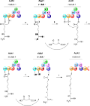
Scheme 2: Proposed model for iteration of module 1 of AzlA1 in azalomycin biosynthesis. The 4-guanidinobutyry...

Figure 2: LC–MS analysis of azalomycin F4a production. a) DSM4137 wild type; b) Δazl (azl disrupted mutant); ...
The direct oxidative diene cyclization and related reactions in natural product synthesis
- Juliane Adrian,
- Leona J. Gross and
- Christian B. W. Stark
Beilstein J. Org. Chem. 2016, 12, 2104–2123, doi:10.3762/bjoc.12.200
- diastereoisomeric lactone 52 in 76% yield. This lactone (52) was converted to enediol 53 in a further few steps. The second THF ring was then established using an epoxidation–cyclization sequence. Thus, asymmetric Sharpless epoxidation (SAE) [103][104] yielded an intermediary oxirane (not shown in Scheme 12) which

Graphical Abstract
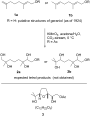
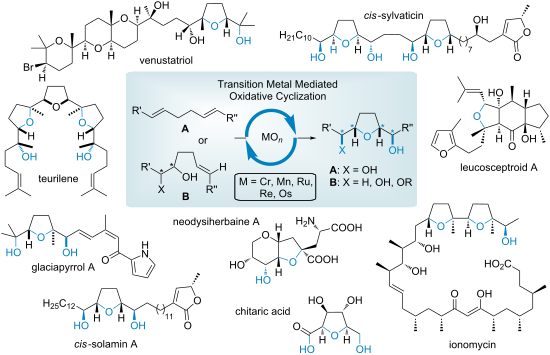
Scheme 1: Putative structures of geraniol 1a (R = H) or 1b (R = H) (in 1924), their expected dihydroxylation ...

Scheme 2: Correlation between the substrate double bond geometry and relative stereochemistry of the correspo...

Scheme 3: Mechanisms and classification for the metal-mediated oxidative cyclizations to form 2,5-disubstitut...

Scheme 4: Synthesis of (+)-anhydro-D-glucitol and (+)-D-chitaric acid using an OsO4-mediated oxidative cycliz...

Scheme 5: Total synthesis of neodysiherbaine A via a Ru(VIII)- and an Os(VI)-catalyzed oxidative cyclization,...

Scheme 6: Formal synthesis of ionomycin by Kocienski and co-workers.

Scheme 7: Total synthesis of amphidinolide F by Fürstner and co-workers.

Scheme 8: Brown`s and Donohoe`s oxidative cyclization approach to cis-solamin A.
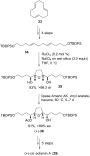
Scheme 9: Total synthesis of cis-solamin A using a Ru(VIII)-catalyzed oxidative cyclization and enzymatic des...
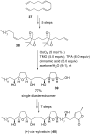
Scheme 10: Donohoe´s double oxidative cyclization approach to cis-sylvaticin.

Scheme 11: Permanganate-mediated approach to cis-sylvaticin by Brown and co-workers.

Scheme 12: Total synthesis of membranacin using a KMnO4-mediated oxidative cyclization.

Scheme 13: Total synthesis of membrarollin and its analogue 21,22-diepi-membrarollin.
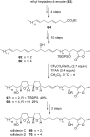
Scheme 14: Total synthesis of rollidecin C and D using a late stage Re(VII)-catalyzed oxidative polycyclizatio...

Scheme 15: Co(II)-catalyzed oxidative cyclization in the total synthesis of asimilobin and gigantetrocin A.

Scheme 16: Mn(VII)-catalyzed oxidative cyclization of a 1,5-diene in the synthesis of trans-(+)-linalool oxide....

Scheme 17: Re(VII)-catalyzed oxidative cyclization in the total synthesis of teurilene.
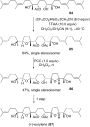
Scheme 18: Total synthesis of (+)-eurylene via Re(VII)- and Cr(VI)-mediated oxidative cyclizations.

Scheme 19: Synthesis of cis- and trans-THF Rings of eurylene via Mn(VII)-mediated oxidative cyclizations.

Scheme 20: Cr(VI)-catalyzed oxidative cyclization in the total synthesis of venustatriol by Corey et al.

Scheme 21: Ru(VIII)-catalyzed oxidative cyclization of a 1,5-diene in the synthesis and evaluation of its ster...

Scheme 22: Ru(VII)-catalyzed oxidative cyclization of a 5,6-dihydroxy alkene in the synthesis of the core stru...
Diastereoselective synthesis of 3,4-dihydro-2H-pyran-4-carboxamides through an unusual regiospecific quasi-hydrolysis of a cyano group
- Mikhail Yu. Ievlev,
- Oleg V. Ershov,
- Mikhail Yu. Belikov,
- Angelina G. Milovidova,
- Viktor A. Tafeenko and
- Oleg E. Nasakin
Beilstein J. Org. Chem. 2016, 12, 2093–2098, doi:10.3762/bjoc.12.198

- presence thereof, but all acids promote only the iminolactone decyclization process without traces of lactone derivative 4 (Table 2). It is also important to note that during the reaction pathway (Scheme 3) a carbonyl-assisted carbonitrile hydration effect (CACHE) was occured. The carbonyl group, through

Graphical Abstract

Scheme 1: An exclusive approach to 3,4-dihydro-2H-pyran-4-carboxamides from non-pyran sources.

Scheme 2: Known approach to pyran derivatives based on ketonitriles 1.

Figure 1: The molecular structure of 2a with atom-numbering scheme. Displacement ellipsoids are drawn at the ...

Scheme 3: Plausible reaction pathways for 3,4-dihydro-2H-pyran-4-carbxamides 2 formation.
Rearrangements of organic peroxides and related processes
- Ivan A. Yaremenko,
- Vera A. Vil’,
- Dmitry V. Demchuk and
- Alexander O. Terent’ev
Beilstein J. Org. Chem. 2016, 12, 1647–1748, doi:10.3762/bjoc.12.162
- for the oxidative production of valuable intermediates [264][265][266][267][268][269]. The asymmetric oxidation of 3-substituted cyclopentane-1,2-diones 87a–f is an efficient tool in organic synthesis for the preparation of unsymmetrical γ-lactone acids 88a–f with high optical purity and good yields
- (Table 6). These γ-lactone acids are valuable substrates for the synthesis of compounds with potentially useful pharmacological properties, such as homocitrates, alkyl- and aryl-substituted nucleosides [270][271][272]. The reaction starts with an asymmetric epoxidation of the substituted cyclopentane-1,2
- -dione 87a to form epoxide 89a. The second step involves the Baeyer–Villiger oxidation of epoxide 89a to peroxide 90a followed by the rearrangement into intermediate 91a. The latter is hydrolyzed by H2O to form dicarboxylic acid 92a, which is cyclized under the acidic conditions to γ-lactone acid 88a

Graphical Abstract
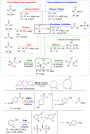
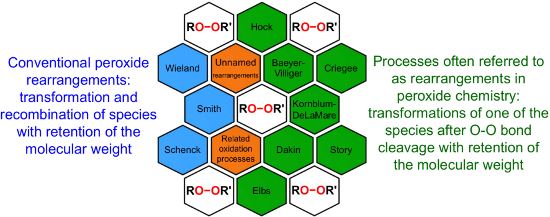
Figure 1: The named transformations considered in this review.

Scheme 1: The Baeyer–Villiger oxidation.

Scheme 2: The general mechanism of the peracid-promoted Baeyer–Villiger oxidation.

Scheme 3: General mechanism of the Lewis acid-catalyzed Baeyer–Villiger rearrangement.

Scheme 4: The theoretically studied mechanism of the BV oxidation reaction promoted by H2O2 and the Lewis aci...

Scheme 5: Proton movements in the transition states of the Baeyer–Villiger oxidation.

Scheme 6: The dependence of the course of the Baeyer–Villiger oxidation on the type of O–O-bond cleavage in t...
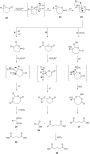
Scheme 7: The acid-catalyzed Baeyer–Villiger oxidation of cyclic epoxy ketones 22.

Scheme 8: Oxidation of isophorone oxide 29.

Scheme 9: Synthesis of acyl phosphate 32 from acyl phosphonate 31.

Scheme 10: Synthesis of aflatoxin B2 (36).

Scheme 11: The Baeyer–Villiger rearrangement of ketones 37 to lactones 38.

Scheme 12: Synthesis of 3,4-dimethoxybenzoic acid (40) via Baeyer–Villiger oxidation.

Scheme 13: Oxone transforms α,β-unsaturated ketones 43 into vinyl acetates 44.

Scheme 14: The Baeyer–Villiger oxidation of ketones 45 using diaryl diselenide and hydrogen peroxide.

Scheme 15: Baeyer–Villiger oxidation of (E)-2-methylenecyclobutanones.

Scheme 16: Oxidation of β-ionone (56) by H2O2/(BnSe)2 with formation of (E)-2-(2,6,6-trimethylcyclohex-1-en-1-...

Scheme 17: The mechanism of oxidation of ketones 58a–f by hydrogen peroxide in the presence of arsonated polys...

Scheme 18: Oxidation of ketone (58b) by H2O2 to 6-methylcaprolactone (59b) catalyzed by Pt complex 66·BF4.

Scheme 19: Oxidation of ketones 67 with H2O2 in the presence of [(dppb}Pt(µ-OH)]22+.

Scheme 20: The mechanism of oxidation of ketones 67 in the presence of [(dppb}Pt(µ-OH)]22+ and H2O2.

Scheme 21: Oxidation of benzaldehydes 69 in the presence of the H2O2/MeReO3 system.

Scheme 22: Oxidation of acetophenones 72 in the presence of the H2O2/MeReO3 system.

Scheme 23: Baeyer–Villiger oxidation of 2-adamantanone (45c) in the presence of Sn-containing mesoporous silic...

Scheme 24: Aerobic Baeyer–Villiger oxidation of ketones 76 using metal-free carbon.

Scheme 25: A regioselective Baeyer-Villiger oxidation of functionalized cyclohexenones 78 into a dihydrooxepin...

Scheme 26: The oxidation of aldehydes and ketones 80 by H2O2 catalyzed by Co4HP2Mo15V3O62.

Scheme 27: The cleavage of ketones 82 with hydrogen peroxide in alkaline solution.

Scheme 28: Oxidation of ketones 85 to esters 86 with H2O2–urea in the presence of KHCO3.

Scheme 29: Mechanism of the asymmetric oxidation of cyclopentane-1,2-dione 87a with the Ti(OiPr)4/(+)DET/t-BuO...

Scheme 30: The oxidation of cis-4-tert-butyl-2-fluorocyclohexanone (93) with m-chloroperbenzoic acid.

Scheme 31: The mechanism of the asymmetric oxidation of 3-substituted cyclobutanone 96a in the presence of chi...

Scheme 32: Enantioselective Baeyer–Villiger oxidation of cyclic ketones 98.

Scheme 33: Regio- and enantioselective Baeyer–Villiger oxidation of cyclic ketones 101.

Scheme 34: The proposed mechanism of the Baeyer–Villiger oxidation of acetal 105f.

Scheme 35: Synthesis of hydroxy-10H-acridin-9-one 117 from tetramethoxyanthracene 114.

Scheme 36: The Baeyer–Villiger oxidation of the fully substituted pyrrole 120.

Scheme 37: The Criegee rearrangement.

Scheme 38: The mechanism of the Criegee reaction of a peracid with a tertiary alcohol 122.

Scheme 39: Criegee rearrangement of decaline ethylperoxoate 127 into ketal 128.

Scheme 40: The ionic cleavage of 2-methoxy-2-propyl perester 129.

Scheme 41: The Criegee rearrangement of α-methoxy hydroperoxide 136.
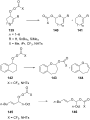
Scheme 42: Synthesis of enol esters and acetals via the Criegee rearrangement.

Scheme 43: Proposed mechanism of the transformation of 1-hydroperoxy-2-oxabicycloalkanones 147a–d.

Scheme 44: Transformation of 3-hydroxy-1,2-dioxolanes 151 into diketone derivatives 152.

Scheme 45: Criegee rearrangement of peroxide 153 with the mono-, di-, and tri-O-insertion.

Scheme 46: The sequential Criegee rearrangements of adamantanes 157a,b.

Scheme 47: Synthesis of diaryl carbonates 160a–d from triarylmethanols 159a–d through successive oxygen insert...

Scheme 48: The synthesis of sesquiterpenes 162 from ketone 161 with a Criegee rearrangement as one key step.

Scheme 49: Synthesis of trans-hydrindan derivatives 164, 165.

Scheme 50: The Hock rearrangement.

Scheme 51: The general scheme of the cumene process.

Scheme 52: The Hock rearrangement of aliphatic hydroperoxides.
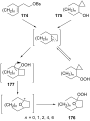
Scheme 53: The mechanism of solvolysis of brosylates 174a–c and spiro cyclopropyl carbinols 175a–c in THF/H2O2....

Scheme 54: The fragmentation mechanism of hydroperoxy acetals 178 to esters 179.

Scheme 55: The acid-catalyzed rearrangement of phenylcyclopentyl hydroperoxide 181.

Scheme 56: The peroxidation of tertiary alcohols in the presence of a catalytic amount of acid.

Scheme 57: The acid-catalyzed reaction of bicyclic secondary alcohols 192 with hydrogen peroxide.

Scheme 58: The photooxidation of 5,6-disubstituted 3,4-dihydro-2H-pyrans 196.

Scheme 59: The oxidation of tertiary alcohols 200a–g, 203a,b, and 206.

Scheme 60: Transformation of functional peroxide 209 leading to 2,3-disubstitued furans 210 in one step.

Scheme 61: The synthesis of carbazoles 213 via peroxide rearrangement.

Scheme 62: The construction of C–N bonds using the Hock rearrangement.

Scheme 63: The synthesis of moiety 218 from 217 which is a structural motif in the antitumor–antibiotic of CC-...

Scheme 64: The in vivo oxidation steps of cholesterol (219) by singlet oxygen.

Scheme 65: The proposed mechanism of the rearrangement of cholesterol-5α-OOH 220.

Scheme 66: Photochemical route to artemisinin via Hock rearrangement of 223.

Scheme 67: The Kornblum–DeLaMare rearrangement.

Scheme 68: Kornblum–DeLaMare transformation of 1-phenylethyl tert-butyl peroxide (225).

Scheme 69: The synthesis 4-hydroxyenones 230 from peroxide 229.

Scheme 70: The Kornblum–DeLaMare rearrangement of peroxide 232.

Scheme 71: The reduction of peroxide 234.

Scheme 72: The Kornblum–DeLaMare rearrangement of endoperoxide 236.

Scheme 73: The rearrangement of peroxide 238 under Kornblum–DeLaMare conditions.

Scheme 74: The proposed mechanism of rearrangement of peroxide 238.

Scheme 75: The Kornblum–DeLaMare rearrangement of peroxides 242a,b.

Scheme 76: The base-catalyzed rearrangements of bicyclic endoperoxides having electron-withdrawing substituent...

Scheme 77: The base-catalyzed rearrangements of bicyclic endoperoxides 249a,b having electron-donating substit...

Scheme 78: The base-catalyzed rearrangements of bridge-head substituted bicyclic endoperoxides 251a,b.

Scheme 79: The Kornblum–DeLaMare rearrangement of hydroperoxide 253.

Scheme 80: Synthesis of β-hydroxy hydroperoxide 254 from endoperoxide 253.

Scheme 81: The amine-catalyzed rearrangement of bicyclic endoperoxide 263.

Scheme 82: The base-catalyzed rearrangement of meso-endoperoxide 268 into 269.

Scheme 83: The photooxidation of 271 and subsequent Kornblum–DeLaMare reaction.

Scheme 84: The Kornblum–DeLaMare rearrangement as one step in the oxidation reaction of enamines.

Scheme 85: The Kornblum–DeLaMare rearrangement of 3,5-dihydro-1,2-dioxenes 284, 1,2-dioxanes 286, and tert-but...

Scheme 86: The Kornblum–DeLaMare rearrangement of epoxy dioxanes 290a–d.

Scheme 87: Rearrangement of prostaglandin H2 292.

Scheme 88: The synthesis of epicoccin G (297).

Scheme 89: The Kornblum–DeLaMare rearrangement used in the synthesis of phomactin A.

Scheme 90: The Kornblum–DeLaMare rearrangement in the synthesis of 3H-quinazolin-4-one 303.

Scheme 91: The Kornblum–DeLaMare rearrangement in the synthesis of dolabriferol (308).

Scheme 92: Sequential transformation of 3-substituted 2-pyridones 309 into 3-hydroxypyridine-2,6-diones 311 in...

Scheme 93: The Kornblum–DeLaMare rearrangement of peroxide 312 into hydroxy enone 313.

Scheme 94: The Kornblum–DeLaMare rearrangement in the synthesis of polyfunctionalized carbonyl compounds 317.

Scheme 95: The Kornblum–DeLaMare rearrangement in the synthesis of (Z)-β-perfluoroalkylenaminones 320.

Scheme 96: The Kornblum–DeLaMare rearrangement in the synthesis of γ-ketoester 322.

Scheme 97: The Kornblum–DeLaMare rearrangement in the synthesis of diterpenoids 326 and 328.

Scheme 98: The synthesis of natural products hainanolidol (331) and harringtonolide (332) from peroxide 329.

Scheme 99: The synthesis of trans-fused butyrolactones 339 and 340.

Scheme 100: The synthesis of leucosceptroid C (343) and leucosceptroid P (344) via the Kornblum–DeLaMare rearra...

Scheme 101: The Dakin oxidation of arylaldehydes or acetophenones.

Scheme 102: The mechanism of the Dakin oxidation.

Scheme 103: A solvent-free Dakin reaction of aromatic aldehydes 356.

Scheme 104: The organocatalytic Dakin oxidation of electron-rich arylaldehydes 358.

Scheme 105: The Dakin oxidation of electron-rich arylaldehydes 361.

Scheme 106: The Dakin oxidation of arylaldehydes 358 in water extract of banana (WEB).

Scheme 107: A one-pot approach towards indolo[2,1-b]quinazolines 364 from indole-3-carbaldehydes 363 through th...

Scheme 108: The synthesis of phenols 367a–c from benzaldehydes 366a-c via acid-catalyzed Dakin oxidation.

Scheme 109: Possible transformation paths of the highly polarized boric acid coordinated H2O2–aldehyde adduct 3...

Scheme 110: The Elbs oxidation of phenols 375 to hydroquinones.

Scheme 111: The mechanism of the Elbs persulfate oxidation of phenols 375 affording p-hydroquinones 376.

Scheme 112: Oxidation of 2-pyridones 380 under Elbs persulfate oxidation conditions.

Scheme 113: Synthesis of 3-hydroxy-4-pyridone (384) via an Elbs oxidation of 4-pyridone (382).

Scheme 114: The Schenck rearrangement.

Scheme 115: The Smith rearrangement.

Scheme 116: Three main pathways of the Schenck rearrangement.

Scheme 117: The isomerization of hydroperoxides 388 and 389.

Scheme 118: Trapping of dioxacyclopentyl radical 392 by oxygen.

Scheme 119: The hypothetical mechanism of the Schenck rearrangement of peroxide 394.

Scheme 120: The autoxidation of oleic acid (397) with the use of labeled isotope 18O2.

Scheme 121: The rearrangement of 18O-labeled hydroperoxide 400 under an atmosphere of 16O2.

Scheme 122: The rearrangement of the oleate-derived allylic hydroperoxides (S)-421 and (R)-425.

Scheme 123: Mechanisms of Schenck and Smith rearrangements.

Scheme 124: The rearrangement and cyclization of 433.

Scheme 125: The Wieland rearrangement.

Scheme 126: The rearrangement of bis(triphenylsilyl) 439 or bis(triphenylgermyl) 441 peroxides.

Scheme 127: The oxidative transformation of cyclic ketones.

Scheme 128: The hydroxylation of cyclohexene (447) in the presence of tungstic acid.

Scheme 129: The oxidation of cyclohexene (447) under the action of hydrogen peroxide.

Scheme 130: The reaction of butenylacetylacetone 455 with hydrogen peroxide.

Scheme 131: The oxidation of bridged 1,2,4,5-tetraoxanes.

Scheme 132: The proposed mechanism for the oxidation of bridged 1,2,4,5-tetraoxanes.

Scheme 133: The rearrangement of ozonides.

Scheme 134: The acid-catalyzed oxidative rearrangement of malondialdehydes 462 under the action of H2O2.
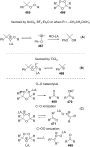
Scheme 135: Pathways of the Lewis acid-catalyzed cleavage of dialkyl peroxides 465 and ozonides 466.

Scheme 136: The mechanism of the transformation of (tert-butyldioxy)cyclohexanedienones 472.

Scheme 137: The synthesis of Vitamin K3 from 472a.

Scheme 138: Proposed mechanism for the transformation of 478d into silylated endoperoxide 479d.

Scheme 139: The rearrangement of hydroperoxide 485 to form diketone 486.

Scheme 140: The base-catalyzed rearrangement of cyclic peroxides 488a–g.

Scheme 141: Synthesis of chiral epoxides and aldols from peroxy hemiketals 491.

Scheme 142: The multistep transformation of (R)-carvone (494) to endoperoxides 496a–e.

Scheme 143: The decomposition of anthracene endoperoxide 499.

Scheme 144: Synthesis of esters 503 from aldehydes 501 via rearrangement of peroxides 502.

Scheme 145: Two possible paths for the base-promoted decomposition of α-azidoperoxides 502.

Scheme 146: The Story decomposition of cyclic diperoxide 506a.

Scheme 147: The Story decomposition of cyclic triperoxide 506b.

Scheme 148: The thermal rearrangement of endoperoxides A into diepoxides B.

Scheme 149: The transformation of peroxide 510 in the synthesis of stemolide (511).

Scheme 150: The possible mechanism of the rearrangement of endoperoxide 261g.

Scheme 151: The photooxidation of indene 517.

Scheme 152: The isomerization of ascaridole (523).

Scheme 153: The isomerization of peroxide 525.

Scheme 154: The thermal transformation of endoperoxide 355.

Scheme 155: The photooxidation of cyclopentadiene (529) at a temperature higher than 0 °C.

Scheme 156: The thermal rearrangement of endoperoxides 538a,b.

Scheme 157: The transformation of peroxides 541.

Scheme 158: The thermal rearrangements of strained cyclic peroxides.

Scheme 159: The thermal rearrangement of diacyl peroxide 551 in the synthesis of C4-epi-lomaiviticin B core 553....

Scheme 160: The 1O2 oxidation of tryptophan (554) and rearrangement of dioxetane intermediate 555.

Scheme 161: The Fe(II)-promoted cleavage of aryl-substituted bicyclic peroxides.

Scheme 162: The proposed mechanism of the Fe(II)-promoted rearrangement of 557a–c.

Scheme 163: The reaction of dioxolane 563 with Fe(II) sulfate.

Scheme 164: Fe(II)-promoted rearrangement of 1,2-dioxane 565.

Scheme 165: Fe(II) cysteinate-promoted rearrangement of 1,2-dioxolane 568.

Scheme 166: The transformation of 1,2-dioxanes 572a–c under the action of FeCl2.

Scheme 167: Fe(II) cysteinate-promoted transformation of tetraoxane 574.

Scheme 168: The CoTPP-catalyzed transformation of bicyclic endoperoxides 600a–d.

Scheme 169: The CoTPP-catalyzed transformation of epoxy-1,2-dioxanes.

Scheme 170: The Ru(II)-catalyzed reactions of 1,4-endoperoxide 261g.

Scheme 171: The Ru(II)-catalyzed transformation as a key step in the synthesis of elyiapyrone A (610) from 1,4-...

Scheme 172: Peroxides with antimalarial activity.

Scheme 173: The interaction of iron ions with artemisinin (616).

Scheme 174: The interaction of FeCl2 with 1,2-dioxanes 623, 624.

Scheme 175: The mechanism of reaction 623 and 624 with Fe(II)Cl2.

Scheme 176: The reaction of bicyclic natural endoperoxides G3-factors 631–633 with FeSO4.

Scheme 177: The transformation of terpene cardamom peroxide 639.
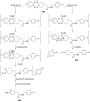
Scheme 178: The different ways of the cleavage of tetraoxane 643.

Scheme 179: The LC–MS analysis of interaction of tetraoxane 646 with iron(II)heme 647.

Scheme 180: The rearrangement of 3,6-epidioxy-1,10-bisaboladiene (EDBD, 649).

Scheme 181: Easily oxidized substrates.

Scheme 182: Biopathway of synthesis of prostaglandins.

Scheme 183: The reduction and rearrangements of isoprostanes.

Scheme 184: The partial mechanism for linoleate 658 oxidation.

Scheme 185: The transformation of lipid hydroperoxide.

Scheme 186: The acid-catalyzed cleavage of the product from free-radical oxidation of cholesterol (667).

Scheme 187: Two pathways of catechols oxidation.

Scheme 188: Criegee-like or Hock-like rearrangement of the intermediate hydroperoxide 675 in dioxygenase enzyme...

Scheme 189: Carotinoides 679 cleavage by carotenoid cleavage dioxygenases.
Rh-Catalyzed reductive Mannich-type reaction and its application towards the synthesis of (±)-ezetimibe
- Motoyuki Isoda,
- Kazuyuki Sato,
- Yurika Kunugi,
- Satsuki Tokonishi,
- Atsushi Tarui,
- Masaaki Omote,
- Hideki Minami and
- Akira Ando
Beilstein J. Org. Chem. 2016, 12, 1608–1615, doi:10.3762/bjoc.12.157
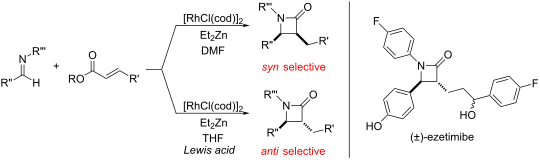
- imine at the α-position (Table 1, entry 9). By using [RhCl(cod)]2, the α,β-unsaturated lactone was also converted to the product with a small improvement in the yield (Table 1, entry 11). Acrylamide 2i also gave the corresponding β-aminoamide 4Ai in a low yield (Table 1, entry 12). In the reaction using
- α,β-unsaturated lactone 2h, the β-lactam anti-3Ah that has a hydroxy group on the side chain was obtained in a low yield (Table 1, entry 11). This result was of interest because the reaction is applicable to the synthesis of ezetimibe. Ezetimibe is an inhibitor of the cholesterol transporter Niemann
- ). BF3·Et2O was found to be the most suitable Lewis acid, and the desired β-lactam (anti-3Bh) was obtained in moderate yield (Table 2, entry 9). Based on these results, we applied this reaction to the synthesis of ezetimibe (Scheme 3). The reaction of imine 1B with lactone 2j proceeded smoothly and gave

Graphical Abstract

Scheme 1: The synthesis of syn-β-lactams using a reductive Mannich-type reaction.

Scheme 2: Previous results using β-substituted α,β-unsaturated esters.

Scheme 3: A new synthetic route for ezetimibe.

Figure 1: Plausible mechanism for the Rh-catalyzed reductive Mannich-type reaction.

Scheme 4: Effect of the Lewis acid addition.

Figure 2: Reaction of 2k and 1A and the configuration of Int A.

Scheme 5: Transition-state model without Lewis acid.

Scheme 6: Transition-state model with Lewis acid.
Biosynthesis of oxygen and nitrogen-containing heterocycles in polyketides
- Franziska Hemmerling and
- Frank Hahn
Beilstein J. Org. Chem. 2016, 12, 1512–1550, doi:10.3762/bjoc.12.148
- annelated with a δ-lactone and a cyclopentanone or oxidation products of the latter. Aflatoxin biosynthesis has been studied since the late 1960s and has attracted attention, because the polyketide undergoes a series of oxidative rearrangements, which drastically alter the molecular scaffold. Due to the
- lactone that is decarboxylated towards the xanthone [103]. Studies with recombinant AflM and a lack of isolatable intermediates however made it clear that the order of steps in demethylsterigmatocystin (107) formation needs to be carefully re-evaluated [100]. Methylation by an O-methyltransferase and
- isoprenoid biosynthesis. The designated branching modules of lactone and glutarimide-producing PKS show similar designs: a branching domain (B or X), which is flanked by a KS and an ACP domain (Scheme 20b and c). In vitro reconstitution experiments with the branching module of the macrolide rhizoxin (130

Graphical Abstract

Scheme 1: Schematic description of the cyclisation reaction catalysed by TE domains. In most cases, the nucle...

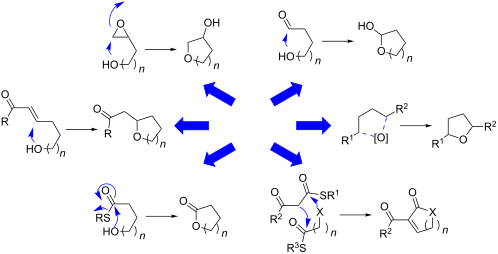
Scheme 2: Mechanisms for the formation of oxygen heterocycles. The degree of substitution can differ from tha...

Scheme 3: Pyran-ring formation in pederin (24) biosynthesis. Incubation of recombinant PedPS7 with substrate ...

Scheme 4: The domain AmbDH3 from ambruticin biosynthesis catalyses the dehydration of 25 and subsequent cycli...

Scheme 5: SalBIII catalyses dehydration of 29 and subsequent cyclisation to tetrahydropyran 30 [18].

Figure 1: All pyranonaphtoquinones contain either the naphtha[2,3-c]pyran-5,10-dione (32) or the regioisomeri...

Scheme 6: Pyran-ring formation in actinorhodin (34) biosynthesis. DNPA: 4-dihydro-9-hydroxy-1-methyl-10-oxo-3H...

Scheme 7: Pyran formation in granaticin (36) biosynthesis. DNPA: 4-dihydro-9-hydroxy-1-methyl-10-oxo-3H-napht...

Scheme 8: Pyran formation in alnumycin (37) biosynthesis. Adapted from [21].

Scheme 9: Biosynthesis of pseudomonic acid A (61). The pyran ring is initially formed in 57 after dehydrogena...

Scheme 10: Epoxidation–cyclisation leads to the formation of the tetrahydropyran ring in the western part of t...

Scheme 11: a) Nonactin (70) is formed from heterodimers of (−)(+)-dimeric nonactic acid and (+)(−)-dimeric non...

Figure 2: Pamamycins (73) are macrodiolide antibiotics containing three tetrahydrofuran moieties, which are a...

Scheme 12: A PS domain homolog in oocydin A (76) biosynthesis is proposed to catalyse furan formation via an o...

Scheme 13: Mechanism of oxidation–furan cyclisation by AurH, which converts (+)-deoxyaureothin (77) into (+)-a...

Scheme 14: Leupyrrin A2 (80) and the proposed biosynthesis of its furylidene moiety [69,70].

Scheme 15: Asperfuranone (93) biosynthesis, adapted from [75].
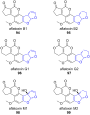
Figure 3: The four major aflatoxins produced by Aspergilli are the types B1, B2, G1 and G2 (94–97). In the di...

Scheme 16: Overview on aflatoxin B1 (94) biosynthesis. HOMST = 11-hydroxy-O-methylsterigmatocystin [78,79,82-106].

Scheme 17: A zipper mechanism leads to the formation of oxygen heterocycles in monensin biosynthesis [109-111].

Scheme 18: Formation of the 2,6-dioxabicyclo[3.2.1]octane (DBO) ring system in aurovertin B (118) biosynthesis ...

Figure 4: Structures of the epoxide-containing polyketides epothilone A (119) and oleandomycin (120) [123-125].

Scheme 19: Structures of phoslactomycin B (121) (a) and jerangolid A (122) (b). The heterocycle-forming steps ...

Scheme 20: a) Structures of rhizoxin (130) and cycloheximide (131). Model for the formation of δ-lactones (b) ...

Scheme 21: EncM catalyses a dual oxidation sequence and following processing of the highly reactive intermedia...

Figure 5: Mesomeric structures of tetronates [138,139].

Figure 6: Structures of tetronates for which gene clusters have been sequenced. The tetronate moiety is shown...
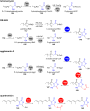
Scheme 22: Conserved steps for formation and processing in several 3-acyl-tetronate biosynthetic pathways were...

Scheme 23: In versipelostatin A (153) biosynthesis, VstJ is a candidate enzyme for catalysing the [4 + 2] cycl...

Scheme 24: a) Structures of some thiotetronate antibiotics. b) Biosynthesis of thiolactomycin (165) as propose...

Scheme 25: Aureusidine synthase (AS) catalyses phenolic oxidation and conjugate addition of chalcones leading ...

Scheme 26: a) Oxidative cyclisation is a key step in the biosynthesis of spirobenzofuranes 189, 192 and 193. b...

Scheme 27: A bicyclisation mechanism forms a β-lactone and a pyrrolidinone and removes the precursor from the ...

Scheme 28: Spontaneous cyclisation leads to off-loading of ebelactone A (201) from the PKS machinery [163].

Scheme 29: Mechanisms for the formation of nitrogen heterocycles.

Scheme 30: Biosynthesis of highly substituted α-pyridinones. a) Feeding experiments confirmed the polyketide o...

Scheme 31: Acridone synthase (ACS) catalyses the formation of 1,3-dihydroxy-N-methylacridone (224) by condensa...

Scheme 32: A Dieckmann condensation leads to the formation of a 3-acyl-4-hydroxypyridin-2-one 227 and removes ...

Scheme 33: a) Biosynthesis of the pyridinone tenellin (234). b) A radical mechanism was proposed for the ring-...

Scheme 34: a) Oxazole-containing PKS–NRPS-derived natural products oxazolomycin (244) and conglobatin (245). b...

Scheme 35: Structure of tetramic acids 251 (a) and major tautomers of 3-acyltetramic acids 252a–d (b). Adapted...

Scheme 36: Equisetin biosynthesis. R*: terminal reductive domain. Adapted from [202].

Scheme 37: a) Polyketides for which a similar biosynthetic logic was suggested. b) Pseurotin A (256) biosynthe...

Figure 7: Representative examples of PTMs with varying ring sizes and oxidation patterns [205,206].

Scheme 38: Ikarugamycin biosynthesis. Adapted from [209-211].

Scheme 39: Tetramate formation in pyrroindomycin aglycone (279) biosynthesis [213-215].

Scheme 40: Dieckmann cyclases catalyse tetramate or 2-pyridone formation in the biosynthesis of, for example, ...
Discovery of an inhibitor of the production of the Pseudomonas aeruginosa virulence factor pyocyanin in wild-type cells
- Bernardas Morkunas,
- Balint Gal,
- Warren R. J. D. Galloway,
- James T. Hodgkinson,
- Brett M. Ibbeson,
- Yaw Sing Tan,
- Martin Welch and
- David R. Spring
Beilstein J. Org. Chem. 2016, 12, 1428–1433, doi:10.3762/bjoc.12.137
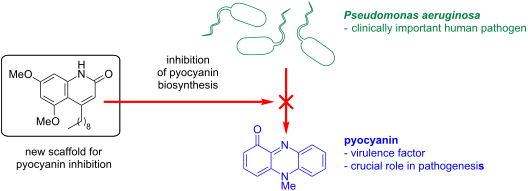
- types of quorum sensing systems. Two of the QS signaling systems in P. aeruginosa utilise N-acylated-L-homoserine lactones (AHLs) as signalling molecules [20][21][22]. The rhl system utilises N-butanoyl-L-homoserine lactone (BHL) and it’s cognate receptor RhlR [20][21][22]. The las system utilises N-(3
- -oxododecanoyl)-L-homoserine lactone (OdDHL) and it’s cognate receptor LasR (Figure 1) [20][21][22]. Interlinking these two AHL signalling systems is a third signaling system utilising a quinolone signalling molecule (termed Pseudomonas quinolone signal, PQS) [20] to form an intricate hierarchical signaling

Graphical Abstract

Figure 1: BHL and OdDHL are two natural AHL-based signaling molecules used by P. aeruginosain quorum sensing....

Scheme 1: Unexpected synthesis of compound 4. The synthesis of 2 was achieved by a previously reported route [9]....

Figure 2: a) Inhibitory effect of compound 4 (200 μM suspension in DMSO) on pyocyanin production in PAO1. DMS...
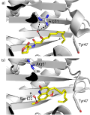
Figure 3: Binding poses of OdDHL and compound 4 in OdDHL binding site. Hydrogen bonds are shown in black dott...
Stereoselective synthesis of tricyclic compounds by intramolecular palladium-catalyzed addition of aryl iodides to carbonyl groups
- Jakub Saadi,
- Christoph Bentz,
- Kai Redies,
- Dieter Lentz,
- Reinhold Zimmer and
- Hans-Ulrich Reissig
Beilstein J. Org. Chem. 2016, 12, 1236–1242, doi:10.3762/bjoc.12.118
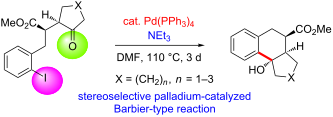
- configurational assignment is ambiguous in this case, the NMR data and the fact that no γ-lactone is formed strongly support the trans-arrangement of the two functional groups as depicted. Under similar conditions (5 mol % Pd(PPh3)4, 90 °C, 3 d) the isopropyl-substituted ketone 2 furnished a mixture of the

Graphical Abstract

Scheme 1: Planned Heck reaction of A to compound B and serendipitous discovery of the palladium-catalyzed cyc...

Scheme 2: Synthesis of compounds A (1–6) via methyl 2-siloxycyclopropanecarboxylates D, their alkylation to E...

Scheme 3: Palladium-catalyzed reactions of methyl ketone 1 to tetralin derivative 7 and of isopropyl-substitu...

Scheme 4: Palladium-catalyzed cyclization of diastereomeric cyclopentanone derivatives 3a/3b to products 11a ...
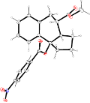
Figure 1: Molecular structure (ORTEP, [14]) of compound 12a (thermal ellipsoids at 50% probability).

Scheme 5: Palladium-catalyzed cyclizations of diastereomeric cyclohexanone derivatives 4a and 4b leading ster...

Figure 2: Molecular structure (ORTEP, [14]) of compound 14a (thermal ellipsoids at 50% probability).

Scheme 6: Palladium-catalyzed cyclizations of cycloheptanone derivatives 5a and 5b leading to products 15a an...

Figure 3: Molecular structure (ORTEP, [14]) of compound 15a (thermal ellipsoids at 50% probability).

Figure 4: Molecular structure (ORTEP [14]) of compound 15b (thermal ellipsoids at 50% probability).

Scheme 7: Palladium-catalyzed cyclization of p-methoxy-substituted aryl iodide 6a/6b to compound 16.

Scheme 8: Typical palladium-catalyzed cyclization of an o-iodoaniline derivative to a tricyclic tertiary alco...

Scheme 9: Proposed transition state (TS) explaining the stereoselective formation of cyclization products.

Scheme 10: Possible mechanism of the reduction of palladium(II) to palladium(0) by triethylamine (additional l...



