Search for "organization" in Full Text gives 188 result(s) in Beilstein Journal of Organic Chemistry.
Beilstein J. Org. Chem. 2013, 9, 81–88, doi:10.3762/bjoc.9.11
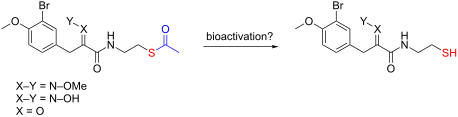
Graphical Abstract
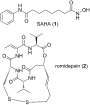
Figure 1: FDA approved HDAC inhibitors for the treatment of CTCL.
Scheme 1: SAR of psammaplin A against zinc-dependant HDACs. Adapted from Baud et al. [20].
Scheme 2: Synthesis of 7–9. Conditions: (i) HCl·H2NOMe, pyridine, rt, 12 h; (ii) EDC, NHS, dioxane, rt, 3 h; ...
Scheme 3: Top: Generation of the fluorescent adduct 11 after reaction of probe 10 with thiols. Bottom left: F...
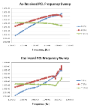
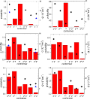
Figure 2: rHDAC1 was incubated with a predetermined IC50 concentration of 7 (left) and 9 (right) for 1–60 min...
Beilstein J. Org. Chem. 2012, 8, 1936–1998, doi:10.3762/bjoc.8.225
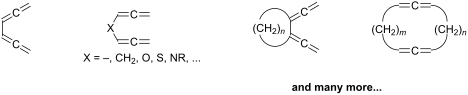
Graphical Abstract
Figure 1: Loschmidt’s structure proposal for benzene (1) (Scheme 181 from [3]) and the corresponding modern stru...
Figure 2: The first isolated bisallenes.
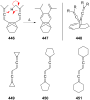
Figure 3: Carbon skeletons of selected bisallenes discussed in this review.
Scheme 1: The preparation of 1,2,4,5-hexatetraene (2).
Scheme 2: The preparation of a conjugated bisallene by the DMS-protocol.
Scheme 3: Preparation of the 3-deuterio- and 3,4-dideuterio derivatives of 24.
Scheme 4: A versatile method to prepare alkylated conjugated bisallenes and other allenes.
Scheme 5: A preparation of 3,4-dimethyl-1,2,4,5-hexatetraene (38).
Scheme 6: A (C6 + 0)-approach to 1,2,4,5-hexatetraene (2).
Scheme 7: The preparation of a fully alkylated bisallenes from a 2,4-hexadiyne-1,6-diol diacetate.
Scheme 8: The preparation of the first phenyl-substituted conjugated bisallenes 3 and 4.
Scheme 9: Selective hydrogenation of [5]cumulenes to conjugated bisallenes: another (C6 + 0)-route.
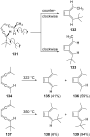
Scheme 10: Aryl-substituted conjugated bisallenes by a (C3 + C3)-approach.
Scheme 11: Hexaphenyl-1,2,4,5-hexatetraene (59) by a (C3 + C3)-approach.
Scheme 12: An allenation route to conjugated bisallenes.
Scheme 13: The preparation of 3,4-difunctionalized conjugated bisallenes.
Scheme 14: Problems during the preparation of sulfur-substituted conjugated bisallenes.
Scheme 15: The preparation of 3,4-dibromo bisallenes.
Scheme 16: Generation of allenolates by an oxy-Cope rearrangement.
Scheme 17: A linear trimerization of alkynes to conjugated bisallenes: a (C2 + C2 + C2)-protocol.
Scheme 18: Preparation of a TMS-substituted conjugated bisallene by a C3-dimerization route.
Scheme 19: A bis(trimethylsilyl)bisallene by a C3-coupling protocol.
Scheme 20: The rearrangement of highly substituted benzene derivatives into their conjugated bisallenic isomer...
Scheme 21: From fully substituted benzene derivatives to fully substituted bisallenes.
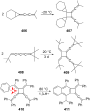
Scheme 22: From a bicyclopropenyl to a conjugated bisallene derivative.
Scheme 23: The conversion of a bismethylenecyclobutene into a conjugated bisallene.
Scheme 24: The preparation of monofunctionalized bisallenes.
Scheme 25: Preparation of bisallene diols and their cyclization to dihydrofurans.
Scheme 26: A 3,4-difunctionalized conjugated bisallene by a C3-coupling process.
Scheme 27: Preparation of a bisallenic diketone by a coupling reaction.
Scheme 28: Sulfur and selenium-substituted bisallenes by a [2.3]sigmatropic rearrangement.
Scheme 29: The biallenylation of azetidinones.
Scheme 30: The preparation of a fully ferrocenylated conjugated bisallene.
Scheme 31: The first isomerization of a 1,5-hexadiyne to a 1,2,4,5-hexatetraene.
Scheme 32: The preparation of alkynyl-substituted bisallenes by a C3-dimerization protocol.
Scheme 33: Preparation of another completely ferrocenylated bisallene.
Scheme 34: The cyclization of 1,5-hexadiyne (129) to 3,4-bismethylenecyclobutene (130) via 1,2,4,5-hexatetraen...
Scheme 35: Stereochemistry of the thermal cyclization of bisallenes to bismethylenecyclobutenes.
Scheme 36: Bisallene→bismethylenecyclobutene ring closures in the solid state.
Scheme 37: A bisallene cyclization/dimerization reaction.
Scheme 38: A selection of Diels–Alder additions of 1,2,4,5-hexatetraene with various double-bond dienophiles.
Scheme 39: The stereochemistry of the [2 + 4] cycloaddition to conjugated bisallenes.
Scheme 40: Preparation of azetidinone derivatives from conjugated bisallenes.
Scheme 41: Cycloaddition of heterodienophiles to a conjugated bisallene.
Scheme 42: Addition of triple-bond dienophiles to conjugated bisallenes.
Scheme 43: Sulfur dioxide addition to conjugated bisallenes.
Scheme 44: The addition of a germylene to a conjugated bisallene.
Scheme 45: Trapping of conjugated bisallenes with phosphinidenes.
Scheme 46: The cyclopropanantion of 1,2,4,5-hexatetraene (2).
Scheme 47: Photochemical reactions involving conjugated bisallenes.
Scheme 48: Base-catalyzed isomerizations of conjugated bisallenes.
Scheme 49: Ionic additions to a conjugated bisallene.
Scheme 50: Oxidation reactions of a conjugated bisallene.
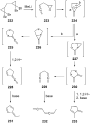
Scheme 51: The mechanism of oxidation of the bisallene 24.
Scheme 52: CuCl-catalyzed cyclization of 1,2,4,5-hexatetraene (2).
Scheme 53: The conversion of conjugated bisallenes into cyclopentenones.
Scheme 54: Oligomerization of a conjugated bisallene by nickel catalysts.
Scheme 55: Generation of 1,2,5,6-heptatetraene (229) as a reaction intermediate.
Scheme 56: The preparation of a stable derivative of 1,2,5,6-heptatetraene.
Scheme 57: A bisallene with a carbonyl group as a spacer element.
Scheme 58: The first preparation of 1,2,6,7-octatetraene (242).
Scheme 59: Preparation of 1,2,6,7-octatetraenes by (C4 + C4)-coupling of enynes.
Scheme 60: Preparation of 1,2,6,7-octatetraenes by (C4 + C4)-coupling of homoallenyl bromides.
Scheme 61: Preparation of 1,2,6,7-octatetraenes by alkylation of propargylic substrates.
Scheme 62: Preparation of two highly functionalized 1,2,6,7-octatetraenes.
Scheme 63: Preparation of several higher α,ω-bisallenes.
Scheme 64: Preparation of different alkyl derivatives of α,ω-bisallenes.
Scheme 65: The preparation of functionalized 1,2,7,8-nonatetraene derivatives.
Scheme 66: Preparation of functionalized α,ω-bisallenes.
Scheme 67: The preparation of an α,ω-bisallene by direct homologation of an α,ω-bisalkyne.
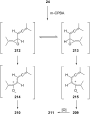
Scheme 68: The gas-phase pyrolysis of 4,4-dimethyl-1,2,5,6-heptatetraene (237).
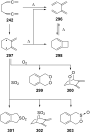
Scheme 69: Gas-phase pyrolysis of 1,2,6,7-octatetraene (242).
Scheme 70: The cyclopropanation of 1,2,6,7-octatetraene (242).
Scheme 71: Intramolecular cyclization of 1,2,6,7-octatetraene derivatives.
Scheme 72: The gas-phase pyrolysis of 1,2,7,8-nonatetraene (265) and 1,2,8,9-decatetraene (266).
Scheme 73: Rh-catalyzed cyclization of a functionalized 1,2,7,8-nonatetraene.
Scheme 74: A triple cyclization involving two different allenic substrates.
Scheme 75: Bicyclization of keto derivatives of 1,2,7,8-nonatetraene.
Scheme 76: The preparation of complex organic compounds from functionalized bisallenes.
Scheme 77: Cycloisomerization of an α,ω-bisallene containing a C9 tether.
Scheme 78: Organoborane polymers from α,ω-bisallenes.
Scheme 79: Preparation of trans- (337) and cis-1,2,4,6,7-octapentaene (341).
Scheme 80: The preparation of 4-methylene-1,2,5,6-heptatetraene (349).
Scheme 81: The preparation of acetylenic bisallenes.
Scheme 82: The preparation of derivatives of hydrocarbon 351.
Scheme 83: The construction of macrocyclic alleno-acetylenes.
Scheme 84: Preparation and reactions of 4,5-bismethylene-1,2,6,7-octatetraene (365).
Scheme 85: Preparation of 1,2-bis(propadienyl)benzene (370).
Scheme 86: The preparation of 1,4-bis(propadienyl)benzene (376).
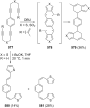
Scheme 87: The preparation of aromatic and heteroaromatic bisallenes by metal-mediated coupling reactions.
Scheme 88: Double cyclization of an aromatic bisallene.
Scheme 89: Preparation of an allenic [15]paracyclophane by a ring-closing metathesis reaction of an aromatic α...
Scheme 90: Preparation of a macrocyclic ring system containing 1,4-bis(propadienyl)benzene units.
Scheme 91: Preparation of copolymers from 1,4-bis(propadienyl)benzene (376).
Scheme 92: A boration/copolymerization sequence of an aromatic bisallene and an aromatic bisacetylene.
Scheme 93: Formation of a layered aromatic bisallene.
Figure 4: The first members of the semicyclic bisallene series.
Scheme 94: Preparation of the first bis(vinylidene)cyclobutane derivative.
Scheme 95: Dimerization of strain-activated cumulenes to bis(vinylidene)cyclobutanes.
Scheme 96: Photodimerization of two fully substituted butatrienes in the solid state.
Scheme 97: Preparation of the two parent bis(vinylidene)cyclobutanes.
Scheme 98: The preparation of 1,3-bis(vinylidene)cyclopentane and its thermal isomerization.
Scheme 99: The preparation of the isomeric bis(vinylidene)cyclohexanes.
Scheme 100: Bi- and tricyclic conjugated bisallenes.
Scheme 101: A selection of polycyclic bisallenes.
Scheme 102: The first endocyclic bisallenes.
Figure 5: The stereochemistry of 1,2,6,7-cyclodecatetraene.
Scheme 103: The preparation of several endocyclic bisallenes.
Scheme 104: Synthesis of diastereomeric derivatives of 1,2,6,7-cyclodecatetraene.
Scheme 105: Preparation of a derivative of 1,2,8,9-cyclotetradecatetraene.
Scheme 106: The preparation of keto derivatives of cyclic bisallenes.
Scheme 107: The preparation of cyclic biscumulenic ring systems.
Scheme 108: Cyclic bisallenes in natural- and non-natural-product chemistry.
Scheme 109: The preparation of iron carbonyl complexes from cyclic bisallenes.
Figure 6: A selection of unknown exocyclic bisallenes that should have interesting chemical properties.
Scheme 110: The thermal isomerization of 1,2-diethynylcyclopropanes and -cyclobutanes.
Scheme 111: Intermediate generation of a cyclooctapentaene.
Scheme 112: Attempted preparation of a cyclodecahexaene.
Scheme 113: The thermal isomerization of 1,5,9-cyclododecatriyne (511) into [6]radialene (514).
Scheme 114: An isomerization involving a diketone derived from a conjugated bisallene.
Scheme 115: Typical reaction modes of heteroorganic bisallenes.
Scheme 116: Generation and thermal behavior of acyclic hetero-organic bisallenes.
Scheme 117: Generation of bis(propadienyl)thioether.
Scheme 118: The preparation of a bisallenic sulfone and its thermal isomerization.
Scheme 119: Bromination of the bisallenic sulfone 535.
Scheme 120: Metalation/hydrolysis of the bisallenic sulfone 535.
Scheme 121: Aromatic compounds from hetero bisallenes.
Scheme 122: Isomerization/cyclization of bispropargylic ethers.
Scheme 123: The preparation of novel aromatic systems by base-catalyzed isomerization of bispropargyl ethers.
Scheme 124: The isomerization of bisacetylenic thioethers to bicyclic thiophenes.
Scheme 125: Aromatization of macrocyclic bispropargylic sulfides.
Scheme 126: Preparation of ansa-compounds from macrocyclic bispropargyl thioethers.
Scheme 127: Alternate route for cyclization of a heterorganic bisallene.
Scheme 128: Multiple isomerization/cyclization of “double” bispropargylic thioethers.
Scheme 129: Preparation of a bisallenyl disulfide and its subsequent bicyclization.
Scheme 130: Thermal cyclization of a bisallenyl thiosulfonate.
Scheme 131: Some reactions of heteroorganic bisallenes with two sulfur atoms.
Scheme 132: Further methods for the preparation of heteroorganic bisallenes.
Scheme 133: Cyclization reactions of heteroorganic bisallenes.
Scheme 134: Thermal cycloadditions of bisallenic tertiary amines.
Scheme 135: Cyclization of a bisallenic tertiary amine in the presence of a transition-metal catalyst.
Scheme 136: A Pauson–Khand reaction of a bisallenic ether.
Scheme 137: Formation of a 2:1adduct from two allenic substrates.
Scheme 138: A ring-forming silastannylation of a bisallenic tertiary amine.
Scheme 139: A three-component cyclization involving a heterorganic bisallene.
Scheme 140: Atom-economic construction of a complex organic framework from a heterorganic α,ω-bisallene.
Beilstein J. Org. Chem. 2012, 8, 1867–1876, doi:10.3762/bjoc.8.215
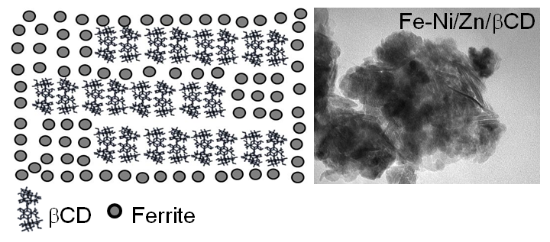
Graphical Abstract
Figure 1: AFM images of (a) Fe-Ni/Zn and (b) Fe-Ni/Zn/βCD.
Figure 2: TEM images of (a) Fe-Ni/Zn and (b) Fe-Ni/Zn/βCD and SEM images of (c) Fe-Ni/Zn and (d) Fe-Ni/Zn/βCD....
Figure 3: DLS measurements for before (a) and (b) and after (c) and (d) the sonication process.
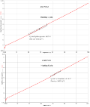
Figure 4: Potentiometric curves of the (a) Fe-Ni/Zn and (b) Fe-Ni/Zn/βCD.
Figure 5: Zeta potential curves as a function of pH for the (○) Fe-Ni/Zn and (▲) Fe-Ni/Zn/βCD.
Figure 6: Relative optical obscuration (Ob/Ob,0) as a function of time for (a) Fe-Ni/Zn and (b) Fe-Ni/Zn/βCD.
Figure 7: Obscuration curves for the Fe-Ni/Zn (○) and Fe-Ni/Zn/βCD (▲) as a function of pH.
Figure 8: Adsorption curves of (a) Cr3+ and (b) Cr2O72− ions using Fe-Ni/Zn and Fe-Ni/Zn/βCD aqueous suspensi...
Beilstein J. Org. Chem. 2012, 8, 1610–1618, doi:10.3762/bjoc.8.184
Graphical Abstract
Scheme 1: Synthesis of PDMS-Im/Br ionic liquid.
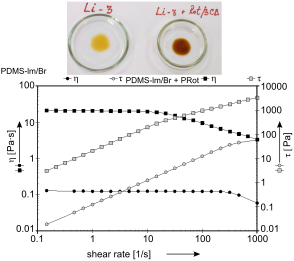
Figure 1: Appearance of (A) pure PDMS-Im/Br ionic liquid; (B) PDMS-Im/Br ionic liquid containing 1 wt % PRot.
Figure 2: Wet-STEM images at 30 kV in bright field mode of: PDMS-Im/Br ionic liquid (A,B) and mixture of PDMS...
Figure 3: Amplitude sweep results for PDMS-Im/Br and PDMS-Im/Br+PRot at 25 °C.
Figure 4: Storage (G’) and loss (G”) moduli dependence on frequency for PDMS-Im/Br and PDMS-Im/Br+PRot at 25 ...
Figure 5: Storage (G’) and loss (G”) moduli dependence on temperature for PDMS-Im/Br and PDMS-Im/Br+PRot.
Figure 6: Flow curves for PDMS-Im/Br and PDMS-Im/Br + PRot at 25 °C.
Figure 7: Temperature dependence of flow curves for PDMS-Im/Br ionic liquid.
Figure 8: Temperature dependence of flow curves for PDMS-Im/Br+PRot.
Figure 9: DSC second heating curves of: (1) PDMS-Im/Br ionic liquid, (2) mixture of PDMS-Im/Br with Prot and ...
Beilstein J. Org. Chem. 2012, 8, 1576–1583, doi:10.3762/bjoc.8.180
Graphical Abstract
Figure 1: Trifunctional cyclic β-tripeptide forming an intermolecular stack of rings by backbone hydrogen bon...
Figure 2: β-Amino acids 1–3 with orthogonal side-chain protection obtained by Arndt–Eistert homologation foll...
Scheme 1: Synthesis of cyclic peptides employing the oxidation-labile aryl hydrazide linker [11,24].
Figure 3: Functional units provided as carboxylic acids for the attachment to the cyclo-β-peptide: 5(6)-tetra...
Scheme 2: Functionalization of the cyclic β-tripeptide 4.
Figure 4: Cyclic β-tripeptides varying in two side-chain functionalities and containing an additional azide m...
Beilstein J. Org. Chem. 2012, 8, 1318–1332, doi:10.3762/bjoc.8.151
Graphical Abstract
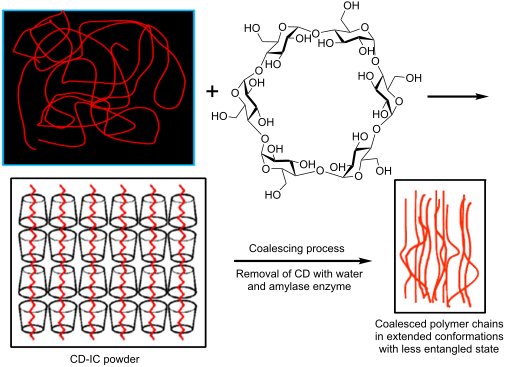
Figure 1: Formation of and coalescence of a polymer sample from its crystalline cyclodextrin inclusion comple...
Figure 2: Crystal structures and wide-angle X-ray diffractograms of neat (a) cage and (b) columnar IC γ-CD [20].
Figure 3: DSC cooling scans of as-received (upper) and coalesced N-6 (lower) [58].
Figure 4: DSC heating scans for asr-PVAc (upper) and c-PVAc coalesced from its γ-CD IC (lower) [72].
Figure 5: Melt-crystallization curves of as-received and coalesced PCL observed at 20, 10, 5, and 1 °C/min co...
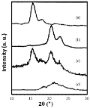
Figure 6: X-ray diffraction patterns of as-synthesized PCL-b-PLLA films (a) and coalesced PCL-b-PLLA films (b...
Figure 7: Polarizing photomicrographs of (a) PLLA, (b) PCL, (c) solution-cast, and (d) coalesced PLLA/PCL ble...
Figure 8: X-ray diffractograms of (a) pure PCL and (b) PLLA and PCL/PLLA blends obtained by casting from diox...
Figure 9: MDSC scans of the (a) first and (b) second heating runs recorded for the PC/PMMA/PVAc-2 blend. The ...
Figure 10: Storage modulus, loss modulus, and apparent viscosity (G’, G’’, and n*, respectively) for asr- and ...
Figure 11:
Crystalline all trans (t) and γ-CD-included g±tg
conformations of PET [76].
Figure 12: DSC scans for p-PET [70].
Figure 13: DSC cooling scans from the melts of (I) asr-N-6, (II) nuc-N-6, and (III) asr/nuc N-6 film sandwich....
Figure 14: Mechanical properties of N-6 films [62].
Figure 15: Tensile testing of as-received/as-received and as-received/nucleated nylon-6 film sandwiches conduc...
Beilstein J. Org. Chem. 2012, 8, 1172–1184, doi:10.3762/bjoc.8.130
Graphical Abstract
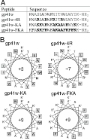
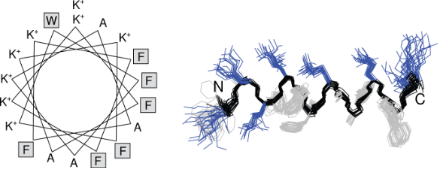
Figure 1: (A) Names and sequences of the gp41w-derived peptides. (B) Helical-wheel projections of gp41w, gp41...
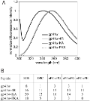
Figure 2: (A) Normalized Trp emission spectra of the gp41w derivatives in buffer. The spectra have been norma...
Figure 3: Relative Ksv values calculated for gp41w, gp41w-4R, gp41w-KA and gp41w-FKA in buffer and in the pre...
Figure 4: Percent calcein leakage induced by the gp41 derivatives. Gp41w (blue), gp41w-4R (orange), gp41w-KA ...
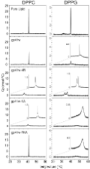
Figure 5: DSC thermograms of pure zwitterionic DPPC (left) and anionic DPPG (right) lipid suspensions compare...
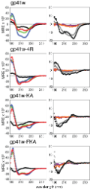
Figure 6: Far-UV CD spectra of gp41w and the three derivative peptides. The panel on the left shows the pepti...
Figure 7: NMR solution structure of gp41w-4R, gp41w-KA and gp41w-FKA in the cosolvent mixture. Overlay of the...
Beilstein J. Org. Chem. 2012, 8, 1071–1090, doi:10.3762/bjoc.8.119
Graphical Abstract
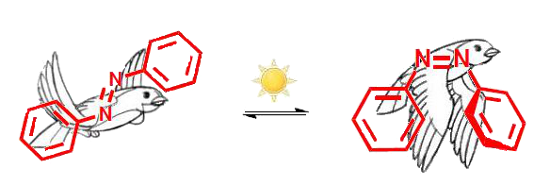
Figure 1: Photoisomerization process of azobenzene.
Figure 2: Representative example of an UV spectrum of an azocompound of the azobenzene type (blue line: trans...
Figure 3: Mechanistic proposals for the isomerization of azobenzenes.
Figure 4: Representation of the photocontrol of a K+ channel in the cellular membrane based on the isomerizat...
Figure 5: (a) MAG interaction with iGluR; (b) photocontrol of the opening of the ion channel by trans–cis iso...
Figure 6: Photocontrol of the structure of the α-helix in the polypeptide azoderivative 2. Reprinted (adapted...
Figure 7: Recognition of a guanidinium ion by a cis,cis-bis-azo derivative 3.
Figure 8: Recognition of cesium ions by cis-azo derivative 4.
Figure 9: Photocontrolled formation of an inclusion complex of cyclodextrin trans-azo 5+6.
Figure 10: Pseudorotaxane-based molecular machine.
Figure 11: Molecular hinge. Reprinted (adapted) with permission from Org. Lett. 2004, 6, 2595–2598. Copyright ...
Figure 12: Molecular threader. Reprinted (adapted) with permission from Acc. Chem. Res. 2001, 34, 445–455. Cop...
Figure 13: Molecular scissors based on azobenzene 12. Reprinted (adapted) with permission from J. Am. Chem. So...
Figure 14: Molecular pedals. Reprinted by permission from Macmillan Publishers Ltd: Nature, 2006, 440, 512–515...
Figure 15: Design of nanovehicles based on azo structures. Reprinted (adapted) with permission from Org. Lett. ...
Figure 16: Light-activated mesostructured silica nanoparticles (LAMs).
Figure 17: Molecular lift.
Figure 18: Conformational considerations in mono-ortho-substituted azobenzenes.
Scheme 1: Synthesis and photoisomerization of sulfinyl azobenzenes. Reprinted (adapted) with permission from ...
Figure 19: Photoisomerization of azocompound 22 and its application as a photobase catalyst.
Figure 20: Effect of irradiation with linearly polarized light on azo-LCEs. Reprinted by permission from Macmi...
Figure 21: Chemically and photochemically triggered memory switching cycle of the [2]rotaxane 25.
Figure 22: Unidirectional photoisomerization process of the azobenzene 26.
Beilstein J. Org. Chem. 2012, 8, 967–976, doi:10.3762/bjoc.8.109
Graphical Abstract
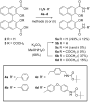
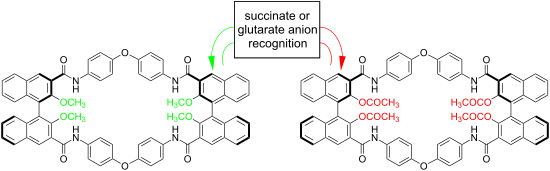
Figure 1: Structure of the macrocycle (R,R)-1 (top), and synthetic strategies for the production of novel ami...
Scheme 1: Reagents and conditions: (i) SOCl2, CHCl3 or (COCl)2, DMF, CH2Cl2 then amine, Et3N, CH2Cl2 or (ii) ...
Scheme 2: Structure and synthesis of the macrocycles discussed in this paper.
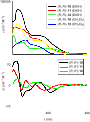
Figure 2: UV and CD (EtOH) spectra of macrocycles (R,R)-10, (R,R)-11 and (R,R)-12 in the range 220–400 nm.
Figure 3: Minimized molecular structures of (from top left to bottom left, clockwise): (R,R)-10, (R,R)-11, (R,...
Figure 4: Aromatic region of the 1H NMR (CDCl3, 500 MHz, 25 °C) spectra of macrocycle (R,R)-12 (2.8 mM, botto...
Beilstein J. Org. Chem. 2012, 8, 897–904, doi:10.3762/bjoc.8.102
Graphical Abstract
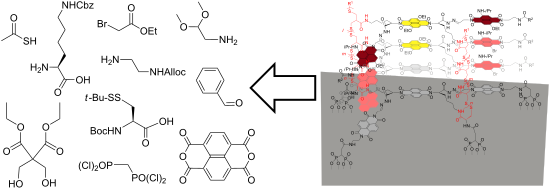
Figure 1: Schematic structure of photosystem 1 on indium tin oxide (ITO, grey) with antiparallel gradients in...
Scheme 1: Synthesis of initiator 2.
Scheme 2: Synthesis of propagators 3 and 4.
Scheme 3: Synthesis of stack exchangers 5 and 6. Compounds 5, 6, 45 and 47 are mixtures of 2,6- and 3,7-regio...
Scheme 4: Synthesis of photosystem 1, self-organizing surface-initiated polymerization (SOSIP). R1 = SH (50) ...
Scheme 5: Synthesis of photosystem 1, stack exchange. R1 = SH or oxidized derivative, R1 = CH2CHCH2. 5 and 6 ...
Scheme 6: Schematic overview over SOSIP and stack exchange.
Beilstein J. Org. Chem. 2012, 8, 629–639, doi:10.3762/bjoc.8.70
Graphical Abstract
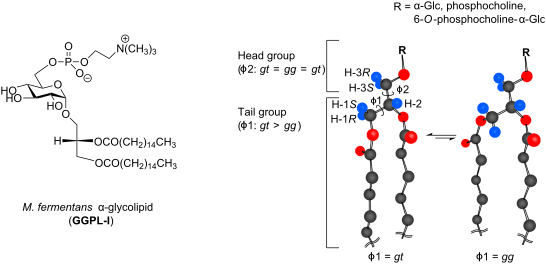
Figure 1: Absolute chemical structures of M. fermentans α-glycolipid antigens, GGPL-I and GGPl-III (GGPL: Gly...
Scheme 1: An established synthetic pathway to α-glycosyl-sn-glycerols 4a and 5a. A reagent combination of CBr4...
Scheme 2: Syntheses of GGPL-I homologue I-a and its isomer I-b. Conditions: (a) K2CO3, CH3OH; (b) cesium palm...
Figure 2: 1H NMR spectra of I-a and I-b (500 MHz, 25 °C, CDCl3/CD3OD 10:1). The assignment of sn-glycerol met...
Figure 3: Distributions of gg, gt and tg-conformers in 3-substituted sn-glycerols at 11 mM in solutions of CD...
Figure 4: Distributions of gg, gt and tg-conformers in 1-substituted sn-glycerols. In these sn-isomers, Φ1 an...
Figure 5: A common conformational property of GGPL-I and DPPC. The tail lipid moiety favors two gauche-confor...
Beilstein J. Org. Chem. 2012, 8, 472–485, doi:10.3762/bjoc.8.54
Graphical Abstract
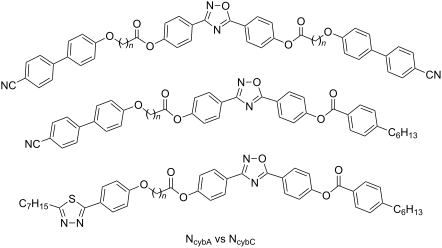
Scheme 1: Structures of the investigated ABA-heterotrimesogens CB-Ox-CB/n and heterodimesogens CB-Ox/n, Thia-...
Scheme 2: Synthesis of the ABA-heterotrimesogens CB-Ox-CB/n.
Scheme 3: Synthesis of the dimesogens CB-Ox/n and Thia-Ox/n.
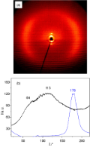
Figure 1: XRD pattern of a (partially) surface-aligned sample of the N phase of compound CB-Ox-CB/4: (a) diff...
Figure 2: Dimesogen CB-Ox/4: (a) DSC traces obtained during initial heating and cooling cycles scanned at a r...
Figure 3: XRD data of the dimesogen CB-Ox/4: (a,b) diffraction patterns of a magnetic-field-aligned sample (t...
Figure 4: Models showing the suggested organizations of dimesogens in the smectic phases and in the preferred...
Figure 5: Dimesogen Thia-Ox/5: (a) DSC traces obtained during first heating and cooling cycles scanned at a r...
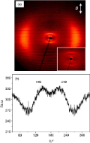
Figure 6: XRD data of the SmC phase of the dimesogen Thia-Ox/5: (a) diffraction pattern at T = 160 °C; (b) χ-...
Figure 7: XRD pattern of a magnetic-field-aligned sample of the NcybC phase of the dimesogen Thia-Ox/10: (a) ...
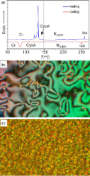
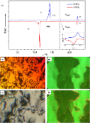
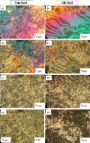
Figure 8: Comparison of the optical textures of distinct types of 1,2,4-oxadiazole based dimesogens as observ...
Beilstein J. Org. Chem. 2012, 8, 155–163, doi:10.3762/bjoc.8.16
Graphical Abstract
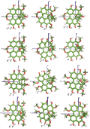
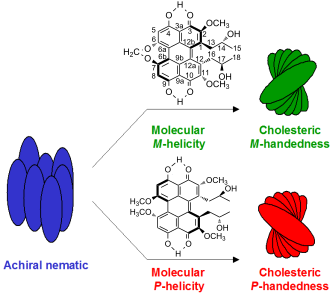
Figure 1: Chemical structure of the helical perylenequinones under investigation: Cercosporin (1) and phleich...
Figure 2: Newman projections of the conformational states of the side chain linked at C1 of cercosporin (1), ...
Figure 3: “Propeller” (left) and “double butterfly” geometry (right) of the g+ g+ conformer of 1, as obtained...
Figure 4: Optimized geometry of all conformers of 1 (upper half) and 2 (lower half), obtained at the DFT/M06-...
Figure 5: Chirality parameter Q (diamonds) and probability distribution (bars), calculated for all conformers...
Beilstein J. Org. Chem. 2012, 8, 112–117, doi:10.3762/bjoc.8.12
Graphical Abstract
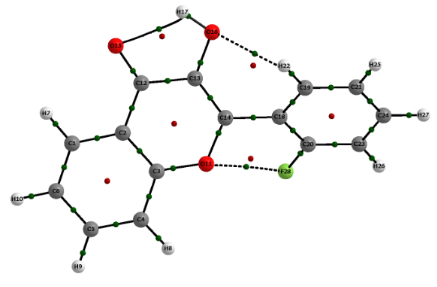
Figure 1: 2'-Haloflavonols and the α and β torsional angles.
Figure 2: Stable conformers of 2'-fluoroflavonol.
Beilstein J. Org. Chem. 2011, 7, 1713–1721, doi:10.3762/bjoc.7.201
Graphical Abstract
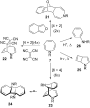
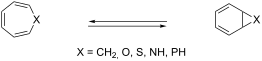
Scheme 1: Valence isomerization of cyclohepta-1,3,5-triene (1) and its heteroelement analogues.
Scheme 2: Conformational ring inversions.
Scheme 3: Rearrangements of the parent cycloheptatriene 1 and norcaradiene 2.
Figure 1: NICS(0) values of fluorinated heteropines.
Scheme 4: Reactivity of oxepine (3) and benzene oxide (4).
Figure 2: Stabilized thiepines 15–18.
Scheme 5: Valence isomerization of 1H-azepines.
Scheme 6: Reactivity of 1H-azepine.
Figure 3: Benzannulated azepines 27 and 28.
Figure 4: Reported phosphepines 29–32.
Scheme 7: Phosphinidene generation from metal-complexed benzophosphepine 33.
Beilstein J. Org. Chem. 2011, 7, 648–652, doi:10.3762/bjoc.7.76
Graphical Abstract
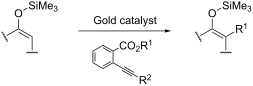
Scheme 1: Alkylation of silyl enol ethers.
Scheme 2: Plausible mechanism for the alkylation of silyl enol ether.
Scheme 3: Gold-catalyzed isomerism of silyl enol ether.
Scheme 4: Gold-catalyzed alkylation of tetra-substituted silyl enol ether.
Beilstein J. Org. Chem. 2011, 7, 198–203, doi:10.3762/bjoc.7.26
Graphical Abstract
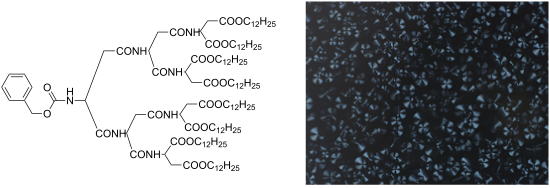
Scheme 1: Synthetic sequence of amphiphilic dendritic peptides: (i) 1-dodecanol, EDCI, DMAP, dichoromethane, ...
Figure 1: (A) SEM images of the xerogels of G3 from n-hexane (B) magnification of the xerogels structure.
Figure 2: X-ray diffraction patterns of G3 as an organogelator and liquid crystal.
Figure 3: FT-IR of G3 as an organogelator and liquid crystal.
Figure 4: Differential scanning thermograms of ADPs registered during the second heating–cooling cycle with s...
Figure 5: Temperature dependent FT-IR of G3.
Figure 6: . Polarized optical micrographs of G3 at 145 °C (A), 140 °C (B), and 50 °C (C).
Figure 7: X-ray diffraction patterns of G3 at 50 °C.
Beilstein J. Org. Chem. 2010, 6, 960–965, doi:10.3762/bjoc.6.107
Graphical Abstract
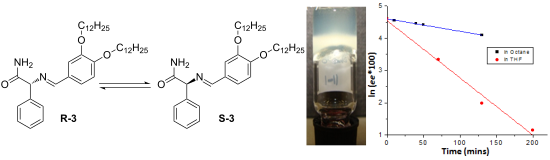
Scheme 1: Synthesis of R-3 and S-3.
Figure 1: Concentration-dependent 1H NMR spectra of R-3 in chloroform (CDCl3). The red colours indicate the h...
Figure 2: a) R-3 gel in octane (5 mM); b) octane solution containing a mixture of R-3 (2.5 mM) and S-3 (2.5 m...
Figure 3: a) Concentration-dependent 1H NMR spectra of R-3 in cyclohexane-d12 and b) the shift of N–H signal ...
Figure 4: The evolution of ln(ee × 100) for the racemization of R-3 (1 mM) in the presence of 1 equivalent of...
Beilstein J. Org. Chem. 2010, 6, 945–959, doi:10.3762/bjoc.6.106
Graphical Abstract
Scheme 1: Oxalyl retro-dipetide gelators; each b to a, (a) LiOH/MeOH, H2O; (b) H+; each b to c: (c) NH3/MeOH.
Figure 1: Chiral bis(amino acid)-(I) and bis(amino alcohol)-(II)-oxalamide gelators.
Figure 2: TEM images (PWK staining) of: (S,S)-1a H2O/DMSO gel.
Figure 3: TEM images (PWK staining) of: (S,R)-1a H2O/DMSO gel.
Figure 4: TEM images (PWK staining) of: (S,R)-1b toluene gel showing the presence of short tape like aggregat...
Figure 5: The concentration dependence of NH and C*H chemical shifts in (S,R)-1b toluene-d8 gel samples (conc...
Figure 6: The concentration dependence of NH and C*H chemical shifts in (S,S)-1b and its racemate (S,S)-1b/(R...
Figure 7: Temperature dependence of: a) oxalamide NH protons (▲), Leu-NH protons (Δ) and b) oxalamide-α-Leu-C...
Figure 8: Temperature dependent CD spectra of: a) (S,R)-1b decalin gel (c = 3.4·10−2 M); b) (S,S)-1b decalin ...
Figure 9: X-ray powder diffractograms of (a) (S,R)-1b and (b) (S,S)-1b xerogels prepared from their toluene g...
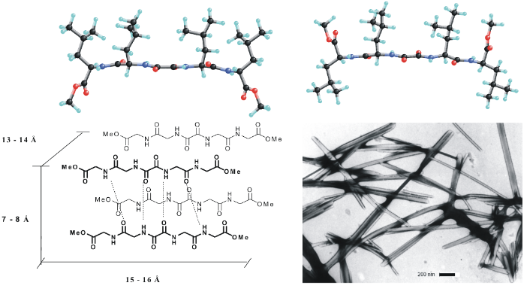
Figure 10: (a) Fully minimized the lowest energy conformations of (S,S)-1b (top) and (S,R)-1b generated by sys...
Figure 11: Schematic presentation of the proposed (S,S)-1b and (S,R)-1b basic packing model based on XRPD, 1H ...
Figure 12: X-ray powder diffraction (XRPD) diagram of (S,R)-1a water/DMSO xerogel.
Beilstein J. Org. Chem. 2010, 6, 880–921, doi:10.3762/bjoc.6.88
Graphical Abstract
Figure 1: Examples of industrial fluorine-containing bio-active molecules.
Figure 2: CF3(S)- and CF3(O)-containing pharmacologically active compounds.
Figure 3: Hypotensive candidates with SRF and SO2RF groups – analogues of Losartan and Nifedipin.
Figure 4: The variety of the pharmacological activity of RFS-substituted compounds.
Figure 5: Recent examples of compounds containing RFS(O)n-groups [12-18].
Scheme 1: Fluorination of ArSCCl3 to corresponding ArSCF3 derivatives. For references see: a[38-43]; b[41,42]; c[43]; d[44]; e[38-43,45-47]; f[38-43,48,49]; g...
Scheme 2: Preparation of aryl pentafluoroethyl sulfides.
Scheme 3: Mild fluorination of the aryl SCF2Br derivatives.
Scheme 4: HF fluorinations of aryl α,α,β-trichloroisobutyl sulfide at various conditions.
Scheme 5: Monofluorination of α,α-dichloromethylene group.
Scheme 6: Electrophilic substitution of phenols with CF3SCl [69].
Scheme 7: Introduction of SCF3 groups into activated phenols [71-74].
Scheme 8: Preparation of tetrakis(SCF3)-4-methoxyphenol [72].
Scheme 9: The interactions of resorcinol and phloroglucinol derivatives with RFSCl.
Scheme 10: Reactions of anilines with CF3SCl.
Scheme 11: Trifluoromethylsulfanylation of anilines with electron-donating groups in the meta position [74].
Scheme 12: Reaction of benzene with CF3SCl/CF3SO3H [77].
Scheme 13: Reactions of trifluoromethyl sulfenyl chloride with aryl magnesium and -mercury substrates.
Scheme 14: Reactions of pyrroles with CF3SCl.
Scheme 15: Trifluoromethylsulfanylation of indole and indolizines.
Scheme 16: Reactions of N-methylpyrrole with CF3SCl [80,82].
Scheme 17: Reactions of furan, thiophene and selenophene with CF3SCl.
Scheme 18: Trifluoromethylsulfanylation of imidazole and thiazole derivatives [83].
Scheme 19: Trifluoromethylsulfanylation of pyridine requires initial hydride reduction.
Scheme 20: Introduction of additional RFS-groups into heterocyclic compounds in the presence of CF3SO3H.
Scheme 21: Introduction of additional RFS-groups into pyrroles [82,87].
Scheme 22: By-products in reactions of pyrroles with CF3SCl [82].
Scheme 23: Reaction of aromatic iodides with CuSCF3 [93,95].
Scheme 24: Reaction of aromatic iodides with RFZCu (Z = S, Se), RF = CF3, C6F5 [93,95,96].
Scheme 25: Side reactions during trifluoromethylsulfanylation of aromatic iodides with CF3SCu [98].
Scheme 26: Reactions with in situ generated CuSCF3.
Scheme 27: Perfluoroalkylthiolation of aryl iodides with bulky RFSCu [105].
Scheme 28: In situ formation and reaction of RFZCu with aryl iodides.
Figure 6: Examples of compounds obtained using in situ generated RFZCu methodology [94].
Scheme 29: Introduction of SCF3 group into aromatics via difluorocarbene.
Scheme 30: Tetrakis(dimethylamino)ethylene dication trifluoromethyl thiolate as a stable reagent for substitut...
Scheme 31: The use of CF2=S/CsF or (CF3S)2C=S/CsF for the introduction of CF3S groups into fluorinated heteroc...
Scheme 32: One-pot synthesis of ArSCF3 from ArX, CCl2=S and KF.
Scheme 33: Reaction of aromatics with CF3S− Kat+ [115].
Scheme 34: Reactions of activated aromatic chlorides with AgSCF3/KI.
Scheme 35: Comparative CuSCF3/KI and Hg(SCF3)2/KI reactions.
Scheme 36: Me3SnTeCF3 – a reagent for the introduction of the TeCF3 group.
Scheme 37: Sandmeyer reactions with CuSCF3.
Scheme 38: Reactions of perfluoroalkyl iodides with alkali and organolithium reagents.
Scheme 39: Perfluoroalkylation with preliminary breaking of the disulfide bond.
Scheme 40: Preparation of RFS-substituted anilines from dinitrodiphenyl disulfides.
Scheme 41: Photochemical trifluoromethylation of 2,4,6-trimercaptochlorobenzene [163].
Scheme 42: Putative process for the formation of B, C and D.
Scheme 43: Trifluoromethylation of 2-mercapto-4-hydroxy-6-trifluoromethylyrimidine [145].
Scheme 44: Deactivation of 2-mercapto-4-hydroxypyrimidines S-centered radicals.
Scheme 45: Perfluoroalkylation of thiolates with CF3Br under UV irradiation.
Scheme 46: Catalytic effect of methylviologen for RF• generation.
Scheme 47: SO2−• catalyzed trifluoromethylation.
Scheme 48: Electrochemical reduction of CF3Br in the presence of SO2 [199,200].
Scheme 49: Participation of SO2 in the oxidation of ArSCF3−•.
Scheme 50: Electron transfer cascade involving SO2 and MV.
Scheme 51: Four stages of the SRN1 mechanism for thiol perfluoroalkylation.
Scheme 52: A double role of MV in the catalysis of RFI reactions with aryl thiols.
Scheme 53: Photochemical reaction of pentafluoroiodobenzene with trifluoromethyl disulfide.
Scheme 54: N- Trifluoromethyl-N-nitrosobenzene sulfonamide – a source of CF3• radicals [212,213].
Scheme 55: Radical trifluoromethylation of organic disulfides with ArSO2N=NCF3.
Scheme 56: Barton’s S-perfluoroalkylation reactions [216].
Scheme 57: Decarboxylation of thiohydroxamic esters in the presence of C6F13I.
Scheme 58: Reactions of thioesters of trifluoroacetic and trifluoromethanesulfonic acids in the presence of ar...
Scheme 59: Perfluoroalkylation of polychloropyridine thiols with xenon perfluorocarboxylates or XeF2 [222,223].
Scheme 60: Interaction of Xe(OCORF)2 with nitroaryl disulfide [227].
Scheme 61: Bi(CF3)3/Cu(OCOCH3)2 trifluoromethylation of thiophenolate [230].
Scheme 62: Reaction of fluorinated carbanions with aryl sulfenyl chlorides.
Scheme 63: Reaction of methyl perfluoromethacrylate with PhSCl in the presence of fluoride.
Scheme 64: Reactions of ArSCN with potassium and magnesium perfluorocarbanions [237].
Scheme 65: Reactions of RFI with TDAE and organic disulfides [239,240].
Scheme 66: Decarboxylation of perfluorocarboxylates in the presence of disulfides [245].
Scheme 67: Organization of a stable form of “CF3−” anion in the DMF.
Scheme 68: Silylated amines in the presence of fluoride can deprotonate fluoroform for reaction with disulfide...
Figure 7: Other examples of aminomethanols [264].
Scheme 69: Trifluoromethylation of diphenyl disulfide with PhSO2CF3/t-BuOK.
Scheme 70: Amides of trifluoromethane sulfinic acid are sources of CF3− anion.
Scheme 71: Trifluoromethylation of various thiols using “hyper-valent” iodine (III) reagent [279].
Scheme 72: Trifluoromethylation of p-nitrothiophenolate with diaryl CF3 sulfonium salts [280].
Scheme 73: Trifluoromethyl transfer from dibenzo (CF3)S-, (CF3)Se- and (CF3)Te-phenium salts to thiolates [283].
Scheme 74: Multi-stage paths for synthesis of dibenzo-CF3-thiophenium salts [61].
Beilstein J. Org. Chem. 2010, 6, No. 56, doi:10.3762/bjoc.6.56
Graphical Abstract
Scheme 1: Synthesis of polysulfone macromonomers.
Figure 1: FT-IR spectra of PSU-2000, PSU-DA-2000 and PSU-DM-2000.
Figure 2: 1H NMR spectra of PSU-2000 (a), PSU-DA-2000 (b) and PSU-DM-2000 (c) in CDCl3.
Figure 3: Rate (a) and conversion (b) of photo induced polymerization of PSU-DA-2000 and PSU-DM-2000.
Figure 4: Rate (a) and conversion (b) of photo induced polymerization of PSU-DAs with different molecular wei...
Figure 5: TGA thermograms of the precursor oligomers (PSU-2000) (a), and macromonomer, PSU-DA-2000 before (b)...
Figure 6: DSC results of the precursor oligomer (PSU-2000) (a), and macromonomer, PSU-DA-2000 before (b), and...
Beilstein J. Org. Chem. 2010, 6, No. 51, doi:10.3762/bjoc.6.51
Graphical Abstract
Scheme 1: Hexapentyloxytriphenylene (HAT5).
Figure 1: Optical microscopy textures of a film prepared by drop-casting on heating to the isotropic phase an...
Figure 2: Optical microscopy images of a spin-coated sample with linear structures thick enough to be detecte...
Figure 3: AFM scan of a thick rope, of similar size to the linear structures observed by optical microscopy. ...
Figure 4: Thinner, isolated fibers, similar to the ones constituting the larger rope in Figure 3 are present in other...
Figure 5: Small, elongated aggregates form a nematic-like texture, possibly due to the formation of a lyonema...
Figure 6: AFM image of a spin-coated sample from a solution of 6 mg/ml. Below the surface profile along the w...
Figure 7: AFM image of the sample prepared from a concentration of 3 mg/ml.
Figure 8: Surface topography of the sample prepared from a concentration of 1.5 mg/ml visualized by AFM. The ...
Figure 9: Higher resolution scans of the fiber structure of the low concentration sample.
Beilstein J. Org. Chem. 2010, 6, No. 32, doi:10.3762/bjoc.6.32
Graphical Abstract
Figure 1: Biologically important amines and quaternary ammonium salts: histamine (1), dopamine (2) and acetyl...
Figure 2: Crown ether 18-crown-6.
Figure 3: Conformations of 18-crown-6 (4) in solvents of different polarity.
Figure 4: Binding topologies of the ammonium ion depending on the crown ring size.
Figure 5: A “pseudorotaxane” structure consisting of 24-crown-8 and a secondary ammonium ion (5); R = Ph.
Figure 6: Typical examples of azacrown ethers, cryptands and related aza macrocycles.
Figure 7: Binding of ammonium to azacrown ethers and cryptands [111-113].
Figure 8: A 19-crown-6-ether with decalino blocking groups (11) and a thiazole-dibenzo-18-crown-6-ether (12).
Figure 9: 1,3-Bis(6-oxopyridazin-1-yl)propane derivatives 13 and 14 by Campayo et al.
Figure 10: Fluorescent azacrown-PET-sensors based on coumarin.
Figure 11: Two different pyridino-cryptands (17 and 18) compared to a pyridino-crown (19); chiral ammonium ion...
Figure 12: Pyridino-18-crown-6 ligand (21), a similar acridino-18-crown-6 ligand (22) and a structurally relat...
Figure 13: Ciral pyridine-azacrown ether receptors 24.
Figure 14: Chiral 15-crown-5 receptors 26 and an analogue 18-crown-6 ligand 27 derived from amino alcohols.
Figure 15: C2-symmetric chiral 18-crown-6 amino alcohol derivatives 28 and related macrocycles.
Figure 16: Macrocycles with diamide-diester groups (30).
Figure 17: C2-symmetric chiral aza-18-crown-6 ethers (31) with phenethylamine residues.
Figure 18: Chiral C-pivot p-methoxy-phenoxy-lariat ethers.
Figure 19: Chiral lariat crown ether 34.
Figure 20: Sucrose-based chiral crown ether receptors 36.
Figure 21: Permethylated fructooligosaccharide 37 showing induced-fit chiral recognition.
Figure 22: Biphenanthryl-18-crown-6 derivative 38.
Figure 23: Chiral lariat crown ethers derived from binol by Fuji et al.
Figure 24: Chiral phenolic crown ether 41 with “aryl chiral barriers” and guest amines.
Figure 25: Chiral bis-crown receptor 43 with a meso-ternaphthalene backbone.
Figure 26: Chromogenic pH-dependent bis-crown chemosensor 44 for diamines.
Figure 27: Triamine guests for binding to receptor 44.
Figure 28: Chiral bis-crown phenolphthalein chemosensors 46.
Figure 29: Crown ether amino acid 47.
Figure 30: Luminescent receptor 48 for bis-alkylammonium guests.
Figure 31: Luminescent CEAA (49a), a bis-CEAA receptor for amino acids (49b) and the structure of lysine bindi...
Figure 32: Luminescent CEAA tripeptide for binding small peptides.
Figure 33: Bis crown ether 51a self assembles co-operatively with C60-ammonium ion 51b.
Figure 34: Triptycene-based macrotricyclic dibenzo-[24]-crown-8 ether host 52 and guests.
Figure 35: Copper imido diacetic acid azacrown receptor 53a and the suggested His-Lys binding motif; a copper ...
Figure 36: Urea (54) and thiourea (55) benzo crown receptor for transport and extraction of amino acids.
Figure 37: Crown pyryliums ion receptors 56 for amino acids.
Figure 38: Ditopic sulfonamide bridged crown ether receptor 57.
Figure 39: Luminescent peptide receptor 58.
Figure 40: Luminescent receptor 59 for the detection of D-glucosamine hydrochloride in water/ethanol and lumin...
Figure 41: Guanidinium azacrown receptor 61 for simple amino acids and ditopic receptor 62 with crown ether an...
Figure 42: Chiral bicyclic guanidinium azacrown receptor 63 and similar receptor 64 for the enantioselective t...
Figure 43: Receptors for zwitterionic species based on luminescent CEAAs.
Figure 44: 1,10-Azacrown ethers with sugar podand arms and the anticancer agent busulfan.
Figure 45: Benzo-18-crown-6 modified β-cyclodextrin 69 and β-cyclodextrin functionalized with diaza-18-crown-6...
Figure 46: Receptors for colorimetric detection of primary and secondary ammonium ions.
Figure 47: Porphyrine-crown-receptors 72.
Figure 48: Porphyrin-crown ether conjugate 73 and fullerene-ammonium ion guest 74.
Figure 49: Calix[4]arene (75a), homooxocalix[4]arene (75b) and resorcin[4]arene (75c) compared (R = H, alkyl c...
Figure 50: Calix[4]arene and ammonium ion guest (R = H, alkyl, OAcyl etc.), possible binding sites; A: co-ordi...
Figure 51: Typical guests for studies with calixarenes and related molecules.
Figure 52: Lower rim modified p-tert-butylcalix[5]arenes 82.
Figure 53: The first example of a water soluble calixarene.
Figure 54: Sulfonated water soluble calix[n]arenes that bind ammonium ions.
Figure 55: Displacement assay for acetylcholine (3) with a sulfonato-calix[6]arene (84b).
Figure 56: Amino acid inclusion in p-sulfonatocalix[4]arene (84a).
Figure 57: Calixarene receptor family 86 with upper and lower rim functionalization.
Figure 58: Calix[6]arenes 87 with one carboxylic acid functionality.
Figure 59: Sulfonated calix[n]arenes with mono-substitution at the lower rim systematically studied on their r...
Figure 60: Cyclotetrachromotropylene host (91) and its binding to lysine (81c).
Figure 61: Calixarenes 92 and 93 with phosphonic acids groups.
Figure 62: Calix[4]arene tetraphosphonic acid (94a) and a double bridged analogue (94b).
Figure 63: Calix[4]arene tetraphosphonic acid ester (92c) for surface recognition experiments.
Figure 64: Calixarene receptors 95 with α-aminophosphonate groups.
Figure 65: A bridged homocalix[3]arene 95 and a distally bridged homocalix[4]crown 96.
Figure 66: Homocalix[3]arene ammonium ion receptor 97a and the Reichardt’s dye (97b) for colorimetric assays.
Figure 67: Chromogenic diazo-bridged calix[4]arene 98.
Figure 68: Calixarene receptor 99 by Huang et al.
Figure 69: Calixarenes 100 reported by Parisi et al.
Figure 70: Guest molecules for inclusion in calixarenes 100: DAP × 2 HCl (101a), APA (101b) and Lys-OMe × 2 HC...
Figure 71: Different N-linked peptido-calixarenes open and with glycol chain bridges.
Figure 72: (S)-1,1′-Bi-2-naphthol calixarene derivative 104 published by Kubo et al.
Figure 73: A chiral ammonium-ion receptor 105 based on the calix[4]arene skeleton.
Figure 74: R-/S-phenylalaninol functionalized calix[6]arenes 106a and 106b.
Figure 75: Capped homocalix[3]arene ammonium ion receptor 107.
Figure 76: Two C3 symmetric capped calix[6]arenes 108 and 109.
Figure 77: Phosphorous-containing rigidified calix[6]arene 110.
Figure 78: Calix[6]azacryptand 111.
Figure 79: Further substituted calix[6]azacryptands 112.
Figure 80: Resorcin[4]arene (75c) and the cavitands (113).
Figure 81: Tetrasulfonatomethylcalix[4]resorcinarene (114).
Figure 82: Resorcin[4]arenes (115a/b) and pyrogallo[4]arenes (115c, 116).
Figure 83: Displacement assay for acetylcholine (3) with tetracyanoresorcin[4]arene (117).
Figure 84: Tetramethoxy resorcinarene mono-crown-5 (118).
Figure 85: Components of a resorcinarene based displacement assay for ammonium ions.
Figure 86: Chiral basket resorcin[4]arenas 121.
Figure 87: Resorcinarenes with deeper cavitand structure (122).
Figure 88: Resorcinarene with partially open deeper cavitand structure (123).
Figure 89: Water-stabilized deep cavitands with partially structure (124, 125).
Figure 90: Charged cavitands 126 for tetralkylammonium ions.
Figure 91: Ditopic calix[4]arene receptor 127 capped with glycol chains.
Figure 92: A calix[5]arene dimer for diammonium salt recognition.
Figure 93: Calixarene parts 92c and 129 for the formation molecular capsules.
Figure 94: Encapsulation of a quaternary ammonium cation by two resorcin[4]arene molecules (NMe4+@[75c]2 × Cl−...
Figure 95: Encapsulation of a quaternary ammonium cation by six resorcin[4]arene molecules (NMe3D+@[130]6 × Cl−...
Figure 96: Structure and schematic of cucurbit[6]uril (CB[6], 131a).
Figure 97: Cyclohexanocucurbit[6]uril (CB′[6], 132) and the guest molecule spermine (133).
Figure 98: α,α,δ,δ-Tetramethylcucurbit[6]uril (134).
Figure 99: Structure of the cucurbituril-phthalhydrazide analogue 135.
Figure 100: Organic cavities for the displacement assay for amine differentiation.
Figure 101: Displacement assay methodology for diammonium- and related guests involving cucurbiturils and some ...
Figure 102: Nor-seco-Cucurbituril (±)-bis-ns-CB[6] (140) and guest molecules.
Figure 103: The cucurbit[6]uril based complexes 141 for chiral discrimination.
Figure 104: Cucurbit[7]uril (131c) and its ferrocene guests (142) opposed.
Figure 105: Cucurbit[7]uril (131c) guest inclusion and representative guests.
Figure 106: Cucurbit[7]uril (131c) binding to succinylcholine (145) and different bis-ammonium and bis-phosphon...
Figure 107: Paraquat-cucurbit[8]uril complex 149.
Figure 108: Gluconuril-based ammonium receptors 150.
Figure 109: Examples of clefts (151a), tweezers (151b, 151c, 151d) and clips (151e).
Figure 110: Kemp’s triacid (152a), on example of Rebek’s receptors (152b) and guests.
Figure 111: Amino acid receptor (154) by Rebek et al.
Figure 112: Hexagonal lattice designed hosts by Bell et al.
Figure 113: Bell’s amidinium receptor (156) and the amidinium ion (157).
Figure 114: Aromatic phosphonic acids.
Figure 115: Xylene phosphonates 159 and 160a/b for recognition of amines and amino alcohols.
Figure 116: Bisphosphonate recognition motif 161 for a colorimetric assay with alizarin complexone (163) for ca...
Figure 117: Bisphosphonate/phosphate clip 164 and bisphosphonate cleft 165.
Figure 118: N-Methylpyrazine 166a, N-methylnicotinamide iodide (166b) and NAD+ (166c).
Figure 119: Bisphosphate cavitands.
Figure 120: Bisphosphonate 167 of Schrader and Finocchiaro.
Figure 121: Tweezer 168 for noradrenaline (80b).
Figure 122: Different tripods and heparin (170).
Figure 123: Squaramide based receptors 172.
Figure 124: Cage like NH4+ receptor 173 of Kim et al.
Figure 125: Ammonium receptors 174 of Chin et al.
Figure 126: 2-Oxazolin-based ammonium receptors 175a–d and 176 by Ahn et al.
Figure 127: Racemic guest molecules 177.
Figure 128: Tripods based on a imidazole containing macrocycle (178) and the guest molecules employed in the st...
Figure 129: Ammonium ion receptor 180.
Figure 130: Tetraoxa[3.3.3.3]paracyclophanes 181 and a cyclophanic tetraester (182).
Figure 131: Peptidic bridged paraquat-cyclophane.
Figure 132: Shape-selective noradrenaline host.
Figure 133: Receptor 185 for binding of noradrenaline on surface layers from Schrader et al.
Figure 134: Tetraphosphonate receptor for binding of noradrenaline.
Figure 135: Tetraphosphonate 187 of Schrader and Finocchiaro.
Figure 136: Zinc-Porphyrin ammonium-ion receptors 188 and 189 of Mizutani et al.
Figure 137: Zinc porphyrin receptor 190.
Figure 138: Zinc porphyrin receptors 191 capable of amino acid binding.
Figure 139: Zinc-porphyrins with amino acid side chains for stereoinduction.
Figure 140: Bis-zinc-bis-porphyrin based on Tröger’s base 193.
Figure 141: BINAP-zinc-prophyrin derivative 194 and it’s guests.
Figure 142: Bisaryl-linked-zinc-porphyrin receptors.
Figure 143: Bis-zinc-porphyrin 199 for diamine recognition and guests.
Figure 144: Bis-zinc-porphyrin crown ether 201.
Figure 145: Bis-zinc-porphyrin 202 for stereodiscrimination (L = large substituent; S = small substituent).
Figure 146: Bis-zinc-porphyrin[3]rotaxane and its copper complex and guests.
Figure 147: Dien-bipyridyl ligand 206 for co-ordination of two metal atoms.
Figure 148: The ligand and corresponding tetradentate co-complex 207 serving as enantioselective receptor for a...
Figure 149: Bis(oxazoline)–copper(II) complex 208 for the recognition of amino acids in aqueous solution.
Figure 150: Zinc-salen-complexes 209 for the recognition tertiary amines.
Figure 151: Bis(oxazoline)–copper(II) 211 for the recognition of amino acids in aqueous solution.
Figure 152: Zn(II)-complex of a C2 terpyridine crown ether.
Figure 153: Displacement assay and receptor for aspartate over glutamate.
Figure 154: Chiral complex 214 for a colorimetric displacement assay for amino acids.
Figure 155: Metal complex receptor 215 with tripeptide side arms.
Figure 156: A sandwich complex 216 and its displaceable dye 217.
Figure 157: Lanthanide complexes 218–220 for amino acid recognition.
Figure 158: Nonactin (221), valinomycin (222) and vancomycin (223).
Figure 159: Monesin (224a) and a chiral analogue for enantiodiscrimination of ammonium guests (224b).
Figure 160: Chiral podands (226) compared to pentaglyme-dimethylether (225) and 18-crown-6 (4).
Figure 161: Lasalocid A (228).
Figure 162: Lasalocid derivatives (230) of Sessler et al.
Figure 163: The Coporphyrin I tetraanion (231).
Figure 164: Linear and cyclic peptides for ammonium ion recognition.
Figure 165: Cyclic and bicyclic depsipeptides for ammonium ion recognition.
Figure 166: α-Cyclodextrin (136a) and novocaine (236).
Figure 167: Helical diol receptor 237 by Reetz and Sostmann.
Figure 168: Ammonium binding spherand by Cram et al. (238a) and the cyclic[6]metaphenylacetylene 238b in compar...
Figure 169: Receptor for peptide backbone and ammonium binding (239).
Figure 170: Anion sensor principle with 3-hydroxy-2-naphthanilide of Jiang et al.
Figure 171: 7-bromo-3-hydroxy-N-(2-hydroxyphenyl)naphthalene 2-carboxamide (241) and its amine binding.
Figure 172: Naturally occurring catechins with affinity to quaternary ammonium ions.
Figure 173: Spiropyran (244) and merocyanine form (244a) of the amino acid receptors of Fuji et al.
Figure 174: Coumarin aldehyde (245) and its iminium species with amino acid bound (245a) by Glass et al.
Figure 175: Coumarin aldehyde appended with boronic acid.
Figure 176: Quinolone aldehyde dimers by Glass et al.
Figure 177: Chromogenic ammonium ion receptors with trifluoroacetophenone recognition motifs.
Figure 178: Chromogenic ammonium ion receptor with trifluoroacetophenone recognition motif bound on different m...
Beilstein J. Org. Chem. 2010, 6, No. 15, doi:10.3762/bjoc.6.15
Graphical Abstract
Scheme 1: Synthesis of bis-carbamate 12 and oxazolidinone 13.
Scheme 2: Mechanism of the palladium-catalyzed ionization/cyclization reaction.
Scheme 3: Synthesis of aminocyclitol analogue 6.
Figure 1: The thermal ellipsoid plot of the single crystal X-ray crystallographic structure of 18.
Scheme 4: Synthesis of oxazolidone 23.
Scheme 5: Mechanism of the palladium-catalyzed ionization/cyclization reaction in dichloro biscarbamate 22.
Scheme 6: Synthesis of dichloroaminocyclitol 7.
Figure 2: 1H NMR NOE spectrum of compound 7.
Beilstein J. Org. Chem. 2010, 6, No. 4, doi:10.3762/bjoc.6.4
Graphical Abstract
Scheme 1: The chemical structures of the salts 1–13.
Figure 1: X-ray structure of 4-IPhNH3Cl (1) with numbering for selected atoms (a) and the packing scheme view...
Figure 2: Interaction contacts in 4-IPhNH3Cl (1; a), 4-BrPhNH3Cl (2; b), 4-ClPhNH3Cl (3; c) and 4-FPhNH3Cl (4...
Figure 3: X-ray structure of 4-IPhNH3Br (5) with selected numbering scheme (a) and the packing scheme viewed ...
Figure 4: X-ray structure of 4-IPhNH3H2PO4 (6) with selected numbering scheme of the asymmetric unit and the ...
Figure 5: X-ray structure of 3-IPyBnCl (9) with the selected numbering scheme of the asymmetric unit (a) and ...
Figure 6: X-ray structure of 3-IPyHCl (10) with the selected numbering scheme of the asymmetric unit (a) and ...
Figure 7: X-ray structure of 3-IPyH-5-NIPA (13) with selected numbering scheme of the asymmetric unit (a). A ...