Search results
Search for "probes" in Full Text gives 268 result(s) in Beilstein Journal of Organic Chemistry. Showing first 200.
Spectral and DFT studies of anion bound organic receptors: Time dependent studies and logic gate applications
Beilstein J. Org. Chem. 2017, 13, 222–238, doi:10.3762/bjoc.13.25
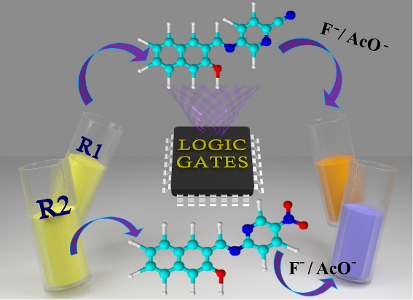
- ][24][25][26]. The choice of the appropriate detection technique is highly essential as it directly dictates the efficacy of the sensor. Anion binding through colorimetric probes comprising of a binding site and a signaling unit works in a coordinative way yielding an optical output visible to the


Interactions between photoacidic 3-hydroxynaphtho[1,2-b]quinolizinium and cucurbit[7]uril: Influence on acidity in the ground and excited state
Beilstein J. Org. Chem. 2017, 13, 203–212, doi:10.3762/bjoc.13.23
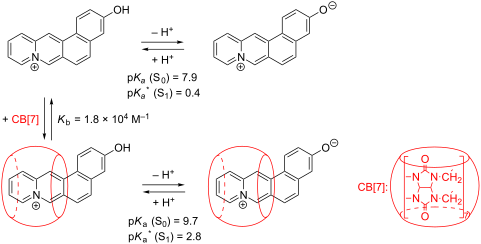
- ]. Notably, the chromophore of the oxyanion-substituted quinolizinium derivative 2cB resembles the well-established solvatochromic pyridinium-N-phenolate betaine dyes that are employed as polarity probes [53]. Correspondingly, the derivative 2cB shows a similar positive solvatochromism, i.e., a blue shift of


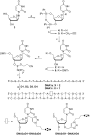
A postsynthetically 2’-“clickable” uridine with arabino configuration and its application for fluorescent labeling and imaging of DNA
Beilstein J. Org. Chem. 2017, 13, 127–137, doi:10.3762/bjoc.13.16
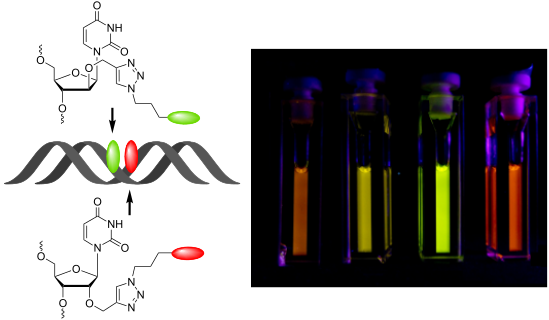
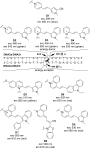
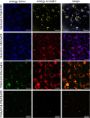
- traffic lights” [17][19][25] that are energy transfer-based nucleic acid probes that can be used in molecular beacons [26], especially for vesicular microRNA imaging in living cancer cells [27], and for siRNA transport imaging [28]. Donor and acceptor dyes are combined in an interstrand and diagonal
- /or fluorescence quantum yields. Thereby, improved fluorescent nucleic acid probes were elucidated that are suitable not only for nucleic acid imaging of living cells but additionally allow a two-color readout. Experimental Materials and methods. Chemicals and dry solvents were purchased from Aldrich
- energy transfer-based nucleic acid probes. Melting temperatures (Tm) and fluorescence quantum yields (ΦF) of singly modified DNA2aD1–DNA2rD4. Fluorescence intensity ratios (color contrast) C = IAc/IDo and fluorescence quantum yields ΦF of energy transfer pairs between dyes D1–D4 in DNA2a and DNA2r and



Versatile synthesis of end-reactive polyrotaxanes applicable to fabrication of supramolecular biomaterials
Beilstein J. Org. Chem. 2016, 12, 2883–2892, doi:10.3762/bjoc.12.287

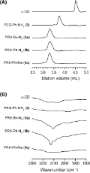
- ) contrast agents and positron emission tomography (PET) probes for in vivo studies. Conclusion In this study, we described a novel preparation method for end-reactive PRXs using 3 as an axle polymer for the PRXs. The terminal 2-amino-3-phenylpropyl groups of 3 prevent the dethreading of α-CDs after end




O-Alkylated heavy atom carbohydrate probes for protein X-ray crystallography: Studies towards the synthesis of methyl 2-O-methyl-L-selenofucopyranoside
Beilstein J. Org. Chem. 2016, 12, 2828–2833, doi:10.3762/bjoc.12.282

- -atom probes for O-alkyl carbohydrate binding lectins. Results and Discussion The first synthetic approach towards O-methylated selenofucoside 3 was based on the reported syntheses of unmodified methyl α-L-selenofucoside (1) [23] and of the reported tectonin ligand allyl 2-O-methyl-α-L-fucoside (2) [28


Chemical probes for competitive profiling of the quorum sensing signal synthase PqsD of Pseudomonas aeruginosa
Beilstein J. Org. Chem. 2016, 12, 2784–2792, doi:10.3762/bjoc.12.277
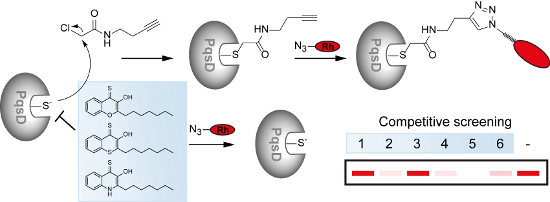
- developed a library of cysteine reactive chemical probes with an alkyne handle for fluorescence tagging and report the selective and highly sensitive in vitro labelling of the active site cysteine of this important enzyme. Interestingly, only one type of probe, with a reactive α-chloroacetamide was capable
- of covalently reacting with the active site. We demonstrated the potential of our probes in a competitive labelling platform where we screened a library of synthetic HHQ and PQS analogues with heteroatom replacements and found several inhibitors of probe binding that may represent promising scaffolds
- for the development of customized PqsD inhibitors as well as a chemical toolbox to investigate the activity and active site specificity of the enzyme. Keywords: activity-based probes; PqsD; protein labelling; Pseudomonas aeruginosa; quinolones; Introduction The emergence of multi-drug resistant



Benzothiadiazole oligoene fatty acids: fluorescent dyes with large Stokes shifts
Beilstein J. Org. Chem. 2016, 12, 2739–2747, doi:10.3762/bjoc.12.270
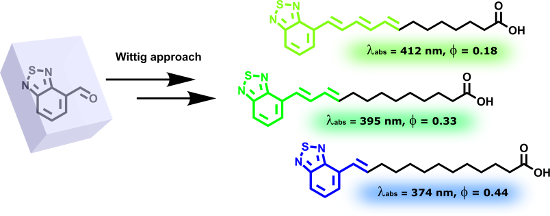
- with very similar geometrical parameters differing only in their absorption and emission wavelengths. The grade of unsaturation as the sole geometrical difference thus provides a set of probes to study the effect of rigidified ethene moieties as straight-chain alkane surrogates within biological
- , but spectroscopically different fluorescent probes we believe that these fatty acids might find interest as useful candidates to study the sensitive hydrophobic area of membranes in terms of domain formation or as labeling agents in general. Experimental General. All solvents for column chromatography


Computational methods in drug discovery
Beilstein J. Org. Chem. 2016, 12, 2694–2718, doi:10.3762/bjoc.12.267
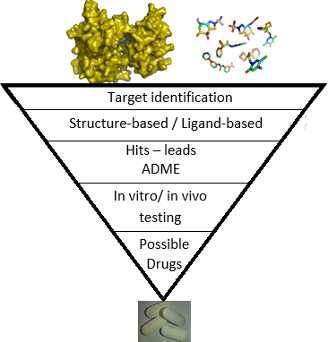
- -based methods [90]. In Q-SiteFinder a van der Waals probe is used and the interaction energy between the probe and the protein is found in order to identify binding sites of the protein [91]. The SiteHound program is another energy-based method that uses two kinds of probes; a carbon probe and a
- protease. Another energy-based method, FTMAP, uses 16 probes in identifying hot spots in structures and was more recently extended to include any user provided small molecule as an additional probe [93][94]. Many other binding pocket finding programs exist. PEP-SiteFinder [95], SiteMap available through



A direct method for the N-tetraalkylation of azamacrocycles
Beilstein J. Org. Chem. 2016, 12, 2457–2461, doi:10.3762/bjoc.12.239

- resulting complexes [2]. These systems typically exhibit high thermodynamic and kinetic stability and have found application within biomimetic systems [1][7][8][9][10], in biomedicine [3][6][11][12][13][14][15][16], as catalysts [17][18][19][20][21][22], and as fluorescent probes [5][23][24][25][26][27][28


Economical and scalable synthesis of 6-amino-2-cyanobenzothiazole
Beilstein J. Org. Chem. 2016, 12, 2019–2025, doi:10.3762/bjoc.12.189

- nanostructures in cellulo [12][13]. The precursor of D-aminoluciferin, 6-amino-2-cyanobenzothiazole (ACBT, 8), is an attractive building block for BLI probes and for handles for CBT ligations, because of the ease of derivatisation of its amino group. Like other functionalised CBTs, ACBT is available from
- plug to give the desired product in 60–71% yield. Pure product 8 was recrystallised from hot ethanol for melting point determination. Conclusion We have developed a straight-forward, practical and readily scalable synthesis of ACBT 8, a valuable intermediate in the development of chemical probes for



Application of Cu(I)-catalyzed azide–alkyne cycloaddition for the design and synthesis of sequence specific probes targeting double-stranded DNA
Beilstein J. Org. Chem. 2016, 12, 1348–1360, doi:10.3762/bjoc.12.128
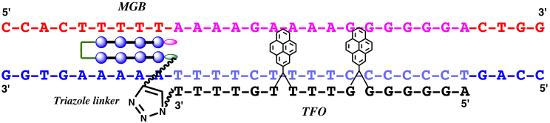
- , so they were successfully used for both gene expression regulation and the synthesis of fluorescent probes for DNA imaging in fixed and live cells [1][2][3][8][9]. However, the length of the sequence recognized by the classical hairpin polyamides (5–6 base pairs) is much shorter than that for TFOs
- transformations. So, this reaction is suitable for the synthesis of different biologically important conjugates including polyamide-TFO conjugates and fluorescent probes based on these components. Several methods avoiding the presence of cytotoxic copper ions have been also described [27][28][29]. Baskin et al
- because of the low concentration of integrated viral DNA in the genome. That is why for the synthesis of the fluorescent probes by "click chemistry" we decided to use a polyamide F1-NH2 that targets the tandem repeats of murine pericentromeres abundant in the murine genome [2][3]. The polyamide structure


Synthesis, fluorescence properties and the promising cytotoxicity of pyrene–derived aminophosphonates
Beilstein J. Org. Chem. 2016, 12, 1229–1235, doi:10.3762/bjoc.12.117
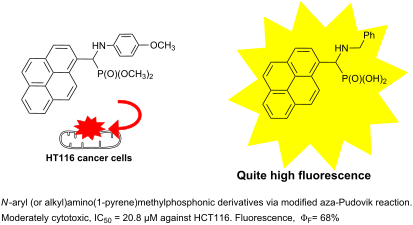
- derivatives were then selected and their biological and photophysical properties were studied. Luminescent properties of pyrenyl aminophosphonates The widespread use of pyrene derivatives as luminescent probes in biological research [24][25][26][27] prompted us to study emissive properties of the synthesized
- corresponding aminophosphonate was earlier reported [29]. The aforementioned data suggest possible application of compound 3Aj (and other exhibiting similar emission quantum yield) as molecular probes monitoring micropolarity of the fluorophore environment. On the other hand, water-soluble 4a might be used for


Synthesis of a deuterated probe for the confocal Raman microscopy imaging of squalenoyl nanomedicines
Beilstein J. Org. Chem. 2016, 12, 1127–1135, doi:10.3762/bjoc.12.109

- fulfill this task, radioactive labeling or fluorescent probes have been thoroughly used. For example, the subcellular localization of the 3H-radiolabeled GemSQ conjugate has been evaluated by micro-autoradiography coupled to confocal imaging of fluorescently labeled cellular structures [21]. A dual
- , the use of fluorescent probes requires the covalent binding of large dye molecules (bodipy, cyanine, rhodamine etc, ...) to the drug conjugate, thus potentially modifying its physicochemical profile as well as the in vivo fate and the pharmacological activity. A simple encapsulation of an amphiphilic


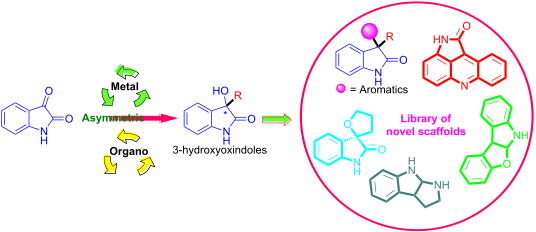
Catalytic asymmetric synthesis of biologically important 3-hydroxyoxindoles: an update
Beilstein J. Org. Chem. 2016, 12, 1000–1039, doi:10.3762/bjoc.12.98




Synthesis and fluorosolvatochromism of 3-arylnaphtho[1,2-b]quinolizinium derivatives
Beilstein J. Org. Chem. 2016, 12, 854–862, doi:10.3762/bjoc.12.84

- states. Keywords: fluorescence; heterocycles; quinolizinium; solvatochromism; Introduction Dyes that change their absorption and emission properties, especially their color, in different media are considered as helpful optical probes, because they may be applied for the characterization and
- identification of either bulk media or microscopic environments with relatively simple spectrometric analyses [1][2][3]. For example, distinct solvent properties, such as hydrogen-bonding ability, polarity or polarizability can be determined even quantitatively by means of solvatochromic optical probes [4][5][6
- ][7]. In this context, fluorosolvatochromic probes appear to be especially attractive as indicators for the surrounding medium, because emission spectroscopy is a highly sensitive method that allows to determine three different physical quantities, namely emission quantum yield, emission energy and


Indenopyrans – synthesis and photoluminescence properties
Beilstein J. Org. Chem. 2016, 12, 825–834, doi:10.3762/bjoc.12.81

- chromophores are valuable candidates for the fabrication of OLEDs [21][22], dye lasers [23], sensors [24], dye-sensitized solar cells, fluorescent probes [25] or logic gates [26]. Recently [27], 6-CF3-2H-pyran-2-ones have been reported as potential building blocks for the preparation of novel



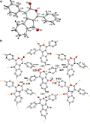
Synthesis and in vitro cytotoxicity of acetylated 3-fluoro, 4-fluoro and 3,4-difluoro analogs of D-glucosamine and D-galactosamine
Beilstein J. Org. Chem. 2016, 12, 750–759, doi:10.3762/bjoc.12.75
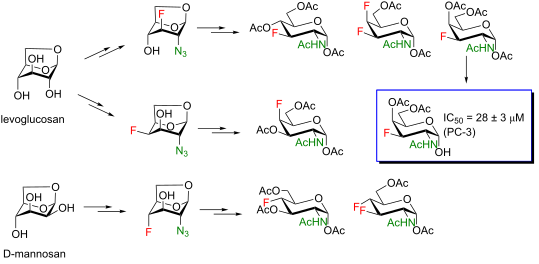
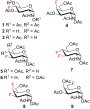
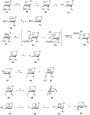
- Background: Derivatives of D-glucosamine and D-galactosamine represent an important family of the cell surface glycan components and their fluorinated analogs found use as metabolic inhibitors of complex glycan biosynthesis, or as probes for the study of protein–carbohydrate interactions. This work is





New synthetic strategies for xanthene-dye-appended cyclodextrins
Beilstein J. Org. Chem. 2016, 12, 537–548, doi:10.3762/bjoc.12.53
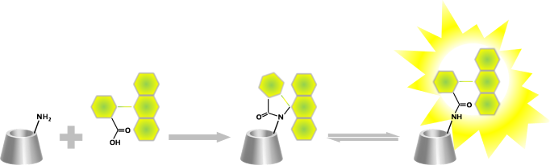
- glass substrates. Hasegawa et al. [15] were the first to develop rhodamine labeled CDs for biological purposes. They synthesized two different fluorescent β-CDs and showed their utility as new fluorogenic probes for monitoring pH of HeLa cells. The synthetic strategy was based first on the modification


Copper-mediated arylation with arylboronic acids: Facile and modular synthesis of triarylmethanes
Beilstein J. Org. Chem. 2016, 12, 496–504, doi:10.3762/bjoc.12.49
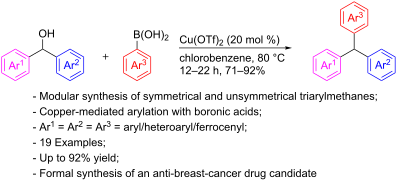
- triarylmethane motif are ubiquitous and found mainly in technologically and medicinally relevant molecules like dyes [6][7][8][9], pH indicators [10][11][12], fluorescent probes [13][14][15][16][17][18] and antibacterial drugs [19]. For example, malachite green (1) is a dye, cresol red (2) is a pH indicator and


Art, auto-mechanics, and supramolecular chemistry. A merging of hobbies and career
Beilstein J. Org. Chem. 2016, 12, 362–376, doi:10.3762/bjoc.12.40
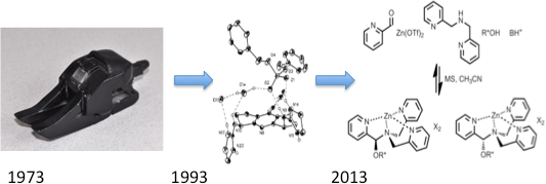
- to answer these questions where mechanistically interesting, there was a question – “How many people really care about such subtle details?” Thus, while mechanistic pursuits remain a constant in our group’s work, we switched from using synthetic receptors as mechanistic probes to using such receptors
- Molecular Probes. The directions that Vincent Rotello is taking the field of differential sensing, toward that of biological applications, is one clear future. We are similarly moving to biological applications with kinase and lipid analysis, and cellular classification. But, even beverage analysis, complex





A journey in bioinspired supramolecular chemistry: from molecular tweezers to small molecules that target myotonic dystrophy
Beilstein J. Org. Chem. 2016, 12, 125–138, doi:10.3762/bjoc.12.14
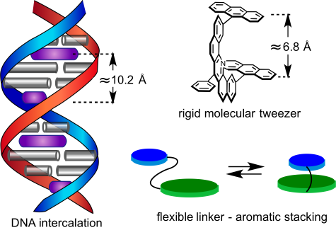
- macrocycle and the act of reading the polymer sequence would have to be performed sequentially rather than random access. Macrocycles make an appearance: macrocyclic bisintercalators and our early efforts to develop DNA probes As just illustrated, one of the major advantages of the molecular tweezer approach
- consistent with much of the data [45]. Beyond the novelty of the binding mode, we thought these macrocyclic bisintercalators might serve as probes of DNA breathing and further might have particularly slow dissociation kinetics, thereby improving their ability to inhibit enzymatic DNA processing. However


Smart molecules for imaging, sensing and health (SMITH)
Beilstein J. Org. Chem. 2015, 11, 2540–2548, doi:10.3762/bjoc.11.274
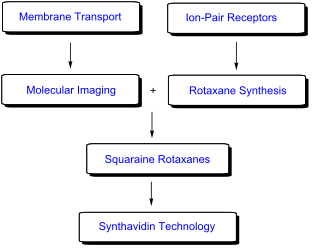
- it is hard” [11]. We realized that most of the targeted fluorescent molecular probes for phospholipids were derivatives of large protein systems and we felt that we could devise small synthetic mimics of the binding pockets. Our primary phospholipid target was phosphatidylserine, which gets exposed
- selectively recognize the anionic head group of phosphatidylserine [12]. Furthermore, binding strength is amplified by electrostatic attraction of the cationic receptor to the apoptotic cell membrane with a negative surface potential. We developed a family of fluorescent ZnDPA probes for fluorescence
- microscopy and flow cytometry methods for preclinical research [13][14][15][16] (Figure 2). Many of these fluorescent probes are used as imaging reagents to quantify the level of cell death in a range of biomedical samples [17]. We also developed some nuclear isotopic labeled probes for in vivo imaging of


Easy access to heterobimetallic complexes for medical imaging applications via microwave-enhanced cycloaddition
Beilstein J. Org. Chem. 2015, 11, 2202–2208, doi:10.3762/bjoc.11.239

- was to develop a toolbox of different dyads for further coordination of different types of metals, the easy and fast assembly of two polyazamacrocycles providing easy access to new bimodal probes. Depending upon the desired application, it could allow choosing one paramagnetic metal for MRI and one
- [16][17] and porphyrins as PET probes. Cu–NOTA is significantly more inert in acidic conditions compared to Cu–DOTA, which usually decomplexed within few minutes. 64Cu2+-NOTA is considered as better PET agent, with regard to its in vivo stability [18]. Porphyrins are also excellent macrocyclic ligands
- ]. Gallium-68. NOTA [22] and DOTA [23] have been reported to form a stable complex with gallium(III) and those two ligands are widely used in the preparation of 68Ga-based PET probes. Advantageously, Ga complexes of porphyrins and corroles are known to be very stable allowing possible PET imaging


2-Hetaryl-1,3-tropolones based on five-membered nitrogen heterocycles: synthesis, structure and properties
Beilstein J. Org. Chem. 2015, 11, 2179–2188, doi:10.3762/bjoc.11.236

- which has attracted much attention due to the applications in various molecular probes and luminescent materials because of the remarkable photophysical properties of the ESIPT (excited state intramolecular proton transfer) chromophores [33][34]. UV-irradiation of solutions of these compounds in


![[Graphic 3]](/bjoc/content/inline/1860-5397-11-236-i8.png?max-width=637&scale=1.18182) N···H–O equilibrium in solutions of 2-hetaryl-5,6,7-trichloro- and 4,...
N···H–O equilibrium in solutions of 2-hetaryl-5,6,7-trichloro- and 4,...


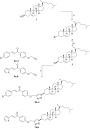
Synthesis, antimicrobial and cytotoxicity evaluation of new cholesterol congeners
Beilstein J. Org. Chem. 2015, 11, 1922–1932, doi:10.3762/bjoc.11.208

- regulator of cellular cholesterol [8]. Synthetic BODIPY–cholesterol conjugates were reported as probes for visualization of intracellular cholesterol pools and for monitoring cholesterol efflux from cells to extracellular receptors [9]. ABCA1 plays an inevitable role in the resistance against tumorgenesis
- under the same conditions and compound 32 also could not be obtained [44][45]. To investigate, whether the triazole or the cholesterol entities are not compatible with these debenzylation conditions, probes 36 and 38 (Scheme 7) were prepared by CuAAC of derivative 34 with compounds 35 and 9b