Search results
Search for "small molecules" in Full Text gives 240 result(s) in Beilstein Journal of Organic Chemistry. Showing first 200.
Hydroxy-functionalized hyper-cross-linked ultra-microporous organic polymers for selective CO2 capture at room temperature
Beilstein J. Org. Chem. 2016, 12, 1981–1986, doi:10.3762/bjoc.12.185
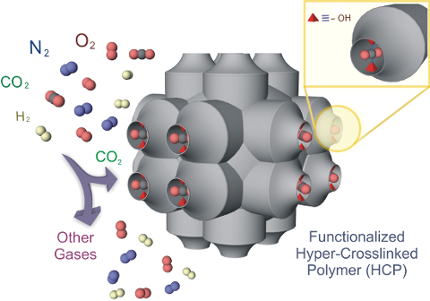
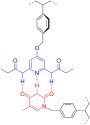
- synthesis, the cost-effective formaldehyde dimethyl acetal (FDA), FeCl3 and that organic small molecules can produce very low cost materials with high yield [28]. Hyper-cross-linking prevents the close packing of polymeric chains in this type of material to impart the intrinsic porosity. Hyper-cross-linked


Effect of the π-conjugation length on the properties and photovoltaic performance of A–π–D–π–A type oligothiophenes with a 4,8-bis(thienyl)benzo[1,2-b:4,5-b′]dithiophene core
Beilstein J. Org. Chem. 2016, 12, 1788–1797, doi:10.3762/bjoc.12.169
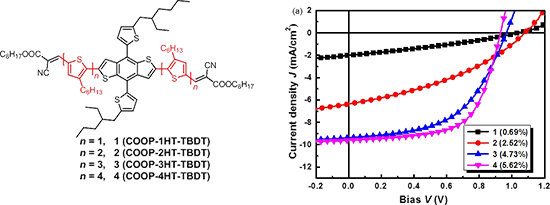
- use in organic solar cells. In this paper, four 4,8-bis(5-alkyl-2-thienyl)benzo[1,2-b:4,5-b′]dithiophene (TBDT)-containing A–π–D–π–A-type small molecules (COOP-nHT-TBDT, n = 1, 2, 3, 4), having 2-cyano-3-octyloxy-3-oxo-1-propenyl (COOP) as terminal group and regioregular oligo(3-hexylthiophene) (nHT
- production [1][2]. In the past few years, OSCs based on polymers have achieved power conversion efficiencies (PCEs) of over 11% [3][4]. Meanwhile, OSCs based on conjugated small molecules attracted also enormous attentions due to their ease of synthesis, defined chemical structure, low batch-to-batch
- . Organic solar cells based these conjugated small molecules as the electron donor were fabricated and tested. In addition, long-term stability of these solar cells was also studied, and a general structure–property–performance relationship of these type of molecules is evaluated, which could serve as a



Organic chemistry meets polymers, nanoscience, therapeutics and diagnostics
Beilstein J. Org. Chem. 2016, 12, 1638–1646, doi:10.3762/bjoc.12.161
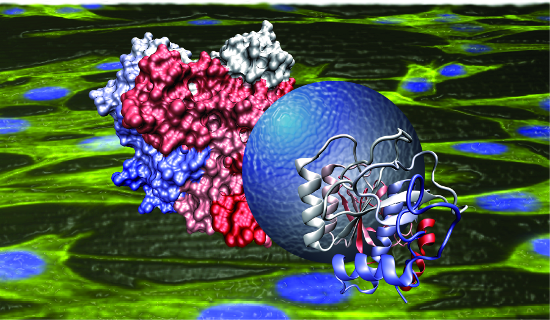
- nucleic acids, where we showed that cationic nanoparticles could bind to anionic DNA and inhibit transcription [37]. We also developed a number of strategies for delivery of small molecules, including glutathione-mediated release of covalently attached thiols [38], as the effective release of drugs




Star-shaped and linear π-conjugated oligomers consisting of a tetrathienoanthracene core and multiple diketopyrrolopyrrole arms for organic solar cells
Beilstein J. Org. Chem. 2016, 12, 1459–1466, doi:10.3762/bjoc.12.142
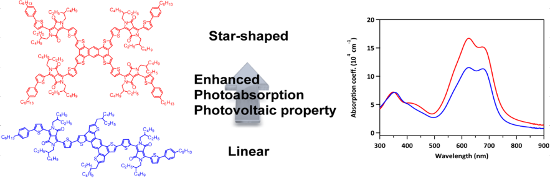
- , including organic solar cells (OSCs) [1][2][3][4]. OSCs have drawn much attention as promising next-generation renewable energy sources because abundant sun-light energy can be directly converted into electricity. Recently, the power conversion efficiencies (PCEs) of OSCs based on small molecules with bulk
- results [32]. For most of the donor materials, including polymers and small molecules reported, the best photovoltaic performances were generally achieved with an active layer thickness of around 100 nm. However, TTA-DPP4 and TTA-DPP2 presented the highest PCEs with much thinner active layers of


Discovery of an inhibitor of the production of the Pseudomonas aeruginosa virulence factor pyocyanin in wild-type cells
Beilstein J. Org. Chem. 2016, 12, 1428–1433, doi:10.3762/bjoc.12.137
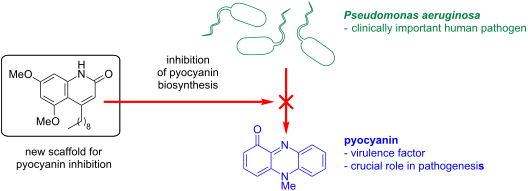
- hypothesis has been validated with a number of synthetic small molecules which inhibit LasR and pyocyanin production, respectively [8][9][20][23][24][25][26]. Many such inhibitors of pyocyanin biosynthesis are based on the same general structural framework as OdDHL. For example, we have recently reported the
- ) were used (which is typically the case) [9]. Conceivably 4 could also be of value in better elucidating the role of pyocyanin in P. aeruginosa infections. Of wider significance, the identification of small molecules with antivirulence activity is needed in order to more fully evaluate the therapeutic


Selective bromochlorination of a homoallylic alcohol for the total synthesis of (−)-anverene
Beilstein J. Org. Chem. 2016, 12, 1361–1365, doi:10.3762/bjoc.12.129

- ; total synthesis; Introduction The directed enantioselective functionalization of olefins is an extremely powerful tool in synthesis. A preeminent example is the Sharpless asymmetric epoxidation (SAE), which has been featured in countless syntheses of enantioenriched small molecules [1][2]. While the


Stimuli-responsive HBPS-g-PDMAEMA and its application as nanocarrier in loading hydrophobic molecules
Beilstein J. Org. Chem. 2016, 12, 939–949, doi:10.3762/bjoc.12.92

- , ionic strength and pH value) was investigated. The loading ability for small hydrophobic molecules was studied. To the best of our knowledge, this is the first report to prepare HBPS-containing stimuli-responsive materials for loading small molecules. Results and Discussion Synthesis and




Supported bifunctional thioureas as recoverable and reusable catalysts for enantioselective nitro-Michael reactions
Beilstein J. Org. Chem. 2016, 12, 628–635, doi:10.3762/bjoc.12.61
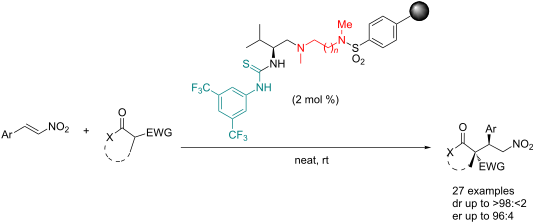
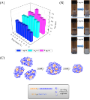
- transformations [1][2][3][4][5]. In these processes one of the major problems is related to the recovering of the catalysts. The support of the small molecules on different materials has been proposed as a solution, including their use in continuous flow processes [6][7][8][9]. The most popular supports include


Biosynthesis of α-pyrones
Beilstein J. Org. Chem. 2016, 12, 571–588, doi:10.3762/bjoc.12.56
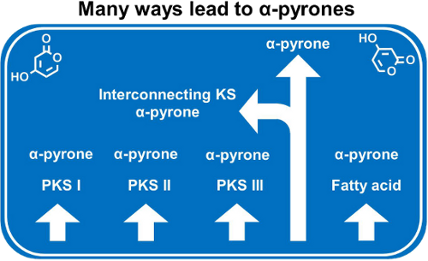
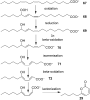
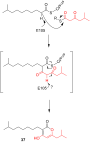
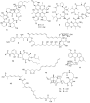
- and lactonization to yield the polyketide 76. 2.3 Biosynthesis by PKSIII systems Type III PKSs are relatively small molecules, since in contrast to the PKSs of type I and II they solely consist of a single ketosynthase. A single KS connects the CoA-bound starter and extender units; and also in this






Natural products from microbes associated with insects
Beilstein J. Org. Chem. 2016, 12, 314–327, doi:10.3762/bjoc.12.34
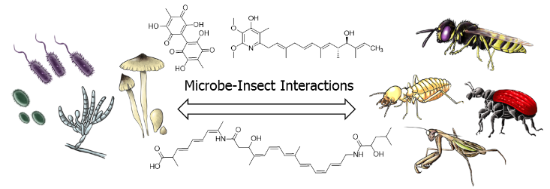
- adapted to living in symbiosis with invertebrates, and have been isolated from many different parts of different insect species [12]. To further illuminate the importance of Actinobacteria as producers of valuable small molecules, we provide below additional examples of novel bioactive secondary
- in vitro analyses, but efforts should be directed towards identifying the presence and activity of candidate compounds in situ. The examination of bacterial secondary metabolisms and the respective small molecules secretome, can give insights into the up or down-regulation of (cryptic) biosynthetic
- chemical signals from microbial interactions. (1) Chemical profiling of microbial interactions using analytical techniques. (2) Dereplication leads to potentially new small molecules. (3) Optimization of the isolation protocol based on biological assessment of the activity of the isolated compounds. (4





My maize and blue brick road to physical organic chemistry in materials
Beilstein J. Org. Chem. 2016, 12, 229–238, doi:10.3762/bjoc.12.24
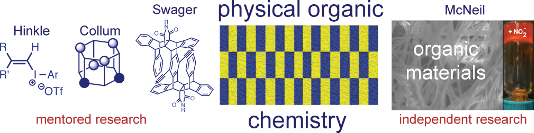
- providing a portable and potentially inexpensive method for sensing. Considering how naïve my understanding of gelation was at the time, I am still surprised that my proposal idea worked almost exactly as described. Molecular gels form through the self-assembly of small molecules into supramolecular


A journey in bioinspired supramolecular chemistry: from molecular tweezers to small molecules that target myotonic dystrophy
Beilstein J. Org. Chem. 2016, 12, 125–138, doi:10.3762/bjoc.12.14
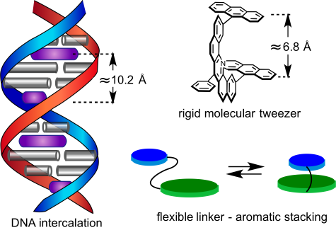
- small molecules recognizing DNA mismatches has been recently published [51]. Sometimes a break can be productive and refreshing In the year or so prior to my tenure and promotion, I thought about taking on a new and seemingly more challenging problem. At that time, there was a lot of discussion and some
- design principles that lead to high affinity [50][57][58], and then to apply that knowledge to self-assembling systems. Inspired by the work of Lehn [59], Whitesides [60], and Wuest [61], Brook Duerr, Yuguo Ma, Dave Reichert, and Fanwen Zeng developed discrete cyclic assemblies of small molecules [62][63
- small molecules to treat DM2, which originates in a CCUG expansion, but Lien Nguyen, Chun-Ho Wong, and JuYeon Lee used similar rational design approaches and found lead agents that are selective for this RNA as well [89]. Although the gain of function mechanism that has CUGexp sequestering MBNL1 is well


Supramolecular polymer assembly in aqueous solution arising from cyclodextrin host–guest complexation
Beilstein J. Org. Chem. 2016, 12, 50–72, doi:10.3762/bjoc.12.7
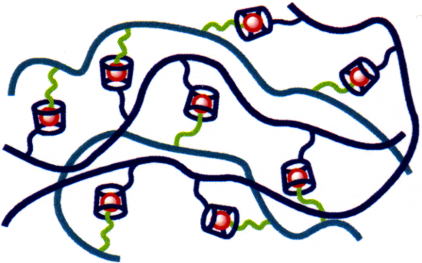
- complexes hydrophobic guest species to form host–guest complexes, or inclusion compounds. The host–guest complexes formed by cyclodextrins and their hydrophobic guests, which range from small molecules to polymer substituents and sections of polymer chains, have been widely studied and utilized as building
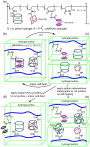
- photo-responsive small molecules are azobenzene and its derivatives which isomerize from trans to cis and from cis to trans under irradiation with UV and visible light, respectively, and are potentially components of photo-responsive materials. In 2005, Harada et al. constructed a photo-responsive


Bright molecules for sensing, computing and imaging: a tale of two once-troubled cities
Beilstein J. Org. Chem. 2015, 11, 2774–2784, doi:10.3762/bjoc.11.298
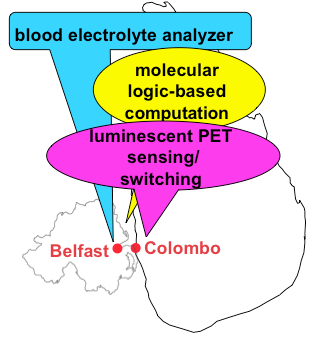
- molecular-mass oligonucleotides [81], both of which involve high levels of organization in space-time. The challenge we faced was to emulate this deep-seated animal behaviour with small molecules with no organization other than to spread them out on paper [82]. Such spreading would create a graphical user
- dollars is around the total debt plus derivatives traded in the world (2013 figures). In contrast, the total world gross domestic product is only 70 trillion dollars. Emulating a bit of arts The achievement of edge detection by small molecules allowed us to apply this idea to visual arts at a rudimentary







Direct estimate of the internal π-donation to the carbene centre within N-heterocyclic carbenes and related molecules
Beilstein J. Org. Chem. 2015, 11, 2727–2736, doi:10.3762/bjoc.11.294
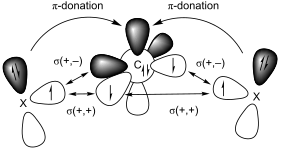
- last two decades, these versatile compounds have been widely employed in transition metal [9][10][11][12][13] and organocatalysis [14][15][16], organometallic [17][18][19] and main group synthesis [20][21][22][23][24][25][26], and activation of small molecules [27][28]. NHCs possess a divalent C(II


Learning from the unexpected in life and DNA self-assembly
Beilstein J. Org. Chem. 2015, 11, 2713–2720, doi:10.3762/bjoc.11.292
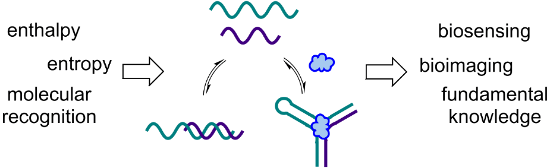
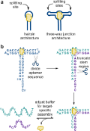
- , some of our greatest moments are when something doesn’t work for an unexpected reason. These “failed” experiments, while initially frustrating, have frequently led us to learn something new about the interactions of nucleic acids with each other or with ligands such as small molecules. These new
- sensors. This was surprising, as the fluorophores are small molecules attached to the termini of much larger DNA molecules. However, we found this lesson very informative, as it showed that dyes and other functional groups that we frequently append to DNA are not as innocuous as we assume them to be
- wealth of information that can be gained regarding the concentrations and flux of small molecules within these dynamic and complex environments. Additionally, the ability to fluorescently monitor targets such as small molecules inside of living cells could prove to be valuable for synthetic biology




Recent developments in copper-catalyzed radical alkylations of electron-rich π-systems
Beilstein J. Org. Chem. 2015, 11, 2278–2288, doi:10.3762/bjoc.11.248
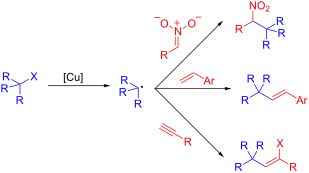
- Kirk W. Shimkin Donald A. Watson Department of Chemistry and Biochemistry, University of Delaware, Newark, Delaware 19716, United States 10.3762/bjoc.11.248 Abstract Recently, a number of papers have emerged demonstrating copper-catalyzed alkylation reactions of electron-rich small molecules. The


Conformational equilibrium in supramolecular chemistry: Dibutyltriuret case
Beilstein J. Org. Chem. 2015, 11, 2105–2116, doi:10.3762/bjoc.11.227

- existence of life. It is also present in many small molecules acting as an intramolecular configurational lock. This is realized in hydrazones [1], heterocyclic urea derivatives [2], molecules exhibiting photoexcited proton transfer [3] and other compounds [4][5][6] reported also by us [7][8][9][10]. The


Recent applications of ring-rearrangement metathesis in organic synthesis
Beilstein J. Org. Chem. 2015, 11, 1833–1864, doi:10.3762/bjoc.11.199

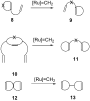
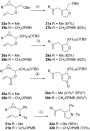
- structurally diverse small molecules starting with solid-supported phosphonate 213. In this regard, they have shown the use of a RRM protocol to prepare the bicyclic product 218 as well as tricyclic product 217. To this end, the phosphonate ester 213 reacted with a wide variety of aldehydes 214 such as aryl










Synthesis and evaluation of the biostability and cell compatibility of novel conjugates of nucleobase, peptidic epitope, and saccharide
Beilstein J. Org. Chem. 2015, 11, 1352–1359, doi:10.3762/bjoc.11.145

- chromatography (HPLC) to purify the target conjugates. Gelation properties Supramolecular hydrogels [18][19][20][21][22][23][24] formed by self-assembly of small molecules in water, as demonstrated previously by us and other researchers, have numerous potential applications, such as encapsulation and delivery of


Thiazole-induced rigidification in substituted dithieno-tetrathiafulvalene: the effect of planarisation on charge transport properties
Beilstein J. Org. Chem. 2015, 11, 1148–1154, doi:10.3762/bjoc.11.129
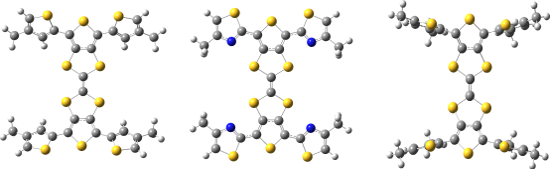
- transistors (OFETs) Compounds 1 and 2 were used in the fabrication of bottom-gate bottom-contact OFETs to give an indication on the applicability of these small molecules to organic semiconductor devices. The use of self-assembled monolayers (SAMs) was investigated with pentafluorobenzenethiol (PFBT) and



DNA display of glycoconjugates to emulate oligomeric interactions of glycans
Beilstein J. Org. Chem. 2015, 11, 707–719, doi:10.3762/bjoc.11.81
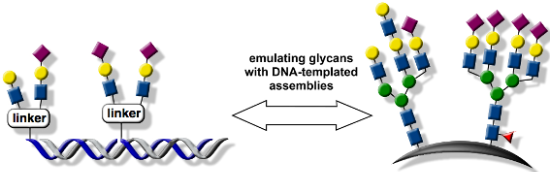
- standard technology and customized arrays with 104–106 discrete sequences are readily available. Screening for glycan binding in a microarray format has also proven extremely valuable in glycobiology [46][47]. Based on earlier reports that small molecules [48][49] and protein microarrays [50] can be


The Shono-type electroorganic oxidation of unfunctionalised amides. Carbon–carbon bond formation via electrogenerated N-acyliminium ions
Beilstein J. Org. Chem. 2014, 10, 3056–3072, doi:10.3762/bjoc.10.323
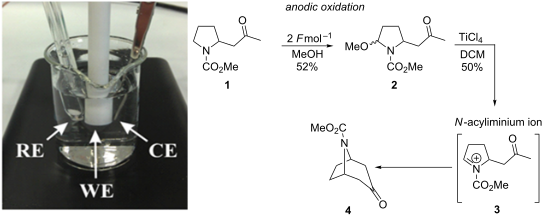
- been adapted to efficiently generate novel small molecules in an electrochemical microflow system [26][30]. Combining the advantages of the cation-pool method with microflow technologies has enabled the concept of “cation flow” systems (Figure 1). In this arrangement a porous carbon felt is used as an


Come-back of phenanthridine and phenanthridinium derivatives in the 21st century
Beilstein J. Org. Chem. 2014, 10, 2930–2954, doi:10.3762/bjoc.10.312

- . The common approach to complex small molecules targeting DNA and RNA usually required a number of consecutive synthetic steps, which made modification of the interesting structures a laborious and time-consuming task, quite often being the bottle-neck in the structure–activity relation research. With
- cases a switch of the binding site to the minor groove was reported. In an effort to influence DNA sequence-selective recognition by small molecules (MW <1000), our group prepared a series of phenanthridine derivatives with one or two nucleobases covalently attached at the 3 and/or 8 positions of the
- monomeric analogues) revealed significantly increased DNA-binding affinity and consequently enhanced telomerase and reverse transcriptase inhibition [69]. Conjugates of phenanthridine with other DNA and RNA active moieties Another common approach to increased selectivity of DNA- and RNA-targeting small




Removal of volatile organic compounds using amphiphilic cyclodextrin-coated polypropylene
Beilstein J. Org. Chem. 2014, 10, 2743–2750, doi:10.3762/bjoc.10.290
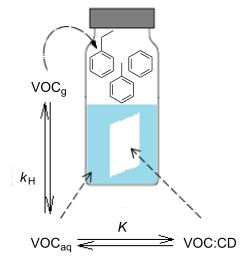
- , there is a great need to discover alternative methods to purify both industrial and private wastewater effectively in order to enable the EU member states to achieve the goals of the Water Framework Directive. Cyclodextrins (CDs) are cyclic, relatively small molecules consisting of units of glucose