Search results
Search for "thiourea" in Full Text gives 203 result(s) in Beilstein Journal of Organic Chemistry. Showing first 200.
New hydrogen-bonding organocatalysts: Chiral cyclophosphazanes and phosphorus amides as catalysts for asymmetric Michael additions
Beilstein J. Org. Chem. 2014, 10, 224–236, doi:10.3762/bjoc.10.18
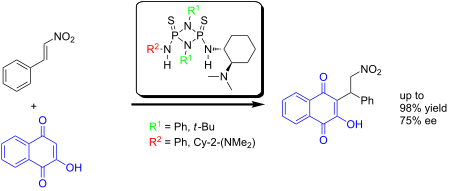
- reaction of methyl acrylate with benzaldehyde the substituted triamide catalysts show a comparable or an even superior activity relative to the thiourea analogue. Recently, Gale et al. demonstrated that the same phosphoric triamides effectively act as anion transporters by hydrogen bonding [19]. These
- the nitro moiety with a bonding energy (ΔE) of 5.2 kcal/mol and a mean bond length NHurea–Onitrobenzene of 2.31 Å. Thiourea complex Ib forms slightly stronger hydrogen bonds to the NO2 moiety with a bonding energy of 6.5 kcal/mol, which is also reflected in the shorter mean bond length of NHthiourea
- –Onitrobenzene (2.19 Å). This is in accordance with the experimentally observed higher acidity [27] of thiourea over urea. Squaramide complex II forms the strongest hydrogen bonds of all computed motifs. The bond lengths NHsquaramide–Onitrobenzene are shortest with 2.11 Å while the bonding energy is highest (8.3


Synthesis of homo- and heteromultivalent carbohydrate-functionalized oligo(amidoamines) using novel glyco-building blocks
Beilstein J. Org. Chem. 2013, 9, 2395–2403, doi:10.3762/bjoc.9.276
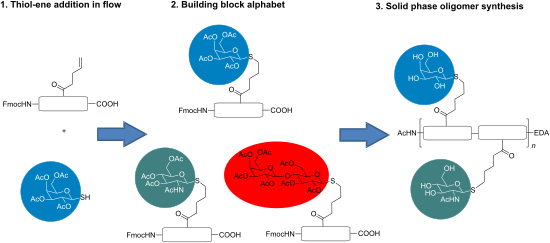
- DDS 1 and thioglycosides 2–7 are required. The large scale synthesis of DDS 1 was achieved according to a published procedure [26]. The required β-thioglycosides 2–7 were prepared via their corresponding glycosyl bromides followed by SN2 displacement of the anomeric bromide with thiourea [41] or Na2S


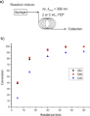

An overview of the synthetic routes to the best selling drugs containing 6-membered heterocycles
Beilstein J. Org. Chem. 2013, 9, 2265–2319, doi:10.3762/bjoc.9.265
- chromium(VI) oxide yielded the aldehyde 1.67 required for the previously described Knoevenagel condensation. The five membered heterocycle 2,4-thiazolidinedione (1.68) is readily available commercially, but can be easily prepared at scale via a simple cyclocondensation between thiourea and chloroacetic
- (Scheme 16, A). Alternatively, the α-amino acid portion of 1.81 can be diazotised under standard conditions and will subsequently deliver the same product when treated with lithium isothiocyanate (Scheme 16, B). Finally, α-bromonitrile 1.77 can be condensed with thiourea to give pioglitazone after aqueous


Synthesis of the reported structure of piperazirum using a nitro-Mannich reaction as the key stereochemical determining step
Beilstein J. Org. Chem. 2013, 9, 1737–1744, doi:10.3762/bjoc.9.200
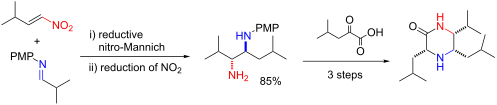
- . Enantioselective reactions have been controlled by asymmetric metal-centred Lewis acids; chiral hydrogen bond donors, in particular by the use of asymmetric thiourea organocatalysts, chiral Brønsted acids, phase-transfer catalysts and Brønsted base catalysts [3][15][25][26][27][28][29][30][31][32][33][34][35][36


The rapid generation of isothiocyanates in flow
Beilstein J. Org. Chem. 2013, 9, 1613–1619, doi:10.3762/bjoc.9.184
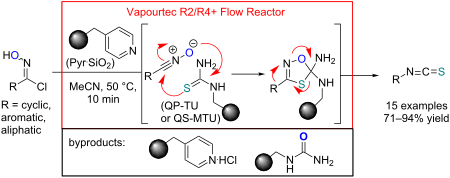
- which has received less attention are isothiocyanates. These species are widely utilised as valuable starting materials for many thiourea-based organocatalysts [24][25][26], numerous heterocyclic entities [27][28][29] as well as important entry points towards other key functional groups such as
- ], both reagents causing safety concerns due to the formation of toxic, malodorous and/or extremely corrosive byproducts (Scheme 1a). An underutilised alternative sequence is the 1,3-dipolar cycloaddition reaction between a nitrile oxide and a thiourea compound which initially generates an unstable 1,4,2
- weak base and a functionalised thiourea) placed as a 1:1-mixture within a single glass reactor cartridge (Scheme 2). The immobilised base affects the in situ formation of the reactive nitrile oxide from the chloroxime which is immediately captured by the local tethered thiocarbonyl dipolarophile


A reductive coupling strategy towards ripostatin A
Beilstein J. Org. Chem. 2013, 9, 1533–1550, doi:10.3762/bjoc.9.175
- a small amount of THF to dissolve the starting material). The oxy-Michael addition with chiral thiourea and phenylboronic acid proceeded to give a single diastereomer; however, after 48 h at 50 °C, only 17% of the syn diol was formed, and 56% of the starting material was re-isolated. Under the
- carry out the reaction with diisopropylamine as a substitute for the thiourea catalyst. This modification afforded both the syn and anti diols in roughly a 1:1 ratio and a combined yield of 40–45%, albeit without recovery of starting material. The syn and anti diastereomers could be separated by


Structures of the reaction products of the AZADO radical with TCNQF4 or thiourea
Beilstein J. Org. Chem. 2013, 9, 1487–1491, doi:10.3762/bjoc.9.169

- reaction of AZADO (2-azaadamantane N-oxyl) with TCNQF4 (2,3,5,6-tetrafluoro-7,7,8,8-tetracyanoquinodimethane), the reaction of AZADO with thiourea provided an inclusion compound, in which AZADO molecules are incorporated in cylindrical channels formed by thiourea molecules. Keywords: adduct; inclusion
- compound; nitroxide radical; TCNQF4; thiourea; Introduction TEMPO radical (2,2,6,6-tetramethylpiperidinyl-N-oxyl) (1) is a typical nitroxide radical and is persistent because of the steric hindrance of the four neighboring methyl groups of the NO moiety protecting it from attack by various reagents
- acceptor. Moreover, we tried to prepare a supramolecule from 2 with thiourea (4), as structurally similar 1-bromoadamantane was reported to form an intriguing inclusion compound with thiouea [9]. There are some reported examples of inclusion compounds derived from TEMPO and related nitroxide radicals with


Thiourea-catalyzed Diels–Alder reaction of a naphthoquinone monoketal dienophile
Beilstein J. Org. Chem. 2013, 9, 1414–1418, doi:10.3762/bjoc.9.158

- -Leopoldshafen, Germany 10.3762/bjoc.9.158 Abstract A variety of organocatalysts were screened for the catalysis of the naphthoquinone monoketal Diels–Alder reaction. In this study we found that Schreiner's thiourea catalyst 10 and Jacobson's thiourea catalyst 12 facilitate the cycloaddition of the sterically
- hindered naphthoquinone monoketal dienophile 3 with diene 4. The use of thiourea catalysis allowed for the first time the highly selective synthesis of the exo-product 2a in up to 63% yield. In this reaction a new quaternary center was built. The so formed cycloaddition product 2a represents the ABC
- tricycle of beticolin 0 (1) and is also a valuable model substrate for the total synthesis of related natural products. Keywords: beticolin 0; Diels–Alder reaction; natural product; organocatalysis; thiourea catalysis; total synthesis; Introduction In the past few years, many different types of


Camera-enabled techniques for organic synthesis
Beilstein J. Org. Chem. 2013, 9, 1051–1072, doi:10.3762/bjoc.9.118
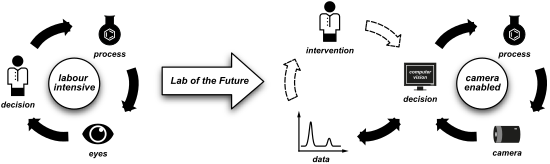
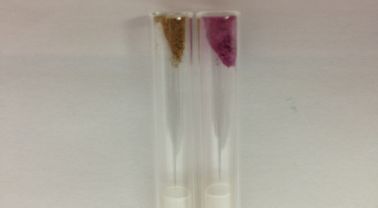
- from purple to brown (d). (a) Ozonolysis of a series of alkenes using ozone in a bottle-reactor; (b) Glaser–Hay coupling using oxygen gas in the second-generation reactor. Cartridges containing polymer supported (PS) reagents are used to scavenge residual reagents: thiourea (TU) sequesters copper, and


Appel-reagent-mediated transformation of glycosyl hemiacetal derivatives into thioglycosides and glycosyl thiols
Beilstein J. Org. Chem. 2013, 9, 974–982, doi:10.3762/bjoc.9.112

- halide or acetate with thiourea or thioacetate and hydrolysis of the resulting intermediates [26][27]; (b) reaction of hydrogen sulfide gas with glycosyl halides in hydrogen fluoride [39]; (c) treatment of the glycosyl hemiacetal derivatives with Lawesson’s reagent [40] and (d) treatment of 1,6-anhydro


A facile, rapid, one-pot regio/stereoselective synthesis of 2-iminothiazolidin-4-ones under solvent/scavenger-free conditions
Beilstein J. Org. Chem. 2013, 9, 689–697, doi:10.3762/bjoc.9.78

- the formation of the carboxylate anion of one the starting materials viz. chloroacetic acid or the thiourea-chloroacetic acid coupled product. This may retard the direct amine–carboxylic acid coupling, thus decreasing the yield of the product. In view of the above perception, the solvent-free protocol
- expected thiourea. Having established the new protocol for the synthesis of 2-iminothiazolidin-4-ones, the method was extended to the rapid synthesis of a library of thiazolidinone derivatives (Table 4). Further, it is pertinent to mention here the interesting regio/stereoselectivity noted in the synthesis




Efficient Cu-catalyzed base-free C–S coupling under conventional and microwave heating. A simple access to S-heterocycles and sulfides
Beilstein J. Org. Chem. 2013, 9, 467–475, doi:10.3762/bjoc.9.50

- consequence, the development of new methodologies for CAr–S bond formation still represents a challenge in organic chemistry (Figure 1). Nucleophilic substitution of aryl halides by a variety of sulfur anions, such as PhS−, 1-naphthylS−, S2−, thiourea anion (−SCNH(NH2)), thioacetate anion (MeCOS−) and


Spin state switching in iron coordination compounds
Beilstein J. Org. Chem. 2013, 9, 342–391, doi:10.3762/bjoc.9.39


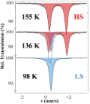


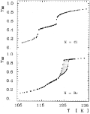

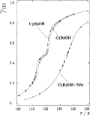


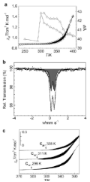
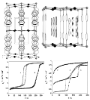
![[Graphic 1]](/bjoc/content/inline/1860-5397-9-39-i3.png?max-width=637&scale=1.18182) ) modes versus the anion volu...
) modes versus the anion volu...






Reactions of salicylaldehyde and enolates or their equivalents: versatile synthetic routes to chromane derivatives
Beilstein J. Org. Chem. 2012, 8, 2166–2175, doi:10.3762/bjoc.8.244

- 27. Although Shanti and co-workers used a chiral catalyst, no data was provided on the stereoselectivity of this reaction. In a study related to that of Shanti and co-workers, Yang and co-workers used chiral amine-thiourea catalyst 31 in a three-component enantioselective reaction of salicylaldehyde


Mechanochemistry assisted asymmetric organocatalysis: A sustainable approach
Beilstein J. Org. Chem. 2012, 8, 2132–2141, doi:10.3762/bjoc.8.240
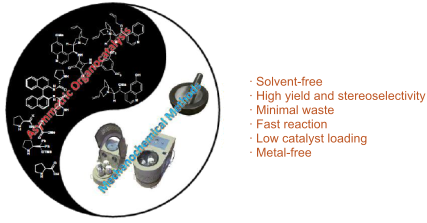
- grinding and liquid-assisted grinding (LAG) have been applied to the synthesis of mono- and bis(thiourea)s in quantitative yield by using the click coupling of aromatic or aliphatic diamines with aromatic isothiocyanates (Scheme 9) [54]. The mechanochemically prepared chiral molecules were applied as
- organocatalysts in an enantioselective MBH reaction and as cyanide ion sensors in organic solvents. Chiral bis-thiourea XI catalyses the MBH reaction of benzaldehyde (2b) and 2-cyclohexen-1-one (15) to provide MBH adduct 16 in 70% yield and 24% ee under neat grinding and LAG. Anhydride ring opening The
- Michael reaction assisted by pestle and mortar grinding. C-2 symmetric thiourea catalysed enantioselective MBH reaction. Quinine-catalysed ring opening of meso-anhydride by ball-milling. Ball-milling-assisted (A) synthesis of glycine schiff bases and (B) their organocatalytic asymmetric alkylation


Chemical modification allows phallotoxins and amatoxins to be used as tools in cell biology
Beilstein J. Org. Chem. 2012, 8, 2072–2084, doi:10.3762/bjoc.8.233
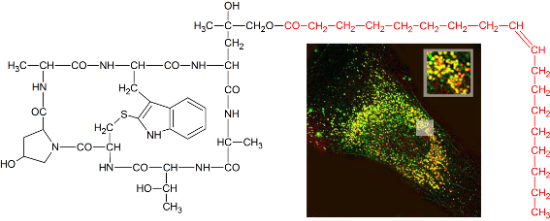
- , by a factor of >100. Linked by a thiourea moiety, as in compound 3, the fluorescent moiety is not cleaved inside the cell, as concluded from the observation that this phalloidin derivative still decorates filaments in the cell. This property of rhodamine-labeled phalloidin seems useful as a tool for




Organocatalytic tandem Michael addition reactions: A powerful access to the enantioselective synthesis of functionalized chromenes, thiochromenes and 1,2-dihydroquinolines
Beilstein J. Org. Chem. 2012, 8, 1668–1694, doi:10.3762/bjoc.8.191

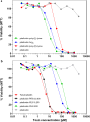
- poor enantioselectivity (5–17% ee) (Scheme 16). Very recently, Schreiner et al. [63] reported a bifunctional thiourea XXXIb catalyzed tandem reaction of salicyl-N-tosylimines 33 with nitroolefins 27 in toluene at room temperature for the synthesis of nitrochromenes 28, which resulted in poor yield and
- pyrrolidine derivatives XIV (Scheme 20). In 2007 Wang et al. [67] presented a hydrogen-bond-mediated catalysis in order to perform highly enantio- and diastereoselective tandem Michael–aldol reactions for the synthesis of thiochromene derivatives. In a very low catalyst loading (<1 mol %) of hybrid thiourea
- bioactive succinimide-containing benzothiochromenes by condensation of 2-mercaptobenzaldehydes 34 with maleimides 42 catalyzed by a bifunctional chiral amine thiourea XXXVII. Mechanistically, the reaction proceeded through a hydrogen-bond-mediated activation mechanism by using 1 mol % catalyst loading






Synthesis and evaluation of new guanidine-thiourea organocatalyst for the nitro-Michael reaction: Theoretical studies on mechanism and enantioselectivity
Beilstein J. Org. Chem. 2012, 8, 1485–1498, doi:10.3762/bjoc.8.168
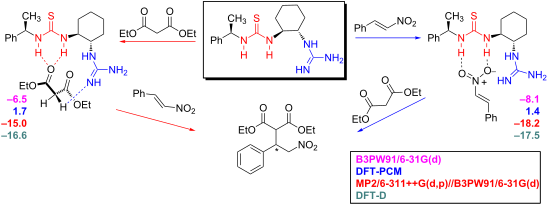
- Organic Chemistry I, University of Erlangen-Nuremberg, Henkestraße 42, 91054, Erlangen, Germany 10.3762/bjoc.8.168 Abstract A new guanidine-thiourea organocatalyst has been developed and applied as bifunctional organocatalyst in the Michael addition reaction of diethyl malonate to trans-β-nitrostyrene
- . Extensive DFT calculations, including solvent effects and dispersion corrections, as well as ab initio calculations provide a plausible description of the reaction mechanism. Keywords: bifunctional organocatalyst; DFT calculations; guanidine-thiourea; Michael addition; organocatalysis; transition states
- ; Introduction In recent years bifunctional compounds have found frequent applications as organocatalysts in modern synthetic organic chemistry [1][2][3][4][5][6][7][8]. Over the past decade, different catalytic methodologies have been reported that use chiral thiourea-based bifunctional molecules [9][10][11][12



Organocatalytic asymmetric addition of malonates to unsaturated 1,4-diketones
Beilstein J. Org. Chem. 2012, 8, 1452–1457, doi:10.3762/bjoc.8.165
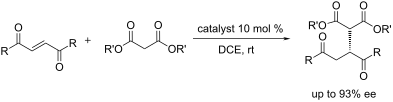
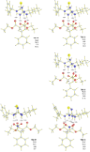
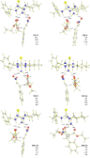
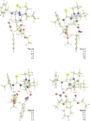
- unsaturated 1,4-diketones catalyzed by thiourea and squaramide derivatives with Cinchona alkaloids afforded the formation of a new C–C bond in high yields (up to 98%) and enantiomeric purities (up to 93%). The absolute configuration of the product was suggested from comparison of the experimental and
- calculated VCD spectra of the reaction product 3a. Keywords: Michael addition; non-covalent catalysis; organocatalysis; squaramide; thiourea; Introduction The asymmetric 1,4-conjugated addition (Michael reaction) of C-nucleophiles to enones is a powerful tool for obtaining a significant variety of
- bicyclic guanidines [7][9][12]. Xiao et al. reported the addition of nitroalkanes to 4-oxo-enoates, using chiral urea derivatives [7]. Miura et al. achieved an asymmetric addition of α,α-disubstituted aldehydes to maleimides catalyzed by primary amine thiourea organocatalyst [13]. Wang et al. reported the


Synthesis of chiral sulfoximine-based thioureas and their application in asymmetric organocatalysis
Beilstein J. Org. Chem. 2012, 8, 1443–1451, doi:10.3762/bjoc.8.164
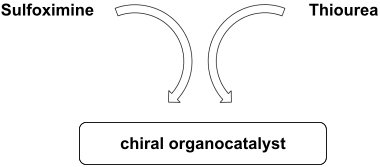
- Marcus Frings Isabelle Thome Carsten Bolm Institut für Organische Chemie, Landoltweg 1, RWTH Aachen University, 52074 Aachen, Germany 10.3762/bjoc.8.164 Abstract For the first time, chiral sulfoximine derivatives have been applied as asymmetric organocatalysts. In combination with a thiourea-type
- backbone the sulfonimidoyl moiety leads to organocatalysts showing good reactivity in the catalytic desymmetrization of a cyclic meso-anhydride and moderate enantioselectivity in the catalytic asymmetric Biginelli reaction. Straightforward synthetic routes provide the newly designed thiourea-sulfoximine
- reactions in a highly enantioselective manner has no end in sight. In this context, thiourea-based organocatalysts have caught significant attention due to their ability to activate substrates through hydrogen-bonding [42][43][44][45][46][47]. Usually, these chiral thioureas are classified into several


Cation affinity numbers of Lewis bases
Beilstein J. Org. Chem. 2012, 8, 1406–1442, doi:10.3762/bjoc.8.163
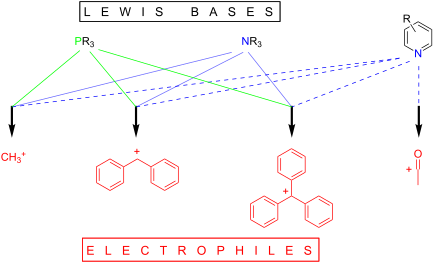
- pivaloylamido group (α, β, γ). The resulting MCA values vary by about 18 kJ/mol. Besides these amide-containing phosphanes (thio-)urea-containing phosphanes were also investigated. They possess lower MCA values than the previously discussed ones. In general, the ‘thiourea-phosphanes’ (258, 263) show even lower


Highly enantioselective access to cannabinoid-type tricyles by organocatalytic Diels–Alder reactions
Beilstein J. Org. Chem. 2012, 8, 1385–1392, doi:10.3762/bjoc.8.160
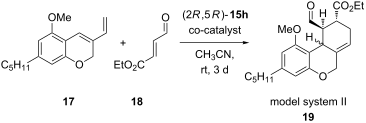
- that other groups have used thiourea-derivatives as successful catalysts [32], we decided to test, on a model system, whether these catalysts could increase the reaction rate based on specific hydrogen bonds. In our initial screening we used the proven Schreiner catalyst 1,3-bis(3,5-bis(trifluoromethyl
- )phenyl)thiourea, which gave a satisfying 60% yield. In order to optimize the yield and to introduce chiral elements, we screened a number of analogues. These thiourea catalysts 9a–l were easy to obtain from the corresponding isothiocyanates 7a,b and chiral amines 8a–f in a one-step synthesis (Scheme 1
- from 68% to 99% depending on the substitution of the thiourea-catalyst 9a–l (Table 2). When the substitution of the various thioureas 9a–l is further compared with the obtained yields in the Diels–Alder reaction (Table 2), the following tendencies are also observed. A noticeable fact is that, in


Restructuring polymers via nanoconfinement and subsequent release
Beilstein J. Org. Chem. 2012, 8, 1318–1332, doi:10.3762/bjoc.8.151
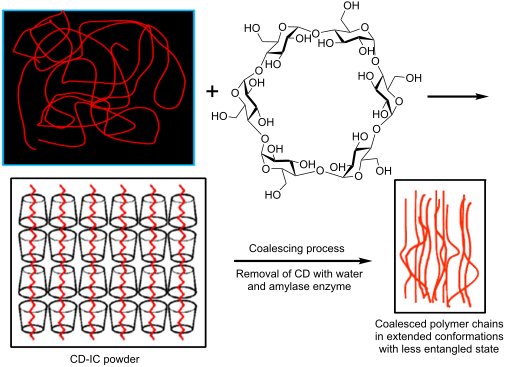
- coalesced bulk polymer sample. This process is illustrated in Figure 1, in which the cyclic starches, cyclodextrins (CDs), are the host molecules used to form ICs with guest polymers [1][2]. In polymer ICs formed with CDs and other small-molecule hosts, such as urea, thiourea, cyclotriphosphazenes, and




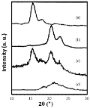

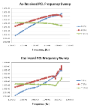

![[Graphic 3]](/bjoc/content/inline/1860-5397-8-151-i3.png?max-width=637&scale=1.063638) conformations of PET [76].
conformations of PET [76].


Asymmetric organocatalytic decarboxylative Mannich reaction using β-keto acids: A new protocol for the synthesis of chiral β-amino ketones
Beilstein J. Org. Chem. 2012, 8, 1279–1283, doi:10.3762/bjoc.8.144
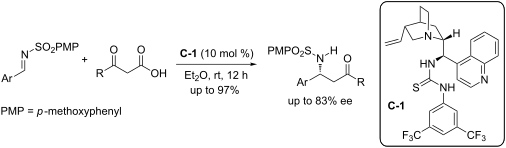
- , catalyzed by cinchonine-derived bifunctional thiourea catalyst has been described. The desired β-amino ketones were obtained in excellent yields and with moderate to good enantioselectivities. Keywords: decarboxylative addition; β-keto acid; Mannich reaction; organocatalysis; Introduction Chiral β-amino
- , entry 1). Quinine-derived sulfonamide [40], β-isocupreidine (β-ICD) [41][42] and biscinchona alkaloid (DHQ)2AQN were all found to be poor catalysts (Table 1, entries 2–4). On the other hand, cinchona alkaloid derived bifunctional thiourea tertiary amine catalysts afforded much improved results (Table 1
- , entries 5–7). Among them, the cinchonine based thiourea C-1 turned out to be the best catalyst, and the Mannich product was isolated with 58% ee (Table 1, entry 7). In addition, we also examined several other bifunctional catalysts based on amino acids [43][44], including threonine derived Thr-1 [45], and


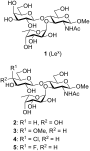
Synthesis of 4” manipulated Lewis X trisaccharide analogues
Beilstein J. Org. Chem. 2012, 8, 1134–1143, doi:10.3762/bjoc.8.126
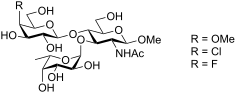
- intermediates 26–28 is described in Scheme 2. First, acceptors 23–25 were prepared in good yields through the selective removal of the chloroacetate (thiourea) in disaccharides 20–22. Fucosylation of acceptor 23 with ethylthioglycoside 12 was first attempted under NIS and TMSOTf activation at low temperature