


Search results
Search for "DMF" in Full Text gives 1101 result(s) in Beilstein Journal of Organic Chemistry. Showing first 200.
Synthesis, optical and electrochemical properties of (D–π)2-type and (D–π)2Ph-type fluorescent dyes
Beilstein J. Org. Chem. 2022, 18, 1047–1054, doi:10.3762/bjoc.18.106
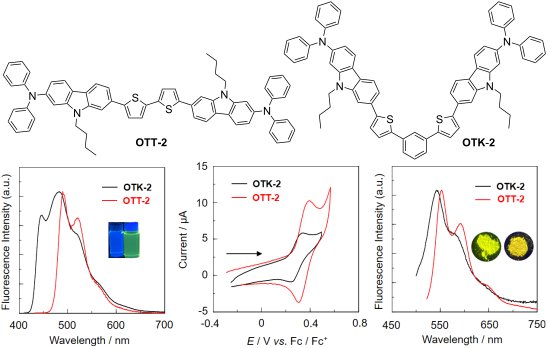
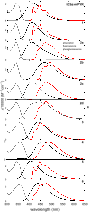
- photoabsorption band but also intense fluorescence emission both in solution and the solid state, compared to the (D–π)2Ph-type structure. The electrochemical properties of OTK-2 and OTT-2 (0.1 mM) were evaluated using CV in DMF containing 0.1 M tetrabutylammonium perchlorate (Bu4NClO4), in which the potentials
- decay measurements were performed on a HORIBA DeltaFlex modular fluorescence lifetime system using a Nano LED pulsed diode excitation source (451 nm). Cyclic voltammetry (CV) curves were recorded in DMF/Bu4NClO4 (0.1 M) solution with a three-electrode system consisting of Ag/Ag+ as the reference
- Royal Society of Chemistry, distributed under the terms of the Creative Commons Attribution 3.0 Unported License, https://creativecommons.org/licenses/by/3.0/). Cyclic voltammograms of OTK-2 and OTT-2 (0.1 mM) in DMF containing 0.1 M Bu4NClO4 at a scan rate of 100 mV s−1. The arrow denotes the direction


Electrochemical Friedel–Crafts-type amidomethylation of arenes by a novel electrochemical oxidation system using a quasi-divided cell and trialkylammonium tetrafluoroborate
Beilstein J. Org. Chem. 2022, 18, 1040–1046, doi:10.3762/bjoc.18.105
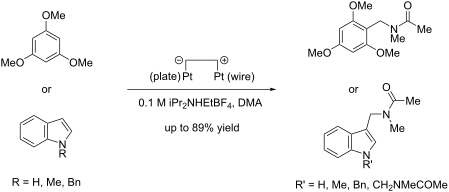
- ) [22][23]. We also succeeded in generating N-acyliminium ions from N,N-dimethylformamide (DMF) used as a solvent in the electrochemical carboxylation of benzyl bromides. Electrolysis of benzyl bromides in DMF containing 0.1 M Bu4NBF4 and iPr2NEt (1 equiv) using an undivided cell equipped with a Pt
- plate cathode and a Pt wire anode (a quasi-divided cell) [24][25][26][27][28] in the presence of carbon dioxide resulted in reductive carboxylation at the cathode and selective formation of N-acyliminium ions of DMF at the anode to produce coupling products, N-phenylacetoxymethyl-N-methylformamides, in
- good yields [29]. In this reaction system, the use of a quasi-divided cell enabled DMF to be oxidized with high selectivity at the anode even in the presence of carboxylate and bromide ions, which would generally be oxidized more easily than DMF. Accordingly, we tried this electrolysis system using a


Automated grindstone chemistry: a simple and facile way for PEG-assisted stoichiometry-controlled halogenation of phenols and anilines using N-halosuccinimides
Beilstein J. Org. Chem. 2022, 18, 999–1008, doi:10.3762/bjoc.18.100
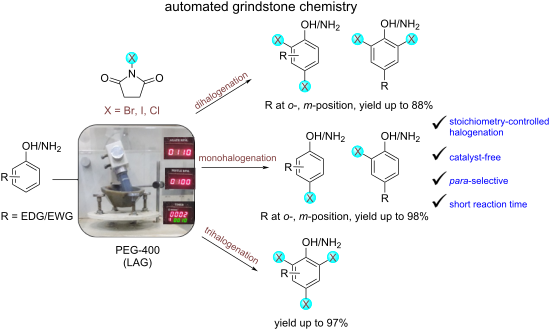
- with N-bromosuccinimide (NBS) was carried out in toxic polar solvents (e.g., DMF), but no iodinated or chlorinated products were obtained because of the low reactivity of NIS and NCS (Scheme 1a) [24][25][26][27]. In recent time, the use of Lewis or Brønsted acids, Lewis bases, and transition-metal




Electroreductive coupling of 2-acylbenzoates with α,β-unsaturated carbonyl compounds: density functional theory study on product selectivity
Beilstein J. Org. Chem. 2022, 18, 956–962, doi:10.3762/bjoc.18.95

- Shimadzu IRAffinity-1 infrared spectrometer. HRMS were measured on a Thermo Scientic Exactive FTMS spectrometer. Melting points were uncorrected. Column chromatography was performed on silica gel 60. THF was distilled from sodium benzophenone ketyl radical. TMSCl, TEA, and DMF were distilled from CaH2
- ) was placed in the cathodic chamber of a divided cell (40 mL beaker, 3 cm diameter, 6 cm height) equipped with a platinum cathode (5 × 5 cm2), a platinum anode (2 × 1 cm2), and a ceramic cylindrical diaphragm (1.5 cm diameter). A 0.3 M solution of Bu4NClO4 in DMF (4 mL) was placed in the anodic chamber


Introducing a new 7-ring fused diindenone-dithieno[3,2-b:2',3'-d]thiophene unit as a promising component for organic semiconductor materials
Beilstein J. Org. Chem. 2022, 18, 944–955, doi:10.3762/bjoc.18.94
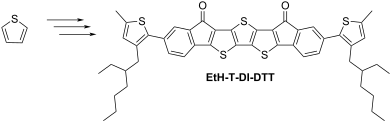
- tetrahydrofuran, −5 °C, 1 h, then −78°C, trimethyl borate, then rt, overnight, 25% [49][50]. Synthesis of the soluble target structure EtH-T-DI-DTT (1): a) 32, Pd(PPh3)4, K2CO3, THF, H2O, 70 °C, 45 h, 76% [40]; b) LiOH, THF, H2O, 70 °C [15], 6 d, 91%; c) oxalyl chloride, anhydrous DMF (cat.), anhydrous CH2Cl2, rt


Morita–Baylis–Hillman reaction of 3-formyl-9H-pyrido[3,4-b]indoles and fluorescence studies of the products
Beilstein J. Org. Chem. 2022, 18, 926–934, doi:10.3762/bjoc.18.92
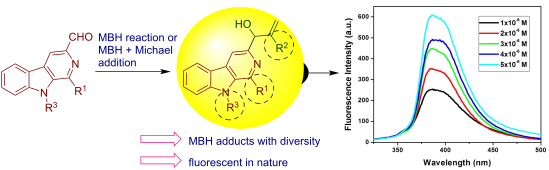
- ) condensation of ʟ-tryptophan (1) with different aldehydes (a–e) in dry DCM at room temperature yielded tetrahydro-β-carboline derivatives 2a–e, which were then oxidized with KMnO4 in anhydrous DMF for 45 minutes to yield β-carboline derivatives 3a–e. It was encouraging to observe that the P-S condensation with
- concentration showed a fluorescence intensity >1000 a.u. After optimizing the time and concentration parameters, dilutions of 7dA in different organic solvents such as dichloromethane, DMF and ethyl acetate were prepared for optimizing the solvent for obtaining the best fluorescence results. Fluorescence
- spectra were recorded after 15 minutes of sample preparation in 5 × 10⁻⁶ M concentration and fluorescence intensity was observed to be in the following order: CHCl3 > EtOAc > CH2Cl2 > DMF. The results of the optimization studies are presented in Figure 5 and it was concluded from the studies that C-3


Cathodic generation of reactive (phenylthio)difluoromethyl species and its reactions: mechanistic aspects and synthetic applications
Beilstein J. Org. Chem. 2022, 18, 872–880, doi:10.3762/bjoc.18.88
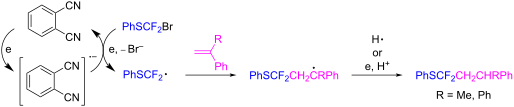
- , run 4). The reason is not clear at present. Thus the obtained results indicate that the cathodically generated reactive species would be the (phenylthio)difluoromethyl radical. In order to increase the yield of adduct 4, the cathodic reduction of 1 was performed in other solvents such as DMF and


First series of N-alkylamino peptoid homooligomers: solution phase synthesis and conformational investigation
Beilstein J. Org. Chem. 2022, 18, 845–854, doi:10.3762/bjoc.18.85
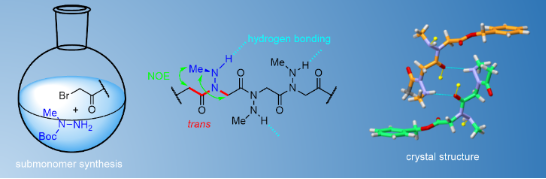
- to the mixed anhydride activating method using isobutyl chloroformate (IBCF) in the presence of N-methylmorpholine (NMM) at 0 °C in DMF for 10 min, followed by the addition of hydrazine 1a [43][44]. The best results were obtained with two equivalents of preformed mixed anhydride, pure dimer 2d being


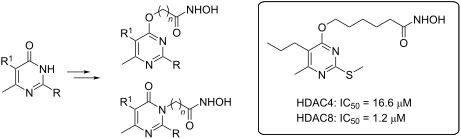
Synthesis and HDAC inhibitory activity of pyrimidine-based hydroxamic acids
Beilstein J. Org. Chem. 2022, 18, 837–844, doi:10.3762/bjoc.18.84
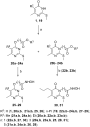
- of compounds 3–18. Reagents and conditions: (a) ethyl 2-bromoethanoate, TBAB, TEA, 50–60 °C, 0.5 h; (b) oxone, DMF, 40 °C, 0.5 h; (c) corresponding amine, DMSO, 50–70 °C, 0.5 h; (d) H2O, DMSO, 100 °C, 0.5 h; (e) H2O, reflux, 1 h; (f) aqueous NaOH, dioxane, rt, 12 h, then, conc. HCl to pH 2; (g



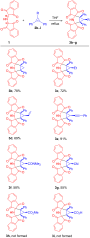
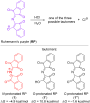
Synthesis of bis-spirocyclic derivatives of 3-azabicyclo[3.1.0]hexane via cyclopropene cycloadditions to the stable azomethine ylide derived from Ruhemann's purple
Beilstein J. Org. Chem. 2022, 18, 769–780, doi:10.3762/bjoc.18.77
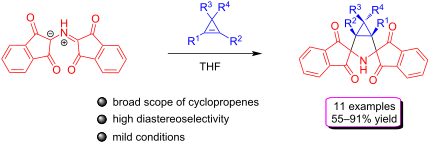
- optimization of the reaction conditions for improving the yield of the cycloadduct 3a. A broad range of solvents was screened at different temperatures. As presented in Table 1, aprotic solvents such as 1,4-dioxane, acetonitrile, and dimethylformamide (DMF) at 65 °C favored the formation of the desired






Inductive heating and flow chemistry – a perfect synergy of emerging enabling technologies
Beilstein J. Org. Chem. 2022, 18, 688–706, doi:10.3762/bjoc.18.70
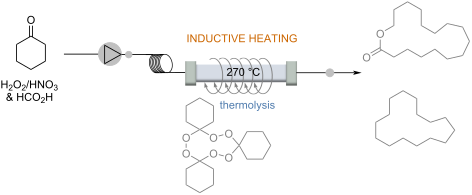
- materials to inductively heat up glass reactors. For the Biginelli reaction solubility of the starting urea (22) as well as the products 24a and 24b were an issue being overcome by using a solvent mixture of PEG/DMF 1:1. Also the proline-catalyzed asymmetric Mannich reaction was achieved with cyclohexanone


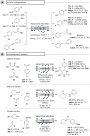


A study of the photochemical behavior of terarylenes containing allomaltol and pyrazole fragments
Beilstein J. Org. Chem. 2022, 18, 588–596, doi:10.3762/bjoc.18.61
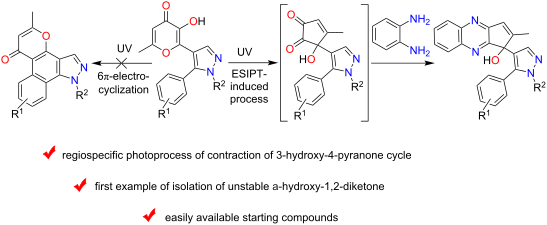
- in a solution of DMSO-d6. UV irradiation at a wavelength of 365 nm for 48 h in an NMR tube did not lead to any transformations of the starting pyrazole 16. Our attempts to carry out the photocyclization of pyrazole 16 in various solvents (DMF, acetonitrile, toluene, ethanol, methylene chloride
- solvents excluding acetic acid, DMSO and DMF. Initially, UV irradiation of compound 12a was carried out at a wavelength of 365 nm in a solution of DMSO in common glassware for 24 h. However, subsequent water treatment did not allow the isolation of the target product 14a. Due to the fact that aqueous
- medium accelerates the decomposition of target α-hydroxy-1,2-diketone 14a. Subsequently, we used DMF as a solvent for carrying out the studied photoreaction. Unexpectedly, the starting pyrazole 12a was isolated unchanged after 24 hours of UV irradiation, indicating that DMF also is not suitable for the





Substituent effect on TADF properties of 2-modified 4,6-bis(3,6-di-tert-butyl-9-carbazolyl)-5-methylpyrimidines
Beilstein J. Org. Chem. 2022, 18, 497–507, doi:10.3762/bjoc.18.52
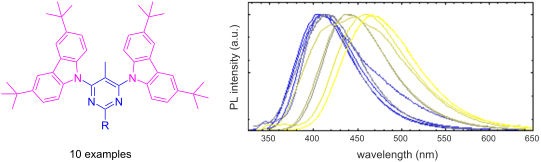
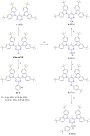
- methylsulfonyl group was necessary to perform. A suitable oxidant for this purpose appeared to be oxone [40]. Thus, the oxidation of tCbz-mPYR with oxone proceeded in DMF at 80 °C to provide the 2-methylsulfonyl derivative 3 in 92% yield. Then, treatment of compound 3 with NaCN or 4-(tert-butyl)thiophenol led to
- equiv by active component), and DMF (3 mL) were stirred at 80 °C for 3 h. After completion of the reaction, water (40 mL) was added to reaction mixture and the aqueous solution was extracted with chloroform (3 × 25 mL). The combined extract was washed with brine twice, dried with anhydrous Na2SO4
- equiv; 1 equiv in case of meta-substituted boronic acids), copper(I) 3-methylsalicylate (2.2 equiv), dioxane, 130 °C, 4 h, argon; iii – oxone (2.5 equiv), DMF, 80 °C, 3 h; iv – NaCN (2.2 equiv), THF, reflux, 3.5 h; v – 4-t-BuC6H4SH (1.1 equiv), Et3N (1.1 equiv), THF, 50 °C, overnight, argon. DFT




Synthesis of 3,4,5-trisubstituted isoxazoles in water via a [3 + 2]-cycloaddition of nitrile oxides and 1,3-diketones, β-ketoesters, or β-ketoamides
Beilstein J. Org. Chem. 2022, 18, 446–458, doi:10.3762/bjoc.18.47

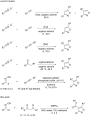
- . Purification via column chromatography (ethyl acetate/hexanes) resulted in the aldoxime product. To a solution of the aldoxime (1 mmol) in DMF was added N-chlorosuccinimide and the mixture stirred for 18 h at rt. After the reaction was complete, as indicated by TLC, the reaction mixture was poured into water



Cs2CO3-Promoted reaction of tertiary bromopropargylic alcohols and phenols in DMF: a novel approach to α-phenoxyketones
Beilstein J. Org. Chem. 2022, 18, 420–428, doi:10.3762/bjoc.18.44
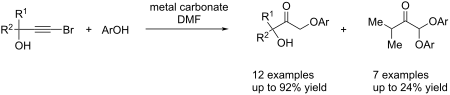
- with phenols in the presence of Cs2CO3/DMF affords α-phenoxy-α’-hydroxyketones (1:1 adducts) and α,α-diphenoxyketones (1:2 adducts) in up to 92% and 24% yields, respectively. Both products are formed via ring opening of the same intermediates, 1,3-dioxolan-2-ones, generated in situ from
- the addition of phenols to bromoacetylenes (K2CO3 or Cs2CO3, DMF, 110 °C), the reaction turned out to be non-selective: along with the expected bromovinyl phenyl ether 3a (3–9%) and phenoxyhydroxyketone 4a (25–39%), diphenoxyketone 5a was isolated in 9–24% yield (Table 1, entries 1–3). At 50–55 °C
- to the reaction system. It was shown that the reaction of 1a with 2a in aqueous DMF (1 equiv of Cs2CO3, DMF/H2O, 10:1, 50–55 °C) was highly selective to deliver phenoxyhydroxyketone 4a in 78% yield and dihydroxyketone 8a as a side product (Table 1, entry 6). Hence, the addition of phenol to the



New efficient synthesis of polysubstituted 3,4-dihydroquinazolines and 4H-3,1-benzothiazines through a Passerini/Staudinger/aza-Wittig/addition/nucleophilic substitution sequence
Beilstein J. Org. Chem. 2022, 18, 286–292, doi:10.3762/bjoc.18.32
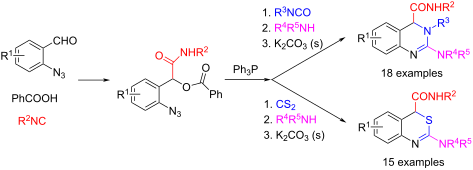
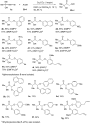
- 3,4-dihydroquinazoline 8a was then optimized (Table 1). As K2CO3 in different solvents (DMF, CH2Cl2 and toluene) were used, 0–72% yields of the product 8a were obtained (Table 1, entries 2–4). Utilizing a stronger base (NaOH and EtONa) resulted in a dark solution and no product was received (entries 5




Recent developments and trends in the iron- and cobalt-catalyzed Sonogashira reactions
Beilstein J. Org. Chem. 2022, 18, 262–285, doi:10.3762/bjoc.18.31
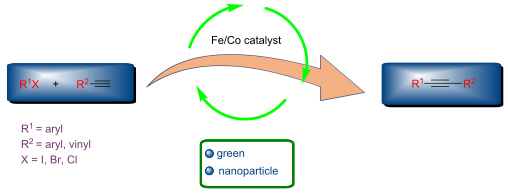
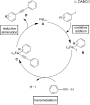
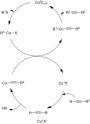
- products, pharmaceuticals of biological activity, and materials science [3]. In a Sonogashira reaction, the reaction conditions are mild and many reactions can be performed at room temperature [4]. However, the reaction is usually carried out in organic solvents like amines, benzene, THF, and DMF along
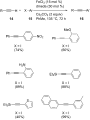
- arylacetylenes in good yields (Scheme 4) [23]. The prepared Fe catalyst was found to be efficient and inexpensive, and could be recycled by filtration. This green strategy showed better yields in the presence of the inorganic base Cs2CO3 in DMF/H2O at 110 °C. Both electron-rich and electron-deficient aryl
- catalytic system for the cross-coupling of aryl iodides and vinyl, aryl or alkyl-substituted terminal alkynes [28]. They studied the reaction between phenylacetylene and iodobenzene in the presence of iron powder/CuI catalyst with PPh3 as ligand in DMF, which provided 95% yield of the desired product







Flow synthesis of oxadiazoles coupled with sequential in-line extraction and chromatography
Beilstein J. Org. Chem. 2022, 18, 232–239, doi:10.3762/bjoc.18.27
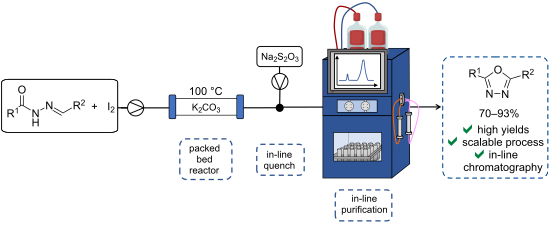
- solubility only being observed in DMF and DMSO. Despite the slightly lower yield observed using DMF (entry 8, Table 2), it provided the option of a co-solvent system in situations where solubility in DMSO is insufficient. A variety of acyl hydrazones were subsequently synthesised from the corresponding


Trichloroacetic acid fueled practical amine purifications
Beilstein J. Org. Chem. 2022, 18, 225–231, doi:10.3762/bjoc.18.26
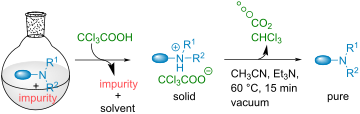
- contrast, use of Lewis basic solvents such as DMF considerably accelerate the decarboxylation kinetic (Table 1, entry 3) with the recovery of the free amine after 24 hours. However, this solvent is not convenient given its high boiling point making difficult it’s separation from the purified amine
- process, while less coordinating species all provided purification yields above 80%. Finally, polar DMF was removed from dicyclohexylamine in 81% yield (Table 2, entry 8). Aside from the potential impurities, we also focused on the purification of other types of amines (Table 3). One equivalent of


Organocatalytic asymmetric nitroso aldol reaction of α-substituted malonamates
Beilstein J. Org. Chem. 2022, 18, 217–224, doi:10.3762/bjoc.18.25

- , chloroform, and hexane provided 4a with moderate enantioselectivities, and the reaction failed when DMF was used as the solvent. When the catalyst loading was reduced to 10 and 5 mol %, the enantioselectivity remained reasonably good, but the reaction yield was substantially affected. Having identified the




Anomeric 1,2,3-triazole-linked sialic acid derivatives show selective inhibition towards a bacterial neuraminidase over a trypanosome trans-sialidase
Beilstein J. Org. Chem. 2022, 18, 208–216, doi:10.3762/bjoc.18.24
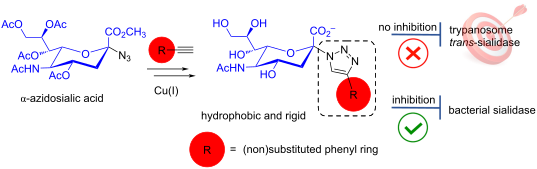
- 20 mol % excess of the terminal alkynes in a mixture of solvents (DMF/H2O 4:1) at 60 °C and Cu(I) generated in situ [33], but in catalytic amount. This approach resulted in the synthesis of eight 1,4-disubstituted 1,2,3-triazole derivatives (2a–h) in good yields (45–78%) and high purity. Other two
- steps from N-acetylneuraminic acid [26] – and terminal alkyne (72 µmol) in DMF/H2O 4:1 (1 mL) in a glass vial. The mixture was stirred for 24 h at 60 °C [33] and solvents were evaporated under vacuum with addition of toluene (3 × 5 mL). EtOAc (10 mL) was added to the crude and washed with H2O (3 × 5 mL



Chemoselective N-acylation of indoles using thioesters as acyl source
Beilstein J. Org. Chem. 2022, 18, 89–94, doi:10.3762/bjoc.18.9

- in this procedure (Table 1, entries 3 and 4). Also the reaction did not work in the absence of Cs2CO3 (Table 1, entry 5). Solvent screening indicated that xylene was the best choice, and DMF, THF, and MeOH were not suitable for this reaction (Table 1, entries 7–9). When Cs2CO3 was reduced from 3.0


Efficient and regioselective synthesis of dihydroxy-substituted 2-aminocyclooctane-1-carboxylic acid and its bicyclic derivatives
Beilstein J. Org. Chem. 2022, 18, 77–85, doi:10.3762/bjoc.18.7
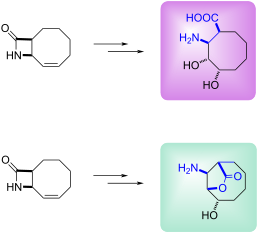
- the epoxide-ring-opening reaction of 7 with sodium azide, to introduce an extra amino group in position 4 on the cyclooctane skeleton. For this, epoxide 7 was treated with NaN3 in the presence of NH4Cl/DMF and this formed lactone 13 as the sole product in 80% yield (Scheme 4). The epoxide 7 was
- treated with NaN3 and NH4Cl/DMF to obtain compound 12. From this reaction, the formation of unexpected lactone 13 was observed. The reaction was repeated again with only NH4Cl and DMF, and the reaction resulted in formation of compound 13. This experiment shows that NaN3/DMF does not to play any role in
- cyclic β-amino acid derivative, was achieved by oxirane ring opening in epoxide 7 with HCl(g)–MeOH, NaHSO4, or NH4Cl–DMF. The regioselectivity of oxirane ring-opening in 7 was attributed to the conformational effects. The mechanism for the formation of compound 10 was elucidated with DFT computations


1,2-Naphthoquinone-4-sulfonic acid salts in organic synthesis
Beilstein J. Org. Chem. 2022, 18, 53–69, doi:10.3762/bjoc.18.5
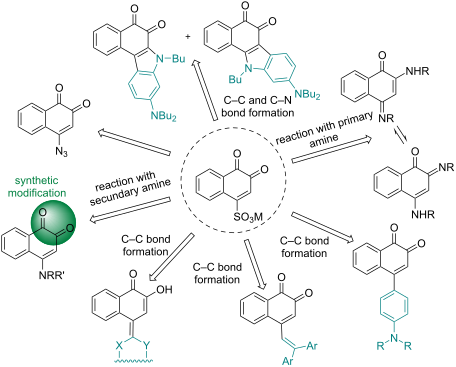
- amine (3-amino-N,N-dibutylaniline) under NiOAc2 catalysis to obtain the 4-arylated compound. As expected, 4-arylated-benzo[c]carbazole-5,6-dione 58 and 4-amino-1,2-naphthoquinone 59 were formed in 5% and 35% yields, respectively. However, the reaction of 18 with 3-butylamino-N,N-dibutylaniline in DMF in


Recent advances and perspectives in ruthenium-catalyzed cyanation reactions
Beilstein J. Org. Chem. 2022, 18, 37–52, doi:10.3762/bjoc.18.4
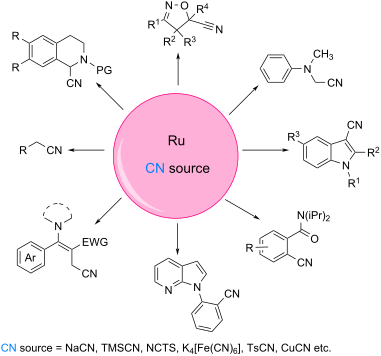
- arenes and heteroarenes using heterogeneous catalysts In 2012, a novel strategy for the 3-cyanation of indole in the presence of Ru(III)-exchanged NaY zeolite (RuY) was reported [36]. In this reaction K4[Fe(CN)6] was utilized as the cyano source in DMF at 110 °C. The Cu(OAc)2 and O2 (1 atm) was found





