Search results
Search for "activation" in Full Text gives 1200 result(s) in Beilstein Journal of Organic Chemistry. Showing first 200.
Cofactor-independent C–C bond cleavage reactions catalyzed by the AlpJ family of oxygenases in atypical angucycline biosynthesis
Beilstein J. Org. Chem. 2024, 20, 1198–1206, doi:10.3762/bjoc.20.102
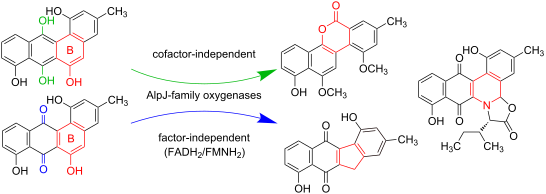
- conditions [25]. This observation not only affirmed 8 as an intermediate in jadomycin biosynthesis but also suggested a role as a more electron-rich substrate with the potential for direct activation of molecular oxygen. We first confirmed the generation of 8 in the biosynthetic pathway of kinamycin. The




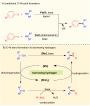
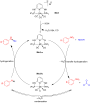
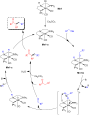
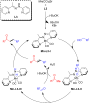
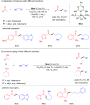
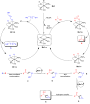
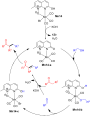
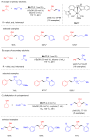
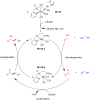
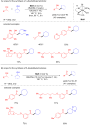
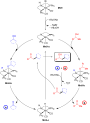
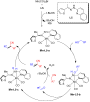
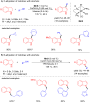
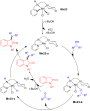
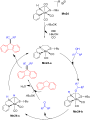
Manganese-catalyzed C–C and C–N bond formation with alcohols via borrowing hydrogen or hydrogen auto-transfer
Beilstein J. Org. Chem. 2024, 20, 1111–1166, doi:10.3762/bjoc.20.98



























Synthesis of 1,4-azaphosphinine nucleosides and evaluation as inhibitors of human cytidine deaminase and APOBEC3A
Beilstein J. Org. Chem. 2024, 20, 1088–1098, doi:10.3762/bjoc.20.96
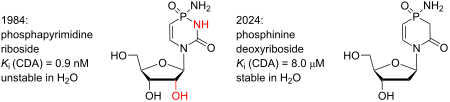
- activation-induced deaminase (AID) and APOBEC3 (A3), act preferentially on single-stranded DNA (ssDNA) containing one or multiple cytosine residues. Although some action was detected on RNA, none was observed on cytidine or cytosine alone. Each cytosine or cytidine deaminase has an important biological


Light on the sustainable preparation of aryl-cored dibromides
Beilstein J. Org. Chem. 2024, 20, 1076–1087, doi:10.3762/bjoc.20.95
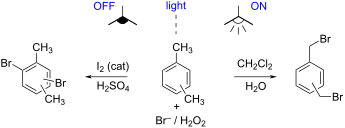
- be employed in two variants modulated by light irradiation. This external switch can be used to selectively trigger side-chain or core halogenation. Keywords: aryl halides; benzyl halides; bromination; sustainability; Introduction Activation through halogens has become a key strategy in achieving
- context of covalent organic frameworks (COFs) and metal-organic frameworks (MOFs), frequently assembled through imine linkages. While C–H activation through halogens presents clear technical advantages, it also brings forth concerns about the toxicity of halo compounds to both human health and the



Novel route to enhance the thermo-optical performance of bicyclic diene photoswitches for solar thermal batteries
Beilstein J. Org. Chem. 2024, 20, 1053–1068, doi:10.3762/bjoc.20.93
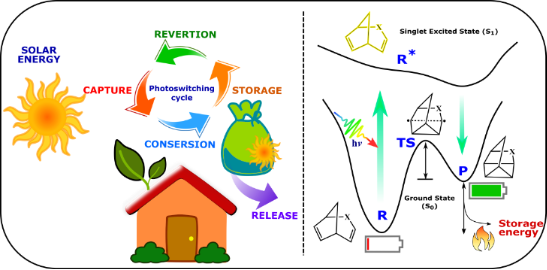
- photoswitching cycle. The activation energy required to trigger the transformation of the metastable photoisomer to the parent diene is called the thermal back isomerization barrier. The TBR barrier governs the duration of storage of harvested solar energy in the MOST devices. Photoswitching systems exhibiting a
- DFT-based PBE method is still better to predict the geometry of TS using nudged elastic band (NEB) calculations and multireference methods determines the activation energy values close to the experiments [42]. In the present investigation, the geometry of all the TS structures was obtained with the


Novel analogues of a nonnucleoside SARS-CoV-2 RdRp inhibitor as potential antivirotics
Beilstein J. Org. Chem. 2024, 20, 1029–1036, doi:10.3762/bjoc.20.91
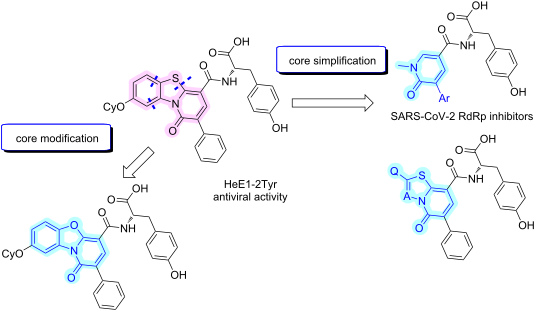
- the replication by acting as a delayed chain terminator or by causing genetic corruption in the viral RNA and includes the first FDA-approved antiviral drugs in the therapy of COVID-19 patients, remdesivir [10] and molnupiravir [11]. The usability of NAIs may largely depend on the metabolic activation


Carbonylative synthesis and functionalization of indoles
Beilstein J. Org. Chem. 2024, 20, 973–1000, doi:10.3762/bjoc.20.87
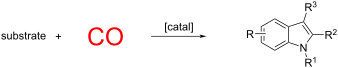
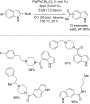
- bar of CO, in CH3CN at 160 °C. By this route, 29 examples were synthesized with isolated yields up to 91% (Scheme 27). One year later, Čarný and co-workers described a facile construction of the isoindolo[2,1-a]indol-6-one structure via a Pd-catalyzed aminocarbonylation and C–H activation reaction












Enantioselective synthesis of β-aryl-γ-lactam derivatives via Heck–Matsuda desymmetrization of N-protected 2,5-dihydro-1H-pyrroles
Beilstein J. Org. Chem. 2024, 20, 940–949, doi:10.3762/bjoc.20.84
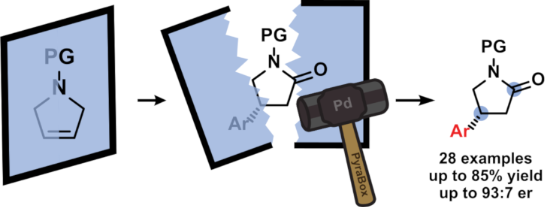
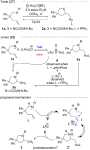
- all other lactams as R was done by analogy. The assignment of the absolute stereochemistry allowed us to propose a rationale for the Heck–Matsuda reaction (Scheme 7). Upon activation of the catalyst (I), oxidative addition of aryldiazonium salt and subsequent nitrogen release generates the cationic




Synthesis and properties of 6-alkynyl-5-aryluracils
Beilstein J. Org. Chem. 2024, 20, 898–911, doi:10.3762/bjoc.20.80
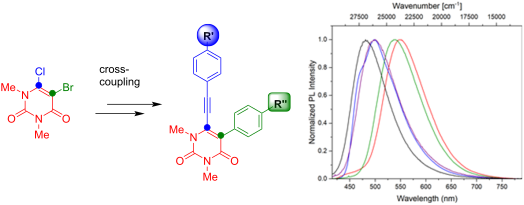
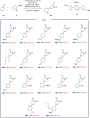
- , only the double-substituted product could be found. No reaction was observed when the reaction temperature was lowered to 0 °C. This could be due to the double activation of the 5-position, despite the fact that bromine is a better leaving group than chlorine. Both positions might be influenced by the





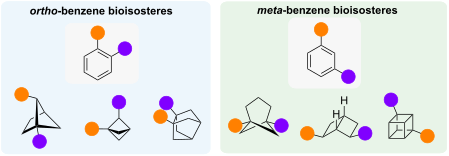
(Bio)isosteres of ortho- and meta-substituted benzenes
Beilstein J. Org. Chem. 2024, 20, 859–890, doi:10.3762/bjoc.20.78
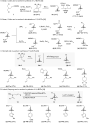
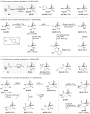
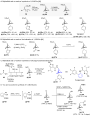
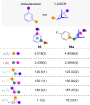
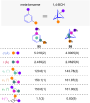
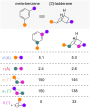
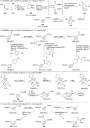
- -cubanes (Scheme 9B) [51]. Partial deprotection of diester 88 led to acid 89 as a key intermediate and in situ activation of the acid as the hypervalent iodine complex enabled a photoredox decarboxylative amination to 1,2-cubane 90. Alternatively, conversion of the acid moiety of 89 to redox active esters
- haloalkylation with alkyl iodides (Scheme 14A) [27][47]. This reaction can be performed either under photoredox catalysis conditions or without the need for an initiator, depending on the used alkyl iodide. For selected examples, the radical initiator Et3B could also be used. Activation by photoredox catalysis
- was developed by Anderson and co-workers and was shown to be the more versatile than initiator-free activation. Both initiator-free and Et3B-initiated reactions only tolerated electrophilic radicals (to 134a and 134e), while photoredox catalysis also tolerated electron-rich radicals (to 134b). The

















Ortho-ester-substituted diaryliodonium salts enabled regioselective arylocyclization of naphthols toward 3,4-benzocoumarins
Beilstein J. Org. Chem. 2024, 20, 841–851, doi:10.3762/bjoc.20.76
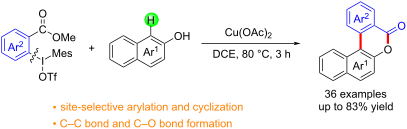
- have been employed in benzocyclization and arylocyclization reactions, enabling intramolecular cyclization by forming aromatic or heterocyclic rings as a part of cyclic structures [8]. In these reactions, the dual activation of a C–I bond and vicinal C–H bonds/functional groups features a distinct
- advantage, facilitating the formation of two or more chemical bonds in a step-economic manner [9][10][11][12][13]. In a prior study, we reported a palladium-catalyzed efficient activation of both C–I bond and the adjacent C–H bond of diaryliodonium salts in the formation of 4,5-benzocoumarin derivatives
- [31][32][33]. Building on our great interest in ortho-functionalized diaryliodonium salts and their dual activation capabilities, we sought to incorporate carboxylic ester groups into the structures of ortho-substituted diaryliodonium salts to explore their properties and reactivity. Our previous


Skeletal rearrangement of 6,8-dioxabicyclo[3.2.1]octan-4-ols promoted by thionyl chloride or Appel conditions
Beilstein J. Org. Chem. 2024, 20, 823–829, doi:10.3762/bjoc.20.74
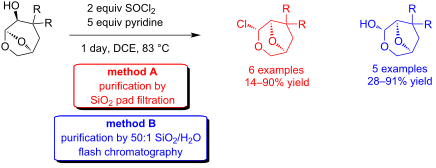
- the byproduct triphenylphosphine oxide, necessitating chromatography which resulted in some hydrolysis. There are a number of catalytic activation strategies for Appel or Mitsunobu reactions such as those described by the Denton group [30], and Rutjes and co-workers [31], and while these may prove




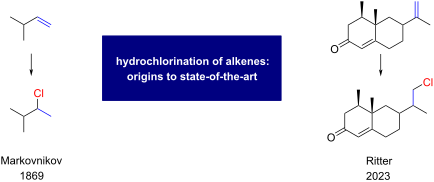
Advancements in hydrochlorination of alkenes
Beilstein J. Org. Chem. 2024, 20, 787–814, doi:10.3762/bjoc.20.72
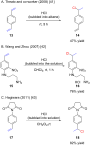
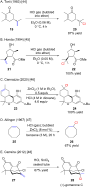
- C–H bonds into the alkene π-bond [30]. Before reviewing polar hydrochlorination reactions in detail, it is worth mentioning several statements which were made in the Sergeev review [12]: a) The activation energy for an anti-Markovnikov addition is at least by 30 kJ mol−1 higher than for normal
- addition. Therefore, anti-Markovnikov products are generally not observed. b) In contrast to the reactions with HBr (peroxide effect) [31][32], the formation of anti-Markovnikov products is low even in the presence of peroxides or photochemical activation. For instance, Whitmore and co-workers observed
- concerning the polar hydrochlorinations the activation energy for an anti-Markovnikov addition is at least by 30 kJ mol−1 higher than for normal addition. Therefore, the formation of the anti-Markovnikov product via purely cationic intermediates is never observed. The only report for the formation of the












Methodology for awakening the potential secondary metabolic capacity in actinomycetes
Beilstein J. Org. Chem. 2024, 20, 753–766, doi:10.3762/bjoc.20.69
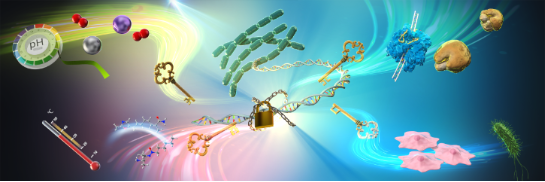
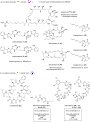
- been discovered. In this review, we outline the silent gene activation methods, including the authors’ efforts (Figure 1). Review Artificial methods Several target-oriented methods focusing on specific biosynthetic genes and regulatory factors and artificial methods have been reported to activate
- [46]. Finally, several studies have reported the modulation of secondary metabolic activation in actinomycetes using small molecules. For example, Ochi et al. proposed the “ribosome engineering” technique, in which actinomycetes are cultured with antibiotics to activate secondary metabolism by
- ribosomal S12 protein mutation results in increased expression of translation factors, which leads to enhanced protein synthesis in secondary metabolism [47]. Liu et al. reported activation of the production of bohemamines 11–13, bacterial alkaloids containing a pyrrolizidine core with two unusual methyl


Evaluation of the enantioselectivity of new chiral ligands based on imidazolidin-4-one derivatives
Beilstein J. Org. Chem. 2024, 20, 684–691, doi:10.3762/bjoc.20.62
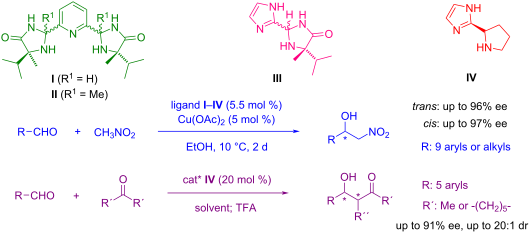
- chiral metal complex catalyst but also as an enantioselective organocatalyst [17]. Accordingly, its application in enantioselective organocatalysis, particularly in asymmetric reactions through “enamine activation”, warrants further investigation. Results and Discussion The corresponding copper(II
- -tetrazole, which was successfully used in many asymmetric reactions via “enamine activation”, especially in asymmetric aldol reactions [20][21][22][23]. Moreover, compound IV was previously included in a study dealing with asymmetric cascade reactions (based on aldol reactions) of aldehydes with α-keto


Regioselective quinazoline C2 modifications through the azide–tetrazole tautomeric equilibrium
Beilstein J. Org. Chem. 2024, 20, 675–683, doi:10.3762/bjoc.20.61
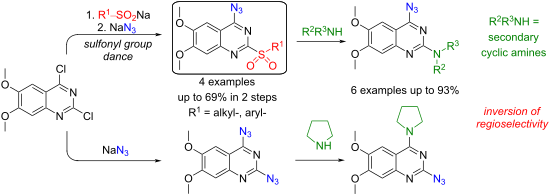
- reactions of substituted anilines VI, VII or N-arylamidines VIII are frequently employed for synthesizing C2-substituted quinazolines (Scheme 1), thereby influencing the spatial arrangement of the desired substituents [13][14]. Moreover, there have been recent advancements in efficient C–H activation


Chemical and biosynthetic potential of Penicillium shentong XL-F41
Beilstein J. Org. Chem. 2024, 20, 597–606, doi:10.3762/bjoc.20.52
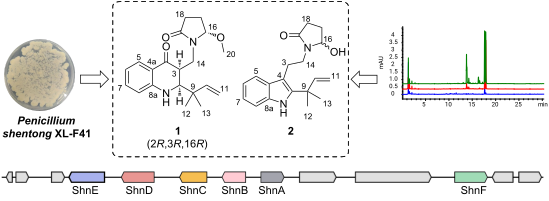
- , given the application of suitable activation techniques. Results and Discussion Compound isolation and structure elucidation To activate the silent BGCs in Penicillium shentong XL-F41, we conducted small-scale fermentations using various media. Analysis revealed that HPLC peaks, which correspond to




Possible bi-stable structures of pyrenebutanoic acid-linked protein molecules adsorbed on graphene: theoretical study
Beilstein J. Org. Chem. 2024, 20, 570–577, doi:10.3762/bjoc.20.49
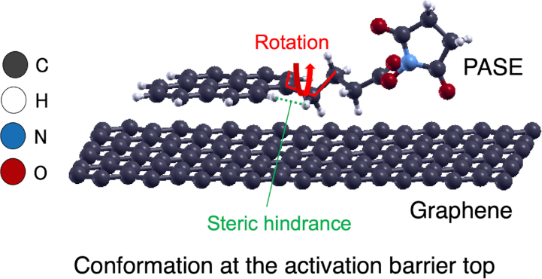
- ) linkers on graphene. The activation barrier between two bi-stable conformations exhibited by PASE is confirmed to be based on the steric hindrance effect between a hydrogen on the pyrene group and a hydrogen on the alkyl group of this molecule. Even after the protein is supplemented, this steric hindrance
- effect remains if the local structure of the linker consisting of an alkyl group and a pyrene group is maintained. Therefore, it is likely that the kinetic behavior of a protein immobilized with a single PASE linker exhibits an activation barrier-type energy surface between the bi-stable conformations on
- pathway on the adiabatic potential energy surface that connects these conformations caused by the deformation of the PASE linker. The reaction pathway for the conformational change of the PASE itself was found to have a reaction activation barrier [9]. First, we identify that the origin of the barrier is


Synthesis of photo- and ionochromic N-acylated 2-(aminomethylene)benzo[b]thiophene-3(2Н)-ones with a terminal phenanthroline group
Beilstein J. Org. Chem. 2024, 20, 552–560, doi:10.3762/bjoc.20.47
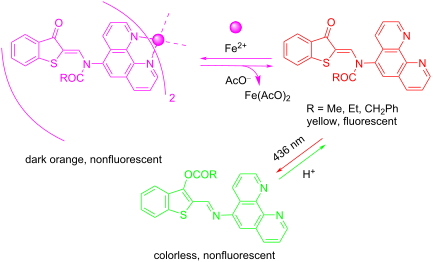
- . The reverse reaction 3a–c→2a–c with full restoration of the initial absorption and fluorescence properties was characterized by a high activation barrier and could be accomplished by heating a solution of 3a–c in o-dichlorobenzene at 423 K or by passing dry hydrogen chloride through a solution of 3a–c


Ligand effects, solvent cooperation, and large kinetic solvent deuterium isotope effects in gold(I)-catalyzed intramolecular alkene hydroamination
Beilstein J. Org. Chem. 2024, 20, 479–496, doi:10.3762/bjoc.20.43
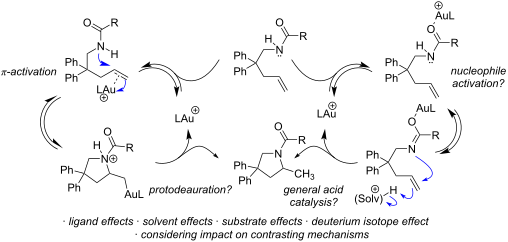
- both within the context of a classic gold π-activation/protodeauration mechanism and a general acid-catalyzed mechanism without intermediate gold alkyls. Keywords: alkene hydroamination; general acid catalysis; gold catalysis; isotope effect; phosphine ligand effect; solvent effect; Introduction
- Since the seminal 1998 report by Teles et al. on the gold(I)-catalyzed addition of alcohols to alkynes [1], a multitude of gold-catalyzed reactions have been reported. Great successes in mechanistic analysis and synthetic methods have been achieved for allene and alkyne activation, while the activation
- competing Brønsted acid catalysis in gold-catalyzed alkene functionalization remains a consideration [2], and while it is assumed that alkene activations follow the same prototypical mechanisms as allene and alkyne activations, that is (1) π-activation with nucleophilic attack followed by (2






Development of a chemical scaffold for inhibiting nonribosomal peptide synthetases in live bacterial cells
Beilstein J. Org. Chem. 2024, 20, 445–451, doi:10.3762/bjoc.20.39
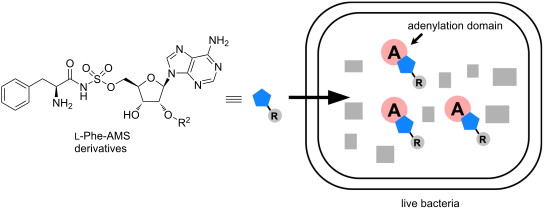
- (Figure 1) [3]. The adenylation (A) domain in NRPSs is responsible for the selection and activation of amino acids, hydroxy acids, and aryl acids upon ATP consumption (Figure 2a) [4]. The activated aminoacyladenosine monophosphate (AMP) is transferred to the thiol group of a phosphopantetheine prosthetic


Enhanced host–guest interaction between [10]cycloparaphenylene ([10]CPP) and [5]CPP by cationic charges
Beilstein J. Org. Chem. 2024, 20, 436–444, doi:10.3762/bjoc.20.38
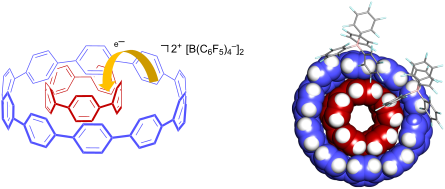
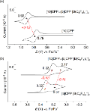
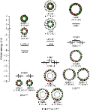
- ). The other two isomers, 2 and 3 (Figure 5b,c), with two CPPs tilted at 15.6° and 45.5°, are 2.5 and 4.2 kJ mol−1 less stable than complex 1, respectively. The stability among the isomers is low, and the activation energy for isomerization should be very low. Therefore, all isomers are expected to be




Mono or double Pd-catalyzed C–H bond functionalization for the annulative π-extension of 1,8-dibromonaphthalene: a one pot access to fluoranthene derivatives
Beilstein J. Org. Chem. 2024, 20, 427–435, doi:10.3762/bjoc.20.37
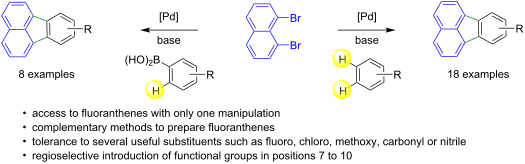
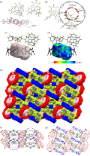
- palladium-catalyzed direct intermolecular arylation, followed by a direct intramolecular arylation step. As the C–H bond activation of several benzene derivatives remains very challenging, the preparation of fluoranthenes from 1,8-dibromonaphthalene via Suzuki coupling followed by intramolecular C–H
- activation has also been investigated to provide a complementary method. Using the most appropriate synthetic route and substrates, it is possible to introduce the desired functional groups at positions 7–10 on fluoranthenes. Keywords: catalysis; C–H bond functionalization; direct arylation; fluoranthenes
- %) using again a large excess of DBU base (7 equiv) also allowed to prepare unsubstituted fluoranthene in 87% yield (Scheme 1c) [22]. The reaction of naphthol with aryl bromides followed by nonaflation and intramolecular C–H activation for the access to fluoranthenes has also been reported [23]. Most of


Green and sustainable approaches for the Friedel–Crafts reaction between aldehydes and indoles
Beilstein J. Org. Chem. 2024, 20, 379–426, doi:10.3762/bjoc.20.36
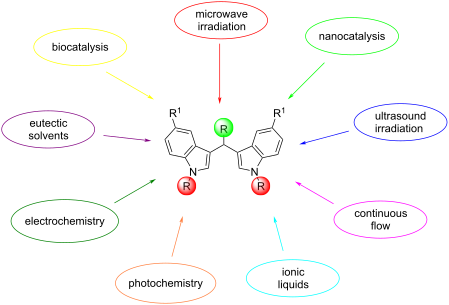
- step involves the activation of the carbonyl group by the catalyst. This renders it susceptible to a nucleophilic attack from the indole, leading to the formation of the intermediate product. Subsequently, a second nucleophilic attack occurs by another molecule of indole, yielding the final BIM product
- . The difference between the two mechanistic pathways is the nature of activation of the carbonyl group. Protic acids induce the protonation of the carbonyl group of the aldehyde or ketone, enhancing its electrophilic character. Whereas, Lewis acid catalysts bind to the heteroatom of the carbonyl group
- electron-withdrawing substituents. The reaction mechanism is based on the activation of the carbonyl group by molecular I2, through the formation of a halogen bond, which lowers the LUMO of the carbonyl moiety, increasing its electrophilicity, and thus allowing the addition of the indole group (Scheme 7




Mechanisms for radical reactions initiating from N-hydroxyphthalimide esters
Beilstein J. Org. Chem. 2024, 20, 346–378, doi:10.3762/bjoc.20.35
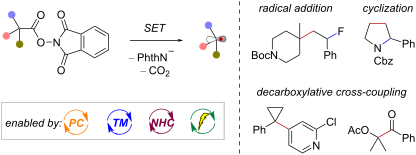
- transfer complexes with a donor species 6 or via LUMO lowering activation with Brønsted and Lewis acids 7 (Scheme 2B), collectively offering a number of variables to influence their reactivity. Upon reduction, RAEs give rise to a radical anion 8 with a weakened N–O bond (BDE < 70 kcal/mol) [33]. While
- carbene (NHC)-catalyzed radical relay, and (iv) mechanisms under electrochemical activation. By discussing selected literature examples, we illustrate how the activation mode of NHPI esters, and the reactivity of the resulting radical species, can vary depending upon the choice of catalytic or
- readers to recently published review articles for additional discussion [30][31]. Discussion Mechanism under photochemical conditions In this section we provide a summary of the various conditions and activation modes employed in radical reactions of NHPI esters using visible-light irradiation. Upon