Search results
Search for "amine" in Full Text gives 1234 result(s) in Beilstein Journal of Organic Chemistry. Showing first 200.
Competing electrophilic substitution and oxidative polymerization of arylamines with selenium dioxide
Beilstein J. Org. Chem. 2024, 20, 1221–1235, doi:10.3762/bjoc.20.105
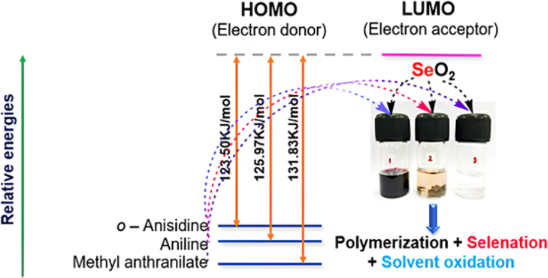
- polymerization, and solvent oxidation. For aniline and o-anisidine, predominant oxidative polymerization occurred, leading to the formation of the respective polyaniline polymers as major products. For methyl anthranilate, the oxidative polymerization was suppressed due to the delocalization of amine lone pair
- of quinones having exceptional radical-stabilizing abilities. The best example in nature is the radical pathway in the catechol oxidation process [56][57][58]. The structure of o-anisidine resembles catechol as it has two adjacent electron-donating functions (NH2 and OMe). For o-anisidine, the amine


The Ugi4CR as effective tool to access promising anticancer isatin-based α-acetamide carboxamide oxindole hybrids
Beilstein J. Org. Chem. 2024, 20, 1213–1220, doi:10.3762/bjoc.20.104
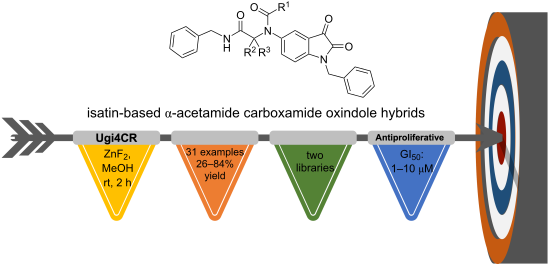
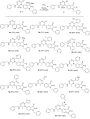
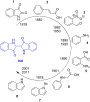
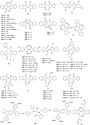
- using 5-amino-1-benzyl-3,3-dimethoxyindolin-2-one (1) [12] and benzyl isocyanide (4), as amine and isocyanide components, respectively. Different carboxylic acids 2 and aldehydes/ketones 3 were evaluated using ZnF2 as catalyst (10 mol %) and MeOH as the solvent (Scheme 2 and Figure 2). A library of α




Manganese-catalyzed C–C and C–N bond formation with alcohols via borrowing hydrogen or hydrogen auto-transfer
Beilstein J. Org. Chem. 2024, 20, 1111–1166, doi:10.3762/bjoc.20.98

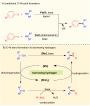
- are of substantial importance for the fine chemical industry, pharmaceuticals, agrochemicals, dyes, and natural products [25]. The synthesis of amine derivatives can be accomplished using many powerful techniques, including Buchwald–Hartwig and Ullmann cross-coupling reactions, hydroamination
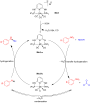
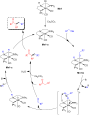
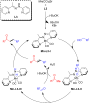
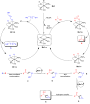
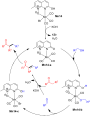
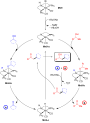
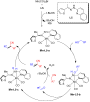
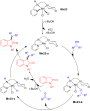
- aldehydes or ketones, undergo base-assisted condensation reactions with amines providing the corresponding imines. In the last step, the active manganese hydride complexes reduce the imine compounds and afford the desired alkylated amine products (Scheme 2B). Several well-defined manganese complexes have
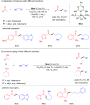
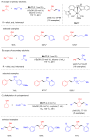
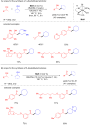
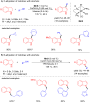
- synthesis of amines and imines using Mn-pincer catalyst [37]. When t-BuOK (1 equiv) was used as a base, alkylated amine products were observed selectively using alcohol as an alkylating agent, whereas when t-BuONa (1.5 equiv) was used as base, alkylated imine products were isolated (Scheme 6). This



























Light on the sustainable preparation of aryl-cored dibromides
Beilstein J. Org. Chem. 2024, 20, 1076–1087, doi:10.3762/bjoc.20.95
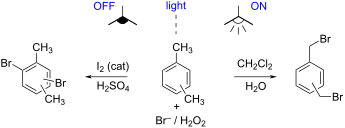
- -cored halides can be broadened by converting C–Hal functions into different functional groups. For example, aldehyde and amine functionalities can be readily derived from C(sp3)–Hal functions through hydrolysis–oxidation [13] or substitution [14], respectively. This is of significant interest in the



Innovative synthesis of drug-like molecules using tetrazole as core building blocks
Beilstein J. Org. Chem. 2024, 20, 950–958, doi:10.3762/bjoc.20.85
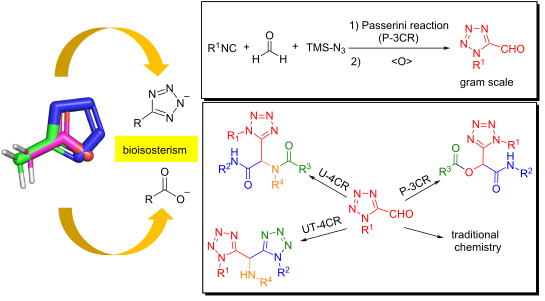
- ]. In stark contrast, a method for the synthesis of drug-like tetrazole compound libraries involving a building block approach have remained elusive, with success being reported thus far only with the tetrazole amine [14][15]. The use of a tetrazole building block in MCRs would have all the advantages




Direct synthesis of acyl fluorides from carboxylic acids using benzothiazolium reagents
Beilstein J. Org. Chem. 2024, 20, 921–930, doi:10.3762/bjoc.20.82
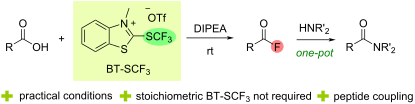
- was formed (internal standard: PhCF3, Table 1, entry 1). Pleasingly, changing the base to K2CO3 led to the formation of 2a in 7% 19F NMR yield (Table 1, entry 2), while the selectivity of the reaction could be switched significantly upon employing organic amine bases (Table 1, entries 3 and 4). Using



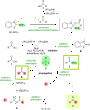
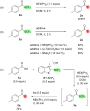
One-pot Ugi-azide and Heck reactions for the synthesis of heterocyclic systems containing tetrazole and 1,2,3,4-tetrahydroisoquinoline
Beilstein J. Org. Chem. 2024, 20, 912–920, doi:10.3762/bjoc.20.81
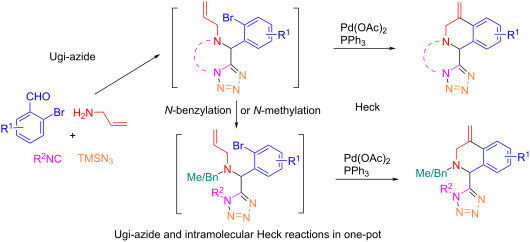
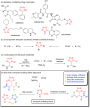
- schistosomiasis [22][23][24][25]. The combination of the privileged heterocycles tetrazole and tetrahydroisoquinoline in one molecule generates new molecules which could have biological activities. A standard Ugi four-component reaction (Ugi-4CR) of an aldehyde, amine, isocyanide, and a carboxylic acid produces
- highly diverse peptidic structures A with up to four points of substitution (Scheme 1) [26][27]. By replacing the carboxylic acid with a nucleophilic azide reagent XN3 (generally TMSN3), the Ugi-azide four-component reaction (UA-4CR) of an aldehyde, amine, isocyanide, and azide gives 1,5-disubstituted 1H
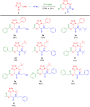
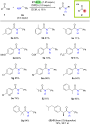
- -pyrazino[2,1-a]isoquinolin-6(5H)-ones 6c–k in 73–79% yields. The presence of electron-donating or electron-withdrawing groups on the aromatic ring did not show significant effects on the Heck reaction. Products 6c–k were obtained in higher yields than products 6a,b. We believe that the secondary amine in


(Bio)isosteres of ortho- and meta-substituted benzenes
Beilstein J. Org. Chem. 2024, 20, 859–890, doi:10.3762/bjoc.20.78
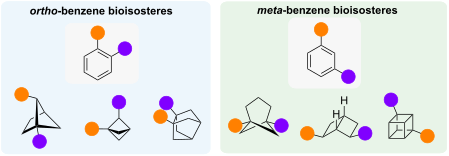
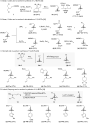
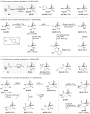
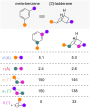
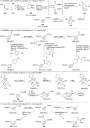
- esterification of alcohol (±)-5 gave redox active ester (±)-6, which was itself shown to be a suitable substrate for nickel-catalysed decarboxylative cross coupling reactions to aryl-substituted BCPs (±)-7. Oxidation of alcohol (±)-8 gave acid (±)-9 which yielded amine (±)-10 after a Curtius rearrangement
- ) [32]. The synthesis of the corresponding 2-aza-1,5-BCHs 13 was achieved by an intramolecular photochemical [2 + 2] cycloaddition. They were able to employ this synthetic route to synthesise a variety of 1,2-BCPs (±)-14 bearing a protected amine in the bridge position. In early 2023, MacMillan and co
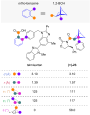
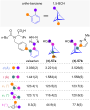
- rearrangement, amine (±)-27 was then accessible in one additional step. Formation of redox active ester (±)-28 from acid (±)-26 allowed photochemical Minisci reaction to 1,2-BCH (±)-29 and borylation to boronic ester (±)-30. Synthesis of phenol isostere (±)-31 was possible through oxidation of boronic ester

















Activity assays of NnlA homologs suggest the natural product N-nitroglycine is degraded by diverse bacteria
Beilstein J. Org. Chem. 2024, 20, 830–840, doi:10.3762/bjoc.20.75
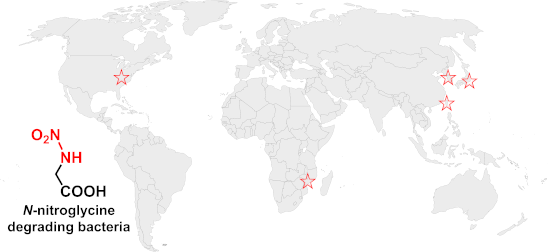
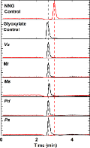
- produced during the process of amine-based carbon dioxide capture technologies [13][14]. These linear nitramines from these reactions pose their own health and environmental consequences [13]. Therefore, strategies to remediate linear nitramines are needed. Compared to cyclic nitramines [1][2][15][16




Synthesis and characterization of water-soluble C60–peptide conjugates
Beilstein J. Org. Chem. 2024, 20, 777–786, doi:10.3762/bjoc.20.71
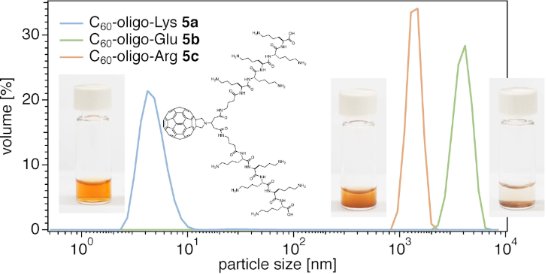
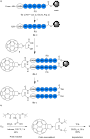
- suitable for the coupling to peptides on resin, prepared by solid-phase peptide synthesis (SPPS) [35]. The detailed conditions for the amide-forming reaction were optimized using biscarboxylic acid-substituted C60 derivative 3 and a similar peptide with a primary amine derived from γ-aminobutyric acid
- on resin, a GABA residue was attached to the N-terminus of the peptide in order to provide a less-hindered primary amine, enabling an efficient amide conjugation reaction with biscarboxylic acid-substituted C60 derivative 3. Compound 3 was prepared by Prato reaction of C60 and an N-glycine derivative




Chemoenzymatic synthesis of macrocyclic peptides and polyketides via thioesterase-catalyzed macrocyclization
Beilstein J. Org. Chem. 2024, 20, 721–733, doi:10.3762/bjoc.20.66
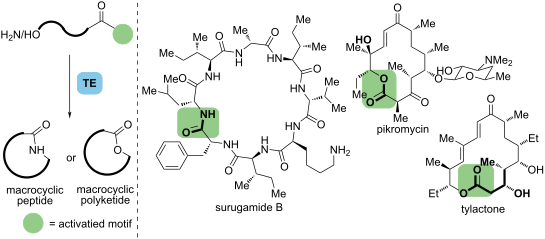
- polyketides or peptides, and form an ester bond. Then, they catalyze either intramolecular macrocyclization to give macrolactones or macrolactams with attacking of internal nucleophiles (alcohols or amine), or hydrolysis to release linear acids or peptides (Scheme 1b). Although TE domains may display


Regioselective quinazoline C2 modifications through the azide–tetrazole tautomeric equilibrium
Beilstein J. Org. Chem. 2024, 20, 675–683, doi:10.3762/bjoc.20.61
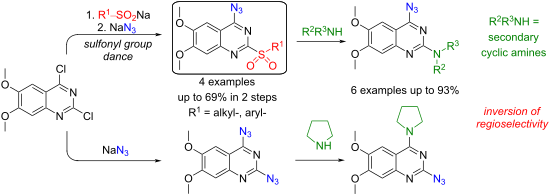
- )amine) [33] in toluene. Conclusion To summarize, an approach toward 4-azido-6,7-dimethoxy-2-alkyl/arylsulfonylquinazolines was developed employing a sulfonyl group dance caused by the azide–tetrazole equilibrium in quinazolines. 4-Azido-6,7-dimethoxy-2-alkyl/arylsulfonylquinazolines were obtained using


Palladium-catalyzed three-component radical-polar crossover carboamination of 1,3-dienes or allenes with diazo esters and amines
Beilstein J. Org. Chem. 2024, 20, 661–671, doi:10.3762/bjoc.20.59
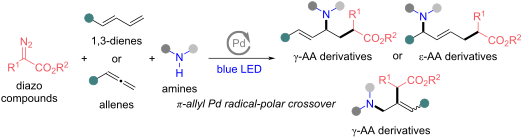
- alkylpalladium radical with the release of dinitrogen. The radical intermediate selectively adds to the double bond of a 1,3-diene or allene, followed by the allylpalladium radical-polar crossover path and selective allylic substitution with the amine substrate, thereby leading to a single unsaturated γ- or ε
- process (Scheme 1c). In this process, the hybrid α-ester alkylpalladium radical species from diazo ester adds to the double bond of 1,3-dienes or allenes, followed by the allylpalladium radical-polar crossover path. As with the classical Tsuji–Trost reaction, a subsequent nucleophilic attack of an amine
- and linear amine 3b were found to readily participate in this protocol, furnishing the corresponding products 4a–c in 61–84% yields. To our delight, this MCR strategy was compatible with a wide variety of complex bioactive molecules, including tetrahydropapaverine, (R)-duloxetine, sertraline



A laterally-fused N-heterocyclic carbene framework from polysubstituted aminoimidazo[5,1-b]oxazol-6-ium salts
Beilstein J. Org. Chem. 2024, 20, 621–627, doi:10.3762/bjoc.20.54
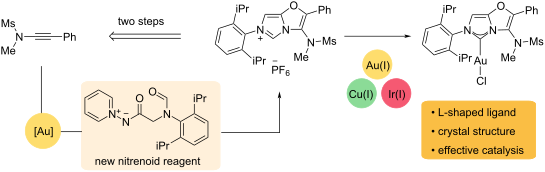
- incorporating the unsaturated oxazole counterparts has not been explored. Results and Discussion Reaction of ynamide 1a with the N-acylpyridinium-N-aminide reagent 2 proceeded in good yield to afford oxazole 3 bearing a C-2 methyleneamino moiety as the first example of a free secondary amine in this annulation
- introduce a formamide motif in place of the amine or imine to allow the use of more forcing cyclisation conditions (Scheme 1a, path c). Oxazole 8a was obtained in good yield from 1a using only a slight excess of nitrenoid 7 and 2 mol % catalyst loading. Heating 8a in the presence of POCl3 afforded the 3


A myo-inositol dehydrogenase involved in aminocyclitol biosynthesis of hygromycin A
Beilstein J. Org. Chem. 2024, 20, 589–596, doi:10.3762/bjoc.20.51
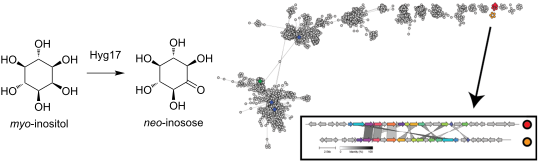
- 584 sequences were near an acyl synthase domain, 340 sequences by an acyl carrier protein domain, and 1,193 sequences by a thioesterase domain. In addition, Hyg17 works together with the aminotransferase Hyg8 to replace a hydroxy group with an amine generating an aminocyclitol from myo-inositol. We


Synthesis and biological profile of 2,3-dihydro[1,3]thiazolo[4,5-b]pyridines, a novel class of acyl-ACP thioesterase inhibitors
Beilstein J. Org. Chem. 2024, 20, 540–551, doi:10.3762/bjoc.20.46
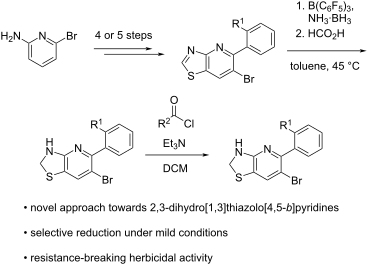
- (13b): To a stirred mixture of 6-bromopyridin-2-amine (8, 10.00 g, 56.88 mmol, 1.00 equiv), 2-fluorophenylboronic acid (9.52 g, 65.98 mmol, 1.16 equiv), and Na2CO3 (12.06 g, 113.8 mmol, 2.00 equiv) in a mixture of 1,4-dioxane (80 mL) and water (80 mL) at room temperature was added Pd(dppf)Cl2 (1.67 g


Switchable molecular tweezers: design and applications
Beilstein J. Org. Chem. 2024, 20, 504–539, doi:10.3762/bjoc.20.45
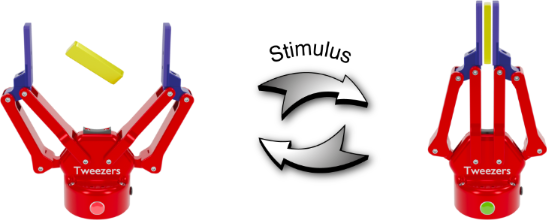
- quenched when the tweezers are closed by the addition of a Zn2+ cation because of intramolecular π–π stacking interactions between the chromophores. The system can be reopened and its luminescence properties restored by introducing tris(2-aminoethyl)amine (TREN), which has a better affinity for Zn2+ and
- bisalkynylplatinum(II)–terpyridine clips [54]. The dimer showed photocatalytic activity in the photooxidation of a secondary amine to the corresponding imine that could be deactivated and reactivated by opening or closing the tweezers. Variations on multidentate N-donor ligands have also been developed by Lehn and
- , and two separate aromatic arms are present on the phosphine ether/amine ligand side [84]. In the closed form, the system is catalytically inactive because the bulky aromatic arms stack with the salen complex and shield its access to the substrate. The addition of Cl− or acetonitrile causes the




Ligand effects, solvent cooperation, and large kinetic solvent deuterium isotope effects in gold(I)-catalyzed intramolecular alkene hydroamination
Beilstein J. Org. Chem. 2024, 20, 479–496, doi:10.3762/bjoc.20.43
- Ruichen Lan Brock Yager Yoonsun Jee Cynthia S. Day Amanda C. Jones Chemistry, Wake Forest University, 1834 Gulley Rd., Winston-Salem, NC, 27109, USA 10.3762/bjoc.20.43 Abstract Kinetic studies on the intramolecular hydroamination of protected variants of 2,2-diphenylpent-4-en-1-amine were carried
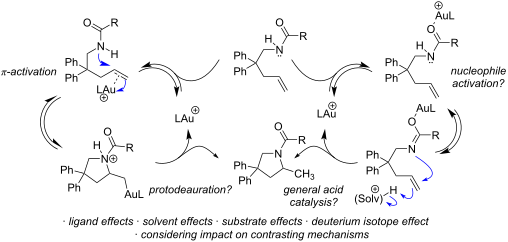
- -order dependence on alkene, first-order dependence on catalyst, and second-order dependence on the imidazolidinone nucleophile [22]. They observed a primary kinetic isotope effect (k(H/D) = 3.14) when deuterated amine was used. The second order dependence is rationalized by a mechanism where a second
- molecule of amine delivers a proton to the alkylgold intermediate (for protodeauration). In a platinum-catalyzed hydroamination, a protodemetalation pathway is supported by kinetics and reactivity studies on generated platinum alkyl intermediates [46]. In a palladium-catalyzed hydroamination, a






Synthesis of 2,2-difluoro-1,3-diketone and 2,2-difluoro-1,3-ketoester derivatives using fluorine gas
Beilstein J. Org. Chem. 2024, 20, 460–469, doi:10.3762/bjoc.20.41
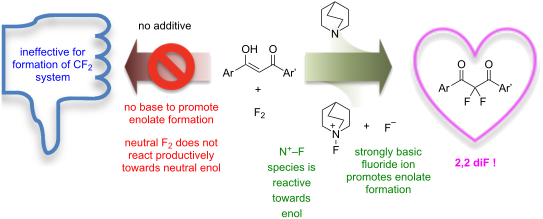
- -diketone 2a. Supplementation of the reaction mixture with either a tertiary amine or inorganic base led to varying mixtures of mono- and difluoro products 2a and 3a, respectively, with the tertiary amines proving most effective. Inorganic bases offer the possibility of deprotonating 1a-enol to form a more


Facile approach to N,O,S-heteropentacycles via condensation of sterically crowded 3H-phenoxazin-3-one with ortho-substituted anilines
Beilstein J. Org. Chem. 2024, 20, 336–345, doi:10.3762/bjoc.20.34
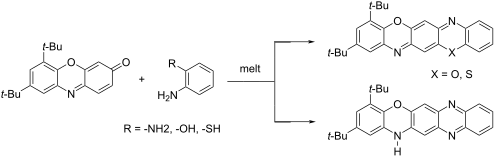
- ][12]. At the first stage, this reaction follows one of three possible reaction pathways, including Schiff base formation (attack at the C(3) center), Michael addition at C(1), or nucleophilic substitution (SNH) at the C(2) center [13][14][15]. Most readily used is the pathway involving carbonyl–amine
- conditions. The reactions proceed readily in refluxing acidified (pKa = 1–5) ethanol solutions of the amine hydrochlorides to give 2-monosubstituted derivatives of 3H-phenoxazin-3-ones in a moderate yield [10][17]. In the present work, we intended to explore the reaction of 3H-phenoxazin-3-ones with aromatic
- the crystalline samples, which is otherwise typical for solid-state reaction, was employed in this case. As seen in Scheme 2, the nucleophilic substitution reaction occured in good yield and with no restrictions in terms of amine basicity. The molecular structures of compounds 4c,d,f were determined


Spatial arrangements of cyclodextrin host–guest complexes in solution studied by 13C NMR and molecular modelling
Beilstein J. Org. Chem. 2024, 20, 331–335, doi:10.3762/bjoc.20.33
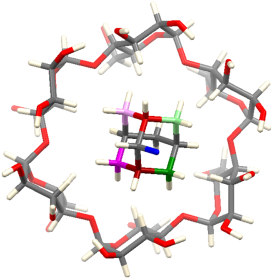
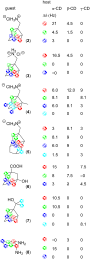
- anisotropy of the chiral cavity is expressed by differences in the magnetic shielding of prochiral atoms, resulting in signal splitting of the prochiral carbons of the guest molecule in 13C NMR spectra. Adamantan-2-amine hydrochloride was used as a model guest molecule containing three sets of prochiral
- -cyclodextrins. Compounds 1, 6 and 8 are commercial, compounds 2–5 [21] and 7 [22] were prepared according to published procedures. Compound 2 (as a free amine) crystallized in the supramolecular capsule of two α-cyclodextrins, and the mono-crystal was subjected to X-ray analysis. This experiment was performed
- arrangement in solution and extrapolated for compounds with similar size and bonding nature. Model system for the elucidation of the solution state conformations of the host–guest complexes. 13C NMR splits of prochiral carbons of the guest molecule 1 (adamantan-2-amine hydrochloride) in the anisotropic cavity




Substitution reactions in the acenaphthene analog of quino[7,8-h]quinoline and an unusual synthesis of the corresponding acenaphthylenes by tele-elimination
Beilstein J. Org. Chem. 2024, 20, 243–253, doi:10.3762/bjoc.20.24
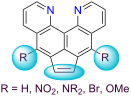
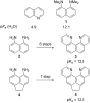
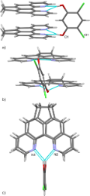
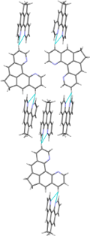
- reagents (amine, oxidizing agent) (for details and literature sources, see Supporting Information File 1, Table S1). In most experiments, only starting compound 5 was isolated almost quantitatively from the reaction mixture. Azaarene 5 proved to be resistant to the action of reagents even in the presence





Photochromic derivatives of indigo: historical overview of development, challenges and applications
Beilstein J. Org. Chem. 2024, 20, 228–242, doi:10.3762/bjoc.20.23
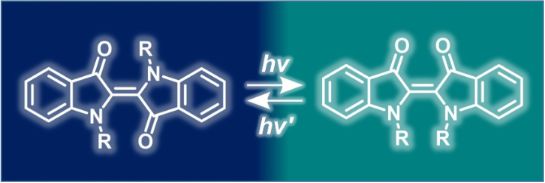
- -9a and Z-9d in benzene solution. Interestingly, the order of acceleration was primarily dependent on the basicity of the catalyst, unless the steric hindrance of the amine became a significant factor, as is the case of diisopropylamine and trimethylamine. Compounds 9d and 9e are the first examples of





Copper-catalyzed multicomponent reaction of β-trifluoromethyl β-diazo esters enabling the synthesis of β-trifluoromethyl N,N-diacyl-β-amino esters
Beilstein J. Org. Chem. 2024, 20, 212–219, doi:10.3762/bjoc.20.21
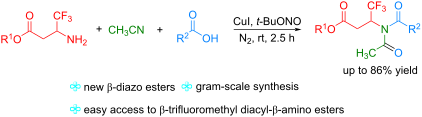
- side reactions was carried out with benzyl 3-amino-4,4,4-trifluorobutanoate (1a) and benzoic acid (3a) as model substrates. The initial reaction of amine 1a and acid 3a in acetonitrile in the presence of diazotization reagent tert-butyl nitrite with CuI (10 mol %) as catalysts for 2.5 h at room
- bring any improvement on the reaction outcome (Table 1, entries 6 and 7). Further optimization of the reaction conditions focused on the variation of the amounts of amine 1a and tert-butyl nitrite (Table 1, entries 8–12). Considering the instability of the diazo structure generated from amine 1a, we
- increased the amount of amine 1a and tert-butyl nitrite to 4 equivalents. Pleasingly, the yield of product 4a was further increased to 74% (Table 1, entry 12). Furthermore, we optimized the reaction time and found that shortening the reaction time resulted in a decreased yield (Table 1, entry 13




Chiral phosphoric acid-catalyzed transfer hydrogenation of 3,3-difluoro-3H-indoles
Beilstein J. Org. Chem. 2024, 20, 205–211, doi:10.3762/bjoc.20.20
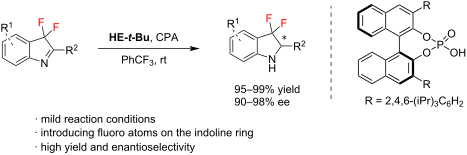
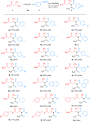
- mechanism of the CPA-catalyzed transfer hydrogenation reaction was proposed (Figure 2). The activation of 3,3-difluoro-substituted 3H-indole 1 by protonation through the Brønsted acid generates the iminium A. Subsequent hydrogen transfer from the Hantzsch ester gives the chiral amine 2 and pyridinium salt B