


Search results
Search for "amino group" in Full Text gives 408 result(s) in Beilstein Journal of Organic Chemistry. Showing first 200.
Anomeric modification of carbohydrates using the Mitsunobu reaction
Beilstein J. Org. Chem. 2018, 14, 1619–1636, doi:10.3762/bjoc.14.138
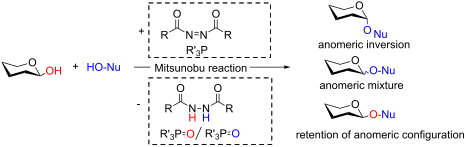
- NH group. Hence, the trichloroethoxycarbonyl (Troc) protection/activation of the amino group of questiomycin 119 allowed Igarashi et al. to access the N-glucosylated derivative 120 in good yield and complete β-stereoselectivity from hemiacetal 1 (Scheme 23) [88]. Also some aza-heterocycles bearing a


Drug targeting to decrease cardiotoxicity – determination of the cytotoxic effect of GnRH-based conjugates containing doxorubicin, daunorubicin and methotrexate on human cardiomyocytes and endothelial cells
Beilstein J. Org. Chem. 2018, 14, 1583–1594, doi:10.3762/bjoc.14.136
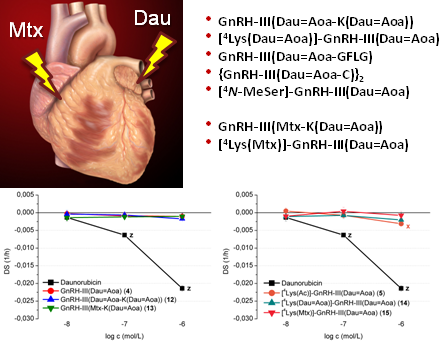
- drug conjugates. Dox has three potential conjugation sites; i) a primary OH group at C-14 on the aglycone part, which is suitable for ester bond formation, ii) an oxo group at C-13 is available for the generation of an oxime linkage and iii) the amino group on the daunosamine sugar moiety, which can be
- molecules were also prepared. When the native GnRH-III was used, an additional Lys was incorporated to the side chain of Lys in position 8. A Dau was attached to its ε-amino group and the second Dau (12) or the Mtx (13) was connected to the α-amino group. In conjugate 14, the two Dau molecules were linked
- fragmentation of the conjugate between the aglycon part and sugar moiety resulted in fragments in which the peptide was attached either the aglycon OH group or the amino group of sugar moiety [23]. When unprotected Dox was used for the reaction with glutaric anhydride, the amino group was modified with glutaric


Acyl-group specificity of AHL synthases involved in quorum-sensing in Roseobacter group bacteria
Beilstein J. Org. Chem. 2018, 14, 1309–1316, doi:10.3762/bjoc.14.112

- . gallaeciensis BS107 produced eight different AHLs [8]. The biosynthesis of AHLs is mediated by the enzyme LuxI or its homologs, and often accompanied by a regulator protein, LuxR [18][19]. An ACP-bound fatty acid acyl group 1 is transferred onto the amino group of S-adenosylmethionine (SAM, 2) that is followed


Oligonucleotide analogues with cationic backbone linkages
Beilstein J. Org. Chem. 2018, 14, 1293–1308, doi:10.3762/bjoc.14.111
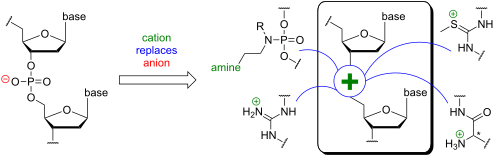
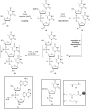
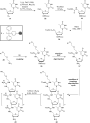
- was then converted into a reactive carbodiimide 24 and coupled to a terminal amino group of the solid phase 25 (Scheme 2). This coupling furnished solid phase-attached intermediate 26, which was Fmoc-deprotected to the amine 27. Iterative repetition of this coupling-deprotection cycle gave oligomer 28
- '-amino-5'-deoxythymidine attached to CPG (37) served as the solid phase. The construction of the oligomer, achieved in 3'→5' direction, was based on the coupling of 3'-isothiocyanate 38 with the 5'-amino group of 37 to give 39 and, after acidic MMTr cleavage, 40. Iterative repetition of this coupling
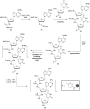
- 46 and 47 [15][16][17][18][19][20][21][22] furnished the structure of an 'NAA-modified oligonucleotide' 48 (Figure 5). The 6'-amino group of the NAA-modification is positively charged at physiological pH values, thus providing a (partially) zwitterionic backbone structure if some phosphate diester





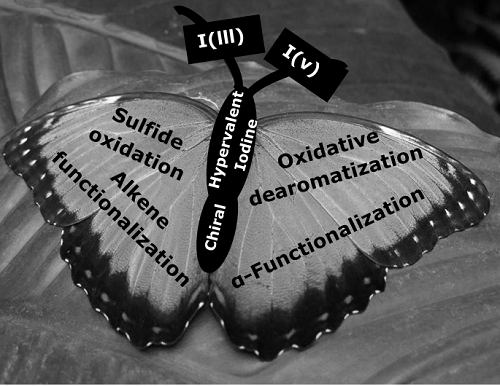
A survey of chiral hypervalent iodine reagents in asymmetric synthesis
Beilstein J. Org. Chem. 2018, 14, 1244–1262, doi:10.3762/bjoc.14.107
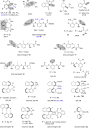
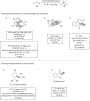
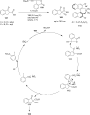
- oxy/amino group followed by the nucleophilic addition of the aryl group delivers the desired products 54. The key to success also lies on the enantiotopic face discrimination of the alkene by the lactate-based chiral iodine reagent. This difunctionalization strategy was further showcased by Muñiz et



An overview of recent advances in duplex DNA recognition by small molecules
Beilstein J. Org. Chem. 2018, 14, 1051–1086, doi:10.3762/bjoc.14.93
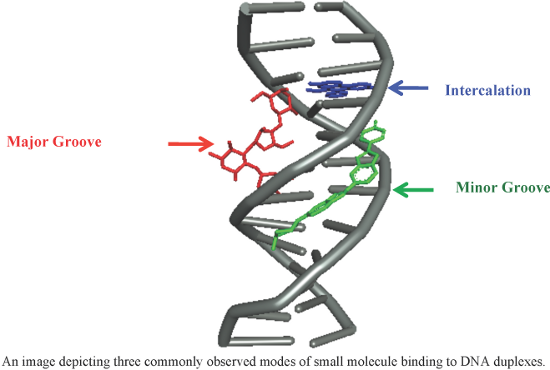
- substituent (3-quinolinyl nitrogen forming a hydrogen bond with a guanine amino group at the base of the minor groove) and a low pKa tail group. This drug was further selected for the treatment of Gram-positive bacteria Clostridium difficile infections and is currently in the phase II clinical trials
- MGBs is their preference for narrow A·T-rich regions compared to G·C regions because (i) they can form hydrogen bonds to N3 of adenine and O2 of thymine in the A·T region; (ii) less steric hindrance in the A·T region in comparison to the G·C region due to the presence of an extra protruding C2-amino
- group of the guanine base [19]. 2.1. Polypyrroles and polyamides The first two MGBs discovered were distamycin A and netropsin (Figure 3). These naturally occurring molecules are characterized by repeating N-methylpyrrole units with one or more positively charged nitrogen atoms at the end. Their concave






The first Pd-catalyzed Buchwald–Hartwig aminations at C-2 or C-4 in the estrone series
Beilstein J. Org. Chem. 2018, 14, 998–1003, doi:10.3762/bjoc.14.85

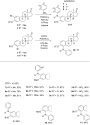
- -aminated estrone derivatives are described as inhibitors of estrogen biosynthesis. They are often synthesized via a three-step method including nitration, reduction, and functionalization of the amino group [1][2]. This three-step protocol may be simplified to involve only one or two steps by the
- ]. Thus 13α-estrone is a suitable compound for the development of biologically active steroids lacking estrogenicity. Literature reveals that besides the inversion of C-13, the introduction of an amino group onto C-2 or C-4 of estrone also leads to significant decreases in its binding affinity for nuclear


On the design principles of peptide–drug conjugates for targeted drug delivery to the malignant tumor site
Beilstein J. Org. Chem. 2018, 14, 930–954, doi:10.3762/bjoc.14.80
- ]. This type of linkers/spacers offers the capability to release the active drug after simultaneous cascade reactions, as shown in Figure 5. Para-amino benzyl alcohol (PABC; colored in red) is a representative example that can be connected in the amino group via an amide bond to an enzyme-hydrolyzable
- -amino group of the D-Lys side chain of the peptide D-Lys6-LHRH. Notably, both conjugates fully preserved the cytotoxic activity of the parent drugs, DOX or 2-pyrrolino-DOX, respectively, in vitro and also retained the high binding affinity of their peptide carrier to receptors for LHRH on rat pituitary
- on its building block 2-pyrrolino-DOX and tried to construct new PDCs using other peptides. Therefore, they synthesized a new analog, designated AN-238, consisting of the octapeptide RC-121 linked through the α-amino group of its N-terminal D-Phe moiety and a glutaric acid spacer to the 14-OH group


Development of novel cyclic NGR peptide–daunomycin conjugates with dual targeting property
Beilstein J. Org. Chem. 2018, 14, 911–918, doi:10.3762/bjoc.14.78
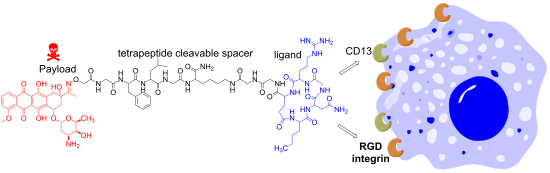
- CD13+ HT-1080 human fibrosarcoma and CD13− but integrin positive HT-29 human colon adenocarcinoma cells. However, it seems that the free ε-amino group of Lys in the cycle is not necessary for the biological activity. Therefore, we developed novel cyclic NGR peptide–daunomycin conjugates in which Lys
- homing devices may provide dual targeted delivery of anticancer drugs. According to literature data, one of the most stable and tumor-selective cyclic NGR-peptides is c[KNGRE]-NH2, in which the α-amino group of the N-terminal Lys is coupled to the γ-carboxyl group of the glutamic acid residue (head-to
- the use of orthogonal protecting groups (Figure 1A). Previous studies indicated that the free ε-amino group of Lys does not have an impact on the biological activity [15][17]. To prove our assumption, a set of novel cyclic NGR peptide–Dau conjugates were developed in which the Lys was replaced by


Phosphodiester models for cleavage of nucleic acids
Beilstein J. Org. Chem. 2018, 14, 803–837, doi:10.3762/bjoc.14.68
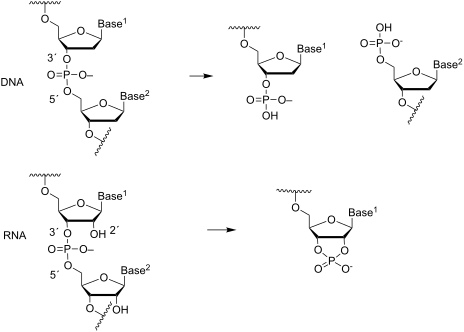
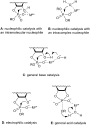
- transfer from the attacking 2´-OH to non-bridging phosphoryl oxygen. Primary amines are, in turn, used to mimic the action of the ε-amino group of lysine. Both guanidine and primary amino groups are basic functions that at physiological pH are present as guanidinium and ammonium ions. These ions tend to
- reduce electron density in their vicinity, inductively through bonds and electrostatically through space, or they may serve as weak general acids. The guanidine group may additionally participate in proton shuttling through various tautomeric forms [75] and the amino group through bifurcated H-bonds. The
- the lysine ε-amino group in the catalytic center of RNase A has been elucidated by incorporating an amino group covalently in the vicinity of the scissile phosphodiester linkage of the model compound. For this purpose, compound 12a bearing two aminomethyl groups at C4´ was prepared and its reactions



Synthesis and in vitro biochemical evaluation of oxime bond-linked daunorubicin–GnRH-III conjugates developed for targeted drug delivery
Beilstein J. Org. Chem. 2018, 14, 756–771, doi:10.3762/bjoc.14.64
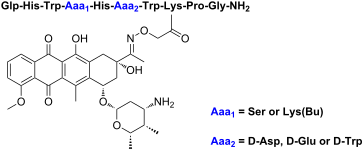
- preclinical and clinical studies, was zoptarelin-doxorubicin also known as AEZS-108 (previously AN-152) [16]. The anthracycline doxorubicin was conjugated to the ε-amino group of GnRH-I-[6D-Lys] by insertion of a glutaric acid linker. The resulting ester bond can be cleaved by carboxylesterases, leading to
- antiproliferative activity. Furthermore, the absence of the free ε-amino group additionally reduced the endocrine effect [23][24]. Thus, the 8Lys can be utilized as conjugation site for cytotoxic agents like anthracyclines. In the past decade, a variety of different linkage systems has been carried out including
- breast adenocarcinoma cancer cells (MCF-7) and on hormone independent human colon carcinoma cells (HT-29) were analyzed [22][25][27][28]. Thereby, it has been exposed, that an exchange of 4Ser by 4Lys followed by acylation of the ε-amino group with short chain fatty acids (SCFA) improved the cellular



Enzyme-free genetic copying of DNA and RNA sequences
Beilstein J. Org. Chem. 2018, 14, 603–617, doi:10.3762/bjoc.14.47
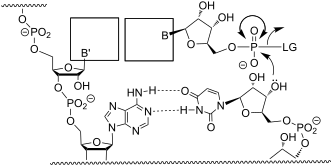
- arrangement became the most common way of performing the reaction [17][18][19][20]. In this brief account we will focus on primer extension reactions on DNA and RNA templates. The copying of DNA sequences is usually performed with primers terminating in a 3'-amino-2',3'-dideoxynucleoside. The amino group is


Investigations towards the stereoselective organocatalyzed Michael addition of dimethyl malonate to a racemic nitroalkene: possible route to the 4-methylpregabalin core structure
Beilstein J. Org. Chem. 2018, 14, 553–559, doi:10.3762/bjoc.14.42
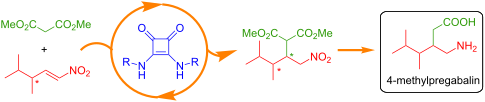
- amine 9 to compound 11 in two steps. However, under microwave heating conditions, both couplings of the amino group with squarate, as well as methoxymethyl (MOM) deprotection was observed. To the best of our knowledge, there is no report describing methanolysis of MOM-groups under microwave conditions


Stimuli-responsive oligonucleotides in prodrug-based approaches for gene silencing
Beilstein J. Org. Chem. 2018, 14, 436–469, doi:10.3762/bjoc.14.32


5-Aminopyrazole as precursor in design and synthesis of fused pyrazoloazines
Beilstein J. Org. Chem. 2018, 14, 203–242, doi:10.3762/bjoc.14.15
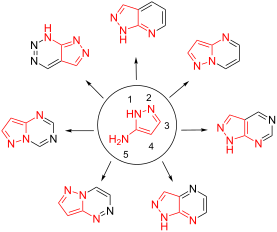
- formed by addition from the less sterically hindered amino group. The free amino group was alkylated by reductive amination on reaction with substituted aldehyde or ketones to provide the corresponding pyrazolo[1,5-a]pyrimidine derivatives 139 (Scheme 39). The pyrazolo[1,5-a]pyrimidine derivatives 139
- ) with high regioselectivity without any traces of other possible regioisomeric pyrazolo[1,5-a]pyrimidines 169. The regioselectivity of the reaction was attributed to the higher nucleophilicity of the exocyclic primary amino group over the endocyclic amino group. Synthesis of pyrazolo[1,5-a]pyrimidine


Progress in copper-catalyzed trifluoromethylation
Beilstein J. Org. Chem. 2018, 14, 155–181, doi:10.3762/bjoc.14.11
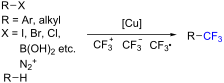
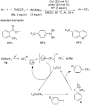
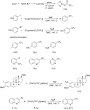
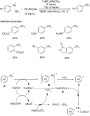
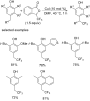
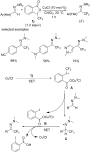
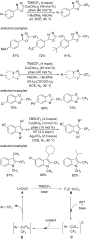
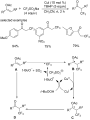
- . The amino group can be easily transformed into numerous functional groups including halides or cyano groups, which is known as the Sandmeyer reaction. This transformation contained two steps: Diazotization of aromatic amines led to aryldiazonium salt, followed by conversion of diazonium group into













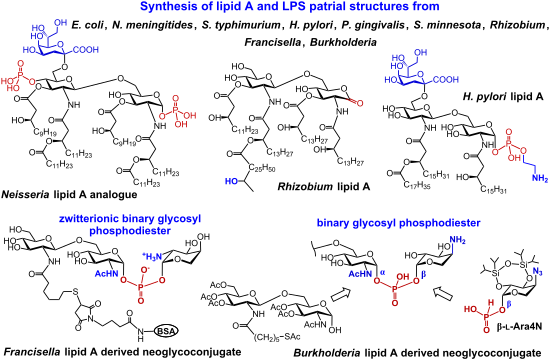
Aminosugar-based immunomodulator lipid A: synthetic approaches
Beilstein J. Org. Chem. 2018, 14, 25–53, doi:10.3762/bjoc.14.3
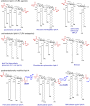
- DBU to provide a free amino group, the 2’-NH2 and 3-OH groups could be differentiated in the next acylation step by using DCC as activating agent for the N-acylation, and Steglich reaction conditions (DCC and DMAP) for the O-acylation. Following removal of the Alloc protecting group was readily
- group was acylated with myristoyl chloride. Reduction of the 2-azido group by treatment with Zn in acetic acid followed by acylation of the amino group under standard conditions gave hexaacylated intermediate 7. The α-glycosyl phosphate was stereoselectively introduced by first, cleavage of the anomeric
- separation of the anomeric α/β mixture furnished the anomerically pure trisaccharide 15. Next, three acyl residues were introduced at positions 2’, 3’ and 3 by successive deprotection–acylation sequence. The N-Fmoc protecting group was removed using DBU and the resulting free amino group was acylated with (R






The photodecarboxylative addition of carboxylates to phthalimides as a key-step in the synthesis of biologically active 3-arylmethylene-2,3-dihydro-1H-isoindolin-1-ones
Beilstein J. Org. Chem. 2017, 13, 2833–2841, doi:10.3762/bjoc.13.275
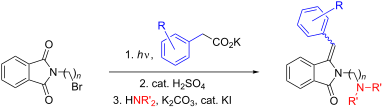
- [41], followed by amination [42] furnishes the desired target compounds. The amino group is introduced in the final step as it would otherwise interfere with the desired photoreaction. In fact, amines are very potent electron donors and are easily oxidized by the excited phthalimide chromophore [43


CF3SO2X (X = Na, Cl) as reagents for trifluoromethylation, trifluoromethylsulfenyl-, -sulfinyl- and -sulfonylation. Part 1: Use of CF3SO2Na
Beilstein J. Org. Chem. 2017, 13, 2764–2799, doi:10.3762/bjoc.13.272
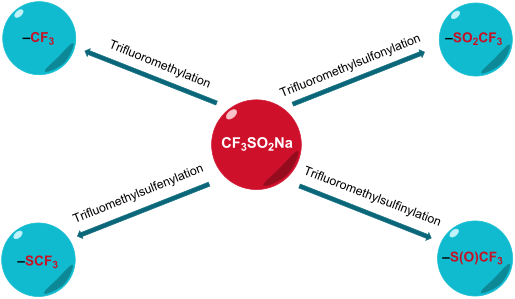
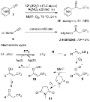
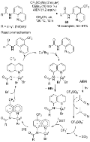
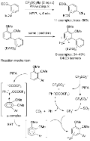
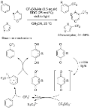
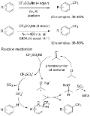
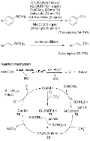
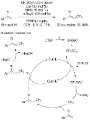
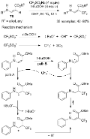
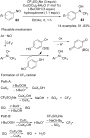
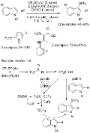
- authors studied the effect of structural variations in the substrate (R1 = aryl, heteroaryl, alkyl; R2 = H, 6-OMe, 2-Me). Aniline amides gave no conversion nor did quinoline having an ester group at the 8 position instead of the 8-amino group. The chitosan-based copper catalyst was efficiently reused in




















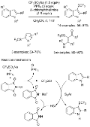


Vinylphosphonium and 2-aminovinylphosphonium salts – preparation and applications in organic synthesis
Beilstein J. Org. Chem. 2017, 13, 2710–2738, doi:10.3762/bjoc.13.269

- synthesis of resonance-stabilized phosphorus ylides 81 (Scheme 51). The obtained ylides underwent further cyclization by the intramolecular acylation of the primary amino group to give the final bicyclic products 82 in 85–90% yields [67]. The synthesis of resonance-stabilized phosphorus ylides via the


Development of a fluorogenic small substrate for dipeptidyl peptidase-4
Beilstein J. Org. Chem. 2017, 13, 2690–2697, doi:10.3762/bjoc.13.267
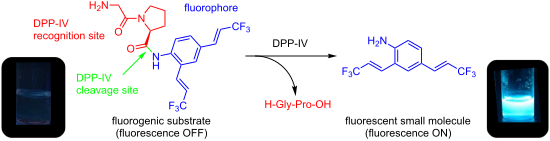
- reactions of (E)-trimethyl-(3,3,3-trifluoroprop-1-enyl)silane and iodoanilines. This straightforward method is useful for TFPE introduction and a broad range of iodoanilines can be used without protection of the amino group. We used this approach to synthesize several aniline derivatives containing TFPE
- different, ideally, non-fluorescence and intensive fluorescence, respectively. On the basis of the structural features of 1, we expected that its fluorescence would disappear as a result of peptide derivatization of the amino group, because electron donation by the amino group would be attenuated and the
- -protected glycine was condensed with proline methyl ester under microwave irradiation. Subsequent hydrolysis of the ester gave N-protected Gly-Pro-OH (6). Condensation of dipeptide 6 with 1 was achieved using the corresponding acid chloride. Deprotection of the amino group was achieved by treatment with


Recent progress in the racemic and enantioselective synthesis of monofluoroalkene-based dipeptide isosteres
Beilstein J. Org. Chem. 2017, 13, 2637–2658, doi:10.3762/bjoc.13.262
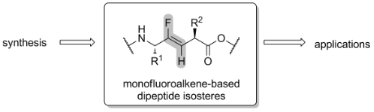
- . This was then converted into a protected amino group employing a Mitsunobu reaction. Finally, removal of the nosyl group, followed by hydrolysis using lithium hydroxide, afforded the targeted isostere 24. Sano and co-workers also worked on the Mg(II)-promoted stereoselective synthesis of (Z


A novel synthetic approach to hydroimidazo[1,5-b]pyridazines by the recyclization of itaconimides and HPLC–HRMS monitoring of the reaction pathway
Beilstein J. Org. Chem. 2017, 13, 2561–2568, doi:10.3762/bjoc.13.252
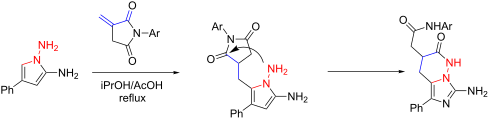
- -addition by the activated C=C double bond and subsequent intramolecular recyclization of the intermediate with the amino group involved. Keywords: cascade reaction; diaminoimidazoles; HPLC–HRESIMS; imidazo[1,5-b]pyridazines; itaconimides; Introduction Among the numerous bicyclic fused imidazole
- -b][1,2]diazepines 10, respectively, can be obtained. As a result of the initial addition of diaminoimidazole 4 as a 1,4-N,N-dinucleophile, intermediates 6 and 7 could be formed, whose heterocyclization with a second amino group could lead to imidazotriazepines 11 and 13 or imidazotriazocines 12 and
- aminoazole systems containing an amino group at the second position of the cycle [43]. The heterocyclization of intermediate 6 involving the C5 atom of the imidazole is improbable (not shown in the Scheme 5). The key criterion for the choice of the structure of the compounds obtained is the presence of the


Sulfation and amidinohydrolysis in the biosynthesis of giant linear polyenes
Beilstein J. Org. Chem. 2017, 13, 2408–2415, doi:10.3762/bjoc.13.238
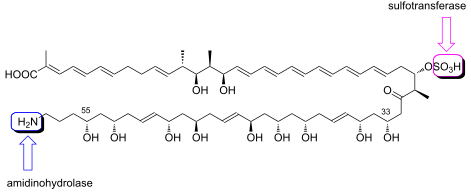
- difference expected between the cle and the med clusters was the presence of an essential amidinohydrolase gene, encoding an enzyme that would act at a late stage in the pathway to unmask the primary amino group of the mediomycins, as we have previously described for the biosynthesis of aminomarginolactone


Synthesis, effect of substituents on the regiochemistry and equilibrium studies of tetrazolo[1,5-a]pyrimidine/2-azidopyrimidines
Beilstein J. Org. Chem. 2017, 13, 2396–2407, doi:10.3762/bjoc.13.237

- efficient and regioselective synthesis of pyrazolo[1,5-a]pyrimidines and aryl[heteroaryl]pyrazolo[1,5-a]pyrimidines in acetic acid under reflux. The regioselectivity was attributed to the high nucleophilicity of the amino group in 3-amino-5-methyl-1H-pyrazole and the high electrophilicity of the β-carbon
- CF3 can be found at the β-carbon C3 (Figure 2a). Under acidic conditions, in which the reactions were performed, C1 is the carbon with the highest LUMO coefficient (0.235) when R = phenyl (Figure 2b). Consequently, the first nucleophilic attack from the amino group of 5-aminotetrazole occurs at C1
- 5h. The first nucleophilic attack from the amino group of 5-aminotetrazole was evidenced by HOMO coefficient calculations (Table S3 in Supporting Information File 1). The highest HOMO coefficient for the NH2 group indicates the superior nucleophilicity of the NH2 group in the aminotetrazole molecule


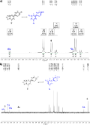
![[Graphic 9]](/bjoc/content/inline/1860-5397-13-237-i9.svg?max-width=637&scale=1.18182) 4d equilibrium in DMSO-d6 at 25 °C.
4d equilibrium in DMSO-d6 at 25 °C.





