Search results
Search for "asymmetric synthesis" in Full Text gives 234 result(s) in Beilstein Journal of Organic Chemistry. Showing first 200.
Asymmetric Diels–Alder reaction with >C=P– functionality of the 2-phosphaindolizine-η1-P-aluminium(O-menthoxy) dichloride complex: experimental and theoretical results
Beilstein J. Org. Chem. 2013, 9, 392–400, doi:10.3762/bjoc.9.40

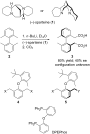
- barrier of the Diels–Alder reaction of 7a with 1,3-butadiene, involving its attack from the Si face, is lower. It is found that in this case, the exo approach of the diene is slightly preferred over the endo approach. Keywords: aluminium(O-menthoxy) dichloride; asymmetric synthesis; >C=P– functionality
- in asymmetric synthesis, which is one of the most attractive methods from the atom-economy point of view [1] for producing single enantiomers selectively. Over the past three decades, a variety of reactions allowing the formation of C–H, C–C, C–N, C–O and other bonds enantioselectively have been


Inter- and intramolecular enantioselective carbolithiation reactions
Beilstein J. Org. Chem. 2013, 9, 313–322, doi:10.3762/bjoc.9.36

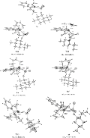
- the possibility of introducing further functionalization on the molecule by trapping the reactive organolithium intermediates with electrophiles. Keywords: alkenes; asymmetric synthesis; carbolithiation; carbometallation; enantioselectivity; lithium; Introduction The carbolithiation reaction has
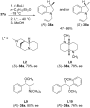
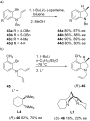
- chiral ligands for lithium, thus opening new opportunities for their application in asymmetric synthesis. The naturally occurring alkaloid (−)-sparteine, which has been until recently inexpensive and commercially available, is the most widely used chiral ligand in enantioselective carbolithiation





Asymmetric synthesis of host-directed inhibitors of myxoviruses
Beilstein J. Org. Chem. 2013, 9, 197–203, doi:10.3762/bjoc.9.23
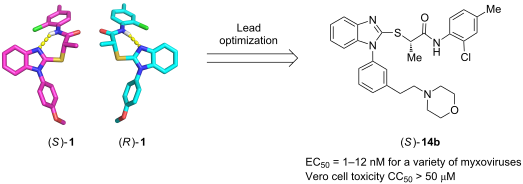
- : asymmetric synthesis; benzimidazole; host-directed; myxovirus; small molecule inhibitor; Introduction Myxoviruses are divided into two evolutionarily distinct yet related families: the orthomyxoviridae, which is composed largely of the influenza viruses, and the paramyxoviridae, which includes respiratory
- of the pure isomers for further pharmacokinetic and animal studies, we present here an asymmetric synthesis of 1 and its congeners with improved aqueous solubility and antiviral potency. Results and Discussion Design. We previously reported a series of compounds with antiviral activity against a
- )- (left, magenta) and (R)- (right, cyan) enantiomers of 1. L-Tartaric acid salt (18f-tartrate) and benzenesulfonic acid salt (18f-benzenesulfonate) of 18f. Synthesis of anilino nitrobenzene 7a. Preparation of morpholinyl-o-nitroanilines. Asymmetric synthesis of (R)- and (S)-isomers by using two different


Reactions of salicylaldehyde and enolates or their equivalents: versatile synthetic routes to chromane derivatives
Beilstein J. Org. Chem. 2012, 8, 2166–2175, doi:10.3762/bjoc.8.244

- of 2,2-dimethylchromene 45. Synthesis of 2,3-disubstituted chromene 47 by Stukan and co-workers. Ravichandrans synthesis of 3-substituted chromenes 52–55. Synthesis of 3-substituted chromene 58 coumarin 59 by Paye and co-workers. Govender and co-workers asymmetric synthesis of 2-phenylchromenes 62
- and 63. Asymmetric synthesis of 2-phenylchromene 62 by Li and co-workers. Acknowledgements We thank DAAD-NAPRECA for the scholarship (ZYD), the University of Botswana and the Royal Society of Chemistry for financial support.


Mechanochemistry assisted asymmetric organocatalysis: A sustainable approach
Beilstein J. Org. Chem. 2012, 8, 2132–2141, doi:10.3762/bjoc.8.240
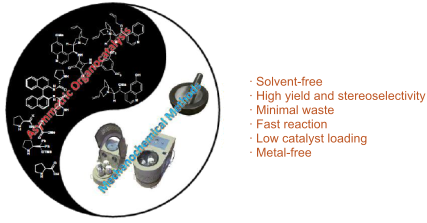
- amplified in recent times. In this regard, catalytic asymmetric synthesis involving the use of chiral organocatalysts has emerged as a powerful tool from the infancy to the maturity of asymmetric organocatalysis [13][14][15][16][17][18][19][20][21][22][23][24][25][26]. The use of organocatalysts for
- . Alkylation of imine Alkylation of glycine imine by using a chiral phase-transfer catalyst emerged as a very good strategy for the asymmetric synthesis of amino-acid derivatives [59][60][61]. Lamaty and co-workers prepared a series of glycine Schiff bases 22 in excellent yield (97–98%) in short reaction time


Asymmetric synthesis of γ-chloro-α,β-diamino- and β,γ-aziridino-α-aminoacylpyrrolidines and -piperidines via stereoselective Mannich-type additions of N-(diphenylmethylene)glycinamides across α-chloro-N-sulfinylimines
Beilstein J. Org. Chem. 2012, 8, 2124–2131, doi:10.3762/bjoc.8.239
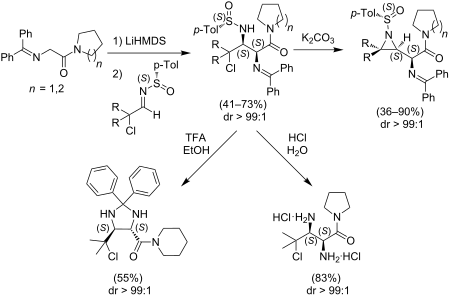
- 264 62 21 Department of Medicinal Chemistry, University of Antwerp, Universiteitsplein 1, B-2610 Antwerp, Belgium Department of Chemistry, University of Bergen, Allégt. 41, N-5007 Bergen, Norway 10.3762/bjoc.8.239 Abstract The asymmetric synthesis of new chiral γ-chloro-α,β-diaminocarboxylamide
- -diaminocarboxylamides was optimized, which resulted in Nα-deprotected syn-γ-chloro-α,β-diaminocarboxylamides, N-sulfinyl-β,γ-aziridino-α-aminocarboxylamide derivatives, a trans-imidazolidine, and an Nα,Nβ-deprotected syn-γ-chloro-α,β-diaminocarboxylamide. Keywords: asymmetric synthesis; diaminoacid derivatives
- chemistry and is continuously under development [1][2][3]. Recently, our research group elaborated the asymmetric synthesis of new chiral γ-chloro-α,β-diaminocarboxyl esters by highly diastereoselective Mannich-type reactions of N-(diphenylmethylene)glycine esters across a chiral α-chloro-N-p




The multicomponent approach to N-methyl peptides: total synthesis of antibacterial (–)-viridic acid and analogues
Beilstein J. Org. Chem. 2012, 8, 2085–2090, doi:10.3762/bjoc.8.234
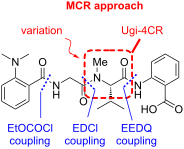
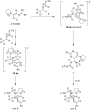
- properties (Scheme 3) [13]. Since the MCR results in racemates, we decided to investigate the applicability of a chiral auxiliary MCR approach for the asymmetric synthesis of viridic acid (1). The Ugi-4CR is not specifically prone to asymmetric induction, but at least some auxiliaries are known to result in


Design and synthesis of quasi-diastereomeric molecules with unchanging central, regenerating axial and switchable helical chirality via cleavage and formation of Ni(II)–O and Ni(II)–N coordination bonds
Beilstein J. Org. Chem. 2012, 8, 1920–1928, doi:10.3762/bjoc.8.223
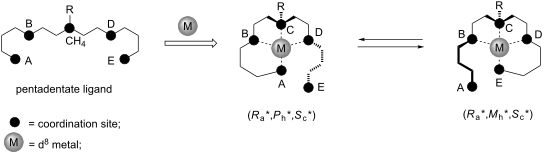
- framework of our recently described methodology for applying a new generation of nucleophilic glycine equivalents [27][28][29][30][31][32] to a general asymmetric synthesis of α-amino acids [33][34][35][36][37][38]. In this manner, modular assembly of achiral C2-symmetric pentadentate ligands 12 was carried



Automated three-component synthesis of a library of γ-lactams
Beilstein J. Org. Chem. 2012, 8, 1804–1813, doi:10.3762/bjoc.8.206
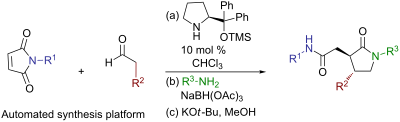
- diastereomer. In the case of an asymmetric synthesis, however, the initial diasteromeric ratio would be reflected in the enantiomeric ratio of the final products when the downstream epimerization step is taken into account; this is illustrated for the limiting case of high facial selectivity with respect to


Organocatalytic cascade aza-Michael/hemiacetal reaction between disubstituted hydrazines and α,β-unsaturated aldehydes: Highly diastereo- and enantioselective synthesis of pyrazolidine derivatives
Beilstein J. Org. Chem. 2012, 8, 1710–1720, doi:10.3762/bjoc.8.195
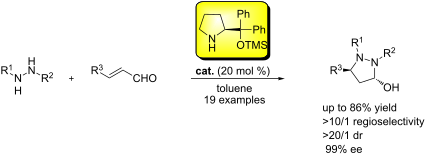
- -pyrazolines starting from α,β-unsaturated ketones and phenylhydrazine or N-tert-butyloxycarbonylhydrazine in the presence of a chiral Brønsted acid or a phase-transfer catalyst [70][71]. Compared with monosubstituted hydrazines in organocatalytic asymmetric synthesis, disubstituted hydrazines were also


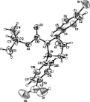
Organocatalytic tandem Michael addition reactions: A powerful access to the enantioselective synthesis of functionalized chromenes, thiochromenes and 1,2-dihydroquinolines
Beilstein J. Org. Chem. 2012, 8, 1668–1694, doi:10.3762/bjoc.8.191

- -unsaturated ketones have also responded as Michael acceptors in the organocatalytic tandem Michael addition reaction towards the synthesis of tetrahydroxanthones. Córdova et al. [50], in 2007, reported the first organocatalytic asymmetric synthesis of tetrahydroxanthenones through the domino Michael–aldol
- pyrrolidine-triazole-based C2 symmetric organocatalysts XXVIIa was reported by Sankararaman et al. [61] for the asymmetric synthesis of nitrochromenes 30 (Scheme 15). The reaction gave poor enantioselectivities both in toluene (15% ee) and in DMF (24% ee). In 2010, Das et al. [62] reported an organocatalytic
- is anticipated to have hydrogen-bonding interactions with the nitro group. The subsequent Henry reaction with the aldehydes, followed by dehydration, generated 3-nitro-1,2-dihydroquinolines. Conclusion The advantage of organocatalysts in asymmetric synthesis has grown tremendously since its advent


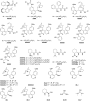


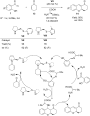


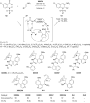
Synthesis of chiral sulfoximine-based thioureas and their application in asymmetric organocatalysis
Beilstein J. Org. Chem. 2012, 8, 1443–1451, doi:10.3762/bjoc.8.164
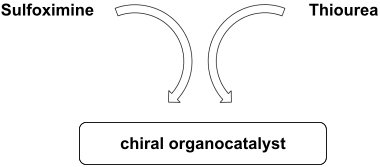
- findings include their use as fluoromethylation reagents, as fluorophores or as directing groups [16][17][18][19]. Two quality characteristics make them particularly attractive for asymmetric synthesis: 1) The stereogenic sulfur atom which is stable towards many reaction conditions, and 2) the ease of


Organocatalytic C–H activation reactions
Beilstein J. Org. Chem. 2012, 8, 1374–1384, doi:10.3762/bjoc.8.159
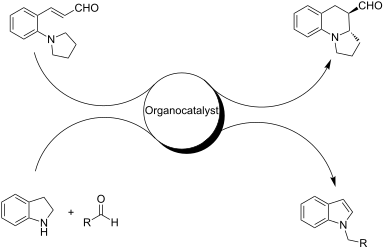
- non-asymmetric version of the reaction using pyrrolidine-TFA as catalyst in acetonitrile. High yields (67–98%) and moderate to good diastereoselectivities (59:41 to 80:20) were obtained for amine donors of different ring size [24]. After successfully performing the non-asymmetric synthesis of
- regenerated (Scheme 11). The following year, Akiyama and co-workers reported another organocatalytic asymmetric synthesis of tetrahydroquinolines using chiral phosphoric acid as the catalyst [25]. In this instance, benzylidene malonates were used as the hydride acceptor. Another important feature of this
- -(dialkylamino)cinnamaldehydes. Mechanism for aminocatalytic redox reaction of ortho-(dialkylamino)cinnamaldehydes. Asymmetric synthesis of tetrahydroquinolines having gem-methyl ester groups. Asymmetric synthesis of tetrahydroquinolines from chiral substrates 18. Organocatalytic biaryl synthesis by Kwong, Lei



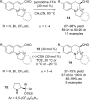


A novel asymmetric synthesis of cinacalcet hydrochloride
Beilstein J. Org. Chem. 2012, 8, 1366–1373, doi:10.3762/bjoc.8.158

- Veera R. Arava Laxminarasimhulu Gorentla Pramod K. Dubey R&D Laboratory, Suven Life Sciences Ltd., Hyderabad, India Department of Chemistry, J. N. T. University, Hyderabad, India 10.3762/bjoc.8.158 Abstract A novel route to asymmetric synthesis of cinacalcet hydrochloride by the application of (R
- )-tert-butanesulfinamide and regioselective N-alkylation of the naphthyl ethyl sulfinamide intermediate is described. Keywords: asymmetric synthesis; (R)-tert-butanesulfinamide; cinacalcet hydrochloride; naphthyl ethyl sulfinamide; regioselective N-alkylation; Introduction Cinacalcet hydrochloride
- ][16][17][18][19][20]. In our quest to utilize the chiral tert-butanesulfinamides in asymmetric syntheses of chiral amine APIs in an industrial setting [21][22][23], we report a novel asymmetric synthesis of 1 (Scheme 1) based on (R)-tert-butanesulfinamide (2), which was developed and extensively


Organocatalytic asymmetric Michael addition of unprotected 3-substituted oxindoles to 1,4-naphthoquinone
Beilstein J. Org. Chem. 2012, 8, 1360–1365, doi:10.3762/bjoc.8.157
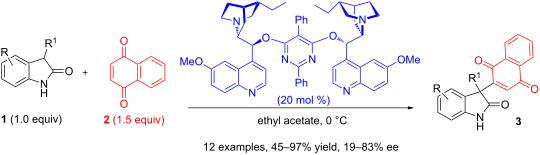
- catalytic synthesis of which was unprecedented. Keywords: 3,3-disubstituted oxindoles; Michael addition; organocatalysis; quaternary stereogenic center; unprotected 3-substituted oxindoles; Introduction The catalytic asymmetric synthesis of 3,3-disubstituted oxindoles has recently received great attention
- ][10], 3-aminooxindoles [11][12][13][14][15] and 3-quaternary oxindoles [16][17][18][19][20]. Despite achievements, the catalytic asymmetric synthesis of 3,3-diaryloxindoles has not been reported. This is possibly due to the challenge in the construction of such congested quaternary stereogenic centers
- following steps. Even if there is much potential for further improvement in the ee, this sequential reaction represented the first example of catalytic asymmetric synthesis of 3,3-diaryl oxindoles. Conclusion In summary, we have developed the first example of organocatalytic Michael addition of unprotected


Asymmetric organocatalytic decarboxylative Mannich reaction using β-keto acids: A new protocol for the synthesis of chiral β-amino ketones
Beilstein J. Org. Chem. 2012, 8, 1279–1283, doi:10.3762/bjoc.8.144
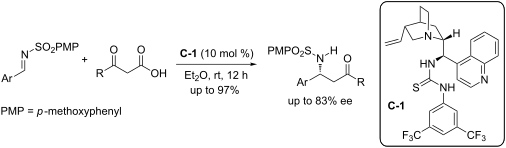
- ketones are an important class of building blocks for the synthesis of 1,3-amino alcohols [1][2], 1,3-amino acids [3] and other bioactive nature products [4][5][6]. Given their synthetic significance, methods for the asymmetric synthesis of β-amino ketones have been extensively investigated over the past


Recyclable fluorous cinchona alkaloid ester as a chiral promoter for asymmetric fluorination of β-ketoesters
Beilstein J. Org. Chem. 2012, 8, 1233–1240, doi:10.3762/bjoc.8.138
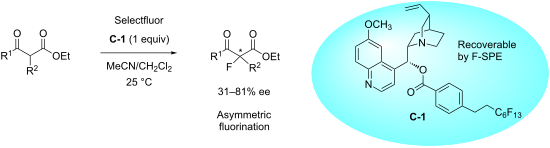
- cinchona alkaloids for catalytic Diels–Alder reactions [23][24]. Introduced in this paper is a new fluorous cinchona alkaloid ester for flourination of β-ketoesters. It is part of our recent effort on the development of recyclable fluorous reagents and organocatalysts for asymmetric synthesis [25][26][27
- ]. Results and Discussion Cinchona alkaloids and their derivatives have been well-explored in asymmetric synthesis [28]. We envisioned that the introduction of a fluorous tag could facilitate the recycling of cinchona alkaloids. The synthesis of fluorous quinine ester C-1 was accomplished by the reaction of


Similarity analysis, synthesis, and bioassay of antibacterial cyclic peptidomimetics
Beilstein J. Org. Chem. 2012, 8, 1146–1160, doi:10.3762/bjoc.8.128
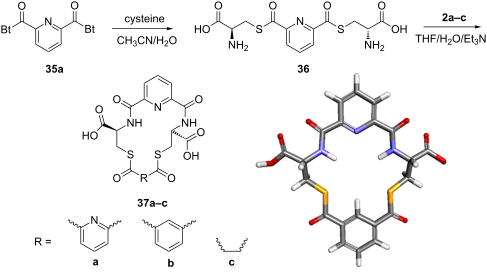
- and also as important structural elements. Pyridine scaffolds possess important antiviral [15], anti-inflammatory [16][17], anticonvulsant [18], antibacterial [19], and antitumor pharmacological activities [20][21]. Chiral macrocyclic ligands have found wide application in asymmetric synthesis and


Asymmetric total synthesis of smyrindiol employing an organocatalytic aldol key step
Beilstein J. Org. Chem. 2012, 8, 1112–1117, doi:10.3762/bjoc.8.123
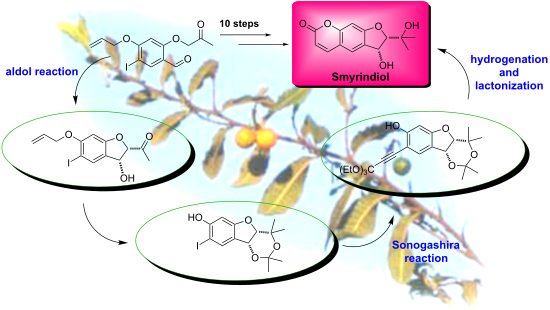
- Dieter Enders Jeanne Fronert Tom Bisschops Florian Boeck Institute of Organic Chemistry, RWTH Aachen University, Landoltweg 1, 52074 Aachen, Germany 10.3762/bjoc.8.123 Abstract The first organocatalytic asymmetric synthesis of smyrindiol, by using an (S)-proline catalyzed enantioselective
- reaction; asymmetric synthesis; organocatalysis; proline; smyrindiol; Introduction Furocoumarins are a group of compounds that are structurally derived from psoralen or angelicin (Figure 1) [1]. Naturally occurring furocoumarins are mainly found in plants of the Apiaceae and Rutaceae families [2] and are
- diastereoselectivity, with a slight preference (18% versus 15%) towards the anti-isomer xanthoarnol (Scheme 2).We now wish to present the first diastereo- and enantioselective, organocatalytic, asymmetric synthesis of smyrindiol. Results and Discussion Retrosynthetic analysis Previously the proline-catalyzed


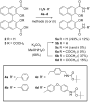
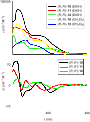
Synthesis and anion recognition properties of shape-persistent binaphthyl-containing chiral macrocyclic amides
Beilstein J. Org. Chem. 2012, 8, 967–976, doi:10.3762/bjoc.8.109
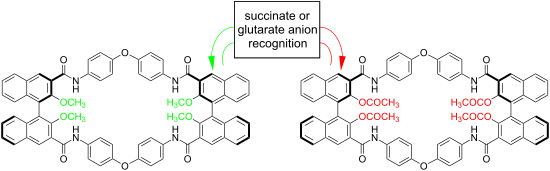
- information, not only in the field of asymmetric synthesis and catalysis, but also in materials science [19][20][21][22][23][24]. During the course of our ongoing efforts dealing with the use of binol-based synthons for the production of functional, oriented nanomaterials and chiroptical sensors [25][26][27





Carbohydrate-auxiliary assisted preparation of enantiopure 1,2-oxazine derivatives and aminopolyols
Beilstein J. Org. Chem. 2012, 8, 662–674, doi:10.3762/bjoc.8.74
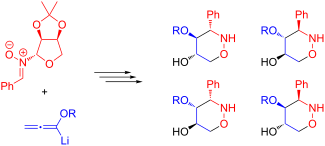
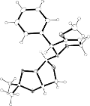
- known protocols employing terpene units [62] and carbohydrate-derived auxiliaries [63][64] for the asymmetric synthesis of the 1,2-oxazine derivatives. More recently, the use of (–)-menthol as a chiral auxiliary was presented for the separation of diastereomeric 6H-1,2-oxazines [65][66]. Subsequent




Stereoselective, nitro-Mannich/lactamisation cascades for the direct synthesis of heavily decorated 5-nitropiperidin-2-ones and related heterocycles
Beilstein J. Org. Chem. 2012, 8, 567–578, doi:10.3762/bjoc.8.64
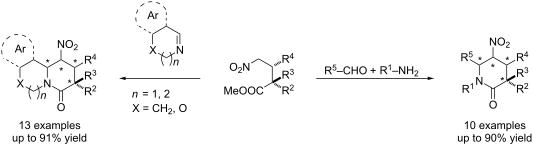
- of the necessary variations to the nitro-Mannich/lactamisation cascade having been tested, optimised and scoped, we looked at the possibility of combining it with a catalytic asymmetric synthesis of a particular Michael adduct, so as to construct a one-pot enantio- and diastereoselective four


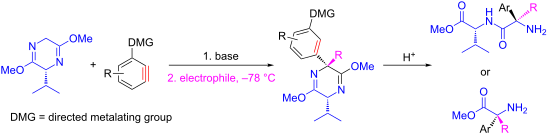
Asymmetric synthesis of quaternary aryl amino acid derivatives via a three-component aryne coupling reaction
Beilstein J. Org. Chem. 2011, 7, 1570–1576, doi:10.3762/bjoc.7.185




A new phenylethyl alkyl amide from the Ambrostoma quadriimpressum Motschulsky
Beilstein J. Org. Chem. 2011, 7, 1342–1346, doi:10.3762/bjoc.7.158

- chain was accomplished by the selective protection of the hydroxy groups and two-time implementation of the Wittig olefination reaction. Keywords: asymmetric synthesis; beetle; fatty acid amide; isolation; Introduction The leaf beetle Ambrostoma quadriimpressum Motschulsky (Coleoptera: Chrysomelidae


Carbamate-directed benzylic lithiation for the diastereo- and enantioselective synthesis of diaryl ether atropisomers
Beilstein J. Org. Chem. 2011, 7, 1327–1333, doi:10.3762/bjoc.7.156
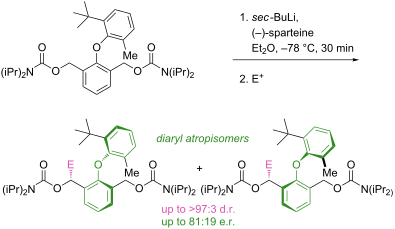
- relative acidity of benzylic protons makes enantioselective deprotonation in the style of Scheme 1, of one of a pair of enantiotopic aromatic methyl, alkoxymethyl or acyloxymethyl substitutents, a viable approach to the asymmetric synthesis of atropisomeric molecules. We have developed a number of methods
- ], sulfides and sulfones [13], and many of the methods we developed for their asymmetric synthesis employed dynamic resolution techniques under kinetic or thermodynamic control [6][11][13][14][15][16]. The mechanistic possibilities associated with dynamic resolution were initially elaborated by Beak for
- enantiomeric enrichment in the product 5 [22]. In this paper we report parallel studies on the attempted asymmetric synthesis of atropisomeric diaryl ethers in diastereomerically and/or enantiomerically enriched form by the directed deprotonation and electrophilic quench of benzylic positions ortho to a