Search results
Search for "blue" in Full Text gives 1011 result(s) in Beilstein Journal of Organic Chemistry. Showing first 200.
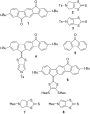
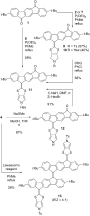
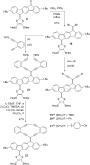
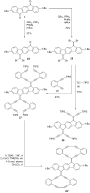
Multi-redox indenofluorene chromophores incorporating dithiafulvene donor and ene/enediyne acceptor units
Beilstein J. Org. Chem. 2024, 20, 59–73, doi:10.3762/bjoc.20.8
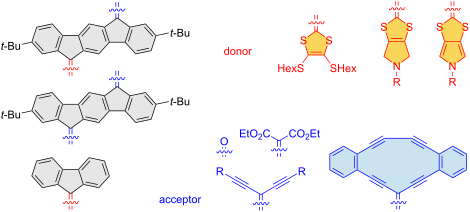
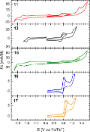
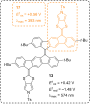
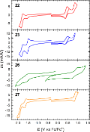
- rate: 0.1 V/s. All potentials are depicted against the Fc/Fc+ redox couple. Radical anion (left), dianion (middle), and radical cation (right) of compound 23; the radical anion has a 14πz-aromatic ring (highlighted in blue; only counting 2π-electrons of each triple bond, here defined as those in πz







Preparing a liquid crystalline dispersion of carbon nanotubes with high aspect ratio
Beilstein J. Org. Chem. 2024, 20, 52–58, doi:10.3762/bjoc.20.7
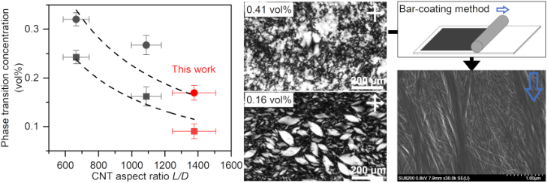
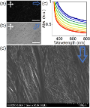
- polarizers (white double arrows). Scale bars are 400 µm. (c) Polarized optical absorption spectra with different angles ranging from 0° (red) to 90° (blue). The sear direction and polarizer are parallel at 0°. (d) SEM image of the DWCNT film. Blue outlined arrows indicate the shear direction of bar-coating
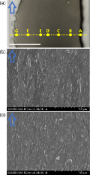
- . (a) Photograph of the DWCNT film. Thicknesses were measured at 7 spots along the yellow dashed line. Scale bar is 1 cm. SEM image at spot (b) A and (c) D. Blue outlined arrows indicate the shear direction of bar-coating. The list of the thickness at each spot in Figure 5a. Supporting Information


Using the phospha-Michael reaction for making phosphonium phenolate zwitterions
Beilstein J. Org. Chem. 2024, 20, 41–51, doi:10.3762/bjoc.20.6
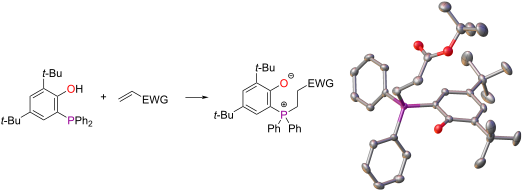
- Michael adduct of acrylamide, and 2h, the Michael adduct of 2-hydroxyethyl acrylate, show blue-shifted absorption maxima of 352 nm and 356 nm, respectively. Upon increasing the solvent polarity by using methanol instead of chloroform, a hypsochromic shift of the absorption maximum occurs (dotted lines in
- Figure 3). The blue shift is more pronounced for those zwitterions not bearing any hydrogen-bond-donating functional groups. Accordingly, it is plausible to explain the blue-shifted absorption maxima of 2b and 2h in chloroform by a more polar environment of the chromophore caused by the hydrogen-bond
- molecular structures of 2a (orange) and 2f (blue); c) bond length of the phenolate substituent for 2a, 2f and 2,4-di-tert-butyl-6-(triphenylphosphonium)phenolate [30]; d) resonance structures for the description of the bonding situation in 2a. Left: UV–vis spectra of 2a, 2b and 2d in chloroform (straight


1-Butyl-3-methylimidazolium tetrafluoroborate as suitable solvent for BF3: the case of alkyne hydration. Chemistry vs electrochemistry
Beilstein J. Org. Chem. 2023, 19, 1966–1981, doi:10.3762/bjoc.19.147
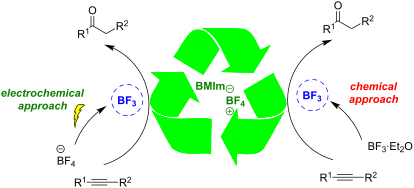
- BMIm-BF4 catalysed by BF3·Et2O (blue) and by electrogenerated BF3 (orange). Anodic oxidation of tetrafluoroborate anion. Optimization of the reaction conditions for hydration of diphenylacetylene (1a)a. Structure of the ILs used as solvent for the hydration reaction of diphenylacetylene (1a). Hydration


Studying specificity in protein–glycosaminoglycan recognition with umbrella sampling
Beilstein J. Org. Chem. 2023, 19, 1933–1946, doi:10.3762/bjoc.19.144
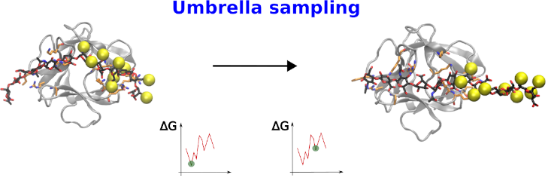
- ). Graphical representation of the ligands’ starting (in red, licorice) and final (in blue, licorice) positions in regard of the binding site of basic fibroblast factor (in yellow, new cartoon). Graphical representation of the ligand’s starting (in red, licorice) and final (in blue, licorice) poses in regard
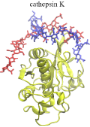
- of the binding site of acidic fibroblast factor (in yellow, new cartoon). Graphical representation of the ligand 4 starting (in red, licorice) and final (in blue, licorice) position in regard of binding site of cathepsin K (in yellow, new cartoon). Comparison of the last frame of the US simulation




Beyond n-dopants for organic semiconductors: use of bibenzo[d]imidazoles in UV-promoted dehalogenation reactions of organic halides
Beilstein J. Org. Chem. 2023, 19, 1912–1922, doi:10.3762/bjoc.19.142
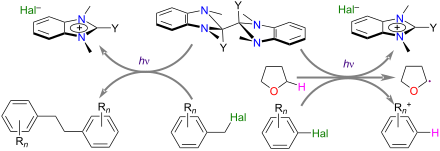
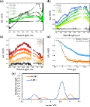
- longer-time spectra with Cyc-DMBI• having a blue-shifted absorption relative to N-DMBI•, consistent with the observed features arising from the monomeric radicals. Intersystem crossing (ISC) from the singlet to triplet excited state is also a possibility and TD-DFT calculations suggest that the dimer T1
- representative temporal evolution of % conversion (blue squares), % toluene yield (red diamonds), and % bibenzyl yield (black circles) during the dark dehalogenation reaction of benzyl bromide (BnBr) using (N-DMBI)2 in THF (these data were acquired using 3 mM BnBr and 1.5 mM of (N-DMBI)2. (b) Plot of [D2]0


Biphenylene-containing polycyclic conjugated compounds
Beilstein J. Org. Chem. 2023, 19, 1895–1911, doi:10.3762/bjoc.19.141
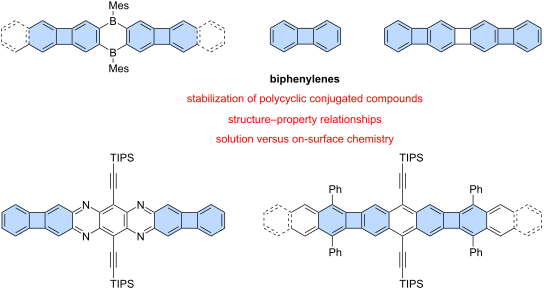
- % yields, respectively. When comparing compounds 25a and 25b, UV–vis and fluorescence studies (λmax = 500 nm, λem = 502 nm, Φem = 0.45 for 25a; λmax = 513 nm, λem = 517 nm, Φem = 0.26 for 25b; λmax = 442 nm, λem = 444 nm, Φem = 0.97 for 9,10-bis((triisopropylsilyl)ethynyl)anthracene – blue-colored) provide
- phenanthrene moiety exhibits a dihedral angle of approximately 22°. Upon comparing the UV–vis spectra of the angular structures 37 and 38, it was observed that after the Ir-catalyzed cycloaddition reaction, the λmax of product 38 considerably blue shifted in comparison to the λmax of 37. Xia et al. also
- demonstrated significant absorption and fluorescence characteristics. Among the synthesized compounds, linear derivative 62 exhibited the most intense absorption peak (λmax = 503 nm), whereas the other two compounds 63 and 64 possessed slightly blue-shifted absorption maxima at 487 nm and 501 nm, respectively



Anion–π catalysis on carbon allotropes
Beilstein J. Org. Chem. 2023, 19, 1881–1894, doi:10.3762/bjoc.19.140
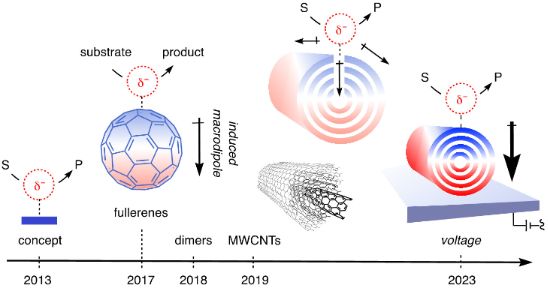
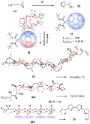
- International License, https://creativecommons.org/licenses/by/4.0). Bioinspired enolate addition chemistry to benchmark anion–π catalysts: Stabilization of “enol” intermediate II over “keto” intermediate I and nitronate transition state III by anion–π interactions (blue) selectively catalyzes the formation of




Aromatic systems with two and three pyridine-2,6-dicarbazolyl-3,5-dicarbonitrile fragments as electron-transporting organic semiconductors exhibiting long-lived emissions
Beilstein J. Org. Chem. 2023, 19, 1867–1880, doi:10.3762/bjoc.19.139
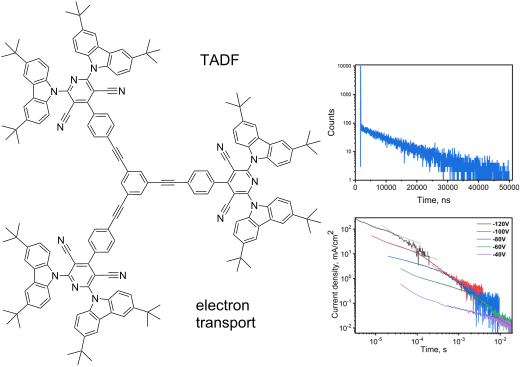
- electronic devices including OLEDs. Thus, extensive search for organic dyes exhibiting E-type fluorescence (thermally activated delayed fluorescence (TADF)) is booming [1][2][3]. The majority of research results are protected by an impressive amount of patent applications. The first example of a blue TADF
- 10 000 cd m−2, electroluminescence ranging from blue to yellow, maximum current of 15 cd/A and higher EQE than 7%. Pyridine-3,5-dicarbonitrile-based TADF materials exhibit different visible light emission spectra (Figure 1). Recently, Chen and Lu reported two new orange-red/red TADF emitters composed
- NMR spectra. Funding This work was supported by the project of scientific co-operation program between Latvia, Lithuania, and Taiwan, "Synthesis and study of deep-blue TTF fluorescent emitters to exceed theoretical OLED external quantum efficiency reaching 15%" (grant LV-LT-TW/2023) and Research


Controlling the reactivity of La@C82 by reduction: reaction of the La@C82 anion with alkyl halide with high regioselectivity
Beilstein J. Org. Chem. 2023, 19, 1858–1866, doi:10.3762/bjoc.19.138
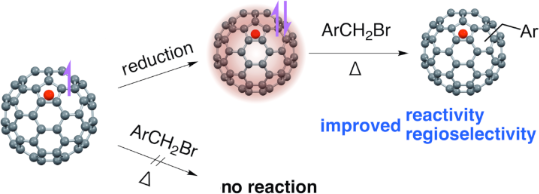
- ) an enlarged part view of blue region in (a). (c) Spin density of La@C2v-C82 as a function of its POAV values [34][35]. (d) Molecular structure of La@C2v-C82 and numbering carbon atoms. Reaction of the La@C2v-C82 anion with benzyl bromide derivatives. Charge densities and POAV values of carbon atoms


GlAIcomics: a deep neural network classifier for spectroscopy-augmented mass spectrometric glycans data
Beilstein J. Org. Chem. 2023, 19, 1825–1831, doi:10.3762/bjoc.19.134
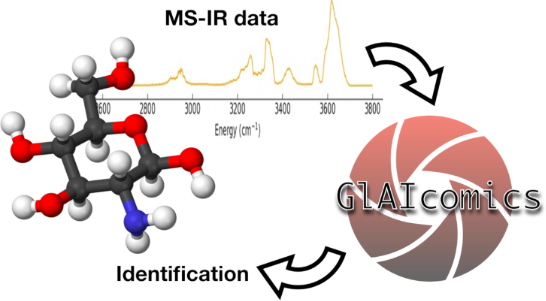
- ultimately be included in the algorithm for an optimal coverage of complex carbohydrates. (a) Fingerprint of an unknown monosaccharide. (b) Labelled reference spectra of monosaccharide standards. Typical experimental MS–IR spectra of the four categories of monosaccharides included in the first dataset. Blue


Recent advancements in iodide/phosphine-mediated photoredox radical reactions
Beilstein J. Org. Chem. 2023, 19, 1785–1803, doi:10.3762/bjoc.19.131
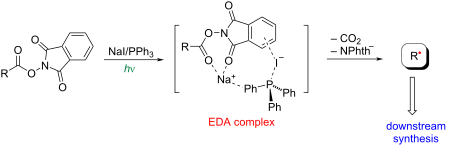
- smoothly delivered an electron donor–acceptor (EDA) complex II via coulombic interactions. Upon 456 nm blue LED light irradiation, the EDA complex II underwent a single electron transfer (SET) process, followed by subsequent decarboxylation to produce the alkyl radical intermediate A, accompanied by
- colleagues reported on the photocatalytic decarboxylative alkenylation reactions facilitated by cooperative NaI/PPh3 catalysis [9]. These conversions involved the coupling of 1,1-diarylethene/cinnamic acid derivatives (1, 2) with redox-active esters 3 (Scheme 3). Notably, the reactions were driven by blue
- approach. Importantly, the demonstration of the exceptional compatibility between blue LEDs and diazirine compounds also held the promise of inspiring further exploration and development of novel synthetic strategies in this field. Enamides are commonly found in medicinal compounds and physiologically




Selectivity control towards CO versus H2 for photo-driven CO2 reduction with a novel Co(II) catalyst
Beilstein J. Org. Chem. 2023, 19, 1766–1775, doi:10.3762/bjoc.19.129
- chosen solvent for photocatalysis. The absorption profile evokes the structured band of the free ligand BzQuTr [42], with two intense π–π* ligand-centered transitions at circa 319 nm and 330 nm (Figure 3). The pink solid dissolves as an intense blue DMA solution. Nevertheless, the d–d transitions
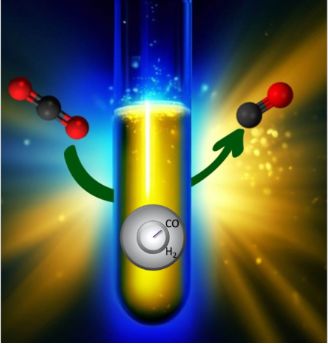
- ) ferrocene and (b) decamethylferrocene. Scan rate was 100 mV s−1. Time evolution of CO (blue squares) and H2 (red triangles) with the power functional fitting (blue and red curve, respectively). Data were collected for photocatalytic tests in 5 mL DMA/TEA 7:1, [PS] = 0.5 mM; [1] = 0.025 mM; [BIH] = 10 mM


Charge carrier transport in perylene-based and pyrene-based columnar liquid crystals
Beilstein J. Org. Chem. 2023, 19, 1755–1765, doi:10.3762/bjoc.19.128
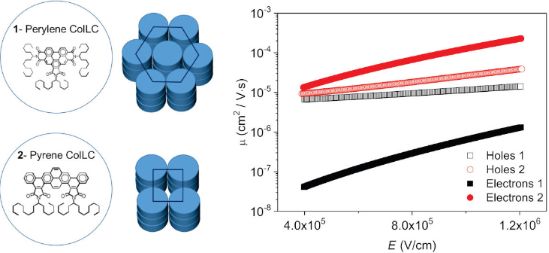
- . The enhanced and blue-shifted emission at the transition to the isotropic phase arise from the excited isolated molecules, where the exciton decays radiatively without diffusion. For the isolated molecules, the more localized π-orbital results in a higher energy emission state. The same effect was


Quinoxaline derivatives as attractive electron-transporting materials
Beilstein J. Org. Chem. 2023, 19, 1694–1712, doi:10.3762/bjoc.19.124
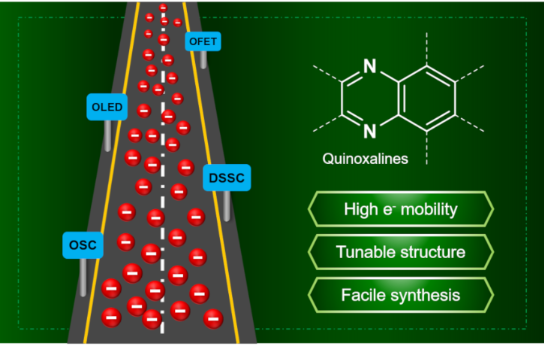
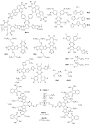
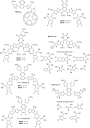
- , based on 6-(trifluoromethyl)quinoxaline or 6-cyanoquinoxaline acceptors, respectively. The small energy splitting values (0.03–0.04 eV) and long fluorescence lifetimes (5.0 μs) indicated efficient TADF processes. The utilization of these emitters in full-TADF white OLEDs, along with a sky-blue emitter




A deep-red fluorophore based on naphthothiadiazole as emitter with hybridized local and charge transfer and ambipolar transporting properties for electroluminescent devices
Beilstein J. Org. Chem. 2023, 19, 1664–1676, doi:10.3762/bjoc.19.122
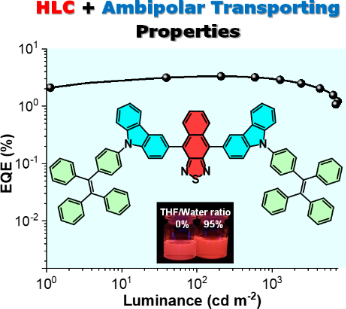
- PL emission and a weakened emission intensity with the increased solvent polarity [57][58]. As the fw was further raised to 95%, the PL emissions became more intense and were blue-shifted. This was attributable to the formation of nanoaggregates and suppression of the ICT process. This finding proves


Sulfur-containing spiroketals from Breynia disticha and evaluations of their anti-inflammatory effect
Beilstein J. Org. Chem. 2023, 19, 1604–1614, doi:10.3762/bjoc.19.117
- resulting dark blue crystals were dissolved in dimethyl sulfoxide, and the absorbance of the obtained solution was measured at 492 nm. ELISA The concentrations of IL-1β and IL-6 in the culture medium after 12 h of LPS treatment were measured using Quantikine ELISA kits for mouse IL-1β and IL-6 (R&D Systems
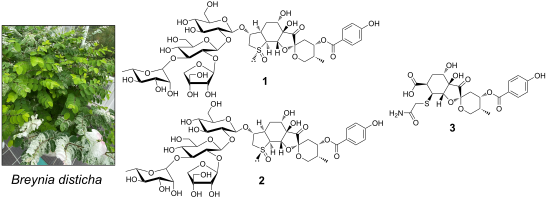
- comparisons between two groups. Dunnett’s test was used for multiple comparisons. P < 0.05 was considered statistically significant. Structures of compounds 1–7. Key HMBC (red arrows), H2BC (black bold lines), and COSY (blue bold lines) correlations in 1 and 2. a) Simplified model structures 1′ and 2′ for
- Boltzmann-weighted spectra computed for 2′ (red dashed line). Key HMBC (red arrows), H2BC (black bold lines), and COSY (blue bold lines) correlations in compounds 3 and 4. Comparison of experimental (black solid line) and calculated (red dashed line) ECD spectra of 3. Anti-inflammatory effects of isolated



Complexes of resorcin[4]arene with secondary amines: synthesis, solvent influence on “in-out” structure, and theoretical calculations of non-covalent interactions
Beilstein J. Org. Chem. 2023, 19, 1525–1536, doi:10.3762/bjoc.19.109
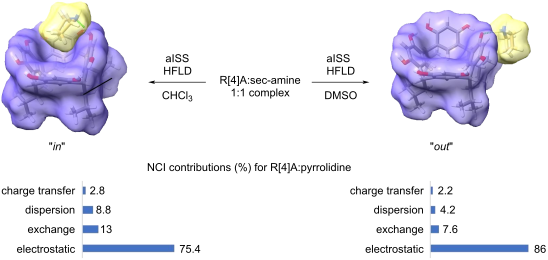
- highlighted in blue. Theoretically calculated (PBE0-D4/def2-mTZVPP/CPCM) structures of the R[4]A:pyrrolidine complex in DMSO and CHCl3. The lengths of hydrogen bonds between the R[4]A molecule and the pyrrolidine molecule are marked in green, while the lengths of hydrogen bonds in the upper ring of R[4]A
- stoichiometry between R[4]A and dipropylamine and diisopropylamine. The intermolecular hydrogen bonds between the amines and R[4]A molecules are marked in blue, while the intramolecular hydrogen bonds between the oxygen anion and the hydroxy group in R[4]A are shown in violet. pKa values of protons of hydroxy




Functional characterisation of twelve terpene synthases from actinobacteria
Beilstein J. Org. Chem. 2023, 19, 1386–1398, doi:10.3762/bjoc.19.100
- Phylogenetic analysis A phylogenetic tree was constructed from 4018 bacterial terpene synthase homologs (Figure 2). In this tree all branches of homologous enzymes for which at least one representative was functionally characterised are shown in blue, whereas the uncharacterised enzymes are shown in grey
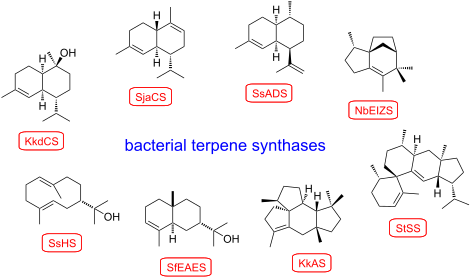
- are relevant arguments to continue the research on terpene synthases, despite the fact that already many enzymes of this class have been described. Terpenes produced by characterised terpene synthases. Phylogenetic tree constructed from the amino acid sequences of 4018 terpene synthase homologs. Blue




Consecutive four-component synthesis of trisubstituted 3-iodoindoles by an alkynylation–cyclization–iodination–alkylation sequence
Beilstein J. Org. Chem. 2023, 19, 1379–1385, doi:10.3762/bjoc.19.99
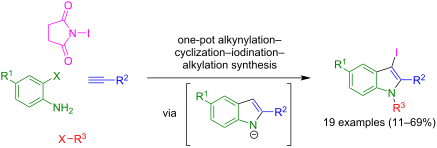
- electrophilic trapping of the intermediary indole anion with alkyl halides provides a concise one-pot synthesis of 3-iodoindoles. The latter are valuable substrates for Suzuki arylations, which are exemplified with the syntheses of four derivatives, some of them are blue emitters in solution and in the solid
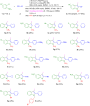
- -trisubstitued indoles 8 in good yield (Scheme 4). The 1,2,3-trisubstitued indoles 8 were unambiguously confirmed by 1H and 13C NMR spectroscopy, as well as by mass spectrometry and elemental analysis. Miura et al. could show that 1-alkyl-2,3-diarylindoles constitute a class of blue-emissive indole derivatives
- absorption maximum of indole derivative 8b appears at 309 nm with an absorption coefficient ε = 10700 M−1 cm−1 and the emission maximum is found at 423 nm with a Stokes shift of 8700 cm−1 (Figure 1A). Moreover, compound 8b emits intensively blue in both the solid state and solution (Figure 1B). Conclusion In




Organic thermally activated delayed fluorescence material with strained benzoguanidine donor
Beilstein J. Org. Chem. 2023, 19, 1289–1298, doi:10.3762/bjoc.19.95
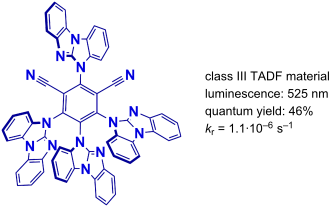
- to 60 K. However, only marginal increase of lifetime measured in the range of 60 to 16 K indicating a phosphorescence PL nature below 60 K. The charge transfer singlet (1CT) and local excited singlet (1LE), triplet (3LE) state energies were estimated from the onset values of the blue emission edge of


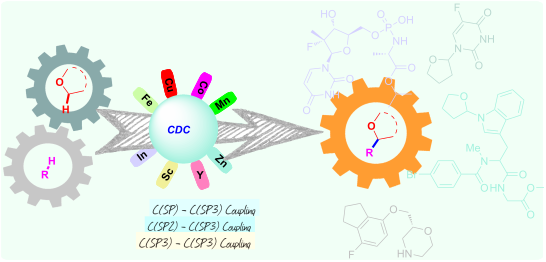
Non-noble metal-catalyzed cross-dehydrogenation coupling (CDC) involving ether α-C(sp3)–H to construct C–C bonds
Beilstein J. Org. Chem. 2023, 19, 1259–1288, doi:10.3762/bjoc.19.94
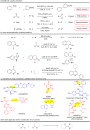
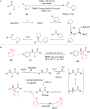
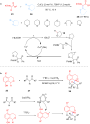
- source played a key role, with lower yields or no product obtained when the reaction was performed without water or under other light source conditions such as 19 W CFL or irradiation with blue or green LEDs. This method is applicable to various heteroatom-containing compounds such as quinolines
- heterocyclic aromatics with α-C–H bonds of ethers was achieved under the irradiation of a 34 W blue LED using rose bengal (RB) as the organic photoredox catalyst, TBHP as oxidizing agent, and DABCO as the base (Scheme 43c) [125]. The wide scope of substrates, aerobic conditions, and gram-scale suitability are





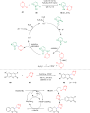

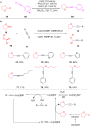


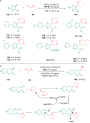


Exploring the role of halogen bonding in iodonium ylides: insights into unexpected reactivity and reaction control
Beilstein J. Org. Chem. 2023, 19, 1171–1190, doi:10.3762/bjoc.19.86
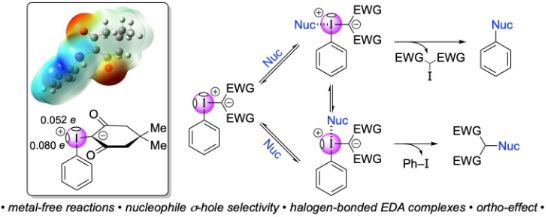
- events. Xuan, Li and co-workers further investigated the coupling between iodonium ylides and tertiary amines, and showed that this thermal reaction could instead be initiated by blue light photocatalysis (Scheme 7) [124]. Therein, they investigated the iodoarene motif of the ylide, and while ylide 31
- ). Control experiments showed that the reaction failed in the dark at room temperature, and they concluded that blue light activation of the initially-formed EDA complex (analogous to 36) promoted the onset of SET events. As this latter protocol also required two equivalents of ylide 39, the authors proposed
- had occurred, which was attributed to halogen bond complex formation. In 2019, the Murphy group reported the first transformation induced by blue LED irradiation of cyclic and acyclic iodonium ylides (e.g., 6) and alkenes, which generated cyclopropanes 40 in yields up to 96% (Scheme 8) [125]. UV–vis








New one-pot synthesis of 4-arylpyrazolo[3,4-b]pyridin-6-ones based on 5-aminopyrazoles and azlactones
Beilstein J. Org. Chem. 2023, 19, 1155–1160, doi:10.3762/bjoc.19.83
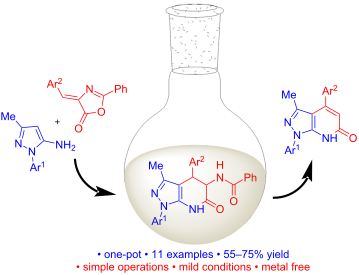
- -trimethoxyphenyl- (4e), 2-furyl- (4h) and 2-thienyl- (4i), the product yields are reduced to 55–60% (Scheme 2). All the compounds obtained are colorless crystalline substances. When dissolved, they produce colorless solutions exhibiting distinct fluorescent properties with blue emission when exposed to UV light


Selective and scalable oxygenation of heteroatoms using the elements of nature: air, water, and light
Beilstein J. Org. Chem. 2023, 19, 1146–1154, doi:10.3762/bjoc.19.82
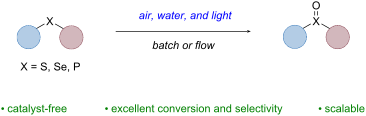
- = 365 nm, 96 W) at a distance of 0.5 cm from the reactor wall. In contrary with what has been reported previously for the catalyst-free oxidation under blue light irradiation [28], the reaction occurs also using water as the solvent (Table 1, entry 2). Running the reaction without adding extra water