


Search results
Search for "carbohydrates" in Full Text gives 202 result(s) in Beilstein Journal of Organic Chemistry. Showing first 200.
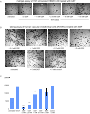
An easily accessible sulfated saccharide mimetic inhibits in vitro human tumor cell adhesion and angiogenesis of vascular endothelial cells
Beilstein J. Org. Chem. 2012, 8, 787–803, doi:10.3762/bjoc.8.89
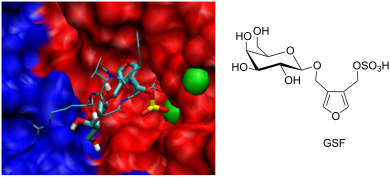
- (hydroxymethyl)furan and benzoylated galactose imidate, is nontoxic and antagonizes cell physiological processes in vitro that are important for the dissemination and growth of tumor cells in vivo. Keywords: angiogenesis; biomimetic synthesis; carbohydrates; in silico blind docking; melanoma cells
- -adhesive properties showed that 3,4-bis{[(β-D-galactopyranosyl)oxy]methyl}furan (BGF) could inhibit the adhesion of murine B16F10 melanoma cells to several ECM-proteins [15]. Probably, more important than uncharged saccharides are carbohydrates that contain acidic residues, such as sialic acids or sulfated


Sonogashira–Hagihara reactions of halogenated glycals
Beilstein J. Org. Chem. 2012, 8, 675–682, doi:10.3762/bjoc.8.75
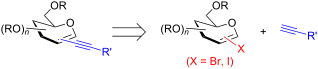
- substituent in position 2. Keywords: C-glycosides; enyne; glycals; reductive/oxidative refunctionalization; Sonogashira–Hagihara reaction; Introduction Carbohydrates are key players in a plethora of biological processes, such as cell-development, metastasis, cell–cell aggregation and viral infection [1][2


Carbohydrate-auxiliary assisted preparation of enantiopure 1,2-oxazine derivatives and aminopolyols
Beilstein J. Org. Chem. 2012, 8, 662–674, doi:10.3762/bjoc.8.74
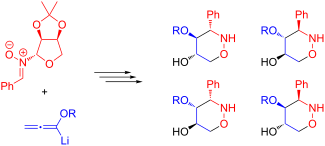
- samarium diiodide leading to enantiopure acyclic aminopolyols. We also report on our attempts to convert these compounds into enantiopure hydroxylated pyrrolidine derivatives. Keywords: aminopolyols; carbohydrates; chiral auxiliaries; lithiated alkoxyallenes; 1,2-oxazines; pyrroles; pyrrolidines; samarium
- diastereoselectivity [9]. We previously reported on the unusually diverse synthetic potential of carbohydrate-derived 1,2-oxazines allowing the smooth and flexible preparation of various highly functionalised compounds, including de novo syntheses of carbohydrates and their mimetics, as well as N-heterocycles [10][11




2-Allylphenyl glycosides as complementary building blocks for oligosaccharide and glycoconjugate synthesis
Beilstein J. Org. Chem. 2012, 8, 597–605, doi:10.3762/bjoc.8.66
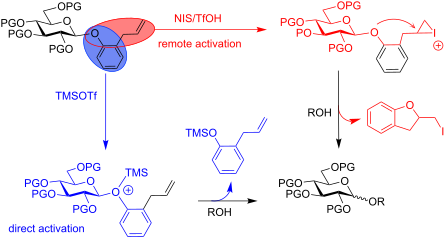
- efficient oligosaccharide assembly. Keywords: carbohydrates; glycosylation; leaving group; oligosaccharides; orthogonal strategy; selective activation; Introduction Current knowledge about the key roles of carbohydrates is still limited. However, thanks to the explosive growth of the field of glycobiology
- in recent years, we have already learned that carbohydrates are involved in a broad range of vital biological processes (e.g., fertilization, anti-inflammation, immunoresponse, joint lubrication, antigenic determination) [1]. Carbohydrates are also involved in many harmful processes (e.g., bacterial


Synthesis of fluorinated maltose derivatives for monitoring protein interaction by 19F NMR
Beilstein J. Org. Chem. 2012, 8, 448–455, doi:10.3762/bjoc.8.51
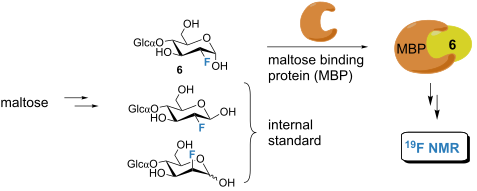
- carbohydrates to the maltose-binding protein, which were found to be in perfect agreement with published X-ray data. The results of the NMR competition experiments together with the established correlation between 19F chemical shift data and molecular interaction patterns, suggest valuable applications for


Synthesis of heteroglycoclusters by using orthogonal chemoselective ligations
Beilstein J. Org. Chem. 2012, 8, 421–427, doi:10.3762/bjoc.8.47
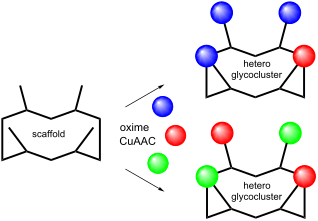
- combinations of carbohydrates. By using both oxime ligation and copper(I)-catalyzed alkyne–azide cycloaddition, two series of compounds bearing binary combinations of αMan, αFuc or βLac in an overall tetravalent presentation, and either 2:2 or 3:1 relative proportions, have been prepared. Keywords
- : chemoselective ligation; click chemistry; cyclopeptide; heteroglycocluster; oxime; Introduction Multivalent interactions between carbohydrates and proteins play key roles in diverse biological events, including fertilization, cell–cell communication, host–pathogen interactions, immune response and cancer
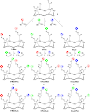
- reacted with aminooxy glycosyls 1–3a and propargyl glycosides 1–3b. Twelve novel oxime and triazole linked-heteroglycoclusters displaying well-defined distributions and combinations of carbohydrates were thus obtained in excellent yields and purity. Experimental Standard procedures for the



Synthesis in the glycosciences II
Beilstein J. Org. Chem. 2012, 8, 411–412, doi:10.3762/bjoc.8.45
- . Expertise and rational planning have allowed the utilization of carbohydrates in stereoselective synthesis and the employment of enzymes in oligosaccharide synthesis. Analytical and pharmacological knowhow have disclosed polysaccharide and glycoconjugate structures, their biological effects and their
- biology in living systems. For this endeavour, chemical, biological and physical concepts and experiments have been equally important and equally challenging. In addition computer-aided methods, such as molecular dynamics studies of carbohydrates and glycoconjugates, have added valuable information about
Amine-linked diglycosides: Synthesis facilitated by the enhanced reactivity of allylic electrophiles, and glycosidase inhibition assays
Beilstein J. Org. Chem. 2011, 7, 1115–1123, doi:10.3762/bjoc.7.128

- ]. Reports of Mitsunobu reactions of secondary alcohols in fully functionalized carbohydrates are much scarcer. Rather, reports exist of failed attempts at Mitsunobu reactions of secondary carbohydrate alcohols [23] or the selective functionalisation of primary carbohydrate alcohols in the presence of
- secondary alcohols [24]. Some examples of successful reactions do exist, though, for oxygen, nitrogen and sulfur nucleophiles [25][26][27][28]. Unsaturated carbohydrates, similar to those described here, have also been reported to undergo Mitsunobu reaction with simple, non-carbohydrate nucleophiles [29][30




Metathesis access to monocyclic iminocyclitol-based therapeutic agents
Beilstein J. Org. Chem. 2011, 7, 699–716, doi:10.3762/bjoc.7.81

- the synthesis of naturally occurring iminocyclitols and in their structural modification. Consequently, efficient and stereoselective synthetic routes have been developed, often starting from an inexpensive chiral-pool of precursors, in particular carbohydrates that share structural features with
- ) (129) a natural iminosugar present in buckwheat (widely used in traditional recipes) is an efficient agent for preventing sharp blood glucose peaks after the intake of refined carbohydrates and for positively influencing intestinal microbiota by favouring adhesion of probiotics. It is supposed that


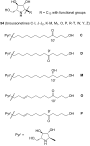

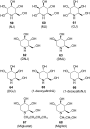


Synthesis of glycoconjugate fragments of mycobacterial phosphatidylinositol mannosides and lipomannan
Beilstein J. Org. Chem. 2011, 7, 369–377, doi:10.3762/bjoc.7.47

- recently refined by the Kováč group [49] for the attachment of amine-derivatized carbohydrates to carrier proteins has particular advantages over other linker methodologies as diethyl squarate is commerically available and exhibits good selectivity in each coupling step, with the intermediate squaramate


Synthesis and self-assembly of 1-deoxyglucose derivatives as low molecular weight organogelators
Beilstein J. Org. Chem. 2011, 7, 234–242, doi:10.3762/bjoc.7.31
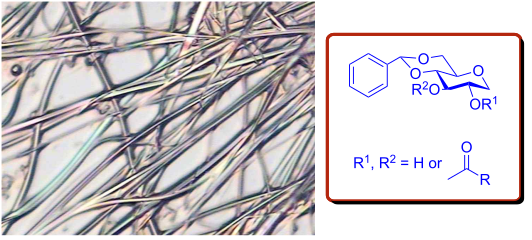
- into 3-dimensional networks. The resulting gels may find applications as soft materials for drug delivery, enzyme immobilization, scaffolds for tissue engineering, etc. [10][11][12][13][14]. The structures of LMWGs span a diverse range; carbohydrates have frequently been used in the synthesis of LMWGs


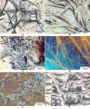


Carbasugar analogues of galactofuranosides: α-O-linked derivatives
Beilstein J. Org. Chem. 2010, 6, 1127–1131, doi:10.3762/bjoc.6.129

- major factor in explaining the generally low reactivity of carbohydrates (at non-anomeric positions) in SN2 reactions. Carbapyranose 1,2-epoxides with α-gluco 3 and α-galacto configurations did not give such good results. With amine nucleophiles, attack was often unregioselective [15]: attack at C1


Preparation of aminoethyl glycosides for glycoconjugation
Beilstein J. Org. Chem. 2010, 6, 699–703, doi:10.3762/bjoc.6.81

- aminoethyl glycosides of cell-surface carbohydrates, which are important intermediates for glycoarray synthesis, is described. A set of protocols was developed which provide these intermediates, in a short number of steps, from commercially available starting materials. Keywords: aminoethyl glycosides
- ; glycoarrays; glycoconjugation; glycosylation; Introduction The chemical conjugation of carbohydrates through the anomeric centre to biomolecules such as peptides, proteins, lipids, metabolites and to array surfaces is an important synthetic challenge [1][2][3][4][5]. A diverse range of linkers and spacers


Addition of lithiated enol ethers to nitrones and subsequent Lewis acid induced cyclizations to enantiopure 3,6-dihydro-2H-pyrans – an approach to carbohydrate mimetics
Beilstein J. Org. Chem. 2010, 6, No. 75, doi:10.3762/bjoc.6.75

- ketones. This strategy allowed a simple access to unusual carbohydrates with C2-branched 4-amino sugar units and related carbohydrate mimetics [3][4][5][6][7]. Moreover, pursuing a similar strategy, we described the stereocontrolled preparation of 3,6-dihydro-2H-pyrans D as precursors for the synthesis of
- with high structural similarities to carbohydrates. Reduction of the carbonyl group of 8 by NaBH4 followed by hydrogenolysis of the N,O- and N-benzyl-bonds furnished aminopyran 24 (Scheme 12). Similarly, nitrone 21 was smoothly converted to the diastereomeric aminopyran 26 by analogous reductive


New amphiphilic glycopolymers by click functionalization of random copolymers – application to the colloidal stabilisation of polymer nanoparticles and their interaction with concanavalin A lectin
Beilstein J. Org. Chem. 2010, 6, No. 58, doi:10.3762/bjoc.6.58
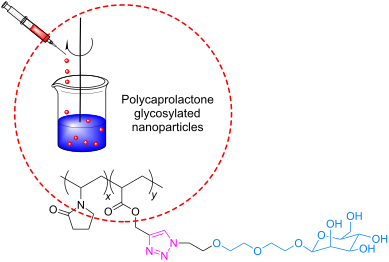
- enough to allow scale-up. Thus, we elected to use the simplest carbohydrates, i.e., those which are easy to prepare and easy to handle, e.g., the peracetylated monosaccharide 1 [16]. Although other derivatives, such as the 2,3,4,6-tetra-O-acetyl-1-O-trichloroacetimidoyl mannose might give rise to better
- flocculation or precipitation, whereas the suspension should remain unchanged on the addition of “naked” nanoparticles (without any carbohydrate on their surface) or nanoparticles covered with non specific carbohydrates. This increase in size can be observed either by the naked eye, turbidity or fluorescence
- copolymer in order to obtain glycosylated polycaprolactone nanoparticles stable over a long period of storage. The carbohydrates covalently bound to the copolymers are accessible at the surface of the nanoparticles and are available for molecular recognition. The recognition of α-D-mannose at the surface of


Molecular recognition of organic ammonium ions in solution using synthetic receptors
Beilstein J. Org. Chem. 2010, 6, No. 32, doi:10.3762/bjoc.6.32




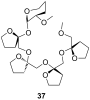


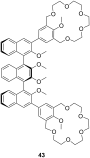


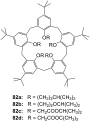


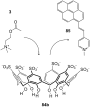


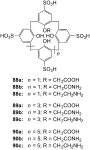


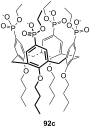


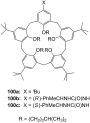


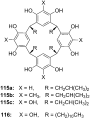
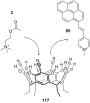


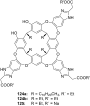
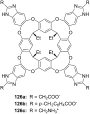


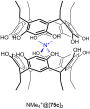


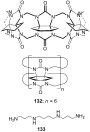


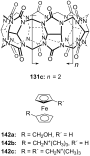


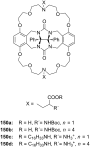
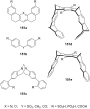












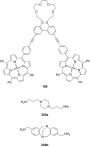


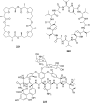


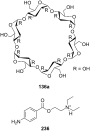
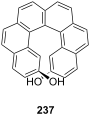




Bioorthogonal metabolic glycoengineering of human larynx carcinoma (HEp-2) cells targeting sialic acid
Beilstein J. Org. Chem. 2010, 6, No. 24, doi:10.3762/bjoc.6.24
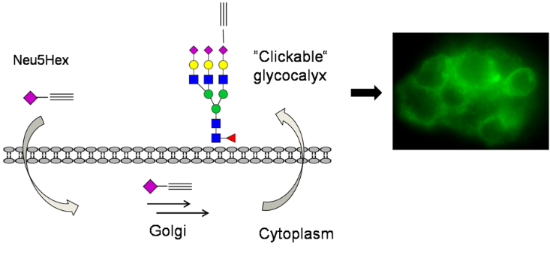
- , functionalized carbohydrates both in vitro and in vivo [2][3]. Acetylated monosaccharides, for example 2-azidoacetylamino-2-deoxy-1,3,4,6-tetraacetyl-β-D-glucopyranoside (Ac4GlcNAz, 16), are believed to permeate the cell membrane by diffusion processes [4]. Recently, it was reported that neuraminic acid
- through the membrane of eukaryotic cells [3]. Neu5Hex (3) is a new substrate for metabolic glycoengineering which is proposed to be incorporated into the cell surface glycan structures. It was shown that carbohydrates in growth media contribute to alterations in glycosylation patterns in human cells [8
- -functionalized carbohydrates in the glycocalyx are specifically addressed by complementary functionalized fluorescence agents 9-[2-carboxy-4-[(2-propyn-1-ylamino)carbonyl]phenyl]-3,6-bis(dimethylamino)xanthylium, alkynylated TAMRA or benzoic acid 2-[6-(3-azidopropanyloxy)-3-oxo-3H-xanthen-9-yl] 3-azidopropanyl




Bis(oxazolines) based on glycopyranosides – steric, configurational and conformational influences on stereoselectivity
Beilstein J. Org. Chem. 2010, 6, No. 23, doi:10.3762/bjoc.6.23
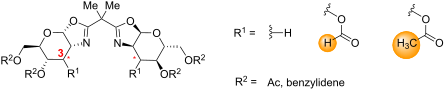
- revealed strong steric and configurational effects of position 3 on asymmetric induction, further dramatic effects of the pyranose conformation were also observed. Keywords: asymmetric synthesis; carbohydrates; copper; cyclopropanation; ligand design; Introduction The design and optimisation of chiral
- ligands for metal catalysed transformations is of crucial importance for stereoselective synthesis and is therefore an active field of research. In this context, carbohydrates are interesting, even if comparatively rarely used as starting materials for the preparation of new chiral ligand structures


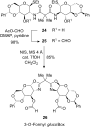

(Pseudo)amide-linked oligosaccharide mimetics: molecular recognition and supramolecular properties
Beilstein J. Org. Chem. 2010, 6, No. 20, doi:10.3762/bjoc.6.20
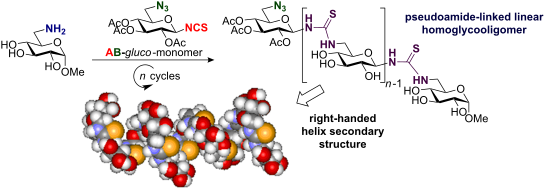
- carbohydrates. Such oligosaccharide mimetics are potential therapeutic agents against HIV and other infections, against cancer, diabetes and other metabolic diseases. An efficient strategy to access this type of compounds is the replacement of the glycosidic linkage by amide or pseudoamide functions such as
- ; glycomimetics; pseudooligosaccharides; spaced sugars; Review Among the major classes of biomolecules, carbohydrates are characterized by nearly unlimited structural diversity. Monosaccharide units can combine to produce oligosaccharides in a number of permutations that increases rapidly with the number of
- proteins [5][6][7], cell–cell communication [8] and immune response to pathogens [7][9][10][11]. However, the application of oligosaccharides as potential therapeutic agents has its main drawback in the low instability of natural carbohydrates in biological systems. In addition, solid phase synthesis of



Benzyne arylation of oxathiane glycosyl donors
Beilstein J. Org. Chem. 2010, 6, No. 19, doi:10.3762/bjoc.6.19
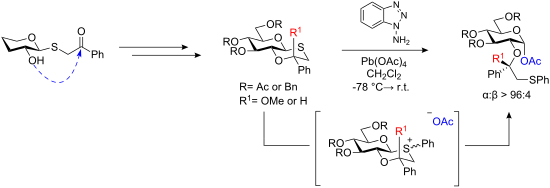
- ; stereoselective glycosylations; Introduction Carbohydrates play important roles in many biological processes including tumour metastasis [1][2], bacterial and viral recognition [3][4][5], and the immunological response [6][7][8]. In order to obtain pure samples of oligosaccharides for biological studies


Synthesis in the glycosciences
Beilstein J. Org. Chem. 2010, 6, No. 16, doi:10.3762/bjoc.6.16
- Thisbe K. Lindhorst Otto Diels Institute of Organic Chemistry, Christiana Albertina University of Kiel, Otto-Hahn-Platz 3/4, 24098 Kiel, Germany 10.3762/bjoc.6.16 All cells are coated in carbohydrates and glycoconjugates. Today, after decades where sugars were regarded mainly as a means of energy
- storage or simply as molecular material, it is now known that carbohydrates are deeply involved in cellular communication. This awareness of the biological importance of carbohydrates has led to glycosciences becoming an intriguing and fascinating field of interdisciplinary research. However, the
Recognition properties of receptors consisting of imidazole and indole recognition units towards carbohydrates
Beilstein J. Org. Chem. 2010, 6, No. 9, doi:10.3762/bjoc.6.9
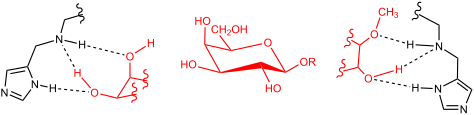
- units as the entities used in nature, and 2-aminopyridine group as a heterocyclic analogue of the asparagine/glutamine primary amide side chain, were prepared and their binding properties towards carbohydrates were studied. The design of these receptors was inspired by the binding motifs observed in the
- crystal structures of protein–carbohydrate complexes. 1H NMR spectroscopic titrations in competitive and non-competitive media as well as binding studies in two-phase systems, such as dissolution of solid carbohydrates in apolar media, revealed both highly effective recognition of neutral carbohydrates
- selected carbohydrates are described and compared with those of the previously described receptors. Keywords: carbohydrates; hydrogen bonds; molecular recognition; receptors; supramolecular chemistry; Introduction Analysis of the binding motifs found in the crystal structures of protein–carbohydrate


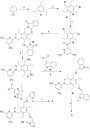


Synthesis of chiral cyclohexanes and carbasugars by 6-exo-dig radical cyclisation reactions
Beilstein J. Org. Chem. 2008, 4, No. 43, doi:10.3762/bjoc.4.43

- of carbohydrates as precursors for highly functionalised carbocyclic rings systems has found wide utility in organic synthesis [1][2][3][4][5][6][7][8][9][10][11]. In particular there is a large amount of literature devoted to the synthesis of cyclopentanes [12][13] that employs a 5-exo-dig ring





Trifluoromethyl ethers – synthesis and properties of an unusual substituent
Beilstein J. Org. Chem. 2008, 4, No. 13, doi:10.3762/bjoc.4.13

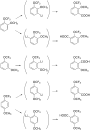
- hypofluorite (FOCF3) to olefins [38]. The introduction of the trifluoromethoxy substituent into carbohydrates was realized using tris(dimethylamino)sulfonium trifluoromethoxide (TASOCF3) as OCF3-transfer reagent [39]. This compound can be prepared by reaction of carbonyl fluoride with tris(dimethylamino
- )sulfonium difluorotrimethylsilicate in anhydrous THF at −75 °C (Scheme 9) [40]. The trifluoromethoxide anion is a relatively poor nucleophile. However, when reacted with primary triflate esters of carbohydrates, the anion displaced the triflate under mild conditions. However, although aromatic




Investigation of acetyl migrations in furanosides
Beilstein J. Org. Chem. 2006, 2, No. 14, doi:10.1186/1860-5397-2-14
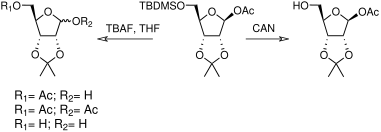
- ribosides, acyl migration could be prevented when desilylation was catalysed by cerium ammonium nitrate. Introduction Over the years, a number of methods aimed at achieving chemoselective acylation of carbohydrates have been developed.[1][2][3] In addition to the challenges encountered in the selective
- intermolecular trans-esterification was also taking place. To identify the reaction conditions and the structural features of the acetylated furanosides facilitating acetyl migration upon protecting group manipulation, the various protected carbohydrates (1–5) were treated with tetrabutyl ammonium fluoride (TBAF





