Search results
Search for "coupling reactions" in Full Text gives 524 result(s) in Beilstein Journal of Organic Chemistry. Showing first 200.
Controlling alkyne reactivity by means of a copper-catalyzed radical reaction system for the synthesis of functionalized quaternary carbons
Beilstein J. Org. Chem. 2020, 16, 502–508, doi:10.3762/bjoc.16.45
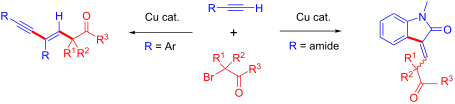
- related coupling reactions [2][3][4]. Although there are many reports on alkyne transformations, one recent development in this area has been the reaction of alkynes with tertiary alkyl electrophiles to produce functionalized quaternary carbon atoms via addition [5][6][7][8][9][10] or coupling [11][12][13


KOt-Bu-promoted selective ring-opening N-alkylation of 2-oxazolines to access 2-aminoethyl acetates and N-substituted thiazolidinones
Beilstein J. Org. Chem. 2020, 16, 492–501, doi:10.3762/bjoc.16.44
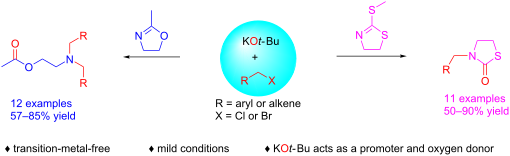
- to synthesize thiazolidinone derivatives through a Barton–McCombie pathway in 2015 [17] (Scheme 1b). Recently, potassium tert-butoxide has been shown to be an efficient promoter for C–C-bond formation reactions [18][19][20][21][22]. However, only few reports described C–N-bond cross-coupling
- reactions using potassium tert-butoxide as promoter. Wu developed an efficient protocol for the KOt-Bu-promoted synthesis of 1-aminoisoquinolines from 2-methylbenzonitriles and benzonitriles [23], and the carbonylative cyclization of propargylic amines with selenium under CO gas-free conditions [24]. Based


Synthesis of 4-amino-5-fluoropyrimidines and 5-amino-4-fluoropyrazoles from a β-fluoroenolate salt
Beilstein J. Org. Chem. 2020, 16, 445–450, doi:10.3762/bjoc.16.41

- obtained in excellent yields of 93% and 97%, respectively, and represent potential substrates for subsequent cross-coupling reactions, which would provide structurally more complex products. Amidines with heterocyclic substituents were also evaluated. While the pyridine-substituted derivative 10o furnished


Room-temperature Pd/Ag direct arylation enabled by a radical pathway
Beilstein J. Org. Chem. 2020, 16, 384–390, doi:10.3762/bjoc.16.36
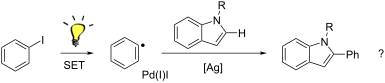
- groups. 2-Substituted benzoic acids in general, and 2-nitrobenzoic acid in particular, are reactive substrates in decarboxylative coupling reactions [16][17]. However, more forceful conditions are typically required than used in the room-temperature system. Indeed, a very similar Pd/Ag system has been




Copper-promoted/copper-catalyzed trifluoromethylselenolation reactions
Beilstein J. Org. Chem. 2020, 16, 305–316, doi:10.3762/bjoc.16.30

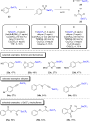
- could be trifluoromethylselenolated that way (Scheme 2) [13][15][16][17]. Mechanistically, the authors postulated the involvement of copper(I)/(III) oxidation states. Oxidative cross-coupling reactions between terminal alkynes using the [(bpy)CuSeCF3]2 complex were also undertaken by the same group to
- yields, as can be seen in Scheme 12 [35]. Due to the limitations of ClSeCF3 as an electrophilic reagent for trifluoromethylselenolations in cross-coupling reactions, our group developed a new bench-stable reagent, namely trifluoromethyltolueneselenosulfonate (TsSeCF3) [36
- already demonstrated its versatility in numerous processes. Nevertheless, its use in oxidative cross-coupling reactions requires stoichiometric amounts of the oxidant, which limits the attractiveness of the method in some cases. Finally, the newly developed electrophilic reagent TsSeCF3 also demonstrated



Recent developments in photoredox-catalyzed remote ortho and para C–H bond functionalizations
Beilstein J. Org. Chem. 2020, 16, 248–280, doi:10.3762/bjoc.16.26
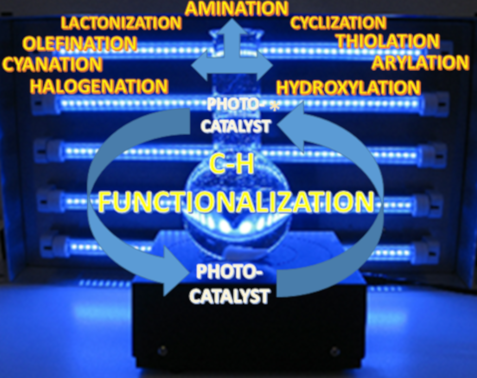
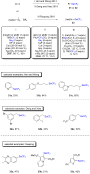
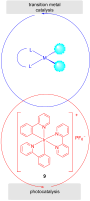
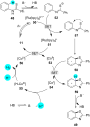
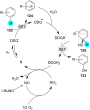
- undergoing synthetic transformations regio- and enantioselectively (Figure 5) [53][54]. With the aid of photoredox catalysis, the active radical moieties can easily undergo nonclassical nucleophilic direct coupling reactions. Also, there is a possibility of intermediate catalytic moiety excitation via












Allylic cross-coupling using aromatic aldehydes as α-alkoxyalkyl anions
Beilstein J. Org. Chem. 2020, 16, 185–189, doi:10.3762/bjoc.16.21

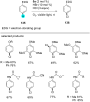
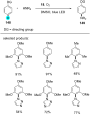
- summary, we developed an umpolung strategy for catalytically formed α-alkoxyalkyl anions from aromatic aldehydes for the use in allylic cross-coupling reactions. The synergistic palladium/copper-catalyzed reaction of aromatic aldehydes, allylic carbonates, and a silylboronate delivered the homoallylic


Starazo triple switches – synthesis of unsymmetrical 1,3,5-tris(arylazo)benzenes
Beilstein J. Org. Chem. 2020, 16, 22–31, doi:10.3762/bjoc.16.4
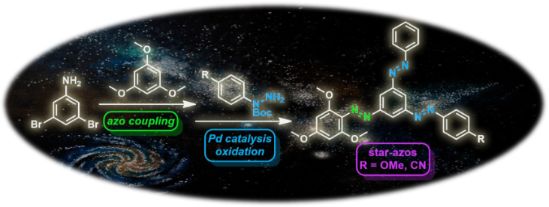
- Baeyer–Mills reactions and the other based on Pd-catalyzed coupling reactions of arylhydrazides and aryl halides, followed by oxidation, were investigated. The Pd-catalyzed route efficiently led to the target compounds, unsymmetrical tris(arylazo)benzenes. These triple switches were preliminarily
- example of such compounds are 1,3,5-tris(arylazo)benzenes – ‘starazos’ – introduced by Cho and co-workers in 2004 (Figure 1) [10]. Despite their successful synthesis, using Pd-catalyzed coupling reactions of aryl halides and arylhydrazides [11] followed by Cu(I)-mediated oxidation, the photochemical
- tris(arylazo)benzenes 3 relied on Pd-catalyzed coupling reactions and Cu(I) oxidation, as presented by Cho and co-workers (Scheme 2) [10]. This route offers the advantage that the preparation of a wide variety of N-(tert-butoxycarbonyl)phenylhydrazides has already been reported [17][18][19


Palladium-catalyzed Sonogashira coupling reactions in γ-valerolactone-based ionic liquids
Beilstein J. Org. Chem. 2019, 15, 2907–2913, doi:10.3762/bjoc.15.284
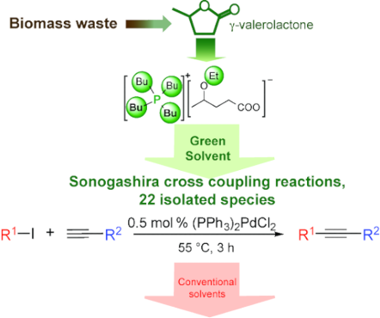
- -ethoxyvalerate as a partially bio-based solvent can be utilized as alternative reaction medium for copper- and auxiliary base-free Pd-catalyzed Sonogashira coupling reactions of aryl iodides and functionalized acetylenes under mild conditions. Twenty-two cross-coupling products were isolated with good to
- synthesis of a wide range of functionalized organic molecules from laboratory to industrial scale [1][2][3]. Among these tools, the Pd-catalyzed coupling reactions have received substantial attention, due to the mild operation conditions, excellent functional group tolerance and chemoselectivity as well as
- important transformation. Herein we report a study on the palladium-catalyzed copper- and added base-free Sonogashira coupling reactions to synthesize various acetylenes in γ-valerolactone-based ionic liquids under mild conditions. Results and Discussion We recently demonstrated that copper-catalyzed


Palladium-catalyzed synthesis and nucleotide pyrophosphatase inhibition of benzo[4,5]furo[3,2-b]indoles
Beilstein J. Org. Chem. 2019, 15, 2830–2839, doi:10.3762/bjoc.15.276

- selected inhibitors on isozymes ENPP1 and ENPP3 modelled proteins were in accordance with in vitro experimental studies. Conclusion In conclusion, we have reported a convenient strategy for the preparation of benzo[4,5]furo[3,2-b]indoles based on Suzuki–Miyaura coupling reactions followed by Pd-catalyzed


Synthesis of aryl-substituted thieno[3,2-b]thiophene derivatives and their use for N,S-heterotetracene construction
Beilstein J. Org. Chem. 2019, 15, 2678–2683, doi:10.3762/bjoc.15.261

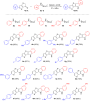
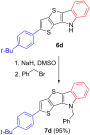
- effectively tune their physical characteristics and also reduce production costs since the routine synthesis of heteroacene structures involves cross-coupling reactions catalyzed by expensive transition metals [15]. Thus, in this paper, we would like to present an efficient metal-free synthesis of the aryl



Arylisoquinoline-derived organoboron dyes with a triaryl skeleton show dual fluorescence
Beilstein J. Org. Chem. 2019, 15, 2612–2622, doi:10.3762/bjoc.15.254
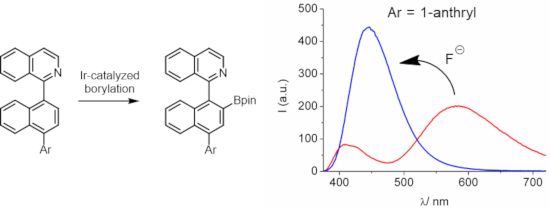
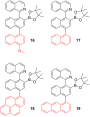
- -coupling reactions was planned. Starting from 1-bromo-4-methoxynaphthalene (1), the Pd-catalyzed Suzuki coupling reaction with commercial boronic acids afforded the naphthyl and pyrenyl derived methyl ethers 2 and 3 in 78% and 87% yield, respectively (Scheme 1). For the synthesis of the anthryl derivative



A new approach to silicon rhodamines by Suzuki–Miyaura coupling – scope and limitations
Beilstein J. Org. Chem. 2019, 15, 2569–2576, doi:10.3762/bjoc.15.250
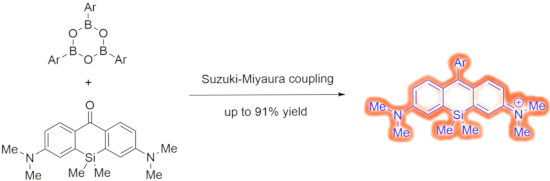
- 24c only in traces (Table 2, entry 3). Usage of the tert-butyl-protected boronobenzoic acid 25a, or its boroxine counterpart 25b, respectively, gave fluorophore 25c suitable for later coupling reactions in reasonable yields of 43% and 53%, depending on the catalyst used (Table 2, entries 4 and 5
- reactions). Conclusion Since just three literature examples are known to date in which Suzuki–Miyaura cross-coupling reactions gave access to silicon rhodamines in poor to moderate yields (Scheme 2), we wanted to improve these first valuable experimental results. In general, the amount of re-isolated
- conditions of triflate 21, derived from Si-xanthone 12, with boron species 18b, 19 and 20 (see Table 1). Coupling reactions of silicon xanthone 12 with different boron species (23b–30b, 31). Optimization of cross-coupling conditions of triflate 21, derived from Si-xanthone 12, with boron species 18b, 19 and


Chiral terpene auxiliaries V: Synthesis of new chiral γ-hydroxyphosphine oxides derived from α-pinene
Beilstein J. Org. Chem. 2019, 15, 2493–2499, doi:10.3762/bjoc.15.242

- with chlorophosphines, the reaction of metal phosphides with haloalkanes, and transition-metal-catalyzed cross-coupling reactions to form C–P bonds are the most widely used methods for the synthesis of phosphines [13][14]. Since phosphines are easily oxidized to phosphine oxides, the addition of


Sugar-derived oxazolone pseudotetrapeptide as γ-turn inducer and anion-selective transporter
Beilstein J. Org. Chem. 2019, 15, 2419–2427, doi:10.3762/bjoc.15.234
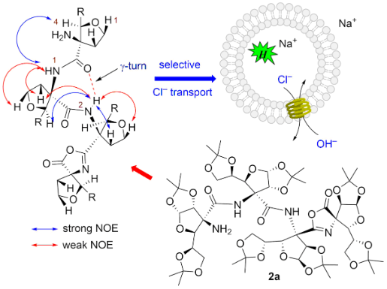
- , coupling reactions of 8/9 with different reagents (HATU, TBTU, PyBOP, EDC·HCl), under a variety of solvents (DMF, acetonitrile, dichloromethane) and reaction conditions (25–80 °C for 24 h) were unsuccessful. This could be due to the stable helical conformation of 8 and 9 in which reactive acid and amino


![[Graphic 2]](/bjoc/content/inline/1860-5397-15-234-i4.svg?max-width=637&scale=1.18182) lucigenin (A). Conce...
lucigenin (A). Conce...
Functionalization of 4-bromobenzo[c][2,7]naphthyridine via regioselective direct ring metalation. A novel approach to analogues of pyridoacridine alkaloids
Beilstein J. Org. Chem. 2019, 15, 2304–2310, doi:10.3762/bjoc.15.222
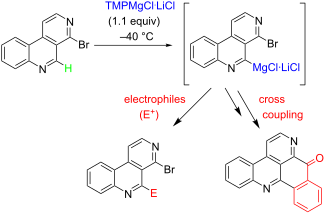
- , phenolates), acyl anions (generated by umpolung of aldehydes with imidazolium salts) and by palladium-catalyzed cross-coupling reactions (Suzuki, Stille) [10]. A related Stille cross coupling of a benzo[c][2,7]naphthyridine bearing a triflate group at C-5 gave an intermediate for the total synthesis of
- of the 4-bromo residue (cross-coupling reactions, nucleophilic substitutions) should open the opportunity to generate a broad variety of 4,5-disubstituted benzo[c][2,7]naphthyridines as building blocks for natural products total synthesis (Figure 2D). Results and Discussion For the envisaged direct
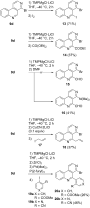
- cross-coupling reactions, 4-bromo-5 iodobenzo[c][2,7]naphthyridine (13) is regarded as an interesting building block for synthetic chemists. Another interesting building block is ester 14, which was obtained in 37% yield by quenching 5-metalated 9d with diethyl carbonate. The quenching of 9d after




Azologization and repurposing of a hetero-stilbene-based kinase inhibitor: towards the design of photoswitchable sirtuin inhibitors
Beilstein J. Org. Chem. 2019, 15, 2170–2183, doi:10.3762/bjoc.15.214
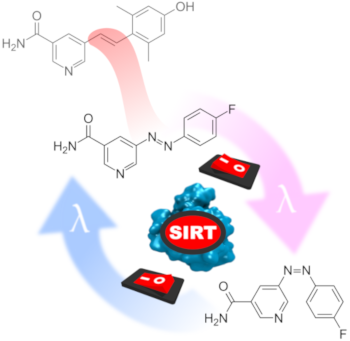
- useful tools in the further investigation of the biochemistry and pharmacology of sirtuins. Results Chemistry of azastilbenes All azastilbene derivatives were synthesised by palladium-catalysed cross-coupling reactions using either commercially available 5-bromonicotinamide (3a) or methyl 5


Installation of -SO2F groups onto primary amides
Beilstein J. Org. Chem. 2019, 15, 1907–1912, doi:10.3762/bjoc.15.186

- coupling reactions and as potential covalent probes in protein profiling [14][25][26][27][28]. Phenols (or alcohols) and amines as the most common nucleophiles have been found to react with different S(VI) connectors (SO2F2, CH2=CH-SO2F, SOF4 etc.) to provide diversified sulfonyl fluoride derivatives. The


Vicinal difunctionalization of alkenes by four-component radical cascade reaction of xanthogenates, alkenes, CO, and sulfonyl oxime ethers
Beilstein J. Org. Chem. 2019, 15, 1822–1828, doi:10.3762/bjoc.15.176

- , Institute of Molecular Sciences, UMR-CNRS 5255, 351 cours de la libération, Talence, 33405 Cedex, France 10.3762/bjoc.15.176 Abstract Four-component coupling reactions between xanthogenates, alkenes, CO, and sulfonyl oxime ethers were studied. In the presence of hexabutylditin, working as a propagating


Recent advances on the transition-metal-catalyzed synthesis of imidazopyridines: an updated coverage
Beilstein J. Org. Chem. 2019, 15, 1612–1704, doi:10.3762/bjoc.15.165
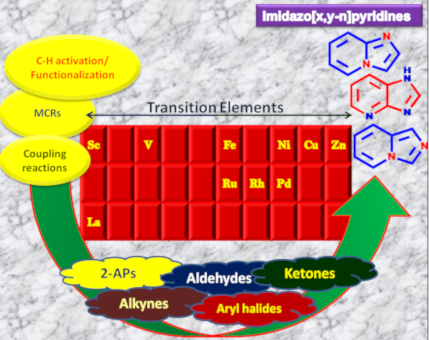
- reactions, C–H activation/functionalization and coupling reactions are highlighted in this review article. The basic illustration of this review comprises of schemes with concise account of explanatory text. The schemes depict the reaction conditions along with a quick look into the mechanism involved to
- development and (ii) for the modifications needed thereof in the R&D sector. Keywords: C–H activation/functionalization; coupling reactions; imidazopyridines; multicomponent reactions; transition metal catalysis; Introduction The structural diversity and biological importance of nitrogen-containing
- widely described in the literature encompassing a number of reactions like oxidative cyclizations [11], oxidative coupling reactions [12], Vilsmeier type cyclizations [13], intramolecular aminooxygenation/C–H amination reactions [14][15], Groebke–Blackburn–Bienayme (GBB) reactions [16][17][18] and many


Synthesis of 9-O-arylated berberines via copper-catalyzed CAr–O coupling reactions
Beilstein J. Org. Chem. 2019, 15, 1575–1580, doi:10.3762/bjoc.15.161



Borylation and rearrangement of alkynyloxiranes: a stereospecific route to substituted α-enynes
Beilstein J. Org. Chem. 2019, 15, 1416–1424, doi:10.3762/bjoc.15.141

- -coupling reactions. Herein, stereodefined 1,3-enynes, including tetrasubstituted ones, were straightforwardly synthesized from cis or trans-alkynylated oxiranes in good to excellent yields by a one-pot cascade process. The procedure relies on oxirane deprotonation, borylation and a stereospecific
- coupling reactions of either terminal or organometallic alkynes with vinyl halides or of alkynyl halides with vinylic organometallics [20]. However, both routes may lead to mixtures of stereoisomers and synthetic approaches to stereodefined substituted α-enynes remain scarce and thus still represent a


Selenophene-containing heterotriacenes by a C–Se coupling/cyclization reaction
Beilstein J. Org. Chem. 2019, 15, 1379–1393, doi:10.3762/bjoc.15.138

- different scan rates (right). Synthesis of heterotriacenes DTT 1 and DTS 2 via copper-catalyzed cross-coupling reactions. Synthesis of selenolotriacenes DST 3 and DSS 4. Oxidative polymerization of heterotriacenes 1–4 to corresponding conjugated polymers P1–P4. Bond distances, bond angles, and distances D


Synthesis of dipolar molecular rotors as linkers for metal-organic frameworks
Beilstein J. Org. Chem. 2019, 15, 1331–1338, doi:10.3762/bjoc.15.132

- -4,7-diiodo-2,1,3-benzothiadiazole (11b) was reported by Blakey, Marder and co-workers [51], no cross-coupling reactions using this derivative have been reported yet. Recently, the synthesis of 4,7-dibromo-5,6-dicyano-2,1,3-benzothiadiazole (11a) was also reported alongside with its use in a
- moments known for MOF linkers so far, with 5 even exceeding 10 Debye. Cross-coupling reactions, particularly Sonogashira reactions of dicyanobenzenes are known to be accompanied by phthalocyanine formation and other side products. These problems are avoided by applying Stille conditions using 1


Remarkable effect of alkynyl substituents on the fluorescence properties of a BN-phenanthrene
Beilstein J. Org. Chem. 2019, 15, 1257–1261, doi:10.3762/bjoc.15.122
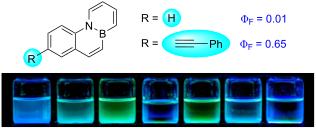
- -phenanthrenes with substituents of a diverse nature have been synthesized by palladium-catalyzed cross-coupling reactions of a common chloro-substituted precursor, which was made from readily available materials in only four steps. Evaluation of the photophysical properties of the prepared compounds unveiled an
- cross-coupling reactions [30], and we envisioned that this reaction could be used to prepare C7 substituted BN-phenanthrenes (Figure 1). Herein we report the synthesis of chloro-substituted BN-phenanthrene 1b, its derivatization via palladium-catalyzed cross-coupling reactions and the significant effect
- to provide alkynyl-substituted BN-phenanthrenes 1e and 1f in excellent yields (Scheme 3). These results confirm the value of palladium-catalyzed cross-coupling reactions of chloro-substituted BN-arenes as a useful tool for the preparation of derivatives functionalized with a range of substituents of