


Search results
Search for "cyclodextrin" in Full Text gives 233 result(s) in Beilstein Journal of Organic Chemistry. Showing first 200.
Orthogonal dual thiol–chloroacetyl and thiol–ene couplings for the sequential one-pot assembly of heteroglycoclusters
Beilstein J. Org. Chem. 2014, 10, 1557–1563, doi:10.3762/bjoc.10.160
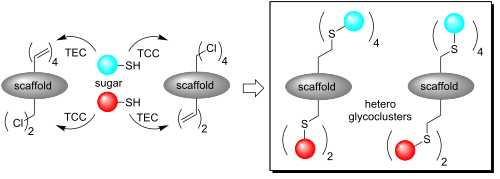
- successive attachment of sugar residues on a core scaffold such as sugar [6][7], peptide [8][9][10], dendrimer [11][12], cyclodextrin [13][14][15] and polymer [16]. The most common synthetic strategy to build such hGCs relies on a fragment-coupling approach using thiol–ene coupling [17], copper(I)-catalyzed


Synthesis of the first examples of iminosugar clusters based on cyclopeptoid cores
Beilstein J. Org. Chem. 2014, 10, 1406–1412, doi:10.3762/bjoc.10.144
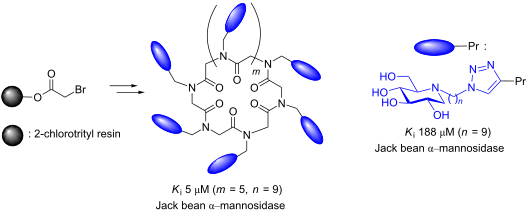
- ], β-cyclodextrin [4][5] and porphyrin [7] cores, and with nanoparticles prepared by self-assembly of iminosugar-based glycopolypetides [6]. So far, the largest multivalent effect (up to 610-fold relative inhibition potency increase on a valency-corrected basis) has been achieved on jack bean α
- -mannosidase with β-cyclodextrin-based analogues displaying 14 copies of 1-deoxynojirimycin (DNJ) [4]. Applications of the inhibitory multivalent effect to glycosidases of therapeutic interest were promptly performed and promising results were obtained in the field of Gaucher disease, the most common lysosomal
- , evaluation of the inhibition potency of multivalent iminosugars 10 was performed on this peculiar enzyme (Table 1). Related monovalent controls 11 [3][4] as well as 7-valent β-cyclodextrin-based DNJ clusters 12 [4] have been included for comparative purposes (Figure 3). Our results clearly point out that all

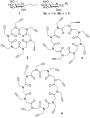

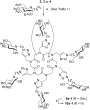


A complete series of 6-deoxy-monosubstituted tetraalkylammonium derivatives of α-, β-, and γ-cyclodextrin with 1, 2, and 3 permanent positive charges
Beilstein J. Org. Chem. 2014, 10, 1390–1396, doi:10.3762/bjoc.10.142

- Prague, Hlavova 8, 128 40, Prague 2, Czech Republic 10.3762/bjoc.10.142 Abstract An efficient synthetic route toward the preparation of a complete series of monosubstituted tetraalkylammonium cyclodextrin (CD) derivatives is presented. Monotosylation of native CDs (α-, β-, γ-) at position 6 gave the
- ; regioselectivity; tetraalkylammonium derivatives; Introduction Cyclodextrins (CDs) are cyclic oligosaccharides with the shape of a hollow truncated cone, first described in 1891 by Villiers [1]. Naturally occurring CDs are named α-, β- and γ-cyclodextrin and are composed of 6, 7 or 8 D-glucopyranose units
- excellent chiral selectors in capillary zone electrophoresis (CZE) [18][19] and as catalysts of chemical reactions [20][21]. The synthesis of some cationic derivatives of β-CD have already been described in the literature (namely 6I-(N,N,N-trimethylammonio)-6I-deoxy-β-cyclodextrin [21] and 6I-(N,N,N’,N‘,N


Substitution effect and effect of axle’s flexibility at (pseudo-)rotaxanes
Beilstein J. Org. Chem. 2014, 10, 1299–1307, doi:10.3762/bjoc.10.131
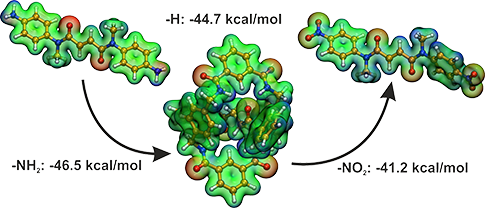
- computational energy profile [22]. The formation of α-cyclodextrin-based [3]pseudorotaxanes in the gas phase was studied by means of density functional calculations [23]. Molecular mechanics calculations were used for a free energy calculation of an α-cyclodextrin rotaxane system and for the investigation of


Atherton–Todd reaction: mechanism, scope and applications
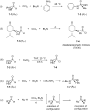
Beilstein J. Org. Chem. 2014, 10, 1166–1196, doi:10.3762/bjoc.10.117





Towards allosteric receptors – synthesis of β-cyclodextrin-functionalised 2,2’-bipyridines and their metal complexes
Beilstein J. Org. Chem. 2014, 10, 814–824, doi:10.3762/bjoc.10.77
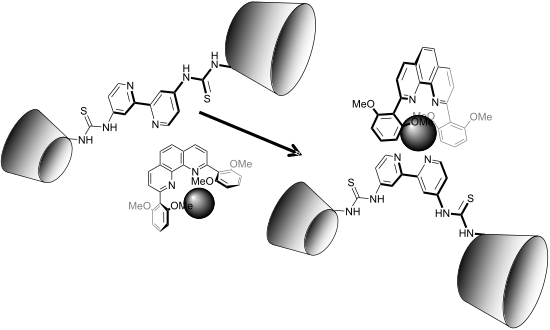
- Abstract Herein, we present three new 2,2’-bipyridines that carry two β-cyclodextrin moieties in different substitution patterns. When coordinated by zinc(II) or copper(I) ions (or their complexes), these compounds undergo conformational changes and switch between “open” and “closed” forms and thereby
- bringing together or separating the cyclodextrin moieties from each other. Keywords: allosteric receptors; 2,2’-bipyridines; β-cyclodextrin; supramolecular chemistry; metal complexes; Introduction In biological systems, recognition events play a major role to guarantee the selectivity of essential
- on-state in the absence of the effector and changes its conformation to the open off-state upon binding of it. In this article we present the synthesis of three new cyclodextrin-functionalised 2,2’-bipyridines 1–3 differing in the bipyridine’s substitution pattern (Scheme 2) and their metal complexes




Staudinger ligation towards cyclodextrin dimers in aqueous/organic media. Synthesis, conformations and guest-encapsulation ability
Beilstein J. Org. Chem. 2014, 10, 774–783, doi:10.3762/bjoc.10.73
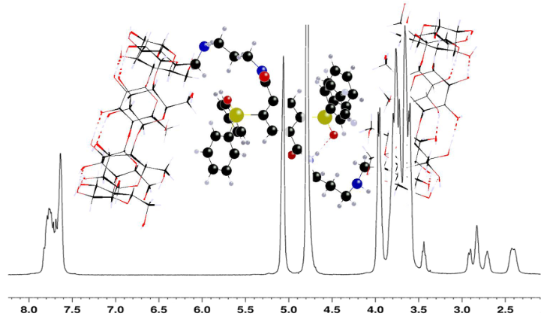
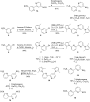
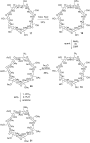
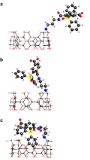
- , 15310 Greece. Tel. +30210 6503796, Fax: +30 210 6511766 10.3762/bjoc.10.73 Abstract β-Cyclodextrin (β-CD) dimers have been prepared using the bioorthogonal Staudinger ligation for the first time. In addition to a known linker, methyl 2-(diphenylphosphanyl)terephthalate, a doubly active linker was
- ) satisfactory aqueous solubility and independent binding capacity of the cavities. Keywords: calculations; conformations; cyclodextrin; dimer; inclusion; PM3; Staudinger ligation; Introduction The Staudinger reaction [1] is a classical method for the preparation of amines from phosphines and azides [2][3
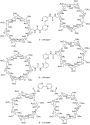
- confirming the structure of dimer 5. However, while the excellent yield of the Staudinger ligation step to 4 showed its applicability and suitability for cyclodextrin substrates, the poor yield of CD-dimer 5 suggested the presence of impediments in the introduction of a second β-CD moiety. Examination of the



Structure elucidation of female-specific volatiles released by the parasitoid wasp Trichogramma turkestanica (Hymenoptera: Trichogrammatidae)
Beilstein J. Org. Chem. 2014, 10, 767–773, doi:10.3762/bjoc.10.72
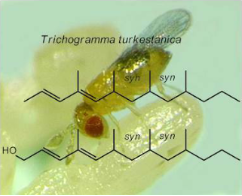
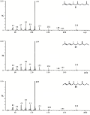
- -butyldimethylsilyl)]-β-cyclodextrin (50% in OV1701) as the stationary GC phase, operated at 100 °C. Under these conditions, the (2S,4S,6S)-enantiomer [30] is the later eluting stereoisomer, giving an α-value of (tr2:tr1) = 1.019 (see Supporting Information File 1, Figure S4). As a result of our investigations we



End-group-functionalized poly(N,N-diethylacrylamide) via free-radical chain transfer polymerization: Influence of sulfur oxidation and cyclodextrin on self-organization and cloud points in water
Beilstein J. Org. Chem. 2014, 10, 680–691, doi:10.3762/bjoc.10.61
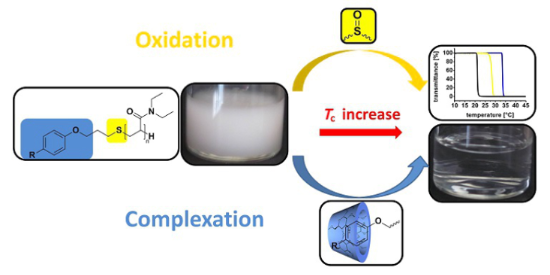
- synthesis of thermo-, oxidation- and cyclodextrin- (CD) responsive end-group-functionalized polymers, based on N,N-diethylacrylamide (DEAAm). In a classical free-radical chain transfer polymerization, using thiol-functionalized 4-alkylphenols, namely 3-(4-(1,1-dimethylethan-1-yl)phenoxy)propane-1-thiol and
- methylated β-cyclodextrin (RAMEB-CD). Additionally, the influence of the oxidation of the incorporated thioether linkages on the cloud point is investigated. The resulting hydrophilic sulfoxides show higher cloud point values for the lower critical solution temperature (LCST). A high degree of
- with β-cyclodextrin derivatives. Since 4-alkylphenyl moieties are good guests for ß-cyclodextrin [37][38], we were encouraged to use 4-tert-butylphenol as well as 4-tert-octylphenol and modify them with mercapto groups. By doing so, well-defined PDEAAm end-group labeled polymers can be obtained by


N,N'-(Hexane-1,6-diyl)bis(4-methyl-N-(oxiran-2-ylmethyl)benzenesulfonamide): Synthesis via cyclodextrin mediated N-alkylation in aqueous solution and further Prilezhaev epoxidation
Beilstein J. Org. Chem. 2013, 9, 2834–2840, doi:10.3762/bjoc.9.318
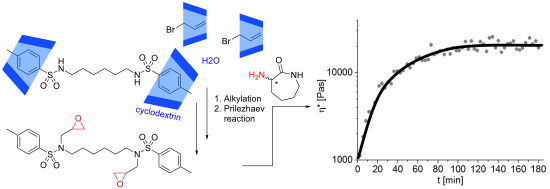
- allyl bromide and subsequent Prilezhaev reaction with m-chloroperbenzoic acid to give N,N'-(hexane-1,6-diyl)bis(4-methyl-N-(oxiran-2-ylmethyl)benzenesulfonamide) is described. This twofold alkylation was performed in aqueous solution, whereby α-, and randomly methylated β-cyclodextrin were used as
- adequate phase transfer catalysts and the cyclodextrin–guest complexes were characterized by 1H NMR and 2D NMR ROESY spectroscopy. Finally, the curing properties of the diepoxide with lysine-based α-amino-ε-caprolactam were analyzed by rheological measurements. Keywords: alkylation; cyclodextrins; epoxy
- with two equivalents of randomly methylated β-cyclodextrin (β-CD) to give 3β, water solubility could be increased distinctively. Characterization of the inclusion complex of β-CD with 3 in D2O solution was conducted using 2D NMR ROESY spectroscopy (Figure 1). Thereby, proton signals at 7.0 and 7.4 ppm


Oligomeric epoxide–amine adducts based on 2-amino-N-isopropylacetamide and α-amino-ε-caprolactam: Solubility in presence of cyclodextrin and curing properties
Beilstein J. Org. Chem. 2013, 9, 2803–2811, doi:10.3762/bjoc.9.315
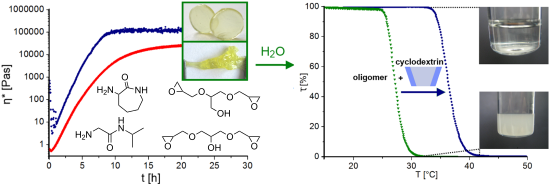
- diglycidyl ether to give novel oligomeric thermoresponsive epoxide–amine adducts. These oligomers exhibit a lower critical solution temperature (LCST) behavior in water. The solubility properties were influenced with randomly methylated β-cyclodextrin (RAMEB-CD) and the curing properties of the amine–epoxide
- mixtures were analyzed by oscillatory rheology and differential scanning calorimetry, whereby significant differences in setting time, viscosity, and stiffness were observed. Keywords: amino acids; curing properties; cyclodextrin; epoxide–amine oligomers; LCST; Introduction Many partially hydrophobic
- randomly methylated β-cyclodextrin (RAMEB-CD) were added (9β). After that, the cloud point shifted significantly up to 36 °C, which is remarkable since PNIPAM does not interact with β-CD [14]. Explanation for this can be steric effects, since the isopropyl group in our system 9 is placed not so close at




One-pot sequential synthesis of isocyanates and urea derivatives via a microwave-assisted Staudinger–aza-Wittig reaction
Beilstein J. Org. Chem. 2013, 9, 2378–2386, doi:10.3762/bjoc.9.274

- preparation of triphenylphosphine-loaded cross-liked cyclodextrin complexes as recyclable green catalyst [39]. The reactivity of polystyrene-supported reagents strongly depends on the choice of solvent that can influence polymer swelling [40]. Solvent choice is therefore an important issue as it must allow


Bis(benzylamine) monomers: One-pot preparation and application in dendrimer scaffolds for removing pyrene from aqueous environments
Beilstein J. Org. Chem. 2013, 9, 2320–2327, doi:10.3762/bjoc.9.266

- obtained with cyclodextrin polymers (109 M−1) [33] and alkylated fifth-generation diaminobutane poly(propylene imine) dendrimers (108 M−1) [28][29][30]. The large magnitude is proposed to be due to the thermodynamically favorable process of pyrene moving from a hydrophilic to a hydrophobic environment. A



Structure elucidation of β-cyclodextrin–xylazine complex by a combination of quantitative 1H–1H ROESY and molecular dynamics studies
Beilstein J. Org. Chem. 2013, 9, 1917–1924, doi:10.3762/bjoc.9.226
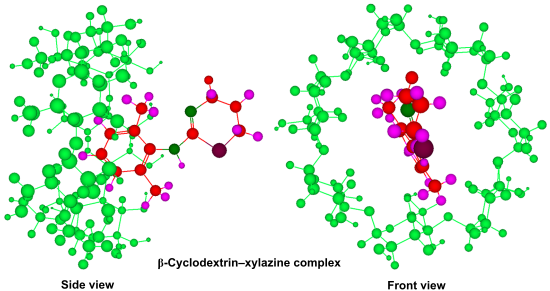
- Syed Mashhood Ali Kehkeshan Fatma Snehal Dhokale Department of Chemistry, Aligarh Muslim University, Aligarh-202002, India National Chemical Laboratory, Pune-411008, India 10.3762/bjoc.9.226 Abstract The complexation of xylazine with β-cyclodextrin was studied in aqueous medium. 1H NMR titrations
- confirmed the formation of a 1:1 inclusion complex. A ROESY spectrum was recorded with long mixing time which contained TOCSY artifacts. It only confirmed the presence of xylazine aromatic ring in the β-cyclodextrin cavity. No information regarding the mode of penetration, from the wide or narrow side
- and molecular dynamics analysis. On the other hand, a ROESY spectrum with no spin diffusion can only compliment an averaged ensemble conformation obtained by molecular dynamics which is generally considered ambiguous. Keywords: β-cyclodextrin; inclusion complex; ROESY; simulation studies; xylazine





Topochemical control of the photodimerization of aromatic compounds by γ-cyclodextrin thioethers in aqueous solution
Beilstein J. Org. Chem. 2013, 9, 1858–1866, doi:10.3762/bjoc.9.217
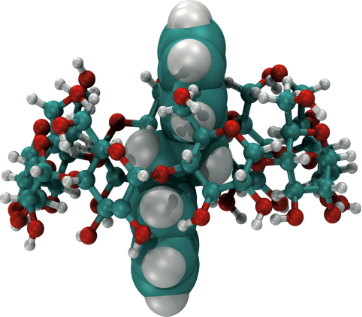
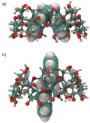
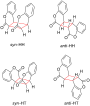
- Hai Ming Wang Gerhard Wenz Organic Macromolecular Chemistry, Saarland University, Campus Saarbrücken C4 2, 66123 Saarbrücken, Germany 10.3762/bjoc.9.217 Abstract The formation of soluble 1:2 complexes within hydrophilic γ-cyclodextrin (γ-CD) thioethers allows to perform photodimerizations of



Structures of the reaction products of the AZADO radical with TCNQF4 or thiourea
Beilstein J. Org. Chem. 2013, 9, 1487–1491, doi:10.3762/bjoc.9.169

- host molecules such as tris(o-phenylenedioxy)cyclotriphosphazene (TPP) [10], cyclodextrin (CD) [11], or cucurbituril (CB) derivatives [12] but the inclusion compound derived from AZADO is still unknown. Here in this paper we wish to report the apparent difference of reactivity between AZADO (2) and


Linkage of α-cyclodextrin-terminated poly(dimethylsiloxanes) by inclusion of quasi bifunctional ferrocene
Beilstein J. Org. Chem. 2013, 9, 1278–1284, doi:10.3762/bjoc.9.144
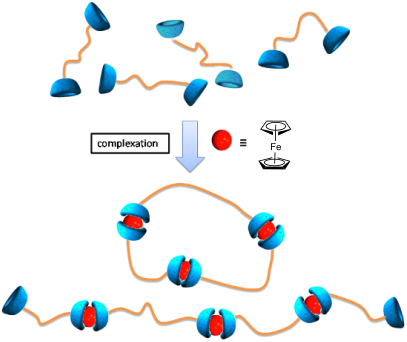
- cyclodextrin and ferrocene as a representative of metallocenes has been the subject of numerous works. Especially Takahashi and Harada were engaged in the analysis of ferrocene complexes with different cyclodextrins [5], which could be obtained in aqueous solution in high yields. In addition, the crystal
- structure of the α-CD:ferrocene complex has been analyzed by X-ray-diffraction [6]. These studies showed that the ferrocene molecule is encapsulated by two α-CD rings in a tail-to-tail orientation, where all carbon atoms of the cyclopentadienyl rings are in close contact with the cavity of the cyclodextrin
- –CH3 groups of the siloxane backbones at 0 ppm. In addition, the signals of the cyclodextrin-substituents appear in the area of 3.50 to 6.00 ppm. New peaks at 0.43 and 1.25 ppm of the resulting dimethylene bridge between the siloxane and α-CD are detectable. Signals for the double bond of the vinyl


Space filling of β-cyclodextrin and β-cyclodextrin derivatives by volatile hydrophobic guests
Beilstein J. Org. Chem. 2013, 9, 1185–1191, doi:10.3762/bjoc.9.133
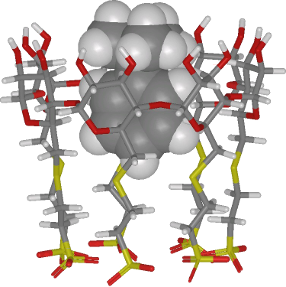
- Saarbrücken, Germany 10.3762/bjoc.9.133 Abstract The inclusion of volatile derivatives of benzene and cyclohexane in β-cyclodextrin (β-CD), hydroxypropyl-β-CD, and hydrophilic β-CD-thioethers was investigated by static headspace gas chromatography (HS-GC) and molecular modelling. The obtained binding
- pressure; Introduction β-Cyclodextrin (β-CD, 1), the cyclic α(1→4) heptamer of glucose, is known to form inclusion compounds with a great variety of guests [1], such as derivatives of benzene [2][3], cyclohexane [4], adamantane [5][6], other alicyclic guests [7], and also inorganic molecules or ions [1][8


Superstructures of fluorescent cyclodextrin via click-reaction
Beilstein J. Org. Chem. 2013, 9, 827–831, doi:10.3762/bjoc.9.94
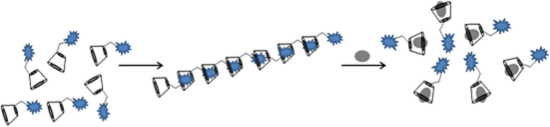
- , Humboldtstr. 10, 07743 Jena, Germany 10.3762/bjoc.9.94 Abstract Mono-(6-azido-6-deoxy)-β-cyclodextrin (CD) was covalently attached to an alkyne-modified 5-methyl-2-(pyridin-2-yl)thiazol-4-ol yielding a fluorophore containing CD in a click-type reaction. Intermolecular complexes were formed by poly(host–guest
- and Discussion The water-soluble fluorescent cyclodextrin was synthesized via copper-catalyzed cycloaddition (Scheme 1). The existence of the resulting product was confirmed by MALDI–TOF spectrometry, 1H NMR and IR spectroscopy. The formation of host–guest structures between the thiazole functionality
- of a fluorescent cyclodextrin via click reaction. The changes in the spectroscopic properties of the fluorescent cycloadduct were investigated in the presence and absence of the competitive guest potassium adamantane-1-carboxylate. The intermolecular formation of polymeric structures with elongated


The β-cyclodextrin/benzene complex and its hydrogen bonds – a theoretical study using molecular dynamics, quantum mechanics and COSMO-RS
Beilstein J. Org. Chem. 2013, 9, 118–134, doi:10.3762/bjoc.9.15
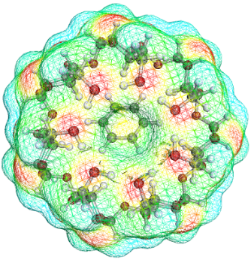
- Jutta Erika Helga Kohler Nicole Grczelschak-Mick Wacker Chemie AG, Consortium für elektrochemische Industrie, Zielstattstrasse 20, D-81379 München, Germany 10.3762/bjoc.9.15 Abstract Four highly ordered hydrogen-bonded models of β-cyclodextrin (β-CD) and its inclusion complex with benzene were
- when it was positioned vertically. The AM1 HOMO/LUMO gap of the empty β-CD with about 12 eV is lowered to about 10 eV in the complex, in agreement with data from the literature. AM1 IR spectra displayed a splitting of the O–H frequencies of cyclodextrin upon complex formation. At the BP/TZVP-DISP3
- certainly no longer displayed the highly ordered hydrogen bonds of β-CD and benzene occupied many different positions inside the cavity, before it left the β-CD finally at its O2/O3 side. Keywords: AM1; benzene; COSMO-RS; cyclodextrin; hydrogen bonds; inclusion complex; molecular dynamics; quantum


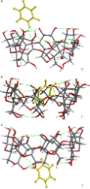

Inclusion of the insecticide fenitrothion in dimethylated-β-cyclodextrin: unusual guest disorder in the solid state and efficient retardation of the hydrolysis rate of the complexed guest in alkaline solution
Beilstein J. Org. Chem. 2013, 9, 106–117, doi:10.3762/bjoc.9.14
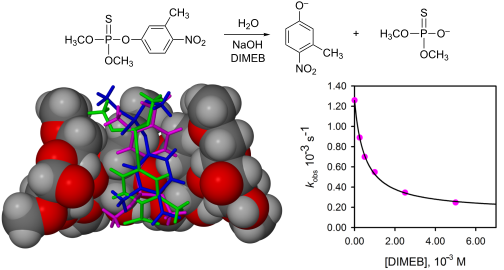
- )phosphorothioate] and the host compound heptakis(2,6-di-O-methyl)-β-cyclodextrin (DIMEB) was prepared and its structure elucidated by single-crystal X-ray diffraction. This revealed two independent host molecules in the asymmetric unit. In one of these, the cavity is occupied by two disordered guest components
- of DIMEB showed a remarkable reduction of 84% in the rate of this reaction relative to that for the free substrate, a value exceeding those previously attained with the native hosts, β- and γ-cyclodextrin, and fully methylated β-cyclodextrin. Keywords: crystal structure; cyclodextrin; fenitrothion
- presence of DIMEB (2 mM) the signal appears at 66.82 ppm, in agreement with data reported for 1 in water [6][12][13][14]. The shift observed indicates that a complex is formed. The 1H NMR spectrum shows that the protons H3 and H5 of the cyclodextrin rings that are located inside the cavity are slightly


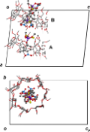


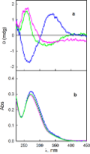


Theoretical study on β-cyclodextrin inclusion complexes with propiconazole and protonated propiconazole
Beilstein J. Org. Chem. 2012, 8, 2191–2201, doi:10.3762/bjoc.8.247
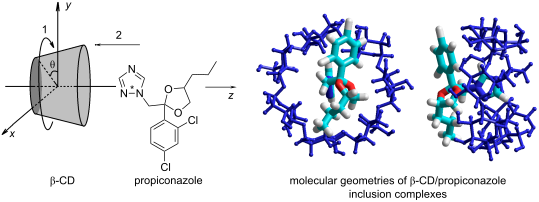
- , “Gheorghe Asachi” Technical University of Iasi, 700050 Iasi, Romania Faculty of Chemistry, “Al. I. Cuza” University Iasi, Iasi 700506, Romania 10.3762/bjoc.8.247 Abstract The synthesis of the β-cyclodextrin/propiconazole nitrate inclusion complex and the advantages of the encapsulation of this drug were
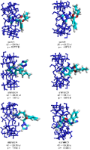
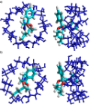
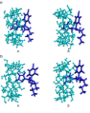
- recently reported, but the experimental data only partially revealed the structure of the supramolecular complex due to the limitations in understanding the intermolecular association mechanism. The present work describes the equilibrium molecular geometries of β-cyclodextrin/propiconazole and β
- -cyclodextrin/protonated propiconazole, established by the AM1 and PM3 semi-empirical methods. The affinity between different parts of the guest molecule and the cyclodextrin cavity was studied considering that propiconazole possesses three residues able to be included into the host cavity through primary or






Influence of cyclodextrin on the solubility and the polymerization of (meth)acrylated Triton® X-100
Beilstein J. Org. Chem. 2012, 8, 2176–2183, doi:10.3762/bjoc.8.245
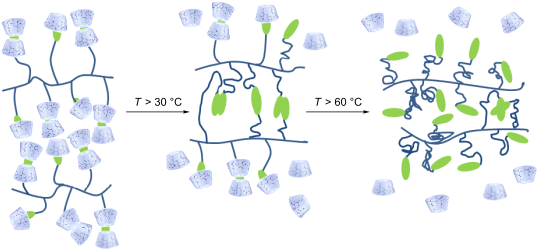
- the absence and presence of randomly methylated β-cyclodextrin (RAMEB-CD). Triton®-polymers that were polymerized with RAMEB-CD in water were compared with polymers that were synthesized in organic solvents after the addition of RAMEB-CD. The polymers were characterized by 1H NMR and FTIR spectroscopy
- ®; randomly methylated β-cyclodextrin (RAMEB-CD); rheology; Triton® X-100 (poly(ethylene glycol)tert-octylphenyl ether); Introduction Triton® X-100 (1) is a macromolecular, nonionic surfactant with an average number of ethylene oxide units of 9.5. The tert-octylphenyl group is a hydrophobic moiety whereas
- a few minutes (Scheme 1). In the solid state, the complex formation could be proved by FTIR, as the ether-band shifted from 1102 to 1033 cm−1. By using 2D-ROESY NMR, the interactions between the inner protons H-3 and H-5 of 2,6-dimethyl-β-cyclodextrin (DIMEB-CD) and the protons of the tert-octyl and


New enzymatically polymerized copolymers from 4-tert-butylphenol and 4-ferrocenylphenol and their modification and inclusion complexes with β-cyclodextrin
Beilstein J. Org. Chem. 2012, 8, 2118–2123, doi:10.3762/bjoc.8.238
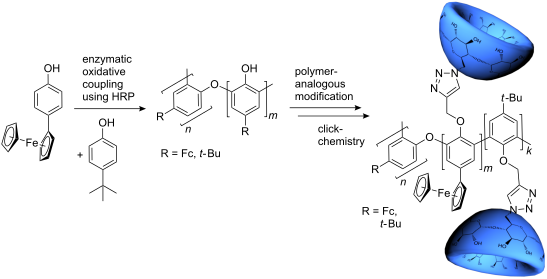
- of a copolymer of 4-tert-butylphenol and 4-ferrocenylphenol by horse radish peroxidase (HRP) in the presence of H2O2 in a 1,4-dioxane/water system is described. Furthermore, polymer-analogous alkylation of the free hydroxy groups and subsequent click reaction with mono-6-azido-6-desoxy-β-cyclodextrin
- (N3-β-CD) was carried out. The formation of inter- and intramolecular inclusion complexes was investigated by DLS measurement. Keywords: copolymer; ß-cyclodextrin; enzymatic polymerization; 4-ferrocenylphenol; polyphenol; 4-tert-butylphenol; horseradish peroxidase; HRP oxidative coupling; inclusion
- investigated until now. Hence, in the present paper we report the HRP-catalyzed synthesis of novel copolymers from 2 and 3. Click reaction of the propargyl modified polyphenol 5 with mono-(6-azido-6-deoxy)-β-cyclodextrin (6) was also investigated. Based on former studies, host–guest structures were created [24


![[Graphic 2]](/bjoc/content/inline/1860-5397-8-238-i3.png?max-width=637&scale=0.59091) ).
).

Cyclodextrin-based nanosponges as drug carriers
Beilstein J. Org. Chem. 2012, 8, 2091–2099, doi:10.3762/bjoc.8.235
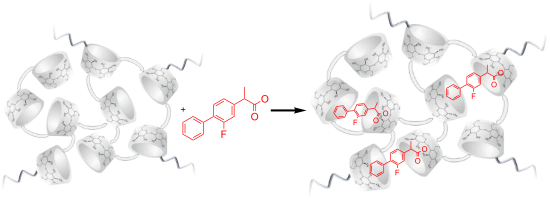
- Francesco Trotta Marco Zanetti Roberta Cavalli Dipartimento di Chimica. University of Torino, Via Pietro Giuria 7 10125 Torino, Italy Dipartimento di Scienza e Tecnologia del Farmaco. University of Torino, Via Pietro Giuria 9 10125 Torino, Italy 10.3762/bjoc.8.235 Abstract Cyclodextrin-based
- nanosponges, which are proposed as a new nanosized delivery system, are innovative cross-linked cyclodextrin polymers nanostructured within a three-dimensional network. This type of cyclodextrin polymer can form porous insoluble nanoparticles with a crystalline or amorphous structure and spherical shape or
- biodegradable material with negligible toxicity on cell cultures and are well-tolerated after injection in mice. Cyclodextrin-based nanosponges can form complexes with different types of lipophilic or hydrophilic molecules. The release of the entrapped molecules can be varied by modifying the structure to





