


Search results
Search for "drug delivery" in Full Text gives 184 result(s) in Beilstein Journal of Organic Chemistry.
Michael-type addition of azoles of broad-scale acidity to methyl acrylate
Beilstein J. Org. Chem. 2011, 7, 173–178, doi:10.3762/bjoc.7.24
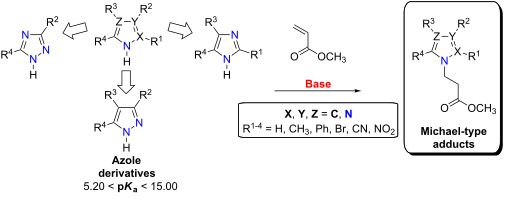
- and which, after acidic hydrolysis [43], can be anchored to drug delivery systems, including, e.g., chemically modified carbon nanotubes, via amide bonds. Examples of azole derivatives as important therapeutic agents. Michael-type addition of azoles of broad-scale acidity 1a–h to methyl acrylate (2


Exceptionally small supramolecular hydrogelators based on aromatic–aromatic interactions
Beilstein J. Org. Chem. 2011, 7, 167–172, doi:10.3762/bjoc.7.23
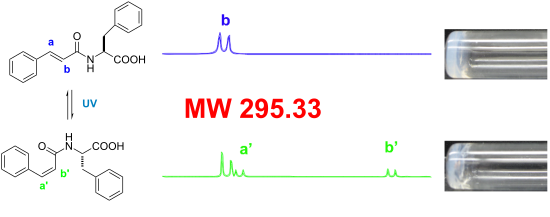
- ., response to external stimuli and flow in response to shear force [2]) and applications in several areas (e.g., bioanalysis [3][4], chemical sensing [5][6][7], food processing [8], cosmetics [9], drug delivery [10][11], and tissue engineering [12][13]). Inspired by the existing and potential applications of




Miniemulsion polymerization as a versatile tool for the synthesis of functionalized polymers
Beilstein J. Org. Chem. 2010, 6, 1132–1148, doi:10.3762/bjoc.6.130
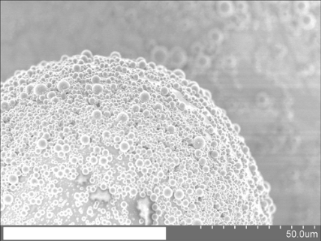
- since the monomer is very reactive and the polymerization can be conducted in the presence of a large amount of water. Moreover, the polymers were shown to be able to pass the blood brain barrier, making them ideal candidates as vectors for drug delivery. Therefore it is not surprising that several
- polymeric shell in comparison to the traditional monolithic morphology. Such capsular morphologies are suitable for drug delivery applications since the liquid in the core (e.g., water) has usually a higher solvent power than hydrophilic monomers. As for other techniques used to encapsulate drugs such as





Pyridinium based amphiphilic hydrogelators as potential antibacterial agents
Beilstein J. Org. Chem. 2010, 6, 859–868, doi:10.3762/bjoc.6.101
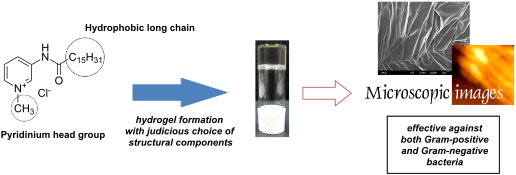
- ; hydrogel; pyridinium; self-assembly; Introduction Gels are an outstanding group of soft materials lying at the interface of solid and liquid, and find numerous applications in various fields including tissue engineering, biosensors, food processing, cosmetics, photography, controlled drug delivery etc. [1



Chiral gels derived from secondary ammonium salts of (1R,3S)-(+)-camphoric acid
Beilstein J. Org. Chem. 2010, 6, 848–858, doi:10.3762/bjoc.6.100
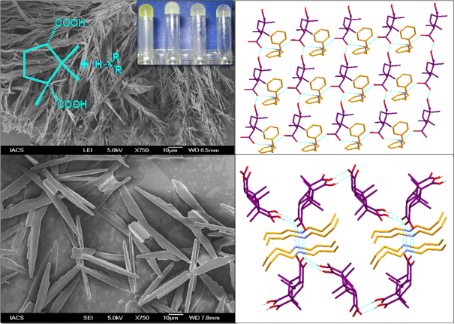
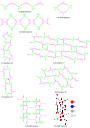
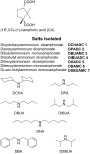
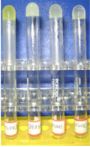
- continuous expanding area on account of their various promising applications [11][12][13]. Broadly, LMOGs are used in cosmetics [14], tissue engineering [15], drug delivery and biomedical applications [16][17][18][19], art conservation [20][21][22], templated synthesis of nanoparticles [23][24], capture and



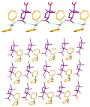

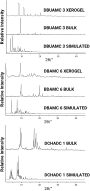
Synthesis and crystal structures of multifunctional tosylates as basis for star-shaped poly(2-ethyl-2-oxazoline)s
Beilstein J. Org. Chem. 2010, 6, 773–783, doi:10.3762/bjoc.6.96
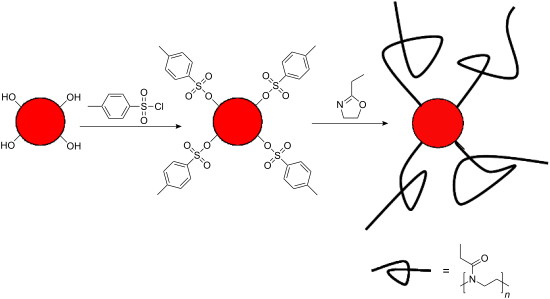
- ; Introduction Nowadays, well-defined polymer structures are of major importance for the development of ever more sophisticated and complex materials, e.g., applications in drug delivery or as adaptive materials. Star-shaped polymers are especially interesting since their properties are distinctly different from




Novel multi-responsive P2VP-block-PNIPAAm block copolymers via nitroxide-mediated radical polymerization
Beilstein J. Org. Chem. 2010, 6, 756–765, doi:10.3762/bjoc.6.89
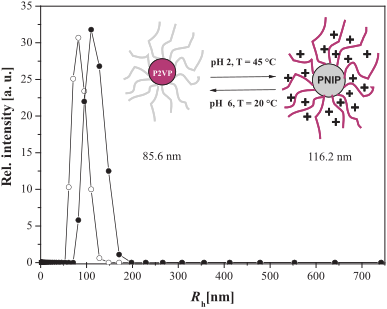
- with large property changes to small external chemical or physical stimuli, are so called “smart”, “responsive” or “intelligent” polymers [1][2], constitute a very interesting group of functional polymers. Such polymers have found applications as reactive surfaces [3], in drug delivery and separation
- , we describe the synthesis of new multi-responsible diblock copolymers poly(2-vinylpyridine-block-N-isopropylacrylamide), which form schizophrenic micelles. Such micellation behavior is interesting for drug delivery systems in the gastro-intestinal tract [36][37]. Results and Discussion Polymerization
- aqueous solution, the block copolymers form so called schizophrenic micelles. The hydrodynamic radius Rh of these micelles associated with pH values and temperature was analyzed by dynamic light scattering (DLS). Such kind of block copolymers has potential for many applications, such as controlled drug


New amphiphilic glycopolymers by click functionalization of random copolymers – application to the colloidal stabilisation of polymer nanoparticles and their interaction with concanavalin A lectin
Beilstein J. Org. Chem. 2010, 6, No. 58, doi:10.3762/bjoc.6.58
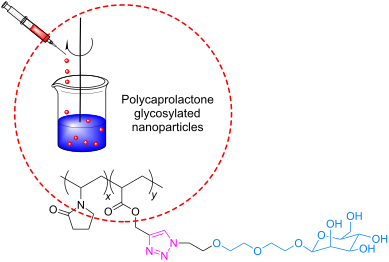
- towards new formulations that can enhance the activity of drugs, as well as the elaboration of new drug delivery systems. The main objectives are the transport of active hydrophilic or lipophilic substances, while minimizing drug degradation, increasing drug availability and localization in the required
- . These parameters are closely connected. For instance, the chemical composition of the polymer matrix may affect the particle morphology because of thermodynamic interactions between the hydrophobic drug and the polymer. Whatever the drug delivery system, surfactants, and in particular polymer non-ionic


Ru-catalyzed dehydrogenative coupling of carboxylic acids and silanes - a new method for the preparation of silyl ester
Beilstein J. Org. Chem. 2008, 4, No. 27, doi:10.3762/bjoc.4.27

- greatly due to biomedical field and environmental concerns [2][3][4]. Obviously, silyl esters are very important intermediates for the preparation of easily degradable functional poly(silyl ester)s, widely utilized as gene delivery carriers, matrices for drug delivery, biodegradable surgical devices, and


Other Beilstein-Institut Open Science Activities



