


Search results
Search for "heteroatom" in Full Text gives 299 result(s) in Beilstein Journal of Organic Chemistry. Showing first 200.
Synthesis of 1-indanones with a broad range of biological activity
- Marika Turek,
- Dorota Szczęsna,
- Marek Koprowski and
- Piotr Bałczewski
Beilstein J. Org. Chem. 2017, 13, 451–494, doi:10.3762/bjoc.13.48
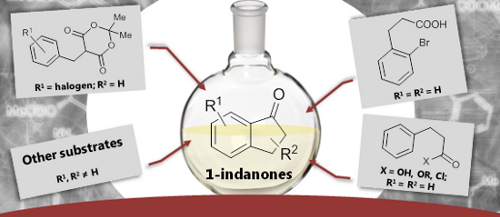
- -indanones and their heteroatom analogues 138–142 which may be further converted into biologically active compounds (Figure 4) [72]. Products 138–142 were obtained by electrocyclization of the substrates substituted by electron-withdrawing groups, such as CO2Me, P(O)(OEt)2, CN or NO2. This reaction was

Graphical Abstract

Figure 1: Biologically active 1-indanones and their structural analogues.

Figure 2: Number of papers about (a) 1-indanones, (b) synthesis of 1-indanones.

Scheme 1: Synthesis of 1-indanone (2) from hydrocinnamic acid (1).

Scheme 2: Synthesis of 1-indanone (2) from 3-(2-bromophenyl)propionic acid (3).

Scheme 3: Synthesis of 1-indanones 5 from 3-arylpropionic acids 4.

Scheme 4: Synthesis of kinamycin (9a) and methylkinamycin C (9b).

Scheme 5: Synthesis of trifluoromethyl-substituted arylpropionic acids 12, 1-indanones 13 and dihydrocoumarin...

Scheme 6: Synthesis of 1-indanones 16 from benzoic acids 15.

Scheme 7: Synthesis of 1-indanones 18 from arylpropionic and 3-arylacrylic acids 17.

Scheme 8: The NbCl5-induced one-step synthesis of 1-indanones 22.

Scheme 9: Synthesis of biologically active 1-indanone derivatives 26.

Scheme 10: Synthesis of enantiomerically pure indatraline ((−)-29).

Scheme 11: Synthesis of 1-indanone (2) from the acyl chloride 30.

Scheme 12: Synthesis of the mechanism-based inhibitors 33 of coelenterazine.

Scheme 13: Synthesis of the indane 2-imidazole derivative 37.

Scheme 14: Synthesis of fluorinated PAHs 41.

Scheme 15: Synthesis of 1-indanones 43 via transition metal complexes-catalyzed carbonylative cyclization of m...

Scheme 16: Synthesis of 6-methyl-1-indanone (46).

Scheme 17: Synthesis of 1-indanone (2) from ester 48.

Scheme 18: Synthesis of benzopyronaphthoquinone 51 from the spiro-1-indanone 50.

Scheme 19: Synthesis of the selective endothelin A receptor antagonist 55.

Scheme 20: Synthesis of 1-indanones 60 from methyl vinyl ketone (57).

Scheme 21: Synthesis of 1-indanones 64 from diethyl phthalate 61.

Scheme 22: Synthesis of 1-indanone derivatives 66 from various Meldrum’s acids 65.

Scheme 23: Synthesis of halo 1-indanones 69.

Scheme 24: Synthesis of substituted 1-indanones 71.

Scheme 25: Synthesis of spiro- and fused 1-indanones 73 and 74.

Scheme 26: Synthesis of spiro-1,3-indanodiones 77.

Scheme 27: Mechanistic pathway for the NHC-catalyzed Stetter–Aldol–Michael reaction.

Scheme 28: Synthesis of 2-benzylidene-1-indanone derivatives 88a–d.

Scheme 29: Synthesis of 1-indanone derivatives 90a–i.

Scheme 30: Synthesis of 1-indanones 96 from o-bromobenzaldehydes 93 and alkynes 94.

Scheme 31: Synthesis of 3-hydroxy-1-indanones 99.

Scheme 32: Photochemical preparation of 1-indanones 103 from ketones 100.

Scheme 33: Synthesis of chiral 3-aryl-1-indanones 107.

Scheme 34: Photochemical isomerization of 2-methylbenzil 108.

Scheme 35: Synthesis of 2-hydroxy-1-indanones 111a–c.

Scheme 36: Synthesis of 1-indanone derivatives 113 and 114 from η6-1,2-dioxobenzocyclobutene complex 112.

Scheme 37: Synthesis of nakiterpiosin (117).

Scheme 38: Synthesis of 2-alkyl-1-indanones 120.

Scheme 39: Synthesis of fluorine-containing 1-indanone derivatives 123.

Scheme 40: Synthesis of 2-benzylidene and 2-benzyl-1-indanones 126, 127 from the chalcone 124.

Scheme 41: Synthesis of 2-bromo-6-methoxy-3-phenyl-1-indanone (130).

Scheme 42: Synthesis of combretastatin A-4-like indanones 132a–s.

Figure 3: Chemical structures of investigated dienones 133 and synthesized cyclic products 134–137.

Figure 4: Chemical structures of 1-indanones and their heteroatom analogues 138–142.

Scheme 43: Synthesis of 2-phosphorylated and 2-non-phosphorylated 1-indanones 147 and 148 from β-ketophosphona...

Scheme 44: Photochemical synthesis of 1-indanone derivatives 150, 153a, 153b.

Scheme 45: Synthesis of polysubstituted-1-indanones 155, 157.

Scheme 46: Synthesis of 1-indanones 159a–g from α-arylpropargyl alcohols 158 using RhCl(PPh3)3 as a catalyst.

Scheme 47: Synthesis of optically active 1-indanones 162 via the asymmetric Rh-catalyzed isomerization of race...

Scheme 48: Mechanism of the Rh-catalyzed isomerization of α-arylpropargyl alcohols 161 to 1-indanones 162.

Figure 5: Chemical structure of abicoviromycin (168) and its new benzo derivative 169.

Scheme 49: Synthesis of racemic benzoabicoviromycin 172.

Scheme 50: Synthesis of [14C]indene 176.

Scheme 51: Synthesis of indanone derivatives 178–180.

Scheme 52: Synthesis of racemic pterosin A 186.

Scheme 53: Synthesis of trans-2,3-disubstituted 1-indanones 189.

Scheme 54: Synthesis of 3-aryl-1-indanone derivatives 192.

Scheme 55: Synthesis of 1-indanone derivatives 194 from 3-(2-iodoaryl)propanonitriles 193.

Scheme 56: Synthesis of 1-indanones 200–204 by cyclization of aromatic nitriles.

Scheme 57: Synthesis of 1,1’-spirobi[indan-3,3’-dione] derivative 208.

Scheme 58: Total synthesis of atipamezole analogues 211.

Scheme 59: Synthesis of 3-[4-(1-piperidinoethoxy)phenyl]spiro[indene-1,1’-indan]-5,5’-diol hydrochloride 216.

Scheme 60: Synthesis of 3-arylindan-1-ones 219.

Scheme 61: Synthesis of 2-hydroxy-1-indanones 222.

Scheme 62: Synthesis of the 1-indanone 224 from the THP/MOM protected chalcone epoxide 223.

Scheme 63: Synthesis of 1-indanones 227 from γ,δ-epoxy ketones 226.

Scheme 64: Synthesis of 2-hydroxy-2-methylindanone (230).

Scheme 65: Synthesis of 1-indanone derivatives 234 from cyclopropanol derivatives 233.

Scheme 66: Synthesis of substituted 1-indanone derivatives 237.

Scheme 67: Synthesis of 7-methyl substituted 1-indanone 241 from 1,3-pentadiene (238) and 2-cyclopentenone (239...

Scheme 68: Synthesis of disubstituted 1-indanone 246 from the siloxydiene 244 and 2-cyclopentenone 239.

Scheme 69: Synthesis of 5-hydroxy-1-indanone (250) via the Diels–Alder reaction of 1,3-diene 248 with sulfoxid...

Scheme 70: Synthesis of halogenated 1-indanones 253a and 253b.

Scheme 71: Synthesis of 1-indanones 257 and 258 from 2-bromocyclopentenones 254.

Scheme 72: Synthesis of 1-indanone 261 from 2-bromo-4-acetoxy-2-cyclopenten-1-one (260) and 1,2-dihydro-4-viny...

Scheme 73: Synthesis of 1-indanone 265 from 1,2-dihydro-7-methoxy-4-vinylnaphthalene (262) and bromo-substitut...

Scheme 74: Synthesis of 1-indanone 268 from dihydro-3-vinylphenanthrene 266 and 4-acetoxy-2-cyclopenten-1-one (...

Scheme 75: Synthesis of 1-indanone 271 from phenylselenyl-substituted cyclopentenone 268.

Scheme 76: Synthesis of 1-indanone 272 from the trienone 270.

Scheme 77: Synthesis of the 1-indanone 276 from the aldehyde 273.

Scheme 78: Synthesis of 1-indanones 278 and 279.

Scheme 79: Synthesis of 1-indanone 285 from octa-1,7-diyne (282) and cyclopentenone 239.

Scheme 80: Synthesis of benz[f]indan-1-one (287) from cyclopentenone 239 and o-bis(dibromomethyl)benzene (286)....

Scheme 81: Synthesis of 3-methyl-substituted benz[f]indan-1-one 291 from o-bis(dibromomethyl)benzene (286) and...

Scheme 82: Synthesis of benz[f]indan-1-one (295) from the anthracene epidioxide 292.

Scheme 83: Synthesis of 1-indanone 299 from homophthalic anhydride 298 and cyclopentynone 297.

Scheme 84: Synthesis of cyano-substituted 1-indanone derivative 301 from 2-cyanomethylbenzaldehyde (300) and c...

Scheme 85: Synthesis of 1-indanone derivatives 303–305 from ketene dithioacetals 302.

Scheme 86: Synthesis of 1-indanones 309–316.

Scheme 87: Mechanism of the hexadehydro-Diels–Alder (HDDA) reaction.

Scheme 88: Synthesis of 1-indenone 318 and 1-indanones 320 and 321 from tetraynes 317 and 319.

Scheme 89: Synthesis of 1-indanone 320 from the triyn 319.

Scheme 90: Synthesis 1-indanone 328 from 2-methylfuran 324.

Scheme 91: Synthesis of 1-indanones 330 and 331 from furans 329.

Scheme 92: Synthesis of 1-indanone 333 from the cycloadduct 332.

Scheme 93: Synthesis of (S)-3-arylindan-1-ones 335.

Scheme 94: Synthesis of (R)-2-acetoxy-1-indanone 338.

Figure 6: Chemical structures of obtained cyclopenta[α]phenanthrenes 339.

Scheme 95: Synthesis of the benzoindanone 343 from arylacetaldehyde 340 with 1-trimethylsilyloxycyclopentene (...
Dimerization reactions of aryl selenophen-2-yl-substituted thiocarbonyl S-methanides as diradical processes: a computational study
- Michael L. McKee,
- Grzegorz Mlostoń,
- Katarzyna Urbaniak and
- Heinz Heimgartner
Beilstein J. Org. Chem. 2017, 13, 410–416, doi:10.3762/bjoc.13.44

- 5). In conformer 12G, the diradical intermediate leading to product 13, where the two spins do couple, the spin density is 0.65 e−. As a model system to determine the effect of the heteroatom on the magnitude of the unpaired spin density, calculations were made for PhC(H)C4XH3, X = Se, S, O (16
- isolated from the reaction mixture. Thus, the presence of the heteroatom is of crucial importance for this new type of dimerization of aryl/hetaryl thiocarbonyl S-methanides of type 1 and this fact reflects the importance of so called ‘heavy atom effect’ [15] in the studied system. Stepwise, diradical
- interconvert readily. Potential competitive cyclization reactions of the intermediate diradical 12. a) Spin densities in the conformers 12F and 12G of diradical 12. b) Heteroatom effect on the magnitude of the spin density in the model diradical 16. Generation and typical reactions of the reactive dialkyl and

Graphical Abstract

Scheme 1: Generation and typical reactions of the reactive dialkyl and diaryl thiocarbonyl S-methanides 1.

Figure 1: Structures of the reactive intermediates as a diradical 6 or a zwitterion 7 in the course of the di...

Scheme 2: The in situ generation of phenyl selenophen-2-yl S-methanide (8) and its competitive reactions: 1,3...

Figure 2: Potential 1,3-dipolar electrocyclization of thiocabonyl S-methanide 8A. Computed enthalpies (free e...

Figure 3: Stepwise radical dimerization of the reactive thiocarbonyl S-methanide 8. Computed enthalpies (free...
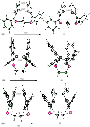
Figure 4: Potential competitive cyclization reactions of the intermediate diradical 12.
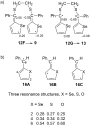
Figure 5: a) Spin densities in the conformers 12F and 12G of diradical 12. b) Heteroatom effect on the magnit...
Chemical probes for competitive profiling of the quorum sensing signal synthase PqsD of Pseudomonas aeruginosa
- Michaela Prothiwa,
- Dávid Szamosvári,
- Sandra Glasmacher and
- Thomas Böttcher
Beilstein J. Org. Chem. 2016, 12, 2784–2792, doi:10.3762/bjoc.12.277
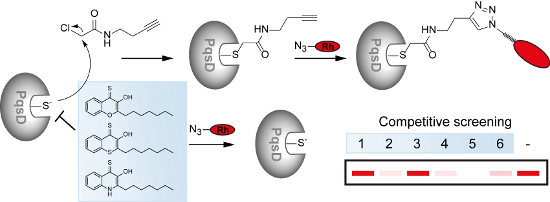
- of covalently reacting with the active site. We demonstrated the potential of our probes in a competitive labelling platform where we screened a library of synthetic HHQ and PQS analogues with heteroatom replacements and found several inhibitors of probe binding that may represent promising scaffolds
- synthetic HHQ and PQS derivatives with systematic heteroatom replacements [33]. Because the interactions of PqsD with AQs is still not entirely understood, we reasoned that HHQ or PQS analogues may be promising scaffolds for inhibitor development and we thus aimed to screen this library competitively
- the described procedures by McGlacken et al. [34] and Hradil et al. [35], respectively. We previously described the synthesis of HHQ and PQS derivatives with nitrogen in position 1 exchanged by oxygen and sulfur [33]. In our efforts to optimize the synthesis of these heteroatom derivatives we used a

Graphical Abstract

Figure 1: Quinolone signals of Pseudomonas aeruginosa. A) Structures of HHQ and PQS. B) Proposed mechanism fo...

Figure 2: Synthesis of electrophilic ABPP probes. A) Synthesis of α,β-unsaturated amide probes UA1–3. B) Synt...

Figure 3: In vitro labeling of PqsD by chemical probes. A) ABPP probe library with wild-type PqsD and PqsD C1...

Scheme 1: Synthesis of various HHQ and PQS analogues.
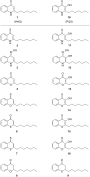
Figure 4: Library of HHQ and PQS analogues.

Figure 5: Competitive profiling platform. A) Schematic representation of the competitive labelling strategy w...
A versatile route to polythiophenes with functional pendant groups using alkyne chemistry
- Xiao Huang,
- Li Yang,
- Rikard Emanuelsson,
- Jonas Bergquist,
- Maria Strømme,
- Martin Sjödin and
- Adolf Gogoll
Beilstein J. Org. Chem. 2016, 12, 2682–2688, doi:10.3762/bjoc.12.265

- conditions leading to exomethylene-EDOT [19]. Therefore, the usage of basic nucleophiles is problematic. Moreover, these heteroatom-based linkers between the polymer backbone and the pendant group usually have limited tolerance to acidic or basic conditions promoting hydrolysis, and some of them are

Graphical Abstract

Scheme 1: Previous and present EDOT functionalization routes.

Scheme 2: The synthetic route from glycidol to pyEDOT (3).

Scheme 3: The synthetic route from D-mannitol diketal to eEDOT 8 and TMS-eEDOT 8’.
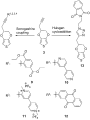
Scheme 4: New EDOT derivatives 9–13 accessible from pyEDOT with bromo-pendant group precursors via Sonogashir...
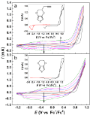
Figure 1: CVs of electrochemical polymerization of (a) pyEDOT 3 and (b) EDOT in MeCN solution with 0.1 M TEAPF...
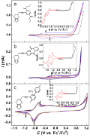
Figure 2: CVs of electrochemical polymerization of (a) pyEDOT-DeT (9), (b) pyEDOT-AQ (12) and (c) pyEDOT-MVPF...
Et3B-mediated and palladium-catalyzed direct allylation of β-dicarbonyl compounds with Morita–Baylis–Hillman alcohols
- Ahlem Abidi,
- Yosra Oueslati and
- Farhat Rezgui
Beilstein J. Org. Chem. 2016, 12, 2402–2409, doi:10.3762/bjoc.12.234

- ; Morita–Baylis–Hillman; palladium; triethylborane; Introduction In nucleophilic allylic substitutions, π-allylpalladium complexes are useful intermediates for the construction of carbon–carbon and carbon–heteroatom bonds in organic synthesis [1]. Usually, palladium species are used as catalysts in the

Graphical Abstract

Figure 1: Cyclic and acyclic MBH alcohols.

Scheme 1: Proposed catalytic cycle involving palladium catalysis for Et3B-promoted allylation of diethyl malo...

Scheme 2: Mechanistic pathway leading to the tricyclic compound 6j.

Figure 2: X-ray crystal structure of tricyclic compound 6j.
Stereo- and regioselectivity of the hetero-Diels–Alder reaction of nitroso derivatives with conjugated dienes
- Lucie Brulíková,
- Aidan Harrison,
- Marvin J. Miller and
- Jan Hlaváč
Beilstein J. Org. Chem. 2016, 12, 1949–1980, doi:10.3762/bjoc.12.184
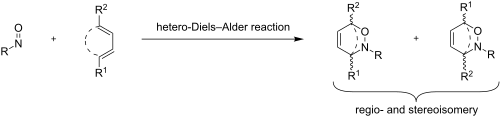
- biologically active compounds. It is a variant of the Diels–Alder reaction where either the diene or the dienophile contains a heteroatom. Hetero-Diels–Alder reactions between conjugated dienes and nitroso dienophiles affording 1,2-oxazines are utilized for the synthesis of many biologically active molecules
- reactions of acylnitroso compounds in [4 + 2] cycloadditions indicate several facts. The copper–oxazoline complex behaves as an excellent catalyst for the aerobic oxidation of acylhydroxamic acids. However, this system is useful only for hydroxamic acids containing a heteroatom between the aryl and carbonyl

Graphical Abstract

Scheme 1: Nitroso hetero-Diels–Alder reaction.

Scheme 2: The hetero-Diels–Alder reaction between thebaine (4) and an acylnitroso dienophile 5.

Figure 1: Examples of nitroso dienophiles frequently used in hetero-Diels–Alder reaction studies.

Scheme 3: Synthesis of arylnitroso species by substitution of a trifluoroborate group [36].
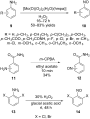
Scheme 4: Synthesis of arylnitroso compounds by amine oxidation.

Scheme 5: Synthesis of arylnitroso compounds by hydroxylamine oxidation.

Scheme 6: Synthesis of chloronitroso compounds by the treatment of a nitronate anion with oxalyl chloride.

Scheme 7: Non-oxidative routes to acylnitroso species.

Figure 2: RB3LYP/6-31G* computed energies (in kcal·mol−1) and bond lengths for exo and endo-transition states...

Scheme 8: Hetero-Diels–Alder cycloadditions of diene 28 and nitroso dienophiles 29.

Figure 3: Relative reactivity (ΔE#) and regioselectivity (Δ) for hetero-Diels–Alder of 28 and nitroso dienoph...

Scheme 9: Reaction of chiral 1-phosphono-1,3-butadiene 31 with nitroso dienophiles 32.

Scheme 10: Hetero-Diels–Alder reactions of hydroxamic acids 35 with various dienes 37.

Scheme 11: General regioselectivity of the nitroso hetero-Diels–Alder reaction observed with unsymmetrical die...

Scheme 12: Effect of the nitroso species on the regioselectivity for weakly directing 2-substituted dienes.

Scheme 13: Regioselectivity of 1,4-disubstituted dienes 51.

Scheme 14: Nitroso hetero-Diels–Alder reaction between Boc-nitroso compound 54 and dienes 55.

Scheme 15: Nitroso hetero-Diels–Alder reaction between Wightman reagent 58 and dienes 59.

Scheme 16: Regioselective reaction of 3-dienyl-2-azetidinones 62 with nitrosobenzene (47).

Scheme 17: The regioselective reaction of 1,3-butadienes 65 with various nitroso heterodienophiles 66.

Scheme 18: Catalysis of the nitroso hetero-Diels–Alder reaction by vanadium in the presence of the oxidant CHP...

Figure 4: 1,2-Oxazines synthesized in solution with moderate to high regioselectivity, showing the favored re...

Figure 5: 1,2-Oxazines synthesized in the solid phase with moderate to high regioselectivity, showing the fav...

Scheme 19: Regioselectivity of solution-phase nitroso hetero-Diels–Alder reaction with acyl and aryl nitroso d...

Scheme 20: Favored regioisomeric outcome for the solution and solid-phase reactions, giving hetero-Diels–Alder...

Figure 6: Favored regioisomers and regioisomeric ratios for 1,2-oxazines synthesized in solid phase (91, 93, ...

Scheme 21: Regiocontrol of the reaction between 3-dienyl-2-azetidinones and nitrosobenzene due to change in a ...

Scheme 22: Regiocontrol of the reaction between diene 111 and 2-methyl-6-nitrosopyridine (112) due to metal co...

Scheme 23: Asymmetric hetero-Diels–Alder reactions reported by Vasella [56].

Scheme 24: Asymmetric hetero-Diels–Alder reaction of cyclohexa-1,3-diene (120) with acylnitroso dienophile 119....

Scheme 25: Asymmetric induction with L-proline derivatives 124–126.

Scheme 26: Asymmetric cycloaddition of the acylnitroso compound 136 to diene 135.

Scheme 27: Asymmetric induction with arylmenthol-based nitroso dienophiles 142.

Scheme 28: Cycloaddition of silyloxycyclohexadiene 145 to the acylnitroso dienophile derived from (+)-camphors...

Scheme 29: Asymmetric reaction of O-isopropylidene-protected cis-cyclohexa-3,5-diene-1,2-diol 147 with mannofu...

Scheme 30: Synthesis of synthon 152 from 2-methoxyphenol 150 and chiral auxiliary 151.

Scheme 31: Asymmetric nitroso hetero-Diels–Alder reaction with Wightman chloronitroso reagent 58.

Scheme 32: Asymmetric 1,2-oxazine synthesis using chiral cyclic diene 157 and the application of this reaction...

Scheme 33: Asymmetric 1,2-oxazine synthesis using a chiral diene reported by Jones et al. [75]. aRegioisomeric rat...

Scheme 34: The nitroso hetero-Diels–Alder reaction of acyclic oxazolidine-substituted diene 170 and chiral 1-s...

Scheme 35: The nitroso hetero-Diels–Alder reaction of acyclic lactam-substituted diene 176 with various acylni...

Scheme 36: The hetero-Diels–Alder reaction of acylnitroso dienophile.

Scheme 37: The hetero-Diels–Alder reaction of arylnitroso dienophiles using Lewis acids.

Scheme 38: Asymmetric hetero-Diels–Alder reactions of chiral alkyl N-dienylpyroglutamates.

Scheme 39: Catalytic asymmetric arylnitroso reaction between mono-substituted 1,3-cyclohexadiene 196 and disub...

Figure 7: Plausible chelate intermediate complexes formed during the hetero-Diels–Alder reaction to give 1,2-...

Scheme 40: Catalytic asymmetric nitroso hetero-Diels–Alder between cyclic dienes and 2-nitrosopyridine.

Scheme 41: The reason for the increased enantioselectivity of stereoisomer 212 compared with stereoisomer 213.

Scheme 42: The copper-catalyzed nitroso hetero-Diels–Alder reaction of 6-methyl-2-nitrosopyridine (199) with p...
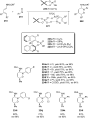
Scheme 43: Asymmetric nitroso hetero-Diels–Alder reaction of nitrosoarenes with dienylcarbamates catalyzed by ...

Scheme 44: The enantioselective hetero-Diels–Alder reaction between nitrosobenzene and (E)-2,4-pentadien-1-ol (...

Scheme 45: Asymmetric nitroso hetero-Diels–Alder reaction using tartaric acid ester chelation of the diene and...
Conjugate addition–enantioselective protonation reactions
- James P. Phelan and
- Jonathan A. Ellman
Beilstein J. Org. Chem. 2016, 12, 1203–1228, doi:10.3762/bjoc.12.116
- unsubstituted at the 2-position (R2 = H) led to lower enanantioselectivity (84:16 to 87:13 er). Products were not observed when either α-heteroatom-substituted acroleins or 3-substituted indoles were used as starting materials. When either the enantioenriched or racemic products 138 were resubmitted to the
- additions to other classes of Michael acceptors only being reported more recently. While many examples using sulfur and carbon nucleophiles have been reported, the addition of other heteroatom nucleophiles remains relatively unexplored. This approach for the synthesis of tertiary carbon stereocenters

Graphical Abstract

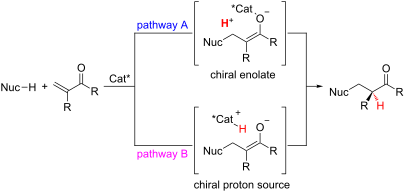
Figure 1: Two general pathways for conjugate addition followed by enantioselective protonation.

Scheme 1: Tomioka’s enantioselective addition of arylthiols to α-substituted acrylates.

Scheme 2: Sibi’s enantioselective hydrogen atom transfer reactions.

Scheme 3: Mikami’s addition of perfluorobutyl radical to α-aminoacrylate 11.

Scheme 4: Reisman’s Friedel–Crafts conjugate addition–enantioselective protonation approach toward tryptophan...

Scheme 5: Pracejus’s enantioselective addition of benzylmercaptan to α-aminoacrylate 20.

Scheme 6: Kumar and Dike’s enantioselective addition of thiophenol to α-arylacrylates.

Scheme 7: Tan’s enantioselective addition of aromatic thiols to 2-phthalimidoacrylates.

Scheme 8: Glorius’ enantioselective Stetter reactions with α-substituted acrylates.

Scheme 9: Dixon’s enantioselective addition of thiols to α-substituted acrylates.

Figure 2: Chiral phosphorous ligands.

Scheme 10: Enantioselective addition of arylboronic acids to methyl α-acetamidoacrylate.

Scheme 11: Frost’s enantioselective additions to dimethyl itaconate.

Scheme 12: Darses and Genet’s addition of potassium organotrifluoroborates to α-aminoacrylates.

Scheme 13: Proposed mechanism for enantioselective additions to α-aminoacrylates.

Scheme 14: Sibi’s addition of arylboronic acids to α-methylaminoacrylates.

Scheme 15: Frost’s enantioselective synthesis of α,α-dibenzylacetates 64.

Scheme 16: Rovis’s hydroheteroarylation of α-substituted acrylates with benzoxazoles.

Scheme 17: Proposed mechanism for the hydroheteroarylation of α-substituted acrylates with benzoxazoles.
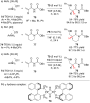
Scheme 18: Sodeoka’s enantioselective addition of amines to N-benzyloxycarbonyl acrylamides 75 and 77.

Scheme 19: Proposed catalytic cycle for Sodeoka’s enantioselective addition of amines.

Scheme 20: Sibi’s enantioselective Friedel–Crafts addition of pyrroles to imides 84.

Scheme 21: Kobayashi’s enantioselective addition of malonates to α-substituted N-acryloyloxazolidinones.

Scheme 22: Chen and Wu’s enantioselective addition of thiophenol to N-methacryloyl benzamide.

Scheme 23: Tan’s enantioselective addition of secondary phosphine oxides and thiols to N-arylitaconimides.

Scheme 24: Enantioselective addition of thiols to α-substituted N-acryloylamides.

Scheme 25: Kobayashi’s enantioselective addition of thiols to α,β-unsaturated ketones.

Scheme 26: Feng’s enantioselective addition of pyrazoles to α-substituted vinyl ketones.

Scheme 27: Luo and Cheng’s addition of indoles to vinyl ketones by enamine catalysis.

Scheme 28: Curtin–Hammett controlled enantioselective addition of indole.

Scheme 29: Luo and Cheng’s enantioselective additions to α-branched vinyl ketones.

Scheme 30: Lou’s reduction–conjugate addition–enantioselective protonation.

Scheme 31: Luo and Cheng’s primary amine-catalyzed addition of indoles to α-substituted acroleins.

Scheme 32: Luo and Cheng’s proposed mechanism and transition state.

Figure 3: Shibasaki’s chiral lanthanum and samarium tris(BINOL) catalysts.

Scheme 33: Shibasaki’s enantioselective addition of 4-tert-butyl(thiophenol) to α,β-unsaturated thioesters.

Scheme 34: Shibasaki’s application of chiral (S)-SmNa3tris(binaphthoxide) catalyst 144 to the total synthesis ...

Scheme 35: Shibasaki’s cyanation–enantioselective protonation of N-acylpyrroles.

Scheme 36: Tanaka’s hydroacylation of acrylamides with aliphatic aldehydes.

Scheme 37: Ellman’s enantioselective addition of α-substituted Meldrum’s acids to terminally unsubstituted nit...

Scheme 38: Ellman’s enantioselective addition of thioacids to α,β,β-trisubstituted nitroalkenes.

Scheme 39: Hayashi’s enantioselective hydroarylation of diphenylphosphinylallenes.

Scheme 40: Hayashi’s enantioselective hydroarylation of diphenylphosphinylallenes.

Figure 4: Togni’s chiral ferrocenyl tridentate nickel(II) and palladium(II) complexes.

Scheme 41: Togni’s enantioselective hydrophosphination of methacrylonitrile.

Scheme 42: Togni’s enantioselective hydroamination of methacrylonitrile.
The synthesis of functionalized bridged polycycles via C–H bond insertion
- Jiun-Le Shih,
- Po-An Chen and
- Jeremy A. May
Beilstein J. Org. Chem. 2016, 12, 985–999, doi:10.3762/bjoc.12.97
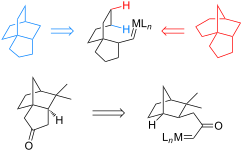
- further develop Wolff’s early work to determine selectivity patterns for transannular insertions (Scheme 7) [34][35]. His group examined the effects of heteroatom substituents such as ethers and an azide in the 3-methoxycyclohexyl substrate 34. The observed patterns largely mirrored those found in

Graphical Abstract

Figure 1: Bridged polycyclic natural products.

Figure 2: Strategic limitations.

Scheme 1: Bridged rings from N–H bond insertions.

Scheme 2: The synthesis of deoxystemodin.

Scheme 3: A model system for ingenol.

Scheme 4: Formal synthesis of platensimycin.
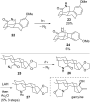
Scheme 5: The formal synthesis of gerryine.

Scheme 6: Copper-catalyzed bridged-ring synthesis.
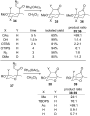
Scheme 7: Factors influencing insertion selectivity.

Scheme 8: Bridged-lactam formation.

Scheme 9: The total synthesis of (+)-codeine.

Scheme 10: A model system for irroratin.

Scheme 11: The utility of 1,6-insertion.

Scheme 12: Piperidine functionalization.

Scheme 13: Wilkinson’s catalyst for C–H bond insertion.

Scheme 14: Bridgehead insertion and the total synthesis of albene and santalene.

Scheme 15: The total synthesis of neopupukean-10-one.

Scheme 16: An approach to phomoidride B.

Scheme 17: Carbene cascade for fused bicycles.
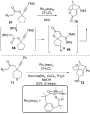
Scheme 18: Cascade formation of bridged rings.
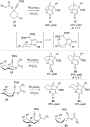
Scheme 19: Conformational effects.

Scheme 20: Hydrazone cascade reaction.

Scheme 21: Mechanistic studies.

Scheme 22: Gold carbene formation from alkynes.

Scheme 23: Au-catalyzed bridged-bicycle formation.

Scheme 24: Gold carbene/alkyne cascade.

Scheme 25: Gold carbene/alkyne cascade with C–H bond insertion.

Scheme 26: Platinum cascades.

Scheme 27: Tungsten cascade.
1H-Imidazol-4(5H)-ones and thiazol-4(5H)-ones as emerging pronucleophiles in asymmetric catalysis
- Antonia Mielgo and
- Claudio Palomo
Beilstein J. Org. Chem. 2016, 12, 918–936, doi:10.3762/bjoc.12.90
- –C and C–heteroatom bonds [112] and have been used in many synthetic applications [113]. However one of the main limitations in the area is the lack of highly diastereo- and enantioselective protocols. In this context, particularly difficult has been to achieve high diastereoselectivity, and only a

Graphical Abstract

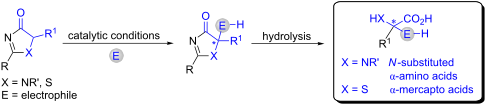
Figure 1: Some α-substituted heterocycles for asymmetric catalysis, their reactivity patterns against enoliza...

Figure 2: 1H-Imidazol-4(5H)-ones 1 and thiazol-4(5H)-ones 2.
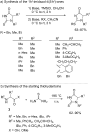
Scheme 1: a) Synthesis of 2-thio-1H-imidazol-4(5H)-ones [55] and b) preparation of the starting thiohydantoins [59].

Scheme 2: Selected examples of the Michael addition of 2-thio-1H-imidazol-4(5H)-ones to nitroalkenes [55]. aReact...

Scheme 3: Michael addition of thiohydantoins to nitrostyrene assisted by Et3N and catalysts C1 and C3. aAbsol...

Scheme 4: Elaboration of the Michael adducts coming from the Michael addition to nitroalkenes [55].

Figure 3: Proposed model for the Michael addition of 1H-imidazol4-(5H)-ones and selected 1H NMR data which su...

Scheme 5: Michael addition 2-thio-1H-imidazol-4(5H)-ones to the α-silyloxyenone 29 [55].

Scheme 6: Elaboration of the Michael adducts coming from the Michael addition to nitroolefins [55].
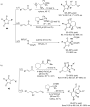
Scheme 7: Rhodanines in asymmetric catalytic reactions: a) Reaction with rhodanines of type 44 [78-80]; b) reactions...

Scheme 8: Michael addition of thiazol-4(5H)-ones to nitroolefins promoted by the ureidopeptide-like bifunctio...

Figure 4: Ureidopeptide-like Brønsted bases: catalyst design. a) Previous known design. b) Proposed new desig...

Scheme 9: Ureidopeptide-like Brønsted base bifunctional catalyst preparation. NMM = N-methylmorpholine, THF =...

Scheme 10: Selected examples of the Michael addition of thiazolones to different nitroolefins promoted by cata...

Scheme 11: Elaboration of the Michael adducts to α,α-disubstituted α-mercaptocarboxylic acid derivatives [85].

Scheme 12: Effect of the nitrogen atom at the aromatic substituent of the thiazolone on yield and stereoselect...

Scheme 13: Michael addition reaction of thiazol-4(5H)ones 74 to α’-silyloxyenone 29 [73].

Scheme 14: Elaboration of the thiazolone Michael adducts [73].

Scheme 15: Enantioselective γ-addition of oxazol-4(5H)-ones and thiazol-4(5H)-ones to allenoates promoted by C6...

Scheme 16: Enantioselective γ-addition of thiazol-4(5H)-ones and oxazol-4(5H)-ones to alkynoate 83 promoted by ...
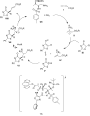
Scheme 17: Proposed mechanism for the C6-catalyzed γ-addition of thiazol-4(5H)-one to allenoates. Adapted from ...

Scheme 18: Catalytic enantioselective α-amination of thiazolones promoted by ureidopeptide like catalysts C5 a...

Scheme 19: Iridium-catalized asymmetric allyllation of substituted oxazol-4(5H)-ones and thiazol-4(5H)-ones pr...
A modular approach to neutral P,N-ligands: synthesis and coordination chemistry
- Vladislav Vasilenko,
- Torsten Roth,
- Clemens K. Blasius,
- Sebastian N. Intorp,
- Hubert Wadepohl and
- Lutz H. Gade
Beilstein J. Org. Chem. 2016, 12, 846–853, doi:10.3762/bjoc.12.83
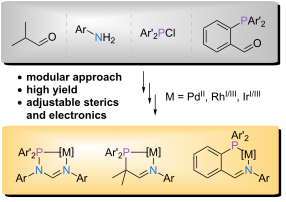
- . In addition, the resulting ligand families should provide nitrogen and phosphorus donors with varying donor strength (amidine vs imine, phosphine vs heteroatom-bound phosphorus) and different bite angles (five- vs six-membered chelate rings). Results and Discussion Ligand synthesis We based the

Graphical Abstract

Figure 1: P,N-ligand frameworks studied in this work.

Scheme 1: Synthesis of N-phosphanylformamidines 2 and 3. Reaction conditions: (i) t-BuLi, THF, −78 °C to rt, ...

Scheme 2: Synthesis of phosphanylformamidines 5 and 7. Reaction conditions: (i) t-BuLi, THF, −78 °C to rt, 1 ...

Scheme 3: Synthesis of complexes [2-M(cod)]X, [3-M(cod)]X, [5-M(cod)]X and [7-M(cod)]X. M = Rh, Ir; X = BF4− ...

Figure 2: Molecular structures of [2a-Rh(cod)]+ (A), [5-Ir(cod)]+ (B), and [7-Rh(cod)]+ (C,D). Anisotropic di...

Figure 3: Coordination of ligands 2a and 5 to Rh(III) and Ir(III) precursors. Yields: [2a-Cp*RhCl]BF4 = 87%, [...

Figure 4: Molecular structures of [2a-Cp*IrI]+ (left) and [5-Cp*IrI]+ (right). Anisotropic displacement ellip...

Figure 5: Formation of palladium complexes of ligands 2a, 5 and 7. (A) Formation of [2a-PdCl2] and [2a-PdCl]2...

Figure 6: Molecular structures of [2a-PdCl2] (left) and [5-Pd(2-Me-allyl)]+ (right). Anisotropic displacement...
Iridium/N-heterocyclic carbene-catalyzed C–H borylation of arenes by diisopropylaminoborane
- Mamoru Tobisu,
- Takuya Igarashi and
- Naoto Chatani
Beilstein J. Org. Chem. 2016, 12, 654–661, doi:10.3762/bjoc.12.65

- regioselectivity is readily predictable based on steric factors; 3) the resulting boryl group is versatile and can be converted into a variety of carbon- or heteroatom-based substituents. An iridium complex in conjunction with 4,4’-di-tert-butylbipyridine (dtbpy) developed by Ishiyama, Miyaura and Hartwig has

Graphical Abstract

Scheme 1: Catalytic C–H borylation of arenes and related reported boron sources.

Scheme 2: Scalability and derivatization.
Copper-mediated arylation with arylboronic acids: Facile and modular synthesis of triarylmethanes
- H. Surya Prakash Rao and
- A. Veera Bhadra Rao
Beilstein J. Org. Chem. 2016, 12, 496–504, doi:10.3762/bjoc.12.49
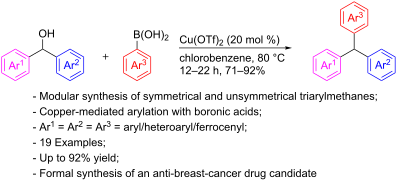
- [1][2][3][4]. Although the group can be restricted to such molecules, many closely related derivatives that have a triarylmethane motif (like those having a heteroatom attached to the central carbon atom or the central carbon is sp2 hybridized) have been included in this class [5]. Molecules with a

Graphical Abstract

Figure 1: Representative examples of triarylmethanes.

Scheme 1: General methods and proposed method for the synthesis of triarylmethanes.

Scheme 2: Role of solvent and reaction conditions in the Cu(OTf)2-mediated coupling of diphenylmethanol (9a) ...

Scheme 3: A plausible mechanism for the formation of triarylmethanes 11.

Scheme 4: Copper-catalyzed C–C bond formation synthesis of triarylmethane 10l.

Scheme 5: Synthesis of anti-breast-cancer agent intermediate 22.
Scope and limitations of the dual-gold-catalysed hydrophenoxylation of alkynes
- Adrián Gómez-Suárez,
- Yoshihiro Oonishi,
- Anthony R. Martin and
- Steven P. Nolan
Beilstein J. Org. Chem. 2016, 12, 172–178, doi:10.3762/bjoc.12.19
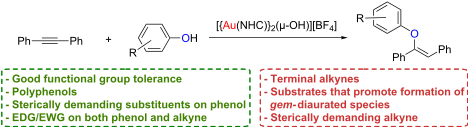
- , the selectivity dropped dramatically and a 1:0.43 ratio of products was observed (3nt, Scheme 5). In order to further test our hypothesis, the polarization of the alkyne was next reduced, but the potential chelating heteroatom was retained. The hydrophenoxylation of the unsymmetrical propargylic ether

Graphical Abstract

Scheme 1: Dual-gold-catalysed hydrophenoxylation of alkynes.
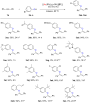
Scheme 2: Exploring the functional group tolerance. Reaction conditions: 1a (0.50 mmol, 1 equiv), 2a–o (0.55 ...

Scheme 3: Hydrophenoxylation using polyphenols. Reaction conditions: 1a (1 mmol, 2 equiv), 2p–s (0.50 mmol, 1...

Scheme 4: Hydrophenoxylation of (un)symmetrical alkynes. Reaction conditions: 1b–k (0.50 mmol, 1 equiv), 2t (...

Scheme 5: Regioselective hydrophenoxylation of unsymmetrical alkynes. Reaction conditions: 1l–p (1 equiv), 2a...
Direct estimate of the internal π-donation to the carbene centre within N-heterocyclic carbenes and related molecules
- Diego M. Andrada,
- Nicole Holzmann,
- Thomas Hamadi and
- Gernot Frenking
Beilstein J. Org. Chem. 2015, 11, 2727–2736, doi:10.3762/bjoc.11.294
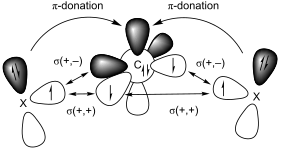
- Ccarb−X bonds. The NBO data indicate that the occupation of the p(π) AO of the Ccarb atom is between 0.81 e (8, and 9) and 0.49 e (6). The p(π) occupation at the Ccarb atom is particularly large for the carbenes which have no heteroatoms bonded to it (9, and 14) or only one heteroatom as in 8. The

Graphical Abstract

Scheme 1: Schematic view of the calculated carbenes 1–15.

Figure 1: Optimized geometries of carbenes 1–15 at the BP86/def2-TZVPP level of theory. Bond lengths and angl...

Figure 2: Frontier orbitals (BP86/def2-TZVPP) and eigenvalues (in eV) of the carbenes 1–15. The isosurfaces w...

Scheme 2: Schematic view of the major orbital interactions between a carbon atom in the 3P electronic ground ...

Figure 3: Plot of deformation densities ∆ρ of the pairwise orbital interactions between C(3P) and N(Me)HC=CHN...

Figure 4: Plot of the ΔEπ values against NBO pπ occupation for the NHC family 1–15.
Recent advances in copper-catalyzed asymmetric coupling reactions
- Fengtao Zhou and
- Qian Cai
Beilstein J. Org. Chem. 2015, 11, 2600–2615, doi:10.3762/bjoc.11.280
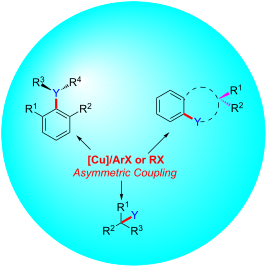
- -catalyzed (or -mediated) asymmetric coupling reactions have received significant attention over the past few years. Especially the coupling reactions of aryl or alkyl halides with nucleophiles became a very powerful tool for the formation of C–C, C–N, C–O and other carbon–heteroatom bonds as well as for the
- construction of heteroatom-containing ring systems. This review summarizes the recent progress in copper-catalyzed asymmetric coupling reactions for the formation of C–C and carbon–heteroatom bonds. Keywords: asymmetric; carbon–heteroatom bond; copper; coupling; Introduction Copper-mediated coupling
- reactions to be carried out under much milder conditions. In the meantime these reactions have become one of the most classic, efficient and powerful methods for the formation of C–C, C–N, C–O and other carbon–heteroatom bonds. Extensive applications have been developed in both academia and industry [6][7

Graphical Abstract

Scheme 1: Copper-catalyzed asymmetric preparation of biaryl diacids by Ullmann coupling.

Scheme 2: Intramolecular biaryl coupling of bis(iodotrimethoxybenzoyl)hexopyranose derivatives.

Scheme 3: Preparation of 3,3’-disubstituted MeO-BIPHEP derivatives.

Scheme 4: Enantioselective synthesis of trans-4,5,9,10-tetrahydroxy-9,10-dihydrophenanthrene.

Scheme 5: Copper-catalyzed coupling of oxazoline-substituted aromatics to afford biaryl products with high di...

Scheme 6: Total synthesis of O-permethyl-tellimagrandin I.

Scheme 7: Total synthesis of (+)-gossypol.

Scheme 8: Total synthesis of (−)-mastigophorene A.

Scheme 9: Total synthesis of isokotanin.

Scheme 10: Synthesis of dimethyl[7]thiaheterohelicenes.

Scheme 11: Intramolecular coupling with chiral ortho-substituents.

Scheme 12: Chiral 1,3-diol-derived tethers in the diastereoselective synthesis of biaryl compounds.

Scheme 13: Synthesis of chiral unsymmetrically substituted biaryl compounds.

Scheme 14: Atroposelective synthesis of biaryl ligands and natural products by using a chiral diether linker.

Scheme 15: Enantioselective arylation reactions of 2-methylacetoacetates.

Scheme 16: Asymmetric aryl C–N coupling reactions following a desymmetrization strategy.

Scheme 17: Construction of cyano-bearing all-carbon quaternary stereocenters.

Scheme 18: An unexpected inversion of the enantioselectivity in the asymmetric C–N coupling reactions using ch...

Scheme 19: Differentiation of two nucleophilic amide groups.

Scheme 20: Synthesis of spirobilactams through a double N-arylation reaction.

Scheme 21: Asymmetric N-arylation through kinetic resolution.

Scheme 22: Formation of cyano-substituted quaternary stereocenters through kinetic resolution.

Scheme 23: Copper-catalyzed intramolecular desymmetric aryl C–O coupling.

Scheme 24: Transition metal-catalyzed allylic substitutions.

Scheme 25: Copper-catalyzed asymmetric allylic substitution of allyl phosphates.

Scheme 26: Allylic substitution of allyl phosphates with allenylboronates.

Scheme 27: Allylic substitution of allyl phosphates with vinylboron.

Scheme 28: Allylic substitution of allyl phosphates with vinylboron.

Scheme 29: Construction of quaternary stereogenic carbon centers through enantioselective allylic cross-coupli...

Scheme 30: Cu-catalyzed enantioselective allyl–allyl cross-coupling.

Scheme 31: Cu-catalyzed enantioselective allylic substitutions with silylboronates.

Scheme 32: Asymmetric allylic substitution of allyl phosphates with silylboronates.

Scheme 33: Stereoconvergent synthesis of chiral allylboronates.

Scheme 34: Enantioselective allylic substitutions with diboronates.

Scheme 35: Enantioselective allylic alkylations of terminal alkynes.
Copper-catalyzed asymmetric conjugate addition of organometallic reagents to extended Michael acceptors
- Thibault E. Schmid,
- Sammy Drissi-Amraoui,
- Christophe Crévisy,
- Olivier Baslé and
- Marc Mauduit
Beilstein J. Org. Chem. 2015, 11, 2418–2434, doi:10.3762/bjoc.11.263
- ; sequential addition; Introduction Amongst the variety of synthetic methods available for the formation of C–C or C–heteroatom bonds, the asymmetric conjugate addition (ACA) of nucleophiles to electron-deficient alkenes is one of the most relevant and versatile for the synthesis of complex chiral molecules

Graphical Abstract

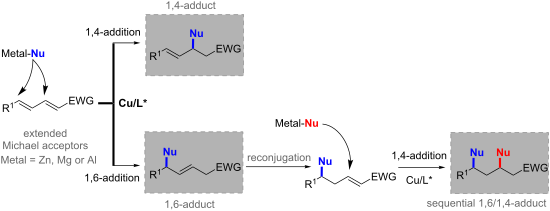
Figure 1: Possible reaction pathways in conjugate additions of nucleophiles on extended Michael acceptors.

Figure 2: Early reports of conjugate addition of copper-based reagents to extended Michael acceptors.

Figure 3: First applications of copper catalyzed 1,6-ACA in total synthesis.

Scheme 1: First example of enantioselective copper-catalyzed ACA on an extended Michael acceptor.

Scheme 2: Meldrum’s acid derivatives as substrates in enantioselective ACA.

Scheme 3: Reactivity of a cyclic dienone in Cu-catalyzed ACA of diethylzinc.

Scheme 4: Efficiency of DiPPAM ligand in 1,6-ACA of dialkylzinc to cyclic dienones.

Scheme 5: Sequential 1,6/1,4-ACA reactions involving linear aryldienones.

Scheme 6: Unsymmetrical hydroxyalkyl NHC ligands in 1,6-ACA of cyclic dienones.

Scheme 7: Performance of atropoisomeric diphosphines in 1,6-ACA of Et2Zn on cyclic dienones.

Scheme 8: Selective 1,6-ACA of Grignard reagents to acyclic dienoates, application in total synthesis.

Scheme 9: Reactivity of polyenic linear thioesters towards sequential 1,6-ACA/reconjugation/1,4-ACA and produ...

Scheme 10: 1,6-Conjugate addition of trialkylaluminium with regards to cyclic dienones.

Scheme 11: Copper-catalyzed conjugate addition of trimethylaluminium onto nitro dienoates.

Scheme 12: Copper-catalyzed selective 1,4-ACA in total synthesis of erogorgiaene.

Scheme 13: 1,4-selective addition of diethylzinc onto a cyclic enynone catalyzed by a chiral NHC-based system.

Scheme 14: Cu-NHC-catalyzed 1,6-ACA of dimethylzinc onto an α,β,γ,δ-unsaturated acyl-N-methylimidazole.

Scheme 15: 1,4-Selectivity in conjugate addition on extended systems with the concomitant use of a chelating c...

Scheme 16: Cu-NHC catalyzed 1,4-ACA as the key step in the total synthesis of ent-riccardiphenol B.

Scheme 17: Cu-NHC-catalyzed 1,4-selective ACA reactions with enynones.

Scheme 18: Linear dienones as substrates in 1,4-asymmetric conjugate addition reactions of Grignard reagents c...

Scheme 19: 1,4-ACA of trimethylaluminium to a cyclic enynone catalyzed by a copper-NHC system.

Scheme 20: Generation of a sterically encumbered chiral cyclohexanone from a polyunsaturated cyclic Michael ac...

Scheme 21: Selective conversion of β,γ-unsaturated α-ketoesters in copper-catalyzed asymmetric conjugate addit...

Scheme 22: Addition of trialkylaluminium compounds to nitroenynes catalyzed by L9/CuTC.

Scheme 23: Addition of trialkylaluminium compounds to nitrodienes catalyzed by L9/CuTC.

Scheme 24: Copper catalyzed 1,8- and 1,10-ACA reactions.
Co-solvation effect on the binding mode of the α-mangostin/β-cyclodextrin inclusion complex
- Chompoonut Rungnim,
- Sarunya Phunpee,
- Manaschai Kunaseth,
- Supawadee Namuangruk,
- Kanin Rungsardthong,
- Thanyada Rungrotmongkol and
- Uracha Ruktanonchai
Beilstein J. Org. Chem. 2015, 11, 2306–2317, doi:10.3762/bjoc.11.251
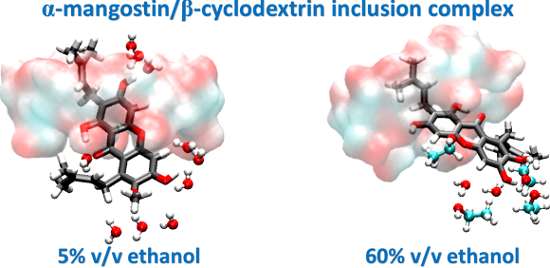
- around the α-MGS in the formed inclusion complexes. The gij(r) was calculated as a function of the ethanol or water oxygen atom j within a spherical radius of r from the α-MGS heteroatom (oxygen atom i). The RDF results of ethanol and water co-solvation are shown in the left and right columns of Figure 6

Graphical Abstract

Figure 1: Schematic views of a) β-CD and b) α-mangostin (α-MGS) geometries.

Figure 2: Solubility of α-mangostin as a function of ethanol concentration for different β-CD concentrations.

Figure 3: Solubility of α-mangostin as a function of β-CD for different ethanol concentrations.

Figure 4: RMSD plots of β-CD (grey) and α-MGS (black) for the five systems with different ethanol percentages....

Figure 5: Displacement of the A–C rings of α-MGS with respect to the β-CD center of gravity for five systems ...
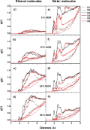
Figure 6: Radial distribution functions (RDF) of (a–d) ethanol, and (e–h) water molecules around the oxygen a...

Figure 7: Snapshots of solvation around heteroatoms of α-MGS/β-CD for systems containing 5% and 60% v/v ethan...
Molecular-oxygen-promoted Cu-catalyzed oxidative direct amidation of nonactivated carboxylic acids with azoles
- Wen Ding,
- Shaoyu Mai and
- Qiuling Song
Beilstein J. Org. Chem. 2015, 11, 2158–2165, doi:10.3762/bjoc.11.233
- [25][26]. Currently, copper-catalyzed, aerobic, oxidative transformations with dioxygen as the sole oxidant have emerged as a useful and powerful strategy to construct carbon–carbon and carbon–heteroatom bonds [27][28][29]. It is known that Cu(II) superoxide species are usually reported to be formed

Graphical Abstract

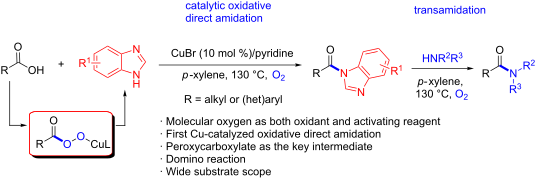
Scheme 1: Traditional activating mode and oxidative activation mode of free carboxylic acids in amide formati...
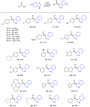
Scheme 2: Substrate scope for catalytic, direct amide formation from carboxylic acids and azoles. Reaction co...

Scheme 3: Further investigation into the scope of amine.

Scheme 4: Possible transamidation process.

Scheme 5: Scope of the amine transamidation from benzimidazole amides. Reaction conditions: benzimidazole ami...

Scheme 6: Preparative scale of the reaction.

Scheme 7: Radical scavenger reaction.

Scheme 8: Control reactions.

Scheme 9: Proposed mechanism.
Investigation of the role of stereoelectronic effects in the conformation of piperidones by NMR spectroscopy and X-ray diffraction
- Cesar Garcias-Morales,
- David Ortegón-Reyna and
- Armando Ariza-Castolo
Beilstein J. Org. Chem. 2015, 11, 1973–1984, doi:10.3762/bjoc.11.213

- hyperconjugation, which is related to the anomeric effect (effect where a heteroatomic substituent adjacent to a heteroatom within a cyclohexane ring prefers the axial orientation instead of the equatorial) [6][7][8][9][10][11][12]. Moreover, stereoelectronic effects have been related to the stabilization of
- heteroatom, this is known as homoanomeric effect, which is a type of homohyperconjugation [28][29][30][31][32][33][34][35][36]. The homoanomeric effect can be observed in two cases: the first-one through a W-arrangement, where the lone-pair electrons (LPEs) of O, N, and S, on the pseudo equatorial position

Graphical Abstract

Figure 1: (a) Schematic representation of the vicinal σC−H→σ*C−X interaction by double-bond/no-bond resonance...

Figure 2: Schematic representation of stereoelectronic effects (a) hyperconjugation, (b) homohyperconjugation...

Figure 3: Schematic representation of possible homoanomeric interactions in six-membered saturated heterocycl...

Figure 4: Structure of compounds 1 to 8.

Scheme 1: Proposed reaction mechanism for the synthesis of piperidones by the Mannich reaction. The substitue...

Scheme 2: For 6, R1 = R2 = H, for 7, R1 = H, R2 = CH3, for 8, R1 = R2 = CH3.
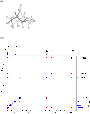
Figure 5: (a) Favored conformation for compound 1, determined by nOe effect, (b) t-ROESY spectrum of 1 record...
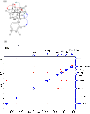
Figure 6: (a) Preferred conformation of 4 determined by nOe, (b) t-ROESY spectrum of 4 recorded at 500 MHz in...

Figure 7: (a) ORTEP diagram of 1. The thermal ellipsoids are drawn at the 30% probability level for all atoms...

Figure 8: (a) ORTEP diagrams of 6 and 7. The thermal ellipsoids are drawn at the 30% probability level for al...

Figure 9: (a) 1JC,H coupling constant of 3, 5, 6, and 8. (b) Plot of the population analysis versus 1JC,H (sl...

Scheme 3: Representation of the nN→σ*C–H(7)eq interaction. The interaction energy is 0.55 kcal/mol at the ωB9...
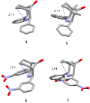
Figure 10: Distances between N(3) and C(7) for 3, 5, 6, and 7 measured in the structures obtained by XRD.
New aryloxybenzylidene ruthenium chelates – synthesis, reactivity and catalytic performance in ROMP
- Patrycja Żak,
- Szymon Rogalski,
- Mariusz Majchrzak,
- Maciej Kubicki and
- Cezary Pietraszuk
Beilstein J. Org. Chem. 2015, 11, 1910–1916, doi:10.3762/bjoc.11.206
- . Coordination motif of latent catalyst of olefin metathesis in which alkylidene ligand is bound to the heteroatom X, acting as an anionic ligand. Known latent catalysts of olefin metathesis in which alkylidene ligands are bound to a heteroatom, acting as an anionic ligand. Selected, known aryloxybenzylidene

Graphical Abstract

Figure 1: Coordination motif of latent catalyst of olefin metathesis in which alkylidene ligand is bound to t...
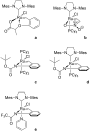
Figure 2: Known latent catalysts of olefin metathesis in which alkylidene ligands are bound to a heteroatom, ...

Figure 3: Selected, known aryloxybenzylidene chelates [9,10].

Scheme 1: Synthesis of catalyst precursors 4–6 [11].

Scheme 2: Synthesis of catalysts 8–10.

Scheme 3: Synthesis of catalysts 13 and 14.

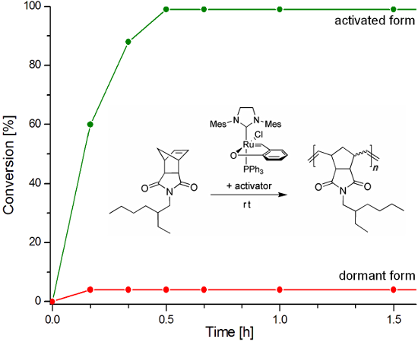
Figure 4: ROMP of COD. Conditions: CH2Cl2, 40 °C, 0.5 M, [COD]:[Ru] = 20000; For clarity, only two representa...

Figure 5: ROMP of cod. Conditions: CH2Cl2, 40 °C, 0.5 M, [cod]:[Ru] = 20000; For clarity only representative ...

Scheme 4: ROMP of monomer 15.

Figure 6: ROMP of monomer 15. Conditions: CDCl3, 40 °C, 0.08 M, [15]:[Ru] = 200.

Figure 7: ROMP of monomer 15. Conditions: CDCl3, 23 °C, 0.08 M, [15]:[Ru] = 200.

Scheme 5: Formation of phosphine free dimeric complex in the presence of CuCl.

Figure 8: A perspective view of complex 16, the ellipsoids are drawn at the 50% probability level. Hydrogen a...

Scheme 6: Synthesis of complexes 1a and 8 starting from dimer 16.

Scheme 7: Activation of complex 8 with one equivalent of HCl.
A comprehensive study of olefin metathesis catalyzed by Ru-based catalysts
- Albert Poater and
- Luigi Cavallo
Beilstein J. Org. Chem. 2015, 11, 1767–1780, doi:10.3762/bjoc.11.192
- field for the synthesis of C–C double bonds [7][8][9]. After the discovery of well-defined Ru-based (pre)catalysts, such as (PCy3)2Cl2Ru=CHPh [10], first by Grubbs and co-workers the range of these catalysts was broadened because of their tolerancy towards heteroatom ligands and the possibility to work
- Table 2), is due to the coordination of the O atom of the substrate in 14–19. In other words, with a heteroatom containing substrate the heteroatom can coordinate to the Ru center, as in the Hoveyda-type precatalysts [6], maybe stabilizing the active species, see Figure 3a. In any case, coordination of
- overall uphill path. Coordination of the terminal C=C double bond with respect to coordination of the O heteroatom is disfavored by 4.5 kcal/mol in 14 and favored by 1.8 kcal/mol in 16, respectively. The transition states are 20.2 and 19.9 kcal/mol higher in energy with respect to the 14e species, and the

Graphical Abstract

Scheme 1: Mechanism of the olefin metathesis.

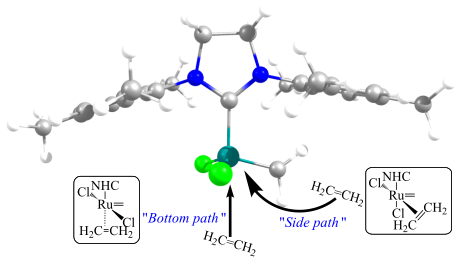
Scheme 2: Possible side or bottom mechanism of the insertion of the olefin.

Scheme 3: Ruthenium catalysts, bottom-bound (a) or side-bound (b and c).
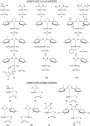
Scheme 4: Studied systems.

Figure 1: a) Naked 14e species for system 9 (distance in Å). b) trans (T); c) cis(S) (C(S)); and d) cis(O) (C...

Figure 2: Coordinated species for species a) 13a and b) 13b.

Figure 3: Naked 14e species for system 14 with the O atom of the substrate coordinated to the Ru center (dist...

Figure 4: System 9 with a Ru…F interaction in the cis and trans geometries, parts a and b, respectively (dist...

Figure 5: Representative geometries of the metallacycles 7 and 15, parts a and b, respectively (distance in Å...

Figure 6: Energy profiles for systems 1 and 14.

Figure 7: Energy profiles for systems 7 and 16.

Figure 8: Metallocycle and cyclopropane formation energy profile (energies in kcal/mol).
Deproto-metallation of N-arylated pyrroles and indoles using a mixed lithium–zinc base and regioselectivity-computed CH acidity relationship
- Mohamed Yacine Ameur Messaoud,
- Ghenia Bentabed-Ababsa,
- Madani Hedidi,
- Aïcha Derdour,
- Floris Chevallier,
- Yury S. Halauko,
- Oleg A. Ivashkevich,
- Vadim E. Matulis,
- Laurent Picot,
- Valérie Thiéry,
- Thierry Roisnel,
- Vincent Dorcet and
- Florence Mongin
Beilstein J. Org. Chem. 2015, 11, 1475–1485, doi:10.3762/bjoc.11.160

- -substituents such as 2-thienyl, 3-pyridyl, 4-methoxyphenyl and 4-bromophenyl, the reactions all took place on the substituent, at the position either adjacent to the heteroatom (S, N) or ortho to the heteroatom-containing substituent (OMe, Br). The CH acidities of the substrates were determined in THF solution

Graphical Abstract

Figure 1: Substrates involved in deproto-metallation reaction.
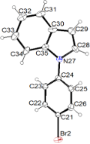
Figure 2: ORTEP diagram (30% probability) of 2e.

Scheme 1: Synthesis of the azole substrates 1f and 2f.

Scheme 2: Deproto-metallation of 1c followed by iodolysis [33].

Scheme 3: Deproto-metallation of 1a and 2a followed by iodolysis.

Scheme 4: Deproto-metallation of 1b and 2b followed by iodolysis.

Scheme 5: Deproto-metallation of 1c and 2c followed by iodolysis.

Figure 3: ORTEP diagrams (30% probability) of 4c, 3d and 3e.

Scheme 6: Deproto-metallation of 1d and 2d followed by iodolysis.

Scheme 7: Deproto-metallation of 1e and 2e followed by iodolysis.

Scheme 8: N-arylation of the iodides 3b, 3d and 4d.
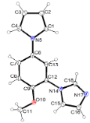
Figure 4: ORTEP diagram (30% probability) of 5d.
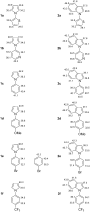
Figure 5: Calculated values of pKa(THF) of the compounds 1 and 2, and bromobenzene.

Figure 6: Antiproliferative activity (growth inhibition) of the tested compounds 1a,b,e,f, 2a,b and 5d at con...

Figure 7: Iodides previously formed as major products from the corresponding N-(4-methoxyphenyl)azoles using ...
Tetrathiafulvalene-based azine ligands for anion and metal cation coordination
- Awatef Ayadi,
- Aziz El Alamy,
- Olivier Alévêque,
- Magali Allain,
- Nabil Zouari,
- Mohammed Bouachrine and
- Abdelkrim El-Ghayoury
Beilstein J. Org. Chem. 2015, 11, 1379–1391, doi:10.3762/bjoc.11.149
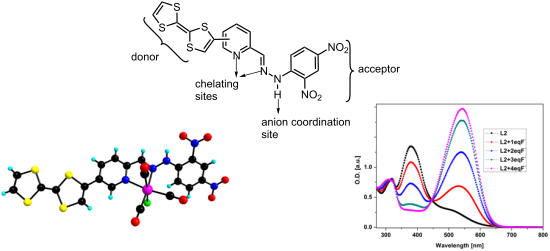
- (Figure 2). These columns are linked together along c-axis through hydrogen bonding occurring between TTF-C-H and NO2 (TTF-C–H1···O3-NO 2.493(6) Å). In the b-direction, the columns of stacked head to tail molecules are connected laterally through S···O heteroatom contacts (d = 3.16 Å, Figure S1

Graphical Abstract

Scheme 1: Multifunctional TTF-appended azine ligands.

Scheme 2: Synthetic scheme for TTF-based azine ligands L1 and L2.

Figure 1: Crystal structure of ligand L1 with atom numbering scheme (top) and a side view of the molecule (bo...

Figure 2: Partial crystal packing of ligand L1 with formation of head to tail dimers that stack along a-axis ...

Figure 3: Packing diagram of L1 showing the orientation of the columns of head to tail dimers.

Figure 4: UV–visible absorption spectra of ligands L1 and L2 (c 2.5 × 10⁻⁵ M in (dichloromethane/acetonitrile...

Figure 5: HOMO–LUMO Frontier orbitals representation for ligands L1 and L2.

Figure 6: Cyclic voltammograms of ligands L1 and L2 (2 × 10⁻⁵ M) in CH2Cl2/CH3CN (9:1, v/v) at 100 mV·s−1 on ...

Figure 7: UV–visible spectral changes of ligand L2 (2 × 10⁻⁵ M in CH2Cl2/CH3CN, 9/1) upon addition of TBAF.

Figure 8: 1H NMR spectra of ligand L2 (4·10−3 M in DMSO-d6) upon addition of successive aliquots of TBAF (DMS...

Figure 9: Crystal structure of complex 3 with atom numbering scheme (top) and a side view of the molecule (bo...

Figure 10: Pattern of intramolecular and intermolecular contacts in 3. Two molecules are linked by pairs of st...

Figure 11: Layered structure of complex 3 viewed along the a-axis. The dimers are linked together through hydr...
Selected synthetic strategies to cyclophanes
- Sambasivarao Kotha,
- Mukesh E. Shirbhate and
- Gopalkrushna T. Waghule
Beilstein J. Org. Chem. 2015, 11, 1274–1331, doi:10.3762/bjoc.11.142
- attachment of the alkyl chain to the aromatic system. In this review we are not discussing orthocyclophanes but rather focus on meta- and paracyclophanes only. The aromatic ring present in the cyclophane system can be either heterocyclic or carbocylic in nature. If there is a heteroatom present in the
- aromatic ring system then the system is called a heterophane (9) [54][55][56], whereas if the heteroatom is present in the alkyl chain of the bridge, then it is called a heteraphane (10) [57][58][59][60]. Alternatively, if the heteroatom is present in both the aromatic ring and the alkyl chain, it is
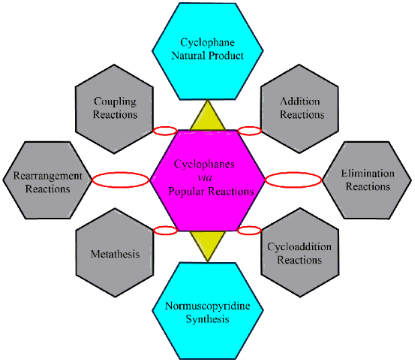
- new synthetic methods in this area is considered a useful exercise. To this end, name reactions or popular reactions, and rearrangement reactions are widely used. In connection with the synthesis of cyclophanes, we describe the employment of these reactions for C–C or C–heteroatom-bond formation. The

Graphical Abstract

Figure 1: General representation of cyclophanes.

Figure 2: cyclophanes one or more with heteroatom.

Figure 3: Metathesis catalysts 12–17 and C–C coupling catalyst 18.

Figure 4: Natural products containing the cyclophane skeleton.

Figure 5: Turriane family of natural products.

Scheme 1: Synthesis of [3]ferrocenophanes through Mannich reaction. Reagents and conditions: (i) excess HNMe2...

Scheme 2: Synthesis of cyclophanes through Michael addition. Reagents and conditions: (i) xylylene dibromide,...

Scheme 3: Synthesis of normuscopyridine analogue 37 through an oxymercuration–oxidation strategy. Reagents an...

Scheme 4: Synthesis of tribenzocyclotriyne 39 through Castro–Stephens coupling reaction. Reagents and conditi...

Scheme 5: Synthesis of cyclophane 43 through Glaser–Eglinton coupling. Reagents and conditions: (i) 9,10-bis(...

Scheme 6: Synthesis of the macrocyclic C-glycosyl cyclophane through Glaser coupling. Reagents and conditions...

Scheme 7: Synthesis of cyclophane-containing complex 49 through Glaser–Eglinton coupling reaction. Reagents a...

Scheme 8: Synthesis of cyclophane 53 through Glaser–Eglinton coupling. Reagents and conditions: (i) K2CO3, ac...

Figure 6: Cyclophanes 54–56 that have been synthesized through Glaser–Eglinton coupling.

Figure 7: Synthesis of tetrasubstituted [2.2]paracyclophane 57 and chiral cyclophyne 58 through Eglinton coup...

Scheme 9: Synthesis of cyclophane through Glaser–Hay coupling reaction. Reagents and conditions: (i) CuCl2 (1...

Scheme 10: Synthesis of seco-C/D ring analogs of ergot alkaloids through intramolecular Heck reaction. Reagent...

Scheme 11: Synthesis of muscopyridine 73 via Kumada coupling. Reagents and conditions: (i) 72, THF, ether, 20 ...

Scheme 12: Synthesis of the cyclophane 79 via McMurry coupling. Reagents and conditions: (i) 75, decaline, ref...

Scheme 13: Synthesis of stilbenophane 81 via McMurry coupling. Reagents and conditions: (i) TiCl4, Zn, pyridin...

Scheme 14: Synthesis of stilbenophane 85 via McMurry coupling. Reagents and conditions: (i) NBS (2 equiv), ben...
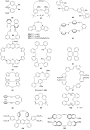
Figure 8: List of cyclophanes prepared via McMurry coupling reaction as a key step.

Scheme 15: Synthesis of paracyclophane by cross coupling involving Pd(0) catalyst. Reagents and conditions: (i...

Scheme 16: Synthesis of the cyclophane 112 via the pinacol coupling and 113 by RCM. Reagents and conditions: (...

Scheme 17: Synthesis of cyclophane derivatives 122a–c via Sonogoshira coupling. Reagents and conditions: (i) C...

Scheme 18: Synthesis of cyclophane 130 via Suzuki–Miyaura reaction as a key step. Reagents and conditions: (i)...

Scheme 19: Synthesis of the mycocyclosin via Suzuki–Miyaura cross coupling. Reagents and conditions: (i) benzy...

Scheme 20: Synthesis of cyclophanes via Wurtz coupling reaction Reagents and conditions: (i) PhLi, Et2O, C6H6,...

Scheme 21: Synthesis of non-natural glycophanes using alkyne metathesis. Reagents and conditions: (i) G-I (12)...

Figure 9: Synthesis of cyclophanes via ring-closing alkyne metathesis.

Scheme 22: Synthesis of crownophanes by cross-enyne metathesis. Reagents and conditions: (i) G-II (13), 5 mol ...

Scheme 23: Synthesis of (−)-cylindrocyclophanes A (156) and (−)-cylindrocyclophanes F (155). Reagents and cond...

Scheme 24: Synthesis of cyclophane 159 derivatives via SM cross-coupling and RCM. Reagents and conditions: (i)...

Scheme 25: Sexithiophene synthesis via cross metathesis. Reagents and conditions: (i) 161, Pd(PPh3)4, K2CO3, T...

Scheme 26: Synthesis of pyrrole-based cyclophane using enyne metathesis. Reagents and conditions: (i) Se, chlo...

Scheme 27: Synthesis of macrocyclic derivatives by RCM. Reagents and conditions: (i) G-I/G-II, CH2Cl2, 0.005 M...

Scheme 28: Synthesis of enantiopure β-lactam-based dienyl bis(dihydrofuran) 179. Reagents and conditions: (i) ...

Scheme 29: Synthesis of a [1.1.6]metaparacyclophane derivative 183 via SM cross coupling. Reagents and conditi...

Scheme 30: Synthesis of a [1.1.6]metaparacyclophane derivative 190 via SM cross coupling. Reagents and conditi...

Scheme 31: Template-promoted synthesis of cyclophanes involving RCM. Reagents and conditions: (i) acenaphthene...

Scheme 32: Synthesis of [3.4]cyclophane derivatives 200 via SM cross coupling and RCM. Reagents and conditions...
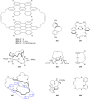
Figure 10: Examples for cyclophanes synthesized by RCM.

Scheme 33: Synthesis of the longithorone C framework assisted by fluorinated auxiliaries. Reagents and conditi...

Scheme 34: Synthesis of the longithorone framework via RCM. Reagents and conditions: (i) 213, NaH, THF, rt, 10...

Scheme 35: Synthesis of floresolide B via RCM as a key step. Reagents and conditions: (i) G-II (13, 0.1 equiv)...

Scheme 36: Synthesis of normuscopyridine (223) by the RCM strategy. Reagents and condition: (i) Mg, THF, hexen...

Scheme 37: Synthesis of muscopyridine (73) via RCM. Reagents and conditions: (i) 225, NaH, THF, 0 °C to rt, 1....

Scheme 38: Synthesis of muscopyridine (73) via RCM strategy. Reagents and conditions: (i) NaH, n-BuLi, 5-bromo...

Scheme 39: Synthesis of pyridinophane derivatives 223 and 245. Reagents and conditions: (i) PhSO2Na, TBAB, CH3...

Scheme 40: Synthesis of metacyclophane derivatives 251 and 253. Reagents and conditions: (i) 240, NaH, THF, rt...

Scheme 41: Synthesis of normuscopyridine and its higher analogues. Reagents and conditions: (i) alkenyl bromid...

Scheme 42: Synthesis of fluorinated ferrocenophane 263 via a [2 + 2] cycloaddition. Reagents and conditions: (...

Scheme 43: Synthesis of [2.n]metacyclophanes 270 via a [2 + 2] cycloaddition. Reagents and conditions: (i) Ac2...

Scheme 44: Synthesis of metacyclophane 273 by a [2 + 2 + 2] co-trimerization. Reagents and conditions: (i) [Rh...

Scheme 45: Synthesis of paracyclophane 276 via a [2 + 2 + 2] cycloaddition reaction. Reagents and conditions: ...

Scheme 46: Synthesis of cyclophane 278 via a [2 + 2 + 2] cycloaddition reaction. Reagents and conditions: (i) ...

Scheme 47: Synthesis of cyclophane 280 via a [2 + 2 + 2] cycloaddition. Reagents and conditions: (i) [(Rh(cod)(...

Scheme 48: Synthesis of taxane framework by a [2 + 2 + 2] cycloaddition. Reagents and conditions: (i) Cp(CO)2 ...

Scheme 49: Synthesis of cyclophane 284 and 285 via a [2 + 2 + 2] cycloaddition reaction. Reagents and conditio...

Scheme 50: Synthesis of pyridinophanes 293a,b and 294a,b via a [2 + 2 + 2] cycloaddition. Reagents and conditi...

Scheme 51: Synthesis of pyridinophanes 296 and 297 via a [2 + 2 + 2] cycloaddition. Reagents and conditions: (...

Scheme 52: Synthesis of triazolophane by a 1,3-dipolar cycloaddition. Reagents and conditions: (i) propargyl b...

Scheme 53: Synthesis of glycotriazolophane 309 by a click reaction. Reagents and conditions: (i) LiOH, H2O, Me...

Figure 11: Cyclophanes 310 and 311 prepared via click chemistry.

Scheme 54: Synthesis of cyclophane via the Dötz benzannulation. Reagents and conditions: (i) THF, 100 °C, 12 h...

Scheme 55: Synthesis of [6,6]metacyclophane by a Dötz benzannulation. Reagents and conditions: (i) THF, 100 °C...

Scheme 56: Synthesis of cyclophanes by a Dötz benzannulation. Reagents and conditions: (i) THF, 65 °C, 3 h; (i...

Scheme 57: Synthesis of muscopyridine (73) via an intramolecular DA reaction of ketene. Reagents and condition...

Scheme 58: Synthesis of bis[10]paracyclophane 336 via Diels–Alder reaction. Reagents and conditions: (i) DMAD,...

Scheme 59: Synthesis of [8]paracyclophane via DA reaction. Reagents and conditions: (i) maleic anhydride, 3–5 ...

Scheme 60: Biomimetic synthesis of (−)-longithorone A. Reagents and conditions: (i) Me2AlCl, CH2Cl2, −20 °C, 7...

Scheme 61: Synthesis of sporolide B (349) via a [4 + 2] cycloaddition reaction. Reagents and conditions: (i) P...

Scheme 62: Synthesis of the framework of (+)-cavicularin (352) via a [4 + 2] cycloaddition. Reagents and condi...

Scheme 63: Synthesis of oxazole-containing cyclophane 354 via Beckmann rearrangement. Reagents and conditions:...

Scheme 64: Synthesis of cyclophanes 360a–c via benzidine rearrangement. Reagents and conditions: (i) 356a–d, K2...

Scheme 65: Synthesis of cyclophanes 365a–c via benzidine rearrangement. Reagents and conditions: (i) BocNHNH2,...

Scheme 66: Synthesis of metacyclophane 367 via Ciamician–Dennstedt rearrangement. Reagents and conditions: (i)...

Scheme 67: Synthesis of cyclophane by tandem Claisen rearrangement and RCM as key steps. Reagents and conditio...

Scheme 68: Synthesis of cyclophane derivative 380. Reagents and conditions: (i) K2CO3, CH3CN, allyl bromide, r...

Scheme 69: Synthesis of metacyclophane via Cope rearrangement. Reagents and conditions: (i) MeOH, NaBH4, rt, 1...

Scheme 70: Synthesis of cyclopropanophane via Favorskii rearrangement. Reagents and conditions: (i) Br2, CH2Cl2...

Scheme 71: Cyclophane 389 synthesis via photo-Fries rearrangement. Reagents and conditions: (i) DMAP, EDCl/CHCl...

Scheme 72: Synthesis of normuscopyridine (223) via Schmidt rearrangement. Reagents and conditions: (i) ethyl s...

Scheme 73: Synthesis of crownophanes by tandem Claisen rearrangement. Reagents and conditions: (i) diamine, Et3...

Scheme 74: Attempted synthesis of cyclophanes via tandem Claisen rearrangement and RCM. Reagents and condition...

Scheme 75: Synthesis of muscopyridine via alkylation with 2,6-dimethylpyridine anion. Reagents and conditions:...

Scheme 76: Synthesis of cyclophane via Friedel–Craft acylation. Reagents and conditions: (i) CS2, AlCl3, 7 d, ...

Scheme 77: Pyridinophane 418 synthesis via Friedel–Craft acylation. Reagents and conditions: (i) 416, AlCl3, CH...

Scheme 78: Cyclophane synthesis involving the Kotha–Schölkopf reagent 421. Reagents and conditions: (i) NBS, A...

Scheme 79: Cyclophane synthesis involving the Kotha–Schölkopf reagent 421. Reagents and conditions: (i) BEMP, ...

Scheme 80: Cyclophane synthesis by coupling with TosMIC. Reagents and conditions: (i) (a) ClCH2OCH3, TiCl4, CS2...

Scheme 81: Synthesis of diaza[32]cyclophanes and triaza[33]cyclophanes. Reagents and conditions: (i) DMF, NaH,...

Scheme 82: Synthesis of cyclophane 439 via acyloin condensation. Reagents and conditions: (i) Na, xylene, 75%;...

Scheme 83: Synthesis of multibridged binuclear cyclophane 442 by aldol condensation. Reagents and conditions: ...

Scheme 84: Synthesis of various macrolactones. Reagents and conditions: (i) iPr2EtN, DMF, 77–83%; (ii) TBDMSCl...

Scheme 85: Synthesis of muscone and muscopyridine via Yamaguchi esterification. Reagents and conditions: (i) 4...

Scheme 86: Synthesis of [5]metacyclophane via a double elimination reaction. Reagents and conditions: (i) LiBr...

Figure 12: Cyclophanes 466–472 synthesized via Hofmann elimination.

Scheme 87: Synthesis of cryptophane via Baylis–Hillman reaction. Reagents and conditions: (i) methyl acrylate,...

Scheme 88: Synthesis of cyclophane 479 via double Chichibabin reaction. Reagents and conditions: (i) excess 478...

Scheme 89: Synthesis of cyclophane 483 via double Chichibabin reaction. Reagents and conditions: (i) 481, OH−;...

Scheme 90: Synthesis of cyclopeptide via an intramolecular SNAr reaction. Reagents and conditions: (i) TBAF, T...

Scheme 91: Synthesis of muscopyridine (73) via C-zip ring enlargement reaction. Reagents and conditions: (i) H...

Figure 13: Mechanism of the formation of compound 494.

Scheme 92: Synthesis of indolophanetetraynes 501a,b using the Nicholas reaction as a key step. Reagents and co...

Scheme 93: Synthesis of cyclophane via radical cyclization. Reagents and conditions: (i) cyclododecanone, phen...

Scheme 94: Synthesis of (−)-cylindrocyclophanes A (156) and (−)-cylindrocyclophanes F (155). Reagents and cond...

Scheme 95: Cyclophane synthesis via Wittig reaction. Reagents and conditions: (i) LiOEt (2.1 equiv), THF, −78 ...

Figure 14: Representative examples of cyclophanes synthesized via Wittig reaction.

Scheme 96: Synthesis of the [6]paracyclophane via isomerization of Dewar benzene. Reagents and conditions: (i)...
Diastereoselective and enantioselective conjugate addition reactions utilizing α,β-unsaturated amides and lactams
- Katherine M. Byrd
Beilstein J. Org. Chem. 2015, 11, 530–562, doi:10.3762/bjoc.11.60


Graphical Abstract

Scheme 1: Generic mechanism for the conjugate addition reaction.

Figure 1: Methods to activate unsaturated amide/lactam systems.

Scheme 2: DCA of Grignard reagents to an L-ephedrine derived chiral α,β–unsaturated amide.

Figure 2: Chiral auxiliaries used in DCA reactions.

Scheme 3: Comparison between auxiliary 5 and the Oppolzer auxiliary in a DCA reaction.

Scheme 4: Use of Evans auxiliary in a DCA reaction.
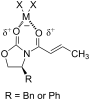
Figure 3: Lewis acid complex of the Evans auxiliary [43].

Scheme 5: DCA reactions of α,β-unsaturated amides utilizing (S,S)-(+)-pseudoephedrine and the OTBS-derivative...

Figure 4: Proposed model accounting for the diastereoselectivity observed in the 1,4-addition of Bn2NLi to α,...

Scheme 6: An example of a tandem conjugate addition–α-alkylation reaction of an α,β-unsaturated amide utilizi...

Scheme 7: Conjugate addition to an α,β-unsaturated bicyclic lactam leading to (+)-paroxetine and (+)-femoxeti...

Scheme 8: Intramolecular conjugate addition reaction to α,β-unsaturated amide.

Scheme 9: Conjugate addition to an α,β-unsaturated pyroglutamate derivative.

Scheme 10: Cu(I)–NHC-catalyzed asymmetric silylation of α,β-unsaturated lactams and amides.

Scheme 11: Asymmetric copper-catalyzed 1,4-borylation of an α,β-unsaturated amide.

Scheme 12: Asymmetric cross-coupling 49 to phenyl chloride.

Scheme 13: Rhodium-catalyzed asymmetric 1,4-arylation of an α,β-unsaturated lactam.

Scheme 14: Rhodium-catalyzed asymmetric 1,4-arylation of an α,β-unsaturated amide.

Scheme 15: Rhodium-catalyzed asymmetric 1,4-arylation of an α,β-unsaturated amide using a chiral bicyclic dien...

Scheme 16: Synthesis of (R)-(−)-baclofen through a rhodium-catalyzed asymmetric 1,4-arylation of lactam 58.

Scheme 17: Rhodium-catalyzed asymmetric 1,4-arylation of an α,β-unsaturated amide and lactam employing organo[...

Scheme 18: Rhodium-catalyzed asymmetric 1,4-arylation of an α,β-unsaturated lactam employing benzofuran-2-ylzi...

Figure 5: Further chiral ligands that have been used in rhodium-catalyzed 1,4-additions of α,β-unsaturated am...

Scheme 19: Palladium-catalyzed asymmetric 1,4-arylation of arylsiloxanes to a α,β-unsaturated lactam.

Scheme 20: SmI2-mediated cyclization of α,β-unsaturated Weinreb amides.

Figure 6: Chiral Lewis acid complexes used in the Mukaiyama–Michael addition of α,β-unsaturated amides.

Scheme 21: Mukaiyama–Michael addition of thioester silylketene acetal to α,β-unsaturated N-alkenoyloxazolidino...

Scheme 22: Asymmetric 1,4-addition of aryl acetylides to α,β-unsaturated thioamides.

Scheme 23: Asymmetric 1,4-addition of alkyl acetylides to α,β-unsaturated thioamides.

Scheme 24: Asymmetric vinylogous conjugate additions of unsaturated butyrolactones to α,β-unsaturated thioamid...

Scheme 25: Gd-catalyzed asymmetric 1,4-cyanation of α,β-unsaturated N-acylpyrroles [205].

Scheme 26: Lewis acid-catalyzed asymmetric 1,4-cyanation of α,β-unsaturated N-acylpyrazole 107.

Scheme 27: Lewis acid mediated 1,4-addition of dibenzyl malonate to α,β-unsaturated N-acylpyrroles.

Scheme 28: Chiral Lewis acid mediated 1,4-radical addition to α,β-unsaturated N-acyloxazolidinone [224].

Scheme 29: Aza-Michael addition of O-benzylhydroxylamine to an α,β-unsaturated N-acylpyrazole.

Scheme 30: An example of the aza-Michael addition of secondary aryl amines to an α,β-unsaturated N-acyloxazoli...

Scheme 31: Aza-Michael additions of anilines to a α,β-unsaturated N-alkenoyloxazolidinone catalyzed by palladi...

Scheme 32: Aza-Michael additions of aniline to an α,β-unsaturated N-alkenoylbenzamide and N-alkenoylcarbamate ...

Scheme 33: Difference between aza-Michael addition ran using the standard protocol versus the slow addition pr...

Scheme 34: Aza-Michael additions of aryl amines salts to an α,β-unsaturated N-alkenoyloxazolidinone catalyzed ...

Scheme 35: Aza-Michael addition of N-alkenoyloxazolidiniones catalyzed by samarium diiodide [244].

Scheme 36: Asymmetric aza-Michael addition of p-anisidine to α,β-unsaturated N-alkenoyloxazolidinones catalyze...

Scheme 37: Asymmetric aza-Michael addition of O-benzylhydroxylamine to N-alkenoyloxazolidinones catalyzed by i...

Scheme 38: Asymmetric 1,4-addition of purine to an α,β-unsaturated N-alkenoylbenzamide catalyzed by (S,S)-(sal...

Scheme 39: Asymmetric 1,4-addition of phosphites to α,β-unsaturated N-acylpyrroles.

Scheme 40: Asymmetric 1,4-addition of phosphine oxides to α,β-unsaturated N-acylpyrroles.

Scheme 41: Tandem Michael-aldol reaction catalyzed by a hydrogen-bonding organocatalyst.

Scheme 42: Examples of the sulfa-Michael–aldol reaction employing α,β-unsaturated N-acylpyrazoles.

Scheme 43: Example of the sulfa-Michael addition of α,β-unsaturated N-alkenoyloxazolidinones.

Figure 7: Structure of cinchona alkaloid-based squaramide catalyst.

Scheme 44: Asymmetric intramolecular oxa-Michael addition of an α,β-unsaturated amide.

Scheme 45: Formal synthesis atorvastatin.



