


Search results
Search for "imines" in Full Text gives 287 result(s) in Beilstein Journal of Organic Chemistry. Showing first 200.
Cupreines and cupreidines: an established class of bifunctional cinchona organocatalysts
Beilstein J. Org. Chem. 2016, 12, 429–443, doi:10.3762/bjoc.12.46
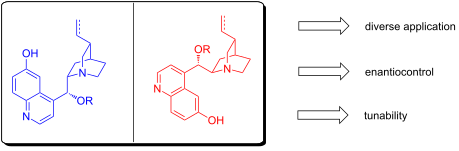
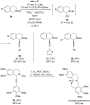
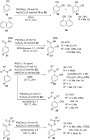
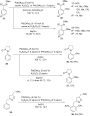
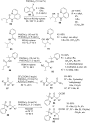
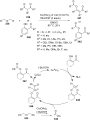
- ]. In this classic process, it was hypothesized that the 6’-OH group was critical in directing the incoming aldehyde electrophile (see Scheme 1 box). Soon after, Shi and co-worker demonstrated the use of β-ICPD in the reaction of imines 5 with methyl vinyl ketone (MVK, 6) using the same catalyst (Scheme


Enantioselective [3 + 2] annulation of α-substituted allenoates with β,γ-unsaturated N-sulfonylimines catalyzed by a bifunctional dipeptide phosphine
Beilstein J. Org. Chem. 2016, 12, 343–348, doi:10.3762/bjoc.12.37
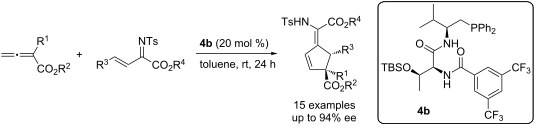
- enantioselectivity of the reaction and was chosen for further investigations. With the optimized conditions established, the substrate scope of this [3 + 2] annulation was explored by varying α-substituted allenoates 1 and imines 2 (Table 2). Firstly, different ester groups at the allenoates were examined (Table 2
- , methoxycarbonylmethyl-substituted allenoate 1j also proved to be a suitable substrate (Table 2, entry 10). The scope of β,γ-unsaturated N-sulfonylimines was subsequently examined by employing a number of differently substituted imines (Table 2, entries 11–15). In general, all the reactions worked well and afforded the


Diastereoselective Ugi reaction of chiral 1,3-aminoalcohols derived from an organocatalytic Mannich reaction
Beilstein J. Org. Chem. 2016, 12, 139–143, doi:10.3762/bjoc.12.15

- , no report of valuable diastereocontrol by them has appeared so far. Successful examples of diastereoselective Ugi reactions have been reported only with chiral amines [15][16][17][18][19] or with chiral cyclic imines (Ugi–Joullié reaction) [20][21][22][23], although in the latter case, racemization
- -Boc imines 2 and catalytic L-proline [29][30], followed by reduction of 3 and cleavage of the Boc group. This short and straightforward synthesis allows the introduction of 2 diversity inputs (R1 and Ar), whereas stereochemical diversity can also be explored using D-proline or different, anti
- -selective organocatalysts. We prepared two known carbamoyl sulfones 1 [30][31] and transformed them without isolation of intermediates into a series of five Boc-protected β-aminoalcohols 4a–e (Scheme 2). Using caesium carbonate, carbamoyl sulfones were converted into the corresponding N-Boc-protected imines


Enantioselective additions of copper acetylides to cyclic iminium and oxocarbenium ions
Beilstein J. Org. Chem. 2015, 11, 2696–2706, doi:10.3762/bjoc.11.290
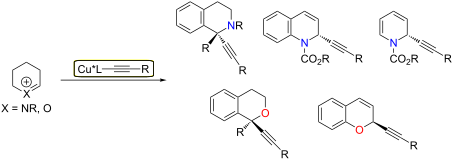
- ; enantioselectivity; iminium ion; oxocarbenium ion; Introduction Nitrogen and oxygen heterocycles with α-stereogenic centers represent important classes of biologicially active compounds [1][2][3][4][5][6][7]. Enantioselective addition of chiral nucleophiles to imines, iminium ions, carbonyls, or oxocarbenium ions
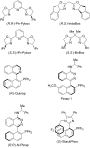
- (oxazoline) (Box), and Quinap-type ligands (Figure 1). Review Additions to iminium ions Although this review will focus on enantioselective additions to cyclic electrophiles, it is worth noting that the first enantioselective additions of chiral copper acetylides to imines or iminium ions utilized acyclic
- enantioselective, metal-catalyzed additions of terminal alkynes to imines or iminium ions, and set the stage for subsequent development of enantioselective alkynylations of cyclic iminium ion substrates [21]. As discussed below, the catalyst systems identified in these reactions have largely informed those used





Continuous formation of N-chloro-N,N-dialkylamine solutions in well-mixed meso-scale flow reactors
Beilstein J. Org. Chem. 2015, 11, 2408–2417, doi:10.3762/bjoc.11.262
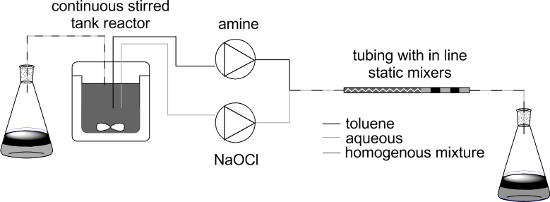
- organozinc reagents to give amines [1]; iii) aldehydes to give amides [5][6][7]; iv) base to give imines [8]; v) alkyl and aryl C–H bonds in the presence of acid and visible light to form heterocycles [9][10]. Furthermore they have also been used for chlorination of aromatics in the presence of acid [11
- alkenes to make amines, aldehydes to make amides, and base to make imines is ongoing. Experimental All reagents were used as received from suppliers without purification. Sodium hypochlorite solution 10–15% available chlorine was purchased from Sigma-Aldrich. The accurate NaOCl concentration was


A concise and efficient synthesis of benzimidazo[1,2-c]quinazolines through CuI-catalyzed intramolecular N-arylations
Beilstein J. Org. Chem. 2015, 11, 2365–2369, doi:10.3762/bjoc.11.258
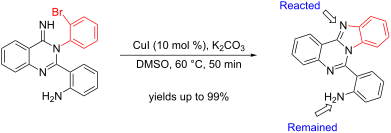
- are not readily available and need harsh conditions. Herein we report a CuI-catalyzed concise and efficient method for the synthesis of benzimidazo[1,2-c]quinazoline derivatives through the intramolecular N-arylation reaction of bromo-substituted quinazolin-4(3H)-imines that are easily prepared from o
- (sp3) in 3a reacted through the Cu-catalyzed Ullmann reaction [18][19][20][21][22][23][24][25]. Inspired by the successful cyclization of quinazolin-4(3H)-imine 3a, further imines were prepared and subjected to the cyclization conditions. Notably, in this protocol, after work-up, the desired bromo
- -substituted quinazolin-4(3H)-imine derivatives 3 were directly employed in the next step reaction without the need for chromatographic purification and the results are summarized in Table 2. Quinazolin-4(3H)-imines 3 having methyl, fluoro or chloro substituents all worked well in the reaction and provided the


Copper-mediated synthesis of N-alkenyl-α,β-unsaturated nitrones and their conversion to tri- and tetrasubstituted pyridines
Beilstein J. Org. Chem. 2015, 11, 2097–2104, doi:10.3762/bjoc.11.226

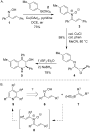
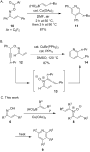
- ][38], fragment couplings [39][40][41][42], and transition metal-catalyzed C–H bond functionalization of α,β-unsaturated imines and oximes [43][44][45][46][47][48][49][50]. We were inspired by the copper-catalyzed coupling of protected α,β-unsaturated oximes and alkenylboronic acids developed by



Fates of imine intermediates in radical cyclizations of N-sulfonylindoles and ene-sulfonamides
Beilstein J. Org. Chem. 2015, 11, 1649–1655, doi:10.3762/bjoc.11.181

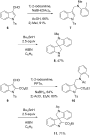
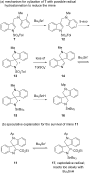
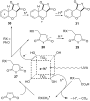
- -dihydropyrroles also presumably form spiro-imines as primary products. However, the lactam carbonyl group facilitates the ring-opening of these cyclic imines by a new pathway of hydration and retro-Claisen-type reaction, providing rearranged 2-(2'-formamidoethyl)oxindoles. Keywords: ene-sulfonamide; imine
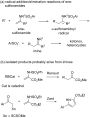
- radicals to make transient imines [1][2][3]. In turn, onward reactions of the imines provide assorted products including ketones and nitrogen heterocycles [4][5][6][7][8][9][10]. Figure 1a shows a generic addition/elimination reaction of ene-sulfonamides along with example transformations in Figure 1b from
- Renaud [8] and Zard [7] that probably involve imine intermediates. Recent work from our group considerably strengthened the case for α-sulfonamidoyl radical elimination reactions. We were able to isolate stable imines from treatment of an assortment of ene-sulfonamides bearing radical precursors [11





Preparative semiconductor photoredox catalysis: An emerging theme in organic synthesis
Beilstein J. Org. Chem. 2015, 11, 1570–1582, doi:10.3762/bjoc.11.173

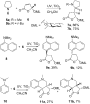
- to imines (Scheme 2) [41][42]. The mechanism was believed to involve e– capture by the imine thereby forming α-aminodiphenylmethyl radicals that underwent hetero-coupling with the allyl radicals generated from the allylic C–H containing substrates. Cyclohexanes, dihydrofurans, cyclopentenes and α
- far accessed include adducts from alkenes and imines, a wide range of heterocycles from ring closures, radical homo-dimers and macrocycles as well as hydrogenated products from nitro-aromatics, alkenes and aldehydes. There is obvious scope for the discovery of additional donor and acceptor precursors
- phenanthrene [29]. SCPC assisted additions of allylic compounds to diazines and imines [40][41][42]. TiO2 promoted addition and addition–cyclization reactions of tert-amines with electron-deficient alkenes [43][44][45][46][47]. Reactions of amines promoted by Pt-TiO2 [48][49]. P25 Promoted alkylations of N







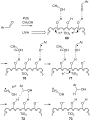
Synthesis of a tricyclic lactam via Beckmann rearrangement and ring-rearrangement metathesis as key steps
Beilstein J. Org. Chem. 2015, 11, 1503–1508, doi:10.3762/bjoc.11.163
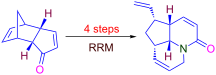
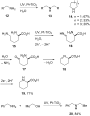
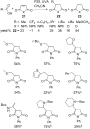
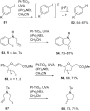
- -caprolactam from cyclohexanone oxime involving the BR. The activation energy for the BR is almost the same as that of the nucleophilic substitution at sp2 nitrogen. To synthesize various aza-arenes and cyclic imines, such as quinolines, aza-spiro compounds and dihydropyrroles, the intramolecular SN2-type


A new and efficient procedure for the synthesis of hexahydropyrimidine-fused 1,4-naphthoquinones
Beilstein J. Org. Chem. 2015, 11, 1235–1240, doi:10.3762/bjoc.11.137

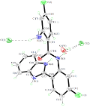
- ]+ of 395.1715. The structure of compound 23 was further elucidated by X-ray diffraction analysis (Figure 3). It confirmed the insertion of two imines to form a hexahydropyrimidine ring which is coupled to a 1,4-naphthoquinone moiety. Figure 3 shows the ORTEP diagram of compound 23 and the details of


Copper-catalyzed cascade reactions of α,β-unsaturated esters with keto esters
Beilstein J. Org. Chem. 2015, 11, 213–218, doi:10.3762/bjoc.11.23

- unsaturated diester followed by a sequential aldol addition and lactonization reaction [13]. To address aforementioned challenges, we have recently reported the first example of a copper-catalyzed reductive aldolization–lactonization cascade reaction of α,β-unsaturated diesters with ketones [14] and imines


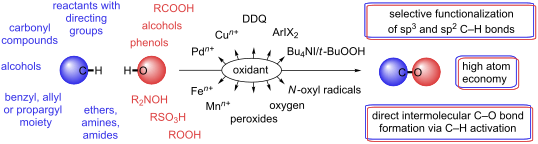
Cross-dehydrogenative coupling for the intermolecular C–O bond formation
Beilstein J. Org. Chem. 2015, 11, 92–146, doi:10.3762/bjoc.11.13









Multicomponent versus domino reactions: One-pot free-radical synthesis of β-amino-ethers and β-amino-alcohols
Beilstein J. Org. Chem. 2015, 11, 66–73, doi:10.3762/bjoc.11.10
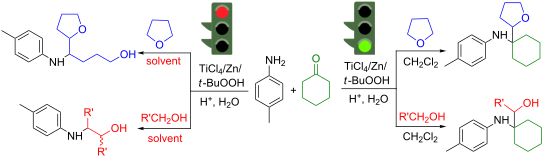
- our ongoing investigation of the role of titanium salts in mediating selective radical transformations [13][14], we have developed new, simple protocols for the synthesis of complex organic compounds through nucleophilic radical addition to imines generated in situ [15]. Several recent contributions
- approach. In fact, our procedure requires neither the preformation of imines nor anhydrous media, due to the coordinating effect of titanium salts, which promote the one-pot synthesis of amino derivatives according to a classical MCR. The basic approach consists of the simple mixing of an aniline, an
- imines through a ring opening of the ether (Scheme 2, entry c) [30]. Even though it is interesting by itself, this domino reaction limits the general approach towards the synthesis of a wider range of β-amino-alcohols and ethers. The importance of these derivatives is well-documented. They are the key


Morita–Baylis–Hillman reaction of acrylamide with isatin derivatives
Beilstein J. Org. Chem. 2014, 10, 2975–2980, doi:10.3762/bjoc.10.315

- coupling of an activated alkene with an electrophile (usually aldehydes or imines) in the presence of a catalyst (Figure 1). The reaction is organocatalytic, atomically economical and operationally simple in nature. Most importantly, it results in the synthesis of densely functionalized molecules, also


Come-back of phenanthridine and phenanthridinium derivatives in the 21st century
Beilstein J. Org. Chem. 2014, 10, 2930–2954, doi:10.3762/bjoc.10.312

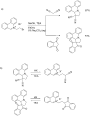
- 1980s, Leardini et al. [15] have shown that under radical conditions via a homolytic aromatic substitution route diaryl-imines were suitable precursors to a number of 6-arylphenanthridine derivatives. The reaction proceeded by initial imidoyl-H atom abstraction by the electrophilic iPrO• radical, and
- rapid rearomatization with the loss of HPdSePh to give the phenanthridine. Candito et al. reported a new and highly efficient method for the synthesis of variously substituted phenanthridine derivatives employing N-unsubstituted imines or N-silylimines [33]. The method is limited to ortho-substituted
- preparation from easily available starting material (benzylamine, aryl iodide, imines, etc.) in few reaction steps, under mild reaction conditions and with yields within the 50–90% range. The great advantage of this approach is the very broad versatility in preparation of phenanthridine derivatives, poly




A novel 4-aminoantipyrine-Pd(II) complex catalyzes Suzuki–Miyaura cross-coupling reactions of aryl halides
Beilstein J. Org. Chem. 2014, 10, 2821–2826, doi:10.3762/bjoc.10.299

- develop a stable and efficient Pd catalyst for these reactions. Recently, palladium complexes containing imidazole-imines [12], binary nanoclusters [13], N-heterocyclic carbenes (NHCs) [14], nanoparticles [15], palladacycles [16], and Schiff bases [17] have been developed as highly effective phosphine


One-pot four-component reaction for convenient synthesis of functionalized 1-benzamidospiro[indoline-3,4'-pyridines]
Beilstein J. Org. Chem. 2014, 10, 2671–2676, doi:10.3762/bjoc.10.281
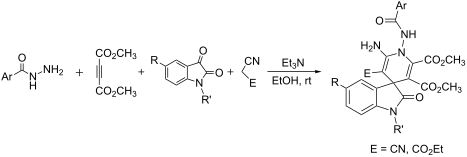
- -3,4’-pyridine] derivatives can be synthesized by employing other nitrogen-containing nucleophiles such as hydrazine and imines in the similar four-component reactions. In fact, the four-component reaction of hydrazine, acetylenedicarboxylate, isatin and malononitrile for the formation of spiro


Electrocarboxylation: towards sustainable and efficient synthesis of valuable carboxylic acids
Beilstein J. Org. Chem. 2014, 10, 2484–2500, doi:10.3762/bjoc.10.260
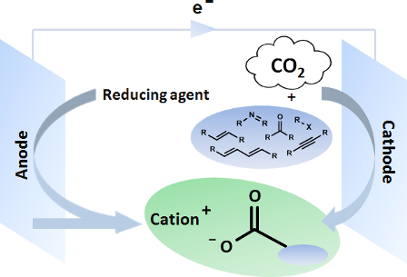
- and lead to a decrease in faradaic efficiency. Electrocarboxylation, the electrochemical fixation of carbon dioxide in organic chemicals, involves the electroreduction of carbon dioxide and/or an organic substrate. For olefins, alkynes, carbonyl compounds, imines and organic halides, this leads to the
- , like activated olefins, imines, carbonyl and halogen compounds, and other anions like an azide, which forms inert N2 upon oxidation [52]. Eventually the electrocarboxylation of 1,3-butadiene was also conducted with sacrificial anodes, resulting in a high selectivity for the C6 product (Table 1, entries
- , aldehydes and imines As is the case for conjugated dienes, olefins and alkynes, two possible pathways exist for electrocarboxylation of carbonyl and imine compounds. One starts with CO2 reduction; another starts with reduction of the substrate (Scheme 11). The second route is considered as the predominant


A small azide-modified thiazole-based reporter molecule for fluorescence and mass spectrometric detection
Beilstein J. Org. Chem. 2014, 10, 2470–2479, doi:10.3762/bjoc.10.258

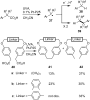
- ) measured with C18-UPLC–ESIMS using a linear gradient of solvents A (water/acetonitrile/formic acid 98:2:0.1; v/v/v) and B (acetonitrile/0.1% formic acid; v/v) and solvent composition and masses of imines 11–14 formed in a model reaction between L-lysine and DDY (10) followed by CuAAC with the different


Oxidative phenylamination of 5-substituted 1-hydroxynaphthalenes to N-phenyl-1,4-naphthoquinone monoimines by air and light “on water”
Beilstein J. Org. Chem. 2014, 10, 2448–2452, doi:10.3762/bjoc.10.255

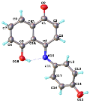
- unexpected but interesting result indicates that on-water oxidative amination reaction of 1,5-DHN (1) with 4-hydroxyphenylamine to produce compound 6 is more favorable than the photooxygenation reaction to give juglone (2). The N-phenylquinone imines are considered as an important class of compounds because
- substitution at the 4-position of compound 1 followed by oxidation of the aminonaphthol intermediate, yield the N-phenyl-1,4-naphthoquinone-4-imines. A mechanism involving radical cation intermediates is supported by the rather high product yields resulting from the reaction of 1,5-DHN (1) with electron-donor




Derivatives of the triaminoguanidinium ion, 3. Multiple N-functionalization of the triaminoguanidinium ion with isocyanates and isothiocyanates
Beilstein J. Org. Chem. 2014, 10, 2255–2262, doi:10.3762/bjoc.10.234
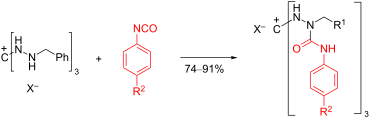
- was combined with benzaldehyde and hydratropic aldehyde to furnish the corresponding tris(imines), which were converted into 1,2,3-tris(benzylamino)guanidinium salts by catalytic hydrogenation in the former, and by borane reduction in the latter case. The resulting alkyl-substituted


Chiral phosphines in nucleophilic organocatalysis
Beilstein J. Org. Chem. 2014, 10, 2089–2121, doi:10.3762/bjoc.10.218
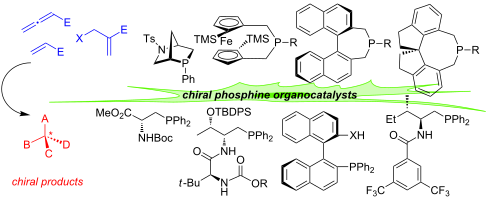
- phosphines possessing various chiral skeletons that have been used in asymmetric nucleophilic organocatalytic reactions, including annulations of allenes, alkynes, and Morita–Baylis–Hillman (MBH) acetates, carbonates, and ketenes with activated alkenes and imines, allylic substitutions of MBH acetates and
- developments in nucleophilic chiral phosphine-catalyzed asymmetric reactions, including annulations of allenes, ketenes, alkynes, and Morita–Baylis–Hillman (MBH) carbonates with activated alkenes and imines, allylic substitution of MBH acetates and carbonates, Michael additions, γ-umpolung additions, and
- developed, asymmetric variants exist for only a few of them. In particular, chiral phosphine-catalyzed [3 + 2] annulations of allenes, alkynes, and MBH adducts with electron-deficient olefins and imines, resulting in cyclopentenes and pyrrolidines, have been the most studied, with many successful reported


Application of cyclic phosphonamide reagents in the total synthesis of natural products and biologically active molecules
Beilstein J. Org. Chem. 2014, 10, 1848–1877, doi:10.3762/bjoc.10.195
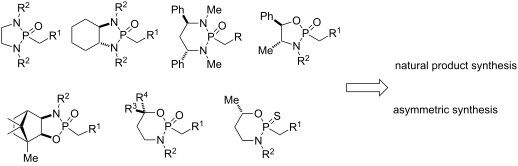
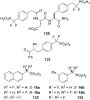
- synthesis of MMP-inhibitors [63], as discussed later in this review. Aziridines are also obtained as primary products in the addition of chloromethyl phosphonamide 28d to imines. The initial attack leads to a α-chloro-β-amino phosphonamide adduct as intermediate, which then undergoes intramolecular
- cyclization to form the aziridine ring after elimination of chloride. When N-substituted aromatic imines are used, the corresponding aziridines can be reduced at the benzylic carbon to give α-aminophosphonic acids [64]. Synthesis of phosphonamides There are four major methods for the synthesis of












Proton transfers in the Strecker reaction revealed by DFT calculations
Beilstein J. Org. Chem. 2014, 10, 1765–1774, doi:10.3762/bjoc.10.184

- cyclic dipeptide [5]. In these reactions, N-substituted imines react with HCN to yield (S)-α-aminonitriles with remarkably high enantiomeric excess (ee). One example is shown in Scheme 3. However, when benzaldehyde and NH3 instead of the N-substituted imine were employed as the substrates, the reaction
- afforded an initial product Ph-CH(NH2)-CN of configurational instability[5]. In the following, Sigman and Jacobsen used a parallel combinatorial library synthesis for the discovery and optimization of a chiral catalyst for the reaction of imines and HCN [6]. From then on, various catalytic asymmetric
- Strecker reactions have been reported to gain high enantioselectivity of the hydrocyanation reaction of imines [7][8][9][10][11][12]. However, the origin of the enantioselectivity in the asymmetric Strecker reactions has not been clarified. To our knowledge, the elementary processes of the whole Strecker





