Search results
Search for "in vivo" in Full Text gives 302 result(s) in Beilstein Journal of Organic Chemistry. Showing first 200.
Tunable microwave-assisted method for the solvent-free and catalyst-free peracetylation of natural products
Beilstein J. Org. Chem. 2016, 12, 2222–2233, doi:10.3762/bjoc.12.214
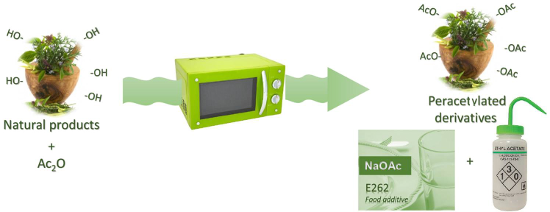
- , phenols and amino groups is a classical protection method in multistep syntheses as well as a transient chemical modification to improve the bioavailaibility and bioactivity of hydrophilic drugs and natural polyols [1][2][3][4][5][6][7][8][9]. Several in vitro and in vivo studies on peracetylated


Economical and scalable synthesis of 6-amino-2-cyanobenzothiazole
Beilstein J. Org. Chem. 2016, 12, 2019–2025, doi:10.3762/bjoc.12.189

- preparation of luciferins 3 involves straightforward condensation of CBTs 1 with D-cysteine (2) (Scheme 1). For BLI applications, luciferins are often generated in vivo from CBTs [4][5][6][7], which are easier to modify and handle due to their higher stability, cell permeability, and reactivity than the full


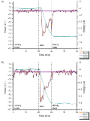

Mechanistic investigations on six bacterial terpene cyclases
Beilstein J. Org. Chem. 2016, 12, 1839–1850, doi:10.3762/bjoc.12.173
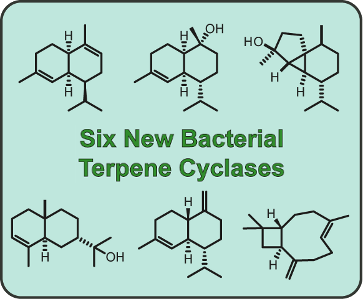
- (−)-(E)-β-caryophyllene synthase (6) from Saccharothrix espanaensis were identified. The identified main and side products were the same as detected in headspace extracts from E. coli during heterologous expression of the terpene cyclase genes [32][33], confirming that the in vitro and in vivo


Synthesis and properties of fluorescent 4′-azulenyl-functionalized 2,2′:6′,2″-terpyridines
Beilstein J. Org. Chem. 2016, 12, 1812–1825, doi:10.3762/bjoc.12.171
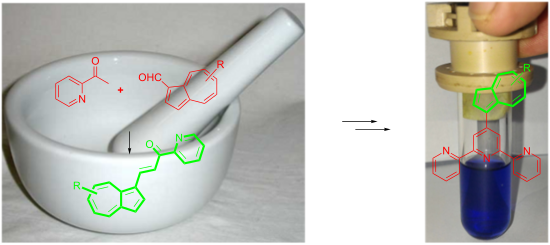
- have been investigated for their potential applications in catalysis, photovoltaic cells and biomedical science [5]. Special attention has been paid to fluorescence responses of metal–terpyridine compounds permitting access to new sensors for bioassays and in vivo imaging purposes [6]. The


Rearrangements of organic peroxides and related processes
Beilstein J. Org. Chem. 2016, 12, 1647–1748, doi:10.3762/bjoc.12.162
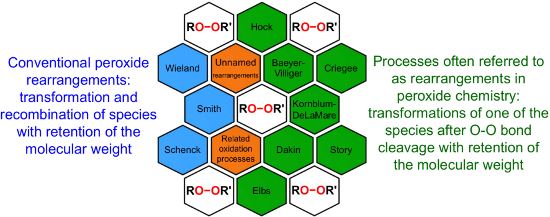
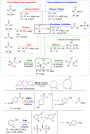
- of luciferin yields the peroxy compound 1,2-dioxetane. This four-membered peroxide cycle is unstable and spontaneously decays to carbon dioxide and excited ketones, which release excess energy through light emission (bioluminescence) [62][63][64][65]. The in vivo oxidation of cholesterol by singlet
- model of the in vivo oxidation of cholesterol (219) by singlet oxygen produces cholesterol-5α-OOH 220, which is subjected to a Hock reaction to form the aldolization product 221 and keto aldehyde (atheronal A, 222) (Scheme 64) [67]. Keto aldehyde (atheronal A, 222) exhibits proatherogenic activity and













Organic chemistry meets polymers, nanoscience, therapeutics and diagnostics
Beilstein J. Org. Chem. 2016, 12, 1638–1646, doi:10.3762/bjoc.12.161
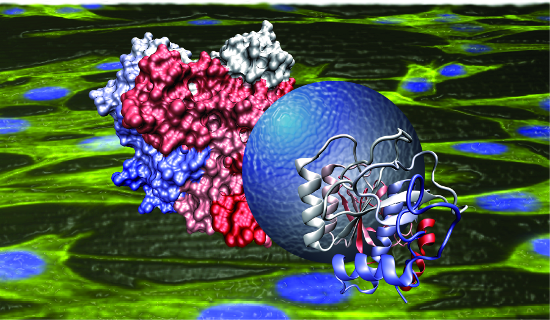
- (including us) could generate emulsions with diameters small enough (<200 nm) for use as in vivo delivery vehicles [60]. Once again, supramolecular chemistry came to the rescue. Anslyn showed that guanidinium groups bound strongly to carboxylates [61]. This led to the surmise that this interaction could be
- the cells can’t do [93]. We have even been doing some immunology [94], including turning on the innate immune system [95] and figuring out what macrophages like to eat [96]. We have plenty to work on just taking our systems where they need to go, be it in vivo or in the clinic [97][98]. Broader




Biosynthesis of oxygen and nitrogen-containing heterocycles in polyketides
Beilstein J. Org. Chem. 2016, 12, 1512–1550, doi:10.3762/bjoc.12.148
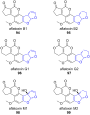
- cyclic compound 72 (Scheme 11b) [56]. This result has been confirmed by in vivo experiments of Shen et al. [59]. NonS was annotated as an enoyl-CoA hydratase and shows a high degree of up to complete identity amino acid homology to mostly uncharacterised enzymes in several other clusters of Streptomyces
- confirmed by partial in vivo and in vitro reconstruction of tetronomycin (Tmn, 149), RK-682 (146) and agglomerin A (147) biosynthesis [141][142][143][144]. It is however not clear, in which order the two sub-steps occur. Tetronate processing. Spirotetronates like abyssomycin C (148), quartromycin D1 (151






Towards potential nanoparticle contrast agents: Synthesis of new functionalized PEG bisphosphonates
Beilstein J. Org. Chem. 2016, 12, 1366–1371, doi:10.3762/bjoc.12.130

- the development of superparamagnetic iron oxide nanoparticles (SPIONPs) because of their biocompatibility which allows there in vivo use both for diagnosis in magnetic resonance imaging and in therapy [1][2]. Most often, it is necessary to modify the surface of SPIONPs to increase the metabolic
- stability. To overcome this main drawback, the NP surface could be derivatized by various functional groups. These ligands have to possess certain chemical and biological properties as the flexibility, the hydrophilicity and an absence of in vivo toxicity. In addition, the nanoparticulate systems so
- coupling reactions with a drug, protein or antibody. The use of PEG polymers with chains of different lengths has also given satisfying results. This modulation would allow improving the nanoparticles stealth in vivo. Further studies in this area and their applications will be reported in due course


Application of Cu(I)-catalyzed azide–alkyne cycloaddition for the design and synthesis of sequence specific probes targeting double-stranded DNA
Beilstein J. Org. Chem. 2016, 12, 1348–1360, doi:10.3762/bjoc.12.128
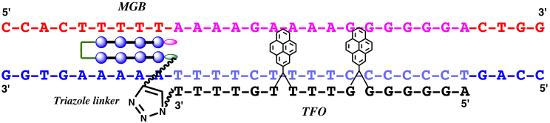
- –imidazole polyamides; sequence specificity: DNA; triplex-forming oligonucleotides; Introduction The recognition and detection of specific sequences in native genomic double-stranded DNA (dsDNA) is of significant importance for the development of efficient gene therapies and in vivo gene labeling [1][2][3
- activation or Mukayama reagents [19][20][21], TFO-MGB conjugates have been synthesized [11][22][23][24]. However, this method is not universal because it requires solubility of all reagents in organic solvents, which is incompatible with in vivo and in situ applications. In addition, according to our


Multicomponent reactions: A simple and efficient route to heterocyclic phosphonates
Beilstein J. Org. Chem. 2016, 12, 1269–1301, doi:10.3762/bjoc.12.121
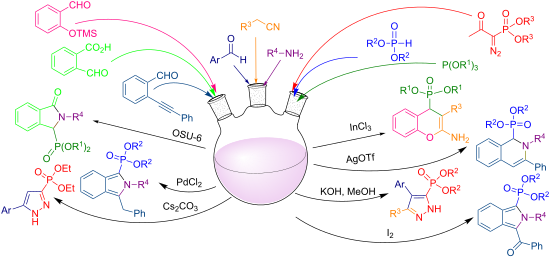
- converted to diethyl (2-methyl-2-pyrrolidinyl)phosphonate 48 by ring closure through an intramolecular nucleophilic substitution (Scheme 12). Subsequent oxidation of 48 with m-chloroperbenzoic acid afforded the corresponding N-oxide 49 which was used for the in vitro and in vivo spin trapping of hydroxyl


Cyclisation mechanisms in the biosynthesis of ribosomally synthesised and post-translationally modified peptides
Beilstein J. Org. Chem. 2016, 12, 1250–1268, doi:10.3762/bjoc.12.120
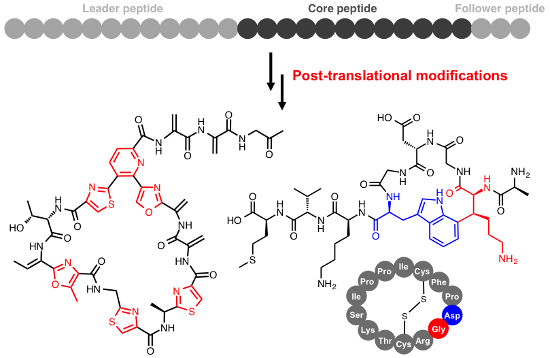
- peptide from prealbumin. This means that macrolactam formation is somewhat inefficient and a significant amount of acyclic SFTI-1 is also produced, but this is masked by the rapid in vivo degradation of this unwanted side-product [105]. Gene silencing experiments have linked AEP-like proteins to the
- cysteine protease-like mechanism [118]. In vivo, this staphylococcal protein ligates proteins with a C-terminal LPXTG motif to the peptidoglycan, via the formation of an enzyme bound thioester on the threonine residue, and has been used widely as an enzymatic tool for ligation to proteins with an LPXTG tag





Synthesis of a deuterated probe for the confocal Raman microscopy imaging of squalenoyl nanomedicines
Beilstein J. Org. Chem. 2016, 12, 1127–1135, doi:10.3762/bjoc.12.109

- , the use of fluorescent probes requires the covalent binding of large dye molecules (bodipy, cyanine, rhodamine etc, ...) to the drug conjugate, thus potentially modifying its physicochemical profile as well as the in vivo fate and the pharmacological activity. A simple encapsulation of an amphiphilic
- , have been developed to study the stability of nanoparticles [23]. In this context, Raman spectroscopy is an interesting technique which is based on the detection of scattered laser light upon irradiating the sample. Nevertheless, because of the low intensity of the Raman scattering, efficient in vivo


Efficient syntheses of climate relevant isoprene nitrates and (1R,5S)-(−)-myrtenol nitrate
Beilstein J. Org. Chem. 2016, 12, 1081–1095, doi:10.3762/bjoc.12.103

- sector in generating structure and function diverse O-nitrate esters for use as in vivo NO-donors. In this context particular emphasis has been placed on developing O-nitrate esters as biologically active agents that act on acetylcholinesterase (AChE), amyloid-βx-42 (Aβ42) aggregation, cyclooxygenase-II


Muraymycin nucleoside-peptide antibiotics: uridine-derived natural products as lead structures for the development of novel antibacterial agents
Beilstein J. Org. Chem. 2016, 12, 769–795, doi:10.3762/bjoc.12.77
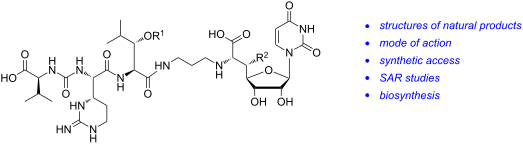
- agents is of growing significance. The discovery of penicillin [1] and the proof of its in vivo efficacy [2] marked the starting point for the research on antibacterial drugs during the so-called "golden age" of antibiotics. Despite the early occurrence of first resistances [3][4][5], an innovation gap
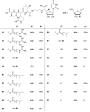
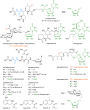
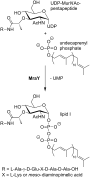
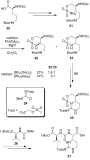
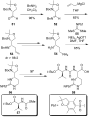
- with MIC values of 2 to 16 μg/mL, Enterococci with 16 μg/mL and higher to some Gram-negative bacteria (8 μg/mL). Against an E. coli mutant with increased membrane permeability, an MIC value below 0.03 μg/mL was obtained, suggesting that inhibition is a matter of cellular uptake of the compound. In vivo











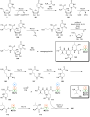


Three new trixane glycosides obtained from the leaves of Jungia sellowii Less. using centrifugal partition chromatography
Beilstein J. Org. Chem. 2016, 12, 674–683, doi:10.3762/bjoc.12.68

- -inflammatory and antioxidant effects of J. paniculata were associated to the presence of flavonoids and other polyphenols [4]. Recently, we reported the in vivo anti-inflammatory properties of an aqueous fraction of the leaves of J. sellowii, that is in agreement with its popular use in Brazil [5]. Apart from


Unconventional application of the Mitsunobu reaction: Selective flavonolignan dehydration yielding hydnocarpins
Beilstein J. Org. Chem. 2016, 12, 662–669, doi:10.3762/bjoc.12.66

- hepatotoxicity in vitro as well as in vivo [10][11]. The flavonolignan hydnocarpin (4, Figure 1) was first isolated in 1973 from Hydnocarpus wightiana [12], and its structure was at first assigned erroneously as what is now named hydnocarpin D (2, Figure 1) (for details see below) [13]. The actual hydnocarpin D
- towards chemotherapy and no toxicity was found in vivo [20]. Unlike for silybins [6], there are only a few examples of total syntheses or even structural modifications of hydnocarpin-type (flavone) flavonolignans – simply because they are not synthetically available [14][21]. A straightforward synthetic


A practical way to synthesize chiral fluoro-containing polyhydro-2H-chromenes from monoterpenoids
Beilstein J. Org. Chem. 2016, 12, 648–653, doi:10.3762/bjoc.12.64
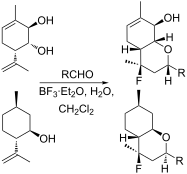
- the presence of K10 montmorillonite clay forms chiral heterocyclic compounds with the hexahydro-2H-chromene scaffold 2 (Scheme 1) [1][2][3][4]. Products of these reactions are of interest as many of them exhibit a significant analgesic activity in vivo [2][3][4]. In terms of structure–activity


Biosynthesis of α-pyrones
Beilstein J. Org. Chem. 2016, 12, 571–588, doi:10.3762/bjoc.12.56
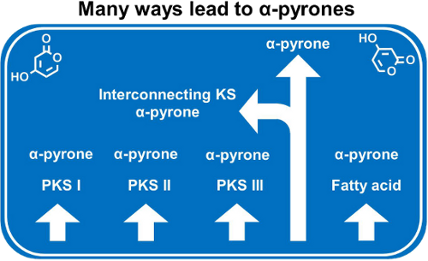
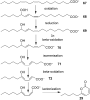
- ’-dichlorodihydrofluorescein (DCFH) to the fluorescent 2’,7’-dichlorofluorescein (DCF) [29]. This antioxidant activity was also linked to anti-inflammatory effects by testing the in vivo effects of 23 in a carrageenan-induced paw edema assay. Oral administration of 23 to mice prior to carrageenan injection resulted in a
- A was also tested successfully using an in vivo mouse model for the treatment of infections with filarial nematodes [44]. Such antibiotics produced by heterotroph bacteria, e.g., marine and terrestrial myxobacteria which can feed on other bacteria, are suggested as predatory weapons to paralyze and
- interesting target of research, due to the fact that the progression of Alzheimer’s disease was slowed down by using anti-inflammatory drugs. Thus, selective COX-2 inhibitors, anti-inflammatory compounds themselves, might have beneficial effects in vivo. Several derivatives of 6-alkyl (alkoxy or alkylthio)-4


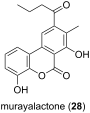




Effective in silico prediction of new oxazolidinone antibiotics: force field simulations of the antibiotic–ribosome complex supervised by experiment and electronic structure methods
Beilstein J. Org. Chem. 2016, 12, 415–428, doi:10.3762/bjoc.12.45

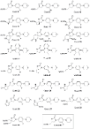
- potency both in vitro and in vivo antibacterial activities [46]. Candidate 7 represents the active form of the prodrug torezolid, the phosphate disodium salt, which was synthetized in order to improve the solubility of its parent drug. Highly active against MRSA, MSSA (methicillin-sensitive Staphylococcus


Diastereoselective synthesis of new O-alkylated and C-branched inositols and their corresponding fluoro analogues
Beilstein J. Org. Chem. 2016, 12, 353–361, doi:10.3762/bjoc.12.39

- the corresponding fluoroinositol (1-fluoro-1-deoxy-scyllo-inositol) was also a good candidate to limit this aggregation. However, in vivo studies in animal models of Alzheimer disease with 1-[18F]fluoro-1-deoxy-scyllo-inositol used as radiotracer for positron emission tomography (PET) have shown that


Natural products from microbes associated with insects
Beilstein J. Org. Chem. 2016, 12, 314–327, doi:10.3762/bjoc.12.34
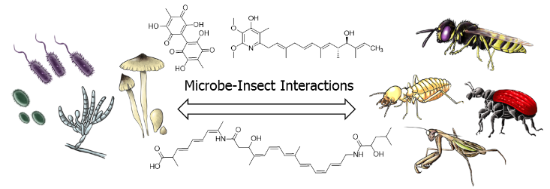
- , in vivo infection studies coupled with methods such as RNA sequencing, can lead to further insights into the role and expression levels of potentially new secondary metabolites. Conclusion Insects provide experimentally tractable and cost-effective model systems to investigate the evolutionary
- (e.g., bafilomycin A1 (21) and B1 (22), Figure 7), but also a novel polyunsaturated and polyoxygenated 26-membered macrolactam named sceliphrolactam (23) (Figure 7) [101]. Sceliphrolactam showed strong antifungal activity against amphotericin B-resistant Candida albicans, but its functional role in
- vivo remains enigmatic. In another study, Oh and co-workers chemically investigated a diverse population of Actinobacteria from the indigenous soil-dwelling Korean dung beetle (Copris tripartitus), its larvae and dung balls [102][103]. Dung beetles are prime contributors to the cyclic breakdown of


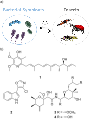

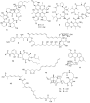


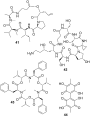
A journey in bioinspired supramolecular chemistry: from molecular tweezers to small molecules that target myotonic dystrophy
Beilstein J. Org. Chem. 2016, 12, 125–138, doi:10.3762/bjoc.12.14
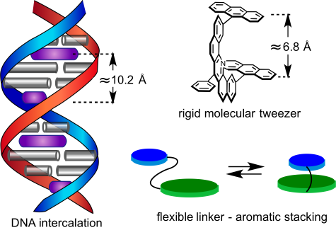
- in vivo using a DM1 Drosophila model that looked at the rough eye phenotype with i(CUG)480 flies. Ligand 30 showed significant and dose-dependent improvement in the rough eye phenotype, whereas the negative control, DB213 showed much weaker activity. Much less effort has been devoted to developing
- CUGexp, also binding CUGexp that slips through inhibiting its sequestration of MBNL1, and, with the catalytic amino/ammonium/imidazole groups, slowly cleaving the CUG-RNA to prevent RAN translation [92]. Edwin Chan and his group again studied the in vivo activity of our compounds, showing that 32


Bright molecules for sensing, computing and imaging: a tale of two once-troubled cities
Beilstein J. Org. Chem. 2015, 11, 2774–2784, doi:10.3762/bjoc.11.298
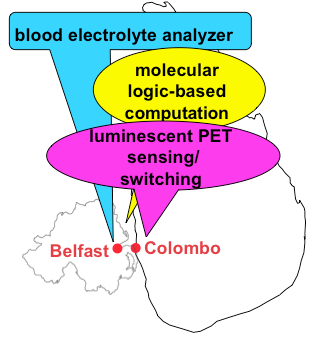
- assiduously. In other words, some of these Colombo residents (like I was) are now alive thanks to a fluorescent PET sensor. In addition to this ex vivo application, which had an easier accreditation process through the medical watchdog institutions as compared to an in vivo version, there are emerging







Assembly of synthetic Aβ miniamyloids on polyol templates
Beilstein J. Org. Chem. 2015, 11, 2646–2653, doi:10.3762/bjoc.11.284

- formation [2]. Alternatively, it is started by seeding with amyloid fragments whose large surface-to-core ratio greatly accelerates the fibril formation. Although amyloid structures are well studied in vitro, their in vivo relevance at the onset of Alzheimer’s disease remains under debate [3]. Aβ peptides


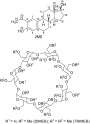
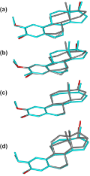
Inclusion complexes of 2-methoxyestradiol with dimethylated and permethylated β-cyclodextrins: models for cyclodextrin–steroid interaction
Beilstein J. Org. Chem. 2015, 11, 2616–2630, doi:10.3762/bjoc.11.281
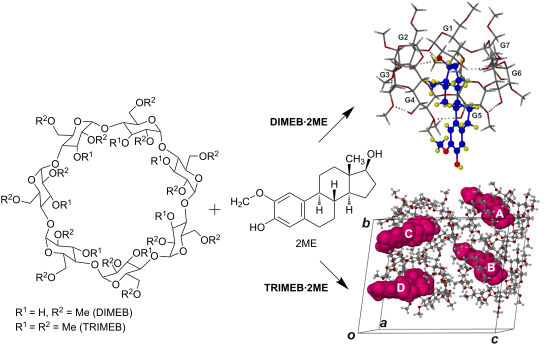
- literature. Encapsulation of poorly soluble drug molecules by CDs with the aim of enhancing drug bioavailability has been practised for over four decades, the first demonstration of both in vivo and in vitro effects of complexation on drug release having been reported in the early 1970s [12][13]. Steroid