Search results
Search for "membrane" in Full Text gives 396 result(s) in Beilstein Journal of Organic Chemistry. Showing first 200.
The design and synthesis of an antibacterial phenothiazine–siderophore conjugate
Beilstein J. Org. Chem. 2018, 14, 2646–2650, doi:10.3762/bjoc.14.242
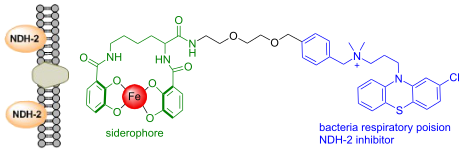
- antibiotics to the bacterial cell [3]. Iron is essential for bacterial survival and bacteria secrete high affinity iron chelating molecules to scavenge and solubilise Fe3+ from the extracellular environment [3]. The siderophore–Fe complex is recognised by specific receptor proteins on the outer membrane of
- the bacteria and internalised into the bacterium cell by active transport [4]. Siderophore–antibiotic conjugates consist of an antibiotic covalently linked by a ‘tether' to a siderophore. Such conjugates overcome the bacterial membrane permeability barrier and facilitate active transport of the
- achieved with beta-lactam-based siderophore conjugates targeting membrane associated penicillin binding proteins (PBPs) [7]. Cefiderocol (S-649266) is a beta-lactam–siderophore conjugate currently in phase III clinical trials which demonstrates enhanced potency against Gram-negative bacteria including


Targeting the Pseudomonas quinolone signal quorum sensing system for the discovery of novel anti-infective pathoblockers
Beilstein J. Org. Chem. 2018, 14, 2627–2645, doi:10.3762/bjoc.14.241
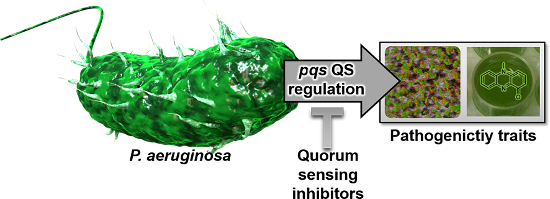
- machineries consisting of several protein components, which in total span from the inner to the outer side of the cell membrane. Their function is to expel a wide range of xenobiotics, among them antibiotics from the cephalosporin, carbapenem, fluroquinolone and aminoglycoside classes [13]. Through this
- molecule [34]. This autoinducer has been described to mediate iron acquisition, cytotoxicity, outer-membrane vesicle biogenesis, and to exert host immune modulatory effects [34][35]. Interestingly, PQS as well as HHQ are able to interfere with nuclear transcription factor-κB and hypoxia-inducible factor 1
- . aeruginosa quorum quenching assays was observed [56]. This highlights a notable issue when addressing intracellular targets of this Gram-negative bacterium, as permeating the outer and inner membrane while escaping efflux and enzymatic deactivation may represent a true challenge. The elucidation of the


Impact of Pseudomonas aeruginosa quorum sensing signaling molecules on adhesion and inflammatory markers in endothelial cells
Beilstein J. Org. Chem. 2018, 14, 2580–2588, doi:10.3762/bjoc.14.235
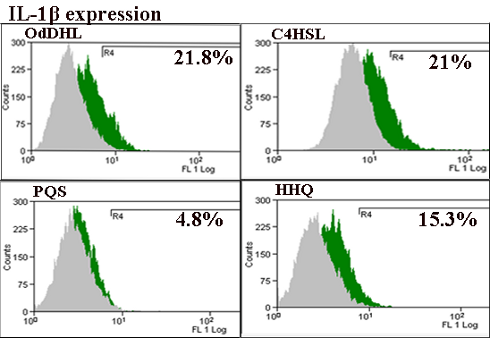
- , and this effect appears to be related to NFκB activation. These autoinducers (AIs) stimulate the production of membrane-associated prostaglandin E (PGE) and PGE2 but not PGE from cytosol. It is known that PGE2 plays a role in inducing mucus secretion, vasodilatation and edema, acting as a lipid


Comparative cell biological study of in vitro antitumor and antimetastatic activity on melanoma cells of GnRH-III-containing conjugates modified with short-chain fatty acids
Beilstein J. Org. Chem. 2018, 14, 2495–2509, doi:10.3762/bjoc.14.226
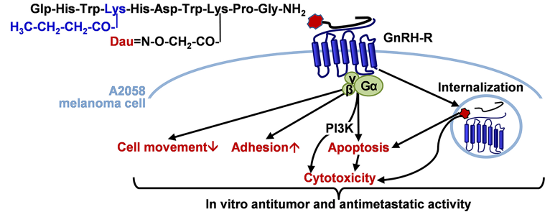
- different enzymatic stability and cellular uptake because these conjugates were found to have similar octanol–water partition index and membrane permeability. Nevertheless, the higher hydrophobicity (lower solubility) of the conjugate with myristic acid seemed to correlate with its increased stability
- (Ac)]-GnRH-III(Dau=Aoa). Dau served as a positive control in this experiment and showed a high level of intracellular fluorescence. Considering that Dau is a small molecule and can diffuse through the plasma membrane while the conjugates can enter the cells by receptor-mediated endocytosis with low
- of conjugates requires their receptor-mediated internalization and the lysosomal degradation, while Dau could diffuse through the plasma membrane and exerts its antitumor activity by intercalating directly to DNA. Furthermore, it was previously demonstrated that the smallest Dau-containing fragment


Rational design of boron-dipyrromethene (BODIPY) reporter dyes for cucurbit[7]uril
Beilstein J. Org. Chem. 2018, 14, 1961–1971, doi:10.3762/bjoc.14.171
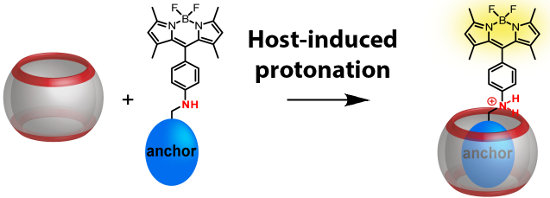
- dye are regenerated. This principle has enabled, for example, real-time monitoring of enzymatic activity [18][19][20], the detection of membrane-transport activity [21] and membrane fusion [22], and even cellular imaging appears to be a potential future prospect [23][24]. However, most combinations of
- fluorescence from biological samples, and it would have a high fluorescence quantum yield in either bound or unbound state with a large difference in fluorescence intensity between both. In addition, a tuneable hydrophobicity to render the dye–CB complex membrane permeable or not, and a tuneable affinity for




Assessing the possibilities of designing a unified multistep continuous flow synthesis platform
Beilstein J. Org. Chem. 2018, 14, 1917–1936, doi:10.3762/bjoc.14.166
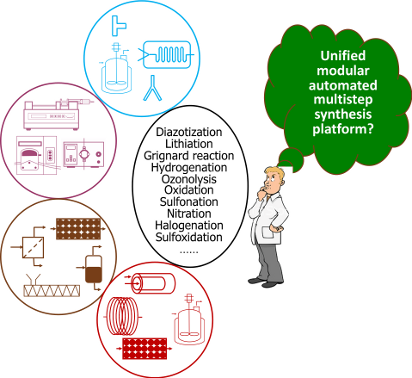
- permeable membrane reactors [46][47][48], high-pressure reactors utilizing back pressure regulators [49][50][51], reactors with different heating and cooling modes (e.g., inductive heating [11][52], microwave [53][54][55] etc.) and many more, also very special reactors [56] with other difficulties that need
- continuous mode (CSTRs). Preheating and precooling are essential for getting reproducible and reliable experimental data. The third and final module includes separators viz. membrane separators/filters, scavengers or adsorption column (packed column), extractors/gravity separators, dryers, extruders, etc
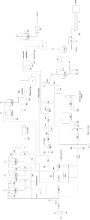
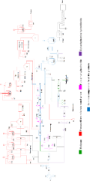
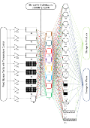
- – membrane separator, E – extruder, BPR – back pressure regulator. Layout for synthesis of 4 molecules on a single platform (approach 2). Approach 3 for a unified platform for multistep synthesis. M1–M9 = mixers, R1–R4 = tubular reactors, R5–R8 = packed bed reactor, R9 = stirred tank reactor, T1–T8



Defining the hydrophobic interactions that drive competence stimulating peptide (CSP)-ComD binding in Streptococcus pneumoniae
Beilstein J. Org. Chem. 2018, 14, 1769–1777, doi:10.3762/bjoc.14.151
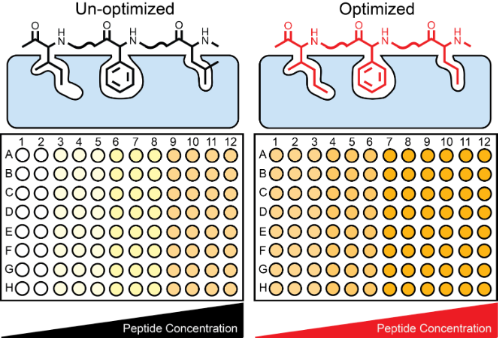
- . Indeed, all the analogs exhibited α-helix CD spectra in membrane mimicking conditions (20% trifluoroethanol (TFE) in PBS buffer; Figure S4, Supporting Information File 1). Quantification of the helix content using both the mean residue ellipticity at 222 nm [32] and the BeStSel method [33] yielded
- . Interestingly, L13 is predicted to be positioned on the opposite face of the helix, away from the proposed binding interface between CSP1 and ComD1. It is therefore not clear why this residue was found to be important for effective receptor binding. In-depth structural analysis of CSP1 in membrane mimicking


Synthesis and photophysical studies of a multivalent photoreactive RuII-calix[4]arene complex bearing RGD-containing cyclopentapeptides
Beilstein J. Org. Chem. 2018, 14, 1758–1768, doi:10.3762/bjoc.14.150
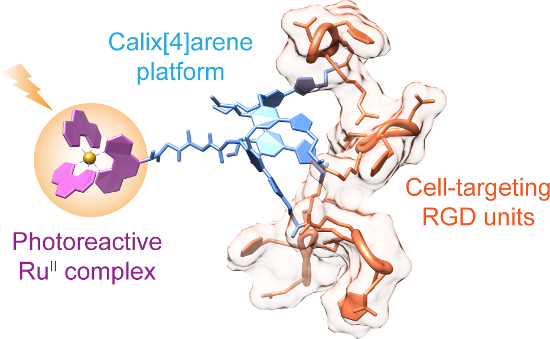
- healthy ones. The next step in the development of phototherapeutic agents based on polyazaaromatic RuII complexes is thus the specific targeting of cancerous cells. In this regard, αvβ3 integrin represents an interesting target as this membrane receptor is overexpressed in the endothelial cells of
- functionalized [54][55][56]. It is noteworthy that the calix[4]arene skeleton has been already exploited for the development of multivalent glyco- and peptidocalixarenes that can be recognized by cell-membrane receptors [57][58][59] and of calixarene derivatives able to specifically target membrane proteins
- involved in the angiogenesis process [60]. Furthermore, the use of calixarenes for biological applications is the subject of intensive researches. They are indeed exploited in various areas such as surface recognition, structural mimes or membrane receptor inhibition [61][62][63], and it was also shown





Natural and redesigned wasp venom peptides with selective antitumoral activity
Beilstein J. Org. Chem. 2018, 14, 1693–1703, doi:10.3762/bjoc.14.144
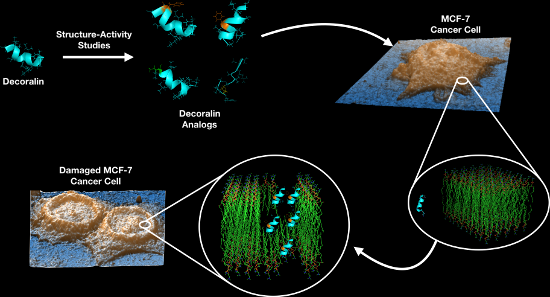
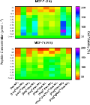
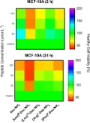
- key for their anticancer activity, as they enable membrane binding [20]. Their anticancer activity typically occurs at micromolar concentrations [21] and is not usually accompanied by hemolytic activity probably because there are structural differences between the membranes of red blood cells and
- moment, and net positive charge, characteristics that are known to be important for peptide–membrane interactions [10]. Some of these changes decreased the hemolytic activity against human red blood cells of Dec-NH2, reported by Konno et al. [24], and retained the antimicrobial activity described by
- electrostatic interactions, after which they tend to adopt helical conformations, which causes cell membrane permeabilization or even membrane disruption that may lead to necrosis [33]. These peptides may also be internalized into the cell, leading to the disruption of the mitochondrial membrane and causing




Cobalt–metalloid alloys for electrochemical oxidation of 5-hydroxymethylfurfural as an alternative anode reaction in lieu of oxygen evolution during water splitting
Beilstein J. Org. Chem. 2018, 14, 1436–1445, doi:10.3762/bjoc.14.121
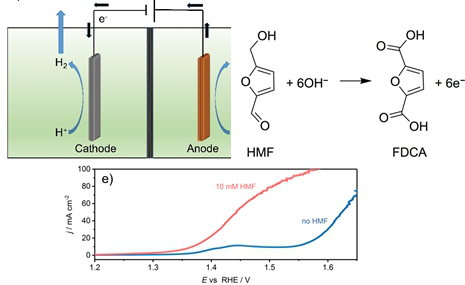
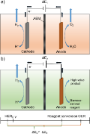
- of the various cobalt–metalloid alloys supported on Ni RDE electrodes revealed CoB to be the most efficient HMF oxidation catalyst. Using a CoB modified Ni foam as anode material, and Ni foam as the cathode in a continuous flow reactor with an anion exchange membrane separating the anodic and
- continuous mode. For this, a flow reactor was employed which contains two nickel foam (NF) electrodes separated by an anion exchange membrane (Supporting Information File 1, Figure S2). The NF anode (1 cm × 1 cm) was modified with CoB by means of spray coating while pure NF was used as cathode material. The
- compartment and the CE compartment were separated by a PEEK reinforced anion exchange membrane (Fumatech). The CE consisted of two stacked unmodified Ni foams (1 cm × 1 cm) and a Hg/HgO/1 M KOH electrode served as RE. Catalyst modified NF (1 cm × 1 cm) was used as the WE. The potential was converted to the



Spectroelectrochemical studies on the effect of cations in the alkaline glycerol oxidation reaction over carbon nanotube-supported Pd nanoparticles
Beilstein J. Org. Chem. 2018, 14, 1428–1435, doi:10.3762/bjoc.14.120
- utilization in fuel cells (FCs) converting chemical into electrical energy [5]. In alkaline FCs (AFCs) and proton exchange membrane FCs (PEMFCs), H2 and O2 are converted to H2O, heat and electricity. Since the development of anion exchange membranes the research interest in AFCs has increased again, because


Design and biological characterization of novel cell-penetrating peptides preferentially targeting cell nuclei and subnuclear regions
Beilstein J. Org. Chem. 2018, 14, 1378–1388, doi:10.3762/bjoc.14.116
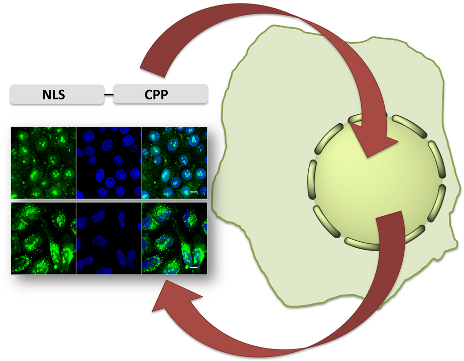
- nuclei; cell-penetrating peptides; nucleoli; subcellular targeting; Introduction Various drugs act on targets that are located within the nucleus, the control center of the eukaryotic cell. A lipid bilayer membrane, which is perforated with nuclear pore complex structures through which the transfer of
- effects, there is a need to develop suitable delivery vectors for the safe transport of drugs to the nucleus. Such nuclear-targeting sequences have already proven to be successful delivery tools. According to their often basic nature, they are also able to traverse the cellular membrane [8]. Based on this
- , these peptides have been added to the growing family of cell-penetrating peptides (CPPs). CPPs are able to overcome the cellular membrane and to enhance the intracellular uptake of CPP-modified molecules [9]. Usually, these peptides are relatively short (≤30 amino acids (aa)) and display an amphipathic



Mechanochemistry of nucleosides, nucleotides and related materials
Beilstein J. Org. Chem. 2018, 14, 955–970, doi:10.3762/bjoc.14.81
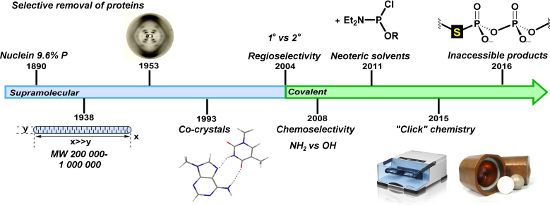
- ) which were agitated using a membrane valve [80]. Within three minutes, almost complete disruption of Gram-positive bacteria was effected enabling downstream analysis by quantitative PCR. Associative processes Variable drug bioavailability associated with crystal and co-crystal polymorphism can be
- exhibited enhanced membrane permeability compared with the pure API [85]. The preparation of co-crystals of 5FU with other API’s (imatinib [86] and piperazine [87]) using LAG has also been reported. Solid dispersions of acyclovir (20%) in neutral carriers (chitosan, hydroxypropylmethyl cellulose K100M® or


On the design principles of peptide–drug conjugates for targeted drug delivery to the malignant tumor site
Beilstein J. Org. Chem. 2018, 14, 930–954, doi:10.3762/bjoc.14.80
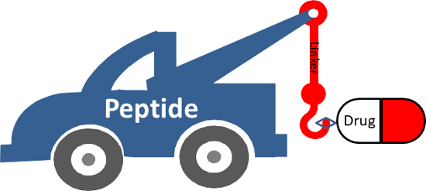
- -28). Both SST-14 and SST-28 exhibit biological activity through high-affinity membrane receptors (somatostatin receptor 1–5; SSTR1–5), that are widely distributed throughout the human body in various tissues like the nervous, pituitary, kidney, lung and immune cells [65][66]. SSTRs are overexpressed


Crystal structure of the inclusion complex of cholesterol in β-cyclodextrin and molecular dynamics studies
Beilstein J. Org. Chem. 2018, 14, 838–848, doi:10.3762/bjoc.14.69

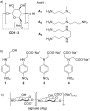
- inclusion complexes with the cholesterol molecule. β-CD and its modified derivatives (2,6-di-O-methyl-β-CD or DM-β-CD, randomly methylated β-CD or RAMEB and 2-hydroxypropyl-β-CD or HP-β-CD) comprise a class of pharmacological agents commonly used to remove membrane cholesterol from cells [5][6][7][8


Synthesis and in vitro biochemical evaluation of oxime bond-linked daunorubicin–GnRH-III conjugates developed for targeted drug delivery
Beilstein J. Org. Chem. 2018, 14, 756–771, doi:10.3762/bjoc.14.64
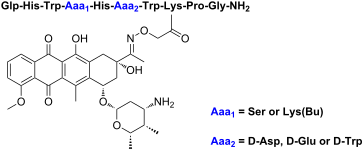
- human breast, prostate, and other cancers [51][52]. The binding affinities of the nonradio-labeled GnRH-III bioconjugates to GnRH-RI were determined by displacement of [125I]-GnRH-I-[6D-Trp] performing an in vitro ligand competition assay as recently reported [29][51][52]. Hereby, membrane homogenates



Nanoreactors for green catalysis
Beilstein J. Org. Chem. 2018, 14, 716–733, doi:10.3762/bjoc.14.61
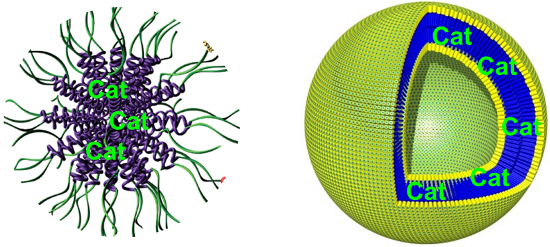
- membrane. Furthermore, the nanosystem also facilitated catalyst recycling by normal extraction. 2.2. Polymeric vesicles Polymeric vesicles or polymersomes are synthetic bilayered hollow architectures that are self-assembled from amphiphilic block copolymers [73]. The synthetic nature of polymersomes allows
- for facile tuning of their properties such as size [13][74], membrane permeability [75] and stability [76]. Various copolymers have been reported for polymersome formation such as poly(ethylene glycol)-b-polystyrene (PEG-b-PS) [14][77], polystyrene-b-polyisocyanopeptide (PS-b-PIAT)[21][22] and poly(N
- ]. Polymersomes comprise an aqueous lumen and hydrophobic membrane. Such hydrophilic and hydrophobic compartments are capable of accommodating hydrophilic (e.g., enzymes) or hydrophobic catalysts (e.g., metal catalysts) in their lumen or bilayer, respectively [28][79]. In an aqueous environment the hydrophobic


High-yielding continuous-flow synthesis of antimalarial drug hydroxychloroquine
Beilstein J. Org. Chem. 2018, 14, 583–592, doi:10.3762/bjoc.14.45
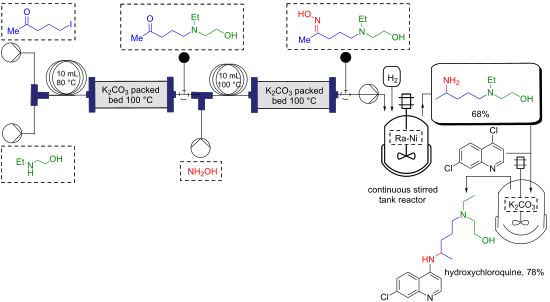
- before phase separation using a hydrophobic, membrane-based separator (Zaiput) [40] (Scheme 3) to afford purified 10 in the organic phase. A loss of 5–10% of product to the water layer was observed, however, this was deemed adequate as it prevented the need for a complete work-up step in batch. In the


An alternative to hydrogenation processes. Electrocatalytic hydrogenation of benzophenone
Beilstein J. Org. Chem. 2018, 14, 537–546, doi:10.3762/bjoc.14.40
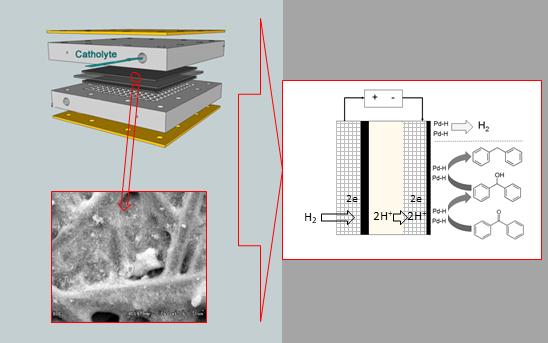
- a polymer electrolyte membrane electrochemical reactor (PEMER). Palladium (Pd) nanoparticles were synthesised and supported on a carbonaceous matrix (Pd/C) with a 28 wt % of Pd with respect to carbon material. Pd/C was characterised by transmission electron microscopy (TEM), and thermogravimetric
- analysis (TGA). Cathodes were prepared using Pd electrocatalytic loadings (LPd) of 0.2 and 0.02 mg cm−2. The anode consisted of hydrogen gas diffusion for the electrooxidation of hydrogen gas, and a 117 Nafion exchange membrane acted as a cationic polymer electrolyte membrane. Benzophenone solution was
- ; electrocatalytic hydrogenation; palladium nanoparticles; polymer electrolyte membrane; Introduction Hydrogenation is a common procedure applied in organic chemistry industry based on the use of an external hydrogen source, generally carried out under moderate experimental conditions of high temperature (until 673



Synthesis and stability of strongly acidic benzamide derivatives
Beilstein J. Org. Chem. 2018, 14, 523–530, doi:10.3762/bjoc.14.38
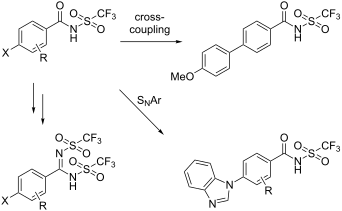
- conditions applied to common chemical transformations has not been described. With the prospect of using these strong benzoic acid derivatives for enhancing proton conductivity in proton-exchange membrane (PEM) fuel cells [3][40] we have examined their compatibility with chemical transformations as well as
- benzimidazole was chosen as model nucleophile for polybenzimidazole, a polymer commonly applied as a membrane in PEM fuel cells [40]. These reactions provided the 4-benzimidazolyl derivatives 13 and 14 in good yields and the N-triflylbenzamide group proved to be stable under these reaction conditions


Carbohydrate inhibitors of cholera toxin
Beilstein J. Org. Chem. 2018, 14, 484–498, doi:10.3762/bjoc.14.34
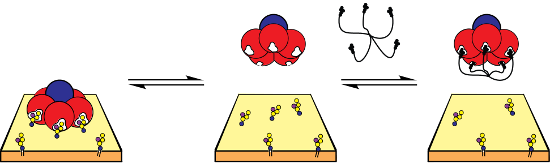
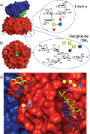
- galactosides have millimolar Kds and little interaction can be detected for simple sialosides [20]. The distance separating the binding sites is similar for all members of the AB5 toxin family and is believed to be instrumental in clustering the glycolipid ligands in such a way that membrane curvature is
- the highest affinity site on the SLT-1 B-subunit has a Kd of only 1 mM [26], yet the toxin achieves sub-nanomolar affinity at a cell membrane. The purpose of the CTB blood group oligosaccharide binding site remains a topic for debate, but it may be responsible for the reported blood group dependence







Latest development in the synthesis of ursodeoxycholic acid (UDCA): a critical review
Beilstein J. Org. Chem. 2018, 14, 470–483, doi:10.3762/bjoc.14.33
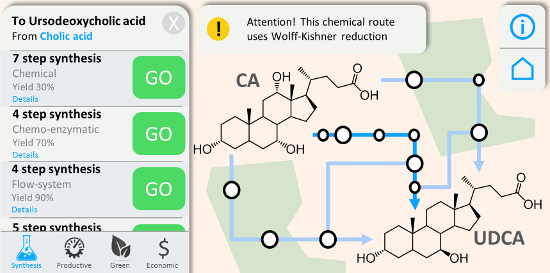
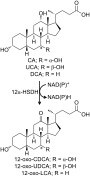
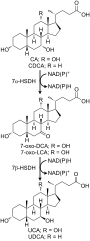
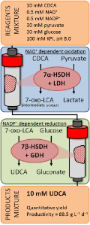
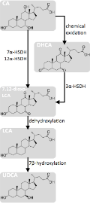
- obtained when the Wolff–Kishner reaction is carried out in the late stage. The typical substrate loading in systems employing purified enzymes is in the range of 10–15 mM. This disadvantage is partially compensated by the reuse of the biocatalysts through the employment of membrane reactors [12][78] or the
- immobilization of enzymes [93]. The first system shows high stability (enzymes in the membrane reactor have a half-life of 1–2 weeks) and the biocatalysts can be reused for eight cycles of conversions. On the other hand, immobilized enzymes show a higher productivity (88.5 vs 8 g L−1 d−1) despite the fact that



Synthesis and biological evaluation of RGD and isoDGR peptidomimetic-α-amanitin conjugates for tumor-targeting
Beilstein J. Org. Chem. 2018, 14, 407–415, doi:10.3762/bjoc.14.29
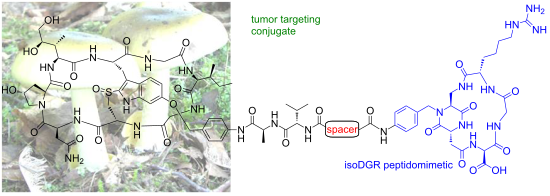
- is responsible for the transcription of DNA to mRNA [1][2]. Despite this strong inhibitory activity, α-amanitin exhibits only a micromolar cytotoxicity and low cellular uptake in most mammalian cells, due to its strong polarity and poor membrane permeability [2]. One notable exception are human
- , unfavorable pharmacokinetics (low tissue diffusion and low accumulation rate) and possible elicitation of immune response [6]. By conjugation to a specific cell-membrane-receptor ligand, the toxin can be delivered at the tumor site and internalized through receptor-mediated endocytosis. In 2013, Reshetnyak
- and co-workers conjugated α-amanitin to pHLIP (pH low insertion peptide) via linkers of different hydrophobicities [7]. The results indicated that pHLIP could deliver α-amanitin into cells and induce cell death in 48 h by a pH-mediated direct translocation across the membrane and cleavage of the


Aminosugar-based immunomodulator lipid A: synthetic approaches
Beilstein J. Org. Chem. 2018, 14, 25–53, doi:10.3762/bjoc.14.3
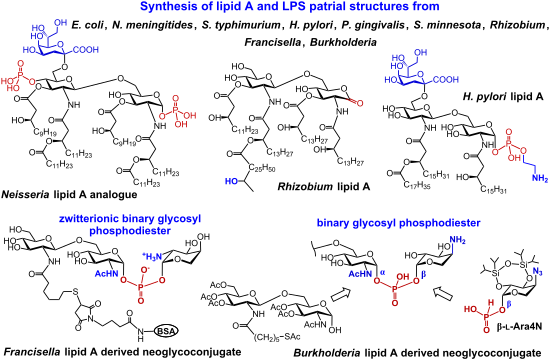
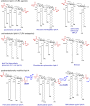
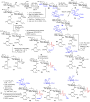
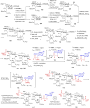
- endotoxin), a complex glycolipid constituting the outer leaflet of the bacterial outer membrane. Recognition of picomolar quantities of pathogenic LPS by the germ-line encoded Toll-like Receptor 4 (TLR4) complex triggers the intracellular pro-inflammatory signaling cascade leading to the expression of
- cytokines, chemokines, prostaglandins and reactive oxygen species which manifest an acute inflammatory response to infection. The “endotoxic principle” of LPS resides in its amphiphilic membrane-bound fragment glycophospholipid lipid A which directly binds to the TLR4·MD-2 receptor complex. The lipid A
- mammalian immune cells such as macrophages, monocytes and dendritic cells [4]. LPS represents the major virulence factor of Gram-negative bacteria and is essential for bacterial survival. LPS constitutes the outer leaflet of the outer membrane of Gram-negative bacteria (Figure 1A) and possesses a complex






Binding abilities of polyaminocyclodextrins: polarimetric investigations and biological assays
Beilstein J. Org. Chem. 2017, 13, 2751–2763, doi:10.3762/bjoc.13.271
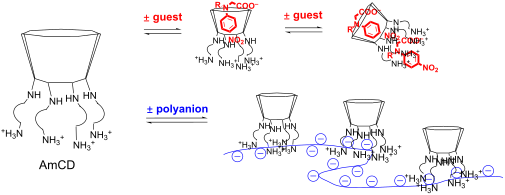
- , can undergo a transient period of competence after a pretreatment with calcium chloride followed by a short heat or electric shock. The addition of CaCl2 promotes the binding of pDNA to the outer membrane of Gram-negative bacteria. The Ca2+ ions both attract the negatively charged DNA backbone and