


Search results
Search for "phenol" in Full Text gives 367 result(s) in Beilstein Journal of Organic Chemistry. Showing first 200.
Fluorocyclisation via I(I)/I(III) catalysis: a concise route to fluorinated oxazolines
Beilstein J. Org. Chem. 2018, 14, 1021–1027, doi:10.3762/bjoc.14.88
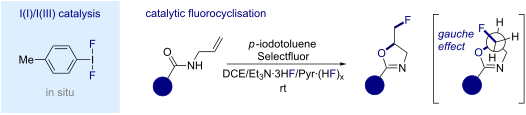
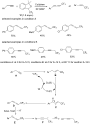
- which contains a free phenol moiety, were also tolerated (69% and 65% yield, respectively), as was the highly deactivated pentafluorophenyl analogue 2j (48%). To briefly explore the effect of chain length on efficiency, the cyclisation of N-(but-3-en-1-yl)benzamide and N-(pent-4-en-1-yl)benzamide was


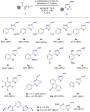


2-Iodo-N-isopropyl-5-methoxybenzamide as a highly reactive and environmentally benign catalyst for alcohol oxidation
Beilstein J. Org. Chem. 2018, 14, 971–978, doi:10.3762/bjoc.14.82

- of the iodobenzamides depends on the ortho-relationship of the iodine atom to the amide group. Therefore, we then investigated N-isopropyl-2-iodobenzamides that have an additional functional group on the benzene ring. Based on the results of our studies on phenol oxidation [60][62] and Ishihara’s [52
- 14a with 4-iodophenoxyacetic acid (23); the results showed excellent reactivity for phenol oxidations [60][61][62][63][64]. When 14a was oxidized with 23, the reaction was very slow and yielded only 23% of 15a and 75% of recovered 14a even after 48 h (Table 1, entry 9) [68]. Since the 5-methoxy



Mechanochemistry of nucleosides, nucleotides and related materials
Beilstein J. Org. Chem. 2018, 14, 955–970, doi:10.3762/bjoc.14.81
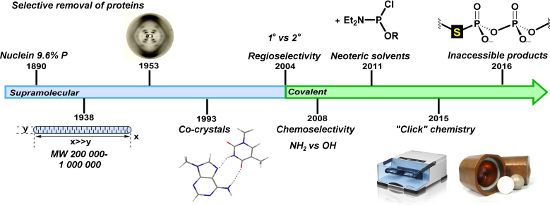
- reported in 1957. More recently, RNA was extracted from both Gram-negative and Gram-positive bacteria by hand grinding in a mortar with phenol under cooling with liquid nitrogen [71] . The reproducibility of studies requiring arduous mechanochemical operations to be performed by hand lead to the rapid


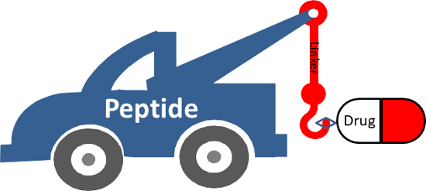
On the design principles of peptide–drug conjugates for targeted drug delivery to the malignant tumor site
Beilstein J. Org. Chem. 2018, 14, 930–954, doi:10.3762/bjoc.14.80


Mannich base-connected syntheses mediated by ortho-quinone methides
Beilstein J. Org. Chem. 2018, 14, 560–575, doi:10.3762/bjoc.14.43
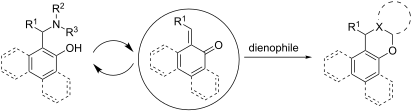
- mechanism of the formation of phenolic Mannich bases is similar to that discussed above for the synthesis of amidoalkylnaphthols. First, the phenol component reacts with the aldehyde to form the o-QM intermediate, which reacts in a nucleophilic addition step with the amine component, resulting in


Stimuli-responsive oligonucleotides in prodrug-based approaches for gene silencing
Beilstein J. Org. Chem. 2018, 14, 436–469, doi:10.3762/bjoc.14.32
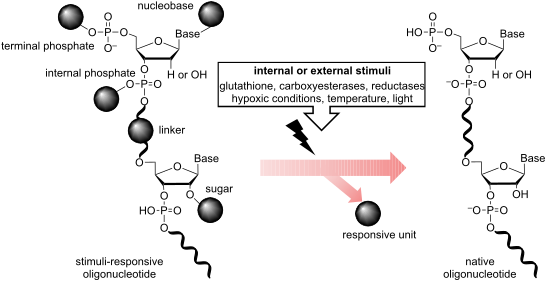
- the reaction between a phosphorothioate derivative and 2-bromo-4’-hydroxyacetophenone to produce a phosphate protected with a thioether-enol phosphotriester, phenol substituted (TEEP, Scheme 19) [77]. The TEEP modification was introduced into “active sites” of 8–17 and 10–23 DNAzymes with good yields


Synthetic and semi-synthetic approaches to unprotected N-glycan oxazolines
Beilstein J. Org. Chem. 2018, 14, 416–429, doi:10.3762/bjoc.14.30
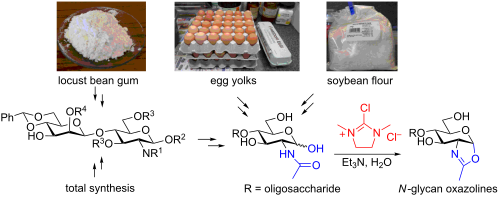
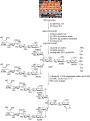
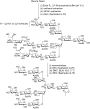
- degradation. The original procedure [82] for the isolation of SGP first involved deproteinization by treatment with 90% phenol and washing with Et2O, and then repeated purification by size exclusion chromatography (SEC, Sephadex G-50, followed by Sephadex G-25) from which sialic acid positive fractions were
- published which have made the isolation process easier and improved the yield. Firstly a significantly shortened procedure [83] followed the phenol treatment with a single purification by SEC (Sephadex G-50), and then filtration through graphitized carbon cartridges. Subsequently an even better method was
- developed [84] which avoided the treatment with phenol and all SEC purification steps (Scheme 9). In this process the egg yolks were first stirred with water and then freeze dried to give egg yolk powder. This powder was washed successively with diethyl ether and then 70% aqueous acetone. The solid was then



Progress in copper-catalyzed trifluoromethylation
Beilstein J. Org. Chem. 2018, 14, 155–181, doi:10.3762/bjoc.14.11
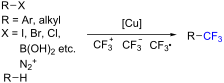
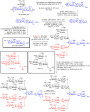
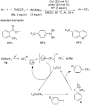
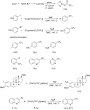
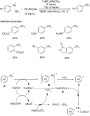
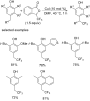
- . Although phenols were widely used building blocks in bioactive compounds, only a few examples introducing a CF3 have been reported. In 2015, the group of Hamashima [52] achieved a direct C–H trifluoromethylation of phenol derivatives with high regioselectivity. The CF3 was selectively incorporated into the
- group of Liu. Trifluoromethylation of terminal alkenes reported by the group of Wang. Trifluoromethylation of tetrahydroisoquinoline derivatives reported by Li and the proposed mechanism. Trifluoromethylation of phenol derivatives reported by the group of Hamashima. Trifluoromethylation of hydrazones













Acid-catalyzed ring-opening reactions of a cyclopropanated 3-aza-2-oxabicyclo[2.2.1]hept-5-ene with alcohols
Beilstein J. Org. Chem. 2017, 13, 2888–2894, doi:10.3762/bjoc.13.281
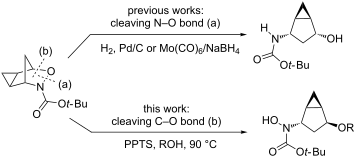
- of product 26l (Table 3, entry 12, preparation of compound 26l from 23a and t-BuOH with PPTS was already published in reference [20]). When the aromatic alcohol phenol was investigated as a nucleophile, no reaction occurred though no starting material was recovered (Table 3, entry 13). Although in


CF3SO2X (X = Na, Cl) as reagents for trifluoromethylation, trifluoromethylsulfenyl-, -sulfinyl- and -sulfonylation and chlorination. Part 2: Use of CF3SO2Cl
Beilstein J. Org. Chem. 2017, 13, 2800–2818, doi:10.3762/bjoc.13.273
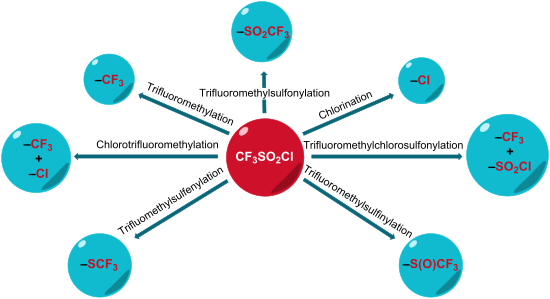
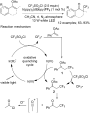
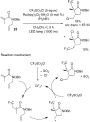
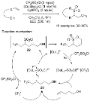
- the reaction medium. As for phenol derivatives, their lower reactivities led to even further decreased yields (Scheme 38b). Interestingly, while the introduction of the SOCF3 moiety occurred selectively on the nitrogen atom for amines, only the C-trifluoromethylsulfinylated products were isolated when
- performing the reaction on phenol derivatives. Such products were probably obtained through an O-trifluoromethylsulfinylation step, followed by a rearrangement. As for the mechanism of the reaction, we proposed a pathway similar to the one we previously described for the trifluoromethylsulfenylation of








Vinylphosphonium and 2-aminovinylphosphonium salts – preparation and applications in organic synthesis
Beilstein J. Org. Chem. 2017, 13, 2710–2738, doi:10.3762/bjoc.13.269

- consisted in the β-elimination of the phenol molecule (Scheme 8) [16]. A similar reaction using β-phenoxyethylphosphonium salts 9 derived from benzyldiphenylphosphine or dibenzylphenylphosphine required an alkaline environment and gave the expected vinylphosphonium salts 10 in good yields (Scheme 9) [16
- ]. The use of pyrocatechol or pyrogallol as reagents in reactions with the analogous mechanism resulted in the formation of mono-, di-, and tricyclic reaction products of phenol derivatives with one or two vinylphosphonium salt molecules (Scheme 62 and Scheme 63) [75]. In a similar reaction with 2
- subsequent isomerization of intermediate allylphosphonium salts. Alkylation of triphenylphosphine with vinyl triflates in the presence of (Ph3P)4Pd. Mechanism of alkylation of triphenylphosphine with vinyl triflates in the presence of (Ph3P)4Pd as catalyst. β-Elimination of phenol from β


Binding abilities of a chiral calix[4]resorcinarene: a polarimetric investigation on a complex case of study
Beilstein J. Org. Chem. 2017, 13, 2698–2709, doi:10.3762/bjoc.13.268

- (with methyl groups in place of the n-propyl groups at the methylene bridges), an average pKa value as large as 6.3 ± 1 per arene subunit has been estimated from titration curves, under the hypothesis that the four subunits behave equivalently [32]. In the latter case, the deprotonation of phenol groups
- progressive deprotonation, and the consequent presence of an increasing negative charge, are reasonable. It is worth recalling here that the cone conformation of the resorcinarene scaffold is stabilized by the possible formation of a hydrogen-bond network between pairs of phenol groups on adjacent arene units
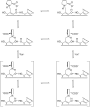
- bond system. Hydrogen bonding is likely enforced by deprotonation of a phenol group, due to enhanced Coulomb interaction with ammonium groups. Moreover, protonation of the nitrogen atom makes it a further chiral centre, which contributes to the overall optical activity of the system. Then, both the




Phosphonic acid: preparation and applications
Beilstein J. Org. Chem. 2017, 13, 2186–2213, doi:10.3762/bjoc.13.219
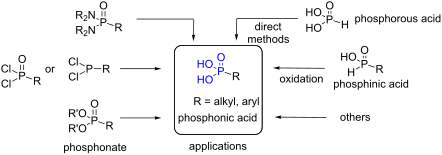
- cleavage. These results indicated that the mesomeric effect induced by the phenol function likely explained the difference of stability of compounds 23 and diethyl 3-hydroxyphenylphosphonate in refluxing HCl 35% solution. Of note, if classical heating at 100 °C is usually employed some reaction under
- dialkyl phosphonates (Figure 8). For the hydrolysis of diphenyl phosphonate it is likely that after protonation of the phosphonate, water acts as a nucleophile and subsequently phenol is eliminated (Figure 11). The repetition of this sequence produces phosphonic acid. Of note, the treatment of phosphonate


Novel approach to hydroxy-group-containing porous organic polymers from bisphenol A
Beilstein J. Org. Chem. 2017, 13, 2131–2137, doi:10.3762/bjoc.13.211
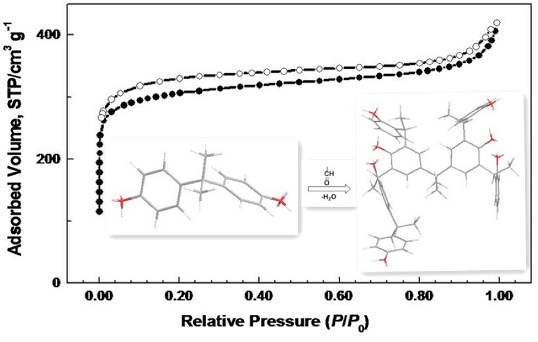
- one trialdehyde M3 [22] were employed to react with bisphenol A to produce phenolic-resin porous polymers PPOP-1–PPOP-3 (Scheme 1). It is well-known that the ortho- and para-position of phenol are activated with negative charge for the electrophilic aromatic substitution in consequence of the electron
- -donating effect of the hydroxy group. The positively charged carbonyl group of the aldehyde could be attacked by the electron-rich phenyl ring, thus a carbonyl group can connect two phenol molecules by elimination of a water molecule. As a result, a cross-linked hydroxy-group-containing polymer is
- thermal degradation for PPOPs until when heated up to 300 °C. According to the TGA result of BPA (Supporting Information File 1, Figure S2), the thermal degradation of BPA begins around 180 °C and the evolved products are mainly phenol with one or two benzene rings from investigations of thermal




Preparation of imidazo[1,2-a]-N-heterocyclic derivatives with gem-difluorinated side chains
Beilstein J. Org. Chem. 2017, 13, 2115–2121, doi:10.3762/bjoc.13.208
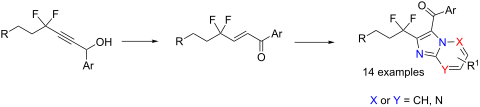
- , respectively. On the other hand, two nucleophilic substitution reactions using phenol and morpholine gave the expected heterocycles 10 and 11 in 73% and 23% yields, respectively. Conclusion In summary, we developed a short and completely regioselective method for the synthesis of imidazo[1,2-a]-N-heterocycles


Intramolecular glycosylation
Beilstein J. Org. Chem. 2017, 13, 2028–2048, doi:10.3762/bjoc.13.201
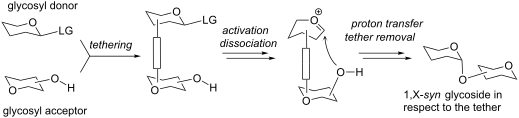
- picoloyl group-directed coordination of palladium from the top β-face of the 1,2-dehydro donor 91 to form intermediate 92 (Scheme 21). With softer nucleophiles, such as phenol (ArOH), the nucleophilic attack is directed away from the steric bulk of the palladium to give α-glycosides 93. When the acceptor


Mechanochemical synthesis of small organic molecules
Beilstein J. Org. Chem. 2017, 13, 1907–1931, doi:10.3762/bjoc.13.186
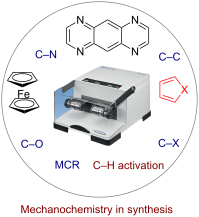
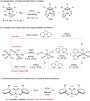
- and co-workers reported bromination of phenol derivatives, chalcones, 1,3-dicarbonyl compounds using NaBr as bromine source and oxone as oxidant under ball-milling conditions [96]. Within 1 h they could isolate more than 90% of mono or poly-brominated products of phenol and 1,3-dicarbonyl compounds




Enzymatic synthesis of glycosides: from natural O- and N-glycosides to rare C- and S-glycosides
Beilstein J. Org. Chem. 2017, 13, 1857–1865, doi:10.3762/bjoc.13.180
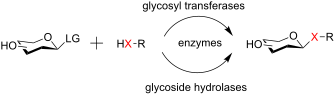
- retaining mechanism). In the case of O-GTs, the nucleophile is an alcohol or a phenol (carbohydrates, serine, threonine, …), whereas in N-GTs, the nature of the nitrogen-containing group is more diverse (amines, amides, guanidine or even indoles) [12]. S- and C-GTs follow a similar mechanism with the




Selective enzymatic esterification of lignin model compounds in the ball mill
Beilstein J. Org. Chem. 2017, 13, 1788–1795, doi:10.3762/bjoc.13.173
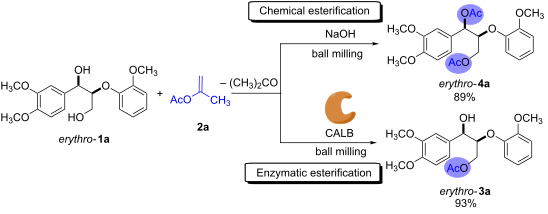
- group. Initially, it was hypothesized that the presence of a phenolic functionality present in 1f could have inhibited the lipase activity or perhaps caused some degree of denaturation in the enzyme. To test this hypothesis, control experiments using erythro-1a, 2a and CALB in the presence of phenol
- (1.0 equiv) and phenol derivatives (guaiacol, 3-methoxyphenol, etc.) were carried out. In most cases, the presence of the additives had no negative effect on the performance of CALB (for details see Table S2 in Supporting Information File 1). Only the presence of 2,2’-biphenol seemed to have slowed
- were milled (Table 2, entry 3), and formation of phenol was expected as a byproduct of the reaction. Hence, the lower reactivity of 1f could have been a consequence of aggregation of the substrate or possible changes in its conformation. This could have reduced the affinity of CALB for 1f compared to



Chiral phase-transfer catalysis in the asymmetric α-heterofunctionalization of prochiral nucleophiles
Beilstein J. Org. Chem. 2017, 13, 1753–1769, doi:10.3762/bjoc.13.170
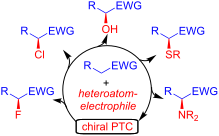
- -worker reported the use of phase-transfer catalysts to carry out the dearomatization of phenol and naphthol derivatives 25 via ortho-hydroxylation to obtain the highly-functionalized targets 26 [119]. Hereby oxaziridines 23 were found to be the best-suited hydroxylating agents. Unfortunately, the


An effective Pd nanocatalyst in aqueous media: stilbene synthesis by Mizoroki–Heck coupling reaction under microwave irradiation
Beilstein J. Org. Chem. 2017, 13, 1717–1727, doi:10.3762/bjoc.13.166

- -diphenylvinyl)phenyl)ethanone (15) [56], and (E)-4-(3,5-dimethoxystyryl)phenol or pterostilbene (19) [60]. Representative procedure for the MW-assisted Stille–Heck coupling reactions Analogously to the procedure described in [47], into a 10 mL MW tube equipped with a magnetic stirring bar, aryl bromide 1a, 1d


Oxidative dehydrogenation of C–C and C–N bonds: A convenient approach to access diverse (dihydro)heteroaromatic compounds
Beilstein J. Org. Chem. 2017, 13, 1670–1692, doi:10.3762/bjoc.13.162
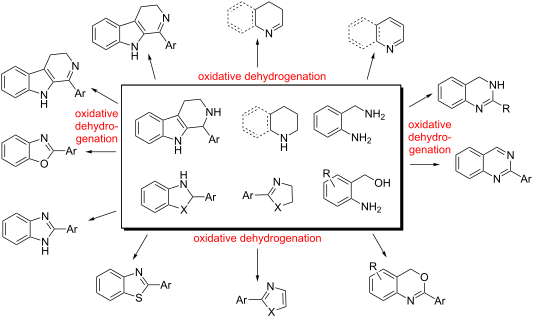
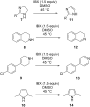
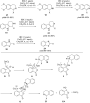
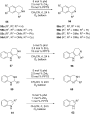
- substituted 2-aminophenol (Scheme 38). Accordingly the reaction is believed to have initiated by the formation of imine intermediate V. The 4-methoxy-TEMPO radical interacted with V and subsequent H-absorption from the phenol moiety afforded phenoxy radical W and 4-methoxy-TEMPOH which gets re-oxidized to the










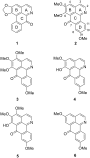
A novel approach to oxoisoaporphine alkaloids via regioselective metalation of alkoxy isoquinolines
Beilstein J. Org. Chem. 2017, 13, 1564–1571, doi:10.3762/bjoc.13.156

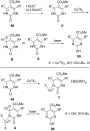
- using polyphosphoric acid (Scheme 1). In the course of this cyclization, the methoxy group at C-6 is typically hydrolized to the phenol, subsequent O-methylation gives the 6-methoxy derivatives menisporphine (2) and dauriporphine (3). Recently, Zhang et al. [20] described an alternative approach



Bifunctional organocatalysts for the asymmetric synthesis of axially chiral benzamides
Beilstein J. Org. Chem. 2017, 13, 1518–1523, doi:10.3762/bjoc.13.151

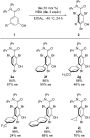
- analysis of the reaction selectivity (the decrease of the enantiomeric purity of 2b was negligible after a day). Furthermore, the reaction of benzamide 5, bearing a protected phenol, was carried out (Scheme 6). It failed to give the corresponding product 6, indicating the significance of multipoint
- substituted phenols. Reactions of monobrominated substrates. Rotational barriers of substrates and intermediates calculated at the B3YLP/6-31G(d) level of theory. Reaction of substrate with protected phenol. Optimization of conditions.a Supporting Information Supporting Information File 257: Experimental




An improved preparation of phorbol from croton oil
Beilstein J. Org. Chem. 2017, 13, 1361–1367, doi:10.3762/bjoc.13.133
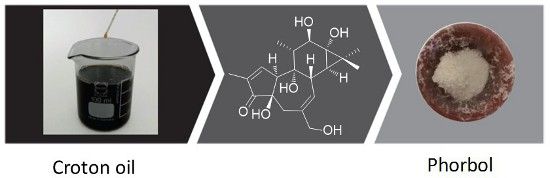
- of the oil, especially in association to phenol [3]. The extraordinarily obnoxious and vesicant properties of croton oil have fostered studies aimed at the identification of its active principles since the very early developments of organic chemistry. Thus, the first chemical study on croton oil was





