


Search results
Search for "purification" in Full Text gives 1642 result(s) in Beilstein Journal of Organic Chemistry. Showing first 200.
Enhanced reactivity of Li+@C60 toward thermal [2 + 2] cycloaddition by encapsulated Li+ Lewis acid
Beilstein J. Org. Chem. 2024, 20, 653–660, doi:10.3762/bjoc.20.58
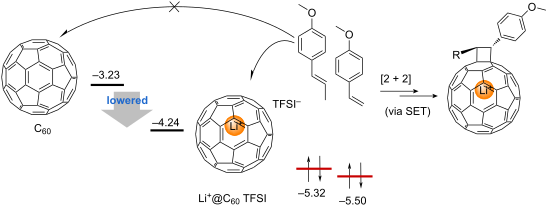
- Corp., TCI, Sigma-Aldrich) and used as received without further purification. Li+@C60TFSI− was purchased as PF6− salt from Idea International Corp., and then its counter anion was exchanged to TFSI− according to reported procedures [9]. NMR spectra were recorded on a JEOL JNM-ECZ400S (1H: 400 MHz, 7Li


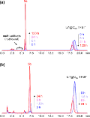
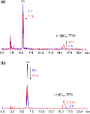


HPW-Catalyzed environmentally benign approach to imidazo[1,2-a]pyridines
Beilstein J. Org. Chem. 2024, 20, 628–637, doi:10.3762/bjoc.20.55
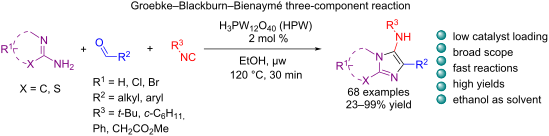
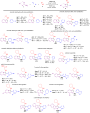
- ][21][22]. Multicomponent reactions (MCRs) provide one-pot reactions, simple synthetic procedures, less waste being produced, fewer purification steps, and a high atom economy [23]. The GBB three-component reaction is carried out in the presence of Lewis or Brønsted acid catalysis to increase the
- furnished good results for the HPW-catalyzed GBB-3CR with yields greater than 63% (5m–o). It is always important to point out the limitations of a given method and in our case, we did have some. Purification by column chromatography became necessary since product isolation by precipitation was not effective
- . The catalyst was impregnated in the isolated crude product, and its removal through a recrystallization step was not successful. The use of a liquid–liquid extraction work-up step proved less effective compared to column chromatography purification. Moreover, attempts to recover the catalyst were not




Chemical and biosynthetic potential of Penicillium shentong XL-F41
Beilstein J. Org. Chem. 2024, 20, 597–606, doi:10.3762/bjoc.20.52
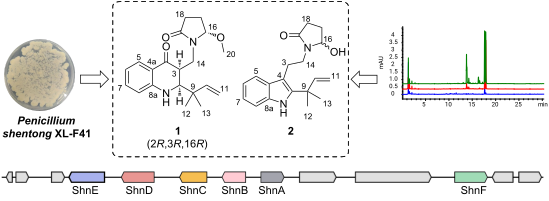
- yield an ethanol extract. This extract was further processed with ethyl acetate (EtOAc) three times. The combined EtOAc phase was then dried using a rotary evaporator to obtain the EtOAc extract, which was stored at −80 °C until further purification process. The above fermentation broth was adsorbed
- EtOAc extracts were dried using a rotary evaporator to obtain the final EtOAc extract, which was stored at −80 °C until further isolation process. Compounds purification The EtOAc extract (3.5 g) obtained from the fermentation broth of XISR I medium underwent column chromatography on silica using a




A myo-inositol dehydrogenase involved in aminocyclitol biosynthesis of hygromycin A
Beilstein J. Org. Chem. 2024, 20, 589–596, doi:10.3762/bjoc.20.51
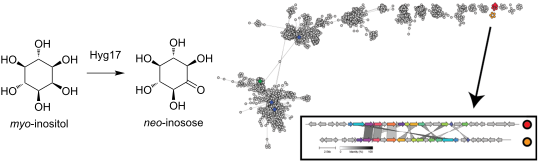
- Cloning, expression, and purification Streptomyces leeuwenhoekii NRRL B-24963 [28] was used as a template to amplify the hyg17 (GenBank CQR59633) with the primers 5’-GTTAGCCATATGACGGTCGCCGTCGTGGGC-3’ and 5’-GTAATGCTCGAGCGGCGCCACCGGCACCGA-3’. hyg17 was cloned into pTip-QC1 [10] using NdeI and XhoI
- /off cycles for 5 min at a duty cycle of 50). Initial purification was performed with gravity filtration using nickel-nitrilotriacetic acid (Ni-NTA) resin (GE Healthcare). Cell lysate was loaded onto the Ni-NTA resin and washed with binding buffer. Protein was eluted using increasing concentrations of
- NaCl, 20 mM Tris pH 7.5) for another 10 min. Then MgSO4 (to ≈1 mM) and 0.2 mg DNase (Thermo Fisher Scientific) were added and stirred for 10 min. The lysate was centrifuged to remove debris for 45 min at 10,000 rpm and 4 °C, and the lysate was collected into a beaker. Purification was then performed


Synthesis and biological profile of 2,3-dihydro[1,3]thiazolo[4,5-b]pyridines, a novel class of acyl-ACP thioesterase inhibitors
Beilstein J. Org. Chem. 2024, 20, 540–551, doi:10.3762/bjoc.20.46
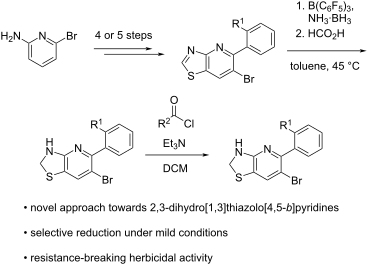
- (SORHA), Triticum aestivum (TRZAS), and Zea mays (ZEAMX). LpFAT A expression and purification: The fat a03 gene from Lemna paucicostata, in which the N-terminal amino acids representing the chloroplast transit peptide were replaced by an N-terminal 6xHis-tag, was cloned into a pET24 vector [3]. The LpFAT


A new analog of dihydroxybenzoic acid from Saccharopolyspora sp. KR21-0001
Beilstein J. Org. Chem. 2024, 20, 497–503, doi:10.3762/bjoc.20.44
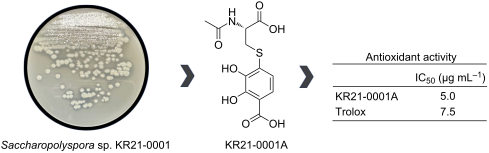
- compound producers. Among the rare actinomycetes, Saccharopolyspora sp. KR21-0001 isolated from soil on Ōha Island, Okinawa, Japan was selected as a potential producer. The strain was cultured in 20 L of production medium in a jar fermenter and the culture broth was extracted. Further purification revealed
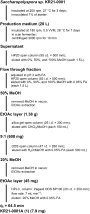
- minute) for 7 days. Purification and extraction The 7-day culture broth of Saccharopolyspora sp. KR21-0001 was centrifuged at 3000 rpm for 10 min. The supernatant fraction was eluted stepwise with 1.5 L of MeOH/H2O (0%, 50%, and 100%) through a HP20 column (55 i.d. × 500 mm), and all fractions were



Pseudallenes A and B, new sulfur-containing ovalicin sesquiterpenoid derivatives with antimicrobial activity from the deep-sea cold seep sediment-derived fungus Pseudallescheria boydii CS-793
Beilstein J. Org. Chem. 2024, 20, 470–478, doi:10.3762/bjoc.20.42
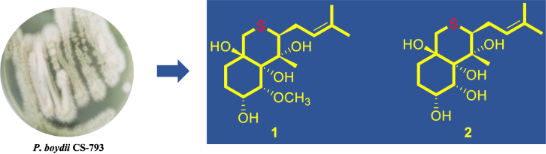
- sesquiterpenoids (1, 2), together with three known related analogs (3–5) [10][11][12][13] have been isolated and identified from the bioactive fraction of P. boydii CS-793. Details of the isolation and purification, structure elucidation, and biological evaluation of compounds 1–5 are described herein. Results and
- Discussion For chemical investigation, the solvent EtOAc was used to extract the fermentation culture of the fungus P. boydii CS-793 to afford an organic extract. Isolation and purification of the crude extract with a combination of column chromatography (CC) by Lobar LiChroprep RP-18, silica gel, Sephadex
- chromatography (TLC) was performed with precoated Si gel GF254 plates (Merck, Darmstadt, Germany). Solvents used for extraction and purification were distilled prior to use. Peptone from yeast extract was purchased from Sigma-Aldrich. Rice, monosodium glutamate, and corn steep liquor were purchased from China


Synthesis of 2,2-difluoro-1,3-diketone and 2,2-difluoro-1,3-ketoester derivatives using fluorine gas
Beilstein J. Org. Chem. 2024, 20, 460–469, doi:10.3762/bjoc.20.41
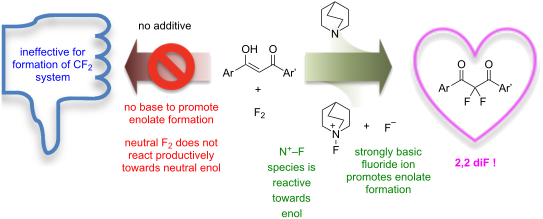
- Supporting Information File 1). To isolate the main difluorinated product 3a, the reaction vessel was purged with nitrogen and the product mixture was partitioned between water and DCM to remove HF and salt by-products. Purification of 3a by column chromatography gave 3a as a white crystalline solid in 65
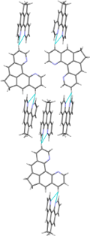
- . Again, purification by column chromatography gave the products 3 as white crystalline solids and the structures of compounds 3f and 3i were confirmed by X-ray crystallography (Figure 2 and Supporting Information File 1). Molecules 3a, f, and i all exist in the solid state with the dicarbonyl moiety
- difluorinated product 5a in 85% isolated yield. Purification of 5a was achieved very readily by eluting the reaction mixture through a small quantity of silica gel with chloroform and evaporating the residual solvent to leave the crude product which could be further purified by recrystallization. Subsequently


Mono or double Pd-catalyzed C–H bond functionalization for the annulative π-extension of 1,8-dibromonaphthalene: a one pot access to fluoranthene derivatives
Beilstein J. Org. Chem. 2024, 20, 427–435, doi:10.3762/bjoc.20.37
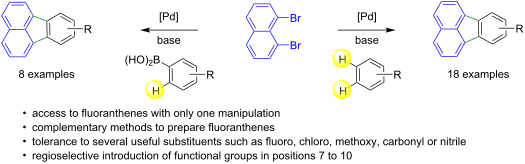
- of PdCl(C3H5)(dppb) (30.5 mg, 0.05 mmol) at 150 °C during 16 h in DMA (4 mL) under argon affords the coupling products 1–18 after evaporation of the solvent and purification on silica gel. Eluent EtOAc/heptane 1:9 for compounds 3–8, 10–18; heptane for compounds 1, 2, and 9. General procedure for the
- DMA (4 mL) under argon affords the coupling products 19–27 after evaporation of the solvent and purification on silica gel. Eluent EtOAc/heptane 1:9 for compounds 19–24; heptane for compounds 25 and 26; EtOAc/heptane 2:8 for compound 27. General procedure for the palladium-catalyzed synthesis of 9
- (4 mL) under argon affords the coupling products 28–30 after evaporation of the solvent and purification on silica gel. Eluent EtOAc/heptane 1:9 for all compounds. Structure of fluoranthene. Pd-catalyzed access to fluoranthenes. Scope of the Pd-catalyzed direct arylation reaction of arenes with 1,8


Facile approach to N,O,S-heteropentacycles via condensation of sterically crowded 3H-phenoxazin-3-one with ortho-substituted anilines
Beilstein J. Org. Chem. 2024, 20, 336–345, doi:10.3762/bjoc.20.34
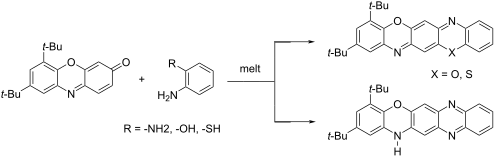
- . Results and Discussion We found that a convenient way toward 6,8-di-tert-butyl-2-(arylamino)-3H-phenoxazin-3-ones 4 involves the short-term heating (30 min) of a molten mixture of 1 and an arylamine at 250 °C, followed by purification of the products by column chromatography. No preliminary grinding of
- potential for testing as potential donors for organic solar cells or as dye sensitizers for dye-sensitized solar cells [24][25]. Experimental All reagents and solvents were purchased from commercial sources (Aldrich) and used without additional purification. The compounds were characterized by 1H, 13C, and


Discovery of unguisin J, a new cyclic peptide from Aspergillus heteromorphus CBS 117.55, and phylogeny-based bioinformatic analysis of UngA NRPS domains
Beilstein J. Org. Chem. 2024, 20, 321–330, doi:10.3762/bjoc.20.32
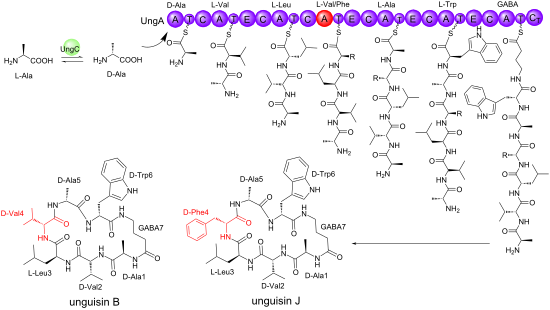
- . heteromorphus CBS 117.55 on rice solid medium yielded an organic-soluble extract, which was subjected to fractionation using preparative HPLC-PDA-ELSD and purification by semipreparative HPLC-PDA; this led to the isolation of a new cyclic peptide 1, along with unguisin B (2, Figure 2). The structure of the new
- performed on a Shimadzu LC-20AP preparative liquid chromatograph (SCL-40 System Controler Deliver and LH-40 Liquid Handler) coupled to a Shimadzu SPD-M40 Photo Diode Array Detector (PDA) system using a RP-18 column (Phenomenex, Kinetex 250 × 30 mm i.d., 5 µm, flow rate of 18.0 mL min−1). The purification of
- consisted of H2O + 0.05% formic acid (eluent A) and MeCN + 0.05% formic acid (eluent B), which was eluted of 20–100% of B with flow rate of 18 mL min−1, yielding 20 fractions. Fractions Fr13 and Fr15 were subjected to a purification by semipreparative HPLC-UV using a Premier RP18 column (250 mm × 10 mm i.d


Elucidating the glycan-binding specificity and structure of Cucumis melo agglutinin, a new R-type lectin
Beilstein J. Org. Chem. 2024, 20, 306–320, doi:10.3762/bjoc.20.31
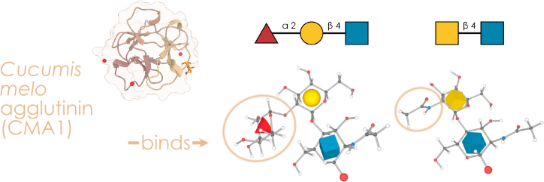
- and subsequent reverse Ni-NTA affinity chromatography resulted in significant co-purification of E. coli contaminants, necessitating an extra purification step, where cation exchange chromatography allowed us to obtain pure fractions of CMA16–291. Of note, this additional purification step was not
- necessary for the purification of the CMA1 N-terminal domain (Figure 1d). Expression of the CMA1 C-terminal domain did not yield sufficiently pure and monodisperse protein for further biochemical and structural analyses. Cucumis melo agglutinin binds C2-substituted, beta-linked galactose We then set out to
- polymerase (Takara #TAKR045A); then the product was digested by DpnI and finally transformed in NEB5α strain (New England Biolabs, #C2992H). Both gene and vector were digested by NcoI and XhoI restriction enzymes (New England Biolabs) prior to purification on agarose gel using Monarch Gel extraction kit and



Synthesis of π-conjugated polycyclic compounds by late-stage extrusion of chalcogen fragments
Beilstein J. Org. Chem. 2024, 20, 287–305, doi:10.3762/bjoc.20.30
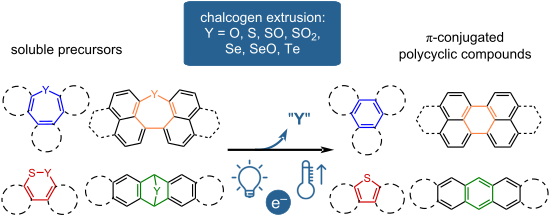
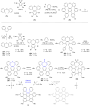
- devices [1][2][3][4][5][6][7][8]. In this regard, the planar character of most (non-substituted) π-CPCs represents a challenge, as it results in very low solubility in common organic solvents due to favorable intermolecular π–π stacking interactions. This inherently hampers the purification of the target
- endoperoxide formation. To overcome these issues, the “precursor approach” was developed and relies on the synthesis, purification and characterization of soluble and stable precursors of the target active π-CPCs, followed by their (solution) processing and their final deprotection once assembled in thin-films
- purification by column chromatography prior to their on-surface deposition. By way of example, the synthesis of decacene precursor 59 was achieved in three synthetic steps by iterative [4 + 2] cycloadditions with an overall yield of 4.7% (Scheme 17). The synthesis of epoxyacene 59 started with the mono-Diels




Nucleophilic functionalization of thianthrenium salts under basic conditions
Beilstein J. Org. Chem. 2024, 20, 257–263, doi:10.3762/bjoc.20.26
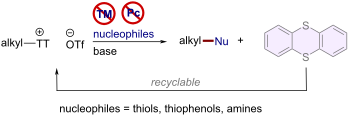
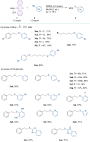
- by chromatographic purification in 88% yield (Table 1, entry 1). Reducing the amount of DIPEA gave diminished yield (Table 1, entry 2). Adding more base was unnecessary to get a higher yield (Table 1, entry 3). Subsequently, the use of other bases was not appropriate for promoting the generation of



Catalytic multi-step domino and one-pot reactions
Beilstein J. Org. Chem. 2024, 20, 254–256, doi:10.3762/bjoc.20.25
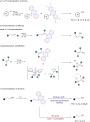
- sophistication over the past decades. Most known processes, however, are still frequently hampered by lengthy protecting-group strategies and very costly purification procedures derived from the "stop-and-go" synthetic methods (Figure 1a). Those protocols are still far from the ideal synthesis, implying high
- atom efficiency, step and pot economies, decreased number of purification steps, or protecting-group-free synthesis. Multi-step domino [1][2] and one-pot [3] reactions represent a new powerful toolbox in organic synthesis to install molecular complexity economically and sustainably, starting from
- triggers the next, which in the end yields a complex product. In contrast to a conventional “stop-and-go” method, only a single workup and purification is needed (Figure 1b), and therefore these reaction cascades can be considered superior to stepwise synthetic approaches in the context of green chemistry

Substitution reactions in the acenaphthene analog of quino[7,8-h]quinoline and an unusual synthesis of the corresponding acenaphthylenes by tele-elimination
Beilstein J. Org. Chem. 2024, 20, 243–253, doi:10.3762/bjoc.20.24
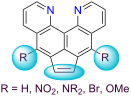
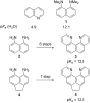
- several minutes with a good yield (Scheme 4). The spectral data fully confirmed the purity and asymmetric structure of product 11. It should be emphasized that the isolation and purification of nitro compounds 10 and 11 is complicated by their low solubility in traditional organic solvents, sensitivity to
- activator of NBS, as was previously shown by the example of a very successful bromination of 6-methylquinoline at position 5 with a preparative yield of 74% [27]. Indeed, under the new conditions, we obtained dibromo derivative 15 in high yield without heating and subsequent purification (Scheme 7). The





Optimizations of lipid II synthesis: an essential glycolipid precursor in bacterial cell wall synthesis and a validated antibiotic target
Beilstein J. Org. Chem. 2024, 20, 220–227, doi:10.3762/bjoc.20.22
- prolonged reaction times did not enhance the product yield, and the subsequent purification of the target product became a difficult task. However, when we conducted the reaction at lower temperatures, the degradation of glycosyl donor 1a slowed down, and the reaction proceeded at a moderate rate
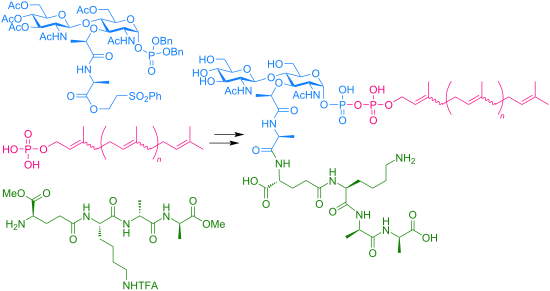
- Supporting Information File 1 for comprehensive information on the synthesis details of the tetrapeptide). To avoid loss of valuable material through HPLC purification, crude 7 is used directly in the next step, and purification performed after the final prenyl phosphate coupling and global deprotection
- % (from compound 7) following reversed-phase HPLC purification (Scheme 2). Similarly, farnesyl, geranylgeranyl, and solanesyl-lipid II analogues 8–10 were synthesized with overall yields of 13%, 21%, and 11%, respectively, using the corresponding prenyl phosphates (Scheme 2). Conclusion In conclusion, we


Metal-catalyzed coupling/carbonylative cyclizations for accessing dibenzodiazepinones: an expedient route to clozapine and other drugs
Beilstein J. Org. Chem. 2024, 20, 193–204, doi:10.3762/bjoc.20.19
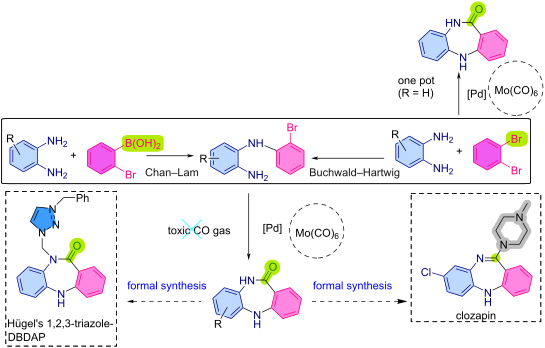
- celite and washed with DCM, then, the solvent was evaporated under reduced pressure to give a crude mixture. Further purification by flash chromatography (hexane/AcOEt 1:1), gave the desired compound 5,10-dihydro-11H-dibenzo[b,e][1,4]diazepin-11-one (4a) as a yellow solid yield (0.032 g, 80%). Mp 249–251


Comparison of glycosyl donors: a supramer approach
Beilstein J. Org. Chem. 2024, 20, 181–192, doi:10.3762/bjoc.20.18
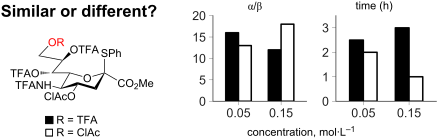
- -acetyl groups. After this procedure the initially formed disaccharides with various O-protective groups were transformed to the same known disaccharide 4 [36]. This procedure significantly simplifies the analysis of the reaction results and purification of the product. For the correct determination of
- during purification by silica gel chromatography. On the other hand, NMR analysis of the crude reaction mixtures may be misleading due to possible overlap of the signals of H-3eq belonging both to disaccharide and monosaccharide derivatives sometimes present in such glycosylation mixtures. At low



Synthesis of the 3’-O-sulfated TF antigen with a TEG-N3 linker for glycodendrimersomes preparation to study lectin binding
Beilstein J. Org. Chem. 2024, 20, 173–180, doi:10.3762/bjoc.20.17
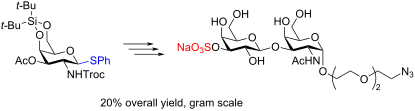
- removed from the reaction mixture in vacuo. Sulfation was then performed through addition of SO3·NMe3 to the DMF solution. Consumption of 1 was observed by TLC after 72 hours and stirring with Dowex® 50WX4 (Na+ form) resin resulted in formation of target 2. Purification by flash chromatography, however
- following acetylation without purification of the intermediate, why the synthesis is high-yielding (20% overall yield) and easily scalable (9 g of protected disaccharide 7 and 1 gram of target 2 were synthesized). Experimental General methods All reactions containing air- and moisture-sensitive reagents
- /v) for 16 hours. The solution was then reduced to dryness and purification by flash chromatography on silica gel (EtOAc→EtOAc/MeOH, 17:3) yielded 8 as a dark orange/brown syrup (3.82 g, 53% over 3 steps). Rf = 0.4 (EtOAc/MeOH, 19:1); [α]D +76 (c 1.0, CH3OH); 1H NMR (500 MHz, CD3OD) δ 5.42 (d, J


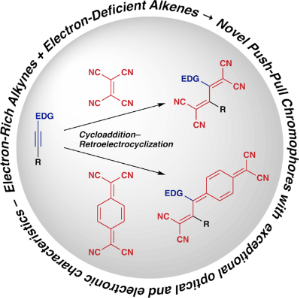
Perspectives on push–pull chromophores derived from click-type [2 + 2] cycloaddition–retroelectrocyclization reactions of electron-rich alkynes and electron-deficient alkenes
Beilstein J. Org. Chem. 2024, 20, 125–154, doi:10.3762/bjoc.20.13


Photoinduced in situ generation of DNA-targeting ligands: DNA-binding and DNA-photodamaging properties of benzo[c]quinolizinium ions
Beilstein J. Org. Chem. 2024, 20, 101–117, doi:10.3762/bjoc.20.11
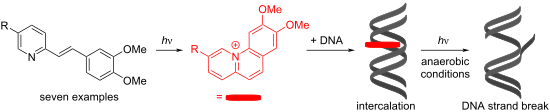
- of isolated product result from significant losses during the purification process, the content and yield of the benzo[c]quinolizinium ions were determined directly after irradiation of 2c, 2e–g by photometric analysis of the reaction mixture (Figure 3, red spectra). The yield of the product 3d could
- yields, so that it may be concluded that the small amounts of isolated product result from losses during work-up and purification. DNA-binding properties of benzoquinolizinium derivatives 3c,e–g The styrylpyridines 2d–g and the benzo[c]quinolizinium derivatives 3c,e–g were investigated with respect to
- chemicals (Alfa, Merck, Fluorochem or BLDpharm) were of reagent grade and used without further purification. 1H NMR spectra were recorded with a JEOL ECZ 500 (1H: 500 MHz and 13C: 125 MHz) and a Varian VNMR S600 (1H: 600 MHz and 13C: 150 MHz) at T = 25 °C. The 1H NMR and 13C{1H} NMR spectra were referenced


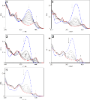


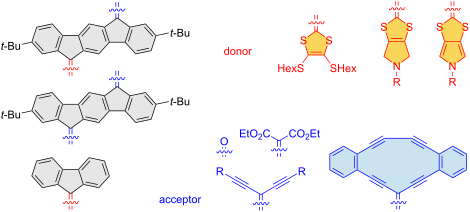
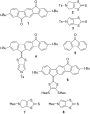
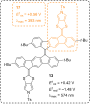
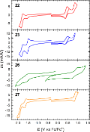
Multi-redox indenofluorene chromophores incorporating dithiafulvene donor and ene/enediyne acceptor units
Beilstein J. Org. Chem. 2024, 20, 59–73, doi:10.3762/bjoc.20.8
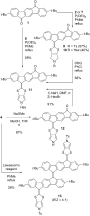
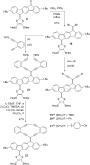
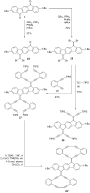
- molecular sieves, or by drying over 3 Å molecular sieves. All remaining anhydrous solvents were obtained from a solvent drying tower (IT model PS-MD-05). HPLC grade solvents were used unless otherwise specified. Purification by chromatography was performed using silica gel (flash: 40–63 μm, Sepacore® Flash
- mmol), Pd(PPh3)2Cl2 (15 mg, 0.021 mmol), and CuI (5.0 mg, 0.026 mmol). The reaction mixture was stirred at rt under a N2 atmosphere for 4 h before it was filtered through a plug of SiO2 (CH2Cl2 as eluent) and concentrated under reduced pressure. Purification by flash column chromatography (SiO2, 10–15







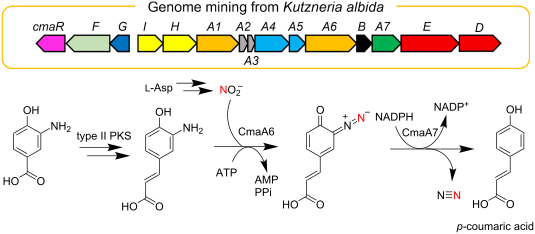
Identification of the p-coumaric acid biosynthetic gene cluster in Kutzneria albida: insights into the diazotization-dependent deamination pathway
Beilstein J. Org. Chem. 2024, 20, 1–11, doi:10.3762/bjoc.20.1
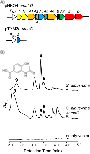
- NMR system (JEOL, Tokyo, Japan) (Table S1 and Figures S9–S13 in Supporting Information File 1). Production and purification of recombinant proteins pColdI-cmaA1, pColdI-cmaA3, and pColdI-cmaA6 were constructed by cloning each gene (which was amplified by PCR using pHKO4-cmaI-D as a template) into the


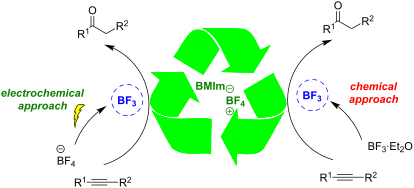
1-Butyl-3-methylimidazolium tetrafluoroborate as suitable solvent for BF3: the case of alkyne hydration. Chemistry vs electrochemistry
Beilstein J. Org. Chem. 2023, 19, 1966–1981, doi:10.3762/bjoc.19.147
- (Fluorochem, Aldrich) and used without further purification. Ionic liquids (ILs, Iolitec) were kept under vacuum (7 mbar) under stirring at 40 °C for 16 h before use. NMR spectra were recorded at ambient temperature on Bruker Avance spectrometer operating at 400 MHz (1H NMR) and 100 MHz (13C{1H} NMR) or on a





