Search results
Search for "substitution pattern" in Full Text gives 231 result(s) in Beilstein Journal of Organic Chemistry. Showing first 200.
New hydrogen-bonding organocatalysts: Chiral cyclophosphazanes and phosphorus amides as catalysts for asymmetric Michael additions
Beilstein J. Org. Chem. 2014, 10, 224–236, doi:10.3762/bjoc.10.18
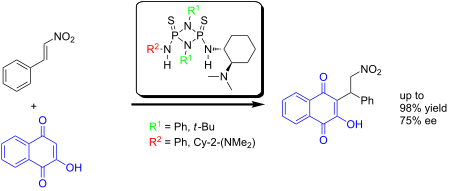
- -selective fashion, as the cis-isomers are generally thermodynamically favored even with large R-groups on the exo-nitrogen substituents [39][40][41]. The situation is less clear for N(ring)-aryl-cyclodiphosphazanes, in which, dependent on the substitution pattern either cis or trans-isomers are favored [42
- yields but a lower enantioselectivity. Chlorine and fluorine in meta-position also lead to diminished yields and lower enantioselectivities (Table 3). Concerning the substitution pattern a clear trend that correlates the increasing electron-withdrawing properties of substituents on the phenyl ring with


The myxocoumarins A and B from Stigmatella aurantiaca strain MYX-030
Beilstein J. Org. Chem. 2013, 9, 2579–2585, doi:10.3762/bjoc.9.293

- natural product. To unambiguously prove the substitution pattern at the aromatic ring system, the phenolic OH-group was selectively methylated using diazomethane. The resulting methyl ether was irradiated in a 1D NOE experiment, which resulted in the expected strong increase of the proton bound to C-6
- of existing coumarin structures in literature, the 5-hydroxy-7-nitro substitution pattern combined with the unusual long-chain, fully saturated alkyl substituent at C-4 are unique to the myxcoumarins 7 and 9. With the production of myxothiazol A (5) and aurachin A (6), the investigated strain


Bidirectional cross metathesis and ring-closing metathesis/ring opening of a C2-symmetric building block: a strategy for the synthesis of decanolide natural products
Beilstein J. Org. Chem. 2013, 9, 2544–2555, doi:10.3762/bjoc.9.289
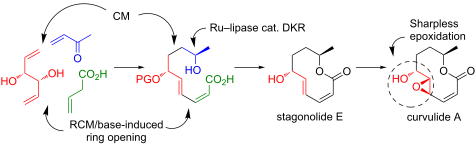
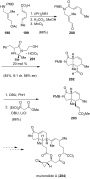
- describes the cyclization of differently substituted derivatives under identical conditions. Notably, the yield of macrolactones is significantly affected by the substitution pattern and increases from 27% for the unsubstituted lactone 34 (Scheme 7) to 53% for the 9-methyl-substituted derivative 36 (Scheme






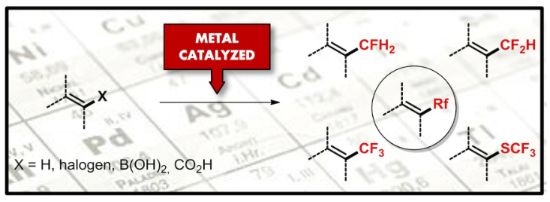
Recent advances in transition metal-catalyzed Csp2-monofluoro-, difluoro-, perfluoromethylation and trifluoromethylthiolation
Beilstein J. Org. Chem. 2013, 9, 2476–2536, doi:10.3762/bjoc.9.287
- , although giving lower yields. A broad substitution pattern on the (hetero)aryl ring was compatible with the reaction, and the “imino” C–H was selectively trifluoromethylated (Table 18). When carrying out the reaction in the presence of TEMPO, the desired reaction was almost completely shut down, while a


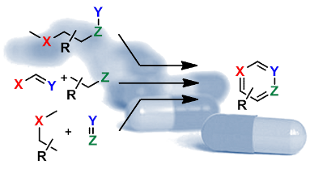
An overview of the synthetic routes to the best selling drugs containing 6-membered heterocycles
Beilstein J. Org. Chem. 2013, 9, 2265–2319, doi:10.3762/bjoc.9.265
- rosiglitazone (1.40) with its structure only differing in the substitution pattern of the parent pyridine ring. Its synthesis begins with the hydroxymethylation of 2-methyl-5-ethylpyridine (1.11), a commodity chemical obtained from the condensation of acetaldehyde with ammonium acetate (Scheme 12) [43]. At
- from the bacterial cell. Due to the elaborate substitution pattern of the parent quinolone ring systems these compounds are usually prepared via a linear consecutive sequence. In the case of moxifloxacin, an intramolecular base catalysed nucleophilic aromatic substitution is used to prepare the


Elucidation of the regio- and chemoselectivity of enzymatic allylic oxidations with Pleurotus sapidus – conversion of selected spirocyclic terpenoids and computational analysis
Beilstein J. Org. Chem. 2013, 9, 2233–2241, doi:10.3762/bjoc.9.262
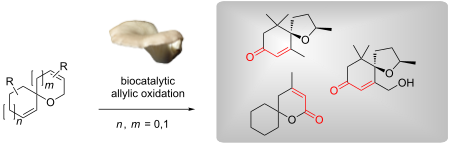
- potential allylic radicals like 11-R1 and 11-R2, 11-R3 is up to 8 kcal/mol more stable. Within the subset of allylic radicals that differ only by their alkyl substitution pattern (11-R1, 11-R2, 12-R1 and 12-R2) the energetic differences are less pronounced. Equally, the reasons for the small variations in


Flexible synthesis of anthracycline aglycone mimics via domino carbopalladation reactions
Beilstein J. Org. Chem. 2013, 9, 2194–2201, doi:10.3762/bjoc.9.258
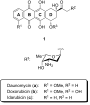
- substitution pattern of the D-ring bares most of the functionalities, i.e., a secondary and a tertiary alcohol, the former of which is commonly glycosylated with 2,6-dideoxy sugars (Figure 1) [3]. These carbohydrates are of highest importance for the biological activity of anthracyclines and bind to the minor
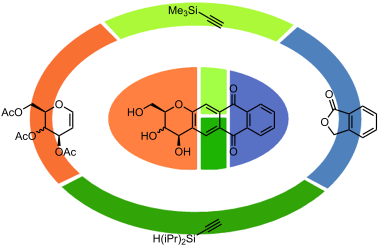
- ]. Opening of the silyl ether moiety was accomplished by treatment with TBAF in quantitative yield and gained access to the natural substitution pattern of the carbohydrate backbone. It was not possible to open the silyl ether moiety of 26 by the utilization of Cs2CO3 in methanol starting from 13 as



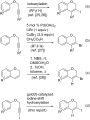
Gold(I)-catalyzed hydroarylation reaction of aryl (3-iodoprop-2-yn-1-yl) ethers: synthesis of 3-iodo-2H-chromene derivatives
Beilstein J. Org. Chem. 2013, 9, 2120–2128, doi:10.3762/bjoc.9.249
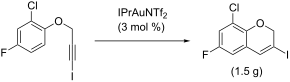
- process competition scenario. The noticed scope endorses an active involvement for a highly reactive gold–vinylidene intermediate as responsible for the selectivity of the eventual cyclization step, in agreement with the tentative mechanistic rationale depicted in Scheme 4A. Though the substitution
- pattern is not the one commonly associated with conventional electrophilic aromatic substitution reactions, other mechanism should not be disregarded on the basis of the structure of the final product. So, the alternative mechanistic description summarized in Scheme 4B cannot be firmly rejected, at the



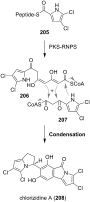
The chemistry of isoindole natural products
Beilstein J. Org. Chem. 2013, 9, 2048–2078, doi:10.3762/bjoc.9.243
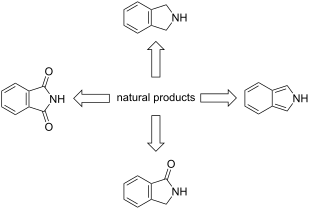
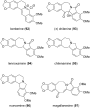
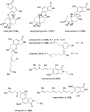
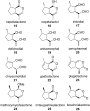
- (1,3-dihydro-2H-isoindole-1,3-dione, 4) substitution pattern. The isoindole structure has attracted scientists for decades and can be found in several natural and pharmaceutical compounds [2][3]. A number of structures were explored over the years and promising drug conjugates such as 5–11 could be
















Continuous flow photocyclization of stilbenes – scalable synthesis of functionalized phenanthrenes and helicenes
Beilstein J. Org. Chem. 2013, 9, 1883–1890, doi:10.3762/bjoc.9.221
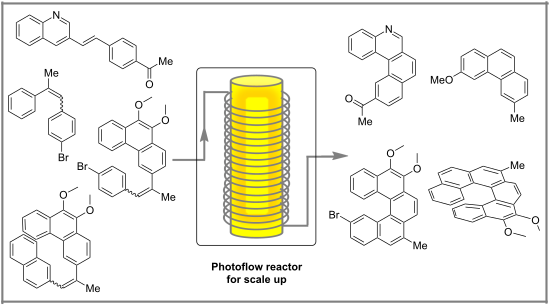
- were observed. Benzo[ghi]perylenes are typical byproducts observed in the photocyclization of [5]helicene-like molecules. Reactions to obtain selectively helicenes or benzo[ghi]perylenes, regardless of the substitution pattern, are still a challenging task. A functionalizable [6]helicene (2r) was




Computational study of the rate constants and free energies of intramolecular radical addition to substituted anilines
Beilstein J. Org. Chem. 2013, 9, 1620–1629, doi:10.3762/bjoc.9.185

- . These results are summarized in Supporting Information File 1. Effect of m,m’-disubstitution The second substitution pattern investigated is the m,m’-disubstitution. By adding both substituents, the problem of the regioselectivity of addition to the arene is circumvented. The examples and results are
- radical center is not too electrophilic. Concerning the substitution pattern of the arene it was found that electron releasing substituents accelerate the addition whereas strongly electron withdrawing substituents like acyl groups retard the addition. Para-substitution has a stronger influence than meta


α-Bromodiazoacetamides – a new class of diazo compounds for catalyst-free, ambient temperature intramolecular C–H insertion reactions
Beilstein J. Org. Chem. 2013, 9, 1407–1413, doi:10.3762/bjoc.9.157

- thermolysis perform intramolecular C–H insertions to produce α-halo-β-lactams. When carried out with α-bromodiazoacetamides bearing cyclic side chains, the thermolysis reaction affords bicyclic α-halo-β-lactams, in some cases in excellent yields, depending on the ring size and substitution pattern of the


Substituent effect on the energy barrier for σ-bond formation from π-single-bonded species, singlet 2,2-dialkoxycyclopentane-1,3-diyls
Beilstein J. Org. Chem. 2013, 9, 925–933, doi:10.3762/bjoc.9.106
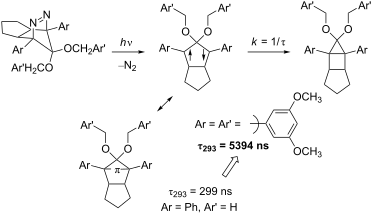
- and cyclopentane-1,3-diyls. Experimental investigation of the chemistry of singlet diradicals has become possible. The present study explores the substituents and the effect of their substitution pattern at the C(1)–C(3) positions on the lifetime of singlet octahydropentalene-1,3-diyls to understand


Inter- and intramolecular enantioselective carbolithiation reactions
Beilstein J. Org. Chem. 2013, 9, 313–322, doi:10.3762/bjoc.9.36

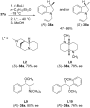
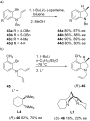
- obtained when R1 = OMe, SPh, SMe, and NMe2, at −80 °C in toluene as solvent. The influence of the substitution pattern in the aromatic ring on both the yield and the enantioselectivity is not clearly established. The introduction of electron-deficient substituents may require higher temperatures for the





Thioester derivatives of the natural product psammaplin A as potent histone deacetylase inhibitors
Beilstein J. Org. Chem. 2013, 9, 81–88, doi:10.3762/bjoc.9.11
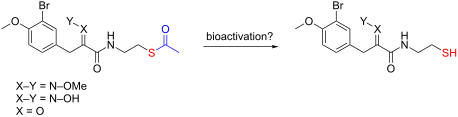
- shown in Scheme 2. We recently demonstrated [20] that variation of the aromatic substitution pattern had only a marginal influence on the HDAC inhibitory potency of psammaplin A analogues in vitro. Therefore, the native phenol was replaced by its methylated homologue for ease of synthesis, notably to

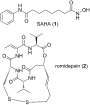


Intramolecular carbolithiation of N-allyl-ynamides: an efficient entry to 1,4-dihydropyridines and pyridines – application to a formal synthesis of sarizotan
Beilstein J. Org. Chem. 2012, 8, 2214–2222, doi:10.3762/bjoc.8.250
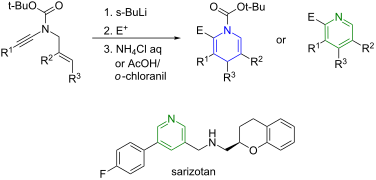
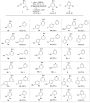
- -dihydropyridine derivatives, which were obtained in virtually pure form in crude reaction mixtures. As evidenced with these results, 3-aryl-1,4-dihydropyridines and pyridines (5/6a–f and l–r) are readily obtained from the corresponding aryl-substituted N-allyl-ynamides regardless of the substitution pattern or
- conditions. The influence of the substitution pattern of the allyl moiety was next carefully examined and substitution at the β-, γ-positions, or both, was well tolerated, yielding the 3,5-disubstituted- (5/6l–o), 3,4-disubstituted- (5/6p–q) and 3,4,5-trisubstituted- (5/6r) 1,4-dihydropyridines and pyridines




The chemistry of bisallenes
Beilstein J. Org. Chem. 2012, 8, 1936–1998, doi:10.3762/bjoc.8.225
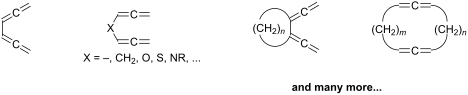
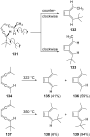
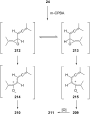
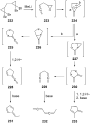
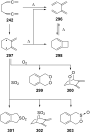
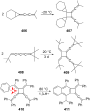
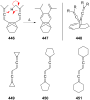
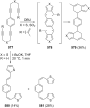
- consecutive carbon atoms, but the system is either lacking the desired substitution pattern or the proper degree of unsaturation (C6 + 0). A fourth possibility, the coupling of three C2 units (C2 + C2 + C2) is extremely rare and it appears that only two examples have been reported so far (see Scheme 12 and
















Synthetic studies towards bottromycin
Beilstein J. Org. Chem. 2012, 8, 1652–1656, doi:10.3762/bjoc.8.189
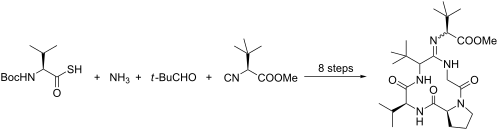
- by Schipper [20] and Kaneda [21], based on detailed NMR studies. According to them, the bottromycins are cyclic tetrapeptides, connected to a tripeptidic side chain through an amidine structure. The different bottromycins differ only in the substitution pattern of the proline (Figure 1). The three


Regioselective synthesis of 7,8-dihydroimidazo[5,1-c][1,2,4]triazine-3,6(2H,4H)-dione derivatives: A new drug-like heterocyclic scaffold
Beilstein J. Org. Chem. 2012, 8, 1584–1593, doi:10.3762/bjoc.8.181
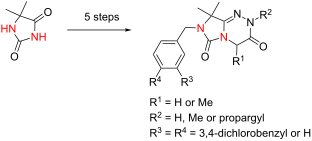
- ring fusion of C4a–N8 (1, 3 and 4) or C8a–N5 atoms (2), and differ in the arrangement of the substitution pattern of the imidazotriazine framework (Figure 1). The structural variation of imidazo[1,2,4]triazine derivatives poses a significant challenge, particularly if a broad variety of substituents is
- regioselectivity depended on the substitution pattern of 6, due to the directing effect of the methyl groups. Thus, traces of a N1-substituted regioisomer were detected by LC/ESI-MS analysis in the conversion of 5 to product 7 (N3/N1-alkylation ratio 15:1). Direct N1,N3-dialkylation of 5, however, was not observed


Synthesis of chiral sulfoximine-based thioureas and their application in asymmetric organocatalysis
Beilstein J. Org. Chem. 2012, 8, 1443–1451, doi:10.3762/bjoc.8.164
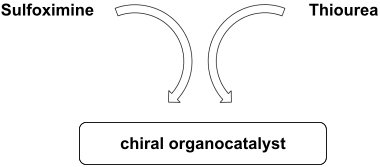
- thiourea core via the sulfonimidoyl nitrogen. They differ in their aryl substitution pattern. Copper-catalyzed arylation of (S)-2 with 2-iodonitrobenzene gave rise to coupling product (S)-10 in excellent yield (98%). After subsequent reduction of the aromatic nitro group to give aniline (S)-11 in 83% yield


Cation affinity numbers of Lewis bases
Beilstein J. Org. Chem. 2012, 8, 1406–1442, doi:10.3762/bjoc.8.163
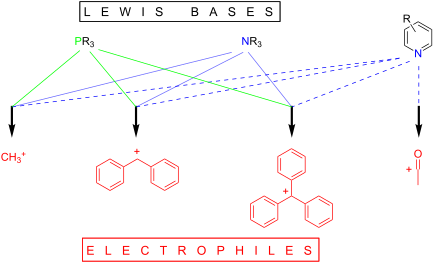
- phosphanes of otherwise comparable substitution pattern. The combination of phosphanes with unusually strained cyclic substituents such as diamandoids or cyclophanes also appears to have no particularly unusual effects. Phosphanes with strongly electron-withdrawing substituents such as PF3 (303) have the
- than the one in amines. This implies that phosphanes have a more pyramidal structure than amines with a comparable substitution pattern. The least pyramidal structure is found here for triphenylamine, which is almost perfectly planar at the nitrogen atom. The degree of planarity correlates well with
- the character of the lone pair orbital. In amines the contribution of the s orbital is decreasing with increasing size of the substituents. This is different for phosphanes, where the lone pair orbital has a systematically larger s-character, which depends only marginally on the substitution pattern


Approaches to α-amino acids via rearrangement to electron-deficient nitrogen: Beckmann and Hofmann rearrangements of appropriate carboxyl-protected substrates
Beilstein J. Org. Chem. 2012, 8, 1393–1399, doi:10.3762/bjoc.8.161

- rotation around the amide C–N moiety (partial double-bond character) in the NMR as seen by twin peaks in certain cases [25]. In carbamates 10, the substitution pattern α to the C=O group in 7–9 has shifted to the α-position next to the amino center. Therefore, in this strategy (Scheme 2) the enolate


Stereoselective synthesis of trans-fused iridoid lactones and their identification in the parasitoid wasp Alloxysta victrix, Part II: Iridomyrmecins
Beilstein J. Org. Chem. 2012, 8, 1256–1264, doi:10.3762/bjoc.8.141
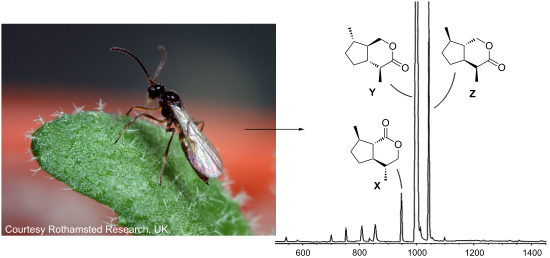
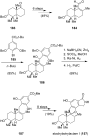
- between the methyl group at C-7 and the substitution pattern at C-7a and C-4a, respectively) configured iridomyrmecins. Key steps were two stereoselective hydrogenations: A transfer hydrogenation for a formal “anti” delivery of hydrogen [14][15], as represented in 5, and the use of Crabtree’s catalyst in



Synthesis of a library of tricyclic azepinoisoindolinones
Beilstein J. Org. Chem. 2012, 8, 1091–1097, doi:10.3762/bjoc.8.120
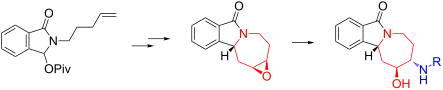
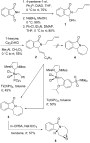
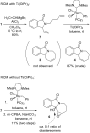
- place during and after the RCM reaction (see below). We also briefly studied the influence of the diene substitution pattern on the rate of isomerization from 4 to 3 and the corresponding product distribution (Scheme 3). Addition of in situ prepared vinyl alane to pivaloate 1 provided the diene 7 in 80
- presence of the Lewis acidic additive Ti(OiPr)4 as well as the substitution pattern of the α,ω-diene precursor. With alkene 3 and the corresponding epoxide 5 in hand, a ZnI2-mediated amine alkylation protocol could be employed, which introduced a variety of nitrogen nucleophiles 8{1–13} (Scheme 4) [38][39
- –isomerization sequence and a ZnI2-mediated epoxide aminolysis. We investigated the factors influencing the alkene isomerization during the RCM process, and identified the presence of the additive Ti(OiPr)4, the substitution pattern on the alkene, and the chemical reactivity of the benzylic allylic methine






Synthesis and anion recognition properties of shape-persistent binaphthyl-containing chiral macrocyclic amides
Beilstein J. Org. Chem. 2012, 8, 967–976, doi:10.3762/bjoc.8.109
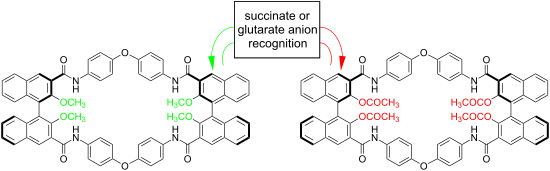
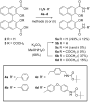
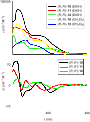
- most sensitive to variations in the substitution pattern (and thus, in the electronic structure) within the naphthyl systems of the binaphthyl units. The UV–vis spectra of macrocycles (R,R)-10 and (R,R)-11, recorded in solvents possessing different solvating and hydrogen-bonding abilities (CH2Cl2, EtOH