


Search results
Search for "switching" in Full Text gives 332 result(s) in Beilstein Journal of Organic Chemistry. Showing first 200.
CF3SO2X (X = Na, Cl) as reagents for trifluoromethylation, trifluoromethylsulfenyl-, -sulfinyl- and -sulfonylation and chlorination. Part 2: Use of CF3SO2Cl
Beilstein J. Org. Chem. 2017, 13, 2800–2818, doi:10.3762/bjoc.13.273
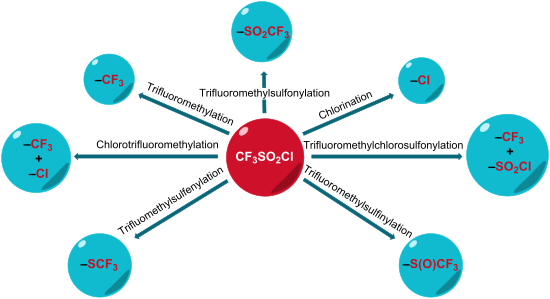
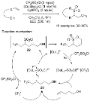
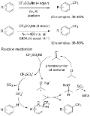
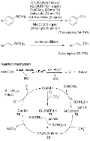
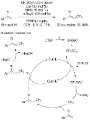
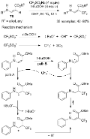
- intermediate 21 was also considered. This, however, was declared unlikely as it was observed that the reaction needed continuous irradiation to proceed efficiently. Unfortunately, Dolbier and co-workers demonstrated in 2015 that this catalytic system was inefficient when switching the substrates to electron

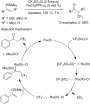

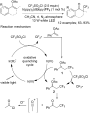


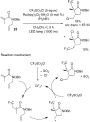




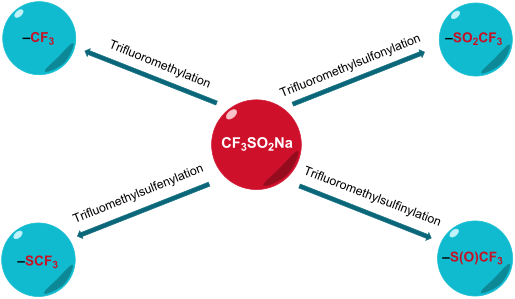
CF3SO2X (X = Na, Cl) as reagents for trifluoromethylation, trifluoromethylsulfenyl-, -sulfinyl- and -sulfonylation. Part 1: Use of CF3SO2Na
Beilstein J. Org. Chem. 2017, 13, 2764–2799, doi:10.3762/bjoc.13.272






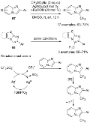

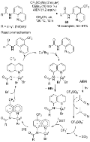


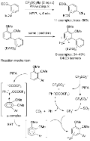


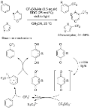











Reagent-controlled regiodivergent intermolecular cyclization of 2-aminobenzothiazoles with β-ketoesters and β-ketoamides
Beilstein J. Org. Chem. 2017, 13, 2739–2750, doi:10.3762/bjoc.13.270

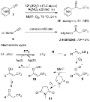
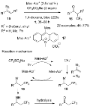
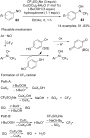
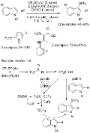
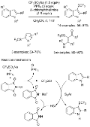
- and amides have been developed, controlled by the reagents employed. With the Brønsted base KOt-Bu and CBrCl3 as radical initiator, benzo[d]imidazo[2,1-b]thiazoles are synthesized via attack at the α-carbon and keto carbon of the β-ketoester moiety. In contrast, switching to the Lewis acid catalyst
- ][12][13] with leaving groups, thus switching to an electrophile [14][15][16], or convert to an α-radical carbon with an oxidant [17][18][19]. β-Ketoesters are also inexpensive, abundant and commercially available, making them attractive substrates. In our continuing effort to develop green and atom
- was not formed with KHCO3 (Table 1, entry 1). Instead, the N-acetylated side product 4 was obtained in moderate yields, together with trace amounts of the benzo[4,5]thiazolo[3,2-a]pyrimidin-4-one side product 5a. Even after switching to the stronger bases K2CO3 and K3PO4, only poor yields of 3a were




A Brønsted base-promoted diastereoselective dimerization of azlactones
Beilstein J. Org. Chem. 2017, 13, 2663–2670, doi:10.3762/bjoc.13.264

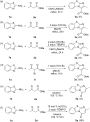
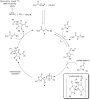
- . Although no trichloromethylation product was observed, we found out that by switching the solvent, the isolated major product comes from dimerization of azlactones. At this point, we turned our attention towards this product, envisioning the development of an atom-economic reaction for stereoselective C–C


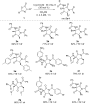



![[Graphic 5]](/bjoc/content/inline/1860-5397-13-264-i10.svg?max-width=637&scale=1.18182) vs time for the dimerization of azlactone 1a.
vs time for the dimerization of azlactone 1a.

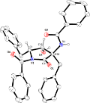
Preparation and isolation of isobenzofuran
Beilstein J. Org. Chem. 2017, 13, 2659–2662, doi:10.3762/bjoc.13.263

- : Analytical equipment and methods, experimental procedures and NMR spectra. Acknowledgements The authors gratefully acknowledge funding from the collaborative research center SFB 677 Function by Switching.


Synthesis of naturally-derived macromolecules through simplified electrochemically mediated ATRP
Beilstein J. Org. Chem. 2017, 13, 2466–2472, doi:10.3762/bjoc.13.243
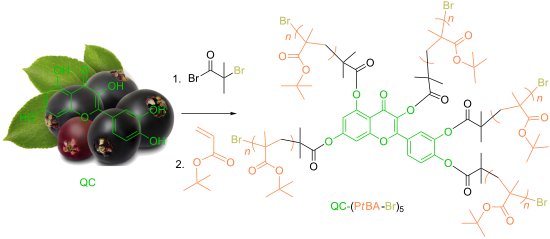
- elimination of chemical reducing agents, catalyst recycle possibility, and an option to receive polymers with narrow MWD [55][56]. Additionally, application of external stimuli offered a possibility of temporal control, such as the stopping and restarting of the polymerization by switching the “off” and “on


Conjugated nitrosoalkenes as Michael acceptors in carbon–carbon bond forming reactions: a review and perspective
Beilstein J. Org. Chem. 2017, 13, 2214–2234, doi:10.3762/bjoc.13.220
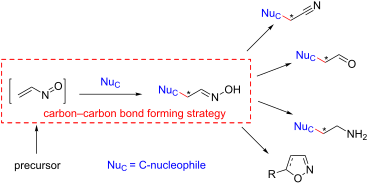
- the procedure (switching from Gilman’s reagent to aryl lithiocyanocuprates), this method was successfully extended to a wide range of acyclic α-chlorooximes 1 (Scheme 19, reaction (2)). Interestingly, the aryl group, not the cyanide anion is transferred from aryl lithiocyanocuprates to a nitrosoalkene


A mechanochemical approach to access the proline–proline diketopiperazine framework
Beilstein J. Org. Chem. 2017, 13, 2169–2178, doi:10.3762/bjoc.13.217
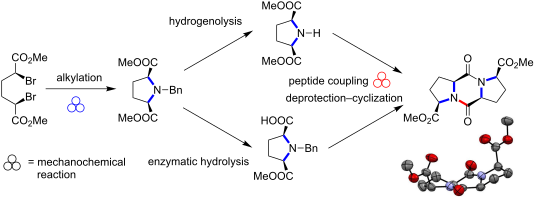
- by mixing an equimolar amount of the starting materials together with a base (K2CO3) in a vibratory ball mill at 25 Hz (Table 2, entry 2). This resulted in a lower conversion compared to that obtained in solution. Using an excess of base increased the conversion to 62% (Table 2, entry 3). Switching


The effect of milling frequency on a mechanochemical organic reaction monitored by in situ Raman spectroscopy
Beilstein J. Org. Chem. 2017, 13, 2160–2168, doi:10.3762/bjoc.13.216
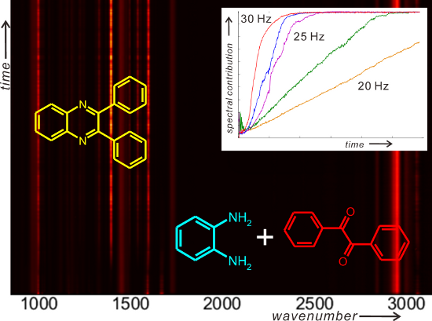
- when ball milling at 27.5 Hz and 30 Hz, compared to milling at frequencies of 20 Hz and 22.5 Hz, while milling at an intermediate frequency of 25 Hz led to irreproducible behavior. Tentatively, we interpret such switching between reactivity profiles by adopting the assumption that mechanochemical


Intramolecular glycosylation
Beilstein J. Org. Chem. 2017, 13, 2028–2048, doi:10.3762/bjoc.13.201
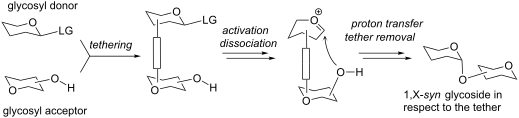
- as a flattened oxacarbenium intermediate (Scheme 1a). Early attempts to achieve some stereocontrol of glycosylations were mainly dedicated to the development of participating groups and optimization of the reaction conditions. More recently, the research emphasis is switching towards understanding of


Solid-state mechanochemical ω-functionalization of poly(ethylene glycol)
Beilstein J. Org. Chem. 2017, 13, 1963–1968, doi:10.3762/bjoc.13.191
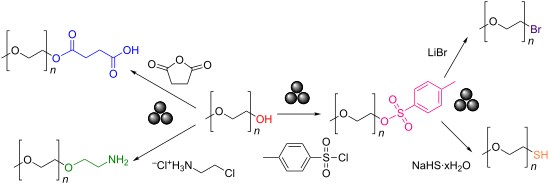
- -diisopropylethylamine (DIPEA) led to 1H NMR yields of 21% and 17%, respectively (Table 1, entries 2 and 3). Switching to NaOH as the base led to a sharp increase of mPEG conversion to 81%. The highest conversions were obtained by using mPEG, NaOH and TsCl in respective stoichiometric ratios of 1:1.2:1.5 (Table 1, entry


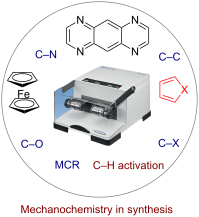
Mechanochemical synthesis of small organic molecules
Beilstein J. Org. Chem. 2017, 13, 1907–1931, doi:10.3762/bjoc.13.186
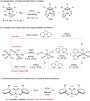
- selectfluor [101][102]. They could control the selectivity of the reaction through LAG using ACN (≈10% v/v of total materials) to get predominantly mono-fluorinated product over difluorinated derivatives (Scheme 27). Contrastingly, addition of 1.0 equiv of Na2CO3 led to switching of the selectivity




Mechanochemical synthesis of thioureas, ureas and guanidines
Beilstein J. Org. Chem. 2017, 13, 1828–1849, doi:10.3762/bjoc.13.178
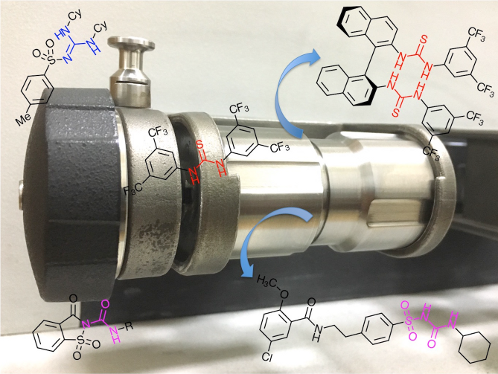
- -butyl and trimethylsilyl derivatives displayed no reactivity. With 2-naphthyl and p-nitrophenylsulfonamides as poorly reactive compounds, additional LAG screening experiments were required to establish the optimal reaction conditions by switching to acetone as the grinding liquid, prolonging the milling






Grip on complexity in chemical reaction networks
Beilstein J. Org. Chem. 2017, 13, 1486–1497, doi:10.3762/bjoc.13.147
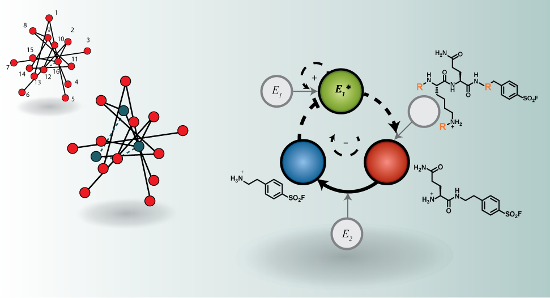
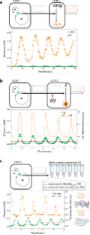
- system level behavior of larger networks [25]. In fact, simple motifs with a few positive and negative feedback loops create functionality, such as bistable switching, adaptation and oscillations [26]. Such building blocks can be reconstructed, and this has sparked enormous activity in the fields of




Development of a method for the synthesis of 2,4,5-trisubstituted oxazoles composed of carboxylic acid, amino acid, and boronic acid
Beilstein J. Org. Chem. 2017, 13, 1478–1485, doi:10.3762/bjoc.13.146

- , utilization of Na+ and K+ as counter cations for the additive provided inferior results (Table 2, entries 8 and 9). Interestingly, switching the counter cation of the base to Li+ did not afford any product (Table 2, entry 10). The reaction with PdCl2(dppf) instead of NiCl2(dppf) reduced the outcome of the


Mechanochemical borylation of aryldiazonium salts; merging light and ball milling
Beilstein J. Org. Chem. 2017, 13, 1463–1469, doi:10.3762/bjoc.13.144
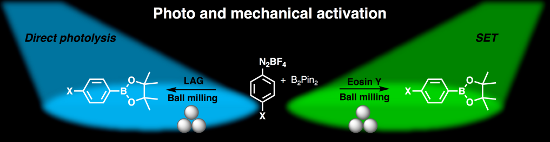
- potential for switching the activation mode from a SET process to a direct heterolytic photolysis. Jacobi von Wangelin et al. noticed that the borylation product 3a could also occurred in the absence of eosin Y, upon irradiation of a MeCN solution of the reactants with white LEDs [23][25]. Pleasingly, LAG


Photocatalyzed synthesis of isochromanones and isobenzofuranones under batch and flow conditions
Beilstein J. Org. Chem. 2017, 13, 1456–1462, doi:10.3762/bjoc.13.143
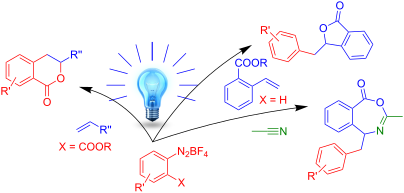
- reagents were supplied by the same syringe, which was kept shielded from the light source. In fact, we verified that no reaction was taking place in the dark, even prolonging the experiment for several hours. Although in the past we observed improvements in yields and purities switching from batch to flow


Switchable highly regioselective synthesis of 3,4-dihydroquinoxalin-2(1H)ones from o-phenylenediamines and aroylpyruvates
Beilstein J. Org. Chem. 2017, 13, 1350–1360, doi:10.3762/bjoc.13.132
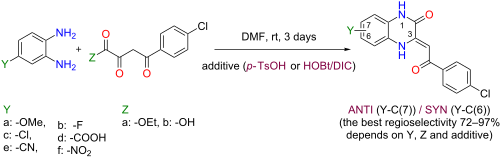
- starting from the same o-phenylenediamines and activated 4-chlorobenzoylpyruvates (ester or acid) enabling switching of 3,4-dihydroquinoxalin-2(1H)-one regioselectivity in a predictable manner. For comparison, all regioselective cyclocondensations were performed with the same standardized conditions (DMF
- , etc.). Therefore, we concluded that switching in regioselectivity (from native SYN to ANTI) could be a matter of DMAP activation of the acyl group in 12a. The above controlled ANTI cyclocondensation (88/12) performed in the presence of DMAP enabled us to obtain pure 17d (ANTI) regioisomer in a 36
- ), 22g is the same as 23g and no SYN/ANTI regioisomerism exists. The regioselective syntheses of both quinoxalin-2(1H)-ones 27 (ANTI) and 26 (SYN). The selective synthesis of substituted quinoxalin-2(1H)-ones 31 from 28 via three reaction steps. Regioselectivity switching based on carbonyl activation of


Towards open-ended evolution in self-replicating molecular systems
Beilstein J. Org. Chem. 2017, 13, 1189–1203, doi:10.3762/bjoc.13.118
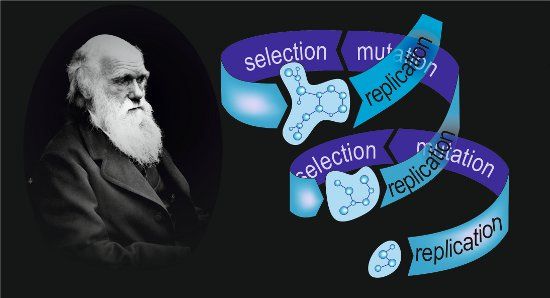
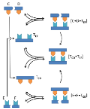
- . Switching between these two states can be achieved by applying external stimuli in the form of heat or the addition of decomposing agents. The switchable behavior and memory of such a self-replicating system constitute an exciting step, moving systems of self-replicating molecules away from equilibrium




G-Protein coupled receptors: answers from simulations
Beilstein J. Org. Chem. 2017, 13, 1071–1078, doi:10.3762/bjoc.13.106
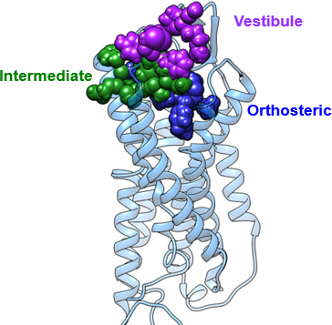
- with what is already available, it reuses successful designs again and again in slightly modified forms. This is the case for the most common means of communicating across cell walls in eukaryotes, G-protein coupled receptors (GPCRs). GPCRs span the cell membrane and generally complex switching ligands
- , H2-H3; EL2, H4-H5 and EL3, H6-H7). The extracellular loops are often involved in ligand recognition and binding, whereas the intracellular ones interact with the IBPs, usually a G-protein. The activation process involves switching of the binding on the intracellular side of the receptor, as outlined
- crystal-packing forces are large enough to change the induction state of the tetracycline repressor [26]. GPCR simulations often also show geometric rearrangements after several hundred nanoseconds, which suggests that the simulation is perhaps switching to a conformation closer to the biologically


A strategic approach to [6,6]-bicyclic lactones: application towards the CD fragment of DHβE
Beilstein J. Org. Chem. 2017, 13, 988–994, doi:10.3762/bjoc.13.98
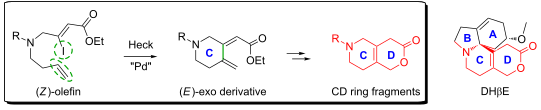
- attempted functionalization by treatment with n-BuLi and quenching with ethyl chloroformate led to a complex mixture of products; the same trend was also observed when switching to LDA as the base. When LiHMDS was applied in this reaction a double addition of ethyl formate took place giving rise to




Automating multistep flow synthesis: approach and challenges in integrating chemistry, machines and logic
Beilstein J. Org. Chem. 2017, 13, 960–987, doi:10.3762/bjoc.13.97
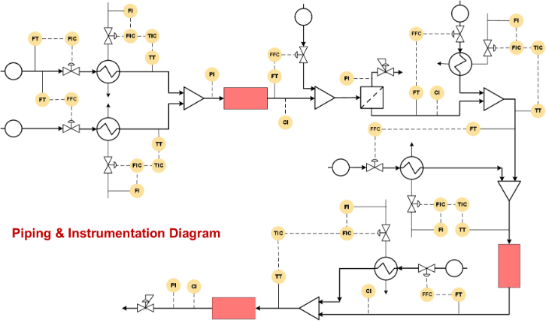
- tank reactor, adding a highly reactive reagent to the reactor, etc.), shut-down (viz. stopping the reaction, giving rapid cooling to the reaction mixture, etc.), change-over (viz. switching from reactant to solvent, changing or recovering the catalyst activity, etc.), override and emergency situations




Chemoselective synthesis of diaryl disulfides via a visible light-mediated coupling of arenediazonium tetrafluoroborates and CS2
Beilstein J. Org. Chem. 2017, 13, 903–909, doi:10.3762/bjoc.13.91

- undesired diphenyl polysulfides (Table 2, entry 4). Switching to DMSO as the solvent for the reaction afforded exclusively the desired product 3a in excellent yield (88%, Table 2, entry 6). Next, other sulfur sources were also examined, such as S8, NaSH, Na2S, Na2S2O3, Na2S2O4 and K2S2O8, however, none of


Synthesis of tetrasubstituted pyrazoles containing pyridinyl substituents
Beilstein J. Org. Chem. 2017, 13, 895–902, doi:10.3762/bjoc.13.90

- ratio is ≈6.6:1, for the 3-pyridinyl congener 1b it was found to be 187:1. Switching to the more polar solvent DMSO-d6 enhances the amount of the keto form to ≈3% (ratio 35:1). The enol forms of compounds 1 show the characteristically large chemical shifts for the OH proton (1a: 15.94 ppm, 1b: 16.52 ppm
- ) in condensed system 12 shows a characteristic upfield shift (δN-6 −176.2 ppm) compared to the ‘usual’ 15N NMR chemical shifts of 2-pyridinyl systems attached to pyrazole C-5 (δ ≈ −62 to −70 ppm). This is in perfect agreement with the ≈100 ppm upfield shift observed when switching from pyridine to


Transition-metal-catalyzed synthesis of phenols and aryl thiols
Beilstein J. Org. Chem. 2017, 13, 589–611, doi:10.3762/bjoc.13.58

- phenols from aryl bromides in the presence of CuI as catalyst in the mixed solvent of t-BuOH–DMSO–H2O at 120 °C (Scheme 9) [31]. Both electron-rich and electron-deficient aryl bromides were converted to the corresponding phenols in good to excellent yields. Under the optimum conditions, switching the base





