


Search results
Search for "1,3-diols" in Full Text gives 15 result(s) in Beilstein Journal of Organic Chemistry.
Enantioselective desymmetrization strategy of prochiral 1,3-diols in natural product synthesis
- Lihua Wei,
- Rui Yang,
- Zhifeng Shi and
- Zhiqiang Ma
Beilstein J. Org. Chem. 2025, 21, 1932–1963, doi:10.3762/bjoc.21.151

- Technology, Guangzhou 510006, P. R. China 10.3762/bjoc.21.151 Abstract Enantioselective desymmetrization is employed as a powerful tool for the creation of chiral centers. Within this scope, the enantioselective desymmetrization of prochiral 1,3-diols, which generates chiral centers by enantioselective
- functionalization of one hydroxy group, offers beneficial procedures for accessing diverse structural motifs. In this review, we highlight a curated compilation of publications, focusing on the applications of enantioselective desymmetrization of prochiral 1,3-diols in the synthesis of natural products and
- biologically active molecules. Based on the reaction types, three strategies are discussed: enzymatic acylation, transition-metal-catalyzed acylation, and local desymmetrization. Keywords: asymmetric synthesis; desymmetrization; 1,3-diols; natural product; total synthesis; Introduction Natural products

Graphical Abstract

Scheme 1: General mechanism of a lipase-catalyzed esterification.

Scheme 2: Shishido’s synthesis of (−)-xanthorrhizol (4) and (+)-heliannuol D (8).

Scheme 3: Shishido’s synthesis of a) (−)-heliannuol A (15) and b) heliannuol G (20) and heliannuol H (21).

Scheme 4: Deska’s synthesis of hyperione A (30) and ent-hyperione B (31).

Scheme 5: Huang’s synthesis of (+)-brazilin (37).

Scheme 6: Shishido’s synthesis of (−)-heliannuol D (42) and (+)-heliannuol A (43).

Scheme 7: Chênevert’s synthesis of (S)-α-tocotrienol (49).

Scheme 8: Kita’s synthesis of monoester 53.

Scheme 9: Kita’s synthesis of fredericamycin A (60).

Scheme 10: Takabe’s synthesis of (E)-3,7-dimethyl-2-octene-1,8-diol (64).

Scheme 11: Takabe’s synthesis of (18S)-variabilin (70).

Scheme 12: Kawasaki’s synthesis of (S)-Rosaphen (74) and (R)-Rosaphen (75).
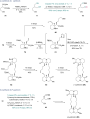
Scheme 13: Tokuyama’s synthesis of a) (−)-petrosin (84) and b) (+)-petrosin (86).

Scheme 14: Fukuyama’s synthesis of leustroducsin B (96).
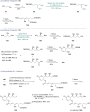
Scheme 15: Nanda’s synthesis of a) fragment 100, b) fragment 106 and c) (−)-rasfonin (109).

Scheme 16: Davies’ synthesis of (+)-pilocarpine (115) and (+)-isopilocarpine (116).

Scheme 17: Ōmura’s synthesis of salinosporamide A (125).

Scheme 18: Kang’s synthesis of ʟ-cladinose (124) and its derivative.

Scheme 19: Kang’s preparation of fragment 139.
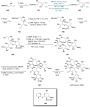
Scheme 20: Kang’s synthesis of azithromycin (149).

Scheme 21: Kang’s synthesis of (−)-dysiherbaine (156).

Scheme 22: Kang’s synthesis of (−)-kaitocephalin (166).
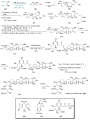
Scheme 23: Kang’s synthesis of laidlomycin (180).

Scheme 24: Snyder’s synthesis of arboridinine (190).
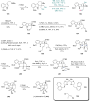
Scheme 25: Ma’s synthesis of (+)-alstrostine G (203).
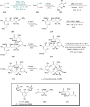
Scheme 26: Trost’s synthesis of (−)-18-epi-peloruside A (215).

Scheme 27: Lindel’s synthesis of (–)-dihydroraputindole (223).

Scheme 28: Iwata’s synthesis of a) (−)-talaromycin B (232) and b) (+)-talaromycin A (235).

Scheme 29: Cook’s synthesis of a) (−)-vincamajinine (240) and b) (−)-11-methoxy-17-epivincamajine (245).

Scheme 30: Cook’s synthesis of (+)-dehydrovoachalotine (249) and voachalotine (250).
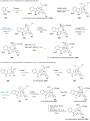
Scheme 31: Cook’s synthesis of a) (−)-12-methoxy-Nb-methylvoachalotine (257) and b) (+)-polyneuridine, macusin...

Scheme 32: Trauner’s synthesis of stephadiamine (273).

Scheme 33: Garg’s synthesis of (–)-ψ-akuammigine (285).

Scheme 34: Ding’s synthesis of (+)-18-benzoyldavisinol (293) and (+)-davisinol (294).
Approaches to stereoselective 1,1'-glycosylation
- Daniele Zucchetta and
- Alla Zamyatina
Beilstein J. Org. Chem. 2025, 21, 1700–1718, doi:10.3762/bjoc.21.133
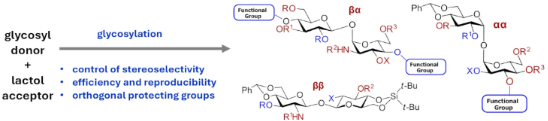
- ]. Diarylborinic acids have been shown to provide exclusive catalytic performance in the site-selective monofunctionalization of various 1,2- and 1,3-diols [60], as well as in the regioselective glycosylation of polyhydroxyglycosyl acceptors via base-promoted deprotonation of a specific hydroxy group involved in
- addition, 2-amino-2-deoxy-1,3-diols were successfully employed as glycosyl acceptors, as exemplified by the use of GlcN-derived lactol 42, which was reacted with the 2N-Troc-protected GalN phosphite donor 47 in the presence of borinic acid catalyst to give the β,α-1,1'-linked disaccharide 48 (Scheme 4) [63

Graphical Abstract

Scheme 1: Application of chloride-, bromide-, and trichloroacetimidate donors in 1,1'-coupling reactions towa...

Scheme 2: Application of trichloroacetimidates as donors in 1,1'-β,α coupling reactions and the use of 1,2-or...

Scheme 3: The β-anomeric configuration in the lactol acceptors can be trapped and fixed within the five-membe...

Scheme 4: Diarylborinic acid-promoted β,α-1,1' glycosylation.

Scheme 5: The anomeric configuration in the lactol acceptor can be trapped in the form of a TMS-glycoside.

Scheme 6: The anomeric configuration in the lactol acceptor can be trapped in form of a 1-O-TMS-glycoside tha...

Scheme 7: Influence of remote protecting groups on the stereoselectivity and efficiency of 1,1'-β,α bond form...

Scheme 8: Synthesis of non-symmetrically fully orthogonally protected β,α-1,1' diglucosamines.

Scheme 9: Synthesis of non-symmetric β,β-1,1'-linked disaccharides.

Scheme 10: Synthesis of non-symmetric, fully orthogonally protected β,β-1,1'-diglucosamines.

Scheme 11: Synthesis of α,α-1,1'-disaccharides.

Scheme 12: Synthesis of α,α-1,1'-thiodisacchrides.

Scheme 13: Synthesis of partially desymmetrized α,α-1,1'-linked disaccharides.

Scheme 14: Synthesis of non-symmetric orthogonally protected α,α-1,1'-linked disaccharides involving an aminos...
4,6-Diaryl-5,5-difluoro-1,3-dioxanes as chiral dopants for liquid crystal compositions
- Maurice Médebielle,
- Peer Kirsch,
- Jérémy Merad,
- Carolina von Essen,
- Clemens Kühn and
- Andreas Ruhl
Beilstein J. Org. Chem. 2024, 20, 2940–2945, doi:10.3762/bjoc.20.246
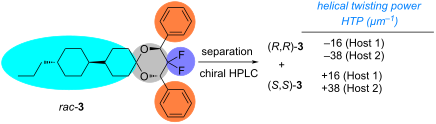
- still remain elusive and are not well understood [29]. Recently we have become interested in the preparation of racemic [30] anti- and highly enantioenriched 2,2-difluoro-1,3-diols [30][31][32] through an acylative double catalytic kinetic resolution (DoCKR) process [33]. While the 1,3-diol motif is
- found in some natural products [34] with some fluorinated analogues [35][36], this motif is rarely found in LCs [37][38][39]. Based on these observations and literature data, we embarked in the synthesis and evaluation of enantiomerically pure acetals derived from anti-2,2-difluoro-1,3-diols as

Graphical Abstract

Figure 1: Selected examples of chiral dopants with high HTPs in their nematic host LC mixture.

Scheme 1: Structure–property relationship of 4,6-diheteroaryl-5,5-difluoro-1,3-dioxanes as potential chiral d...

Scheme 2: The syntheses of chiral 4,6-diphenyl-5,5-difluoro-1,3-dioxanes 3 and 4 as dopants for cholesteric l...

Scheme 3: Synthesis of rac-2 as precursor of rac-3 and rac-4.

Figure 2: Configuration of (R,R)-3 determined by X-ray crystallography.
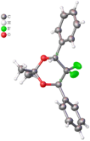
Figure 3: Configuration of (R,R)-4 determined by X-ray crystallography.
Stereoselective synthesis and transformation of pinane-based 2-amino-1,3-diols
- Ákos Bajtel,
- Mounir Raji,
- Matti Haukka,
- Ferenc Fülöp and
- Zsolt Szakonyi
Beilstein J. Org. Chem. 2021, 17, 983–990, doi:10.3762/bjoc.17.80
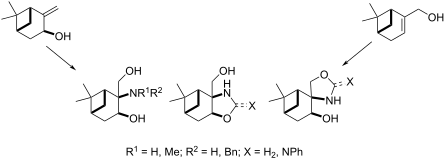
- , POB 35, 40351 Jyväskylä, Finland Stereochemistry Research Group of the Hungarian Academy of Sciences, H-6720 Szeged, Eötvös u. 6, Hungary, Interdisciplinary Centre of Natural Products, University of Szeged, Szeged, Hungary 10.3762/bjoc.17.80 Abstract A library of pinane-based 2-amino-1,3-diols was
- -amino-1,3-diols, which underwent a regioselective ring closure with formaldehyde or benzaldehyde delivering pinane-condensed oxazolidines. During the preparation of 2-phenyliminooxazolidine, an interesting ring–ring tautomerism was observed in CDCl3. Keywords: 2-amino-1,2-diol; monoterpene; oxazolidin
- the regioisomers of potential monoterpenic 2-amino-1,3-diols [29][30][31][32][33]. These trifunctionalized terpenoids may also possess diverse biological activities and could successfully applied as chiral catalysts in enantioselective transformations [34]. In the present study, our aim was to

Graphical Abstract

Figure 1: Biologically active 2-amino-1,3-diols.

Scheme 1: Stereoselective synthesis of the pinane-fused oxazolidin-2-one 9.

Figure 2: NOESY experiments and X-ray structure elucidation of oxazolidin-2-one 9.

Scheme 2: Stereoselective synthesis of the pinane spiro-fused oxazolidin-2-one 12.

Scheme 3: Parallel synthesis of 2-amino-1,3-diols.

Scheme 4: Synthesis of N-benzyl-2-amino-1,3-diol 16.

Scheme 5: Synthesis of 2-amino-1,3-diols.

Figure 3: NOESY experiments and X-ray structure proofment of the structure of oxazolidine 17.

Scheme 6: Synthesis of 2-phenyliminooxazolidines.

Figure 4: Proposed pathway for the ring–ring tautomerism.
The B & B approach: Ball-milling conjugation of dextran with phenylboronic acid (PBA)-functionalized BODIPY
- Patrizia Andreozzi,
- Lorenza Tamberi,
- Elisamaria Tasca,
- Gina Elena Giacomazzo,
- Marta Martinez,
- Mirko Severi,
- Marco Marradi,
- Stefano Cicchi,
- Sergio Moya,
- Giacomo Biagiotti and
- Barbara Richichi
Beilstein J. Org. Chem. 2020, 16, 2272–2281, doi:10.3762/bjoc.16.188
- related esters are relevant synthetic building blocks widely employed as cross-coupling reagents [14] as well as protecting groups for polyols and diamines [15][16]. Moreover, the reversible covalent interaction of boronic acids with specifically oriented cis-1,2 and 1,3-diols has been successfully

Graphical Abstract

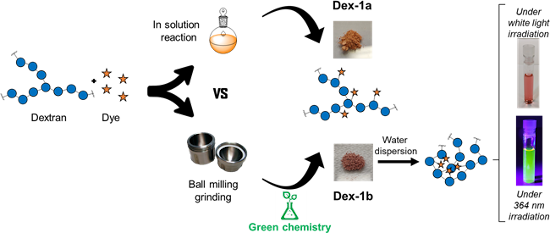
Figure 1: Structure of PBA-BODIPY (1) and schematic representation of dextran (Dex) and PBA-BODIPY conjugated...

Scheme 1: Schematic representation of dextran/PBA-BODIPY bioconjugations in: A. conventional solution-based c...

Figure 2: A) Amount of recovered PBA-BODIPY (1, i.e., nonreacted 1) in the mixtures DMSO/EtOH and in the seri...

Figure 3: A) UV–vis absorption and B) fluorescence emission spectra (λexc = 380 nm) of the BODIPY-dextran con...

Figure 4: A) Hydrodynamic diameter of (nm) conjugate Dex-1b (at 1 mg/mL in H2O, black curve) and PBS (red cur...

Figure 5: Fluorescence emission spectra of pyrene (4.4 × 10⁻⁸ M) in water and in a water solution in the pres...
Recent synthesis of thietanes
- Jiaxi Xu
Beilstein J. Org. Chem. 2020, 16, 1357–1410, doi:10.3762/bjoc.16.116
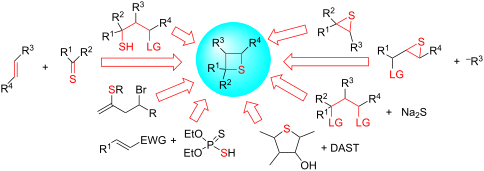
- , or disulfonates of alkane-1,3-diols with sodium sulfide. The intramolecular substitution of 3-mercaptoalkyl halides or sulfonates is a similar strategy for the preparation of thietanes [12][13][14]. Alternatively, inter- and intramolecular photochemical [2 + 2] cycloadditions (thia-Paternò–Büchi
- )-1-tosylazetidine (22) with sodium sulfide followed by the detosylation with Mg in MeOH afforded 1,6-thiazaspiro[3.3]heptane (24) [36] (Scheme 4). 2.1.2 Synthesis via double nucleophilic displacements of disulfonates of alkane-1,3-diols: Considering that 6-amino-3-azaspiro[3.3]heptane was evaluated
- thietanes. Indeed, the direct cyclization of the 3-mercaptopropan-1-ol unit in 60 with Ph3P(OEt)2 as a reagent was realized in the synthesis of the spirothietane derivative 61 [44] (Scheme 14). Also, 1,3-diols were considered as precursors of γ-mercaptoalkanols. A Japanese group developed a new method to

Graphical Abstract

Figure 1: Examples of biologically active thietane-containing molecules.

Figure 2: The diverse methods for the synthesis of thietanes.

Scheme 1: Synthesis of 1-(thietan-2-yl)ethan-1-ol (10) from 3,5-dichloropentan-2-ol (9).

Scheme 2: Synthesis of thietanose nucleosides 2,14 from 2,2-bis(bromomethyl)propane-1,3-diol (11).

Scheme 3: Synthesis of methyl 3-vinylthietane-3-carboxylate (19).

Scheme 4: Synthesis of 1,6-thiazaspiro[3.3]heptane (24).

Scheme 5: Synthesis of 6-amino-2-thiaspiro[3.3]heptane hydrochloride (28).

Scheme 6: Synthesis of optically active thietane 31 from vitamin C.

Scheme 7: Synthesis of an optically active thietane nucleoside from diethyl L-tartrate (32).

Scheme 8: Synthesis of thietane-containing spironucleoside 40 from 5-aldo-3-O-benzyl-1,2-O-isopropylidene-α-D...

Scheme 9: Synthesis of optically active 2-methylthietane-containing spironucleoside 43.

Scheme 10: Synthesis of a double-linked thietane-containing spironucleoside 48.

Scheme 11: Synthesis of two diastereomeric thietanose nucleosides via 2,4-di(benzyloxymethyl)thietane (49).

Scheme 12: Synthesis of the thietane-containing PI3k inhibitor candidate 54.

Scheme 13: Synthesis of the spirothietane 57 as the key intermediate to Nuphar sesquiterpene thioalkaloids.

Scheme 14: Synthesis of spirothietane 61 through a direct cyclic thioetherification of 3-mercaptopropan-1-ol.

Scheme 15: Synthesis of thietanes 66 from 1,3-diols 62.

Scheme 16: Synthesis of thietanylbenzimidazolone 75 from (iodomethyl)thiazolobenzimidazole 70.

Scheme 17: Synthesis of 2-oxa-6-thiaspiro[3.3]heptane (80) from bis(chloromethyl)oxetane 76 and thiourea.

Scheme 18: Synthesis of the thietane-containing glycoside, 2-O-p-toluenesulfonyl-4,6-thioanhydro-α-D-gulopyran...

Scheme 19: Synthesis of methyl 4,6-thioanhydro-α-D-glucopyranoside (89).

Scheme 20: Synthesis of thietane-fused α-D-galactopyranoside 93.

Scheme 21: Synthesis of thietane-fused α-D-gulopyranoside 100.

Scheme 22: Synthesis of 3,5-anhydro-3-thiopentofuranosides 104.

Scheme 23: Synthesis of anhydro-thiohexofuranosides 110, 112 and 113 from from 1,2:4,5-di-O-isopropylidene D-f...

Scheme 24: Synthesis of optically active thietanose nucleosides from D- and L-xyloses.

Scheme 25: Synthesis of thietane-fused nucleosides.

Scheme 26: Synthesis of 3,5-anhydro-3-thiopentofuranosides.

Scheme 27: Synthesis of 2-amino-3,5-anhydro-3-thiofuranoside 141.

Scheme 28: Synthesis of thietane-3-ols 145 from (1-chloromethyl)oxiranes 142 and hydrogen sulfide.

Scheme 29: Synthesis of thietane-3-ol 145a from chloromethyloxirane (142a).

Scheme 30: Synthesis of thietane-3-ols 145 from 2-(1-haloalkyl)oxiranes 142 and 147 with ammonium monothiocarb...
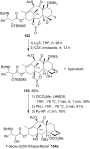
Scheme 31: Synthesis of 7-deoxy-5(20)thiapaclitaxel 154a, a thietane derivative of taxoids.

Scheme 32: Synthesis of 5(20)-thiadocetaxel 158 from 10-deacetylbaccatin III (155).

Scheme 33: Synthesis of thietane derivatives 162 as precursors for deoxythiataxoid synthesis through oxiraneme...

Scheme 34: Synthesis of 7-deoxy 5(20)-thiadocetaxel 154b.

Scheme 35: Mechanism for the formation of the thietane ring in 171 from oxiranes with vicinal leaving groups 1...

Scheme 36: Synthesis of cis-2,3-disubstituted thietane 175 from thiirane-2-methanol 172.

Scheme 37: Synthesis of a bridged thietane 183 from aziridine cyclohexyl tosylate 179 and ammonium tetrathiomo...
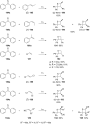
Scheme 38: Synthesis of thietanes via the photochemical [2 + 2] cycloaddition of thiobenzophenone 184a with va...
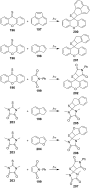
Scheme 39: Synthesis of spirothietanes through the photo [2 + 2] cycloaddition of cyclic thiocarbonyls with ol...

Scheme 40: Photochemical synthesis of spirothietane-thioxanthenes 210 from thioxanthenethione (208) and butatr...

Scheme 41: Synthesis of thietanes 213 from 2,4,6-tri(tert-butyl)thiobenzaldehyde (211) with substituted allene...

Scheme 42: Photochemical synthesis of spirothietanes 216 and 217 from N-methylthiophthalimide (214) with olefi...

Scheme 43: Synthesis of fused thietanes from quadricyclane with thiocarbonyl derivatives 219.
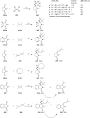
Scheme 44: Synthesis of tricyclic thietanes via the photo [2 + 2] cycloaddition of N-methyldithiosuccinimides ...
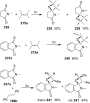
Scheme 45: Synthesis of tricyclic thietanes via the photo [2 + 2] cycloaddition of N-methylthiosuccinimide/thi...

Scheme 46: Synthesis of tricyclic thietanes via the photo [2 + 2] cycloaddition of N-alkylmonothiophthalimides...

Scheme 47: Synthesis of spirothietanes from dithiosuccinimides 223 with 2,3-dimethyl-2-butene (215a).

Scheme 48: Synthesis of thietanes 248a,b from diaryl thione 184b and ketene acetals 247a,b.

Scheme 49: Photocycloadditions of acridine-9-thiones 249 and pyridine-4(1H)-thione (250) with 2-methylacrynitr...

Scheme 50: Synthesis of thietanes via the photo [2 + 2] cycloaddition of mono-, di-, and trithiobarbiturates 2...
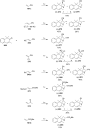
Scheme 51: Synthesis of spirothietanes via the photo [2 + 2] cycloaddition of 1,1,3-trimethyl-2-thioxo-1,2-dih...

Scheme 52: Synthesis of spirothietanes via the photo [2 + 2] cycloaddition of thiocoumarin 286 with olefins.

Scheme 53: Photochemical synthesis of thietanes 296–299 from semicyclic and acyclic thioimides 292–295 and 2,3...

Scheme 54: Photochemical synthesis of spirothietane 301 from 1,3,3-trimethylindoline-2-thione (300) and isobut...

Scheme 55: Synthesis of spirobenzoxazolethietanes 303 via the photo [2 + 2] cycloaddition of alkyl and aryl 2-...

Scheme 56: Synthesis of spirothietanes from tetrahydrothioxoisoquinolines 306 and 307 with olefins.

Scheme 57: Synthesis of spirothietanes from 1,3-dihydroisobenzofuran-1-thiones 311 and benzothiophene-1-thione...

Scheme 58: Synthesis of 2-triphenylsilylthietanes from phenyl triphenylsilyl thioketone (316) with electron-po...

Scheme 59: Diastereoselective synthesis of spiropyrrolidinonethietanes 320 via the photo [2 + 2] cycloaddition...

Scheme 60: Synthesis of bicyclic thietane 323 via the photo [2 + 2] cycloaddition of 2,4-dioxo-3,4-dihydropyri...

Scheme 61: Photo-induced synthesis of fused thietane-2-thiones 325 and 326 from silacyclopentadiene 324 and ca...

Scheme 62: Synthesis of highly strained tricyclic thietanes 328 via the intramolecular photo [2 + 2] cycloaddi...

Scheme 63: Synthesis of tri- and pentacyclic thietanes 330 and 332, respectively, through the intramolecular p...

Scheme 64: Synthesis of tricyclic thietanes 334 via the intramolecular photo [2 + 2] cycloaddition of N-vinylt...

Scheme 65: Synthesis of tricyclic thietanes 336 via the intramolecular photo [2 + 2] cycloaddition of N-but-3-...

Scheme 66: Synthesis of tricyclic thietanes via the intramolecular photo [2 + 2] cycloaddition of N-but-3-enyl...

Scheme 67: Synthesis of tetracyclic thietane 344 through the intramolecular photo [2 + 2] cycloaddition of N-[...
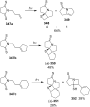
Scheme 68: Synthesis of tri- and tetracyclic thietanes 348, 350, and 351, through the intramolecular photo [2 ...

Scheme 69: Synthesis of tetracyclic fused thietane 354 via the photo [2 + 2] cycloaddition of vinyl 2-thioxo-3H...

Scheme 70: Synthesis of highly rigid thietane-fused β-lactams via the intramolecular photo [2 + 2] cycloadditi...

Scheme 71: Asymmetric synthesis of a highly rigid thietane-fused β-lactam 356a via the intramolecular photo [2...

Scheme 72: Diastereoselective synthesis of the thietane-fused β-lactams via the intramolecular photo [2 + 2] c...

Scheme 73: Asymmetric synthesis of thietane-fused β-lactams 356 via the intramolecular photo [2 + 2] cycloaddi...

Scheme 74: Synthesis of the bridged bis(trifluoromethyl)thietane from 2,2,4,4-tetrakis(trifluoromethyl)-1,3-di...

Scheme 75: Synthesis of the bridged-difluorothietane 368 from 2,2,4,4-tetrafluoro-1,3-dithietane (367) and qua...

Scheme 76: Synthesis of bis(trifluoromethyl)thietanes from 2,2,4,4-tetrakis(trifluoromethyl)-1,3-dithietane (3...

Scheme 77: Synthesis of 2,2-dimethylthio-4,4-di(trifluoromethyl)thietane (378) from 2,2,4,4-tetrakis(trifluoro...

Scheme 78: Formation of bis(trifluoromethyl)thioacetone (381) through nucleophilic attack of dithietane 363 by...

Scheme 79: Synthesis of 2,2-bis(trifluoromethyl)thietanes from 2,2,4,4-tetrakis(trifluoromethyl)-1,3-dithietan...

Scheme 80: Synthesis of the bridged bis(trifluoromethyl)thietane 364 from of 2,2,4,4-tetrakis(trifluoromethyl)...

Scheme 81: Synthesis of 2,4-diiminothietanes 390 from alkenimines and 4-methylbenzenesulfonyl isothiocyanate (...

Scheme 82: Synthesis of arylidene 2,4-diiminothietanes 393 starting from phosphonium ylides 391 and isothiocya...

Scheme 83: Synthesis of thietane-2-ylideneacetates 397 through a DABCO-catalyzed formal [2 + 2] cycloaddition ...

Scheme 84: Synthesis of 3-substituted thietanes 400 from (1-chloroalkyl)thiiranes 398.

Scheme 85: Synthesis of N-(thietane-3-yl)azaheterocycles 403 and 404 through reaction of chloromethylthiirane (...

Scheme 86: Synthesis of 3-sulfonamidothietanes 406 from sulfonamides and chloromethylthiirane (398a).

Scheme 87: Synthesis of N-(thietane-3-yl)isatins 408 from chloromethylthiirane (398a) and isatins 407.

Scheme 88: Synthesis of 3-(nitrophenyloxy)thietanes 410 from nitrophenols 409 and chloromethylthiirane (398a).

Scheme 89: Synthesis of N-aryl-N-(thietane-3-yl)cyanamides 412 from N-arylcyanamides 411 and chloromethylthiir...

Scheme 90: Synthesis of 1-(thietane-3-yl)pyrimidin-2,4(1H,3H)-diones 414 from chloromethylthiirane (398a) and ...

Scheme 91: Synthesis of 2,4-diiminothietanes 418 from 2-iminothiiranes 416 and isocyanoalkanes 415.

Scheme 92: Synthesis of 2-vinylthietanes 421 from thiiranes 419 and 3-chloroallyl lithium (420).

Scheme 93: Synthesis of thietanes from thiiranes 419 and trimethyloxosulfonium iodide 424.

Scheme 94: Mechanism for synthesis of thietanes 425 from thiiranes 419 and trimethyloxosulfonium iodide 424.

Scheme 95: Synthesis of functionalized thietanes from thiiranes and dimethylsulfonium acylmethylides.

Scheme 96: Mechanism for the rhodium-catalyzed synthesis of functionalized thietanes 429 from thiiranes 419 an...

Scheme 97: Synthesis of 3-iminothietanes 440 through thermal isomerization from 4,5-dihydro-1,3-oxazole-4-spir...

Scheme 98: Synthesis of thietanes 443 from 3-chloro-2-methylthiolane (441) through ring contraction.

Scheme 99: Synthesis of an optically active thietanose 447 from D-xylose involving a ring contraction.

Scheme 100: Synthesis of optically thietane 447 via the DAST-mediated ring contraction of 448.

Scheme 101: Synthesis of the optically thietane nucleoside 451 via the ring contraction of thiopentose in 450.

Scheme 102: Synthesis of spirothietane 456 from 3,3,5,5-tetramethylthiolane-2,4-dithione (452) and benzyne (453...

Scheme 103: Synthesis of thietanes 461 via photoisomerization of 2H,6H-thiin-3-ones 459.

Scheme 104: Phosphorodithioate-mediated synthesis of 1,4-diarylthietanes 465.

Scheme 105: Mechanism of the phosphorodithioate-mediated synthesis of 1,4-diarylthietanes 465.

Scheme 106: Phosphorodithioate-mediated synthesis of trisubstituted thietanes (±)-470.

Scheme 107: Mechanism on the phosphorodithioate-mediated synthesis of trisubstituted thietanes.

Scheme 108: Phosphorodithioate-mediated synthesis of thietanes (±)-475.

Scheme 109: Phosphorodithioate-mediated synthesis of 1,2-disubstituted thietanes from aldehydes 476 and acrylon...

Scheme 110: Phosphorodithioate-mediated synthesis of 1,2-disubstituted thietanes via a one-pot three-component ...

Scheme 111: Mechanism for the phosphorodithioate-mediated synthesis of 1,2-disubstituted thietanes via three-co...

Scheme 112: Phosphorodithioate-mediated synthesis of substituted 3-nitrothietanes.

Scheme 113: Mechanism on the phosphorodithioate-mediated synthesis of 1,2-disubstituted thietanes (±)-486.

Scheme 114: Asymmetric synthesis of (S)-2-phenylthietane (497).

Scheme 115: Asymmetric synthesis of optically active 2,4-diarylthietanes.

Scheme 116: Synthesis of 3-acetamidothietan-2-one 503 via the intramolecular thioesterification of 3-mercaptoal...

Scheme 117: Synthesis of 4-substituted thietan-2-one via the intramolecular thioesterification of 3-mercaptoalk...

Scheme 118: Synthesis of 4,4-disubstituted thietan-2-one 511 via the intramolecular thioesterification of the 3...

Scheme 119: Synthesis of a spirothietan-2-one 514 via the intramolecular thioesterification of 3-mercaptoalkano...

Scheme 120: Synthesis of thiatetrahydrolipstatin starting from (S)-(−)-epichlorohydrin ((S)-142a).

Scheme 121: Synthesis of 2-phenethyl-4-(propan-2-ylidene)thietane (520) from 5-bromo-6-methyl-1-phenylhept-5-en...

Scheme 122: Synthesis of 2-phenethyl-4-(propan-2-ylidene)thietane (520) directly from S-(5-bromo-6-methyl-1-phe...

Scheme 123: Synthesis of 2-alkylidenethietanes from S-(2-bromoalk-1-en-4-yl)thioacetates.
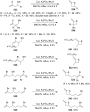
Scheme 124: Synthesis of 2-alkylidenethietanes from S-(2-bromo/chloroalk-1-en-4-yl)thiols.

Scheme 125: Synthesis of spirothietan-3-ol 548 from enone 545 and ammonium hydrosulfide.

Scheme 126: Asymmetric synthesis of the optically active thietanoside from cis-but-2-ene-1,4-diol (47).
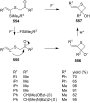
Scheme 127: Synthesis of 2-alkylidenethietan-3-ols 557 via the fluoride-mediated cyclization of thioacylsilanes ...

Scheme 128: Synthesis of 2-iminothietanes via the reaction of propargylbenzene (558) and isothiocyanates 560 in...

Scheme 129: Synthesis of 2-benzylidenethietane 567 via the nickel complex-catalyzed electroreductive cyclizatio...

Scheme 130: Synthesis of 2-iminothietanes 569 via the photo-assisted electrocyclic reaction of N-monosubstitute...

Scheme 131: Synthesis of ethyl 3,4-diiminothietane-2-carboxylates from ethyl thioglycolate (570) and bis(imidoy...
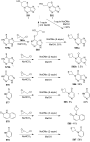
Scheme 132: Synthesis of N-(thietan-3-yl)-α-oxoazaheterocycles from azaheterocyclethiones and chloromethyloxira...

Scheme 133: Synthesis of thietan-3-yl benzoate (590) via the nickel-catalyzed intramolecular reductive thiolati...

Scheme 134: Synthesis of 2,2-bis(trifluoromethyl)thietane from 3,3-bis(trifluoromethyl)-1,2-dithiolane.

Scheme 135: Synthesis of thietanes from enamines and sulfonyl chlorides.

Scheme 136: Synthesis of spirothietane 603 via the [2 + 3] cycloaddition of 2,2,4,4-tetramethylcyclobutane-1,3-...

Scheme 137: Synthesis of thietane (605) from 1-bromo-3-chloropropane and sulfur.
Application of chiral 2-isoxazoline for the synthesis of syn-1,3-diol analogs
- Juanjuan Feng,
- Tianyu Li,
- Jiaxin Zhang and
- Peng Jiao
Beilstein J. Org. Chem. 2019, 15, 1840–1847, doi:10.3762/bjoc.15.179
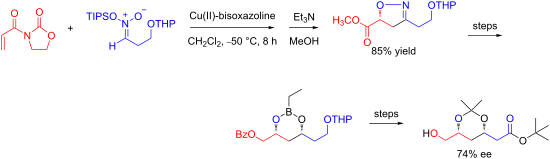
- methods using Claisen condensation. (b) Our new method using cycloaddition. Attempted oxidations of 4. Preparations of 16 and related syn-1,3-diol compounds. Attempted oxidations of 6'. Attempted selective protections of internal 1,3-hydroxy groups: (a) acetonizations of 1,3-diols; (b) removal of co

Graphical Abstract

Scheme 1: Accesses to tert-butyl 3,5-O-isopropylidene-3,5-dihydroxyhexanoates. (a) Previous methods using Cla...

Scheme 2: Attempted oxidations of 4.

Scheme 3: Preparations of 16 and related syn-1,3-diol compounds.

Scheme 4: Attempted oxidations of 6'.

Scheme 5: Attempted selective protections of internal 1,3-hydroxy groups: (a) acetonizations of 1,3-diols; (b...
N-(1-Phenylethyl)aziridine-2-carboxylate esters in the synthesis of biologically relevant compounds
- Iwona E. Głowacka,
- Aleksandra Trocha,
- Andrzej E. Wróblewski and
- Dorota G. Piotrowska
Beilstein J. Org. Chem. 2019, 15, 1722–1757, doi:10.3762/bjoc.15.168

- the same potency as N,N-dimethylsphingosine (DMS) being completely inactive toward hSphK1. 2-Amino-1,3-diols A 2-amino-1,3-dihydroxypropyl fragment 12 of sphingosine and ceramides of the required 2S,3R configuration can also originate from the aziridine alcohol, e.g., (2S,1'R,1''R)-87 prepared from
- synthesized from aziridine-2-methanols either by functionalization at C3 (Scheme 12 and Scheme 13) or by opening of the aziridine ring to form 2-amino-1,3-diols 12 (Schemes 22–24) combined with the removal of the secondary hydroxy group when simple amino acids (R = alkyl, aryl) are to be prepared. For the

Graphical Abstract

Figure 1: Examples of three-carbon chirons.

Figure 2: Structures of derivatives of N-(1-phenylethyl)aziridine-2-carboxylic acid 5–8.

Figure 3: Synthetic equivalency of aziridine aldehydes 6.

Scheme 1: Synthesis of N-(1-phenylethyl)aziridine-2-carboxylates 5. Reagents and conditions: a) TEA, toluene,...

Scheme 2: Absolute configuration at C2 in (2S,1'S)-5a. Reagents and conditions: a) 20% HClO4, 80 °C, 30 h the...

Scheme 3: Major synthetic strategies for a 2-ketoaziridine scaffold [R* = (R)- or (S)-1-phenylethyl; R′ = Alk...

Scheme 4: Synthesis of cyanide (2S,1'S)-13. Reagents and conditions: a) NH3, EtOH/H2O, rt, 72 h; b) Ph3P, CCl4...

Scheme 5: Synthesis of key intermediates (R)-16 and (R)-17 for (R,R)-formoterol (14) and (R)-tamsulosin (15)....

Scheme 6: Synthesis of mitotic kinesin inhibitors (2R/S,1'R)-23. Reagents and conditions: a) H2, Pd(OH)2, EtO...

Scheme 7: Synthesis of (R)-mexiletine ((R)-24). Reagents and conditions: a) TsCl, TEA, DMAP, CH2Cl2, rt, 1 h;...

Scheme 8: Synthesis of (−)-cathinone ((S)-27). Reagents and conditions: a) PhMgBr, ether, 0 °C; b) H2, 10% Pd...

Scheme 9: Synthesis of N-Boc-norpseudoephedrine ((1S,2S)-(+)-29) and N-Boc-norephedrine ((1R,2S)-29). Reagent...

Scheme 10: Synthesis of (−)-ephedrine ((1R,2S)-31). Reagents and conditions: a) TfOMe, MeCN then NaBH3CN, rt; ...

Scheme 11: Synthesis of xestoaminol C ((2S,3R)-35), 3-epi-xestoaminol C ((2S,3S)-35) and N-Boc-spisulosine ((2S...

Scheme 12: Synthesis of ʟ-tryptophanol ((S)-41). Reagents and conditions: a) CDI, MeCN, rt, 1 h then TMSI, MeC...

Scheme 13: Synthesis of ʟ-homophenylalaninol ((S)-42). Reagents and conditions: a) NaH, THF, 0 °C to −78 °C, 1...

Scheme 14: Synthesis of ᴅ-homo(4-octylphenyl)alaninol ((R)-47) and a sphingolipid analogue (R)-48. Reagents an...

Scheme 15: Synthesis of florfenicol ((1R,2S)-49). Reagents and conditions: a) (S)-1-phenylethylamine, TEA, MeO...

Scheme 16: Synthesis of natural tyroscherin ((2S,3R,6E,8R,10R)-55). Reagents and conditions: a) I(CH2)3OTIPS, t...

Scheme 17: Syntheses of (−)-hygrine (S)-61, (−)-hygroline (2S,2'S)-62 and (−)-pseudohygroline (2S,2'R)-62. Rea...

Scheme 18: Synthesis of pyrrolidine (3S,3'R)-68, a fragment of the fluoroquinolone antibiotic PF-00951966. Rea...

Scheme 19: Synthesis of sphingolipid analogues (R)-76. Reagents and conditions: a) BnBr, Mg, THF, reflux, 6 h;...

Scheme 20: Synthesis of ᴅ-threo-PDMP (1R,2R)-81. Reagents and conditions: a) TMSCl, NaI, MeCN, rt, 1 h 50 min,...

Scheme 21: Synthesis of the sphingolipid analogue SG-14 (2S,3S)-84. Reagents and conditions: a) LiAlH4, THF, 0...

Scheme 22: Synthesis of the sphingolipid analogue SG-12 (2S,3R)-88. Reagents and conditions: a) 1-(bromomethyl...

Scheme 23: Synthesis of sphingosine-1-phosphate analogues DS-SG-44 and DS-SG-45 (2S,3R)-89a and (2S,3R)-89a. R...

Scheme 24: Synthesis of N-Boc-safingol ((2S,3S)-95) and N-Boc-ᴅ-erythro-sphinganine ((2S,3R)-95). Reagents and...

Scheme 25: Synthesis of ceramide analogues (2S,3R)-96. Reagents and conditions: a) NaBH4, ZnCl2, MeOH, −78 °C,...

Scheme 26: Synthesis of orthogonally protected serinols, (S)-101 and (R)-102. Reagents and conditions: a) BnBr...

Scheme 27: Synthesis of N-acetyl-3-phenylserinol ((1R,2R)-105). Reagents and conditions: a) AcOH, CH2Cl2, refl...

Scheme 28: Synthesis of (S)-linezolid (S)-107. Reagents and conditions: a) LiAlH4, THF, 0 °C to reflux; b) Boc2...

Scheme 29: Synthesis of (2S,3S,4R)-2-aminooctadecane-1,3,4-triol (ᴅ-ribo-phytosphingosine) (2S,3S,4R)-110. Rea...

Scheme 30: Syntheses of ᴅ-phenylalanine (R)-116. Reagents and conditions: a) AcOH, CH2Cl2, reflux, 4 h; b) MsC...

Scheme 31: Synthesis of N-Boc-ᴅ-3,3-diphenylalanine ((R)-122). Reagents and conditions: a) PhMgBr, THF, −78 °C...

Scheme 32: Synthesis of ethyl N,N’-di-Boc-ʟ-2,3-diaminopropanoate ((S)-125). Reagents and conditions: a) NaN3,...

Scheme 33: Synthesis of the bicyclic amino acid (S)-(+)-127. Reagents and conditions: a) BF3·OEt2, THF, 60 °C,...

Scheme 34: Synthesis of lacosamide, (R)-2-acetamido-N-benzyl-3-methoxypropanamide (R)-130. Reagents and condit...

Scheme 35: Synthesis of N-Boc-norfuranomycin ((2S,2'R)-133). Reagents and conditions: a) H2C=CHCH2I, NaH, THF,...

Scheme 36: Synthesis of MeBmt (2S,3R,4R,6E)-139. Reagents and conditions: a) diisopropyl (S,S)-tartrate (E)-cr...

Scheme 37: Synthesis of (+)-polyoxamic acid (2S,3S,4S)-144. Reagents and conditions: a) AD-mix-α, MeSO2NH2, t-...

Scheme 38: Synthesis of the protected 3-hydroxy-ʟ-glutamic acid (2S,3R)-148. Reagents and conditions: a) LiHMD...

Scheme 39: Synthesis of (+)-isoserine (R)-152. Reagents and conditions: a) AcCl, MeCN, rt, 0.5 h then Na2CO3, ...

Scheme 40: Synthesis of (3R,4S)-N3-Boc-3,4-diaminopentanoic acid (3R,4S)-155. Reagents and conditions: a) Ph3P...

Scheme 41: Synthesis of methyl (2S,3S,4S)-4-(dimethylamino)-2,3-dihydroxy-5-methoxypentanoate (2S,3S,4S)-159. ...

Scheme 42: Syntheses of methyl (3S,4S) 4,5-di-N-Boc-amino-3-hydroxypentanoate ((3S,4S)-164), methyl (3S,4S)-4-N...

Scheme 43: Syntheses of (3R,5S)-5-(aminomethyl)-3-(4-methoxyphenyl)dihydrofuran-2(3H)-one ((3R,5S)-168). Reage...

Scheme 44: Syntheses of a series of imidazolin-2-one dipeptides 175–177 (for R' and R'' see text). Reagents an...

Scheme 45: Syntheses of (2S,3S)-N-Boc-3-hydroxy-2-hydroxymethylpyrrolidine ((2S,3S)-179). Reagents and conditi...

Scheme 46: Syntheses of enantiomers of 1,4-dideoxy-1,4-imino-ʟ- and -ᴅ-lyxitols (2S,3R,4S)-182 and (2R,3S,4R)-...

Scheme 47: Synthesis of 1,4-dideoxy-1,4-imino-ʟ-ribitol (2S,3S,4R)-182. Reagents and conditions: a) AcOH, CH2Cl...

Scheme 48: Syntheses of 1,4-dideoxy-1,4-imino-ᴅ-arabinitol (2R,3R,4R)-182 and 1,4-dideoxy-1,4-imino-ᴅ-xylitol ...

Scheme 49: Syntheses of natural 2,5-imino-2,5,6-trideoxy-ʟ-gulo-heptitol ((2S,3R,4R,5R)-184) and its C4 epimer...

Scheme 50: Syntheses of (−)-dihydropinidine ((2S,6R)-187a) (R = C3H7) and (2S,6R)-isosolenopsins (2S,6R)-187b ...

Scheme 51: Syntheses of (+)-deoxocassine ((2S,3S,6R)-190a, R = C12H25) and (+)-spectaline ((2S,3S,6R)-190b, R ...

Scheme 52: Synthesis of (−)-microgrewiapine A ((2S,3R,6S)-194a) and (+)-microcosamine A ((2S,3R,6S)-194b). Rea...

Scheme 53: Syntheses of ʟ-1-deoxynojirimycin ((2S,3S,4S,5R)-200), ʟ-1-deoxymannojirimycin ((2S,3S,4S,5S)-200) ...

Scheme 54: Syntheses of 1-deoxy-ᴅ-galacto-homonojirimycin (2R,3S,4R,5S)-211. Reagents and conditions: a) MeONH...

Scheme 55: Syntheses of 7a-epi-hyacinthacine A1 (1S,2R,3R,7aS)-220. Reagents and conditions: a) TfOTBDMS, 2,6-...

Scheme 56: Syntheses of 8-deoxyhyacinthacine A1 ((1S,2R,3R,7aR)-221). Reagents and conditions: a) H2, Pd/C, PT...

Scheme 57: Syntheses of (+)-lentiginosine ((1S,2S,8aS)-227). Reagents and conditions: a) (EtO)2P(O)CH2COOEt, L...

Scheme 58: Syntheses of 8-epi-swainsonine (1S,2R,8S,8aR)-231. Reagents and conditions: a) Ph3P=CHCOOMe, MeOH, ...

Scheme 59: Synthesis of a protected vinylpiperidine (2S,3R)-237, a key intermediate in the synthesis of (−)-sw...

Scheme 60: Synthesis of a modified carbapenem 245. Reagents and conditions: a) AcOEt, LiHMDS, THF, −78 °C, 1.5...
Ionic liquids as transesterification catalysts: applications for the synthesis of linear and cyclic organic carbonates
- Maurizio Selva,
- Alvise Perosa,
- Sandro Guidi and
- Lisa Cattelan
Beilstein J. Org. Chem. 2016, 12, 1911–1924, doi:10.3762/bjoc.12.181
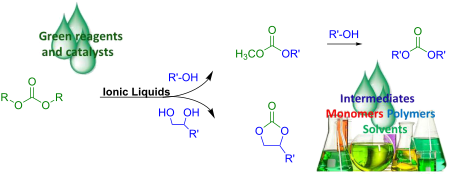
- corresponding cyclic carbonates, while 1,3-diols, depending on their structures, could yield both, cyclic or acyclic carbonates, such as the ones shown in Scheme 19 [75]. There is no direct relation of the performance of these IL-catalysts to their basicity. Curiously, it should be noted that the activity of

Graphical Abstract

Scheme 1: The transesterification of diethyl oxalate (DEO) with phenol catalyzed by MoO3/SiO2.

Scheme 2: Transesterification of a triglyceride (TG) with DMC for biodiesel production using KOH as the base ...

Scheme 3: Top: Green methylation of phosphines and amines by dimethyl carbonate (Q = N, P). Bottom: anion met...

Figure 1: Structures of some representative SILs and PILs systems. MCF is a silica-based mesostructured mater...

Scheme 4: Synthesis of the acid polymeric IL. EGDMA: ethylene glycol dimethacrylate.

Scheme 5: The transesterification of sec-butyl acetate with MeOH catalyzed by some acidic imidazolium ILs.

Figure 2: Representative examples of ionic liquids for biodiesel production.

Scheme 6: Top: phosgenation of methanol; middle: EniChem and Ube processes; bottom: Asahi process for the pro...

Scheme 7: The transesterification in the synthesis of organic carbonates.

Scheme 8: The transesterification of DMC with alcohols and diols.

Scheme 9: Transesterification of glycerol with DMC in the presence of 1-n-butyl-3-methylimidazolium-2-carboxy...

Scheme 10: Synthesis of the BMIM-2-CO2 catalyst from butylimidazole and DMC.

Scheme 11: Plausible cooperative (nucleophilic–electrophilic) mechanism for the transesterification of glycero...

Scheme 12: Synthesis of diazabicyclo[5.4.0]undec-7-ene-based ionic liquids.

Scheme 13: Synthesis of the DABCO–DMC ionic liquid.

Scheme 14: Cooperative mechanism of ionic liquid-catalyzed glycidol production.

Scheme 15: [TMA][OH]-catalyzed synthesis of glycidol (GD) from glycerol and dimethyl carbonate [46].

Scheme 16: [BMIM]OH-catalyzed synthesis of DPC from DMC and 1-pentanol.

Figure 3: Representative examples of ionic liquids for biodiesel production.

Figure 4: Acyclic non-symmetrical organic carbonates synthetized with 1-(trimethoxysilyl)propyl-3-methylimida...

Scheme 17: A simplified reaction mechanism for DMC production.

Scheme 18: [P8881][MeOCO2] metathesis with acetic acid and phenol.

Figure 5: Examples of carbonates obtained through transesterification using phosphonium salts as catalysts.

Scheme 19: Examples of carbonates obtained from different bio-based diols using [P8881][CH3OCO2] as catalyst.

Scheme 20: Ambiphilic catalysis for transesterification reactions in the presence of carbonate phosphonium sal...
One-pot synthesis of enantiomerically pure N-protected allylic amines from N-protected α-amino esters
- Gastón Silveira-Dorta,
- Sergio J. Álvarez-Méndez,
- Víctor S. Martín and
- José M. Padrón
Beilstein J. Org. Chem. 2016, 12, 957–962, doi:10.3762/bjoc.12.94

- . Disappointingly, the product (E)-4a was obtained in low yield although in excellent (dia)stereoselectivity. In the synthesis of anti-2-amino-1,3-diols, we reported earlier that the addition of DIBAL-H must be done necessarily in two portions [16]. Thus, fine-tuning of the reduction conditions was required in

Graphical Abstract

Figure 1: Strategies for the synthesis of N-protected allylic amines. [Red], reduction; [Ox], oxidation; [Ole...
Recent advances in copper-catalyzed asymmetric coupling reactions
- Fengtao Zhou and
- Qian Cai
Beilstein J. Org. Chem. 2015, 11, 2600–2615, doi:10.3762/bjoc.11.280
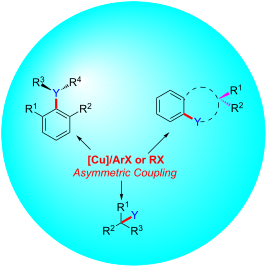
- -halophenoxyl)-1,3-diols by the same group [54]. However, the palladium catalytic systems suffered from limited substrate scope and poor efficiency and enantioselectivity for the formation of quaternary stereocenters. Recently, Cai et al. carried out such couplings using a CuI/cyclized diamine catalytic system

Graphical Abstract

Scheme 1: Copper-catalyzed asymmetric preparation of biaryl diacids by Ullmann coupling.

Scheme 2: Intramolecular biaryl coupling of bis(iodotrimethoxybenzoyl)hexopyranose derivatives.

Scheme 3: Preparation of 3,3’-disubstituted MeO-BIPHEP derivatives.

Scheme 4: Enantioselective synthesis of trans-4,5,9,10-tetrahydroxy-9,10-dihydrophenanthrene.

Scheme 5: Copper-catalyzed coupling of oxazoline-substituted aromatics to afford biaryl products with high di...

Scheme 6: Total synthesis of O-permethyl-tellimagrandin I.

Scheme 7: Total synthesis of (+)-gossypol.

Scheme 8: Total synthesis of (−)-mastigophorene A.

Scheme 9: Total synthesis of isokotanin.

Scheme 10: Synthesis of dimethyl[7]thiaheterohelicenes.

Scheme 11: Intramolecular coupling with chiral ortho-substituents.

Scheme 12: Chiral 1,3-diol-derived tethers in the diastereoselective synthesis of biaryl compounds.

Scheme 13: Synthesis of chiral unsymmetrically substituted biaryl compounds.

Scheme 14: Atroposelective synthesis of biaryl ligands and natural products by using a chiral diether linker.

Scheme 15: Enantioselective arylation reactions of 2-methylacetoacetates.

Scheme 16: Asymmetric aryl C–N coupling reactions following a desymmetrization strategy.

Scheme 17: Construction of cyano-bearing all-carbon quaternary stereocenters.

Scheme 18: An unexpected inversion of the enantioselectivity in the asymmetric C–N coupling reactions using ch...

Scheme 19: Differentiation of two nucleophilic amide groups.

Scheme 20: Synthesis of spirobilactams through a double N-arylation reaction.

Scheme 21: Asymmetric N-arylation through kinetic resolution.

Scheme 22: Formation of cyano-substituted quaternary stereocenters through kinetic resolution.

Scheme 23: Copper-catalyzed intramolecular desymmetric aryl C–O coupling.

Scheme 24: Transition metal-catalyzed allylic substitutions.

Scheme 25: Copper-catalyzed asymmetric allylic substitution of allyl phosphates.

Scheme 26: Allylic substitution of allyl phosphates with allenylboronates.

Scheme 27: Allylic substitution of allyl phosphates with vinylboron.

Scheme 28: Allylic substitution of allyl phosphates with vinylboron.

Scheme 29: Construction of quaternary stereogenic carbon centers through enantioselective allylic cross-coupli...

Scheme 30: Cu-catalyzed enantioselective allyl–allyl cross-coupling.

Scheme 31: Cu-catalyzed enantioselective allylic substitutions with silylboronates.

Scheme 32: Asymmetric allylic substitution of allyl phosphates with silylboronates.

Scheme 33: Stereoconvergent synthesis of chiral allylboronates.

Scheme 34: Enantioselective allylic substitutions with diboronates.

Scheme 35: Enantioselective allylic alkylations of terminal alkynes.
Diastereoselective and enantioselective conjugate addition reactions utilizing α,β-unsaturated amides and lactams
- Katherine M. Byrd
Beilstein J. Org. Chem. 2015, 11, 530–562, doi:10.3762/bjoc.11.60

- method to synthesize protected syn-1,3-diols by performing intramolecular conjugate additions to a series of α,β-unsaturated esters and amides [71] (Scheme 8). Upon treatment of 24 with KHMDS and benzyaldehyde, a hemiacetal forms which provides the alkoxide nucleophile for the DCA reaction. These

Graphical Abstract

Scheme 1: Generic mechanism for the conjugate addition reaction.

Figure 1: Methods to activate unsaturated amide/lactam systems.

Scheme 2: DCA of Grignard reagents to an L-ephedrine derived chiral α,β–unsaturated amide.

Figure 2: Chiral auxiliaries used in DCA reactions.

Scheme 3: Comparison between auxiliary 5 and the Oppolzer auxiliary in a DCA reaction.

Scheme 4: Use of Evans auxiliary in a DCA reaction.
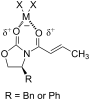
Figure 3: Lewis acid complex of the Evans auxiliary [43].

Scheme 5: DCA reactions of α,β-unsaturated amides utilizing (S,S)-(+)-pseudoephedrine and the OTBS-derivative...

Figure 4: Proposed model accounting for the diastereoselectivity observed in the 1,4-addition of Bn2NLi to α,...

Scheme 6: An example of a tandem conjugate addition–α-alkylation reaction of an α,β-unsaturated amide utilizi...

Scheme 7: Conjugate addition to an α,β-unsaturated bicyclic lactam leading to (+)-paroxetine and (+)-femoxeti...

Scheme 8: Intramolecular conjugate addition reaction to α,β-unsaturated amide.

Scheme 9: Conjugate addition to an α,β-unsaturated pyroglutamate derivative.

Scheme 10: Cu(I)–NHC-catalyzed asymmetric silylation of α,β-unsaturated lactams and amides.

Scheme 11: Asymmetric copper-catalyzed 1,4-borylation of an α,β-unsaturated amide.

Scheme 12: Asymmetric cross-coupling 49 to phenyl chloride.

Scheme 13: Rhodium-catalyzed asymmetric 1,4-arylation of an α,β-unsaturated lactam.

Scheme 14: Rhodium-catalyzed asymmetric 1,4-arylation of an α,β-unsaturated amide.

Scheme 15: Rhodium-catalyzed asymmetric 1,4-arylation of an α,β-unsaturated amide using a chiral bicyclic dien...

Scheme 16: Synthesis of (R)-(−)-baclofen through a rhodium-catalyzed asymmetric 1,4-arylation of lactam 58.

Scheme 17: Rhodium-catalyzed asymmetric 1,4-arylation of an α,β-unsaturated amide and lactam employing organo[...

Scheme 18: Rhodium-catalyzed asymmetric 1,4-arylation of an α,β-unsaturated lactam employing benzofuran-2-ylzi...

Figure 5: Further chiral ligands that have been used in rhodium-catalyzed 1,4-additions of α,β-unsaturated am...

Scheme 19: Palladium-catalyzed asymmetric 1,4-arylation of arylsiloxanes to a α,β-unsaturated lactam.

Scheme 20: SmI2-mediated cyclization of α,β-unsaturated Weinreb amides.

Figure 6: Chiral Lewis acid complexes used in the Mukaiyama–Michael addition of α,β-unsaturated amides.

Scheme 21: Mukaiyama–Michael addition of thioester silylketene acetal to α,β-unsaturated N-alkenoyloxazolidino...

Scheme 22: Asymmetric 1,4-addition of aryl acetylides to α,β-unsaturated thioamides.

Scheme 23: Asymmetric 1,4-addition of alkyl acetylides to α,β-unsaturated thioamides.

Scheme 24: Asymmetric vinylogous conjugate additions of unsaturated butyrolactones to α,β-unsaturated thioamid...

Scheme 25: Gd-catalyzed asymmetric 1,4-cyanation of α,β-unsaturated N-acylpyrroles [205].

Scheme 26: Lewis acid-catalyzed asymmetric 1,4-cyanation of α,β-unsaturated N-acylpyrazole 107.

Scheme 27: Lewis acid mediated 1,4-addition of dibenzyl malonate to α,β-unsaturated N-acylpyrroles.

Scheme 28: Chiral Lewis acid mediated 1,4-radical addition to α,β-unsaturated N-acyloxazolidinone [224].

Scheme 29: Aza-Michael addition of O-benzylhydroxylamine to an α,β-unsaturated N-acylpyrazole.

Scheme 30: An example of the aza-Michael addition of secondary aryl amines to an α,β-unsaturated N-acyloxazoli...

Scheme 31: Aza-Michael additions of anilines to a α,β-unsaturated N-alkenoyloxazolidinone catalyzed by palladi...

Scheme 32: Aza-Michael additions of aniline to an α,β-unsaturated N-alkenoylbenzamide and N-alkenoylcarbamate ...

Scheme 33: Difference between aza-Michael addition ran using the standard protocol versus the slow addition pr...

Scheme 34: Aza-Michael additions of aryl amines salts to an α,β-unsaturated N-alkenoyloxazolidinone catalyzed ...

Scheme 35: Aza-Michael addition of N-alkenoyloxazolidiniones catalyzed by samarium diiodide [244].

Scheme 36: Asymmetric aza-Michael addition of p-anisidine to α,β-unsaturated N-alkenoyloxazolidinones catalyze...

Scheme 37: Asymmetric aza-Michael addition of O-benzylhydroxylamine to N-alkenoyloxazolidinones catalyzed by i...

Scheme 38: Asymmetric 1,4-addition of purine to an α,β-unsaturated N-alkenoylbenzamide catalyzed by (S,S)-(sal...

Scheme 39: Asymmetric 1,4-addition of phosphites to α,β-unsaturated N-acylpyrroles.

Scheme 40: Asymmetric 1,4-addition of phosphine oxides to α,β-unsaturated N-acylpyrroles.

Scheme 41: Tandem Michael-aldol reaction catalyzed by a hydrogen-bonding organocatalyst.

Scheme 42: Examples of the sulfa-Michael–aldol reaction employing α,β-unsaturated N-acylpyrazoles.

Scheme 43: Example of the sulfa-Michael addition of α,β-unsaturated N-alkenoyloxazolidinones.

Figure 7: Structure of cinchona alkaloid-based squaramide catalyst.

Scheme 44: Asymmetric intramolecular oxa-Michael addition of an α,β-unsaturated amide.

Scheme 45: Formal synthesis atorvastatin.
A new intermediate in the Prins reaction
- Shinichi Yamabe,
- Takeshi Fukuda and
- Shoko Yamazaki
Beilstein J. Org. Chem. 2013, 9, 476–485, doi:10.3762/bjoc.9.51
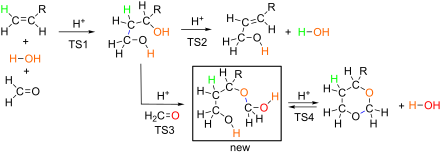
- reactions were investigated by the use of DFT calculations. A model composed of R–CH=CH2 + H3O+(H2O)13 + (H2C=O)2, R = Me and Ph, was adopted to trace reaction paths. For both alkenes, the concerted path forming 1,3-diols was obtained as the rate determining step (TS1). TS stands for a transition state

Graphical Abstract

Scheme 1: A general scheme of the Prins reaction.

Scheme 2: An example of the Prins reaction [4]. The product yields (%) are based on formaldehyde.

Scheme 3: An equilibrium in the hydrolysis of the product, 1,3-dioxane.

Scheme 4: Formation of the acetate of an allylic alcohol by Prins reaction [5].

Scheme 5: A reaction mechanism involving the carbonium-ion intermediate X.

Scheme 6: A reaction model composed of RHC=CH2, (H2C=O)2 and H3O+(H2O)13 to obtain the path of step 2 (Scheme 5). H3O+...
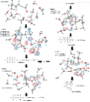
Figure 1: Geometries of the precursor and the transition states (TSs) of the Prins reaction of propene with (...

Figure 2: Energy changes (in kcal/mol) of the propene Prins reaction calculated by B3LYP/6-311+G(d,p) SCRF=(P...
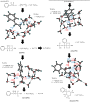
Figure 3: Geometries of the transition states (TSs) of the Prins reaction of styrene + (formaldehyde)2 + H3O+...

Figure 4: Energy changes (in kcal/mol) of the styrene Prins reaction calculated by B3LYP/6-311+G(d,p) SCRF = ...
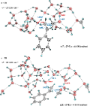
Figure 5: TS1(Ph) geometries of n = 20 and n = 30 in the reacting system of styrene + H3O+(H2O)n + (H2C=O)2 c...

Scheme 7: Summary of the present calculated results. The ether in the box is the new intermediate found in th...
Aryl nitrile oxide cycloaddition reactions in the presence of pinacol boronic acid ester
- Sarah L. Harding,
- Sebastian M. Marcuccio and
- G. Paul Savage
Beilstein J. Org. Chem. 2012, 8, 606–612, doi:10.3762/bjoc.8.67
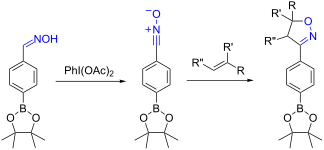
- alkenes [15], alkynes [16][17], and benzyne [18][19], to give Δ2-isoxazolines and isoxazoles. These are interesting sources of bioactive compounds in their own right, but isoxazoles are particularly valuable for their latent functionality as β-hydroxyketones, β-aminoalcohols, 1,3-diols, and a range of

Graphical Abstract

Scheme 1: Concept for library generation by dipolar cycloaddition followed by boronate coupling.

Scheme 2: General formation of alkyl (R) and aryl (Ar) nitrile oxides.

Scheme 3: Formation of 4-(aldoxime)phenylboronic acid pinacol ester 5.
Synthesis of 2-amino-3-arylpropan-1-ols and 1-(2,3-diaminopropyl)-1,2,3-triazoles and evaluation of their antimalarial activity
- Matthias D’hooghe,
- Stéphanie Vandekerckhove,
- Karen Mollet,
- Karel Vervisch,
- Stijn Dekeukeleire,
- Liesbeth Lehoucq,
- Carmen Lategan,
- Peter J. Smith,
- Kelly Chibale and
- Norbert De Kimpe
Beilstein J. Org. Chem. 2011, 7, 1745–1752, doi:10.3762/bjoc.7.205
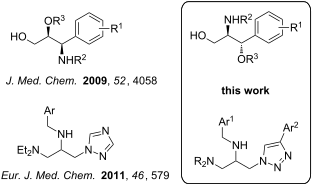
- variety of 2-amino-3-arylpropan-1-ols, anti-2-amino-3-aryl-3-methoxypropan-1-ols and anti-2-amino-1-arylpropan-1,3-diols were prepared selectively through elaboration of trans-4-aryl-3-chloro-β-lactams. In addition, a number of 2-(azidomethyl)aziridines was converted into novel 2-[(1,2,3-triazol-1-yl
- ). Furthermore, in order to provide access to the class of 2-aminopropan-1,3-diols, aziridines 7 were evaluated for the first time as substrates for a water-induced aziridine ring opening in an acidic medium. Thus, treatment of trans-2-aryl-3-(hydroxymethyl)aziridines 7 with one equiv of para-toluenesulfonic
- acid in a H2O/THF (1/1) solvent system [32] furnished novel anti-2-amino-1-arylpropan-1,3-diols 9a–d in good yields after 3 h at 40 °C, again in a regio- and stereospecific way (Scheme 1). The observed regio- and stereoselectivity in aminopropanols 8 and 9 can be rationalized by considering the ring

Graphical Abstract

Figure 1: Functionalized aminopropanes as potential antimalarial agents.

Scheme 1: Synthesis of aminopropanols 6, 8 and 9.

Scheme 2: Synthesis of syn-aminopropan-1,3-diols 12.

Scheme 3: Synthesis of 2-[(1,2,3-triazol-1-yl)methyl]aziridines 15 and their transformation into 1,2,3-triami...



