Search results
Search for "DMF" in Full Text gives 1101 result(s) in Beilstein Journal of Organic Chemistry. Showing first 200.
A cascade synthesis of 2-aminothiochromones from 2-fluorophenyl ketone and thiocarbonyldiimidazole
Beilstein J. Org. Chem. 2026, 22, 1151–1159, doi:10.3762/bjoc.22.92
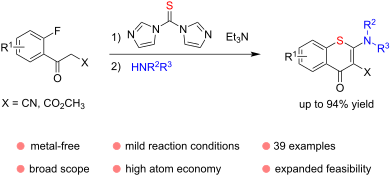
- and a higher reaction temperature are necessary for the scaffold construction. Employing acetonitrile (MeCN), with a higher boiling point, shortened the reaction time while maintaining a comparable yield. Carrying out the reaction in dimethylformamide (DMF) at 100 °C proved optimal, delivering product
- 3a in 78% yield. Keeping DMF as the optimal solvent, subsequent base screening revealed that the yield was maintained when Et3N was replaced by N,N-diisopropylethylamine (DIPEA). In contrast, the use of 1,8-diazabicyclo[5.4.0]undec-7-ene (DBU) or potassium tert-butoxide failed to obtain 3a, and
- potassium carbonate diminished the yield by almost half. The current results indicated that Et₃N was the optimal base for this reaction. Finally, we found that reducing the amount of TCDI to 1.3 equivalents under the optimal Et3N/DMF conditions retained a high yield, thus establishing the standard



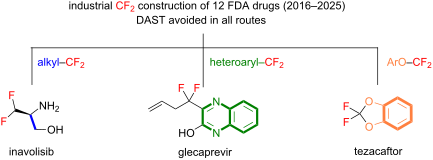
Construction of CF2 moieties in FDA-approved drugs (2016–2025): industrial routes, mechanisms, and scale-up considerations
Beilstein J. Org. Chem. 2026, 22, 1122–1150, doi:10.3762/bjoc.22.91
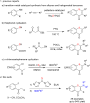
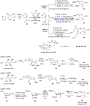
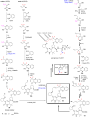
- production. 1.3.2 Difamilast (2021): As shown in Figure 13, the synthesis of the key intermediate of difamilast (6) mainly involves the assembly of three functional groups: the difluoromethyl group, the isopropyl ether, and the carboxylic acid group. Route a (reported in 2017) [68] uses a DMF solution of






Synthesis of functionalized, 13-alkyl-substituted coralyne derivatives and investigation of their interactions with duplex and abasic site-containing DNA
Beilstein J. Org. Chem. 2026, 22, 1057–1066, doi:10.3762/bjoc.22.84
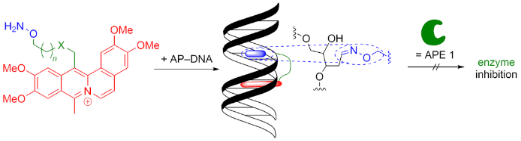
- at room temperature. Temperatures given in the experimental procedures refer to the medium that surrounds the reaction vessel. Solvents were removed at reduced pressure with a rotary evaporator. DMF was distilled from CaH2 and stored with added molecular sieves (4 Å). THF was distilled from sodium


Z-Selective semihydrogenation of alkynes via Ni/Lewis acid synergistic catalyzed system using DMF as hydrogen source and solvent
Beilstein J. Org. Chem. 2026, 22, 1004–1012, doi:10.3762/bjoc.22.79
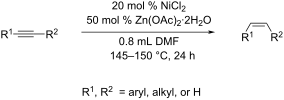
- dual-catalytic system has been developed for the Z-selective semihydrogenation of alkynes. Utilizing DMF as both the hydrogen donor and reaction medium, this method affords Z-alkenes in high yield with excellent stereoselectivity under mild conditions. The protocol employs cost-effective and readily
- available catalysts, and demonstrates broad applicability across a wide range of substrates. Keywords: alkynes; DMF; Ni/Lewis acid catalysis; Z-selective semihydrogenation; Introduction Z-Olefins represent important structural units in natural products, pharmaceuticals, and functional materials, making
- . Dimethylformamide (DMF), a commonly utilized polar aprotic solvent, has recently attracted interest as a hydrogen donor in catalytic reductions [37][38][39][40]. While DMF is classified as a substance of high concern (SVHC) due to its reproductive toxicity and potential health hazards upon improper handling [41



The role of spacer length and flexibility in peptide self-assembly
Beilstein J. Org. Chem. 2026, 22, 986–996, doi:10.3762/bjoc.22.77
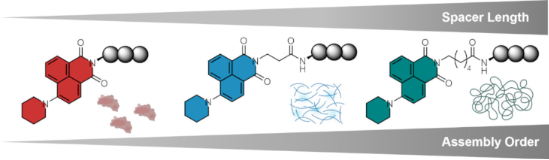
- , using (benzotriazol-1-yloxy)tripyrrolidinophosphonium hexafluorophosphate (PyBOP®) and N,N’-diisopropylethylamine (N,N’-DIPEA) in peptide-grade dimethylformamide (DMF). After the coupling, the peptides were cleaved from the resin under acidic conditions (95% TFA) in the presence of TIPS (2.5%) and H2O
- swollen in DMF (15 mL) at room temperature for one hour before transferring it into the peptide synthesizer. In the peptide synthesizer, DMF was removed through the draining process and DMF (3.5 mL) was added prior to the coupling. Prior to every coupling, the Fmoc-protecting group was cleaved by one
- deprotection step using a solution of 8% piperidine (DMF, 2.1 mL) for 80 s at 110 °C. The amino acids (0.5 M in DMF, 1.0 mL), DIC (0.75 M in DMF, 1.0 mL) and Oxyma Pure (0.26 M in DMF, 1.5 mL) were added to the resin and the solution was heated to 105 °C for 60 s and held at that temperature for 30 s. The


Recent advances in copper-catalyzed direct hydroamination of alkenes with (hetero)aromatic amines
Beilstein J. Org. Chem. 2026, 22, 925–947, doi:10.3762/bjoc.22.73
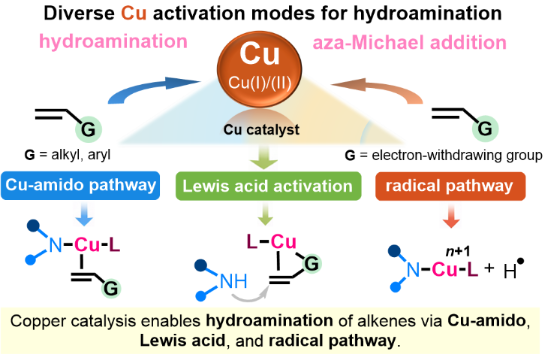
- )-catalyzed tandem oxidative amidation/aza-Michael reaction for the efficient synthesis of 3-substituted N-pyridinylisoindolinones 28 from 2-aminopyridines 25 and alkyl (E)-3-(2-formylphenyl)acrylates 26 (Scheme 9b) [47]. Under open-flask conditions at 80 °C in DMF, the reaction proceeded efficiently in the







Palladium-catalyzed benzocyclization reactions of quinoline-2-carboxamides via sequential C–H/N–H functionalization
Beilstein J. Org. Chem. 2026, 22, 905–914, doi:10.3762/bjoc.22.71
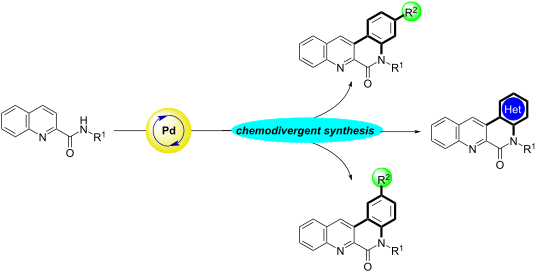
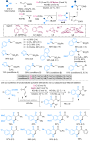
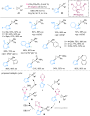
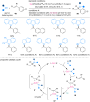
- reaction between quinoline-2-carboxamide 1a and 1-bromo-2-iodobenzene (2a) was tested. When 1a was treated with 1.0 equiv of 2a, 10 mol % Pd(OAc)2, 40 mol % PPh3, and 3.0 equiv of Cs2CO3 in dimethylformamide (DMF) at 140 °C, the desired lactam 3aa was obtained in 19% yield (Table 1, entry 1). This result
- catalyst (Table 1, entry 7). When the reaction temperature was reduced to 110 °C, 120 °C, or 130 °C, product 3aa was obtained in lower yields in all cases compared with entry 7 (Table 1, entries 8–10). Using o-xylene as the solvent gave results similar to those obtained with DMF (Table 1, entry 11




Knoevenagel condensation of 4,5- and 1,8-diazafluorenes
Beilstein J. Org. Chem. 2026, 22, 803–812, doi:10.3762/bjoc.22.62
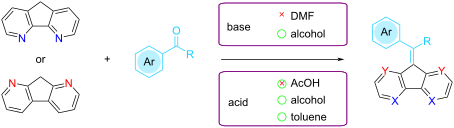
- several electron-donor and electron-acceptor-substituted benzaldehydes (viz. 4-methoxybenzaldehyde, 4-bromobenzaldehyde, 3-nitrobenzaldehyde, and unsubstituted benzaldehyde) were first carried out under basic conditions, using t-BuONa in DMF or t-BuOH (Scheme 1 and Table 1). Both diazafluorenes 1 and 2
- reacted under such conditions, but only acceptor-substituted aldehydes were able to react in DMF, specifically 4-bromobenzaldehyde and 3-nitrobenzaldehyde. Though, the reaction in tert-butanol was successful for all studied substrates. These observations were attributed to solvation phenomena
- . Specifically, solvation by aprotic DMF having a high dipole moment promotes the formation of the [Na+–diazafluorenyl−] ion pair, whose anion displays insufficient nucleophilicity for interaction with weakly electrophilic aldehydes (e.g., benzaldehyde and 4-methoxybenzaldehyde). On the other hand, tert-butanol




Design, synthesis, and biological evaluation of FXR/ASK1 dual-target modulators
Beilstein J. Org. Chem. 2026, 22, 771–781, doi:10.3762/bjoc.22.59
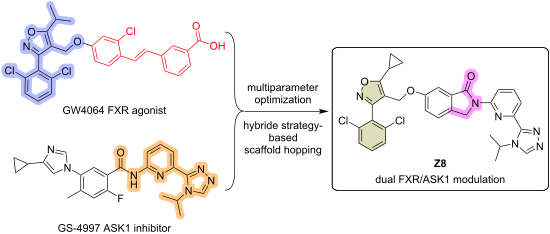
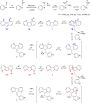
- preparation of triazole intermediates IXa–d is shown in Scheme 5. Firstly, compound VI was reacted with hydrazine hydrate in methanol to obtain hydrazide VII which was mixed with DMF/DMA and heated to provide intermediate VIII. The obtained VIII was not purified and directly reacted with different amines to
- FXR/ASK1 modulation strategy for MASH. Synthesis of compound 2. Conditions: (a) NH2OH·HCl, NaOH, EtOH/H2O, 70 °C, 12 h; (b) NCS, DMF, 40 °C, 2 h; (c) methyl 3-cyclopropyl-3-oxopropanoate, triethylamine, EtOH, rt, 12 h, 64% yield; (d) LiAlH4, THF, 0 °C, 2 h, 68% yield; (e) PBr3, DCM, 0 °C, 12 h, 79
- % yield. Synthesis of compounds IXa–d. Conditions: (a) N2H4·H2O, MeOH, rt, 12 h; (b) DMF–DMA, 80 °C, 12 h; (c) amines (for IXa,c,d) or (R)-alanine methyl ester (for IXb), AcOH, MeCN, 90 °C, 16 h, 66–80% yield; (d) absolute stereochemistry is R. Synthesis of compounds Z1–15. Conditions: (a) K2CO3, KI, MeCN


Photoorganocatalytic trifluoromethylation of (het)arenes in green conditions
Beilstein J. Org. Chem. 2026, 22, 662–671, doi:10.3762/bjoc.22.50
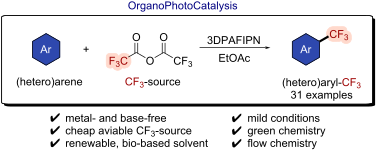
- -light irradiation was selected as the optimal set of conditions for further investigations, with subsequent experiments benchmarked against entry 5 (2 mol % PC, 78% yield, Table 1). We next investigated the effect of solvent on the reaction outcome. Chloroform, acetone, acetonitrile, DMF, DMSO, and THF




Towards the targeted protein degradation of CK2: design and synthesis of CAM4066-based PROTACs
Beilstein J. Org. Chem. 2026, 22, 611–619, doi:10.3762/bjoc.22.47
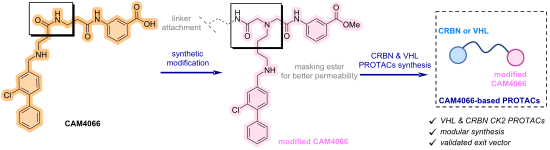
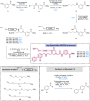
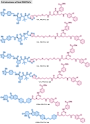
- -diisopropylethylamine; DME = 1,2-dimethoxyethane; DMF = dimethylformamide; HOBt = 1-hydroxybenzotriazole; TFA = trifluoroacetic acid. (A) Synthesis of final VHL PROTACs; (B) Synthesis of final CRBN PROTACs. Abbreviations: Boc = tert-butoxycarbonyl; CRBN = cereblon; DIPEA = N,N-diisopropylethylamine; DMF

Design and synthesis of an erdafitinib-based selective FGFR2 degrader
Beilstein J. Org. Chem. 2026, 22, 583–591, doi:10.3762/bjoc.22.44
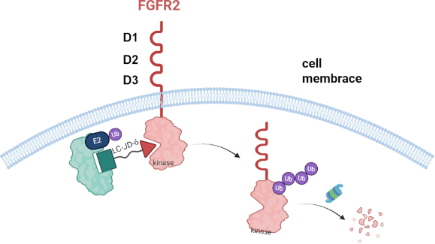
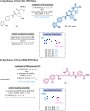
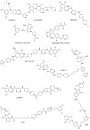
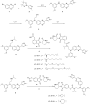
- . Synthesis of PROTACs towards FGFR2. Reagents and conditions: (a) K2CO3, Pd (dppf)Cl2, 1,4-dioxane/H2O 4:1, 100 °C, 5 h; (b) 3,5-dimethoxyaniline, Pd2(dba)3, BINAP, Cs2CO3, toluene, 100 °C, 12 h; (c) (2-bromoethoxy)-tert-butyldimethylsilane, NaH, DMF, rt, 12 h; (d) tetrabutylammonium fluoride, THF rt, 12 h
- ; (e) methanesulfonic anhydride, TEA, DCM, rt, 3 h; (f) isopropylamine, DIPEA, MeCN, 100 °C, 12 h; (g) EDCI, HOBt, DIPEA, DMF, rt, 12 h. Supporting Information Supporting Information File 6: Experimental details and spectral data for all compounds. Acknowledgements The graphical abstract was created



Melifoliox B, a novel phloroglucin derivative isolated from Melicope barbigera (Rutaceae) and synthesis of new oxidation products from melifoliones A and B
Beilstein J. Org. Chem. 2026, 22, 535–546, doi:10.3762/bjoc.22.39
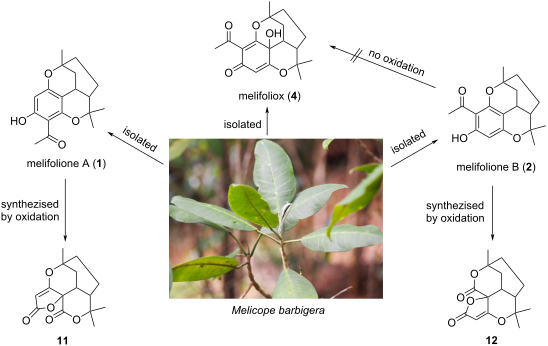
- melifoliones should be synthesized first, to get enough quantity for oxidation to the corresponding quinols in a second experiment. Using the method of Wang and Lee [5], 1 could be prepared regio-specifically in good yield by heating phloroacetophenone and citral in DMF under catalysis of ethylenediammonium
- -position in regard to the OH-group at C-10b (Table 2). Synthesis of melifoliones Melifolione A (1) was prepared according to the method of Wang and Lee [5] by heating phloroacetophenone and citral with ethylene-diammonium diacetate (EDDA) in DMF. However, reaction of the educts in pyridine at 60 °C led to
- made to cyclize 5 into melifolione B (2) with the following results (Scheme 1) Heating of 5 in DMF at 100 °C yielded melifolione A (1) with traces of melifolione B (2). When 5 was heated in acetic acid at 80 °C, only benzoxocin 6 could be isolated. Reaction of 5 with catalytic amounts of p



Modern synthetic pathways towards eribulin and its subunits
Beilstein J. Org. Chem. 2026, 22, 495–526, doi:10.3762/bjoc.22.37
- ; ii. TBDPSCl, imidazole, DCM, 0 °C to rt; iii. MeI, Ag2O, DMF, 0 °C to rt; (g) i. Pd/C, H2, EtOAc; ii. I2, PPh3, imidazole, DCM, 0 °C to rt; (h) vinylmagnesium bromide, CuI, HMPA, THF, −30 °C; (i) OsO4, (DHQ)2PYR, 0 °C; (DHQ)2PYR: hydroquinine 2,5-diphenyl-4,6-pyrimidinediyl diether. Synthesis of 27
- . (a) i. NaH, BnBr, THF, rt; ii. iodobenzoic acid, MeCN, 80 °C; iii. (EtO)2POCH2COOEt, NaH, THF, 0 °C; (b) vinylmagnesium bromide, CuI, THF, TMSCl, HMPA, −78 °C to rt; (c) 2 M HCl, THF, H2O, 65 °C; (d) i. Ag2O, 2,6-DCBCl, DMF, TBAI, rt, darkness; ii. LiAlH4, THF, 0 °C to rt; iii. TBDPSCl, imidazole
- , DCM, 0 °C to rt; iv. NaH, MeI, DMF, 0 °C; (e) I2, MeCN, −20 °C; 2,6-DCBCl: 2,6-dichlorobenzyl chloride. Synthesis of 31 and 33. (a) i. MMTrCl, iPr2NEt, DCM, rt; ii. K2CO3, MeOH, DCM, rt; iii. TBDMSCl, imidazole; (b) i. n-BuLi, THF, −78 °C, Sia2BH, −10 °C to rt; ii. H2O2, 3 M NaOH, 0 °C; (c) i. TsCl








Synthesis and uranyl(VI) extraction performance of a calix[4]pyrrole–tetrahydroxamic acid receptor
Beilstein J. Org. Chem. 2026, 22, 486–494, doi:10.3762/bjoc.22.36
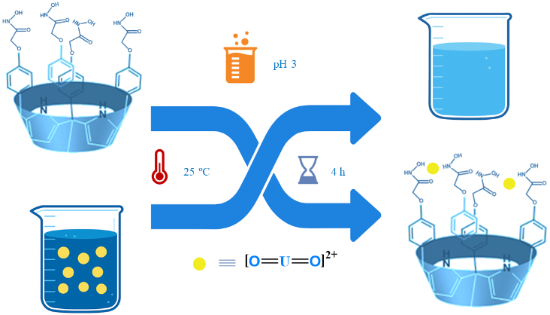
- corresponding hydroxamic acid, with no detectable acid-derived by-products. Solubility tests revealed that PCP HA is soluble exclusively in highly polar aprotic solvents (DMSO, DMF) and remains completely insoluble in other common organic solvents (chloroform, ether, etc.) and water. The absence of ligand


Synthesis of a HDAC inhibitor–nanogold probe for cryo-EM visualization in class I HDAC co-repressor complexes
Beilstein J. Org. Chem. 2026, 22, 480–485, doi:10.3762/bjoc.22.35
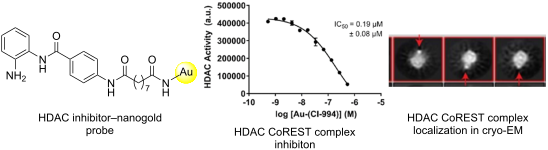
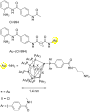
- , 67%; e) TFA, DCM, 0 °C to rt, 20 h; (f) MP-carbonate resin, MeOH, rt, 3 h, 95%; g) benzyl bromide, 1,4-dioxane/DMF 1:1, 90 °C, 19 h, 45%; h) 3, 5, HATU, DIPEA, DMF, 0 °C to rt, 40 h, 59%; i) H2, 10% Pd/C, THF, rt, 19 h, 99%; j) N-hydroxysuccinimide, EDC, DMF, 0 °C to rt, 16 h, 90%; k) TFA, DCM, 0 °C



Synthesis and stereochemical analysis of dynamic planar chiral oxa[7]orthocyclophene
Beilstein J. Org. Chem. 2026, 22, 436–442, doi:10.3762/bjoc.22.30

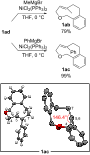
- -alkene 7 in 81% yield. The hydroxy group of 7 was substituted with chlorine using oxalyl chloride in DMF, and the TIPS group was removed by treatment with hydrochloric acid to afford the chloroalcohol 2a (74% yield in two steps). After several attempts to cyclize compound 2a via Williamson etherification






Cone p-aminocalix[4]arenes enriched with ‘clickable’ alkyne or azide functionalities
Beilstein J. Org. Chem. 2026, 22, 399–415, doi:10.3762/bjoc.22.28
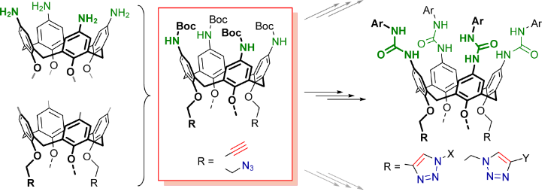
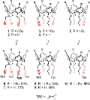
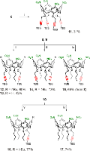
- -Bu4NF·3H2O, THF, 50 °C. Synthesis of 2-azidoethylated p-aminocalix[4]arenes. Conditions: i) HNO3 (fuming, 10 equiv per calixarene aromatic unit, c ≈ 2.5 M), AcOH, dichloromethane, rt, 48 h; ii) FeSO4·7H2O, NH4Cl, Zn, EtOH, THF, H2O, 50 °C; iii) Boc2O, Et3N, dichloromethane, rt; iv) NaN3, DMF, 60 °C




Design, synthesis and biological evaluation of 2,5-diaryloxazolo[4,5-d]pyrimidin-7-ylamines as selective cytotoxic agents against HeLa cells
Beilstein J. Org. Chem. 2026, 22, 390–398, doi:10.3762/bjoc.22.27

- essential medium (MEM, Sigma-Aldrich), fetal bovine serum (FBS, Sigma-Aldrich), antibiotics (Sigma-Aldrich), trypsin (Life Technologies), 3-(4,5-dimethylthiazol-2-yl)-2,5-diphenyltetrazolium bromide (MTT, Sigma-Aldrich), dimethylformamide (DMF, Sigma-Aldrich), sodium dodecylsulfate (SDS, Sigma-Aldrich
- -diphenyltetrazolium bromide (MTT) dye solution (5 mg/mL) for 2 h and lysed with 100 μL of solvent solution containing: 45 mL of dimethylformamide (DMF), 13.5 g of sodium dodecylsulfate (SDS), and 55 mL distilled water [23]. After overnight incubation at 37 °C optical density at 550 nm and with a reference wavelength


Recent advances in the cleavage of non-activated amides
Beilstein J. Org. Chem. 2026, 22, 352–369, doi:10.3762/bjoc.22.23
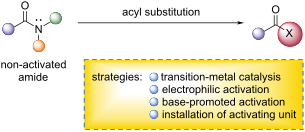
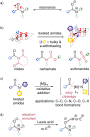
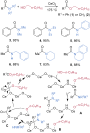
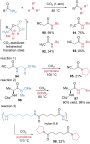
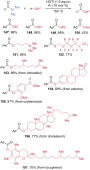
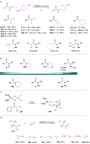
- , such methods often exhibit limited substrate scope, generally restricted to amides with low steric hindrance, such as DMF or DMAC. In recent years, several new strategies have emerged to overcome these limitations: (i) transition-metal-free activation using electrophilic reagents, (ii) strong-base
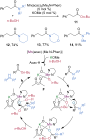
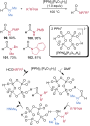
- in 60% yield and 98% ee. Furthermore, nylon 6,6 was cleanly depolymerized to its monomer 98 in 32% yield. The Mukherjee group employed dihydrogen tetrametaphosphate as a Lewis acid to activate formamides for transamidation (Scheme 17) [65]. In the presence of one equivalent of [PPN]2[P4O12H2], DMF




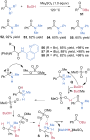
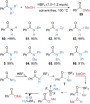
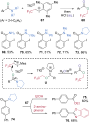
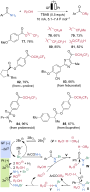






Synthesis of tricyclic fused pyrrolidine nitroxides from 2-alkynylpyrrolidine-1-oxyls
Beilstein J. Org. Chem. 2026, 22, 344–351, doi:10.3762/bjoc.22.22

- literature data on reactivity of 5-azidopentyne derivatives in intramolecular Huisgen cycloaddition reactions are contradictory. Some authors successfully obtained 5-azidopentyne derivatives upon nucleophilic substitution at 80 °C in DMF, and additional heating at 170 °C was necessary for cyclization to
- triazoles to occur [25]. However, there are also examples where the corresponding triazoles were isolated instead of 5-azidopentyne derivatives under the same conditions (DMF, 80 °C) [26]. The nitroxides 3a–f were treated with excess of NaN3 in milder conditions, in DMSO at 60 °C, and a single product was




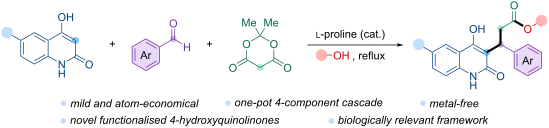
A mild and atom-efficient four-component cascade strategy for the construction of biologically relevant 4-hydroxyquinolin-2(1H)-one derivatives
Beilstein J. Org. Chem. 2026, 22, 244–256, doi:10.3762/bjoc.22.18
- the presence of catalytic DMF in ethanol (Scheme 3a) [40]. A small amount of ethanol ensured homogeneity of the reaction mixture, allowed gradual temperature increase, and prevented sudden charring. DMF, with its high boiling point, acted as a homogenizer by preventing solidification after ethanol
- -unsaturated malonate 6 with 2a–c, various bases (sodium methoxide, triethylamine, potassium hydroxide) and solvents (ethanol, DMF, pyridine) were tested, mostly at room temperature, with an additional attempt at refluxing in ethanol/DMF. The desired malonate Michael adduct 7 (isolated and fully characterized
- , see Supporting Information File 1) was obtained exclusively when potassium hydroxide was used as base in the reaction between 2b and arylidenemalonate 6 in DMF at room temperature. The malonate Michael adduct 7 was then subjected to various decarboxylation conditions. The Krapcho protocol (NaCl or


Synthesis of diaryl phosphates using phytic acid as a phosphorus source
Beilstein J. Org. Chem. 2026, 22, 213–223, doi:10.3762/bjoc.22.15
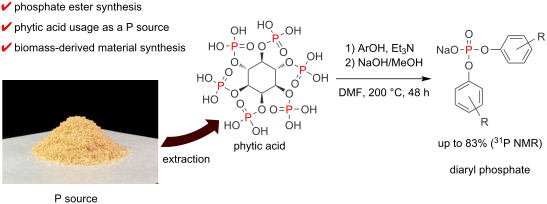
- -withdrawing leaving groups [49][50][54], and the transesterification of alkyl phosphates has rarely been observed [55]. A possible reaction pathway is shown in Figure 5. First, triethylamine increases the solubility of phytic acid in DMF by improving its lipophilicity and accelerates the formation of
- those utilized for commercial phytic acid (Scheme 4), the reaction mixture became dark, and black precipitates were formed during the reaction. After the distillation of excess phenol and DMF, the insoluble burnt material was removed via filtration. Finally, 500 mg (44% yield) of 2a was obtained, and
- mmol, 50 wt % aqueous solution) was added to dimethylformamide (DMF, 60 mL), after which triethylamine (126 mmol) and 1a (420 mmol) were poured into the reaction mixture. Esterification reaction conditions using the extracted phytic acid. The yield refers to the isolated yield. Supporting Information




Synthesis and applications of alkenyl chlorides (vinyl chlorides): a review
Beilstein J. Org. Chem. 2026, 22, 1–63, doi:10.3762/bjoc.22.1
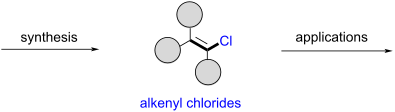
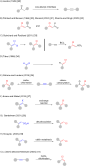
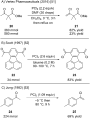
- Vertex Pharmaceuticals describes the synthesis of alkenyl chloride 21 on a 360 and 580 mmol scale (Scheme 6A) [51]. The addition of a few drops of DMF was not commented. Surprisingly a significant decrease in yield was observed at the larger 580 mmol scale compared to the 360 mmol scale. Scott reported a
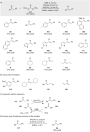
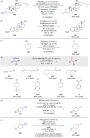
- -workers reported the serendipitous discovery that N-acyl-2,3-dihydro-4-pyridinones react with the Vilsmeier reagent to afford the corresponding alkenyl chlorides (Scheme 14) [67]. Notably, dihydropyridones failed to react with POCl₃ in the absence of DMF. In 2003, Wähälä reported a closely related
- , absence of DMF – the alkenyl chloride 96 was isolated in 95% yield (Scheme 20D). The transformation is mechanistically and conceptually closely related to earlier findings reported by Moughamir and Mestdagh (see Scheme 18). In 2015, Kartika and co-workers reported a metal and acid-free synthesis of























Sustainable electrochemical synthesis of aliphatic nitro-NNO-azoxy compounds employing ammonium dinitramide and their in vitro evaluation as potential nitric oxide donors and fungicides
Beilstein J. Org. Chem. 2025, 21, 2739–2754, doi:10.3762/bjoc.21.211
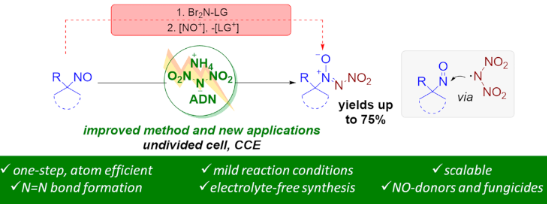
- ), and ammonium dinitramide (ADN) (1–5 equiv, 1–5 mmol, 62–310 mg) in 10 mL of MeCN, acetone, DMF, MeOH or HFIP was electrolyzed using constant current conditions (I = 15–240 mA) at 23–25 °C under magnetic stirring. After passing 1–3 F∙mol−1 of electricity (reaction time 7–161 min), electrodes were